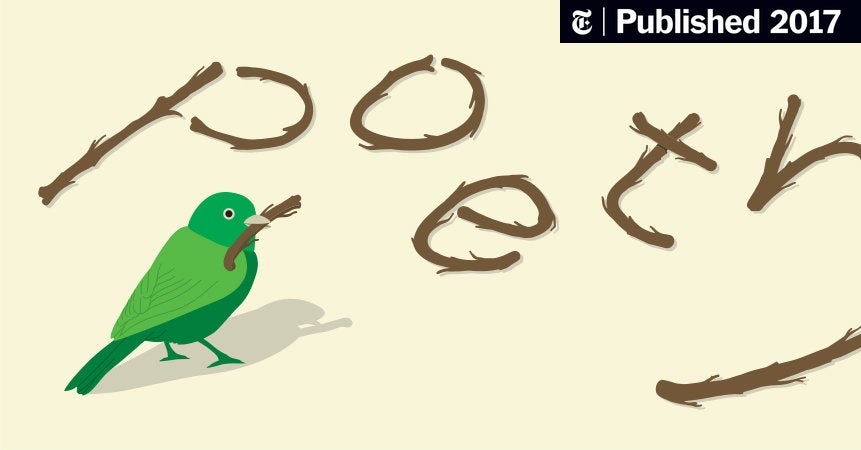
“Like virtually everything else in the Trump era, poetry has gotten sharply political these days,” wrote The Times in 2017. The article continues:
Writers are responding to this turbulent moment in the country’s history with a tsunami of poems that address issues like immigration, global warming, the Syrian refugee crisis, institutionalized racism, equal rights for transgender people, Islamophobia and health care.
…Poets are using social media to respond quickly to the news, posting new verses online. Hours after the election results came in on Nov. 8, Danez Smith, a 27-year-old poet in Minneapolis, wrote a poem about losing faith in the country, titled “You’re Dead, America.” It was published on BuzzFeed on Nov. 9, and includes the verses, “on the TV/ is the man from TV/ is gonna be president/ he has no word/ & hair beyond simile/ you’re dead, America.” Smith, who identifies with neither gender and prefers no courtesy title, has also written poems about health care and police violence, which have been used on signs and read aloud at Black Lives Matter protests.
How might your students use poetry to express their reactions to what is happening in the world today? What published poetry can they find that helps them make sense of it?
One possibility: reading the work of the United States poet laureate, Tracy K. Smith, or listening to her podcast, The Slowdown. In an essay on politics and poetry, she writes that political poetry has become a means of owning up to the complexity of our problems, and introduces the reader to some, like Justin Phillip Reed and Evie Shockley, who are doing it well. She writes:
Poems willing to enter into this fraught space don’t merely stand on the bank calling out instructions on how or what to believe; they take us by the arm and walk us into the lake, wetting us with the muddied and the muddled, and sometimes even the holy.
Invite your students to find or create political poems that address the issues they think are important — and that do so in a way that “take us by the arm and walk us into the lake.”