
2. After watching, think about these questions:
What questions do you still have?
What connections can you make between this film and your own life or experience? Why? Does this film remind you of anything else you’ve read or seen? If so, how and why?
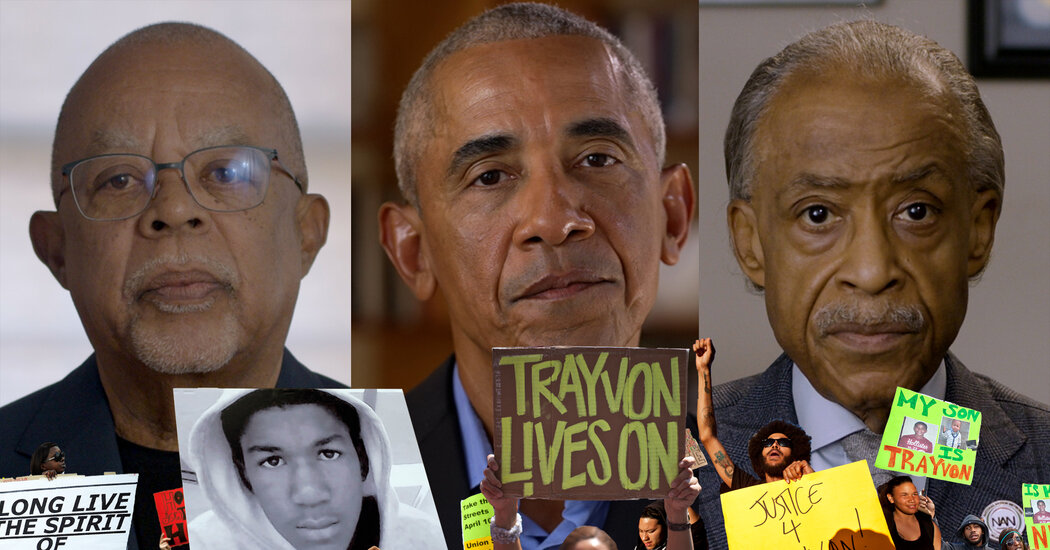
3. An additional challenge | Respond to the essential question at the top of this post: How did the tragic killing of the Trayvon Martin 10 years ago awaken a civil rights movement?
4. Next, join the conversation by clicking on the comment button and posting in the box that opens on the right. (Students 13 and older are invited to comment, although teachers of younger students are welcome to post what their students have to say.)
5. After you have posted, try reading back to see what others have said, then respond to someone else by posting another comment. Use the “Reply” button or the @ symbol to address that student directly.
6. To learn more, read “Trayvon Martin Is Still Making America Confront Its Original Sin.” Charles M. Blow, a Times Opinion columnist, writes:
“One of the most important things that came out of this tragedy was the activation of an entire new generation of civil rights leaders.” That was part of what President Barack Obama told The Times when we asked him what the killing of Trayvon Martin, 10 years ago Saturday, meant for the United States, the movement for civil rights and for him personally.
On Feb. 26, 2012, a 28-year-old neighborhood watch captain, George Zimmerman, spotted Martin in a hoodie walking through a gated townhouse community not far from Orlando.
Suspicious, Zimmerman called 911 and followed Martin. Dispatch told him, “We don’t need you to do that.” There was an encounter between the two before Zimmerman shot Martin in the chest at close range.
Martin was just 17 years old, a boy, and he was where he was supposed to be.
He was unarmed. He was carrying Skittles and a can of iced tea.
There was something about the killing of this particular boy that set it apart from all other killings of Black people, that struck a chord in Black America, that awakened a generation.
Jesse Jackson once called the 1955 lynching of Emmett Till, a 14-year-old Chicago boy brutally murdered in Mississippi, the Big Bang of the civil rights movement. In the same way, the killing of Trayvon Martin was the Big Bang of the new civil rights movement, Black Lives Matter.
Want more student-friendly videos? Visit our Film Club column.
Students 13 and older in the United States and Britain, and 16 and older elsewhere, are invited to comment. All comments are moderated by the Learning Network staff, but please keep in mind that once your comment is accepted, it will be made public.


