There is no modern precedent for the electoral wave last Tuesday that brought a complete collapse of the Republican coalition and gave Democrats the largest victory by either party in half a century. The American political landscape has been reshaped.
What does this mean for your students? Their communities? The United States? The world? What questions do your students have? What can they predict may happen next? What connections can they make between this election and global trends?
Here are a few quick ways to use Times resources to touch on these questions. As always, we’d love to hear what you’re doing. Write to us at LNFeedback@nytimes.com.
Respond to our Student Opinion forum.
Last week, we asked What Are Your Reactions to the Results of the 2026 Midterm Elections? and students across the United States and around the world answered. We invite your students to post their thoughts, too, and to respond to the thoughts of others. Later this month, we hope to do a roundup of our favorite comments and conversations.
Make some predictions.
The Morning newsletter on Nov. 5 offered an accessible summary of how this election could reshape American politics. It begins this way:
As President Obama liked to say, elections have consequences. Tuesday’s contest — in which Democrats routed Republicans by shocking margins in shocking parts of the country — is no exception. How will Democrats use their new power?
The answer isn’t so simple. The result was more a rebuke of President Trump than an endorsement of specific policies, and Democrats disagree with one another on impeachment, the role of fossil fuels, Israel, health care and how much to tax the rich. Meanwhile, Trump still controls the executive branch — and the veto pen.
But the blue wave still promises to reshape American politics.
Invite your students to work in partners or small groups to make predictions based on what they know so far. What happens next? What will Democrats do? What about President Trump? The Republicans? What obstacles stand in the way for both parties? Why?
Have students share their predictions with the class, perhaps comparing them to what is covered in The Morning. For homework, you might invite each student to adopt a prediction — whether they made it themselves or not — and find at least three pieces of reliable evidence to either back it up or rebut it.
If you and your students would like to follow up with more Times analysis, you can check out pieces like “America Punishes Trump’s Party: 8 Takeaways From a Democratic Landslide”; the video “For Democrats, Midterm Wins Bring New Challenge”; and news analyses like “For Trump and America, a Clear Election Verdict Leaves a Murky Future” and “With Democrats’ Sweep, Congress Is Set to Reassert Power to Check Trump.”
When big news like this happens, how do your students tend to make sense of it? What sources do they trust? Why? What has been in their news or social media feeds over the last week? How has that affected their views? Invite students to compare the Times analyses they have read with reactions and analyses from other sources — from across the political spectrum and mediums. Which takes are most interesting or compelling to them? Why? What do these analyses help them understand? How do they figure out which sources to trust? How do they take in all this information and come to conclusions?
Connect this election to global trends.
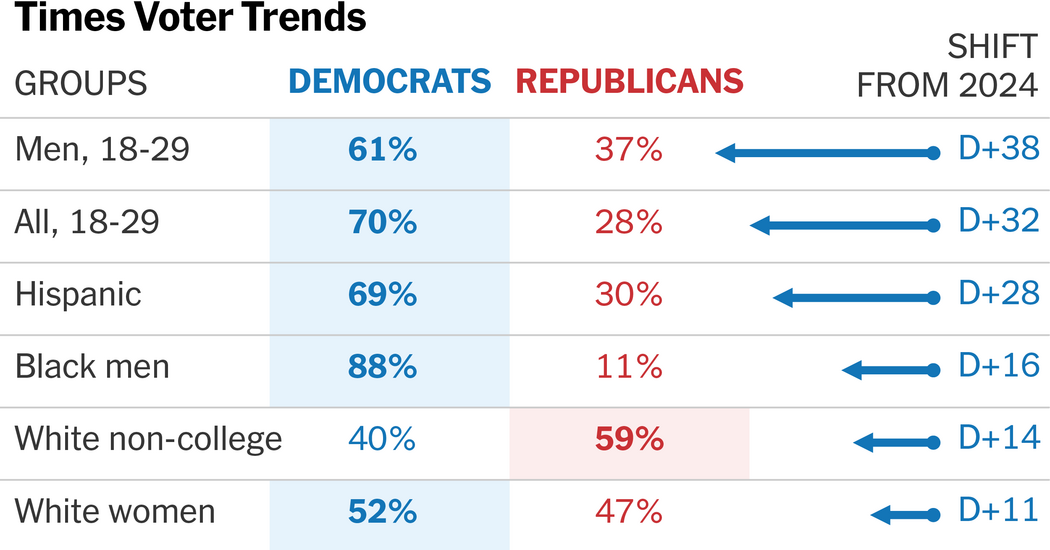
“The discontent is global,” Sabrina Tavernise and Ruth Igielnik write in “Fed Up With Politics and Struggle, Young Voters Rose Up.” What connections can your students make? Where else in the world is Gen Z demanding generational change, and why? What issues unite young people all over?
Here are a few paragraphs from the piece that touch on those questions:
The discontent is global, fostering youth movements from Bangladesh and India to Serbia and France. Government resources have gone to Baby Boom retirees with free health care and subsidized retirements, while education has been stretched, health insurance costs have soared and job security has been hampered by older generations that will not get out of the way. Artificial intelligence and climate change have injected real dread into those coming of voting age.
That is scrambling the political lines that have given shape to American politics since the end of World War II.
“The traditional left-right paradigm has been broken,” said Brandon Kenig, 41, a Kansan who came of age in the College Republicans and worked on Mitt Romney’s presidential campaign.
For young people, that paradigm “applied to their parents and grandparents during a time of relative economic stability,” he said. But normal politics no longer apply, and young people are “seeking out candidates who acknowledge what is happening and do not try to sugar coat.”
What parallels can your students find? Invite them to look for news and information from a country outside their own and find facts, quotes, statistics, images and more that they think show commonalities. What does this information help them understand about their own country? Why?
Our 15-minute lesson plans are new this year. Find more lessons here, or send in your idea.