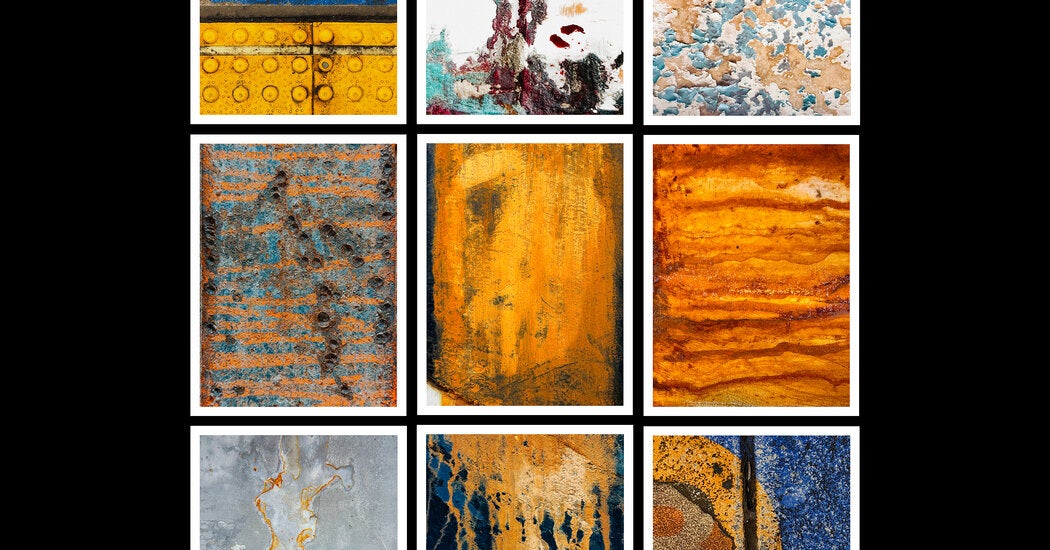
What “accidental art” can you find at school?
“There is a pleasure to be had in finding beauty in unexpected places and taking time to contemplate it,” writes Damon Winter, a Times photographer.
Ask your students: On your commute to or from school, have you ever noticed something beautiful that you think most other people have overlooked? What was it? Why did you find it beautiful — and why do you think most other people didn’t notice it?
Over nearly two decades as a photographer for The Times, I’ve spent innumerable hours in the subway system. It’s not always the most pleasant place to work. Sometimes, as a diversion from the relentless onslaught of train clatter and the endless flood of humanity — hustling, jostling, trying to make it through the commute inside traveling bubbles of indifference — I stop to look for art. I don’t mean the excellent sculptures and mosaics commissioned by the Metropolitan Transportation Authority to brighten up the commute. I mean the accidental kind.
Show your students the illustration at the top of the piece, then slowly scroll through the images in the piece. What do they notice? Which would they have walked right past themselves? How do they think these works of “accidental art” were made?
Here are some lines from the article that show what Mr. Winter looks for. Read them aloud slowly, then ask students, Where might you find hidden details like these in this classroom or school?
— I look for the colorful scenes of decay on the tunnel walls, the rusted iron beams, patterns formed in crumbling tiles and peeling paint.
— I’m drawn to the strange forms found in discarded bubble gum and to the delicate sketches etched in HVAC soot.
— Water is the key medium for much of the naturally occurring art within the subway. It acts as both builder and destroyer.
— Thousands of hands run down railings, thousands of feet shuffle over platforms, leaving their mark.
— Countless footsteps over a pandemic-era social distancing mat at Marcy Avenue unearthed years of layered texture and color.
— On a platform bench at 110th Street-Malcolm X Plaza, the repetition of daily seatings and the resulting abrasion of cloth on wood revealed a sinister portrait.
— A sharp, even violent action by a single person can spark a riveting new piece.
If you’d like to go further:
Invite students to show their work gallery style, posting their favorite images around the classroom or in a collective slide show. What are their favorites? How did hunting for these pieces change how they saw an environment they are in daily?
Mr. Winter writes:
They appear to me as secret works of art just waiting to be noticed and appreciated. I like to imagine them under glass, on pristine white mats inside deep black wood frames on the walls of the Museum of Modern Art. I’ve come to think of it as the “M.T.A. Modern,” a public museum open to all New Yorkers for a mere $3 — if only they knew where to look.
Have students create their own classroom museum showcasing their findings as “secret works of art.” Students can write wall text explaining where each piece was found, who photographed it and why it caught their eye. The class can collaborate to write an introduction to the show as a whole to help others understand the project and its value. Then, invite guests from outside the classroom to visit the museum.
Our 15-minute lesson plans are new this year. Find more lessons here, or send in your idea.