
What ordinary moments did you enjoy during your summer vacation?
Coursera partners with NESCOT to enhance UK further education teaching quality and help drive national technical skills agenda
by Anthony Tattersall, Vice-President for EMEA, Coursera
As the United Kingdom’s further education sector seeks to empower learners to thrive in the digital economy, collaborating to scale up the delivery of high-demand technology, business, and data science skills is essential. To help support the UK’s further education strategy, we are excited to announce that we are partnering with North East Surrey College Of Technology (NESCOT), to both enhance and expand teaching delivery, and to prepare the college’s 9000 students for in-demand careers in the digital economy.
With NESCOT being a partner in the new Coast to Capital region’s Institutes of Technology, access to Coursera will support the college’s aim to deliver a wider range of advanced technical qualifications and higher education courses. NESCOT’s staff will have access to the full Coursera catalogue, including 22 entry-level professional certificates offered by Google, IBM, Meta, and other leading industry partners. The partnership will thereby create additional opportunities for NESCOT’s staff to develop the skills needed to deliver courses on high-demand technologies including AI, data science, engineering and software development.
Coursera is doubling down on its efforts to support the nation’s further education strategy, with the UK government increasingly investing in its new T Levels programme, and with participation in adult government-funded further education having increased by 4.6% over the past year.
The partnership with NESCOT builds upon Coursera’s relationship with the TEC Partnership, one of England’s largest providers of further and technical education, to expand its contribution to the UK’s further and higher education sector. It will do so by filling curriculum gaps, expanding NESCOT’s provision of job-aligned vocational courses, and bridging the gap between student skills and employer needs.
By empowering faculty professional development and bridging this gap, Coursera and NESCOT seek to narrow the UK’s technology and data science skills gaps. The 2022 Global Skills Report, released in June by Coursera, found that the United Kingdom’s technology skills proficiency continues to lag behind a majority of European nations, ranking 42nd globally for technology skills, and 24th among the 33 European nations indexed in the report.
Coursera currently supports the skills development of 2.75 million UK learners. UK institutions already partnering with Coursera include Imperial College London, Queen Mary University of London, The University of Edinburgh, University of Glasgow, University of Leeds, University of London and the University of Manchester. UK learners are able to access 2,500+ Guided Projects, 5,000+ courses, 625+ Specializations, more than 75 Certificates (of which 22 are Entry-Level Professional Certificates), and 35+ degrees. In the first eight months of 2022, UK learners spent more than 1.1 million hours upskilling and reskilling on Coursera’s platform.
We look forward to supporting NESCOT’s faculty to deliver high-quality, job-relevant skills training to their students, and to evolve the college’s blended learning provision.
Top 10 Resume Do’s and Don’ts

You’ve been job hunting for a while. You’ve sent out hundreds of resumes but you’ve only received a handful of callbacks from the companies you applied to. You have finally found your dream position – with all the perks. It’s the one you’ve been waiting for, and you know you have one shot to get them to notice you. Each job post receives an estimated 250 applications. 2-3% of these will get invited for the interview. Your make or break lies in one thing – your resume. Even with the right skills and experience, writing a stand-out résumé is not as easy and straightforward as you’ve discovered. We’re here to empower you with the tips and knowledge you need for your next career move. Don’t fret. Do keep reading. We’ve put together a list of the top 10 resume do’s and don’ts you need to land you that coveted job or make the switch to something different.
What is a Resume?
A resume is a formal document used by applicants to apply for a job. Here, you give recruiters an account of your educational background, professional qualifications, work experience, skills, and other relevant information your potential employer needs to know.
The overall goal of your resume is to summarise to demonstrate to a hiring manager your potential and why you are the right candidate for the role.
What Do Hiring Managers Look For In A Resume?
The truth is there isn’t a blanket answer to this question. This is because it depends on what the hiring manager is looking for – and each position will have different requirements. Which is why your resume needs to be tailored to each new position you’re applying for. More on that below.
Don’t lose heart if you think you don’t stand a chance because you don’t know what it is the recruiter or hiring manager wants. There are essential skills, qualifications, and work experience they need to tick off their list to determine if you’re a probable candidate. What you do need to know however, is that for the most part, recruiters will read a resume that tells a story of the applicant’s career progression. The right format will indicate where you come from and ultimately how your past positions have led you to the job you’re now applying for.
What To Include In A Resume?
Whether you’re just entering the job market or have worked for years as a professional, the temptation to include everything you’ve done is present. But this is not necessary, and pages and pages of your professional story will give off the wrong impression. The key is to keep it short and include a few key things:
- Contact details
- Certificates, awards, honours and professional memberships
- Educational background
- Work history
- Soft, hard, and technical skills
- Summary statement
- Key professional accomplishments
To help you get noticed, we’ve put together a list of top dos and don’ts of what your resume should have and doesn’t need:
Top 10 Resume Do’s
- Do include links to your LinkedIn page, website, or your Alison Public Profile. These give your application a boost.
- Do make use of a tool like Alison’s Resume Builder to give you a clean, professional, and expert-looking resume that will make it stand out amongst the rest.

- K.I.S.S: Keep It Short and Simple. Two pages is the ideal length. Unless you’ve recently graduated from high school, the executive role you’re applying for doesn’t need to include your waitressing gig from 20 years ago.
- Do use a simple format for your resume. A Word or PDF file is accepted and easy to access by everyone. Not all companies will have the latest software to open and read other format types.
- Create a customised resume for each job application. This ensures your focus is on the specific job skills sought and expresses your interest and excitement about being part of the company.
- Do quantify your achievements and don’t just provide generic statements like “team player”. Add adds weight to your abilities by making statements like “contributed to my team winning a $10 million project bid”.
- Do highlight your most relevant work experience. Your resume should demonstrate how the skills, experience, and accomplishments you’ve had will help you perform in the role you’re applying for.
- Do list your soft skills. And give examples of where and how you’ve used these skills in your previous roles.
- Do perform a spell and grammar check using tools like Grammarly or Hemingway. And repeat this exercise one more time before hitting ‘send’.
- Do include a minimum of two references and ensure you’ve asked them to be your referees. You want them to be prepared for a possible call and have made notes on what to say.
So, you’ve looked over your resume and you’ve done everything right. Read our list of don’ts below to ensure your resume doesn’t just look good, but great!
Top 10 Resume Don’ts
- Don’t include personal details like your marital status, or number of children (if any).
- Don’t hide gaps in your resume. If you do, they may get the impression there’s something you’re not telling them. Be aware that you may have to explain these in the face-to-face interview.
- Don’t use coloured text, different font sizes, shading, italics, underlining, boxes, or graphics. If you’re a designer, your portfolio will show off your artistry and skill.
- Don’t copy and paste the job description from the ad to your resume. Use creative ways to say the same thing.
- Don’t go overboard. This includes the length of the resume, and the information added. Nor should you oversell yourself.
- Don’t use cliché statements and phrases. If you must, make sure they are relevant to the industry and role you’re applying for.
- Don’t include irrelevant hobbies or interests as passionate as you are about them. Unless you’re applying for a job with the company that develops PlayStation and are an avid player, don’t include this.
- Don’t include negative phrases or emphasise the skills you don’t have or things you can’t do. This will send your resume to the “No” pile. Don’t mislead them with information about what you can do. Eventually you’ll have to demonstrate these skills and failing here will inevitably result in a black mark against your name.
- Don’t have a solid wall of copy. It’s not reader-friendly. Instead, break up the text with spacing and bullet points.
- Don’t list your current salary or your expectations. There’s a time and place for everything and your résumé is not the place.
There you have it. The top 10 most important dos and don’ts for your resume that will help you get your foot in the door and one step closer to bagging your dream role.
Word of the Day: myriad
This word has appeared in 404 articles on NYTimes.com in the past year. Can you use it in a sentence?
How much do you know about the Ice Age?

We have all surely seen some films of the cartoon Saga, The Ice Age, but what we do not imagine is that we are still living part of the last Ice Age. Yes, according to an article published on space.com, “The most recent period began about 2.6 million years ago and, in fact, we are still technically in it”.

Source: https://ecoosfera.com/
Inspired by the aforementioned space.com article: How many glaciations has the Earth had and could humans experience one?, we investigate about the ice age, past, present, and future; in addition to understanding how the passage of man has impacted, and impacts, the planet.
To cover this topic, first, it is a must to understand, what is an ice age?
We will use the definition from the space.com article we mentioned, saying that “It is when the Earth has cold temperatures for a long time (millions to tens of millions of years) that leads to ice sheets and glaciers covering large areas of its surface. ”.
Many questions arise when imagining a world covered in ice. In this article, we will try to solve those that are repeated the most, since we find it very interesting to understand where we are and our future impact as citizens of the world.
The first question would be, what time are we currently in?
The article explains that “Right now we are in the most recent ice age’s warm interglacial period, which began about 11,000 years ago.
In an ice age, temperatures will fluctuate between colder and warmer levels. Ice sheets and glaciers melt during warmer phases, which are called interglacials, and expand during colder phases, which are called glacial”.
How many glacial periods are counted so far?
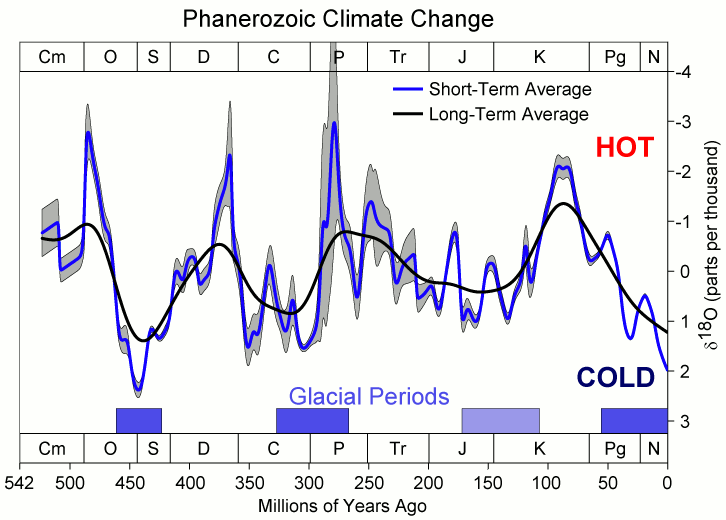
The website www.history.com, in his article Ice Age, he describes that “Scientists have recorded five significant ice ages throughout the Earth’s history: the Huronian (2.4-2.1 billion years ago), Cryogenian (850-635 million years ago), Andean-Saharan (460-430 mya), Karoo (360-260 mya) and Quaternary (2.6 mya-present)”.
What was the temperature during the ice age?
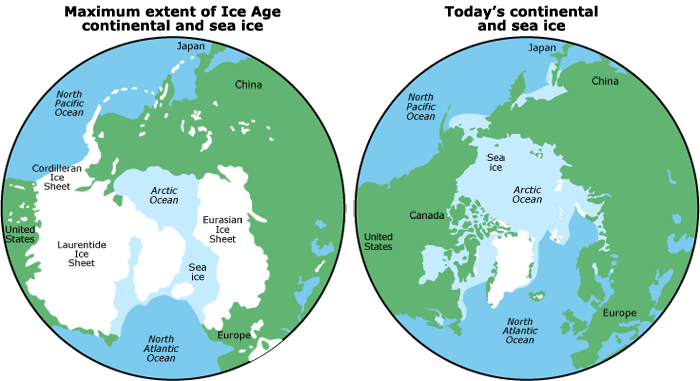
“A team of scientists has nailed down the temperature at the peak of the last ice age, a time known as the Last Glacial Maximum, to about 46 degrees Fahrenheit (ca. 8 °C)”, according to www.cdm.org
Source: https://www.cdm.org/
How long will it be until the next ice age?
The next ice age almost certainly will reach its peak in about 80,000 years, but debate persists about how soon it will begin, with the latest theory being that the human influence on the atmosphere may substantially delay the transition”, states The New York Times.
Will global warming stop the next ice age?
According to an article published by Reuters: “Global warming is likely to disrupt a natural cycle of ice ages and contribute to delaying the onset of the next big freeze until about 100,000 years from now”.
Source: wikipedia.org/wiki/Timeline_of_glaciation
And to the big question: Did man exist during this time?
“Yes, people just like us lived through the ice age. Since our species, Homo sapiens, emerged about 300,000 years ago in Africa, we have spread around the world.
During the ice age, some populations remained in Africa and did not experience the full effects of the cold. Others moved into other parts of the world, including the cold, glacial environments of Europe.
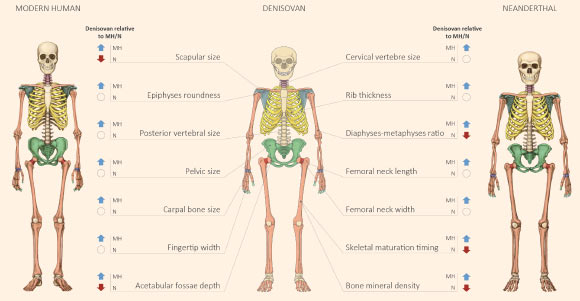
And they weren’t alone. At the beginning of the ice age, there were other species of hominins — a group that includes our immediate ancestors and our closest relatives — throughout Eurasia, like the Neanderthals in Europe and the mysterious in Asia. Both of these groups seem to have gone extinct before the end of the ice age.
There are lots of ideas about how our species survived the ice age when our hominin cousins did not. Some think that it has to do with how adaptable we are, and how we used our social and communication skills and tools. And it appears that humans didn’t hunker down during the ice age. Instead, they moved into new areas”, describes from space.com, in its article: How many glaciations has the Earth had and could humans live through one?
Source www.sci.news
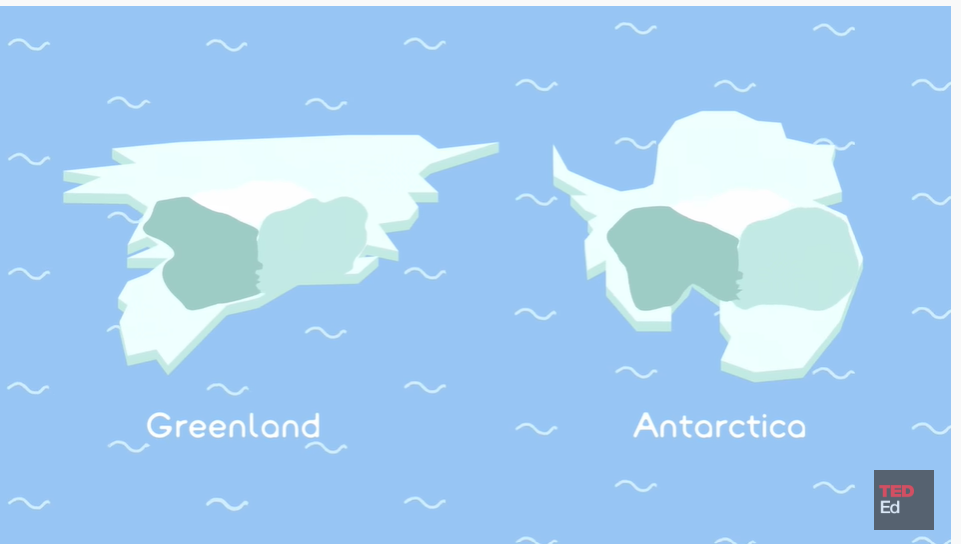
And the inevitable question:When will the next ice age happen? – Lorraine Lisiecki
In this explanatory video from TedEd, you will be able to graphically understand the process, taking a walk through the past, present, and future of our planet.
If you are interested in this topic, and want to learn much more, we recommend the following bibliography and articles:
Frozen Earth : The Once and Future Story of Ice Ages
After the Ice Age : The Return of Life to Glaciated North America
People and Culture in Ice Age Americas : New Dimensions in Paleoamerican Archaeology
Ice Age Extinction: Cause and Human Consequences
Discovering the Ice Ages : International Reception and Consequences for a Historical Understanding of Climate
 |
Author : Vanessa D”angelo |
SUCCESSFUL ONLINE LEARNING TIPS

Online education used to be geared toward working-class adults who wanted to grow in their chosen fields or develop their professions. They can work and learn while they are pursuing this type of study. Since the pandemic era, online learning has advanced to serve young people seeking excellent chances and a variety of job options. While some universities and institutions still only provide on-campus or in-person classes, others have created both types of courses to better serve their various types of students and reach a wider audience.
The facilitators and the interested students must both put in effort for the virtual classes to be successful. In order for the learners to effortlessly navigate the platforms made for that purpose, the facilitators must make sure that the online platforms are user-friendly, flexible, and operating at their maximum potential. They must also make sure that the sites are secure and upgraded as needed.
On the other hand, learners need a few online learning skills, such as the ones listed below:
– The capacity to acquire, retain, and regularly apply new knowledge and abilities to one’s current way of life.
– The capacity to consider newly acquired knowledge with an eye toward applying it in various contexts. The ability to learn, reflect, practice, and apply what has been learned should be present in the learner. This is how to ensure that the information and abilities are kept.
– The learners should be able to summarize what they have learned because virtual learning can occasionally be done by video, zoom, webinars, etc., and these are usually recorded. This means that in order to fully comprehend and be able to sum up what has been learned, the student may need to watch the video clip several times.
– The student should be able to actively participate by posing questions and adding to the discussion when the trainer and participants are communicating via zoom or another similar communication platform.
– Students should be able to participate in group conversations on a variety of subjects in order to gain insight into other participants’ perspectives and thereby increase their knowledge.
– Online students should be able to recognize the ideal pattern for virtual learning and request it.
– Online students should make an effort to balance their studies and personal lives because it is very easy to get caught up in their schedules and forget about other facets of life. For example, they should know when to take breaks, eat well, get some exercise, and get enough sleep to keep their bodies and minds healthy. To assimilate what has been learned, a healthy body and brain are required.
– Online students should make a schedule for when they will learn, what learning style is best at what time, which courses will take more time, and which day of the week they will attend each course. The student must be able to create a plan for their studies and follow it religiously.
– Television should be turned off, other websites that can be distracting should also be closed, and learning should be done in a quiet area. Online students should be able to avoid distractions during learning periods.
– Online learners should be able to utilize the variety of global resources at their disposal as well as the human resources, such as classmates, lecturers, etc. by seeking for help when needed, staying in constant contact with the instructor/lecturers, forming and being a part of study groups, etc.
– Online students should be able to download necessary data, store videos, and links that will make studying simpler.
– Online students should understand how to arrange their files on their devices so that they are simpler to find.
“At the end of the day, I think the more online educators there are, I think the better off the whole world is.” —Anant Agarwal
Sources
https://blog.edx.org/tips-for-successful-online-learning
OBESOPHOBIA
“A phobia is an anxiety disorder defined by a persistent and excessive fear of an object or situation. Phobias typically result in a rapid onset of fear and are usually present for more than six months. Those affected go to great lengths to avoid the situation or object, to a degree greater than the actual danger posed.”– Wikipedia
The Greek term for fat is “obeso.“
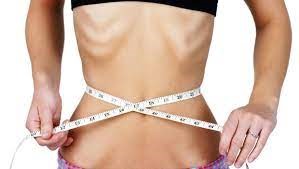
Obesophobia often referred to as pocrescophobia, is an extreme dread of putting on weight or getting obese. Although some men also experience this anxiety, young people and adolescent women tend to experience it more frequently. This phobia is one of the several sorts of anxiety disorders since it compels the patient to adopt bad habits that could be harmful to their health. Maintaining a healthy weight is beneficial, but it is not advisable to support behaviors that could be harmful to one’s health if they are motivated by a desire to watch one’s weight or prevent gaining weight.
What causes people to have this phobia?
People develop obesophobia for a variety of reasons, some of which may be a result of an underlying anxiety illness like fear of social rejection or low self-esteem.
A teenage girl may decide to adopt an unhealthy lifestyle in an effort to maintain the ideal physique required for modeling as shown on social media. Another young lady might be determined to look exactly like a celebrity whom she has chosen as her role model and will stop at nothing to get that look. Even though she is on the slender side, one of my children previously told me she wants to monitor her weight because she wants to be a dancer. She started watching what she ate, exercising excessively, and standing in front of the mirror often, which worried me. Until I learned that she truly had a role model that she wanted to look like, I assumed it was simply a teenage thing. I had to intervene and give her the proper information on that.
Some people fall victim to this trap (obesophobia) in an effort to be the ideal physical embodiment of the perfect person as defined by family, friends, and society, particularly in cultures where being overweight is viewed as an illness.
Because of the experiences they have heard that may have led them to believe that being overweight is not acceptable in society, the majority of people who have been bullied because of their weight in the past may also suffer the dread of gaining weight. Some people may have become motivated to avoid gaining weight after seeing how stigmatized overweight and obese people are.
When the subject of weight increase is brought up, an individual who suffers from obesitophobia feels highly uneasy and may exhibit symptoms like worry, tension, lightheadedness, and even panic attacks. Other signs include hating eating, participating in various weight-management programs, and dieting without seeing a dietitian. Other signs include regular fasting, extreme exercise, and overuse of laxatives or diuretics.
Despite not being a sickness, obesophobia is a psychological disorder that can lead to problems like the adoption of unhealthy behaviors to lose weight, such as the use of laxatives or vomiting, which is known as a purging disorder. Another result of obesophobia is an eating disorder known as anorexia nervosa, which is characterized by people eating minimal amounts of food frequently and excessively, making them appear thin and ill.
Although there is no official diagnosis for obesophobia, if you exhibit symptoms like a constant need to diet, guilt after eating certain foods, obsession with weight gain, avoiding social situations because of a fear of food, having a negative self-image, or intentional vomiting, you may need to see a doctor as further reclining could be fatal.
Sources
https://www.healthline.com/health/obesophobia
https://www.verywellhealth.com/fear-of-gaining-weight-5211985
THE DIFFERENCES BETWEEN A JOB AND A CAREER
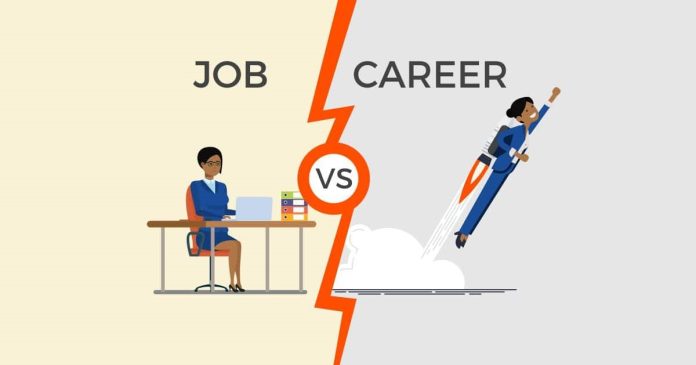
We frequently hear questions like, “What Career Path have you chosen for yourself?” and “Do you find fulfillment in your current job?” What are the distinctions between a Job and a Career?
What is a job?
A job, according to Wikipedia, is “a regular activity performed in exchange for payment, or a task or project that may or may not be compensated.” Another definition of a job is a paid position or a task or pieces of work to be completed.
On most occasions, a job may begin with submitting an application to fill a vacant position of interest in an organization, attending an interview so your claims in your resume can be evaluated, performing a physical checkup, taking a written test, training, and if hired, being placed on probation before finally getting to properly settle down to doing the job.
It also entails signing contractual documents that may include the terms and conditions as well as the code of ethics of the concerned organization, stating that if hired, you will abide by the rules of the organization and that guiding your job function. You may be required to dress, act, and behave in ways you do not like at times, but you may have accepted that as part of the price to pay in order to be paid eventually. Depending on the agreement, you may be paid weekly, monthly, or quarterly for your work.
What is a Career?
When used as a synonym, career can refer to occupations such as Doctor, Accountant, Engineer, Lawyer, Artist, Mechanic, Teacher, and so on, but it primarily refers to an occupation, profession, vocation, or trade in which someone is engaged.
A person’s career may also refer to a person’s path through a series of jobs over a long period of time, which may even include internship or volunteering. Choosing a career path always involves a person’s choice, and it may entail lengthy periods of education in the relevant field, as well as training and advancement.
The following are some of the distinctions between a job and a career:
– While a job is simply a way to earn a living for a short period of time, a career is a lifelong pursuit that leads to specialization.
– While it is possible to gain experience in addition to monetary earnings on the job, professional growth, recognition, and opportunity may not be included. Career, on the other hand, provides you with numerous opportunities for professional development as well as other benefits such as the ability to become a mentor, specialist, and leader.
– While a job may not be as difficult as a career, it may require a few months of training and a probation period before it can be started. A career, on the other hand, requires many years of training and resources.
A career cannot be said to be more important than a job, nor can a job be more important than a career, because it is possible to work on a job while developing a career, and you may even have a career path in mind but would like to work on some jobs to save up enough resources to pursue your desired career.
Furthermore, working on a specific project for an extended period of time usually facilitates the learning process on the career path. For example, if you start as a secretary and continue to work as a secretary in the same or a different organization, you will have gained a lot of experience on the job over time, allowing you to advance in this field to the point where you may be promoted to a trainer or supervisor to other secretaries, allowing you to build a career for yourself. You could then start your own consulting firm where secretaries are trained to work for various organizations.
Another example is a situation in which a person advances through the organization at various levels as a result of being promoted from one capacity to a higher level of responsibility over time. An excellent example is a cleaner in a bank who performs admirably during his contract and is hired as a cashier, eventually rising through the ranks to become head Cashier, head Customer Service, operations manager, and Branch Manager. This cleaner may have carved out a career as a banker.
Sources
https://incafrica.com/library/joshua-spodek-what-is-a-job
https://www.thebalancecareers.com/what-is-a-career-525497
https://www.jobberman.com/discover/career-vs-job
“JACK OF ALL TRADES”

What comes to mind when you hear the phrase “jack of all trades”? Is it a compliment or an insult to you? “A jack of all trades is a master of none, but oftentimes better than a master of one,” the original and complete phrase says. When used in this manner, we can see that it is a compliment rather than an insult, as it is commonly used today. This is because it refers to someone who knows a little bit about a lot of things and can put that knowledge to good use.
This reminds me of one of my teenage daughters, who appears to be unsure about what to study at university. This is because she is very skilled and multitalented in many areas, including cooking, baking, drawing, dancing, acting, singing, knitting, and debates, to name a few. While I see this as a blessing, she sees it as a source of confusion.
Shakespeare was originally described as a jack of all trades because, as a playwright, he could be found hanging around the theatre and participating in all aspects of theatre life, including stage work, costumes, line rehearsal, and directing. He could stand in for anyone and play any role, which is why he was known as a Jack of all trades, master of none, but frequently better than a master of one.
Being a jack of all trades is extremely beneficial, especially for an entrepreneur who is starting a new business venture from scratch.
An entrepreneur who has worked in various capacities at various organizations and has some experience as a cleaner, a salesperson, a marketer, an account clerk, and possibly worked in the human resource department of one of the organizations will undoubtedly fare better than someone who focuses on only one occupation and wishes to become an entrepreneur. Whereas the latter may require a lot of resources to get started because he needs to hire professionals in various fields, from sales people to supervisors who will assist in the daily running of the business from the ground up, the former is able to take off with little resources and little assistance, maybe a few people while he acts as the supervisor and the owner of the business, he is able to wear numerous caps and fill into different positions, he is a jack of all trades.
A jack of all trades is a valuable employee to any organization; he is that adaptable, useful, skilled, and inquisitive employee who is willing to help in any capacity. He appears to fit into any position, albeit to a limited capacity or for a limited time. He is the type who can think outside the box.
A jack of all trades does not need to be educated to be resourceful to himself and the organization; he can cope in any climate, and he has learned a lot from being curious and assisting in areas outside of his work requirements.
Cliff Gibson, the founder of New Key Homes, is an example of someone who had no formal education but became extremely resourceful. He admits to having worked in garages, warehouses, finance, purchasing, a property development company, data architecture, and a variety of other fields that may or may not be related. Armed with his various experiences, he was able to build his own house and now runs a growing property development company that he built from the ground up. Like Cliff Gibson, successful public relations consultant Catherine Bolado stated, “You have to keep an eye on what is going on in other areas to provide the best advice for clients. As a former journalist, charity communications specialist, and now public relations professional, I can advise on everything from fundraising to digital strategy.” Catherine Bolado was able to accomplish these great feats and carve out a career for herself as a consultant simply by being a jack of all trades.
One of the characteristics that distinguishes the “Jack of all trades” character is curiosity. He is very curious, eager to learn, and eager to help, and he believes that no knowledge is wasted.
The Jack of all trades personalities excel at learning, they are not afraid of change in any situation, they can think creatively, and they are proactive.
This is the character that Atlantic International University (AIU) hopes to foster through her Open Curriculum style of learning, which allows students to access a vast array of resources from the global environment. These resources help each student learn on their chosen fields as well as other fields of study, making each student a “University of One” and assisting them in adapting to any change they may encounter. Each student is considered unique and unrepeatable, and they are taught to be creative thinkers, resourceful, and valuable members of their communities and wherever they find themselves in the world.
Sources
https://www.aiu.edu/GeneralInformation.html
 |
Author : Amiakhor Beatrice Ejaeta |
GUEST POST: Memorable Feedback: Lessons from Cognitive Psychology in Selective Attention

1. Moss, C. M., & Brookhart, S. M. (2019). Advancing formative assessment in every classroom : a guide for instructional leaders. ASCD.
2. Willingham, D. T. (2008). Ask the Cognitive Scientist: What Will Improve a Student’s Memory? by Daniel T. Willingham; American Educator, Winter 2008-09, American Federation of Teachers. https://www.aft.org/sites/default/files/periodicals/willingham_0.pdf
3. Atkinson, R. C., & Shiffrin, R. M. (1968). Chapter: Human memory: A proposed system and its control processes. In Spence, K. W., & Spence, J. T. The psychology of learning and motivation (Volume 2). New York: Academic Press. pp. 89–195.
4. Craik, F. I. M., & Lockhart, R. S. (1972). Levels of processing: A framework for memory research. Journal of Verbal Learning and Verbal Behavior, 11(6), 671–684. https://doi.org/10.1016/s0022-5371(72)80001-x
5. Sweller, J. (1988). Cognitive Load During Problem Solving: Effects on Learning. Cognitive Science. 12 (2): 257–285.
6. Stevens, C., & Bavelier, D. (2012). The role of selective attention on academic foundations: A cognitive neuroscience perspective. Developmental Cognitive Neuroscience, 2(Suppl 1), S30–S48. https://doi.org/10.1016/j.dcn.2011.11.001
7. Popham, W. J. (2011). Transformative assessment in action : an inside look at applying the process. ASCD.
8. Wiliam, D., & Leahy, S. (2015). Embedding formative assessment: practical techniques for K-12 classrooms. Learning Sciences International.
9. Shute, V. J. (2008). Focus on Formative Feedback. Review of Educational Research, 78(1), 153–189. https://doi.org/10.3102/0034654307313795
10. Kuepper-Tetzel C.E., Gardner P.L. (2021). Effects of Temporary Mark Withholding on Academic Performance. Psychology Learning & Teaching, 20(3):405-419. doi:10.1177/1475725721999958
11. Brookhart, S. M. (2017). How to give effective feedback to your students. ASCD.
