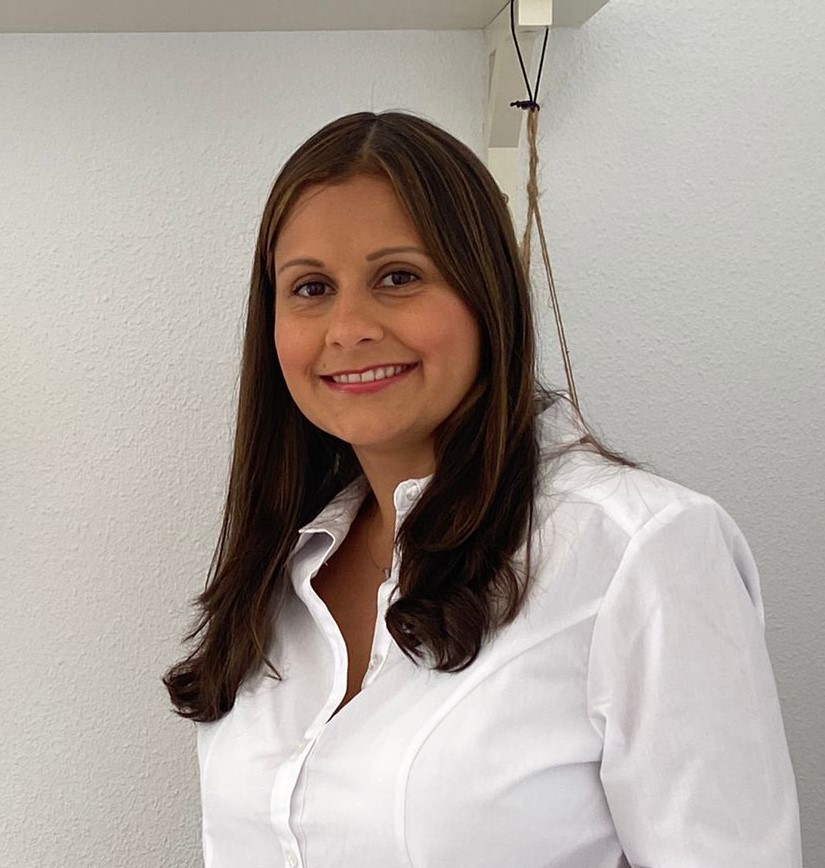
Becky Hamm lives and works in Washington D.C. while studying public health online with the University of Michigan School of Public Health. The full-time software engineer is currently earning her Master of Public Health degree in Population and Health Sciences. Recently, Becky answered prospective students’ questions about earning her MPH online and shared her own perspective as a first year master’s student in the program.
First, she shared why she chose the online MPH program with Michigan Public Health. The fact that she works full-time was a major factor, saying “I couldn’t afford to quit [my job] to go get my master’s degree so, I needed a program geared toward full-time employment.” Hand-in-hand with continuing to work is the need for a flexible schedule. Becky says the MPH program allows [her] to “do school and have a life.”
For Becky, a weekday’s workload might include one live class session on Zoom and fitting in studying before or after work for a couple of hours. “On weekends I dedicate one morning or afternoon to school work. Most of the time we only take one class at a time, so it’s very manageable!”
As an engineer, Becky came into the program with very little public health experience. Having a curriculum designed to provide broad training and instruction in public health gave her confidence, knowing that she would be able to guide her own studies rather than be stifled by required courses. She wanted to “learn about public health disciplines broadly and then be able to choose areas that piqued [her] interests.”
Becky’s choice to attend was also influenced by the support she knew she’d get, noting that “the faculty are incredible! All of my professors have been attentive, helpful, and want to see us succeed.”
She recently wrapped up the elective series “Analyzing Health Data” and was glad to expand her skills in working with data. “I love building things from data. I know with this master’s, I can analyze and build things that improve the public’s overall health and quality of life.” She wishes she had the time to take even more classes, saying “I thought Social Determinants of Health was eye-opening. I also enjoyed Applied Regression…I could really start putting what I’d learned to good use.”
The Population and Health Sciences cohort includes students from a variety of backgrounds, and for Becky, that is a big benefit to her learning. For her, one of the best parts of this program is “getting to learn about my classmates’ experiences.” Even as a student who has been away from the classroom for some time, she says the diversity of the cohort means she can fit right in. “My cohort spans from folks just out of undergrad to those 20+ years my senior. It’s never too late to start a new career, I’m proof of that.”
We’ve just lived through a working from home revolution and it’s not over yet! The pandemic has seen millions of employees around the world relocate from their traditional workspaces to the comfort of their own homes. Many of them have now got a taste for the new situation. No commute and a better work life balance, what’s not to like?
The next phase of the working from home revolution has already started, as individuals are talking the entrepreneurial decision to start their own business and stay working at home, rather than return to the office.
To help empower these go-getters, we’ve put together a list of 7 great careers that allow you to both be the boss and work from home!
As a Website Developer you can either earn from home or become a digital nomad! With e-Commerce continuing to grow, you’ll have no shortage of clients as companies in every sector devote more and more energy to their online business. Our Diploma in Website Development covers all of the vital coding languages you need to build quality websites for satisfied customers.
Clever and persuasive copy is always in short supply so if you’ve got a way with words then freelance copywriting is a great career opportunity. With the growth of online advertising, companies now need bespoke copy for an ever-growing range of different platforms. Our incredibly popular course on How to Write Persuasive Content will teach you how to use words to grab a reader’s attention, describe products attractively, and convert their interest into sales.
Every company needs an eye-catching website to attract and grow business. If you’ve got the know-how when it comes to website design then you’ll be in constant demand. HTML Web Design is the most important skill for a Website Designer to master as it’s the most widely used programming language for creating websites. This invaluable course also covers the basics of both CSS and JavaScript.
The beauty industry is traditionally one of the few recession-proof sectors so this a great choice for a career you can do from home. If you’ve got a passion for fashion then you could make great money from doing what you love. Our course in Manicure Treatment is a great place to start your professional training as a beautician.
Childcare is a vocation and if you’ve got it then caring for children is an incredibly rewarding career. Your home will also get a boost of youthful energy if you turn it into a crèche! This course on Childcare and EYFS is an absolute must for anyone going into the childcare business as it covers crucial subjects like safety and wellbeing.
If you have the inside track on how to successfully manage social media then you’re hot property in the labour market. Businesses will be queueing to hire you to oversee their social media presence. Our Diploma in Social Media Strategy covers all of the major platforms and provides detailed information on how to successfully launch and monitor your social media campaigns.
Working from home and outdoors? This career gives you the best of both worlds. If you love working outside and have a creative side that needs expressing, then landscaping is the perfect career for you. The Diploma in Garden Design and Maintenance will teach you everything you need to know about working with the wide variety of materials that a successful landscape architect needs to master.
Blogging is not a “get rich quick” kind of thing. Yes, there are bloggers out there who make a killing through their blog, but do you think it happened for them overnight? No! In order to become a successful blogger, it takes patience, practice, hard work, dedication, and a lot of trial and error. However, there are some steps you can take to help yourself out. In this post, we will show you how you can make money blogging.
Put First Things First
When it comes to making money through your blog, it all starts with content. Without amazing content, you won’t attract much traffic and without much traffic, you won’t be able to make much money. So first and foremost, before you start implementing any type of monetizing strategy, be sure your site is chock full of great content.
Once you’ve established a great content-producing site and things are starting to take shape, THEN is time to start adding a monetization strategy to the mix.
Create Multiple Streams of Income
You don’t want to be putting all of your eggs in one basket. Having multiple streams of income is key to successful monetization and maximizing your earning potential.
Listed below are four main ways to make money through your blog. Although only four ideas are listed, don’t be afraid to try out others you may encounter! Trial and error is key to finding what generates the best earning potential for you.
#1 Ad Networks
Joining an ad network is by far the easiest way to start generating income from your site. The more your blog traffic increases, the more you can make through ad networks. Watching your ad revenue grow as your blog traffic grows is a great motivator to continually produce amazing content. It’s a win-win situation all around. Three ad networks I highly recommend are:
Google Adsense
If you are a new blogger that hasn’t gained a huge following yet, Google Adsense is a great place to start. Google Adsense is open to anyone, regardless of monthly pageviews, and it’s free to sign up. After signing up, they will provide you with ad codes that you can easily place in HTML gadgets/widgets on your blog. Before applying, be sure to review this post: 10 Things To Do Before Adding Google Adsense
Monumetric
Once you’ve reached a minimum of 10,000 monthly pageviews, then you can sign up for the Propel program at Monumetric. Joining an ad network like Monumetric is great because they take care of adding all of the ads to your site for you. You’ll start generating an income the second the ads are placed on your site. With Propel, you also receive over 70 courses that will teach you how to increase your blog traffic. They also provide you with a custom reporting dashboard that details all of your stats and earnings. They have different programs that you can upgrade to as your traffic grows: Ascend (80K-500K monthly pageviews), Stratos (500K-10MM monthly pageviews), & Apollo (10MM+ monthly pageviews).
AdThrive
AdThrive is another amazing ad network but it requires a minimum of 100,000 monthly pageviews to join. Like Monumetric, they optimize and manage all of your ads, so you don’t have to worry about a thing. AdThrive is famous for producing amazing results. Within just a few days of having ads placed on your site, you’ll most likely see a 100-300% increase in income per pageview. They help you make the very most of each page view so you can earn great money as you focus on creating great content for your blog.
#2 Affiliate Links
Getting involved in affiliate programs is a great way to monetize your blog. You can find affiliate programs to join everywhere (even here at Designer Blogs).
If there is a product or company within your niche that you use often and love, check into whether or not they have an affiliate program. Most likely they do! Once you are signed up as an affiliate, you will be given an affiliate link, which you can then use within the content of your site to promote the products you recommend. When one of your readers clicks through your affiliate link and purchases that product, you earn a commission! The more you promote, the more you can earn. However, it’s important to remember that your readers should always come first. You should only promote things that you truly feel will benefit them and that you absolutely love or use yourself. Your readers will be able to tell whether you are promoting something just to make a buck or two, or because you really believe in and love the product. Some great affiliate programs are:
Bluehost
Bluehost has one of the best affiliate programs out there. You can earn a $95 commission each time someone signs up for web hosting through your affiliate link. Bluehost is constantly holding affiliate competitions where you can earn prizes or even an increased commission rate. The best way to promote Bluehost is by creating a tutorial on your blog (like ours here) that walks people through how to start a WordPress blog using Bluehost. Include your affiliate link throughout that post and then promote that post like crazy and you’ll start earning big bucks in no time.
Amazon
Amazonsells EVERYTHING, so why not become an Amazon affiliate and start earning a 10% commission on products you promote? You can also add Amazon banners to your site to earn additional revenue.
VigLink
VigLink automatically adds affiliate links to products mentioned in your content so you don’t have to. It does all of the affiliate linking, so it’s an effortless way to earn additional revenue.
ShopStyle
ShopStyle is a great affiliate program for fashion bloggers who want an easy way for their readers to shop outfits from their posts.
As your blog continues to grow, you’ll start getting contacted by brands that want you to blog about their products or that want to pay to advertise on your site. It’s a great idea to have a media kit on hand to send to brands when they reach out to you. If you’d like our help custom design one for you, contact us! Media kits highlight your brand and should excite brands to work with you.
Good things to include in a media kit:
Bio & photo
Blog stats from Google Analytics
Social media stats
Sponsored post pricing and/or sidebar ad pricing
Brands you’ve worked with in the past
Photos that showcase your brand and style
Once you’ve sent a brand your media kit and they’ve selected the type of sponsored post they’d like you to do, then you can send them over an invoice (Paypal works great for this). Be enthusiastic and professional when responding to brands. It’s also a good idea to include an example of what a sponsored post by you might look like to get the brands you work with excited about the opportunity to work with you.
#4 Sell Products & Services
Surely you are a talented individual with something that can be offered to the world. What do you have to offer that could be sold?
Here are a few ideas:
Create digital products (e.g. e-books, downloads, printables, e-courses, etc.)
Sell physical products that you can ship out in the mail (e.g. handmade items, posters, t-shirts, etc.)
Offer coaching & consulting services
Teach a class or create an online webinar
Speak at a conference
Sell stuff on Etsy
Host a conference or blogging event
Be creative and don’t be afraid to try new things. It’s easy to keep doing the same old things, but if you expand yourself beyond what you are comfortable with, you may find you have skills you never realized you had before. If there is something you’ve always wanted to learn, step out of your comfort zone and take a class to learn it. It may just end up being the missing piece to your blogging success.
In Conclusion
Building a profitable blog takes time and a lot of hard work, but don’t give up! It may take you a few years to start earning a steady income from your blog, but if you keep working at it, you’ll get there!
Becoming a successful blogger isn’t going to magically happen overnight. It’s an ongoing, day-by-day process of persistent work and dedication. Keep dreaming! Keep challenging yourself! Don’t be afraid of failure! It’s through failure that you’ll eventually find your sweet spot.
Be confident in who you are and what you have to offer the world. Value your time, knowledge, and skills. With persistent effort, you’ll soon see great results!
You probably have a slew of opinions on the books, movies, video games and music you love and loathe. With some patience and attention, you can turn these opinions into a piece of written criticism: a review.
Advice from experts might help. To support students who are interested in writing their own reviews, whether for our annual review contest or just for fun, we asked Times critics who work in four different genres to share their advice.
In the four short videos below, you’ll learn more about how to explain your opinion, persuade a reader, consider a work’s context and examine the artist’s intent. For each video, we provide reflection questions to help students apply the advice to their own writing.
Explain your opinion.
A.O. Scott, a chief film critic at The Times, told us that a review should share the writer’s opinion and explain why he or she feels that way. An opinion alone is not enough, he said: “The only way you get anyone else interested in it is if you can explain it.”
Some questions to consider after watching the video:
Think of a work of film, music, art or writing that you reacted to strongly. What is your opinion of that work?
Why do you have that opinion? What evidence could you use to support your opinion?
What other information about the work might be useful to someone else who wants to learn more about it? How could you help an interested reader?
Persuade the reader.
Maya Phillips, a critic at large who reviews theater, poetry and other works of art and culture, stresses that a review is simply a piece of persuasive writing. She urges students who are new to review writing to use their visceral responses to drive their arguments.
Some questions to consider after watching the video:
Have you ever written a piece of persuasive writing, like an argumentative essay or newspaper column? How did you go about convincing the reader of your opinion?
What does your unique voice sound like? What review topics could be a good match for your preferred language and tone?
Consider a work’s context.
Jon Pareles, the chief pop music critic at The New York Times, told us that when it comes to today’s pop stars, “their stardom isn’t only in their music.” He encourages students to consider not only the work they are reviewing, but how that work fits into the broader cultural landscape.
Some questions to consider after watching the video:
Think about one work that you would be interested in reviewing (in any of the categories that The Times reviews). What would it mean to do a “close read” of this piece? What small details jump out at you?
Who created the work you chose? What do you know about them? How does their public presentation factor into your opinion of their work?
Try to understand the artist’s intent.
Jennifer Szalai, a nonfiction book critic at The Times, told us that reviewers have a responsibility to be fair to the creators of the work they review. “Fair doesn’t mean boring,” she said, “fair just means that you are trying, as much as possible, to understand what the writer of the book was trying to do.”
Some questions to consider after watching the video:
What do you think was the goal of the artist who created the work you chose in the last section? How well do you think they accomplished that goal?
Read a New York Times review in any section that interests you. (Arts, Books, Style and Food are good places to start.) Do you think the review you read was fair to the artist? Why or why not?
2. without any attempt at concealment; completely obvious
_________
The word conspicuous has appeared in 166 articles on NYTimes.com in the past year, including on Aug. 12 in “The Wisdom of the Crowd” by Rory Smith:
Conspicuous consumption runs through soccer’s billion-dollar transfer market. Club executives hold meetings in deluxe suites in the finest hotels in London, Monte Carlo and Milan: the Connaught, the Méridien, the Palazzo Parigi. There, they haggle with agents in tailored suits over eye-watering transfer fees, lavish salaries and towering commissions.
The players being traded sink into the plush leather seats of private jets to travel between clubs, before signing contracts worth tens of millions of dollars in sumptuous, state-of-the-art training facilities.
Daily Word Challenge
Can you correctly use the word conspicuous in a sentence?
Based on the definition and example provided, write a sentence using today’s Word of the Day and share it as a comment on this article. It is most important that your sentence makes sense and demonstrates that you understand the word’s definition, but we also encourage you to be creative and have fun.
Then, read some of the other sentences students have submitted and use the “Recommend” button to vote for two original sentences that stand out to you.
If you want a better idea of how conspicuous can be used in a sentence, read these usage examples on Vocabulary.com.
Students ages 13 and older in the United States and the United Kingdom, and 16 and older elsewhere, can comment. All comments are moderated by the Learning Network staff.
Many museums are trying to reach broader audiences while also looking for ways to diversify, and remove cultural biases from, their exhibits. Some museums have chosen to give outside voices the opportunity to speak within museum walls.
In this lesson, you will learn about several museums across the country that are trying new approaches to curation, including inviting everyday people to write wall labels about works of art. Then, you will write a response to a piece of artwork, reflecting on your personal experiences.
Warm-Up
Part I. Reflect on your experience at art museums.
In your journal, or in a small group discussion, discuss how you experience art:
Do you like going to art museums?
When you go to a museum, how do you engage with the art? Do you prefer viewing it with an educator or a tour guide? Do you look at the piece and then read the label — or vice versa? Do you skip the labels altogether?
If you do read the labels, do you find them helpful? Why or why not?
Part II. Look closely at a work of art.
Look at the painting below, stripped of its caption, and respond to the questions:
Now, read the label that accompanies this artwork at the New-York Historical Society, and respond to the questions.
1. Why did Wendy Nālani E. Ikemoto, a curator at the New-York Historical Society, speak to a Central Park carriage driver when designing a new exhibit? What does this illustrate about changes in the world of art curation?
2. What are some of the conversations that institutions like the New-York Historical Society are having about their exhibits?
3. How did the Middlebury College Museum of Art try to diversify perspectives featured in its galleries? Would you be interested in participating in a similar project?
4. What did the exit surveys from the Danny Lyon photography show at the Delaware Art Museum reveal? What is your reaction to that data?
5. Do you agree with Swarupa Anila, an executive at the Royal Ontario Museum in Toronto, who said that museums have historically been “exclusive” places? Why or why not? Use examples from your own life and experiences in museums to explain your answer.
6. The featured article shares some “existential questions” that curators are facing related to labels. Choose one of the questions and respond to it. You can think of an artwork you’ve seen, or think more generally about labels in art museums:
Who is equipped to write authoritatively about this work? Who is this label being written for? And how do we give over this platform to people who haven’t previously had it?
7. Why does Ikemoto think it is important to invite Indigenous people to comment on Euro-American art?
8. The article ends with a quote from Willow Lawson, a writer, who was responding to Carlos Nadal’s painting “Columbus Circle, New York City.” How is her commentary different from “traditional” wall text. What is your reaction to what she said?
Going Further
Try your hand at interpreting a piece of artwork. You can choose a painting or a drawing from a local art museum or a gallery, or search the online database of one of the museums mentioned in the featured article:
Look closely at the image you selected and consider the following questions:
What is the first thing your eye is drawn to? What do you notice next? What do you think is going on in this artwork?
What feelings or sensations do you notice in your body as you look at the piece of art?
Does this artwork remind you of anything else you’ve seen or experienced?
Is there a story or narrative that the artwork evokes?
What more would you like to know about the artist or the piece of art?
Then, write a label, with a personal artistic response, for the artwork. You can include some information from the digital collection website on your label, and then also include your own interpretation of the piece of art.
You can find inspiration in the labels from the featured article or take a different approach. For example, maybe you would like to respond by creating your own piece of artwork, a short poem or something else.
Once you’ve made your label, you can share the art and the accompanying label with your classmates by doing a gallery walk. After taking in the creations of your classmates, come back together as a group and share what you appreciated and noticed about how you each interpreted the artwork.
Want more Lessons of the Day? You can find them all here.
1. After looking closely at the image above (or at the full-size image), think about these three questions:
2. Next, join the conversation by clicking on the comment button and posting in the box that opens on the right. (Students 13 and older are invited to comment, although teachers of younger students are welcome to post what their students have to say.)
3. After you have posted, try reading back to see what others have said, then respond to someone else by posting another comment. Use the “Reply” button or the @ symbol to address that student directly.
Each Monday, our collaborator, Visual Thinking Strategies, will facilitate a discussion from 9 a.m. to 2 p.m. Eastern time by paraphrasing comments and linking to responses to help students’ understanding go deeper. You might use their responses as models for your own.
4. On Thursday afternoons, we will reveal at the bottom of this post more information about the photo. How does reading the caption and learning its back story help you see the image differently?
The Reveal
We’ll post more information here on Thursday afternoon. Stay tuned!
Students 13 and older in the United States and the Britain, and 16 and older elsewhere, are invited to comment. All comments are moderated by the Learning Network staff, but please keep in mind that once your comment is accepted, it will be made public.
Traveling the world is a dream for many of us. Seeing new places and meeting new people can be life-changing. But, there are very few career paths that allow for the flexibility you’d need to travel around the world while also making a living.
Luckily, there are many roles for programmers that can be done from anywhere in the world, giving you the flexibility to travel and experience different cultures while keeping a steady income. If this lifestyle appeals to you, keep reading to learn about how you can travel the world as a programmer or developer.
Types of work that allow you to travel
What programming and coding jobs work best for traveling? They typically fall into two categories.
Remote work
Remote work is when you work for a company from home or some other location that isn’t in your employer’s office. You may be expected to keep certain hours and work a specific number of hours per week, but your employer allows you to do that work from any location.
As a remote worker, you can expect to have a fixed salary and benefits. While you have the flexibility to work outside the office, you may still be required to make in-person appearances, which could make working abroad full-time challenging.
If traveling abroad doesn’t seem realistic, you may be able to travel domestically or take extended working vacations abroad. But, keep in mind that if your employer allows you to work abroad, you may need to work odd hours to line up with your employer’s time zone.
Freelance work
Freelance work is when you work for yourself , rather than working for a company, and you earn a wage per-project or per-task. As a freelancer, you have a contract with a company or individual to work on a project or task, and once you’ve completed the work, the contract ends.
Since you’re not an employee, you have more control over where and when you work. You can also take on more work when you want to and less when you’re focused on other activities like hiking or surfing.
The upside to freelance work is the flexibility. You control the amount of work you take on and coordinate with your clients about due dates. The downside is the unpredictability. Work may be erratic, or you may not have enough work when you need it.
You also don’t get benefits from your employer, so you’ll be responsible for finding health insurance, saving for retirement, and managing your taxes as a self-employed individual. You may also need to work odd hours to field client calls and meet deadlines depending on which time zone you’re in compared to your clients.
Challenges of traveling while working
Traveling while working can be amazing. You can roll out of bed and hike, surf, ski, experience local culture, , and meet new people in places many people can only dream of visiting. It does have its challenges, though. Here are some things to keep in mind:
Taxes
If you’re a U.S. citizen working abroad, you still have to file a U.S. tax return. Still, there are tax exclusions you may qualify for. The IRS offers those exclusions because you may owe foreign taxes for the money you earn in other countries. Consider working with an accountant who’s knowledgeable about taxes while living and working abroad. If you’re traveling domestically, state taxes can be similarly complicated.
Internet
Many countries have reliable internet, but it may vary from rental to rental. If possible, ask ahead of time what the internet speed is where you’re planning to stay, and always have a backup plan, like a nearby WiFi cafe or co-working space.
Focus
It can be challenging to keep a consistent schedule when you’re traveling. You may also find yourself distracted if you’re staying in places that are tourist-centered, like hostels. Instead, look for hotels and co-working spaces that can offer you peace and quiet when you need it.
Work permits and visas
Many countries have tourist visas that last for three months, which means you’ll need to move every few months. If you hope to stay longer, contact the U.S. Embassy ahead of time to find out the requirements and costs involved. This is another area that requires some planning.
Cybersecurity
As a digital nomad, you’ll be working on unsecured networks. There’s also a chance your laptop will be stolen at some point. It’s critical to have two-factor authentication on everything you can, full-disk encryption, strong passwords, and a VPN to minimize security risks.
Getting started as a digital nomad
Traveling the world while working can be life-changing. The first step to living the digital nomad lifestyle is to establish yourself at home. You may need some experience under your belt before you can find a fully remote position or launch your freelance developer career.
If you decide to go freelance, you’ll need to establish clients before you start traveling. As you gain experience, be sure to update and improve your portfolio. It should highlight your best and most recent work.
Quick tips to think about
It’s vital to build an emergency fund before traveling. You can consider saving enough money to pay for another laptop if it’s lost, damaged, or stolen. You’ll also want enough money on hand to travel back to a safe harbor, like your home, a family member’s home, or the home of a trusted friend.
There may be times where you’re sick or between jobs and need funds to be able to rest and recover. Having three to six months of living expenses on hand is a good baseline for most people, and that goes for digital nomads as well.
Where to keep your funds is also worth considering. Many banks charge a fee when you use another bank’s ATM, and the ATM you’re withdrawing from may also charge fees.
Consider choosing a bank that reimburses ATM fees and a credit card that doesn’t charge foreign transaction fees. Even better, find a credit card that offers travel perks as well, like bonus points for travel purchases or access to airport lounges.
Insurance
Most domestic health insurance plans are little to no help if you become ill overseas (check your insurance plan to confirm). Depending on where you travel, local health care may be relatively affordable compared to the U.S. But, it can still add up, so it’s best to have travel insurance that includes travel medical coverage.
You can also purchase travel medical coverage on its own. Travel health insurance plans vary significantly, so look for one that meets your needs. For example, if you plan to travel to one destination for a few months, a short-term plan will work. And, if you’re planning to destination hop for a year or more, look for a long-term travel health insurance plan.
Skills
Depending on your experience, you may want to consider brushing up on or learning new desirable skills. Since you’ll be competing with other programmers and developers from all over, the competition could be really steep. Adding new skills and developing your current skill set can give you what you need to stand out from the crowd when you’re applying for remote jobs or bidding on freelance work.
Once you have work lined up and funds saved, the next step is deciding where to travel. Again, consider factors like the cost of living and which time zone you’ll be working in. A place with a lower cost of living allows your funds to stretch significantly further while having the experience of a lifetime.
Also, consider the community available, especially if you’re traveling alone. Look for ex-pat meetups and meetups related to your developer community. For example, if you’re a Python developer, look for Python meetups. Not only will you find coding support, but you can also make connections and possibly find new work opportunities.
Even though it requires some extra prep and planning, traveling the world as a programmer can change your life. To start building your skills and preparing for your future career, check out our web development Career Paths for Full-Stack Engineers, Front-End Engineers, and Back-End Engineers.
You can only fill your head with so much coding theory and knowledge from courses and books before you need to put those skills to the test. If you’re a PHP developer, one way to practice your skills is by building a website or web application. But, there’s a much simpler and less time-consuming way to practice PHP coding.
Code challenges are bite-sized development problems that you can solve with code. By solving code challenges, you’ll build on your existing skills and learn new ones that’ll help you efficiently solve more complex projects. And, with over 75% of websites using PHP today, adding this in-demand skill to your skill set is a no-brainer.
In this article, we’ll give you 10 beginner-level PHP code challenges that are a great start for practicing your PHP skills. While these challenges are suitable for beginners, you may want to brush up on your PHP knowledge before getting started. Check out Learn PHP for a quick refresher, then move on to the challenges below.
1. Create a hello world page
For this challenge, create a PHP page with standard HTML, including head, title, and body tags. Since one feature of PHP is the ability to embed it in HTML, this will give you some practice doing that. Inside the body tag, create an H1 tag that contains a PHP section that prints out “Hello World.”
2. Creating variables
In this challenge, make another PHP page with standard HTML. This time, you’ll want to print “Mary had a little lamb” in the HTML element of your choice. But first you should create a variable to hold “Mary” and a variable to hold “lamb” and use those variables to create the string you print out.
3. Modifying data types
Here, you’ll create one variable and then assign it different values. Then, you’ll print those values to the browser using an echo statement. This statement can only include the words “The value is a”. Print each statement on a new line using line breaks. Your result should look like this:
The value is a string. The value is a double. The value is a boolean. The value is a integer. The value is a NULL.
4. Using if, else, and elseif
For this challenge, write a script that gets the current month and then prints out the season using if, else, and elseif. You don’t have to worry about the exact date of the season switch. Count June, July, and August as summer, and September, October, and November as fall. Count December, January, and February as winter, and March, April, and May as spring.
5. Create a multiplication table using nested for loops
For this challenge, you’ll print a multiplication table to the browser for all numbers up to and including 12. To do this, use two for loops, one nested inside of the other. Make sure you use table, td, and tr HTML tags to create a valid HTML table.
6. Responding to a PHP form
You’ll create two PHP files in this challenge. The first file will contain a form with one form field for a user to enter their name and a button to submit the form. This form should use the POST method and post the results of the form to the second PHP file.
The second file should process the form data and print a greeting that looks like this, if the user entered “Bob” as the name: “Hi, your name is Bob”.
7. Looping an array
In this challenge, first, create an array that contains the following city names:
Tokyo, Mexico City, New York City, Mumbai, Seoul, Shanghai, Lagos, Buenos Aires, Cairo, London
Print the values to the browser separated by commas using a loop to iterate over the array. Sort the array and then print the values to the browser again using a loop. Next, add these city names to the array:
Los Angeles, Calcutta, Osaka, Beijing
Then sort the array again and print the values using a for loop.
8. Write a function that accepts arguments
This challenge involves creating a function in PHP that accepts two numeric arguments. These arguments represent the height and width of a rectangle in inches.
In the function, calculate the area of the rectangle and return a sentence. If you pass the function parameters of 4 and 5, it should return, “This rectangle is 4 inches high and 5 inches wide and has an area of 20 square inches.”
9. Form and function
In this challenge, you’ll use the function that you created in the last challenge. Create two PHP files. One will have a form with two fields for width and height and a submit button. The form should use the POST method and submit to the second PHP file, which will output HTML and the result of the function in an H1 tag.
10. Get environment information
For this challenge, write a script in PHP that prints out the PHP version and configuration values, the client’s IP address, and the browser being used.
Build your PHP skills
If you enjoyed these PHP code challenges, you can access more on the Codecademy Go app. Need a refresher before you dive into more challenges? Don’t forget to check out our Learn PHP course, which is great for new and intermediate PHP developers.
Start learning this in-demand skill with us and sign up for free today.