fbpx
Home Blog Page 1229

Weekly News Quiz for Students: Social Media Outage, Nobel Prize, Squid Game

0
Weekly News Quiz for Students: Social Media Outage, Nobel Prize, Squid Game

Above is an image related to one of the news stories we followed this past week. Do you know what it shows? At the bottom of this quiz, you’ll find the answer.

Have you been paying attention to the news recently? See how many of these 10 questions you can get right.

Should Greek Life on College Campuses Come to an End?

0
Should Greek Life on College Campuses Come to an End?

Do you have siblings or other relatives who are, or once were, members of sororities and fraternities? Is Greek life something you’ve always imagined you’ll be a part of when you attend college?

How do you feel about Greek life on college campuses? Do you think sororities and fraternities contribute in a positive way to the college experience? Or do you think they foster a harmful campus culture?

In “After Rape Accusations, Fraternities Face Protests and Growing Anger,” Anemona Hartocollis and Giulia Heyward write about the growing movement to shut down campus Greek life:

At the University of Nebraska-Lincoln, hundreds of students protested outside a fraternity house in August after a student reported a sexual assault by one of its members to the police.

At Northwestern University, in Evanston, Ill., demonstrations erupted on Sunday after several students said they had been drugged at two fraternities. Northwestern suspended recruitment and social events at on-campus fraternity houses.

At the University of Massachusetts Amherst, rumors about a sexual assault prompted hundreds of students to show up outside the Theta Chi fraternity house, chanting an expletive, middle fingers raised. Some protesters overturned a car, and two students were arrested.

These protests were just part of a series of similar demonstrations against fraternities that have occurred this fall — not at small liberal arts colleges, but at big universities with powerful fraternity cultures, like Syracuse and the public universities of Kansas, Iowa and Mississippi.

Some protests are responding to recent formal reports of sexual assault. A few are driven by anonymous reports on social media, which fraternities say lack credibility, and which universities say they must take seriously, given the reluctance of some victims to report an assault.

But many protesters are not fighting what they see as a single case of rape or violence. Nor are many interested in disciplinary measures, doled out case by case.

Rather, many students, feeling newly empowered after the #MeToo movement and the Black Lives Matter protests, say they want an overhaul of campus life.

“A lot of students on campus want to see the fraternity completely abolished,” said Rebecca Evans, a sophomore at the University of Iowa who helps run U for Us, which supports sexual assault victims at the university.

Fraternity officials say that they understand the depth of the students’ anger about sexual assault, but that protesters are not seeing the whole picture.

The article continues to describe some of the steps that fraternity organizations, and individual fraternities, have taken in response:

Mr. Horras said the Interfraternity Conference had taken specific steps to stop sexual misconduct. It requires fraternity members to receive sexual misconduct education, and since the fall of 2019, it has banned the consumption of hard alcohol at fraternity parties and houses.

Fraternity members are told, he said, “You report the incident immediately because we want to have a culture of openness and accountability of individuals.”

Sohaila Ammar and Katie Robertson, first-year students at UMass, say they believe the pandemic has actually energized campus organizing:

“People are conditioned to be ‘Oh, that’s how it is, that’s college culture,’” Ms. Robertson said. “My generation is a lot less tolerant of things that have happened in the past.”

“I feel like we’re a lot more radical even than the juniors and seniors, a lot more bold and forward,” Ms. Ammar said.

Sexual assault was widely discussed on platforms like TikTok over the past year of the pandemic, said Shivali Mashar, a 21-year-old senior at UMass. And, she added, the suspicion of historically white, male-dominated institutions — like the police — has been mobilized against largely white, male-dominated fraternities.

“Whether it be girls who have experienced sexual assault at a fraternity party or Black Americans with the police, both of these groups have been violently targeted in different ways,” she said. They are not the same, she said, just that, “for a long time, this has been swept under the rug.”

Students, read the entire article, then tell us:

  • What is your reaction to the article? How do you feel after reading about the accusations of sexual violence at fraternities? What do you think the response should be from the police, campus officials and leaders of those fraternities?

  • In the article, Ms. Robertson said, “People are conditioned to be ‘Oh, that’s how it is, that’s college culture.’” Have you heard people in your school or larger community excuse sexual misconduct as simply part of young people’s behavior? How would you respond to that perspective?

  • The authors write, “Fraternities point out that they are part of a vibrant campus life — by giving students a sense of belonging on a big campus, by raising donations and helping students in their careers.” To what extent do you agree or disagree with that statement? Why?

  • The authors also write, “Some research also suggests that violence is more closely tied to alcohol abuse and peer support than to anything intrinsic to belonging to a fraternity.” What is your reaction to that research? How much do you think the problem of sexual assault on campus is inherently tied to Greek culture? How much is connected to a culture of alcohol abuse specifically at fraternities? And how much is an effect of student drinking in general?

  • Do you think the dangers of Greek life outweigh the benefits? If yes, what do you think should happen to existing sororities and fraternities? What should replace them? If not, make a case for the importance of preserving Greek life.


Want more writing prompts? You can find all of our questions in our Student Opinion column. Teachers, check out this guide to learn how you can incorporate them into your classroom.

Students 13 and older in the United States and Britain, and 16 and older elsewhere, are invited to comment. All comments are moderated by the Learning Network staff, but please keep in mind that once your comment is accepted, it will be made public.

Lesson of the Day: ‘How an 11-Foot-Tall 3-D Printer Is Helping to Create a Community’

0
Lesson of the Day: ‘How an 11-Foot-Tall 3-D Printer Is Helping to Create a Community’

6. The article states, “Nearly any object can be printed in 3-D.” What object would you most like to see printed and why — whether for practical or fun reasons? What questions do you still have about the technology and its possibilities?

7. Look at the photographs in the article: What do you notice and wonder about the homes? Would you want to live in a 3-D printed house? Why or why not?

Option 1: Propose a 3-D printed solution to a problem in your community.

Today, 3-D printing is used to create cars, toys, furniture, guns, clothes, pizza and musical instruments. The article shows how the essential need of a home can be fulfilled safely, quickly and relatively cheaply using 3-D technology. How do you think 3-D printing might address other social issues and needs?

You might begin by brainstorming a list of challenges in your community. You could interview people in your family, school or neighborhood and find out what they see as the biggest needs in our society. Then, consider ways that 3-D printing technology could address or remedy those needs. What specific, replicable objects do you think would make a difference in people’s lives? How might the speed of production and, in some cases, accessibility and lower costs give a 3-D printer an advantage over other traditional solutions?

Your proposal should include the object you want to see created with a 3-D printer; the social issue, problem or need it would address; and why 3-D printing is better than other approaches. If you are inspired, include drawings or sketches of the object. Then, share your proposals with your class.

Option 2: Learn more about how 3-D printing is changing the world — and our future.

Watch this 12-minute VICE News video on how 3-D-printing innovations in recent years have brought a sea change in the fabrication of items including automobile parts and human biotissues. Or, read one of the Times articles below.

Then, write or discuss with a partner: What is your reaction to the film or article? What was most provocative, surprising or memorable? How does it add to your understanding of 3-D printing technology? What further questions does it raise for you?


Want more Lessons of the Day? You can find them all here.

University of London launches a fully online Bachelor’s degree in Business Administration on Coursera

0
University of London launches a fully online Bachelor’s degree in Business Administration on Coursera

By Betty Vandenbosch, Chief Content Officer, Coursera 

Today, we are pleased to announce an online Bachelor of Science in Business Administration from Royal Holloway, University of London. Among the top-ranked U.K. universities, Royal Holloway is known for its strong industry ties and vibrant community of alumni who hold critical roles across many leading global companies. 

By 2030, demand for management roles across a variety of sectors is expected to rise by 20% in the U.K. To help learners pursue these career opportunities, this new degree program will provide students with a robust grounding in the latest management principles and disciplines such as marketing, human resources, finance, and more. Internationally renowned experts will teach students how to analyze the ever-evolving business landscape, implement data-driven thinking, and establish competitive advantage. Students can also tailor their degree experience to their career ambitions by pursuing a specialist pathway in human resources. 

The rigorous program is further enhanced by immersive learning experiences for students, which includes the opportunity to interact with professors through live sessions and network with peers worldwide.

“Our globally recognized BSc in Business Administration prepares students for a rapidly changing economic landscape,” said University of London Pro-Vice-Chancellor International, Professor Mary Stiasny. “Our partnership with Coursera enables us to deliver a high caliber business and management education to students around the world — in a way that is both flexible and affordable.” 

To further expand access, the degree is open to students with non-traditional qualifications. With performance-based admissions, students can gain acceptance into the program after completing a relevant course. 

Degrees continue to be one of the most transformative credentials in the job market, and we are honored to partner with University of London to nurture a new generation of business leaders and entrepreneurs.

Applications for the BSc in Business Administration are now open, and the first cohort will begin in April 2022. To learn more, please visit https://www.coursera.org/degrees/bsc-business-administration-london 


Coursera appoints Carmen Chang to Board of Directors

0
Coursera appoints Carmen Chang to Board of Directors

Today, we proudly welcome Carmen Chang, General Partner and Head of Asia at New Enterprise Associates (NEA), as a director on the Coursera board. Carmen has more than 20 years of experience guiding growth companies in emerging markets. Her unique insights and expertise will help shape our efforts to meet the rising demand for online learning worldwide. She will also serve on the board’s Leadership, Diversity, Equity, Inclusion and Compensation Committee and the Nominating and Corporate Governance Committee. The appointment is also part of our ongoing commitment to expand the board with members representing a diverse range of experiences, including the appointments of Sabrina Simmons, Amanda Clark, and Ted Mitchell over the last couple of years.

“As part of the NEA team that invested early in Coursera, Carmen is intimately familiar with the company’s mission and its role in the world,” said Jeff Maggioncalda, Coursera CEO. “Her experience will be invaluable as we expand offerings and operations to serve learners and institutions across many emerging markets.”

“As the world recovers from the pandemic and faces hyper-acceleration, Coursera will play an even bigger role in helping individuals and institutions adapt and thrive in the new world,” said Carmen Chang. “Coursera is still in its early stages of growth and impact, and I am honored to serve Coursera’s mission in a new capacity.” 

Carmen has been instrumental in evolving NEA’s Asia practice and has been actively involved with many seminal events in the region’s technology sector for more than two decades. Carmen serves on the board of directors for several NEA portfolio companies. She holds a JD from Stanford Law School and an MA in Modern Chinese History from Stanford University. 


Alison & The Artist – Learn to Draw with Ethan Moran

0
Alison & The Artist – Learn to Draw with Ethan Moran

Ethan Moran is a portrait artist based in Galway, Ireland. An avid drawer with over fifteen years experience, Ethan currently teaches art through an Irish youth organisation, passing on his skills and passion to the next generation. He has now teamed with Alison to spread his knowledge globally by producing an exciting new course entitled How to Draw.

The course is the ideal starting point for budding artists seeking to learn drawing skills, one of the fundamental building blocks for artists interested in any medium. From an understanding of the materials to the finer points of technique, this course covers everything. Ethan spoke to the Alison Blog about how he started drawing, what fascinates him about the skill, and why he’s excited to share what he has learned with others.

Hi Ethan, tell us a bit about yourself.

My name is Ethan Moran. I’m 21 years old and I live in Galway, Ireland. I’m interested in all sorts of art and media but I’m particularly captivated by drawing.

How did you get into drawing?

I remember about the age of 5 I started tracing the line drawings from my colouring books onto separate sheets of paper by holding them both up to the window. After a while of doing this, I began to research drawing on YouTube. I watched every drawing tutorial and drawing-related video in the hopes of getting better and one day being able to draw like the people in the videos. It went from simple cartoons to human line drawings and then on to realistic renders of the human form. The deeper I went, the more love I had for the subject, and this continued to push me to strive for more.

Are you self-taught or how did you learn to be an artist?

Yes, I am self-taught. I tried going to drawing and painting classes but found they weren’t for me. I understand that for some people the structure of a course is very helpful, however I like to experiment myself and gain skills and knowledge through trial and error.

What is it you enjoy about being a portrait artist?

I enjoy being a portrait artist because it gives me a good outlet for my drawing abilities. It’s also a very interesting experience to draw someone as you look at them for hours and hours and try to recreate them on a page. It’s as if you get to know them without ever speaking to them. Portraiture is a constant challenge, no two drawings are ever the same and I really like that.

Have you had any experience teaching?

Yes, I am currently working with a youth organisation called Foróige. My role is to help the kids explore art through different mediums and get them to enjoy themselves. This can be anything from self-portraits done with pencil to clay modelling or even outdoor murals on walls.

What is it you enjoy about sharing your knowledge and skill?

I find sharing my knowledge to be very rewarding. There’s obviously always going to be some children who have no interest in art and that’s perfectly OK, but it’s when you see the one or two that try it out for the first time, enjoy it and come back for more that you really feel like you’re making a difference. It’s amazing to think that through advice and patience you can impart a skill to somebody, help them develop it and that it may go on to change their life.

Why would you recommend getting in to drawing?

I would recommend learning to draw because it has changed my life. Even from a young age I found it to be a fantastic outlet. It really provided focus. Once you pick up a pencil you constantly strive to get better. Once you commit and put the effort in you can really impress yourself and gain a level of skill you never thought was possible. I truly believe that everyone has the ability to draw, it simply depends on variables such as the amount of time you have available to commit, how you learn, and how much you want to learn. If you take the time, find a way of learning that suits you and genuinely want to learn how to draw, then you will learn how to draw. Drawing can be both thrilling and relaxing. It can be both frustrating and fulfilling. Through all the hiccups along the way, I have found learning to draw to be the best journey I have ever undertaken.

What’s the hardest skill to master when it comes to drawing?

I feel the hardest skill to master when it comes to drawing is finding your own style. I see many artists who simply copy the styles of others, add a slight twist and then are content to call it their own. The real challenge when it comes to art is creating something that is uniquely yours, something that people look at and say “Wow, I’ve never seen something like that before”. This truly is the most difficult part. Learning to draw can be a linear process but learning and creating your own style is a journey of self discovery that only you can undertake.

What was it like creating courses with Alison?

Creating the course with Alison was a great experience. It has taught me things like time management, course structuring, and video editing. I feel like Alison is a fantastic platform to share all the tips that I have learned with budding artists. The staff and everyone behind the scenes were also super friendly and helpful which made it a very easy project to undertake. The course I have created has modules and lessons based around everything from the basics of pencils to the advanced drawing of realistic images. I’ve incorporated every little trick I have to help escalate your drawing abilities faster than you ever could have imagined.

What are you working on now?

I’m currently restoring some life-size religious statues for a local church. I’m doing everything from sculpting to painting. It’s a phenomenal experience and I’m learning a lot along the way.

What plans have you for the future, both as an artist and as a teacher?

My plans for the future are unclear if I’m honest. I intend to teach art and drawing classes in person, restore more statues, and maybe create a few of my own along the way. But right now I’m just going with the flow and trying to enjoy myself the best that I can.

Start learning and discover your hidden artistic talents now!

12 Unique & Free Halloween Fonts You Need to Know!

0
12 Unique & Free Halloween Fonts You Need to Know!

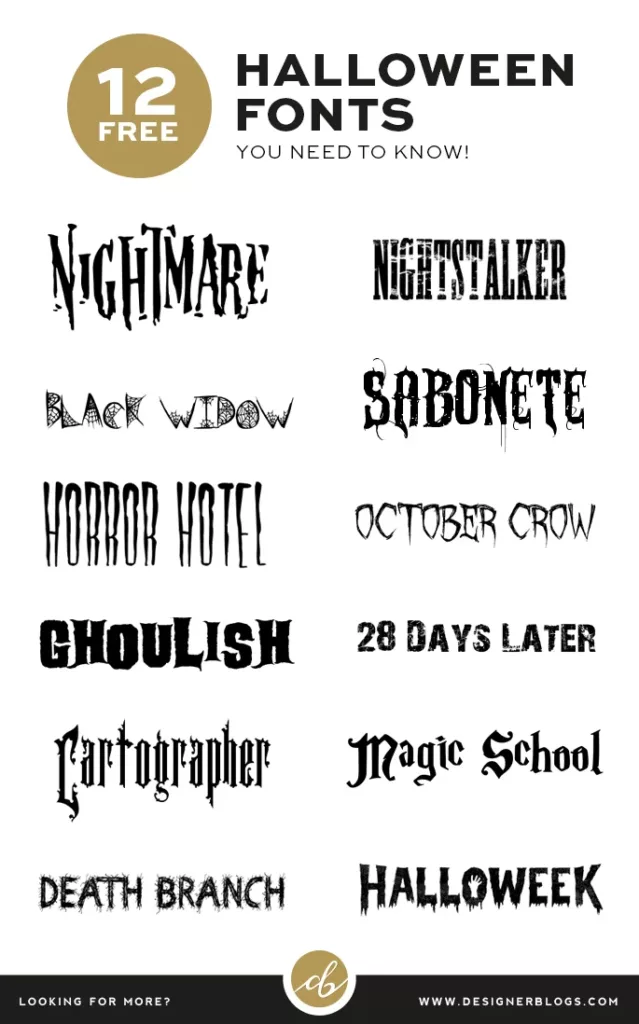
You can never have too many fonts! If you are preparing some seasonal crafts, make sure to check our list of 12 unique & free Halloween fonts. They are perfect for posters, cards, and your social media posts. You will find here all the Halloween classics from slime to spider webs. The best part is that they are all free to use!

Unique & Free Halloween Fonts

Below you will find 12 fonts we picked for you. If you are looking for download links, you will find them below the image. If you are browsing this post at work or just do not feel crafty right now, make sure to pin the image for later use.

Nightmare | Night Stalker | Black Widow | Sabonete | Horror Hotel | October Crow | Ghoulish | 28 Days Later | Cartographer | Magic School | Death Branch | Halloweek

Please show us your works!

I would love to see what you will create using those best scary Halloween fonts for free. Make sure to let us know in the comments, or share your creation on social media and tag Designer Blogs.

Don’t forget to let us know which font is your favorite. Do you prefer such graphic fonts, or would you rather see something more simple next time?

Still looking for a perfect font? Check our 10 Best Scary Halloween Fonts list.

Old Glory

0
Old Glory

For nearly 250 years, the American flag has been made and remade. A recent Times article showcased several new updates to the flag, as imagined by six artists and graphic designers.

Do you think the U.S. flag needs a redesign? Why or why not? What changes would you make to it? What new design featured in the article resonates with you the most?

Tell us in the comments, then read the related article to learn more.


Want more Picture Prompts? Find them all in this column.

Students 13 and older in the United States and Britain, and 16 and older elsewhere, are invited to comment. All comments are moderated by the Learning Network staff, but please keep in mind that once your comment is accepted, it will be made public.

Are Zoos Immoral?

0
Are Zoos Immoral?

Do you like going to the zoo? Do you have a favorite?

Have you ever stopped to consider the possible harmful effects zoos might have on the animals?

In “Modern Zoos Are Not Worth the Moral Cost,” Emma Marris, an environmental writer, asks the reader to reconsider the value of zoos and the effects of captivity on the animals we visit:

After being captives of the pandemic for more than a year, we have begun experiencing the pleasures of simple outings: dining al fresco, shopping with a friend, taking a stroll through the zoo. As we snap a selfie by the sea lions for the first time in so long, it seems worth asking, after our collective ordeal, whether our pleasure in seeing wild animals up close is worth the price of their captivity.

Throughout history, men have accumulated large and fierce animals to advertise their might and prestige. Power-mad men from Henry III to Saddam Hussein’s son Uday to the drug kingpin Pablo Escobar to Charlemagne all tried to underscore their strength by keeping terrifying beasts captive. William Randolph Hearst created his own private zoo with lions, tigers, leopards and more at Hearst Castle. It is these boastful collections of animals, these autocratic menageries, from which the modern zoo, with its didactic plaques and $15 hot dogs, springs.

Ms. Marris describes how the “educational day out” model of zoos endured until the late 20th century, when zoos began actively rebranding themselves as serious contributors to conservation, functioning as “ambassadors” for their species and teaching humans to care about wildlife.

However, she writes, while species such as the Arabian oryx, the California condor and Black-footed ferrets were saved from extinction by the concerted efforts of zoos, these popular public institutions remain largely about entertainment and family outings:

A fine day out with the family might itself be justification enough for the existence of zoos if the zoo animals are all happy to be there. Alas, there’s plenty of heartbreaking evidence that many are not.

In many modern zoos, animals are well cared for, healthy and probably, for many species, content. Zookeepers are not mustache-twirling villains. They are kind people, bonded to their charges and immersed in the culture of the zoo, in which they are the good guys.

But many animals clearly show us that they do not enjoy captivity. When confined they rock, pull their hair and engage in other tics. Captive tigers pace back and forth, and in a 2014 study, researchers found that “the time devoted to pacing by a species in captivity is best predicted by the daily distances traveled in nature by the wild specimens.” It is almost as if they feel driven to patrol their territory, to hunt, to move, to walk a certain number of steps, as if they have a Fitbit in their brains.

The researchers divided the odd behaviors of captive animals into two categories: “impulsive/compulsive behaviors,” including coprophagy (eating feces), regurgitation, self-biting and mutilation, exaggerated aggressiveness and infanticide, and “stereotypies,” which are endlessly repeated movements. Elephants bob their heads over and over. Chimps pull out their own hair. Giraffes endlessly flick their tongues. Bears and cats pace. Some studies have shown that as many as 80 percent of zoo carnivores, 64 percent of zoo chimps and 85 percent of zoo elephants have displayed compulsive behaviors or stereotypies.

Elephants are particularly unhappy in zoos, given their great size, social nature and cognitive complexity. Many suffer from arthritis and other joint problems from standing on hard surfaces; elephants kept alone become desperately lonely; and all zoo elephants suffer mentally from being cooped up in tiny yards while their free-ranging cousins walk up to 50 miles a day. Zoo elephants tend to die young. At least 20 zoos in the United States have already ended their elephant exhibits in part because of ethical concerns about keeping the species captive.

Ms. Marris concludes her essay with some ways to reimagine and transform the zoo:

What if zoos stopped breeding all their animals, with the possible exception of any endangered species with a real chance of being released back into the wild? What if they sent all the animals that need really large areas or lots of freedom and socialization to refuges? With their apes, elephants, big cats, and other large and smart species gone, they could expand enclosures for the rest of the animals, concentrating on keeping them lavishly happy until their natural deaths. Eventually, the only animals on display would be a few ancient holdovers from the old menageries, animals in active conservation breeding programs and perhaps a few rescues.

Such zoos might even be merged with sanctuaries, places that take wild animals that because of injury or a lifetime of captivity cannot live in the wild. Existing refuges often do allow visitors, but their facilities are really arranged for the animals, not for the people. These refuge-zoos could become places where animals live. Display would be incidental.

Students, read the entire article, then tell us:

  • Do you like going to the zoo? Do you have a favorite one? Tell us about a memorable experience you had at a zoo.

  • What impact have zoos had on you? Have they helped you to develop what some zoos call a “conservation ethic?” Do you look at the animals with a “sense of empathy for the individual animal, as well as the wild populations of that animal,” as Dan Ashe, a former director of the U.S. Fish and Wildlife Service, hopes? Have zoos made you care more about conservation or take any action to support it?

  • What is your reaction to Ms. Marris’s essay? Which details on the harmful effects of captivity on animals, such as the physical and emotional toll on elephants, stand out? What do they make you think or feel?

  • How persuasive is Ms. Marris’s argument? Are zoos immoral or wrong? Is our pleasure in seeing wild animals up close worth the price of their captivity? What do you see as the benefits and harms of zoos, both for the human visitors and the animals who live in them?

  • What do you think of Ms. Marris’s recommendations for transforming the zoo? Do you think her idea of the “refuge-zoo,” a place where animals live and displays are incidental, is a good one? What other ideas do you have to improve or reform the modern zoo?

Lesson of the Day: ‘The Facebook Whistle-Blower Testifies’

0
Lesson of the Day: ‘The Facebook Whistle-Blower Testifies’

Featured Podcast: “The Daily” episode “The Facebook Whistle-Blower Testifies” hosted by Astead W. Herndon with special guest Sheera Frenkel

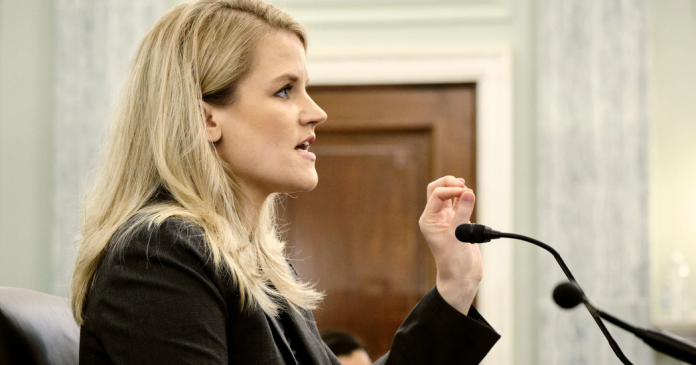
The recent congressional testimony of Frances Haugen, a former Facebook employee, reveals the ways that Instagram, which is owned by Facebook, negatively affects teenagers’ mental health and how hate speech has spread on the company’s platforms. The hearing could be a turning point for the social media giant.

In this lesson, you will learn about Ms. Haugen’s testimony and about some of Facebook’s most problematic practices. Then we invite you to discuss with your classmates how the company should be held accountable and what change should look like.

Part I. Temperature check

Read the statements below related to the way people use Facebook and Instagram. Then, rank each one on a scale of 1 (never) to 10 (always).

  • I see harmful content related to disordered eating, suicide or violence on social media.

  • I see inflammatory content shared by family and friends before I see reputable news sources.

  • I pause to read an article, or do additional research, before sharing something to my social media accounts.

  • Instagram and Facebook have a negative impact on my mental health.

Pause to reflect: What do your responses say about the way these social media apps work?

Part II. Watch a video

Watch a two-minute excerpt from the congressional testimony of Frances Haugen, a former Facebook employee, below. Then answer the following questions:

  • What kind of expertise does Ms. Haugen have to talk about the inner workings of Facebook?

  • What is the main idea of her testimony?

  • The New York Times calls Ms. Haugen a “whistle-blower,” or an informant who exposes wrongdoing within an organization in the hope of stopping it. What evidence from her testimony shows that she is a whistle-blower?

Listen to the first 28 minutes of the episode below. Then answer the questions that follow:

1. What was unique about Tuesday’s congressional hearing, compared with previous ones on Facebook and other large tech companies?

2. How does Ms. Haugen describe Facebook’s relationship with profit and its users?

3. Ms. Haugen uses two terms, “engagement-based ranking” and “amplification of interest,” to explain why harmful content — such as that on disordered eating, suicide or violence — is pushed to young people. In your own words, describe what these two terms mean and how they relate to the spread of negative content. Have you, or have any of your friends, experienced this?

4. What are “meaningful social interactions,” or M.S.I., in the world of Facebook? How has this practice become effective in spreading misinformation and keeping people attached to Facebook? Have you noticed M.S.I. affecting what you see on Facebook or Instagram?

5. Ms. Haugen talked about two things that would make using Facebook and Instagram less harmful: creating more friction and re-implementing a chronological newsfeed. Explain the purpose of each of these. Do you agree with her recommendations? Why or why not?

6. What does Sheera Frenkel, a technology reporter for The Times, say are the ways that Facebook can be held accountable? How do people within Facebook feel about these various methods of accountability?

7. Why don’t Ms. Haugen and other Facebook insiders want Facebook to be broken up or totally taken down? Do you agree with this perspective? Or would you rather see Facebook taken offline entirely? Why?

In your journal, respond to the following questions: What is your reaction to Frances Haugen’s testimony? What surprised you in what she revealed about the inner workings of Facebook? What frustrated or angered you? What, if anything, gives you hope about the future of the company or social media in general?

Now, discuss the following questions with your classmates:

  • What do you think should happen next to Facebook? What should accountability look like?

  • Ms. Haugen suggests that Facebook should “declare moral bankruptcy.” What do you think this would look like and what might the outcomes or consequences be?

  • What role do you think the government should play in investigating or regulating social media?

  • The podcast references Renée DiResta, an academic and misinformation expert at Stanford University, who differentiates between “freedom of speech” and “freedom of reach.” Do you think it is possible for the government to control the spread of misinformation without infringing on the right to free speech? Why or why not?

Additional Teaching and Learning Opportunities

  • Read a guest essay. You can read a former data scientist’s recommendations on how to regulate algorithms, Kara Swisher’s interview with the director of the Stanford Internet Observatory and a former head of security at Facebook, or an essay that asks if Facebook should “go away forever.” What points do you agree and disagree with? How do these pieces change or reinforce your opinion of Facebook?

  • Write a letter to your senator. Explain what you should think should happen next with Facebook. You can share your own experiences with Facebook and Instagram — what you find fulfilling about the sites and what you find concerning. (If you don’t know where to start, read what other teens have said about their relationship to social media and mental health and react to their comments.) Then, provide two or three recommendations for how you think Congress should handle Facebook. Finally, find out how to send your letter.


Want more Lessons of the Day? You can find them all here.