
testing only ….
 |
Author : test Kam last |

testing only ….
|
Author : test Kam last |

“My name is Sean Wallace-Docherty, a partner and a father of one. I grew up in the north-east of the UK and am proud of my heritage. In 1999, I went to visit my late father in the Netherlands for the Christmas and New Year period and I was offered a job within the company he worked for. This job eventually saw me leading a multi-disciplined team of customer sales service and operations advisors.”
How did you learn about Alison?
I was googling courses which could help enhance my career, but also add qualifications to my resume, when I came across Alison. Having looked at what courses they offered and the different levels of courses, I was really impressed. If I could achieve a diploma it would look good on my resume but it would also allow me to learn about other aspects of business.
What was your first course on Alison, and why did you choose it?
I chose a course in HR. I chose this because a the time I was looking at a career change or pursuing a new path with my own business. If I knew the fundamentals of Human Resources and HR Management, it would give me a better insight and a better understanding of the processes of people management.
How have Alison courses affected your career?
Having completed the HR Course, I am now studying two further courses (Operations Management and Accounting). Once these are complete, and the current pandemic is over, I am looking to set up my own business, which is currently in the planning stages.
What’s your favourite way to relax from studying?
My favourite way to relax from studying is to spend time with my partner, Alison, (yes I know that sounds weird – study with Alison, live with an Alison) and my daughter and our pets (one dog and two cats).
Where are you working and what are you studying now?
I am currently studying Accountancy and Operations Management whilst planning my business venture which presently is in the early stages but which I’m hoping to launch by January 2021.
What’s next for you, in terms of education or work?
My next step is to launch my own business and I believe the HR, Operations Management and Accountancy courses will all be beneficial. My next step academically is to take on another Alison course in Marketing so that I can market my business.
If you could learn absolutely anything in the world from an Alison course, what would it be?
If Alison was able to do courses in First Aid Level 3 and Fire Safety Level 2, then that would be great.
What would you say to someone if they asked you about Alison? Would you recommend it and why?
If I was asked about Alison I would ask the person what course they were interested in or what they wanted to do. Then I would recommend Alison to them explaining that you learn in your own time and at your own pace. You can learn on a PC, tablet or phone. You can learn on the move as well which is absolutely amazing. Alison provides courses that can lead to various career paths.
Sadly, it remains a fact that only a privileged percentage of the world population has access to university level education. Just 1% of people in many countries complete any kind of higher education, and higher education achievement rates over 10% are rare outside of the Northern Hemisphere.
On a personal level, access to higher education is strongly correlated with higher earnings. An average full-time worker with a degree in the United States can expect to earn 62% more than their counterparts with a high school diploma, and the income gap is widening over time.
At the level of wider society, increased access to higher education reduces unemployment, poverty, crime, rates of smoking, and improves civic participation e.g. voting, volunteering. But we know that any exposure to higher education produces benefits compared to secondary education alone. With this in mind, what can we do to achieve a Sustainable Education Model Accessible to all?
What is the current state and the current challenges?
Traditional approaches produce/maintain four principal barriers to widening global participation in higher education:
Cost – traditional university level education is very expensive. Even for many citizens of countries with advanced economies, traditional higher education is prohibitively expensive. But in the developing world tuition, higher education tuition costs can exceed the average annual salary.
Availability and accessibility – higher education is simply not available in much of the world. Cost is a factor, but many in poorer countries literally have no access to opportunities for traditional education, even if they could afford to pay.
Likewise, it’s common that an adult may wish to pursue higher education, but caring and career responsibilities make attendance at a traditional course impossible. This effect is more common in disadvantaged places. This lack of access presents a sustainability problem for education in that sustainable and equitable global development is impossible as long as entire communities are denied access to the benefits of lifelong education.
Relevance and outcomes – Relevance is vital, because only if the potential student sees the direct value and practical application of an education program to improve their life will they be motivated to pursue it.
A lot of people don’t feel their degrees from traditional schools are preparing them for life outside education. If a degree doesn’t help a student to prosper as expected upon graduating, what measurable benefit has the student received as a result of the education program?
What higher education alternatives exist?
We aspire to a world where access to quality higher education which effectively prepares students for their life and career is recognized as part of article 26 of the Universal Declaration of Human Rights.
If that goal is to be achievable, it’s clear that new models of alternative education must be developed, and we’re pleased to say that some huge progress has been made in the past two decades.
More than any invention since the printing press, the internet and the World Wide Web have decentralized and democratized access to information and learning. But there’s a lot more technology can do to increase availability by facilitating alternative methods of delivering learning.
Particularly in the rising gig economy, there’s a greater focus these days on skills as opposed to formal qualifications. Freelance employers are less concerned about a degree and more concerned about whether you can get the job done.
The option to complete individual courses focused on a very specific area of study will be critical for the functioning of the future’s gig economy, and the advent of open access to university courses facilitated by projects like Open University, Edx.org, Coursera, and Open Yale Courses has been a major game changer.
Open University
Founded in 1969, the Open University is the United Kingdom’s largest university and a leading institution in global alternative education.
Students have the option of registering, completing, and receiving recognition for individual modules completed. The flexibility inherent in the OU’s system makes it especially popular with adult students whose life circumstances may prohibit committing to a full Bachelor’s degree, and 66% of students are aged over 25.
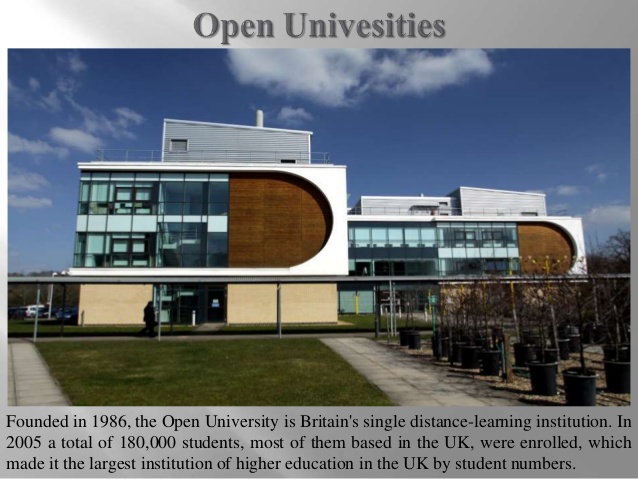
The majority of undergraduate courses have no formal entry requirements, and students who decline to complete the full 360 credits required for a Bachelor’s degree may apply to receive a pre-Bachelors undergraduate qualification such as a Certificate in Higher Education. Increasingly, modules are delivered entirely online using innovative approaches which permit over 7,000 overseas students to study with the Open University, while students looking to pursue a broad base of study studies have the option of pursuing a “pick and mix” style Open Degree. While the OU must be recognized as one of the earliest pioneers in the alternative education field, their approach presents some issues. In particular, fees for overseas students of up to £6,000 per year make courses unaffordable for students outside of advanced economies.
Open Yale Courses, edX, Coursera
Between 2008 and 2012, platforms such as Open Yale Courses, edX, and Coursera revolutionized the alternative education space.
Each platform shares a common philosophy: to provide access to courses from elite global universities to the widest possible audiences. Students can access materials from many courses with no fees and may study at their own pace. Like Open University, the format offered by these platforms permits entirely self-directed study based on the career requirements of the individual
Where official recognition of study is needed for career purposes, achievement certificates and even entire undergraduate and postgraduate programs are available at much lower than usual fees.
What’s different about Atlantic International University’s (AIU) approach?
We touched on our belief that higher Education should be seen as a human right and in pursuit of that goal, we’ve been pioneering an alternative approach to adult education. Our philosophy centers on an adult education model known as andragogy, in which the central focus is the student and the development of a personalized open curriculum.
Recognizing the need to adapt higher education to the realities of today’s world, we’ve moved away from the traditional paradigm of higher education where the institution is the provider, arbiter, and gatekeeper of knowledge delivered within a rigidly defined curriculum that fails to consider the individual’s characteristics.
So, we interview students at the start of their program about their “dream life”; aspirations, personal and professional goals, and how they’d like to contribute to their society and community.
The primary goals of the interview are to:
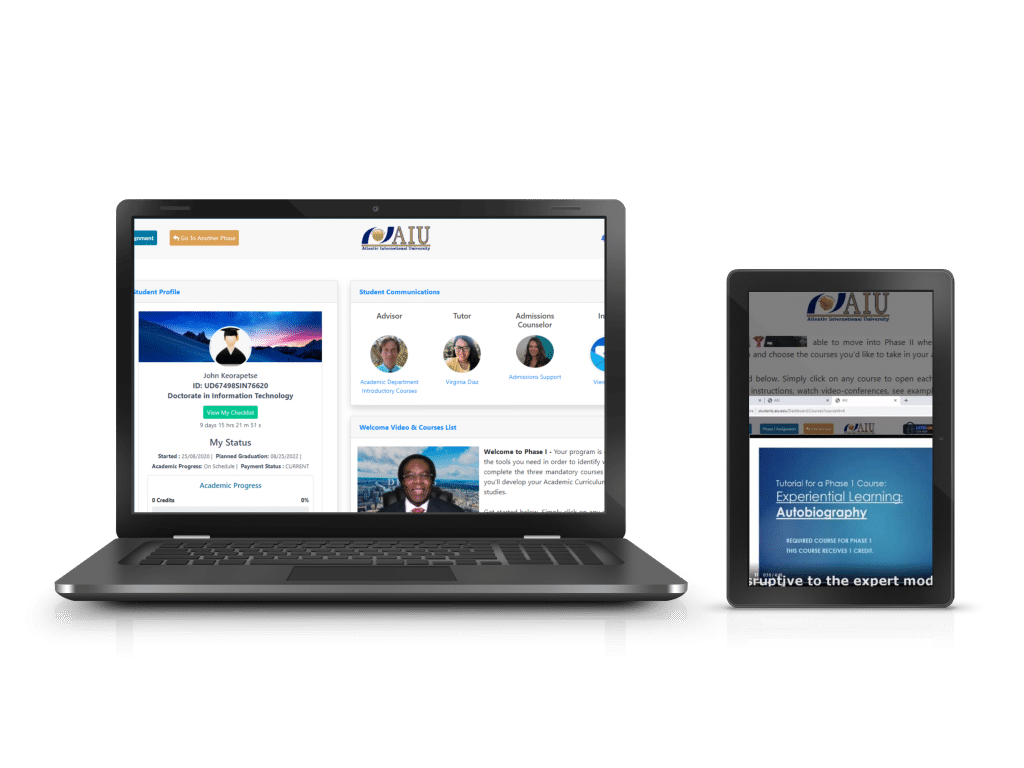
By empowering students with this knowledge and purpose, AIU creates personalized, highly focused programs that are relevant and focused as much as possible on practical vs. theoretical learning. We aim to graduate “doers” rather than rote learners from textbooks.
Today, social media is the primary means of learning for countless people. What do sites like Youtube, Duolingo, and Coursera offer that traditional higher education doesn’t?
24/7 access is key to the democratization and sustainability of education for adult students, especially those in the developing world. The new paradigm in alternative education must employ advancements like gamification and advanced social features, facilitating easy interaction and exchange of knowledge between students.
You may be interested to read this: IMPLICATION OF STAKEHOLDERS ON QURANIC SCHOOLS (A FIELD STUDY ON THE CURRENT SITUATION OF QURAN SCHOOL STUDENTS IN TUDUN YOLA, KANO)
Advancements in alternative education technology and methods serve a critical role in addressing these challenges. AIU remains at the forefront by creating for each student a unique open curriculum and personalized Virtual Campus with 25 powerful tools available to enhance students’ learning experience.
AIU offers degree programs for adult learners from bachelors to doctorate and postdoctoral levels with a wide range of majors and areas of study. Call us now and speak to a guidance worker to discuss your options.
By Rich Jacquet, Chief People Officer
At Coursera, we believe location shouldn’t limit access to world-class learning, and we’re bringing this mindset to the way we evolve our workplace.
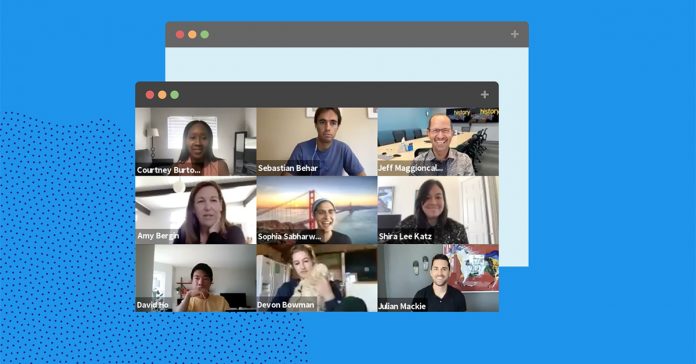
Today we announced that employees can continue to work remotely until January 1, 2022, when we anticipate bringing our offices back to full service. Giving all Courserians more time to work from home offers the flexibility they need to adjust to new routines brought on by the pandemic — like homeschooling — and plan the next 16 months with a clear timeline. We may reopen some locations at limited capacity before 2022, but only if it’s safe.
The truth is, remote work is here to stay. With that in mind, today, we launched a new vision for work-life at Coursera that will enable employees to choose where they do their best work. Even after our offices safely reopen, Courserians will have the flexibility to work remotely for the long term, work from a nearby office, or split their time between the two arrangements.
Given the extended timeline, we are also offering a larger allowance for home office equipment. Every Courserian will receive $1,000 — or the local equivalent in the UK, India, Canada, Bulgaria, and the UAE — to create a productive home environment. Employees will also continue to receive the monthly stipend that began in March to help with home internet expenses.

We’re excited about the challenge of bringing our unique and innovative culture out of the typical office mold. Since March, we’ve already hosted one virtual Make-a-thon event, transitioned our summer picnic online, and celebrated a colleague’s 40th birthday at a virtual town hall. We’ve seen more casual interactions between employees who work in different countries over the last six months than ever before.
Remote work at this scale is new at Coursera. We’ve learned a lot since we all transitioned to working from home in March. We’ll continue to listen to and work with employees to solve other challenges that come up, starting with a focus on wellness, promoting the use of our flexible vacation policy, and workshops to help managers lead remote teams effectively.
We’re also motivated by the opportunity to access talent pools that we traditionally couldn’t engage with. Supporting off-campus work at this scale will enable us to recruit candidates who live beyond a commuting distance from our offices — this will further contribute to our efforts to build a more inclusive workplace.
Courserians have shown tremendous resilience during a particularly uncertain and challenging time for the world. We’re proud of their relentless commitment to supporting learners, partners, and customers at this pivotal moment for online learning. We’re excited to transition to a new working model where Courserians have the flexibility to choose what’s best for them — during the pandemic and beyond.

“My name is Muneer Ahmed. I was born in Karachi in 1954. My parents came to Pakistan when Pakistan was founded in 1947. Both my parents were uneducated but very hard working. My father ran a printing press and my mother was a housewife. I completed my early education in an English language school before moving on to an Urdu language government school to complete my education. Subsequently, all my education has been in English. I did my bachelor of science at the University of Karachi, where my major was Mathematics and my subsidiary subjects were Physics and Statistics. I then did my master’s in Applied Mathematics at the same university, as well as earning a Diploma in Computer Science.”
How did you learn about Alison?
When I was teaching at Chiniot Islamia School & College I was very interested in further education and also very keen to learn how to use a computer. I found Alison while searching online. I introduced my students to Alison and convinced them to learn online. I was an Alison user as well as an Alison promoter.
What was your first course on Alison, and why did you choose it?
In the very beginning, as I remember, I did the certificate courses in Mathematics.
How have Alison courses affected your career?
I haven’t gotten any career achievement but I have got lot of personal satisfaction. Whenever I complete a course and get a certificate I go to bed and start planning for the next online course.
Where are you working or studying now?
At present, I don’t have a job and I am looking for one. Just last Sunday, I took a course on Alison – YouTube Marketing: The Five Essential Steps. I have also applied to the University of London for a course in Computer Science.
What’s next for you, in terms of education or work?
Due to my age, I would like to work from home but I’m also looking for teaching job in a school. I am very interested in Computer Hardware and making computers at home. I am also interested in completing a master’s in Mathematics for free online.
If you could learn absolutely anything in the world from an Alison course, what would it be?
I actually take an interest in learning almost every subject. I like biology and, at the moment, I’m particularly interested in Computer Architecture.
What would you say to someone if they asked you about Alison? Would you recommend it and why?
Alison’s way of teaching is the best and also, Alison is free.


This article was written by our friends at Career Karma.
You have about ten seconds to make a good first impression with the hiring manager or recruiter when submitting your resume for a potential web development or software engineering position. At a glance, what do you want them to know? How will you stand out? In this article, we’ll share some tips for putting together a technical resume that’ll get noticed.
We’ll start at the top. The header of your technical resume should include your name and contact information, including a professional email address, and a phone number. A professional email address is one that somehow incorporates your name, rather than something silly.

Some people choose to add LinkedIn or Github profile links to their resume header as well. If you opt to do this, make sure that your profiles are up to date and showcase you in a professional light.
Lastly, headshots are becoming more commonplace in resume designs today. But while headshots may be appropriate for some industries, note that it’s not required. In fact, it may be beneficial to leave a headshot off your resume in order to leave more room for bullet points that show off your talent.
Now it’s time to dive into your work experience. You may choose to include a section for projects, which could include on-the-job projects or side projects that reflect your skillset, and one for work history.
The addition of two to three relevant projects from your developer portfolio can help showcase your technical skills. For each project, list the name of the application or project you developed, the stack or other special software skills that you used to create it, and how you took part in the software development lifecycle.

For work experience, remember that your resume is an at-a-glance opportunity to show off your skills on one page, rather than a multi-page document that showcases everything you’ve done since graduating from high school. For this reason, you should stick to relevant work experience if you’ve been in the industry for a while and highlight jobs that have skillsets that translate well to the position you’re applying for.
PRO TIP: Some companies use applicant tracking systems (ATS) to pull candidates. These tracking systems search for keywords in applications to help determine relevance.
To that end, try to highlight keywords that are used in the job description for the job you’re applying for. If you’re applying to be a React developer, for instance, try to voice accomplishments using front-end technologies that are mentioned in the job description:
In addition, being more descriptive about your work will help you stand out to recruiters and show them that you understand the technology required for the job.

If you’re making a career transition or don’t have much related work experience, that’s ok. You can make a point to transfer any quantifiable skills from previous industries or careers you have worked into programming. When looking for wording to describe job history outside of the tech industry, consider your past experience under the lens of how it relates to where you plan to go.
The last thing you can do to increase your chances of being noticed by a hiring committee is to add a list of quantifiable skills to your resume. Software engineering and web development roles thrive on being able to be analytical in addition to being technical. If you can work both roles into your resume and cover letter, the more likely you will catch the attention of a recruiter.
Analytical skills include things like communication, problem solving, and creativity. Technical skills include things like the tools you use at work or the programming languages or databases you are familiar with.
Now that you know about what to include on your technical resume, it’s time to think about presentation. Do you want to start with skills at the top, followed by job experience and projects chronologically? Or should you start with projects that pertain to the job and then address job history and education? Should your resume have a more minimalistic design or should you be more creative with it?
There is no one right answer for everyone. It’s all about what works for you and your experience. The one thing that’s important is to get a feel for the employer’s ideology. For instance, a resume with multiple colors, a creative design, and fun font might work for a more casual and creative company, while a minimalistic, professional resume will give off a more authoritative tone.
Once your resume is created, there are services you can use that will run through it and give you a score on how likely it will be picked compared to a job description. This could assist in how you layout and create your content. Services like Jobscan, Resume Worded, and Cultivated Culture have free and premium features you can use to boost your chance to be seen by an Applicant Tracking System.
Just remember: don’t try to give off a personality that’s not true to yourself, really focus on your skills and accomplishments, and always be honest. Best of luck in your job search!
Christina Kopecky is a writer at Career Karma where she focuses on coding tutorials and technical articles.

There lived a man called Hezekiah Okoro Nweje, he was an Anglican priest from South-East Nigeria, Onisha Anambra state. He was born in 1919 and died in June 1962. He was nicknamed “Holy Nweje” because of his very humble, extreme, righteous, easy-going and humanitarian lifestyle. He was tenaciously devoted to the things of God, whatever he had or received as gifts from the church, he shared amongst the poor and the less privileged. He doesn’t hoard them at the expense of the needy. In his philosophy, he believed that wealth was sharing what you have without hoarding it. At a time, he was nominated for the position of the Anglican Bishop on the Niger, he declined and nominated someone he felt was more qualified.
Rev Hezekiah Okoro Nweje was seen as an upright, spotless, and a righteous man. It was all those outstanding qualities he posed while alive that brought about the name “Holy Nweje”, depicting how holy one can be. He believed one’s anger should not see the next moment. In may 1956, two villages in that community were tussling for a piece of land, Rev Nweje was called as a witness, he told the Judge that none of the towns owned the land, na “Ani bu ani Chukwu” meaning the land, and thereof are of the lord. That ended the land tussle. He was always on the side of peace. Around April 1956, in Broadway time local thieves invaded his house in that community and stole tubers of yam and fowl, he ran after them and told them to come and take more, those days jungle justice was the remedy for stealing in that community, but he cited hunger as the reason for their conventional behavior. What a man!
Growing up in that community, and in the entire igbo land, Eastern part of Nigeria, if seen or perceived as an upright person, you would be called or nicknamed holy Nwaeje. It tells how good or describes how good someone is.
He died in 1956, Nweje land in Onisha Metropolis Eastern part of Nigeria is a street named to immortalize him.
Message: we must learn to be kind to people around us and to also teach our children dog. And to make a positive impact in our community.
An open book
Stay tuned!!!

“My name is Bright Dogbe. I am from Ghana and I’m currently living and working in Qatar.”
How did you learn about Alison?
I heard about Alison for the first time in 2013 when I was looking for an IT course to study. From there, I developed a keen interest in the occupational health and safety field, in which I currently work now.
What was your first course on Alison, and why did you choose it?
The first courses I studied were related to IT and health and safety. I chose them because I was interested in this field and wanted to learn more through Alison
How have Alison courses affected your career?
Yes it has helped me develop my career both in safety and in IT.
What’s your favourite way to relax from studying?
My favourite way to relax from studying is by listening to music.
Where are you working or studying now?
I am currently working with Madina Group in Qatar. I am also studying a bachelor of science in Occupational Health and Safety with Open University Malaysia.
What’s next for you, in terms of education or work?
At work, I intend to share my knowledge of the best practices in Health, Safety and Environment (HSE) through the development and implementation of HSE management systems. I also want to promote a culture of continuous improvement and to obtain a responsible and challenging position in Health and Safety where my training, education and experience can be applied and will be valued.
If you could learn absolutely anything in the world from an Alison course, what would it be?
I would like to take more courses related to occupational health and safety and also IT.
What would you say to someone if they asked you about Alison? Would you recommend it and why?
I would recommend anyone who wants the best out of their career to study with Alison because they develop good course content which fits the understanding of their learners.


Welcome to Codecademy! We’re glad you’re here. Whether you’ve recently purchased a Codecademy Pro Student membership or are thinking about signing up, we want to make sure you have everything you need to make the most of it.
We’ll help you decide what to learn, set goals, and find resources to stay motivated. If you haven’t purchased a membership yet but are planning on it, you can get started here.
What makes the Codecademy Pro Student membership different from using Codecademy for free? It’s got all our Pro features built in, including exclusive courses, interactive practice and review, and downloadable materials that you can save for the future.
Learn more about some of the exclusive features and materials available to Pro Student members below.
Skill Paths and Career Paths are step-by-step roadmaps that take you through what you need to learn a specific skill or get started in a specific career direction. They’ll tell you what to learn and in what order, to make things easy.
Work on real, portfolio-ready guided projects to put what you’re learning to use. When you’re done, take your skills to the next level by completing a Challenge Project. We’ll give you a set of tasks to complete on your own, with minimal instruction. As you learn, we’ll recommend Challenge Projects right on your dashboard.
We’ll quiz you on the material as you make your way through a course or Path. Quizzes will help you retain what you’re learning — plus, they’re a nice way to prove to yourself that you’ve mastered a new skill.
You’ll find a variety of practice exercises on your dashboard that’ll help you review and practice the concepts you’ve recently learned. These include everything from fill-in-the-code exercises to additional quizzes, and more.

As you complete Pro courses, you’ll earn certificates. Share them on your LinkedIn profile or on your resume to prepare for your future job search.

In addition to our Pro Student membership, the Codecademy team has been busy collecting our favorite resources for students and making brand new ones. You can find them all in our Student Center, but here are some highlights you won’t want to miss.
To make remote learning feel a little less remote, we’ve launched new Community Chapters. Chapters are local groups designed to help you stay motivated and get to know other learners in your area. Head over to our community to find out more about Chapters or start your own!
During the fall semester, our Curriculum Developers will be hosting a live web series covering the fundamentals of Computer Science. Each week, they’ll be completing a module from our new CS101 Pro Course. Join us for weekly live sessions, streamed to YouTube, Facebook, Twitter, and Twitch. Check out the syllabus and learn more on the blog.
In our Student Center, we’ve curated a list of our most popular cheatsheets. Download and save them or print them out and use them as a go-to reference and reminder of everything you’re learning.
We’ve also made some free virtual backgrounds to make your Zoom classes a little more festive!

Psst! We’ve also added some non-virtual swag to the Codecademy shop, including hats, tees, and sweats. Check it out here.
Ready to dive in and start learning to code? You may already know what language you want to learn or what Path you want to take. If you do, head over to our catalog to get started.
If you haven’t decided what to learn yet, not to worry! We’ve compiled a few tips and resources to get you pointed in the right direction.
As we mentioned above, Paths are step-by-step roadmaps that take you through what you need to learn a specific skill or get started in a specific career direction.
We’ve got Career Paths for Web Development, Data Science, and Computer Science. The material in these paths can compliment what you’re learning in school and give you a leg up. We’ve heard from students that have taken the Computer Science Career Path in preparation for going back to school to study Computer Science, business and design students taking Web Development to broaden their skillset, and biology, chemistry, and astrophysics majors studying Data Science to better understand data in their research projects.
If you’re still not sure, check out the Career Foundations Career Path. It’ll provide an introduction to the world of programming and the fields of Data Science, Web Development, and Computer Science so you can figure out what path is right for you.
We’ve also got a quiz that’ll help you decide what coding language is right for you. It’s like a personality test, but it’ll find the best language and courses for you to start with based on how you think and where your interests lie.

LEARN MORE: Our Curriculum Developers have also put together a collection of suggested courses for both undergraduate and graduate students, sorted by topic. You can click here to check it out.
We know that one of the hardest parts about learning online is staying motivated. That’s why we’re closing this guide out with a few tips and resources related to motivation and learning from home.
We’re glad you’re here, and we wish you all the best on your learning journey!

Lianna Paglia, 16, from Natick High School in Natick, Mass., chose an article headlined “Used Clothes Ban May Crimp Kenyan Style. It May Also Lift Local Design.” and wrote:
Almost all of the clothes hanging in my closet are thrifted. This makes sense, seeing as I virtually only shop secondhand, a habit I’ve adopted over the past few years, which has been motivated by environmental sustainability and the fight against fast fashion’s exploitation of child labor — it’s also just so fun. My desire for upcycling projects has only grown in “captivity,” and fortunately, my beloved thrift stores have begun opening again. But for countries like Kenya, that is not the case. Threats of Covid-19 have halted the importation of clothing donations in Kenya. For a country that relies heavily on shopping secondhand, the absence of used clothes is often the absence of options. But, I found joy in learning that designers like Wagura Kamwana are taking advantage of this situation to bring more of their designs — local designs — to Kenyan markets. While this will certainly produce economic benefits, what brings me joy are the opportunities that this change will create for style visionaries. With no distinguished fashion industry, it has been undoubtedly challenging for aspiring designers of the country to envision themselves being successful — think, “you can’t be what you can’t see.” As awful as this pandemic is, it’s degrading a substantial issue for Kenyan fashion; it’s giving some dreamers a chance. And as a dreamer myself, I know that sometimes, a chance is enough.
In alphabetical order by the writer’s first name.
Alexandra on “A Geopolitical Earthquake Just Hit the Mideast”
Anish on “The Artist Making Bulbous, Colorful Sculptures Out of Thrifted Clothes”
Bennie Beikun Wang on “The Ultimate Beethoven Symphony Collection”
Daliya on “He’s 83, She’s 84, and They Model Other People’s Forgotten Laundry”
Hanshu on “Gods, Monsters and H.P. Lovecraft’s Uncanny Legacy”
Sofia on “Frances Allen, Who Helped Hardware Understand Software, Dies at 88”
Victor Tong on “We All Speak a Language That Will Go Extinct”
Aarti Bhamidipati on “We All Speak a Language That Will Go Extinct”
Adora on “The Mask Slackers of 1918”
