fbpx
Home Blog Page 1459

Do You Think the American Dream Is Real?

0
Do You Think the American Dream Is Real?

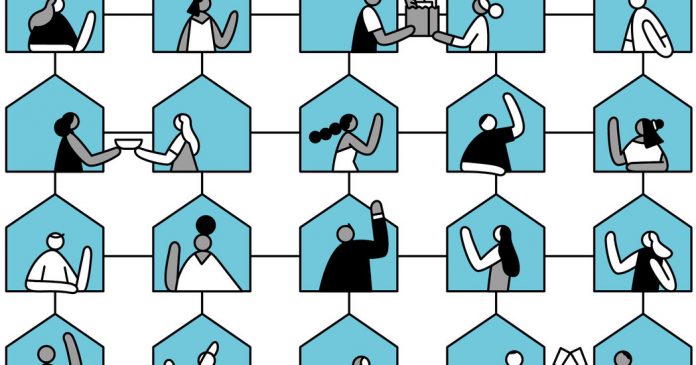
What does the American dream mean to you? A house with a white picket fence? Lavish wealth? A life better than your parents’?

Do you think you will be able to achieve the American dream?

In “The American Dream Is Alive and Well,” Samuel J. Abrams writes:

I am pleased to report that the American dream is alive and well for an overwhelming majority of Americans.

This claim might sound far-fetched given the cultural climate in the United States today. Especially since President Trump took office, hardly a day goes by without a fresh tale of economic anxiety, political disunity or social struggle. Opportunities to achieve material success and social mobility through hard, honest work — which many people, including me, have assumed to be the core idea of the American dream — appear to be diminishing.

But Americans, it turns out, have something else in mind when they talk about the American dream. And they believe that they are living it.

Last year the American Enterprise Institute and I joined forces with the research center NORC at the University of Chicago and surveyed a nationally representative sample of 2,411 Americans about their attitudes toward community and society. The center is renowned for offering “deep” samples of Americans, not just random ones, so that researchers can be confident that they are reaching Americans in all walks of life: rural, urban, exurban and so on. Our findings were released on Tuesday as an American Enterprise Institute report.

What our survey found about the American dream came as a surprise to me. When Americans were asked what makes the American dream a reality, they did not select as essential factors becoming wealthy, owning a home or having a successful career. Instead, 85 percent indicated that “to have freedom of choice in how to live” was essential to achieving the American dream. In addition, 83 percent indicated that “a good family life” was essential.

The “traditional” factors (at least as I had understood them) were seen as less important. Only 16 percent said that to achieve the American dream, they believed it was essential to “become wealthy,” only 45 percent said it was essential “to have a better quality of life than your parents,” and just 49 percent said that “having a successful career” was key.

The Opinion piece continues:

The data also show that most Americans believe themselves to be achieving this version of the American dream, with 41 percent reporting that their families are already living the American dream and another 41 percent reporting that they are well on the way to doing so. Only 18 percent took the position that the American dream was out of reach for them

Collectively, 82 percent of Americans said they were optimistic about their future, and there was a fairly uniform positive outlook across the nation. Factors such as region, urbanity, partisanship and housing type (such as a single‐family detached home versus an apartment) barely affected these patterns, with all groups hovering around 80 percent. Even race and ethnicity, which are regularly cited as key factors in thwarting upward mobility, corresponded to no real differences in outlook: Eighty-one percent of non‐Hispanic whites; 80 percent of blacks, Hispanics and those of mixed race; and 85 percent of those with Asian heritage said that they had achieved or were on their way to achieving the American dream.

Students, read the entire article, then tell us:

— What does the American dream mean to you? Did reading this article change your definition? Do you think your own dreams are different from those of your parents at your age? Your grandparents?

— Do you believe your family has achieved, or is on the way to achieving, the American dream? Why or why not? Do you think you will be able to achieve the American dream when you are older? What leads you to believe this?

— Do you think the American dream is available to all Americans or are there boundaries and obstacles for some? If yes, what are they?

— The article concludes:

What conclusions should we draw from this research? I think the findings suggest that Americans would be well served to focus less intently on the nastiness of our partisan politics and the material temptations of our consumer culture, and to focus more on the communities they are part of and exercising their freedom to live as they wish. After all, that is what most of us seem to think is what really matters — and it’s in reach for almost all of us.

Do you agree? What other conclusions might be drawn? Does this article make you more optimistic about this country and your future?

— Is the American dream a useful concept? Is it helpful in measuring our own or our country’s health and success? Do you believe it is, or has ever been, an ideal worth striving for? Is there any drawback to continuing to use the concept even as its meaning evolves?

Students 13 and older are invited to comment. All comments are moderated by the Learning Network staff, but please keep in mind that once your comment is accepted, it will be made public.

Carrying a Letter

0
Carrying a Letter

What story could this image tell?

Use your imagination to write the opening of a short story or poem inspired by this illustration.

Post it in the comments, then read the related article to find out what this image is all about.

Find many more ways to use our Picture Prompt feature in this lesson plan.

Restricted course access for learners in Crimea, Cuba, Iran, North Korea or Syria

0
Restricted course access for learners in Crimea, Cuba, Iran, North Korea or Syria

UPDATE: These restrictions have now been lifted, read more. 

FutureLearn employs US citizens and works with US suppliers and a growing number of US educational institutions. The combination of these things means we have to comply with US sanctions.

These regulations restrict economic and trade activities with four countries and one region identified by the US Office of Foreign Assets Control (OFAC) – Cuba, Iran, North Korea, Syria and the Crimean region.

While we’re working with OFAC to secure licences to allow us to deliver courses in these countries, the process is still ongoing. To avoid falling foul of any compliance issues, we’re temporarily restricting access to our courses in these countries.

To do this, we will check learners’ IP addresses against a list of countries when they sign in or register.

We are very sorry if this change affects you.  We want to reach as many people in the world with high quality learning and are very proud of the role we have played in breaking down barriers to education for people from all backgrounds.

It is a top priority for us to be able to offer learning to everyone, without restriction. For this reason, we are doing everything in our power to speed up this process, in order to be able to offer our services in these countries.

If you believe your access has been restricted in error or if you have any questions, please contact feedback@futurelearn.com.

Category
Learning,
FutureLearn news

Become a leader

0
Become a leader

The Basics

Here’s a short summary of what a leader is and does.

A leader is someone who leads a team of people. They typically offer instructions, advice and encouragement to their team. Leadership abilities are highly valued and leaders can be found in almost all industries and job sectors.

Step by step

Taking on any new role can be daunting, here’s a step by step for getting started with leadership.

1. Learn more about leadership as a topic, and the skills you’ll need.
2. Explore what type of leadership style you might be suited to.
3. Seek advice from other leaders and experts.
4. Ask for feedback from those you are leading.
5. Keep repeating points 3 and 4.

Key Skills

Find out what abilities you need to be a leader.

Bravery
Leaders are usually the ones who have to make the difficult choices, and ‘tell the hard truths’ (David Thomas, Harvard Business School) this often requires courage.

Decision-making ability
When there’s concerns over which route to take a leader must be able to step in and make a well-informed, considered decision. They then get ‘all hands on deck’ to enforce that decision. (Inc)

Empathy
While a leader must be rational, they almost must develop a keen sense of empathy. Empathy helps us understand each other (Forbes), whether we are leaders or followers. A leader that can empathise with the team they’re leading will have a better sense of the team’s problems and fears and therefore might be more successful in alleviating them.

Communication
It’s no good being a leader if you can’t clearly express yourself to your ‘followers’. A great leader must be able to communicate clearly and persuasively to ensure any instructions are carried out successfully (see number 20 at Entrepreneur)

(Sidenote: everyone you ask ‘what makes a great leader’ will give you a different answer. Some list five key qualities, some list over 20, we’ve listed some of the most common skills that get mentioned.)

Dos and Don’ts

Discover what to do and what not to do as an aspiring leader.

Do

✅ Explore different leadership styles (read about that here)
✅ Ask advice from others in leadership roles
✅ Try and develop your skills in the areas described above

Don’t

❎ Assume people will follow you
❎ Just start bossing people around
❎ Stop working on your skills

Inspiring Leaders

Meet the people excelling at leadership.

Anne-Marie Imafidon

Anne-Marie Imafidon, Founder of Stemettes

After achieving degrees in Maths and Science remarkably young, Anne-Marie Imafidon knew more women should be in STEM. So she set up Stemettes – a social enterprise that has so far helped over 14,000 young women experience STEM. She now sits on several boards, negotiates with major companies and has an MBE for her work. (Image: Anne-Marie Imafidon)

Read more about Anne-Marie.

Raj Panjabi Leader

Raj Panjabi, CEO of Last Mile Health

Raj Panjabi grew up in Liberia, moving to the US when civil war broke out. After qualifying as a doctor he returned to Liberia and, using money he got as a wedding gift, founded Last Mile Health – a nonprofit that trains community health workers. His work has significantly improved access to healthcare for thousands living in remote parts of Libera. (Image: PopTech)

Read more about Raj.

Get started

Get practical help from top organisations with these online leadership courses.

Develop your leadership qualities with the first course in the Management and Leadership program – Management and Leadership: Leading a team, from the Open University. It’s been designed to help you learn and grow crucial leadership abilities.

Find out more about the course

How can we improve support for autistic people?

0
How can we improve support for autistic people?

Ahead of World’s Autism Day tomorrow, in this post Mark Brosnan from the University of Bath discusses some of the challenges and solutions for parents and carers of autistic people, and shares more about the course Smart-ASD: Matching Autistic People with Technology Resources.

Autism FutureLearn

Over the last few decades awareness of autism has grown. Last week was World Autism Awareness Week, which marked the start of World Autism Month (including Autism Speaks’ Light it up blue campaign) and even Sesame Street is getting involved in raising awareness of autism through its new character, Julia.

Awareness campaigns are excellent, but more needs to be done to provide the practical steps to help individuals, families and us as a society respond to the needs of autistic people. Aside from the challenge autism presents for individuals and families, health economists have estimated the cost of supporting people with autism to be £32 billion per year in the UK and $175 billion per year in the USA. This is greater than the costs of cancer, stroke and heart disease combined.

This is where our course can help – it aims to provide practical suggestions and suggestions to help people living with autism. It’s been designed with international partners through our new Centre for Applied Autism Research at the University of Bath to highlight how technology can best be used, specifically mobile apps, including the free SMART-ASD app – that helps assess the needs of autistic children and identifies the most suitable technology to assist individuals’ requirements.

What is autism?

Autism Spectrum Disorder (ASD) is characterised by atypical social communication and behavioural inflexibility. Autistic people can have difficulties socially interacting with other people and have a preference for predictability, routine and sameness. Around 1% of the population receive a diagnosis of ASD, the majority of whom are male.

How can technology support autistic people?

Digital technologies provide an environment within which autistic people can thrive. Computers are (mostly) highly predictable and can provide employment opportunities that depend upon routine and sameness, for which autistic people can be ideally suited. Computers can also mediate social communication, providing platforms to socially interact with other people without being face-to-face. It has been argued that autistic people can have an affinity for using digital technology.

Digital technologies are being developed to build upon a digital affinity to provide therapeutic benefit for autistic people. For example, the Autism Speaks web site lists hundreds upon hundreds of apps that are available to support autistic people. It seems unlikely that one app would support every autistic person, so the issue becomes how to decide what individual technology will best support the autistic individual.

The autistic individual may have movement difficulties that make precise interaction with a touch screen challenging, or they may have intellectual disabilities that would make reading instructions problematic. Many autistic people have associated conditions such as intellectual disability, so the wide range of digital technology available should be able to address the wide range of autistic people’s wants and needs.

But there are two key issues – how do you identify the most appropriate technology for each individual and what is the evidence that the technology provides any therapeutic or learning benefit? Using robust evidence (evidence-based practice) to inform your decisions requires a level of evidence that does not exist for the vast majority of digital technology.

The first step is to better understand what information is available. Understanding what autism is, the impact of associated conditions such as intellectual disability, and what technologies and accessories are potentially available is essential. An obvious example might be touchscreen technologies and thinking about screen protectors and cases if a tablet is likely to be dropped or thrown.

On the course we’ll consider issues like these and more, working together to help improve the lives of those with autism.

Join Smart-ASD: Matching Autistic People with Technology Resources now.

FutureLearn at SXSWedu

0
FutureLearn at SXSWedu

In this post we share some of what our CEO Simon Nelson said about higher education and the digital world, when he spoke at SXSWedu in Texas.

SXSWedu is an annual conference and festival which celebrates innovation in learning. The event is part of the South by Southwest family of conferences and festivals and, now in it’s seventh year, has grown into a global event.

This year Simon Nelson, our CEO, attended the event to discuss how digital can transform education. Here are a few of the key points he made:

MOOCs have “only continued to grow”

MOOCs have been described as both the answer to the world’s educational problems and as a fad. In reality MOOCs sit somewhere in between and despite the hype of the media and educational institutions, MOOCs are continuing to develop.

Data collected by Class Central indicates that 23 million new people registered for a course, over 700 universities offer online education and almost 7000 new courses were designed, all in 2016.

“MOOCs are just one part of a much broader disruption”

The arrival of the internet was a disruptive force in higher education, one that has had a huge impact on learners and institutions. But this is an exciting time for education, presenting opportunities to transform the quality, effectiveness and accessibility of learning for everyone, anywhere in the world.

MOOCs have encouraged organisations to engage with digital in new ways, at FutureLearn, this happens through experimentation with:

“New partnerships”

Instead of building basic partnerships it is important to build a network which supports proper collaboration between universities and organisations.

“New sets of learners”

Initially the creation of MOOCs focused primarily on what they could do for students and secondly what they could do for professionals. This is beginning to change and universities should be looking to cater to all sectors of society, broadening their learner base and creating new opportunities through new audiences.

“New forms of teaching”

Digital can take learning in new directions, offering new levels of accessibility. The focus with digital learning should be on the user, making the experience flexible, manageable, easy-to-use and mobile.

“New approaches to qualifications”

More and more universities are offering full degrees, hosted entirely online, but degrees are now being delivered through MOOCs using social ‘campus’ communities. This is redefining what it is to take a degree in the digital age.

“New ways to have an impact on learners all over the world”

Universities that offer courses, programs and degrees online are opening up opportunities on a global scale. An international classroom grows and develops allowing people  across the world to learn together.

Or to put it simply, when higher education uses digital it is “opening up the university to the world but also bringing the world into the university.”

Want to hear more of Simon’s talk at SXSWedu?
Listen to the podcast now.

Category
Making FutureLearn

FutureLearn updates: Assignments and Course Descriptions

0
FutureLearn updates: Assignments and Course Descriptions

FutureLearn Tutor marked assignments

Submit an assignment and get feedback from your tutor

You can now submit assignments for tutor feedback and grading. Tutor marked assignments are a step in a course which will allow you to submit a written response to a question set by the course provider. One of the educators can then give you feedback either in the form of written feedback, annotations or a percentage mark, much like you’d expect in a classroom.

Pay in your local currency

From this week if you live in the United States, Australia or Europe you will be able to pay for FutureLearn products in your local currency. We hope that this will make it easier for you to upgrade courses, or buy certificates. We’re also working on introducing additional payment methods, to help those who don’t have the ability to pay using a debit or credit card.

Get all the information about a course with new course description pages

Our course description pages now have a shiny new look, designed to highlight each course’s benefits and to help you find the information you are looking for quickly. The new layout is also more mobile friendly so browsing courses on the go will be easier and more enjoyable.


Find out more about how we make FutureLearn.

Category
Making FutureLearn

Curso Gratuito: El Dibujo Arquitectonico y su importancia en la Obra Edilicia

4

Este curso de El Dibujo Arquitectonico y su importancia en la Obra Edilicia y otros cursos abiertos son brindados en su totalidad por la universidad Atlantic International University (AIU) como parte de la “Iniciativa de Acceso Abierto”. Esta iniciativa es consistente con la Misión y Visión de la universidad.

A través de esta iniciativa, la universidad Atlantic International University (AIU) busca eliminar las barreras que existen actualmente en el acceso a la educación, información y trabajos de investigación. La universidad AIU le da mucho valor e importancia al conocimiento y aprendizaje de los individuos y espera que este curso pueda tener una gran repercusión en las vidas de nuestros estudiantes y la humanidad en general alrededor del mundo, quienes tienen la inclinación natural hacia la búsqueda de nuevo conocimiento. Esperamos que este curso en El Dibujo Arquitectonico y su importancia en la Obra Edilicia y otros cursos gratis, disponibles por parte de esta iniciativa de acceso abierto, permitan el avance y actualización a quienes lo deseen.

El curso El Dibujo Arquitectonico y su importancia en la Obra Edilicia contiene lo siguiente:

  • Lecciones en formato de videoconferencias con las que se explica el contenido teórico.
  • Actividades complementarias que le harán investigar más acerca del tema, así como, poner en práctica lo estudiado en la lección. Estas actividades no forman parte de su evaluación final.
  • Examen final para evaluación global del curso.

El curso de El Dibujo Arquitectonico y su importancia en la Obra Edilicia puede formar parte de un programa de titilación abonando hasta tres créditos universitarios. Las lecciones del curso se pueden llevar en línea através de estudio a distancia. Los contenidos y el acceso están abiertos al publico en función de la iniciativa “Open Access” o “Acceso Abierto” de Atlantic International University. Participantes que desean recibir crédito y/o certificado de termino, deben registrarse como alumnos (Conocer mas de AIU Acceso Abrierto).

Leccion 1: El Dibujo Arquitectonico

Video Conferencia

Leccion 2: El Boceto

Video Conferencia

Leccion 3: Fase Conceptual

Video Conferencia

Leccion 4: Fases esquematica y preliminar

Video Conferencia

Leccion 5: Repaso 1ra parte del Curso

Video Conferencia

Leccion 6: El Dibujo de Construccion

Video Conferencia

Leccion 7: La Representacion Artistica en Proyectos de Arquitectura1

Video Conferencia

Leccion 8: La evolucion del dibujo Arquitectonico

Video Conferencia

Leccion 9: Presentaciones de Proyectos

Video Conferencia

Leccion 10: El Internet en el Dibujo Arquitectonico

Video Conferencia

Health Promotion Open course

0


VIEW THIS COURSE FOR FREE!
Subscribe to our newsletters and view this content
  We hate spam and never share your details.

Ask a Data Engineer: Warby Parker Edition 👓

0
Ask a Data Engineer: Warby Parker Edition 👓

wp-header

Codecademy’s very own Nick Duckwiler (left) and Ryan Tuck from Warby Parker (right) in our office. (📷: Mitch Boyer)

Last month, Codecademy and Warby Parker came together to work on a special Learn SQL from Scratch Capstone Project. It was during this time when I met Ryan Tuck, a Data Engineer at Warby, who played a major part in this partnership. So when he decided to drop by our office for the final QA round, I had to break out my notebook and ask some questions. Enjoy.


Hey Ryan, let’s start off with a question I’ve had for a while — what is a Data Engineer? (Is it similar to a Data Analyst or a Software Engineer?)

At Warby Parker, data engineers are responsible for creating and maintaining the plumbing required to support the data and reporting needs of the business. We use software engineering practices to automate the work of data cleaning, normalizing, and model building so that data is always ready to be consumed by data analysts in every department.

What languages/frameworks do you use at Warby?

On data engineering, we use Python as our general purpose programming language, as do most of the other teams in our Technology department. When it comes to databases, we use PostgreSQL for the majority of our SQL needs, and are beginning to use Amazon Athena and Google BigQuery for some of our larger datasets. We use Looker as our exclusive business intelligence entry point to all of this data.

What are some of the projects you worked on?

I’ve had the privilege of working with a lot of of smart people in every department at our company to help them solve their varied data needs, from reconciling financial data with the Accounting team to automating and modeling standardized performance metrics for our team of over 200 customer experience advisors.

As part of a team of five supporting the data needs of a rapidly growing company, I’ve tried where possible to focus on helping our analysts solve their own problems. This includes helping people learn Python and commit to our codebase, guiding the creation of data models in SQL, and encouraging people to submit pull requests to add features in Looker, our BI tool.

Seeing dozens of otherwise “non-technical” colleagues opening up PRs on a daily basis, and consequently being part of the democratization of tech that we value at Warby Parker, is probably the most rewarding “project” I’ve been a part of.

One project finished recently during our first annual “Hackweek” is called Pipes, which allows anyone at the company to easily move large amounts of data from wherever to wherever (Looker, Google Sheets, PostgreSQL, BigQuery, etc) on a regular cadence, or manually through a simple one-line chatbot interface. The adoption has been overwhelmingly positive and we’re looking to grow this sort of tooling out even more.

“We use software engineering practices to automate the work of data cleaning, normalizing, and model building so that data is always ready to be consumed by data analysts in every department.”

What got you into the data field?

I’ve always been drawn to analytical fields like math, and became pretty proficient in Excel during some internships in college. Once I had learned to program and learned more about data science and its applications in artificial intelligence, I knew that anything I could do to immerse myself in the world of data would be a step in the right direction.

Three and a half years ago, I landed a job as a junior software engineer at Warby Parker not fully knowing what I was in for, but am so glad I got the opportunity to help build tools to support an interesting and ever-changing data-driven culture here.

Where did you learn SQL and Python?

I had a background in C++, and was exposed to Python through an Intro to Data Science course. When Warby Parker hired me onto the Data team in 2015, I had never written a SQL query in my life, but picked it up quickly and within a few months started up internal SQL training classes, which I still teach on a monthly basis.

What does your tattoo say?


The ultimate cheatsheet.

This is Bayes’ Theorem, which is an equation that describes how to update probabilities given new evidence. Two summers ago I worked on building a tool to help predict weekly fantasy football performance. Some colleagues suggested a Bayesian approach would be appropriate, since there aren’t really enough data points in an NFL season to be able to use statistical approaches that require larger datasets, and I’d want to regularly update my predictions after each player’s latest performance.

I did a deep dive into understanding the (simple) math underlying Bayes’ Theorem and came out of that experience with a whole new worldview, understanding my entire knowledge of the world as a big and intricate probabilistic model that I was continuously updating with every experience I ever have. It was pretty transformative, and I figured that was worth a tattoo.

What is a concept in SQL/Python that’s essential to your work?

Donald Knuth said, “Premature optimization is the root of all evil.” I’ve generally found this to be true, and try to live by it in my work. For example, I’ll generally prefer to keep a data model simple by rebuilding it for all time on a daily basis using a single SQL query instead of making a more complicated model that requires iteratively adding to a table, keeping track of state, updated timestamps, when something last ran, etc.

A wise man once said, “Duplicating data makes things go fast,” but databases are already impressively fast to begin with, without implementing anything to improve performance. Ultimately, I almost always approach a problem thinking about optimizing for my time over machine time, for readability over performance, and for introducing as little cognitive overhead as is required by the problem at hand. Only once performance issues or readability issues present themselves will some code be worth a rewrite.

Last question! Since you wrote Warby Parker’s internal SQL training courses, I know there gotta be some inner Curriculum Developer in you. Can you teach a SQL concept in 2 minutes?

Sure! Have you ever written a query that yields some result set and you think, “I’d love to query the stuff I just produced like it was a table?” Enter the WITH clause.

Suppose I have a mega query that gives the transaction summaries:

select
    transactions.date as transaction_date,
    sum(items.price) as total_cost,
    count(*) as number_of_items
from
    transactions
inner join
    customers
    on
    customers.id = transactions.customer_id
inner join
    transaction_items
    on
    transactions.id = transaction_items.transaction_id
inner join
    items
    on
    items.id = transaction_items.item_id

Using WITH, I can create a temporary table within my query that I can SELECT from and treat it just like a regular old table.

I will put everything from the previous query in a parentheses and use WITH to give it the name transaction_summaries.

Then I’ll apply the date and customer filtering down below for a more readable query, to separate out all the JOIN logic from the actual WHERE filters that I want to apply on that data.

with transaction_summaries as (
  select
      transactions.date as transaction_date,
      sum(items.price) as total_cost,
      count(*) as number_of_items
  from
      transactions
  inner join
      customers
      on
      customers.id = transactions.customer_id
  inner join
      transaction_items
      on
      transactions.id = transaction_items.transaction_id
  inner join
      items
      on
      items.id = transaction_items.item_id
)

select 
        * 
from 
        transaction_summaries
where 
        first_name = 'beyonce'
        and 
        transaction_date > '2018–01–01'
order by 
        total_cost desc
limit 
        5

If you’re familiar with subqueries, this does a similar thing but makes the SQL far more readable, even if your query isn’t quite as performant as it would have been. This is essentially an implementation of the mantra “Don’t Repeat Yourself” that’s common in the world of programming.

Incredible. And love the SQL styling! 😍


Huge shout out to Ryan and the whole Warby Parker team for making this partnership happen. Special hat tips for behind-the-scenes support from:

  • Lon Binder, Chief Technology Officer, Warby Parker
  • Maddie Tierney, Executive Assistant, Warby Parker
  • Kayla Robbins, Executive Assistant, Warby Parker
  • Kaki Read, Senior Communications Manager, Warby Parker
  • Isabel Seely, Senior Brand Manager, Warby Parker

It’s been an absolute pleasure. And of course, the fam at Codecademy. You know who you are. Couldn’t do it without you.