
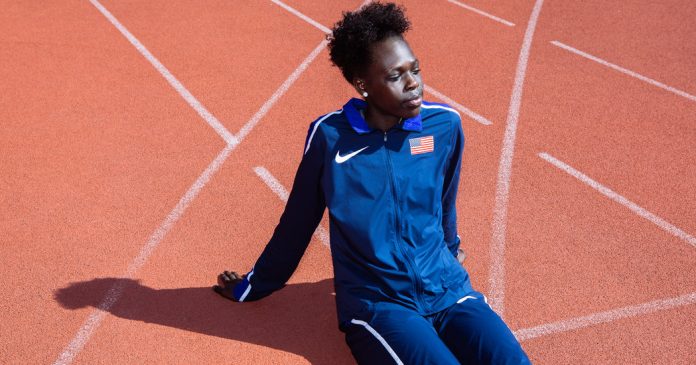
“Hey, guys.” “Hey, what’s up, everybody?” “Hey, everyone.” “Hi, everyone.” “What’s up, guys?” “Hey, it’s Lex Gillette.” “I’m a pro surfer.” “And I’m a canoe slalom athlete.” “Professional distance runner.” “Professional skateboarder.” “Coming to you from San Diego, Calif.” “I’m currently at home, of course. Where else?” “Where I’m staying indoors. Stay inside.” “Just heard about the 2020 Summer Games getting postponed until 2021.” “We heard the news the other day that the Olympics are going to be postponed for next year.” “It’s a pretty big bummer for us.” “Yeah. I heard that the Olympics will be in 2021, so.” “I think the whole situation has been a bit crazy.” “Man, it’s pretty crazy right now, right?” “At the moment, I’m literally packing up my life with the news that the Olympics have been postponed a year.” “This coronavirus, Covid-19, has changed a lot of plans, to say the least.” “We all worked so hard for this, physically and mentally, for this whole upcoming journey.” “I would be lying if I said there wasn’t a piece of me that was heartbroken. I was so looking forward to the Games this summer.” “And yes, that was my big dream, but right now, that’s not that important.” “It’s obviously something bigger than I think we all expected at first.” “And we are doing everything we can in our power to not go stir crazy in our house during this time of quarantine.” “We’re all kind of learning on the fly and taking it day by day and just doing what we can.” “I’ve been training in my backyard. I’ve been doing some workouts.” “My fiance and I have been training and cooking almost all day long.” “I’m doing some gym work in my home gym. Still able to run outside a little bit at this point.” “In Tahiti, we have the sun. We’re lucky we have the sun. We have the water right there.” “Trying to set up a home gym with some dumbbells, some barbells.” “Still going to skate, even if it’s not at the skate park.” “Just been surfing a lot and doing some gym work.” “Not exactly the prettiest gym we’ve ever worked out in, but it’s going to do the job. We’re going to work out.” “We built a little a gym at the park.” “Just getting used to training from home right now.” “Stay busy. Pick up something that you’ve never really done before.” “I’ve always wanted to play the ukulele, or play an instrument.” “So this is my sister Summer.” “What’s up, guys?” “And we are going on the trampoline.” “I do know this one little song. It’s pretty embarrassing but better than not knowing a song.” ♫ “… don’t know it.” ♫ [laughs] “As you can tell, I’m still learning and I’m not the most musically talented.” ♫ “Hope everybody is dealing with this OK. I don’t want anybody to go away.” ♫ “We’ve been doing some games, family games, and drinking coffee and eating chocolate.” “I mean, right now, I’m just spending time with my family, skating inside the house.” “Taking bubble baths. Exercising. Eating appropriately.” “Been here in the studio. I could play y’all something real quick.” ♫ [Rapping] “Yo. It’s like a million scenarios in my cranium, 20/20 vision all I see is packing the stadium. Pride in my chest, steam in my soul, medal round my neck, they gon’ see around the globe. Four years straight my eyes been on the prize. Medal on my neck, see tears on my momma’s eyes. It’s a lesson —” “Yeah. I can’t give y’all too much, but that’s what I’m working on.” “It’s definitely a little scary looking at this next year.” “It’s not what we wanted, but I think that’s the best decision.” “You know, as much as it hurts, I think it was the right call.” “And I think that, right now, what we’re going to need is a revision to be able to make some changes and alterations to ensure that the rest of this year will play out the way we want it to.” “And I am so incredibly proud to be a Paralympic athlete.” “And I’m really looking forward to getting even stronger, and hopefully bringing home some medals in the summer of 2021.” “On that note, I’m going to sign out.” “Wishing everyone a safe and healthy next few weeks.” “I just want to say, stay hungry, stay healthy, you know what I mean? And be positive, and you know, the best is yet to come.” “Looking forward to getting out of this on the other side, and hopefully get to compete at the Olympics.” “So be safe, take care of yourself. We will get through this.” “We’ll see you at 2021 Games, hopefully.” “Finished. Now we do what we all do in quarantine.” “We stay home, we stay safe.” “We watch Netflix and we eat food.” “Yes.” “Let’s go.”
Lesson of the Day: ‘What We Know About Your Chances of Catching the Virus Outdoors’
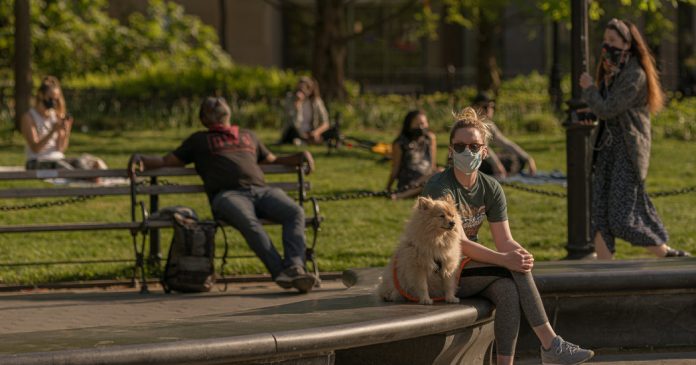
As states move to relax restrictions intended to fight the coronavirus pandemic, even the simplest outdoor activities seem fraught with a thousand questions and calculations. Is it safe to stroll on the beach? How about a picnic in the park? Or coffee with a friend at an outdoor table?
In this lesson, you will learn about the risks in going outdoors again and the precautions you can take to minimize them. In a Going Further activity, you will design a poster or public service announcement to inform others.
Warm Up
Take a moment to study the graph below of the level of human contact in various social spaces from this week’s “What’s Going On in This Graph?” feature. Then, respond to the following questions:
What do you notice? If you make a claim, tell us what you noticed that supports your claim.
What do you wonder? What are you curious about that comes from what you notice in the graph?
Feel free to share your responses on our What’s Going On in This Graph? page, which already has over 130 responses from teenagers.
Questions for Writing and Discussion
Read the featured article, then answer the following questions:
1. What is the “good news” from a growing consensus among experts about going outdoors? On the other hand, what activities do experts express particular caution toward? Are you surprised by either?
2. The authors state that the different approaches taken by states to reopen have left many Americans “bewildered about what is safe behavior outside.” What examples from the article best support this claim? How accurately does the statement characterize your own understanding of what is safe and what is not? Would you say that you are largely bewildered or confused?
3. What is the ideal way to socialize, according to the article? What precautions can reduce your risk if you cannot meet that ideal?
4. What is viral load? Why is it essential to understanding why transmission rates are lower outdoors than indoors?
5. Why are pools and beaches considered areas of risk even if pool water, fresh water in a lake or river, or seawater exposure would be extremely low transmission risk?
6. What advice does the article provide about what to do if you encounter someone too close to you and they are not wearing a mask? Do you find it useful?
7. The article concludes:
Another worry: Because it can take two weeks for symptoms to appear after a person is infected, there is no way to know if you’re going to the beach or the park in the midst of an invisible local outbreak, experts said. It’s yet another reason to take precautions.
“If we now go back to the old normal and don’t follow the social distancing strategy anymore, it’s like a ticking time bomb,” said Peter Jüni, an epidemiologist at the University of Toronto and St. Michael’s Hospital. “You never know where it blows up and when.”
Do you agree with Peter Jüni? Will you continue to practice social distancing now that states are easing restrictions? How concerned are you about getting the virus now that states are reopening?
8. What did you learn from the article? What questions still remain about catching the virus outdoors? Which outdoor spaces and activities described in the graph and the article are you most likely to visit or engage in now that states are easing restrictions? Which will you still avoid? Explain why.
Going Further
Option 1: Inform Others
How you can inform others about what you have learned from the article?
Who would be your target audience — teenagers, older adults or the general public? What message do you want to convey? What, specifically, does your audience need to know about the risks and recommended precautions for going outdoors again? What kind of language, images and graphics will grab their attention?
Here are two creative options you might try:
You might use information from the article or your own research to create a poster. You might use Canva or another design program to produce your designs. Use open-source images or create graphics that help get your point across. Be sure to cite all the sources you use. Then share what you made via social media or with peers at your school.
Or you can create a public service announcement using still photographs from this article, or from your own research, along with text, statistics and music. You might consider storyboarding your public service announcement, and if you have time, record, edit and share it with your class and your school. Scholastic provides some useful tips and a sample P.S.A. storyboard.
Option 2: Research a Question Further
The authors write that “even the simplest outdoor activities seem fraught with a thousand questions and calculations.” What questions do you still have?
Choose a question about the risks of transmission outdoors to research further.
You might start your research with the Times Coronavirus Topics page, or these Times articles:
Or use these online government resources:
Applying to a university degree program during COVID-19 just got easier


As students across the globe continue to see their learning plans significantly disrupted, our university partners are modifying admissions requirements to make it easier to apply for degree programs on Coursera. We recognize that many of our applicants may be experiencing uncertainty about their futures, and earning a high-quality and affordable degree from a world-class institution completely online can offer much-needed stability in the face of ongoing uncertainty.
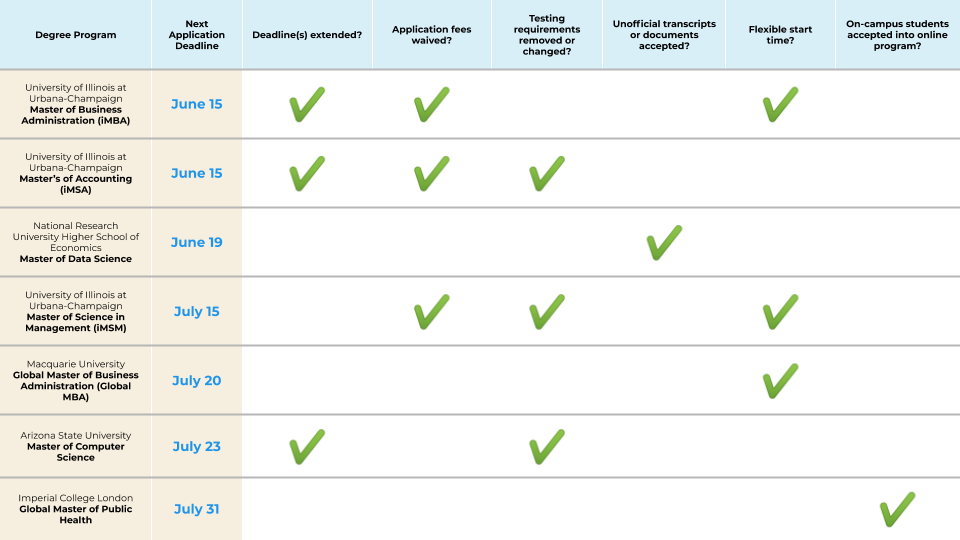
Here are some of the actions our University partners are taking to ease the admissions process for students during COVID-19:
Extended application deadlines
If you’re considering applying for a degree program, but are worried about getting your application materials together in time, these Coursera university partners have extended their application deadlines for the Fall. And remember, applying is easy, it only takes a day or so.
The University of Illinois Gies College of Business has extended its deadlines for both the online Master of Business Administration (iMBA) and online Master of Science in Accounting (iMSA) programs from June 1 to June 15.
Arizona State University will now allow applications to their Master of Computer Science program to be submitted as late as July 23 for the Fall cohort.
Waived application fees and enrollment deposits
During a time where many applicants may be experiencing financial burden or uncertainty, Gies College of Business has removed the application fee and enrollment deposit for all Fall 2020 applications for the online Master of Business Administration (iMBA), Master of Science in Accounting (iMSA), and Master of Science in Management (iMSM) programs, making it possible to now apply with no upfront cost.
Adjusted testing requirements
Recognizing that sitting for a GMAT, GRE, IELTS, or TOEFL exam is not possible with testing centers closing in response to COVID-19, our university partners are accepting other forms of test scores, and in some cases are removing testing requirements altogether.
Arizona State University’s Master of Computer Science and University of Illinois at Urbana-Champaign’s Master of Computer Science (MCS) and Master of Computer Science in Data Science (MCS-DS) programs are accepting Duolingo English Test examination results as an alternative to TOEFL scores for meeting English proficiency.
Illinois’ MCS and MCS-DS programs are also accepting test scores from the launch of new take-at-home tests, such as the TOEFL iBT Special Home Edition Test and GRE General Test.
GMAT or GRE scores are no longer required for application to the online Master of Science in Accounting (iMSA) from the University of Illinois Gies College of Business, and they are completely optional for the online Master of Business Administration (iMBA) and Master of Science in Management (iMSM).
Transcript flexibility
The online Master of Data Science from HSE University—a top 10 Russian university—is temporarily accepting scanned unofficial copies of required application documents before their June 19 deadline.
The admissions team for the Master of Computer Science (MCS) and Master of Computer Science in Data Science (MCS-DS) from the University of Illinois at Urbana-Champaign will not penalize students for the adoption of P/NP, CR/NCR, and other grading options on transcripts for courses completed in Spring 2020.
Flexible start times
Starting in June, Macquarie Business School is introducing entry into the Global Master of Business Administration (GMBA) in all terms. This means you can now apply and start your MBA journey in any of the six terms per year: January, March, May, June, August, or October.
Gies College of Business’ newly launched one-year Master of Science in Management (iMSM) is taking in both an August and October cohort, so you have a choice of when to start your degree learning.
––––––––––––––––––
As we continue to work with our university partners to develop new ways to support our community during this crisis, it is our hope that every learner will have the ability to continue on their chosen path despite the challenges we face in the world today. We are grateful to our partners for their efforts in making it easier for you to apply to Coursera’s online degrees.
Please continue to visit our Degrees Hub to see a full listing of online Master’s and Bachelor’s degree programs offered on Coursera. In each of these programs, you’ll earn the same degree as on-campus students, and you’ll do so 100% online, on your schedule.
Coursera for Business Helps Organizations Drive Business Value with 746% ROI, According to IDC


By Leah Belsky, Chief Enterprise Officer at Coursera
An IDC whitepaper unveiled today, sponsored by Coursera, explores the business value and benefits of skills development through Coursera for Business. With the recent shift to distributed work, companies are focused on scaling digital transformation across their workforce. Equipping employees with the right skills will be essential to their efforts.
Companies using Coursera for Business for skills development achieve greater business success in the long term. Based on interviews with eight organizations using Coursera for Business, IDC calculated that companies will see a 746 percent return on investment over three years. This is equivalent to a total value of $29.4 million, or $33,300 per learner. These savings are driven by additional business benefits:
- Higher employee retention: Companies see a 38 percent reduction in employee attrition rates, and as a result, $1.12M in recruitment cost savings per year.
- Boost in employee morale & mobility: Employees learning through Coursera for Business experience higher morale and feel more valued and empowered. They see a 20 percent increase in likelihood of promotion.
- Increased employee productivity: Companies note a 25 percent increase in productivity, driving an additional $20.1K in productivity value per user.
- More employees trained in less time: Companies are able to train 94 percent more employees using 40 percent fewer training resources in 46 percent less time.
- Lowered training costs: Companies that use Coursera for Business report a 24 percent reduction in training costs.
The ability to drive skills development for positive business outcomes is essential in today’s evolving economy. As IDC’s findings suggest, “Coursera clients will be better positioned to transform and succeed in a rapidly changing world.”
The full whitepaper is available here.
Coursera Appoints ACE President Ted Mitchell to Board of Directors
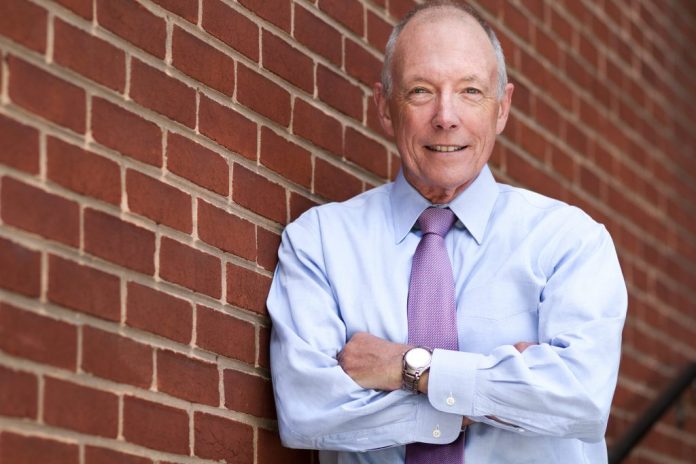

Today, we proudly welcome Ted Mitchell, a leading voice in higher education and former federal policymaker, as a director on the Coursera board. Ted currently serves as president of the American Council on Education (ACE), the country’s largest higher education association, whose mission is to shape effective public policy and foster innovative, high-quality practice.
Previously, Ted served as the U.S. undersecretary of education under President Obama, where he championed postsecondary education policy reforms and access to high-quality outcomes for all students.
Ted joins the Coursera board at an important time when the company is helping thousands of impacted colleges and universities around the world mitigate the disruption caused by the pandemic.
“The current crisis is going to transform higher education,” said Jeff Maggioncalda, CEO of Coursera. “We’re fortunate to have someone of Ted’s stature and experience to help Coursera navigate through this highly dynamic period and help shape our strategies for the future.”
“It’s really exciting for me to join the board of a company that I’ve long admired for its mission and impact on the world,” said Ted. “Now more than ever, the higher education community and Coursera are bound by a common goal of serving the world with access to high-quality, affordable, and job-relevant learning.”
Before joining the Obama administration, Ted was CEO of the NewSchools Venture Fund, a national nonprofit that supports educators and entrepreneurs. Before that, he served as president of Occidental College, vice chancellor and dean of the Graduate School of Education and Information Studies at UCLA, and professor and chair of the Department of Education at Dartmouth College. Ted received his bachelor’s, master’s, and doctorate degrees from Stanford University, where he also served as a member of the Board of Trustees.
Word + Quiz: cummerbund

cummerbund ˈkə-mər-ˌbənd , ˈkəm-bər- noun
: a broad pleated sash worn as formal dress with a tuxedo
_________
The word cummerbund has appeared in two articles on NYTimes.com in the past year, including on June 12 in the theater review “In ‘Open,’ a Love Story Told by Sleight of Hand” by Elisabeth Vincentelli:
Kristen, the narrator and sole character of Crystal Skillman’s new play “Open,” at the Tank, executes magic tricks because she is the one who needs to believe. The miracle this lovely show pulls out is that by the end, she does — and so do we.
Decked out in a floral-pattern blazer and a top hat, a cummerbund over her T-shirt, Kristen (the wondrous Megan Hill) is a pretty funky magician. When she shuffles an invisible deck of cards, she simply mimes the action and a sound effect helps the audience fill in the blanks. When she juggles invisible balls, the slapping noise they make as they hit her palms is enough to convince us that Ms. Hill is a master of eye-hand coordination.
_________
Should Students Be Required to Take the SAT and ACT to Apply to College?

Or, are standardized test scores, like the SAT and ACT, unfair and inaccurate?
In “Why Is the SAT Falling Out of Favor?,” Shawn Hubler asks, “Are the tests that were first deployed to diversify the Ivy League beyond rich prep schoolers a worthwhile yardstick, or are they, as one U.C. regent put it, ‘a proxy for privilege?’” The article continues:
The California system has become the biggest and best-known American institution of higher education to step away from the use of the two major standardized tests, citing charges that they disadvantage students who are poor, black, and Hispanic.
In the last decade or so, more than 1,230 colleges and universities have made the SAT and ACT optional for admission, according to FairTest, a group that has pushed to end testing requirements.
But with a few well-known exceptions, such as the University of Chicago, most have been small institutions. The question now is whether the 300,000-student California system’s decision will spell the beginning of the end for college admissions testing.
“The SAT has been remarkably resilient,” said Terry W. Hartle, senior vice president at the American Council on Education. “But this will quite possibly lead other public universities to say, ‘Well if the U.C. can do without it, why do we still need it?’”
The article also offers an explanation why test scores are still considered in many college admissions decisions:
Admissions officers typically look at several data points, not just test scores.
But those who argue for keeping the tests say colleges need some sort of broad yardstick to compare students across disparate school districts and states. And at large colleges, getting rid of the tests would mean revising the whole mechanism for admissions — retraining admissions officers, redoing applications and rethinking an entire methodology.
The tests provide important information beyond assessing achievement. Some studies have shown that SAT and ACT scores, combined with a student’s grade point average and other factors, can help predict a student’s success in college, especially in the crucial first year.
At the University of California, a faculty task force found that standardized tests were a better predictor of college success than high school grades were. They also found that including the SAT and ACT in the formula for admissions helped some black, Hispanic and low-income students by offering an additional metric for those who might have been rejected based on grades.
The article continues:
Admissions officers typically look at several data points, not just test scores.
But those who argue for keeping the tests say colleges need some sort of broad yardstick to compare students across disparate school districts and states. And at large colleges, getting rid of the tests would mean revising the whole mechanism for admissions — retraining admissions officers, redoing applications and rethinking an entire methodology.
The tests provide important information beyond assessing achievement. Some studies have shown that SAT and ACT scores, combined with a student’s grade point average and other factors, can help predict a student’s success in college, especially in the crucial first year.
At the University of California, a faculty task force found that standardized tests were a better predictor of college success than high school grades were. They also found that including the SAT and ACT in the formula for admissions helped some black, Hispanic and low-income students by offering an additional metric for those who might have been rejected based on grades.
As for why the University of California decided to no longer look at applicants’ SAT and ACT scores, the article states:
Critics of the tests cite decades of data indicating that they are inherently biased in favor of affluent, white and Asian-American students. During the debate among the California regents this week, numerous speakers used the word “racist” to describe the exams.
Critics also say the tests are too easily gamed by students who can pay thousands of dollars for private coaching and test prep. Carol Christ, the chancellor of the University of California, Berkeley, has long called for a move away from standardized testing for admissions. She cited the recent college admissions bribery scandal as a case in point, calling the episode “grotesque.”
Plaintiffs in a lawsuit pending against the University of California say use of the tests build on existing disparities. According to the College Board, which administers the SAT, 55 percent of Asian-American test takers and 45 percent of white test takers scored a 1200 or higher on the SAT in 2019. For Hispanic and black students, those numbers were 12 percent and 9 percent.
Proponents of a change say it is fairer to judge students by other measures, such as teacher recommendations. Some studies have suggested that high school grades better measure a student’s likelihood of graduation and cumulative performance in college.
And some school officials say the tests are superfluous. California’s community college chancellor, Eloy Ortiz Oakley, who is also a University of California regent, reminded the board this week that the university already enrolls tens of thousands of transfer students who are not required to take any standardized admission tests.
Students, read the entire article, then tell us:
Were you surprised by anything you read in the article? If so, what? Have you taken the SAT or ACT? If so, do you think your score is an accurate reflection on your knowledge, skills and potential to do well in college and beyond? Explain.
Have you applied to any colleges or universities? If you have, was an SAT or ACT score required or optional? Did the standardized test score policies of the admissions department affect your decision to apply? If so, how?
If you haven’t taken the SAT or ACT, do you think you will have to at some point? What have you been told about the importance of standardized tests in terms of your academic career? Has anything you read today supported or challenged your view? Explain.
How should admissions departments evaluate applications in the absence of SAT and ACT scores? To what extent can high school grades and teacher recommendations replace test scores in determining whether to grant a student admission or scholarship opportunities? Do you think this could lead to pressure on teachers to inflate grades or write glowing recommendations for all students?
Critics believe there is an inherent bias in standardized testing and, as you read, some people find the exams racist. Why do you think they believe this? What is your stance? Do you think there may be a solution and if so, what is it?
You also read about allegations that standardized testing favors students whose families can afford test prep courses and private coaches. Should this sort of preparation be provided to all students in a push to make the process more fair? If so, where should the funding for the classes and coaching come from? Could this help solve the problem? Explain.
Students 13 and older are invited to comment. All comments are moderated by the Learning Network staff, but please keep in mind that once your comment is accepted, it will be made public.
Lesson of the Day: ‘After 17 Years Underground, Cicadas Stage a 2020 Southern Invasion’

In this lesson, you will learn about cicadas and the hype over their emergence in several states. Then you will determine the degree to which you believe the hype is warranted.
Warm Up
The article you will read today begins, “They break through the ground, like the undead emerging from graves.”
How does that sentence make you feel? Does it make you want to know more — or less — about cicadas, the insects you see pictured above? Why might people think of the emergence of cicadas as a noteworthy event? Make a prediction about why the article’s headline calls it “a 2020 Southern Invasion.”
Questions for Writing and Discussion
Read the article, then answer the following questions:
1. Why are cicadas such a topic of interest? What makes them different from other insects?
2. What are some of the good things about cicadas, perhaps surrounding their return happening now? What are some bad things about the insects?
3. What represents danger to cicadas? At what point in their life span are they most vulnerable? Why?
4. What do they have working in their favor in terms of protection from predators? Explain how most of them are able to evade danger?
5. Why does it take so long for cicadas to emerge? How can people plan accordingly for an emergence?
Going Further
Now that you’ve read about the cicadas in Virginia, West Virginia and North Carolina, do you think comparing their return to “an invasion” is apt? What about the article’s first sentence: “They break through the ground, like the undead emerging from graves”? Or, do you think the author is just having a little fun with language? Why do you say that?
If you don’t live in a place where cicadas emerge, do you wish to experience this phenomenon? If you have experience with cicadas, to what extent do you think the hype is deserved? Explain.
Word + Quiz: eschatology

eschatology ˌe-skə-ˈtä-lə-jē noun
: the branch of theology that is concerned with such final things as death and Last Judgment; Heaven and Hell; the ultimate destiny of humankind
_________
The word eschatology has appeared in five articles on NYTimes.com in the past year, including on March 2 in the Opinion essay “Freeman Dyson’s Quest for Eternal Life” by Katie Mack:
He worked with such luminaries as Richard Feynman and Wolfgang Pauli, and wrote books speculating about religion, biology, and the future of human society. His early achievements landed him an offer of a professorship before he even finished his Ph.D., so he never bothered to complete it — he felt that being a perpetual student gave him license to explore more freely.
Of course, being a genius and visionary helped with that, too. By the time he was pondering eternal life, he had already firmly established his scientific legacy, so he could risk working on topics he knew would be considered frivolous. In the introduction of his 1979 paper, he pushed back against the idea that eschatology, the study of end times, should be avoided by serious scientists: “If our analysis of the long-range future leads us to raise questions related to the ultimate meaning and purpose of life, then let us examine these questions boldly and without embarrassment.”
_________
