fbpx
Home Blog Page 1465

How to stand out when applying for a graduate scheme

0
How to stand out when applying for a graduate scheme

Leaving full-time education is a daunting time for any student. As well as losing the freedom of student life, you’re confronted with some very real decisions about your future. 

Whether you know exactly what you want to do and where or you’re not sure what type of professional role would suit you best, graduate schemes offer the chance to get plenty of practical industry experience and start your working life with a leading company – and a competitive salary to boot.


What is a graduate scheme

A graduate scheme is essentially a paid training course which offers graduates practical industry experience. From PwC to MacDonald’s, top companies use graduate schemes to attract young talent, and, all going well, the training will end in a permanent role. 

They can last from three months to three years and will either prepare you for a specific role in the company (like sales, marketing or management) or give you a more general introduction into the business, encouraging you to specialise later on. 

Applying for a graduate scheme

A graduate scheme offers unparalleled industry exposure and career progression, but competition is fierce. 

In Oleeo’s 2019 survey of 3.8 million graduates, they found that only 1% of graduates applying for schemes within finance, advertising, professional services, and major retailers got the job.

Read on to find out how you can make your application stand out.


1. Get ahead of the game

With potentially thousands of applicants and most graduate schemes opening applications a year before they begin, it pays to start gaining some work experience as early as your first year.

You’ll build valuable skills and open your mind to what you want from a professional role. If you know which schemes you’d like to apply for, getting some relevant experience whilst you’re still at university will show you’re committed to your goal and give you more to discuss on your application and at interview.

Your training could take the form of a summer internship, a work placement during term time, or even just the odd day spent shadowing someone doing a similar job to the one you want.

Not only will you gain a deeper insight into what to expect from a graduate role, but you’ll also be making valuable connections in your industry of choice. 

You never know who may open doors for you further down the line, and, if you impress, then they may even be able to help you with your application or provide you with a killer reference.

2. Tailor your application

Unfortunately, your application will be one of many and you won’t be able to sail through with a generic, one-size-fits-all application. 

Chances are, this is your first time applying for a professional job, so it’s important your CV is adapted accordingly. 

Comb through the job description and identify the skills the employer is looking for. For every item listed on your CV, ask yourself how it relates back to these skills. Aside from school and university grades, if it doesn’t provide evidence of expertise relevant to the industry or role you’re applying for – leave it out. 

However, don’t be put off if you don’t have direct practical experience. The employer will be looking for transferable skills. If you don’t have a huge amount of experience in the area you’re applying for, you will have still gained relevant transferable skills. 

Figure out what skills you’ve gained through work or study experience and incorporate them into your CV.

If you need more advice on crafting a job-bagging CV, check out our post on how to write a great CV.

3. Only apply to places you actually want to work at

Although it’s difficult to secure a place on a graduate scheme, narrowing your focus to companies you are passionate about and a sector you’re engaged with will make it easier to write a genuine application and won’t go unnoticed by an employer.

Narrow it down by thinking about what you really want from a career, company, and role.

Do you want to work with an FTSE 100 company or are you more interested in a company’s mission? Would you like the opportunity to work abroad or would you like to work in a specific place? Would you enjoy working somewhere corporate or somewhere more laid-back? 

Once you’ve chosen some companies you think could be a great fit, look into what type of employer they are. Do they offer perks? What are their company values? Do they offer good career progression? All of these things will be available online and are vital to making sure you’re a good match. If their values align with what drives you to do your best work, then you’re on to a winner. 

And remember, most schemes accept graduates from every discipline, so don’t feel held back by the degree subject you chose three years ago. 

4. Be passionate

As a student, you’ll build lots of relevant skills for work and life, but you certainly won’t be ready to excel in every aspect of your new role – and acting as though you can isn’t going to fool an employer. 

That’s why a passionate and enthusiastic attitude is a key attribute for you to develop and get across in your application. No employer is expecting you to be ready to start the job tomorrow, but they are expecting you to care about the sector and the role you’re applying for. 

Aside from basic research, try and be creative about showing your passion for the scheme. Arm yourself with knowledge about world issues that link to the relevant industry, and don’t be afraid to use emotional language in your application. 

Many graduates get so carried away with explaining how they have the technical skills required, that they forget to prove their (just as valuable) soft skills, like enthusiasm and creative thinking.

5. Network with experts

Most universities offer careers fairs and events for graduates. Don’t skip these. They’ll give you the chance to learn more about the opportunities within a company and speak to people actually working at them. They’ll give you honest information you may not find elsewhere that will help you decide if the scheme is right for you. 

Plus, meeting someone face-to-face creates a deeper impression than a paper or digital application. Bring your best self to these events and be armed with intelligent questions to ask.  Connecting with them on LinkedIn later and referencing something you discussed will also help them to place you. 

If you can’t get to in-person events, use LinkedIn to engage with people working in your desired sector. Developing a professional online presence is a great way of getting your personality across in a more holistic way. 

You can learn how to boost your employability by developing a professional online presence on this free course from the University of Leeds and the Institute of Coding.

6. Be yourself

Amongst hundreds of applications, an employer isn’t going to remember the person who said, “I’m extremely passionate about this role and it has always been my dream to work at your company”. 

Even if that’s true, you can bet your last pristine copy of your CV that at least 50% of your fellow applicants also said that. 

Being authentic means speaking honestly and respectfully about what you believe. Try not to simply give the answer you think they want, but the one that resonates with you most. 

Employers want candidates that have their own opinions and ideas. If you stay neutral and don’t say what you really think, it’s very hard for an employer to understand what your value will be.

Of course, being true to yourself comes with the risk that you won’t be what they’re looking for. However, ultimately, if the company doesn’t think you’re right for the role – and you’ve represented your most authentic self – then you’re probably not right for the role, and that’s okay. It’s actually great that they worked it out before you took the job and hated it.

7. Don’t lose momentum

Sometimes applying for a graduate scheme can feel like a training course in itself. Most applicants have to go through at least three rounds of questioning during the application process. 

By the time you get to the assessment day, you might feel you’ve learned all you can about the sector, company, and role, but don’t lose your drive. 

Whilst the application can be painstakingly worked on and proofread by family and friends when it comes to the face-to-face interview and assessment day – you’re on your own.

The best way to prepare for these is to research as much as you can and practice with someone you trust. Even if you think you have the knowledge you need to answer the questions you’re expecting, saying the answers out loud and responding to a curve-ball question on is a whole different ball game. 

At the end of each interview stage, write down all the new information you’ve heard so that you can improve on your answers as you go. 

Asking questions will help with this and will also show you’re taking the process seriously.


Earning a place on a graduate scheme requires a lot of research, introspection, and hard work. Be resilient in the face of rejection (of which there will be some) and give yourself the best chance to succeed by putting in the work ahead of time.

For more tips on creating applications that stand out, check out our top 10 courses for getting the job you want. 

The 10 best jobs for remote working

0
The 10 best jobs for remote working

With using public transport to travel to work being discouraged in the wake of the COVID-19 epidemic, and social distancing becoming the norm for offices that are reopening, remote working has never seemed more appealing.

In spite of the economic instability provoked by the coronavirus, there are still many in-demand jobs out there that let you work from home, or wherever you want to make your office for the day. Here’s our pick of ten of the best career options for remote working.


 Language teacher

If you’re already fluent in a foreign language, teaching it to others is an easy way to connect with people from across the world, while also being able to work flexibly and remotely. Lessons can easily take place over Zoom, and you can send learning materials using email.

Italki is a good platform to share your skills with others, letting you offer foreign language classes to students from the comfort of your own home, whether you want to provide formal lessons or just casual conversation. 

If you’re interested in teaching English to foreign students, you can also take FutureLearn’s courses for teaching TEFL.

Explore TEFL courses


Personal tutor

With the jobs market contracting, but higher education numbers remaining steady, many young workers are currently overqualified for their current role. If you feel like you’d like to put your academic knowledge to good use – and avoid the rush hour for good measure – online tutoring could be a great way to work.

Websites like Tutorful offer £20-30 an hour to tutors, while sites like Gumtree are also perfect for advertising your services, whether you want to teach school kids or university students. 

If you’d like to learn more about best practise for teaching adults online, The Open University has a brand-new microcredential exploring the topic.

Join the Online Teaching microcredential


Copywriting

Copywriting is a truly remote job – all you need, after all, is a laptop and a love of language. Even in offices, copywriters are often ‘hot desking’ – moving from place to place to write depending on who they’re working with – so working completely remotely is the next logical step.

Services like Copify are always looking for writers to contribute blogs, SEO,  and product descriptions. Once you have some basic experience, you can think about applying to be an in-house writer for a company with an internal marketing team – depending on the company, these roles allow you to work from home. 

You can also browse our range of writing courses, designed to help you perfect your penmanship.

Explore writing courses


Screenwriter

Online video content was experiencing an exponential boom even before lockdown turned us all into Normal People aficionados. Screenwriters need never leave their home office, and there’s now huge demand for good writers to match the global clamour for video content. 

Even better – you can start to remotely build up a portfolio of writing work without ever having to set foot on set. Channel Four have a screenwriting competition you can submit to once you’ve got a script you’re happy with, while the BBC has a good directory of opportunities for new writers.

To start to hone your craft, enrol on UEA’s free ‘Introduction to Screenwriting’ short course.

Discover screenwriting


Photography and videography

Knowing your way around a camera is an in-demand skill, especially as more and more content moves online. Employers are increasingly looking for photographers and videographers to document their business and keep customers up to date via social media. Meanwhile, stock images providers like Shutterstock are always looking for high-quality images.


Once you have a camera, and some basic video or photo editing software, you’re halfway there. To take it to the next level, The Open University’s popular ‘Digital Photography’ microcredential is an expert guide to creating a professional portfolio, and is due to open for its second run later this year.

Browse visual arts courses


Social media manager

If you’re known as the resident meme-maker or social-sharer in your group of friends, have you thought about bossing social media for a living? 

One of the advantages of working with social media is that as long as you have access to a phone and a laptop, you’re ready for work. Social media managers and executives all start with a passion for creating online content, and their roles let them work remotely from anywhere in the world.

To get started, the University of Leeds and the Institute of Coding have a course to help you learn how to create a killer social media campaign. Or you can discover how to use social media for business, with Accenture’s free ‘Digital Skills’ short course.

Learn how to create great online content


Computer programmer

When you work with computers, your office is wherever your home laptop is. Development is one of the best jobs for remote working, with web and software engineering roles featuring highly on LinkedIn’s recent list of ‘Most Promising Jobs’. 

The University of Leeds and the Institute of Coding have a perfect series of courses designed to give you introductory development and coding skills. You can learn the basics of computer programming or learn to code for the web – training that could set you on the path to a successful remote programming career.

Discover coding and programming courses


Podcaster

Podcasting is one of the fastest-growing areas of entertainment in terms of listenership – and ad revenue. 

For anyone with the gift of the gab – or an obscure passion you want to share – it could be an easier way to start a media career from home than the more competitive and image-focused world of YouTube and vlogging.

The University of Wollongong Australia has a starter course designed to give you the basic skills you need to begin your own podcast – from recording to publication.

Start a podcast


Your current job 

The best job for remote working might be the one you currently have. Although home working has been broadly embraced by many employers, some are still reluctant to fully adopt digital technologies and the full potential of remote working. 

Knowing the latest digital trends – and understanding the future of work – could help you persuade you (or your boss) of how remote working could benefit your business, and give staff the skills that will help them thrive in the future.

The Institute of Coding and the University of Leeds have designed a course on Current Workplace Digital Trends that will let you learn why digital, remote working is the way to go.

Explore the future of work


Work your passion

With the rise of digital marketplaces – and the peer-to-peer economy – there’s no reason why your home passion couldn’t be turned into a remote job.

For example, if you’re a foodie, starting a home baking business could be a great way to work remotely – especially as demand for home delivery has skyrocketed. All you need is the right equipment, great ingredients, and a love of colourful cakes. Mum Bakes Cakes has a good guide for budding bakers.

And if you’re handy, selling your homemade products on Etsy could be a viable remote career. From gift cards, to clothes, and accessories, Etsy is the go-to for anything cute and crafty. Check out their beginners’ guide for more information.

Find your next hobby


For more on how to make money while in lockdown, explore our blog on the best ways you can earn money from home, or discover the full range of the digital Skills Toolkit, designed by FutureLearn in partnership with the Department for Education to upskill you for the jobs of tomorrow.


Category Current Issues, Careers

How to maintain healthy relationships in lockdown

0
How to maintain healthy relationships in lockdown

Since the COVID-19 lockdown started, many aspects of our lives have changed. We’ve all had to adapt, balancing the various elements that come with this ‘new normal’. It’s not been easy for many people, and some have found that it can be hard to maintain healthy relationships in lockdown. 

Thankfully, despite the difficult conditions, there are plenty of things you can do to keep your relationships thriving. Whether you’re living together or apart, these small actions can make a significant difference.


 What does a healthy relationship look like?

Before we get into advice on how to maintain healthy relationships in lockdown, let’s look at what one actually looks like. A good place to start is the definition and ten signs of a healthy relationship outlined by One Love. These are:

  1. A comfortable pace
  2. Trust
  3. Honesty
  4. Independence
  5. Respect
  6. Equality
  7. Kindness
  8. Taking responsibility
  9. Healthy conflict
  10. Fun.

By their definition, “healthy relationships bring out the best in you and make you feel good about yourself.” This doesn’t mean you have to be blissfully happy all the time. However, everyone involved should feel supported and connected, while still having their independence. 

Why is it important?

Our relationships, romantic or otherwise, are often a central part of our lives. As such, they can hold huge sway over our emotional and even physical wellbeing. Various studies have shown the importance of social relationships. They can have long- and short-term impacts on our health, for better and worse.

A positive relationship can help to reduce stress, encourage healthy lifestyle choices, give you a sense of purpose, and even make you live longer. So, to maintain healthy relationships in lockdown is to help take care of your and your loved ones’ physical and emotional wellbeing.

Of course, all kinds of challenges present themselves as the COVID-19 pandemic continues. Whether you’re living together or separately, it can be a difficult time for everyone. It’s also a time where having strong relationships is more important than ever.

Long-distance relationships can be challenging at the best of times. However, during lockdown, couples living separately were advised not to meet up until restrictions are relaxed.

When it comes to friends and families, meeting more than one person from outside your household is still off the cards. Even as the restrictions ease slightly, social distancing rules mean that you won’t be able to do many of the things you did before the pandemic.

Have regular catch-ups

Keeping in touch is crucial during this difficult period. No matter what your living arrangements are, it’s common for people to feel a little isolated and lonely during lockdown. Regular catch-ups with the important people in your life can help combat those feelings, and keep you feeling connected.

Remember, communication is an essential part of a healthy relationship. So, taking the time to schedule calls and chats is key for maintaining your emotional bonds. Talk to others about when you want to catch-up, and make sure you follow through with those plans if possible.

Technology gives us so many ways to connect with people, even during lockdown. Whether it’s sending messages throughout the day, calling on the phone, or video chatting, make sure you choose a method you’re both comfortable with.

When you chat, talk about the positives from your day. This could be the small achievements, something that made you smile, or a memory from your past. Also check in with how each of you is doing emotionally. Discuss whether there is anything you can work on together.

However, also be respectful of each other’s boundaries. You don’t want to bombard each other all day every day, especially if one or both of you is still working. It can lead to frustrations and distractions. Instead, take some time to spend working on your own interests. Check out our post on how to find a new hobby in lockdown if you’re looking for some inspiration.

Do some shared activities

With the abundance of ways we can stay connected, our options aren’t limited to just having a conversation on the phone. There are plenty of things you can do together, even if you’re not physically in the same place. They can help bring a feeling of normality back to your day-to-day life.

So, where to start when you’re trying to maintain healthy relationships in lockdown? Here are some ideas to get you started:

  • Play games. There are tons of great games you can play together online. Traditional games like cards and chess are always enjoyable, while modern console and PC games present endless opportunities. Compete against each other or side by side.
  • Cook. Getting creative in the kitchen is always a good way to spend time during lockdown. Although you might not be in the same place as your partner, friends or family, that doesn’t mean you can’t cook together. Choose a recipe and see whose culinary skills are up to the challenge.
  • Watch a movie or TV show. Many of us have spent time streaming media over the last few weeks. So why not try watching your favourites together? Apps like TwoSeven and Netflix Party let multiple people stream the same content while letting you text or video chat at the same time.
  • Write a song. For the creative among us, time in lockdown has meant more time to work on passion projects. It’s the perfect time to collaborate on something creative together, such as making music. 
  • Take a course. One excellent way to get the conversation flowing is to learn something new together. With our boredom-busting courses, you can find all kinds of fascinating topics to study and chat about.

Send a care package or letter

One aspect that many people are struggling with is the lack of physical human contact. This ‘skin hunger’ can be challenging, especially for those who are usually quite tactile. One way to maintain some semblance of physical connectedness is to send something nice to the people you care about most.

Whether it’s a hand-written letter or a care package, sending something tangible can give your loved ones a huge boost. Think about including some of their favourite things and encourage them to write you back.

Make future plans

Start planning that trip you’ve always wanted to take. Think about how you can celebrate an upcoming (or recently passed) birthday. Discuss your options for when people can start congregating.

All of these can give you something to look forward to, and give you and your loved ones some light at the end of the tunnel.

Cohabiting

As challenging as it can be living apart, living in close quarters can also bring its difficulties. You may have gone from having the relative freedom to come and go to being quarantined for weeks on end. No matter whom you’re living with, friends, family, or a partner, lockdown can put a strain on things.

To maintain healthy relationships in lockdown can also mean navigating the complexities of living together.  

Give each other space

Setting boundaries is an essential element of a positive relationship, no matter what’s going on in the world. At this unusual time, they become all the more vital. Having some alone time to focus on your own wants and needs can help to relieve the stresses of life in lockdown.

Make sure to discuss where your boundaries are with the people you’re living with. You should let each other know when and how you want to spend some time alone. It’s then important to respect these wishes and come up with a plan that meets everyone’s needs.

Even if physical space is at a premium, some mental space can be equally beneficial. Taking and giving time for things like reading, playing video games, meditating, chatting with people outside your house, and more is all essential.

When thinking about this physical and mental space, it’s vital that everyone involved respects the situation and is prepared to compromise. You may want to plan out such times if space is tight at home. By doing so, you can make sure everyone has their needs met.

Work on your communication

Communication skills form a central part of any strong relationship. The ability to discuss and explain your thoughts, feelings and needs helps create a fulfilling and trusting bond. Of course, it’s also something that needs to be mutually practised, meaning listening skills are also helpful.

When trying to maintain healthy relationships in lockdown, the need for communication becomes greater. The extra stresses that come with social distancing, and more time under the same roof can leave things fraught. It’s easy to get caught up in the negatives and forget to communicate.

Take some time out of your schedule to focus on communicating with the person or people you live with. Discuss how you’re all feeling, how the situation is affecting you, and what your wants and needs are. Make sure that you give enough time for everyone to speak, which again requires some active listening.

It shouldn’t be something that focuses purely on the negatives either. Share your positive thoughts and emotions, such as what you appreciate about your loved ones and how important they are to you. Keep your tone of voice light and level, and take responsibility for your own feelings and actions.

Make a plan

Regardless of how many other people you share your household with, lockdown life can bring chaos to your daily schedule. If you’re not careful, the days start to blend into one long pyjama-fest. Although this may sound appealing, in reality, it can cause tensions and frustrations.

Creating a plan for your household gives everyone the chance to contribute to the day-to-day running of the house. So, think about chores, cooking, and the essentials that need doing.

However, you don’t have to limit yourself to the mundane. Make sure to have fun with your planning, such as allocating who chooses the playlist, which quiz rounds everyone is doing, and what movie or series you’re going to binge.

Get creative

Although you’re limited to the activities you can do outside your home, that doesn’t mean you can’t bring some fun inside it. Try and organise fun things to do on certain days. Doing so can help you and your cohabitants have something different to look forward to.

Like to wine and dine? Organise a grand banquet and cook some extravagant dishes together. If you’re a culture vulture, why not get dressed up for a night at the home theatre? Try and bring some of the excitement of the things you usually do to your lockdown living.

Not only does this help to maintain healthy relationships, but it can help you forget about the world for a while.

Discover something new

Sometimes, the conversation can run dry when you spend all day every day together. Let’s face it, the chances are you already know the other person’s day – you were there. So it can be helpful to find something new to explore and discuss.

You could take a history course about a period you’ve a special interest in or choose an area of politics you don’t know much about. By studying the same subject, it’s sure to spark questions, debate and conversation. If you like to write, a literature course can set you on the way to penning a poem, screenplay or novel together.

Don’t sweat the small stuff

Healthy conflict is something that all strong relationships need. Whether it’s with a friend, partner, or family member, it’s vital to discuss issues and disagreements openly. That being said, during lockdown, things can get a little fraught. Sometimes, you’re going to need to let minor things slide.

Everyone has their strange habits and idiosyncrasies. It’s what makes us unique. But under the microscope of pandemic living, these things can amplify and seem bigger than they are. It’s a good idea to mentally check in with yourself, so you don’t sweat every minor annoyance.

Of course, boundaries are still really important. But we all have to be a bit understanding of the people we live with. Try and let the small things go, and discuss openly and in a positive manner when you can’t.

Practice gratitude

It can be easy to feel dissatisfied with life at the moment. These strange and unprecedented times are leaving many of us craving for the things we had before lockdown. Yet this feeling of dissatisfaction can have negative consequences on many areas of life, including relationships.

One really positive way to combat dissatisfaction is to practise gratitude. It can refocus your attention towards all the good things (and people) in your life right now. Even the simple act of writing down the things you’re grateful for every few days has been proven to make you feel better.

Look after your mental health

The last point about gratitude brings us to a broader topic, that of mental health. It’s something that we all have a responsibility to take care of, particularly during the current situation.

By taking care of your own mental health, you’re also better positioned to maintain healthy relationships in lockdown. You can offer support and advice to those you care about, whether they’re living with you at the moment or not.

In a separate post, we looked at how to stay healthy during lockdown. We looked at some of the ways you can take care of your physical and mental health at this time. 

Consider your needs, and theirs

The majority of people are finding the current situation tough. But that doesn’t make your struggle any less valid. You can tend to your own needs in various ways, including:

  • Practising mindfulness. The simple act of being aware and present in the current moment can help you feel calm and reduce anxiety. It can also benefit your relationships and communication skills.
  • Eating well. Our diets play a huge role in our physical and emotional wellbeing. Make sure to eat a balanced diet and drink plenty of fluids throughout the day.
  • Finding coping strategies. There are various ways that you can thrive during these trying times. By learning some coping mechanisms, you can reflect on the situation and respond effectively.
  • Managing stress. Although a little bit of stress is normal, too much can have many negative impacts on your life. Finding ways to cope with and combat stress can be hugely beneficial.
  • Limiting screen time. Although technology can certainly be helpful during lockdown, too much can be a bad thing. Learning about digital wellbeing and how technology impacts our lives can bring many benefits.

By learning about all of these topics, you can also help the other people in your life deal with their difficulties. If the young people in your life are having a tough time, a course on helping them manage low mood and depression could be useful.

Lockdown has been particularly hard on people’s mental health, even for those who have never suffered poor mental health before. We have worked with our partners to create specific courses to help you manage your mental health and support your household during lockdown.


Life may seem pretty strange these days, but it’s our relationships that help get us through. By spending the time to focus on maintaining your social bonds, you’re helping yourself and the people you care about.

Whether you’re living in close quarters with your loved ones or having to remain socially distant, there are challenges. But learning about some strategies for dealing with your situation can make things seem more manageable.

GUEST POST: How Exercise Improves Student Mental Health

0
GUEST POST: How Exercise Improves Student Mental Health

The activity connection

In the last decade, research on the link between exercise and mental health has increased significantly. A paper (4) reviewed the research since 2011 into the link between exercise and depression, self-esteem, anxiety and cognitive functioning and found that the strongest link was found between exercise and cognitive function. For depression, the intervention effects were classed as moderate, with the authors saying their findings constitute “partial evidence for a causal association” between increased physical activity and lower rates of depression in young people. Results for anxiety were less clear, due to a lack of studies in this area.

While there was no evidence for a causal association between physical activity and self-esteem in youth, the authors point out that this field is complex. 

How exercise can help

To understand these links further, it can be helpful to explore results from individual studies.

For example, a study in 2017 (5) assessed the association between moderate-to-vigorous physical activity (MVPA), sedentary behaviour and major depressive disorder in middle childhood. The researchers evaluated a community sample of 795 children living in Norway, who were enrolled at 6 years of age and followed up at ages 8 and 10.

The authors concluded that MVPA predicted fewer depressive symptoms in middle childhood, suggesting increased physical activity may be useful to prevent and treat childhood depression.

The study’s lead author Tonje Zahl, M.S.C., from the Norwegian University of Science and Technology, said in a statement: “Physical activity has a range of health benefits, and this study indicates that increasing children’s moderate and vigorous physical activity may prevent later depressive symptoms.

“Thus, increased physical activity may serve as an adjunct component to … pharmacological or psychological treatments. As regards prevention, because nearly all children can be targeted in efforts to increase MVPA, the gains at the population level might be substantial.”

Another study (6) examined an aerobic cybercycling intervention on behavioural self-regulation and classroom functioning in children with mental health disabilities attending a therapeutic day school.

Researchers randomly assigned 103 students to 7 weeks of aerobic cybercycling, in which they used the bikes twice per week during 30- to 40-minute physical education (PE) classes. In the control period, children participated in standard non-aerobic PE.

They found the children, who were aged 7 to 16, experienced 32 to 51 percent lower odds of poor self-regulation and learning-inhibiting disciplinary time out of class when participating in the intervention, which the authors note is both clinically and statistically significant.

Effects were more pronounced on days the children participated in the aerobic exercise, but carryover effects were also observed. The authors concluded that “aerobic cybercycling PE shows promise for improving self-regulation and classroom functioning among children with complex behavioural health disorders. This school-based exercise intervention may significantly improve child behavioral health without increasing parental burden or health care costs, or disrupting academic schedules.”

Lead author April Bowling, assistant professor at Merrimack College, explained to Healthline that cybercycling appealed to the children because they could successfully engage in it at their current ability level and found the video games and virtual reality courses entertaining.

Regarding how exercise influences mood and behaviour, Bowling explains: “First, it seems to change where the brain directs its resources, from areas of the brain that are involved in worrying, for example, and toward areas that are more involved in coordination and focus.

“Secondly, aerobic exercise can change brain chemistry, and specifically the levels of certain neurotransmitters that might help improve an individual’s self-regulation. When mood and self-regulation — the ability to control behavior — is improved, then children can function better in the classroom.”

She recommends schools “stop cutting out movement from the school day – taking time away from recess and physical education for more academic purposes – if we want our children to perform to their potential”.

Word + Quiz: pratfall

0
Word + Quiz: pratfall

1. a fall onto your buttocks

2. an embarrassing mistake

_________

The word pratfall has appeared in three articles on NYTimes.com in the past year, including on May 6 in “Where Have All the Goslings Gone?” by James Gorman:

I thought it would be like the previous spring, when my wife and I often watched what I believe was the same goose pair with a similar brood. One day we saw the whole group leave the shore following the parents, except for one dawdler who was poking at something interesting under a rock. Suddenly the young goose, still fuzzy in its baby feathers, looked up and saw its family paddling away. It made a mad dash for the water and tripped, tumbling head over large, webbed feet in a pratfall made for a funny home video.

I knew it wasn’t a pratfall to the gosling, just a stab of panic and a fall. Still the baby quickly rejoined its family. We giggled. No harm done. You can see why I had high hopes this year.

_________

Weekly News Quiz for Students: House Relief Bill, Baseball, Virtual Graduations

0
Weekly News Quiz for Students: House Relief Bill, Baseball, Virtual Graduations

Above is an image related to one of the news stories we followed over the past week. Do you know what it shows? At the bottom of this quiz, you’ll find the answer.

Have you been paying attention to the news recently? See how many of these 10 questions you can get right.

How Much Has Your ZIP Code Determined Your Opportunities?

0
How Much Has Your ZIP Code Determined Your Opportunities?

In “‘Without Fixing Inequality the Schools Are Always Going to Struggle’,” Lora Kelley shares the responses of eight teachers to the question: Do children’s ZIP codes at birth determine their futures?

We were seeking a direct view into how much such factors determine outcomes for America’s young people and the role that schools play in helping overcome them. We asked teachers in cities across the country to share the experience of how the neighborhood that children are born into affects their futures. Over 500 teachers wrote in.

All of the teachers we heard from went out of their way to praise the hard work and talents of their students. But each also discussed the challenges that students in low-income schools face that students in wealthy ZIP codes do not, including one tied tightly to place: high rates of asthma due to living in polluted areas.

Jay Wamsted, a high school math teacher in Atlanta, responded to the question by saying:

Past and present racism still determine too much of my students’ futures. Race shapes the map of Atlanta. These school zone lines were drawn by race and are still drawn along neighborhood lines that are tracked by race.

I teach in southwest Atlanta. Most of my students are black. Almost everybody receives free or reduced-price lunch. There’s a public high school two ZIP codes over in a whiter, richer part of town. It would be our rival high school if it existed in the same world as us at all. But it doesn’t.

I have taught many children that fought their way through and have gone on to do amazing things. Many wonderful, brilliant kids have come to my school. But those stories just happen less than the stories that would happen in the wealthy part of town. If you look at all the metrics, like test scores, high school graduation, college graduation, future employment — all of that just tracks worse for students in my ZIP code.

Maya Brodkey, a high school English teacher in Oakland, Calif., responded:

I’m a third-generation teacher. As a white teacher with a master’s degree coming from a middle-class background teaching in this neighborhood, the narrative that I got fed about teaching here was, Oh, education is the great equalizer, right? That’s the narrative that we have as a society: If you work hard enough and you study in school, you can be successful. And then coming into my school, I’m like, Oh, well, that’s a lie, right? I have kids who work incredibly hard. And I have kids who have the academic potential to do incredible things, but they have to work 40 hours a week to help support their family.

Even if my students were geniuses receiving a top-notch education, that doesn’t change the fact that they live in a two-bedroom apartment with 12 other people; that they hear gunshots every night; that they have a parent in jail or ICE detention; that they don’t have food at home. If students’ basic physical and emotional needs aren’t met at home, how can they succeed academically? We need a stronger social safety net: We need to eradicate, or at least alleviate, poverty to give students like my kids a chance at “making it.” I think we need to guarantee a right to good, stable housing. The pressures of gentrification are really huge for my students and their families. Some families have had to move, and now those students wake up at 3:30 a.m. to commute to school with their parents who still work in Oakland.

My kids aren’t starting at the starting line. They’re starting from 100 feet behind the starting line. And the fact that they make it to the finish line at all is a testament to how incredible they are. My students are incredible in the resilience that they show.

Amir Tehari, a high school economics teacher in Sacramento, said:

I think it’s important to look into the fundamentals of the students’ environment from an environmental science perspective. Are there heavy levels of lead exposure from lead paint? What is the pollution exposure in the area? Because there is a lot of scientific evidence that high rates of pollution and things like lead paint can be really detrimental to a student and a student’s learning.

Ivy Lin, a high school science teacher in the Bronx, responded:

If I could wave a magic wand, I would make internet access available to all of my students. I also really wish the schools my students attend had less teacher turnover. Students have told me that a lot of teachers who work in the Bronx tend to leave. I feel like the stability of having a group of adults whom they can trust kind of guide them through the four years is important. I have been teaching in the Bronx for most of my 12-year career.

Teachers, students and parents try their hardest in the Bronx. In fact, I’d wager to say that students here try harder than the average suburban student. But there are so many students who get bogged down by homelessness, poverty, domestic violence and other issues in their immediate environment. My students work very, very hard.

Students, read the entire article, then tell us:

  • How has your neighborhood affected who you are: your identity and your worldview? What about where you are from has allowed you to excel? Have you ever faced challenges or limitations because of where you live?

  • How does where you live connect with other parts of your life and well-being, such as your health, access to health care, housing and internet access? How do those other factors connect to your education and ability to do well in school?

  • Imagine some ways your life might be different if you lived in another kind of neighborhood — for example, if you had more or less outdoor space, with better or worse schools, more or fewer environmental health problems, depending on your circumstances.

  • If you live in the United States, see how opportunities in your area compare to those in other parts of the country. Enter your county in the field that says “Choose your county” in this Opinion piece. What do you notice as you scroll through the various graphs?

  • Do you think it is possible for all young people to have the same high level of opportunity? What changes — structural or societal — would have to happen to make that possible? What barriers stand in the way of equal opportunities for all young people?


Students 13 and older are invited to comment. All comments are moderated by the Learning Network staff, but please keep in mind that once your comment is accepted, it will be made public.

A Visual Dispatch From One of the World’s Most Remote Islands

0
A Visual Dispatch From One of the World’s Most Remote Islands

With travel restrictions in place worldwide, we’ve launched a new series, The World Through a Lens, in which photojournalists help transport you, virtually, to some of our planet’s most beautiful and intriguing places. This week, Andy Isaacson shares a collection of photographs from the remote island of Tristan da Cunha.

The six-by-six-mile volcanic island of Tristan da Cunha (the main island of an archipelago bearing the same name) sits in the remote waters of the South Atlantic, roughly equidistant from South Africa and Brazil, and about 1,500 miles from its nearest neighbor, the island of St. Helena. Lacking an airport, Tristan, part of a British Overseas Territory, can only be reached by ship — a journey that lasts about a week.

Tristan, as it’s colloquially known, is currently home to about 250 British nationals, whose diverse ancestry — made up of Scottish soldiers, Dutch seamen, Italian castaways and an American whaler — first arrived some 200 years ago. They live in “the world’s most isolated settlement of Edinburgh of the Seven Seas,” reads the island’s website, “far from the madding crowd.”

It was late one night in 2009 when I Googled “What is the world’s most remote inhabited island?” and Tristan appeared. I had questions. How does it feel to live so far from the madding crowd? How do you even get there?

The logistics, it turns out, involved requesting approval from the island council and booking passage from Cape Town on a South African polar supply ship, one of only a handful of regularly scheduled voyages to and from Tristan each year. (Pack appropriately; once you get there, you’ll be there a while.)

Modern air travel, which involves boarding a plane in one part of the world and stepping out several hours later into another, distorts geography. But a slow journey across the surface of the Earth helps you grasp the true breadth of distance.

Sailing the seas for a week puts Tristan’s extreme isolation into perspective. At first sight, the island — a cone-shaped mass of rock that rises to a height of more than 6,700 feet — appears like an iceberg alone and adrift, given shape by the vast negative space that surrounds it. Improbably, beneath the towering flanks of an active volcano, a cluster of low-slung structures with red and blue tin roofs occupies a narrow grass plateau overlooking the ocean: the settlement of Edinburgh of the Seven Seas.

“People imagine us with grass skirts on,” Iris Green, Tristan’s postmistress at the time, told me after I arrived. In fact, the island’s history is entirely free of such stereotypes. Discovered in 1506 by the Portuguese explorer Tristão da Cunha, it was claimed in 1816 by the British, who placed a garrison there to ensure it would not be used as a base to rescue Napoleon, imprisoned on St. Helena. In 1817, the garrison was removed, but a corporal named William Glass and his associates remained behind. They imported wives from Cape Colony (in present-day South Africa), built homes and boats from salvaged driftwood, and drafted a constitution decreeing a new community based on equality and cooperation.

Over the years, the islanders assimilated castaways and deserters of various nationalities. Today’s inhabitants, all interrelated, share seven family names among them: Glass, Swain, Hagen, Green, Repetto, Lavarello and Rogers. The collective spirit that sustained the island during years of almost complete isolation still exists.

“Tristanians will do business with the world; we understand it’s important to be in the world if you want something from it,” explained Conrad Glass, then the Chief Islander. “But the world can keep its bombs and bird flu. Whatever we’ve got here is under our control. It’s the remoteness of the island that has jelled us and brought us all together.”

In the way of sightseeing, Tristan has little to offer visitors. A tourist brochure lists activities such as golf (a challenging nine-holer whose hazards include chicken coops and gale force winds) and an all-day hike up to Tristan’s summit, Queen Mary’s Peak, which is typically shrouded in clouds. On Saturdays, the recreation center, Prince Philip Hall, comes alive for the weekly dance, while next door, the Albatross — the world’s remotest pub, of course — is the spot to grab a South African lager and pick up some Tristanian dialect. Locals might be “heyen on” about collecting “Jadda boys” as they get “half touch up”— bragging about how many penguin eggs they’ve collected, while getting drunk.

I spent a month on Tristan, participating in its daily rhythms. There were birthdays and baptisms, and lobster prepared five ways. When a bell rang out across the settlement, announcing calm seas, I set out with fishermen to collect the lobster, the island’s primary export. Other days I strolled down Tristan’s only road to a patchwork of stonewalled potato plots overlooking the sea: The Patches.

I recall one afternoon walking into the island’s cafe, where a British Forces TV channel was broadcasting a news conference with President Barack Obama — something about Russia and missile defense. Never had the forces shaping the world, beamed into a faraway room where locals chatted breezily about marking their lambs and the strength of the potato crop, felt so distant and irrelevant.

A novel coronavirus is another thing. Tristanians are far more interconnected with the world today than in 1918, when they were spared the Spanish flu. The island’s hospital has two beds and no ventilators. There are also a disproportionate number of older people, and more than half of Tristan’s population show signs of asthma — a phenomenon that allowed a Canadian researcher in the 1990s to identify one of the genes responsible for the condition. But the island’s remoteness offers an upper hand: Tristanians are insulated from the virus by the world’s widest moat.

Recently, I reached out to James Glass, Tristan’s current Chief Islander (and Conrad’s second cousin). There are no Covid-19 cases to date, he wrote to me. All future cruise and cargo vessels have been banned from landing. At the moment, food security is not a concern: There are plenty of potatoes in the ground and lobster in the sea.

“We will have to decide what we are going to do on the next voyage in June, maybe take more measures. It will be a real problem if it gets here,” Mr. Glass wrote. “All we have for our protection is our isolation and our faith.”

Andy Isaacson, a photographer and writer based in New York, has reported for The Times from all seven continents. You can follow his work on Instagram.

Word + Quiz: agitprop

0
Word + Quiz: agitprop

: political propaganda (especially communist propaganda) communicated via art and literature and cinema

_________

The word agitprop has appeared in 21 articles on NYTimes.com in the past year, including on March 4 in “‘Sorry We Missed You’ Review: The Human Toll of That One-Click Buy” by Wesley Morris:

I’ll never forget the pleading that goes on in “Sorry We Missed You.” It’s desperate but futile. Life goes on, they say. So does the global marketplace. If you order a shower curtain or diapers or a new phone, you probably need it yesterday. Ken Loach’s brutally moving agitprop drama demands a thought be spared for the anonymous souls who drop this stuff off. That shower curtain might be the death of them.

It’s an easy movie at first. Ricky Turner (Kris Hitchen) has done blue-collar labor all his life. Now he’s through with bosses breathing down his neck, so he takes a job as an owner-driver for a third-party delivery company out of Newcastle in northern England. (The title refers to those door tags you get when a package needs a signature and you’re not home.) Gig-economy freedom appeals to him. But anybody watching Ricky natter on about blissful independence, in these opening scenes, can already sense the bad news rising — maybe even before his new not-boss, a big bruiser named Maloney (Ross Brewster), tells him, “Like everything around here, it’s your choice.”

_________

Lesson of the Day: ‘The Trump Administration Is Reversing Nearly 100 Environmental Rules. Here’s the Full List.’

0
Lesson of the Day: ‘The Trump Administration Is Reversing Nearly 100 Environmental Rules. Here’s the Full List.’

The coronavirus has dominated headlines for the past two months. But all the while the Trump administration has continued to pursue other federal policy actions that shape our country and world.

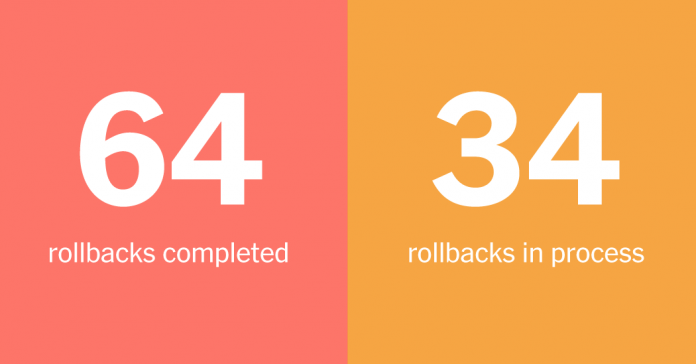
In this lesson, you’ll learn about one such action: In the three years that President Trump has held office, his administration has officially rolled back more than 60 environmental policies, with another 34 rollbacks still in progress.

Take a moment to study the chart below of environmental rollbacks under Mr. Trump. Then, respond to the following questions:

Read the article, then answer the following questions:

1. What justification has the Trump administration given for dismantling major climate and environmental policies, many put in place by the Obama administration?

2. What are some of the rules and regulations the administration has been repealing, replacing or weakening? Name at least three.

3. A spokeswoman for the Environmental Protection Agency said the agency was “delivering on President Trump’s commitment to return the agency to its core mission: Providing cleaner air, water and land to the American people.” Do you agree that the E.P.A. has delivered on this mission? Why or why not? What evidence supports your response?

4. To what extent has the judicial branch played a role in shaping environmental policy? How do you know?

5. What are the implications of these rollbacks, according to energy and legal analysts? How does this influence your opinion of the Trump administration’s actions?

Look at the chart from the warm-up activity again. How did reading the article give you additional insights into what all those numbers signify?

Next, select one section from the drop-down list at the end of the article, such as water pollution or critters, and read all the related actions the Trump administration has either completed or initiated. Which of those actions, if any, do you think are positive changes for United States policy, based on the short descriptions in the article? Which, if any, do you think are negative policy changes? Why?

Then, choose one of those Trump administration actions to research further. Visit the “Read more” link after the short description. Then answer the following questions:

  • What was the original environmental, energy or climate rule, before the Trump administration initiated changes?

  • Why was the rule originally put in place?

  • Why did the Trump administration reverse this rule?

  • What will be possible consequences of this rollback?

  • Do you think the Trump administration’s reversal of this rule is good government policy? Why, or why not?

You may need to do additional research to answer these five questions.