fbpx
Home Blog Page 1504

Word + Quiz: dustup

0
Word + Quiz: dustup

: an angry dispute

_________

The word dustup has appeared in three articles on NYTimes.com in the past year, including on May 23 in “‘Q Ball’ Review: Shooting Hoops While Doing Time” by Jeannette Catsoulis:

In San Quentin State Prison, just north of San Francisco, the basketball team offers inmates both purpose and distraction, a chance to win in lives not characterized by victories. Those benefits, and many others, are the main focus of Michael Tolajian’s capable documentary “Q Ball,” which observes team members on and off the court, at worship services and in boisterous weekly matchups with visiting civilian teams.

…. Despite small digressions outside the prison walls (including one to speak with a murder victim’s mother), “Q Ball” feels superficial, its positivity somewhat forced. Emphasizing the rehabilitative rewards of the program — though its effect on recidivism, if any, is not quantified — the movie offers minimal access to nonplayers or prison staff beyond the soft-voiced cheerleading of the public information officer, Lt. Samuel Robinson. Issues pertinent to mass incarceration are skirted (the majority of faces on screen, for instance, are nonwhite), the players’ relationships with other inmates unclear. A violent dustup off the court, which the movie shows twice but doesn’t address, could make you wonder if the team’s privileges breed envy as well as pride.

_________

Stress, Worry and Anxiety Are All Different. How Do You Cope With Each?

0
Stress, Worry and Anxiety Are All Different. How Do You Cope With Each?

In “The Difference Between Worry, Stress and Anxiety,” Emma Pattee writes:

You probably experience worry, stress or anxiety at least once on any given day. Nearly 40 million people in the U.S. suffer from an anxiety disorder, according to the Anxiety and Depression Association of America. Three out of four Americans reported feeling stressed in the last month, a 2017 study found. But in one of these moments, if asked which you were experiencing — worry, stress or anxiety — would you know the difference?

Does anything in that paragraph resonate with you? How would you define the differences between stress, worry and anxiety? Which do you think you’ve experienced, and what strategies have you used for coping?

In her article, Ms. Pattee defines each, explains how each works and suggests steps to help regulate your symptoms. We have included most of her article below:


Worry is what happens when your mind dwells on negative thoughts, uncertain outcomes or things that could go wrong. “Worry tends to be repetitive, obsessive thoughts,” said Melanie Greenberg, a clinical psychologist in Mill Valley, Calif., and the author of “The Stress-Proof Brain” (2017). “It’s the cognitive component of anxiety.” Simply put, worry happens only in your mind, not in your body.

Worry actually has an important function in our lives, according to Luana Marques, an associate professor of psychiatry at Harvard Medical School and the president of the Anxiety and Depression Association of America. When we think about an uncertain or unpleasant situation — such as being unable to pay the rent, or doing badly on an exam — our brains become stimulated. When we worry, it calms our brains down. Worry is also likely to cause us to problem-solve or take action, both of which are positive things. “Worry is a way for your brain to handle problems in order to keep you safe,” Dr. Marques explained. “It’s only when we get stuck thinking about a problem that worry stops being functional.”

Give yourself a worry “budget,” an amount of time in which you allow yourself to worry about a problem. When that time is up (start with 20 minutes), consciously redirect your thoughts.

When you notice that you’re worried about something, push yourself to come up with a next step or to take action.

Write your worries down. Research has shown that just eight to 10 minutes of writing can help calm obsessive thoughts.

Remember: Worry is helpful only if it leads to change, not if it turns into obsessive thoughts.

Stress is a physiological response connected to an external event. In order for the cycle of stress to begin, there must be a stressor. This is usually some kind of external circumstance, like a work deadline or a scary medical test. “Stress is defined as a reaction to environmental changes or forces that exceed the individual’s resources,” Dr. Greenberg said.

In prehistoric times, stress was a natural response to a threat, like hearing a predator in the bushes. Today, it still prompts a behavioral response, firing up your limbic system and releasing adrenaline and cortisol, which help activate your brain and body to deal with the threat, Dr. Greenberg explained. Symptoms of stress include a rapid heart rate, clammy palms and shallow breath. Stress might feel good at first, as the adrenaline and cortisol flood your body, Dr. Marques said. You might have experienced the benefits of stress as you raced through traffic to get to an appointment, or pulled together an important assignment in the final hour. That’s called “acute stress,” and the rush wore off when the situation was resolved (i.e. you turned in your assignment).

Chronic stress, on the other hand, is when your body stays in this fight-or-flight mode continuously (usually because the situation doesn’t resolve, as with financial stressors or a challenging boss). Chronic stress is linked to health concerns such as digestive issues, an increased risk of heart disease and a weakening of the immune system.

Three things to help your stress:

  • Get exercise. This is a way for your body to recover from the increase of adrenaline and cortisol.

  • Get clear on what you can and can’t control. Then focus your energy on what you can control and accept what you can’t.

  • Don’t compare your stress with anyone else’s stress. Different people respond differently to stressful situations.

Remember: Stress is a biological response that is a normal part of our lives.

If stress and worry are the symptoms, anxiety is the culmination. Anxiety has a cognitive element (worry) and a physiological response (stress), which means that we experience anxiety in both our mind and our body. “In some ways,” Dr. Marques said, “anxiety is what happens when you’re dealing with a lot of worry and a lot of stress.”

Remember how stress is a natural response to a threat? Well, anxiety is the same thing … except there is no threat.

“Anxiety in some ways is a response to a false alarm,” said Dr. Marques, describing a situation, for example, in which you show up at work and somebody gives you an off look. You start to have all the physiology of a stress response because you’re telling yourself that your boss is upset with you, or that your job might be at risk. The blood is flowing, the adrenaline is pumping, your body is in a state of fight or flight — but there is no predator in the bushes.

There is also a difference between feeling anxious (which can be a normal part of everyday life) and having an anxiety disorder. An anxiety disorder is a serious medical condition that may include stress or worry.

Three things to help your anxiety:

  • Limit your sugar … and caffeine intake. Because anxiety is physiological, stimulants may have a significant impact.

  • Check in with your toes. How do they feel? Wiggle them. This kind of refocusing can calm you and break the anxiety loop.

  • When you’re in the middle of an anxiety episode, talking or thinking about it will not help you. Try to distract yourself with your senses: Listen to music, jump rope for five minutes, or rub a piece of Velcro or velvet.

Remember: Anxiety happens in your mind and your body so trying to think your way out of it won’t help.


Students 13 and older are invited to comment. All comments are moderated by the Learning Network staff, but please keep in mind that once your comment is accepted, it will be made public.

Working From Home

0
Working From Home

Amid the coronavirus outbreak, many office workers are working from home. And students and teachers across the country are preparing for remote online learning if schools decide to shut down for weeks or months at a time.

Has your school closed or is it thinking about closing? If it does, will you be expected to continue your school work from home?

What do you think you would like about learning or working from home, if anything? What would be the challenges? If you could choose to learn or work from home indefinitely, would you want to? Why or why not?

Tell us in the comments, then read the related piece to find out why one New York Times columnist thinks working from home is “overrated.”

COVID-19: FutureLearn offers free online coronavirus course

0
COVID-19: FutureLearn offers free online coronavirus course

With 130,000 cases in 125 countries and sadly almost 5,000 deaths so far – including 8 in the UK – the novel coronavirus outbreak now constitutes a pandemic, according to the World Health Organisation.

As conflicting information flies around the internet, it’s never been more crucial to stay informed and receive expert advice about how we should respond to the pandemic, both collectively and individually.

In response, FutureLearn are now offering a free online course open for registration on “COVID-19: Tackling the Novel Coronavirus” from experts at the London School of Hygiene & Tropical Medicine, a renowned institute of public health.

So far we’ve seen a great response to the course – over 25,000 learners have signed up, from almost 200 countries.

Understanding and preventing the spread of Coronavirus

The online course is focussed on the outbreak of novel coronavirus, officially named COVID-19, and will cover what is known about the disease outbreak so far, what the practical implications for response are, how to prevent the spread of coronavirus, and what is needed for the future. 

The course will start on 23 March and is suitable for everyone, from those working in healthcare to anyone interested in the subject and the response more generally. The course will run for three weeks and will require approximately four hours of study per week. 

The London School of Hygiene & Tropical Medicine, who will be running the course, was named Times Higher Education University of the Year 2016 for its response to the Ebola outbreak which included, among many other things, an online course, Ebola in Context, on FutureLearn. 

An international situation

The coronavirus course will be led by Dr Anna Seale and Dr Maryirene Ibeto from the London School of Hygiene & Tropical Medicine. Dr Seale says that the course “aims to bring together expertise, and share knowledge on what we know to date and what we are still learning about the virus and how to combat it.”

The virus, after all, is an international crisis – only by working together can we hope to slow its spread and ultimately defeat it. As Dr Ibeto puts it: “by pooling our knowledge to fill gaps in our knowledge about the virus, we stand the best chance of stopping this outbreak in its tracks.”

Inform yourself

The best response to the coronavirus is to stay informed about both the virus itself, and how to respond as a concerned member of the public. 

This course is a unique opportunity to gain the knowledge you need to know how to react to a public health crisis that’s evolving minute by minute.

Enrol today.


Explore more commentary on coronavirus.

Learn the facts of the disease, and how to compares to other outbreaks. Discover how it’s affecting the sporting schedule, and its impact on the environment and the economy.

Category Coronavirus, Current Issues

Helping universities and colleges take learning online in response to the coronavirus

0
Helping universities and colleges take learning online in response to the coronavirus

By Jeff Maggioncalda, CEO Coursera 

The spread of the coronavirus (COVID-19) is the most serious global health security threat in decades. In many countries, restrictions imposed by government agencies have disrupted daily routines for millions, including students. Many universities in the impacted regions have suspended face-to-face seminars, closed campuses, and are scrambling to find a solution to minimize disruption for their students.  

We are fortunate to have university and industry partners, who have been at the forefront of responding to the challenges humanity has faced from time to time. Inspired by their support and consistent with our mission of serving learners everywhere, we are launching a global effort to assist universities and colleges seeking to offer online courseware in response to the coronavirus. 

Starting today, we’ll provide every impacted university in the world with free access to our course catalogue through Coursera for Campus. Universities can sign up to provide their enrolled students with access to more than 3,800 courses and 400 Specializations from Coursera’s top university and industry partners. These institutions will have access until July 31, 2020, after which we plan to provide month-to-month extensions depending on prevailing risk assessments. Students who enroll on or before July 31 will continue to have access until Sept. 30, 2020.

Over the past few weeks, Duke University has been using Coursera for Campus to serve impacted students at their Duke Kunshan campus in China. This effort has been swiftly adopted by students and widely recognized by the broader community. We believe that Coursera for Campus can be an effective resource to help all higher education institutions respond to the impact of coronavirus.

As a global community of educators, we are honored to be serving fellow institutions and student communities during this crisis. Over the next few days, we will also hold webinars and share more resources, including experiences from our partner community, to help institutions looking to transition online during this crisis. Stay tuned. 

 For more information, please visit https://www.coursera.org/coronavirus. 

5

Word + Quiz: prorogue

0
Word + Quiz: prorogue

: suspend, terminate or adjourn a session of Parliament by royal prerogative, without dissolving the legislative body

_________

The word prorogue has appeared in 22 articles on NYTimes.com in the past year, including on Sept. 24 in “Lady Hale, U.K. Supreme Court Judge, Speaks Calmly and Brings Down the Hammer” by Yonette Joseph and Ceylan Yeginsu:

LONDON — When the full weight of Britain’s Supreme Court came down on Tuesday against the suspension of Parliament, it was dropped like a hammer on Prime Minister Boris Johnson by the first woman to serve as the court’s president: Lady Hale.

In calm, clipped, riveting tones, she read the damning judgment from a sheaf of papers ruling on the act of suspension, called “prorogation.” “The decision to advise Her Majesty to prorogue Parliament was unlawful because it had the effect of frustrating the ability of Parliament to carry out its constitutional functions without reasonable justification,” the judge said.

She added: “The prorogation was void and of no effect — Parliament has not been prorogued.”

_________

Should Parents Track Their Children?

0
Should Parents Track Their Children?

Find all our Student Opinion questions here.

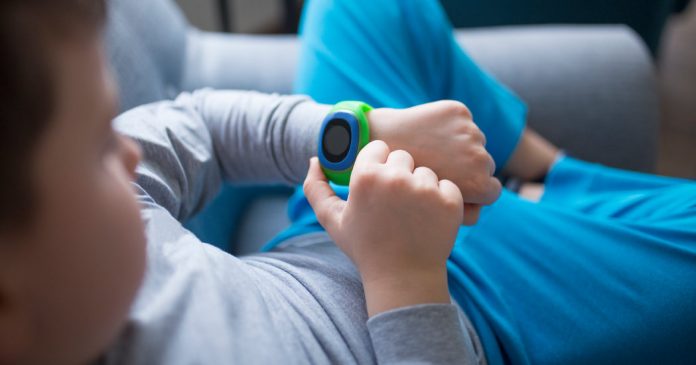
Do your parents use your phone or some other device to track you? If yes, does it make you feel safer that they know where you are? Does it limit your freedom? Do you care one way or the other?

And if they monitor your location, do you know why? Is it because GPS tracking reassures them that you are safe? Is it because they don’t fully trust you? Is there another reason?

Do you have siblings or friends whose parents track them?

In general, do you think parental use of location trackers is a good use of technology? Does it make children safer and relieve parental anxiety? Does it make teenagers behave more responsibly? Or, does it negatively affect children’s sense of freedom and independence?

In “The Rise of Location Trackers for Kids as Young as 3,” Jessica Grose writes:

One of my fondest memories from late elementary school is walking a mile home with a pack of friends. It’s a composite of many days when we’d stop at a park next to the train station on our way home and play tag or swing, our legs pumping in the cool fall air. Our parents didn’t know our exact coordinates, and they didn’t seem to care that we didn’t come home at the same time every day. I recall feeling high on that freedom — it’s a feeling I want my kids to have, too.

This vision of childhood seems harder and harder to realize today.

She continues:

Many of the products marketed to parents include some texting, phone call and pedometer features, but one of their major selling points is safety. For example: “The Wizard lets kids be kids and gives parents the confidence to allow their children to explore the world outside, without the stress and fear of wondering where they are or if they are safe.” Parents in online reviews echo the latter sentiment, about assuaging parental anxiety — “Nowadays you just can’t be too safe!” these parents are saying, and, “You want to know where they are and that they are safe at every moment.”

But these products miss the point of what it means to be a kid, hampering children on the road to independence. And more heartbreakingly, trackers may prevent our kids from feeling truly free.

Ms. Grose writes about why her friend uses the Gizmo watch to track his daughter:

He described his fear as a “vague paranoia,” something deep within his lizard brain that’s calmed by knowing where she is. To him, the Gizmo provides a compromise for his family. Deep down he does want to give his daughter freedom like he had, because he started walking to school in second grade, but he still feels the need to find “a middle way” between giving her total independence and keeping her on the parental leash. “I think helicopter parenting has a real cost” for children, he said.

GPS tracking of such young children is so new, there isn’t reliable research on it — most of the research about children and smartwatches is about weight loss using the pedometer function. With that caveat in mind, the child development experts I spoke to were concerned that tracking young children may get in the way of their developing autonomy and responsibility, and it may also make them more anxious. After all, adults feel completely freaked out when they discover their location is being tracked without their active consent — why wouldn’t kids?

During the elementary school years, children should become more and more responsible and independent, and we need to give them appropriate boundaries. If you tell them that they’re not allowed to leave the neighborhood, and they need to be home at a certain time but you’re still monitoring their movements, that’s a problem.

“You’re trusting a device instead of trusting your child,” said Sally Beville Hunter, assistant clinical professor in child and family studies at the University of Tennessee, Knoxville.

They might not be learning critical skills like knowing where they are and keeping track of time, if they know their parents will be yelling at them through a smartwatch to come home for dinner, Dr. Hunter said. Children’s brains are still developing. If you don’t let them develop these skills, she said, “The part of their brain that’s supposed to be maturing in a more responsible way has shifted.”

Dr. Joseph F. Hagan Jr., a clinical professor in pediatrics at the University of Vermont, was also concerned about the subliminal messages this kind of monitoring may be sending children. The risk to their social and emotional development isn’t just about threats to their autonomy; it’s also about the anxiety that can arise from “being exposed to a world being painted to them as dangerous, when it’s not all that dangerous,” Dr. Hagan said. There is some evidence that anxiety among children is on the rise — a study published in 2018 showed that diagnoses of anxiety for children 6 to 17 rose nearly 20 percent from 2003 to 2012 — and we don’t need to add to it, especially considering that children are far safer by many measures than they were 50 years ago.

Students, read the entire article, then tell us:

  • What is your reaction to the article? Do you think parents and caregivers should use GPS devices to track their children? Are these trackers beneficial to parents? Are they helpful to children? Why?

  • Do you think there is an age at which it is appropriate or necessary for children to be tracked by their parents using GPS? Do you think trackers keep children safe? Do they make kids and teenagers more responsible and accountable because they know their parents are watching them?

  • Do you think there are downsides to parents tracking their children using technology? Do you think the use of GPS trackers might negatively impact child development? Do you think they erode trust between parents and children?

  • How protective are your own parents or guardians? Do you think their fears about your safety are reasonable, or do you think they are overly concerned? Do they generally worry about where you go and with whom you spend time?

  • In general, how do your parents know if you are where you are supposed to be? When you are out, do they have a way of tracking you or getting in touch with you? Do you have agreements about when and how frequently you have to check in with them? Should your parents just trust that you are where you say you are, or do they have cause to be worried?

  • Would you characterize your childhood as one with a lot of freedom? What about now that you are a teenager? Are you allowed to go out alone in your neighborhood? With friends? To school? Do you wish that you had more freedom, or do you think your parents give you the appropriate amount of independence?


Students 13 and older are invited to comment. All comments are moderated by the Learning Network staff, but please keep in mind that once your comment is accepted, it will be made public.

Lesson of the Day: ‘For Paris Olympics, Surfing Will Head to Tahiti’s “Wall of Skulls”’

0
Lesson of the Day: ‘For Paris Olympics, Surfing Will Head to Tahiti’s “Wall of Skulls”’

Find all our Lessons of the Day here.

Featured Article: “For Paris Olympics, Surfing Will Head to Tahiti’s ‘Wall of Skulls’” by Victor Mather and Talya Minsberg

The 2020 Sumer Olympics in Tokyo are just around the corner. But Paris, which is hosting the 2024 Summer Games, is already making plans for its surfing competition. Instead of to the coast of France, surfers in 2024 will travel to Teahupo’o, Tahiti, an overseas collective of France that is home to some of the world’s most dangerous waves.

In this lesson, you’ll learn what makes this location a draw for some of the best surfers in the world. Then you’ll explore ethical questions related to surfing.

Watch this video compilation of surfers in Teahupo’o, Tahiti. Then respond to the questions below:

  • What do you notice about the conditions at Teahupo’o and the type of surfing that is done there?

  • What is your reaction to what you see?

  • Teahupo’o roughly translates to “wall of skulls.” Why do you think it’s named that? What did you see in the video that makes you say that?

Read the article, then answer the following questions:

1. Why is the surf competition for the 2024 Olympics in Paris taking place in Teahupo’o, Tahiti, instead of in France?

2. What unique characteristics make Teahupo’o a desirable location for a world-class surf competition?

3. Compare the surfing in Tahiti to that of Shidashita Beach in Japan, where the contest will take place for this summer’s Tokyo Games. Why does Keala Kennelly say spectators “are going to question whether it’s the same sport”?

4. Media literacy. Watch the two videos from Teahupo’o embedded in this article. How do they add to your understanding of the article? Why do you think the editors included them?

5. What are the advantages and disadvantages of using a wave machine for the Olympic Games? Do you think this technology is a good option? Why or why not?

6. Why does Kennelly think she would be “the person to beat” if she were to compete at Teahupo’o? Do you think she would have a good chance?

This article raises some questions about ethics involved in surfing. Write a list of ethical questions of your own about the sport. These might be related to the dangers associated with surfing, the use of technology, gender parity or anything else mentioned in the article.

Remember, ethical questions often ask us what the “right” thing to do is, based on our ideas about morals, responsibilities, rights and values.

For example, in our Student Opinion feature, The Learning Network has asked questions like whether it is selfish to pursue risky sports, if technology should be limited in sports and if sports should be coed.

If you want to explore beyond the article, you can come up with questions based on your own experience of surfing or on articles from the Times Topics Surfing page.

If you have more time …

Choose one of the questions you came up with and respond to it. What do you think is the right thing to do? Draw on evidence from the article, your own experience or other sources to support your response.

Vibrant Youth

0
Vibrant Youth

What story does this image inspire for you?

Tell us about a memory from your own life that this illustration makes you think of — or use your imagination to write the opening of a short story or poem from the perspective of one of the people pictured.

Post it in the comments, then read the related article to find out what it’s all about.


Find many more ways to use our Picture Prompt feature in this lesson plan. You can find all our Picture Prompts in this column.

How Much Do You Know About Belize?

0
How Much Do You Know About Belize?

Can you find Belize on a map? What else do you know about this Central American nation with a population of about 375,000?