fbpx
Home Blog Page 1507

Are You a Good Person?

0
Are You a Good Person?

Find all our Student Opinion questions here.

Has anyone ever said that you were a good person? Is being good something you strive to be or aspire toward?

In “How to Be Good,” Simran Sethi sought out a therapist, a scholar, a monk, a C.E.O. and others to learn about bringing our best to everything we do, every day. She begins by exploring the meaning of goodness:

Rachana Kamtekar, a professor of philosophy at Cornell University, explained goodness by way of ancient Greek philosophy: “For Plato, goodness is the same as happiness. We desire appetitively because of our bodies. We desire emotionally because of our sense of self in contact with other human beings. And we also have rational desires to understand how to do what’s best. Our goodness requires all of these capacities to be developed and then expressed.”

This can be a lifelong process — something that is never perfectly realized but should always be struggled for. “Goodness is impermanent and organic, meaning it can progress as well as regress,” said Chan Phap Dung, a senior monk at the Plum Village meditation center founded by the Zen master Thich Nhat Hanh. And that is why, he said, we have to be steadfast in caring for ourselves and the world at large. “In politics and culture, in the media and corporations, we have cultivated conditions that have produced a lot of violence, discrimination and despair for which there is a collective level of responsibility.”

Because many of us have a complicated relationship with what it means to be good, it can help to reframe the subject and widen it. “Some people flinch when they ponder whether or not they or others are ‘good’ because the words ‘good’ and ‘goodness’ have long been associated with obedience,” the author and former “Dear Sugars” podcast host Cheryl Strayed shared in response to a query from The Times.

“I reject that definition,” she said. “Goodness is expressed through lovingkindness, generosity of spirit and deed, and the thoughtful consideration of others. It can be as simple as offering to let someone ahead of you in line and as complicated as making yearslong sacrifices of your freedom because someone you love needs your help. Over the course of a lifetime, most of us do both.”

Ms. Sethi shared the insights of a variety of people who think a lot about what it means to be good. Here are four of their suggestions:

Be kind.

Harriet Lerner, psychologist and author

“Kindness is at the center of what it means to be good. It may require very little from us, or the opposite. It may require words and action, or restraint and silence. Everything that can be said can be said with kindness. Every tough position we have to take can be taken with kindness. No exceptions. Being a good person requires that we work toward that unrealized world where the dignity and integrity of all human beings, all life, are honored and respected.”

Pay attention.

Brother Chan Phap Dung, senior monk, Plum Village

“In the Buddhist tradition, the training starts with learning how to stop and come back to the present moment and enjoy our breathing. We stop to recognize what is happening within us and around us: our feelings, our thinking, whether our body is relaxed or in tension, who is there in front of us or what are we doing. With repetition, we begin to see and understand ourselves better — and choose to do one thing rather than another.”

Ask hard questions.

The Rev. William J. Barber II, civil rights activist

“As a public theologian, I tend to look at what has lifted us when we found ourselves at our lowest — what has called us to a better place. How are we, as a nation and as a people, using life itself to create good for the poor and broken and captive and for those who are made to feel unaccepted? We must constantly raise that question as we live life — seeking to answer it not only individually, but together. We need to embrace those deepest moral values that call us to, first and foremost, seek love, truth, justice and concern for others.”

Hold yourself accountable.

Rachana Kamtekar, professor of philosophy, Cornell University

“You have to know what your different motivations are, know how strong they are and if you can get some of them to pull against the others. I was a smoker in my 20s and 30s. Like many smokers, I resolved to quit on multiple occasions. When I was 40, I told my son and his buddies that I had been a smoker and had quit. I knew if I ever smoked again, I was going to have to tell them. My aversion to those kids thinking of me as a smoker swamped any desire I had to smoke. When I added to my rational resolution this prospect of something like shame — that I was going to have to face these kids and say, “I am a smoker” — it changed.”

Students, read the entire article, then tell us:

  • Do you feel you are a good person? Why or why not? Are there ways you wish you were better?

  • Cheryl Strayed said that goodness “can be as simple as offering to let someone ahead of you in line and as complicated as making yearslong sacrifices of your freedom because someone you love needs your help.” Do you agree? What is your definition of goodness?

  • Which insights and suggestions from the article resonated with you most? Explain why.

  • Where do your ideas about goodness, and morals more generally, come from? Have they been shaped by friends and family, culture or religious beliefs?

  • Has anyone ever said that you were a good person? If yes, what do you think they meant? How did that make you feel?

  • Nick Hornby said, “I think all one can ever really do is to try and keep goodness close to you as an ambition — make sure that it’s one of the ways in which you think.” Is goodness an important goal for you? Do you strive to be good?

  • What suggestions would you give to others who seek to be good?


Students 13 and older are invited to comment. All comments are moderated by the Learning Network staff, but please keep in mind that once your comment is accepted, it will be made public.

Brick Wall

0
Brick Wall

What is this illustration saying? How does it relate to or comment on society or the world today? Can you relate to it personally? What is your opinion of its message?

Tell us in the comments, then read the related Opinion essay to find out what it means.


Find many more ways to use our Picture Prompt feature in this lesson plan. You can find all our Picture Prompts in this column.

Mall Rats

0
Mall Rats

For decades, shopping malls were a bustling gathering place for millions of Americans. But 21st-century shopping habits have had a deteriorative effect on them, according to a recent Times article that reports on a spate of retail store closings nationwide.

How often do you go to the mall? What places do you visit when you go? How do you feel about them?

Do you think malls provide a novel shopping experience or are they unnecessary in the age of online shopping? Have you ever gone to the mall not to shop, but to hang out with your friends away from adults?

Tell us in the comments, then read the related article about the current state of brick-and-mortar retailers.


Find many more ways to use our Picture Prompt feature in this lesson plan. You can find all our Picture Prompts in this column.

Word + Quiz: chiaroscuro

0
Word + Quiz: chiaroscuro

: a monochrome picture made by using several different shades of the same color

_________

The word chiaroscuro has appeared in 16 articles on NYTimes.com in the past year, including on April 17 in “A Barnes Foundation Show Illuminates the Dawn of Photography” by Arthur Lubow:

Nadar was a technical innovator. The exhibition includes two photographs he shot in the early 1860s in the Paris catacombs, illuminating the subterranean cavern with a magnesium flash of his own design. For the Hugo portrait, he made early use of a photo enlarger, and the oversized gelatin silver print holds a wall at the Barnes — not simply by virtue of its size, but also with its commanding presence. By cleverly employing a mirror to reflect the glow of a streetlamp into the bedroom, Nadar created a chiaroscuro of light and darkness. Every strand of Hugo’s white beard glistens; his forehead is cooled with shadow.

_________

What Should #MeToo Mean for Teenage Boys?

0
What Should #MeToo Mean for Teenage Boys?

Find all our Student Opinion questions here.

In “The #MeToo Balancing Act in High School,” Andrew Reiner writes:

The #MeToo movement was a watershed moment, empowering girls and women to share their stories, and many boys and young men have told me in interviews that the greater awareness of and need to end sexual assault against females is “long overdue.”

But some boys and young men have also told me that they are worried about what the movement means for them.

Are you a teenage boy who has felt confused by what #MeToo means for you? Do you ask yourself questions like: When is it OK to make the first move? What does consent look like in the moment? How can you read girls’ nonverbal cues more accurately?

How comfortable are you having conversations about these kinds of topics in school, with friends, with family or with someone you’re in a relationship with?

Are you someone — of any gender — who wishes you could provide frank advice to boys confused by these issues? Do you feel frustrated by how many boys approach dating and intimacy? What do you think they could do better?

The article continues:

They feel their voices have been silenced in conversations around gender and they struggle to navigate damaging perceptions about masculinity, particularly in the realm of dating.

Many boys have told me of the “confusing messages” they are sent when it comes to expressing their romantic interest in a girl. On the one hand, boys are finally learning about the necessity of consent; on the other hand, they still face dated masculinity stereotypes that limit and confound them, including a culture that places pressure on men to initiate intimacy.

“I have friends, girls, who want the guy to be the sexual initiator, to be ‘the man,’ like in movies,” Jaden, a high school junior in Alexandria, Va., said. He said these are the same girls who, if a guy asks if he can kiss them, say: ‘That’s so lame. Why would you ask that?’”

Jaden said that he and his male friends want to be “absolutely respectful” of girls’ boundaries, but they also want to be “taken seriously” by the ones who expect them to behave in a stereotypically masculine way. In addition to deciphering this riddle, boys fear that one wrong move could ruin their present and future reputations in this age of swift, devastating social media justice, especially since many college admissions officers scan social media for black marks on candidates’ cyber-presence.

“Dating is just a huge scary maze,” Jaden said, adding that many of his friends have sworn off romantic entanglements for now.

One sexual assault accusation, even if a boy is absolved, is tagged to that person and hovers in cyberspace for life. “You’re guilty until proven innocent,” said Ben, a junior at Frostburg State University in Maryland.

Michael C. Reichert, head of the Center for the Study of Boys’ and Girls’ Lives at the University of Pennsylvania, said that “boys are behind #MeToo but feel overlooked and misunderstood” when it comes to their own needs.

“They feel nothing about their experience as males is being recognized or addressed,” says Dr. Reichert, the author of “How to Raise a Boy: The Power of Connection to Build Good Men.” Yet, he adds, “they are yoked with normative masculine expectations from both males and females.”

Students, read the entire article, then tell us:

  • What advice would you give to fellow teenagers who are uncertain how to navigate boundaries and desires in dating and sex? Would you give different advice to boys and girls?

  • Do you believe there are “rules” or expectations around dating and sex? How did you learn what you know — or think you know — about dating and romantic relationships? From school? Friends? Parents? Online? Do you talk about sex, consent and dating at home? At school?

  • If you have a question about sex, where do you first look for the answer? Do you feel comfortable asking questions about expectations and boundaries when it comes to dating and intimacy? Do you think consent, and communicating actively about touch and sex, is something that is easy for teenagers to practice?

  • The featured article focuses on teenage boys and heterosexual relationships. However, do you perceive differences in how transgender, gender-nonconforming and L.G.B.T.Q. teenagers talk about consent, dating and sex?

  • In the article, Mr. Reiner says that many of the boys he spoke with wanted to respect girls’ boundaries and needs, but felt shut down when asking girls for advice or feedback about their behavior. What do you think about this dynamic? Is it something that you have been a part of or witnessed? Why do you think girls might not want to explain their boundaries to boys? Can you imagine a solution for having a more productive conversation?


Students 13 and older are invited to comment. All comments are moderated by the Learning Network staff, but please keep in mind that once your comment is accepted, it will be made public.

Lesson of the Day: ‘Gender Pronouns Can Be Tricky on Campus. Harvard Is Making Them Stick.’

0
Lesson of the Day: ‘Gender Pronouns Can Be Tricky on Campus. Harvard Is Making Them Stick.’

4. Why are some professors, colleges and universities resistant to the evolving uses of pronouns in their classrooms? Why did Nicholas K. Meriwether, 62, a professor at Shawnee State University, refuse to call a transgender student by “feminine titles or pronouns”? Do you agree that it would violate his religious convictions? How did the university respond to Mr. Meriwether’s claims?

5. Many professors and their students find themselves “gazing across a generational divide” when it comes to an understanding of gender identities, according to the article. What evidence does the author provide to support this claim? Have you ever experienced this divide?

6. What does recent research indicate about the effect of using chosen names and proper pronouns on transgender and nonbinary young people?

7. The article ends:

Flush with success, Mr. Garcia Blum is working on a plan to distribute the stickers schoolwide next year.

“The more that people do it, the more the peer pressure,” he said. “But also, the more the peer affirmation.”

What is your reaction to Mr. Garcia Blum’s efforts to make Harvard more inclusive, safe and welcoming for all students? Do you think that Harvard should adopt gender pronoun stickers for name placards throughout the school? Why or why not?

Choose one of the following activities:

1) Share your opinion and experiences.

  • What is your reaction to the article? Did it change how you understand the issue of gender pronouns?

  • What is the gender pronoun you want other people to use when referring to you? How important is it to you to have teachers and professors call you by your personal pronoun?

  • Do you, or does anyone you know, identify as transgender or nonbinary? Is your school a safe and welcoming space for you, or for transgender and nonbinary students? Does it have a pronoun protocol or policy? Do any of your teachers ever ask students for their personal pronouns?

  • Do you have a story or experience related to pronoun use in the classroom? If so, please share it.

2. Make a recommendation for your school.

What can students, teachers and administrators do to create a safe and inclusive climate for all students? What specific resources and support do transgender and gender-nonconforming youth need from their schools?

For example, should schools have a pronoun protocol like the ones described in the article? If yes, should they be voluntary or mandatory? Should all schools have gender-neutral bathrooms, L.G.B.T.Q.I.A.+ clubs and gay-straight alliances and a more gender-inclusive curriculum?

Here are some additional resources to help with your recommendations:

‘Bracelet of Silence’

0
‘Bracelet of Silence’

How worried are you about technology listening to your conversations? Have you ever had an experience that made you think your phone, computer or smart home device was eavesdropping on you?

This “bracelet of silence,” developed by two computer science professors and an assistant professor, emits ultrasonic signals when activated, preventing nearby microphones from listening to the wearer’s conversations.

Would you wear this bracelet if it were to become widely available? Do you think devices like these are the future? Why or why not?

Tell us in the comments, then read the related article to learn more about this so-called privacy armor.

Introducing Learner Day 2020

0
Introducing Learner Day 2020

At Codecademy, our learners are at the heart of all that we do. That’s why every year, we dedicate a day to set aside our regular work and focus entirely on celebrating our learners. We call it “Learner Day,” and it’s happening on Thursday, March 12th!

This year for Learner Day, we’ll be answering your questions on our forum, sending swag and handwritten notes to some of our fans, coding with our learners, and hosting a series of live streams.

On Thursday March 12th, we’ll be streaming live on YouTube, Twitch, and Facebook from 12:30PM – 5:30PM EST. We have a variety of panels, tutorials, and Q&A sessions planned, and the team is excited to interact directly with you!

Check out the schedule below:

12:30 – 1:30: Take a Course With Our CEO

We’re all learners at Codecademy — including our CEO, Zach Sims! Watch as Zach takes a Codecademy course live on air. If you ever wanted to ask a question to a co-founder of Codecademy, this is your chance!

  • 1:30 – 2:30 What is a Data Request?

Have you wondered what it’s like to be a Data Scientist? Join Data Scientist Camelia Hssaine and Curriculum Developer Ian Freed as they walk you through an example analysis. Bring your questions for these two data experts!

  • 2:30 – 3:30 Contribute to an Open Source Project

Join Curriculum Developer Kenny Lin and Frontend Developer Josh Goldberg as they explore the world of open source projects. Watch as they contribute to Codecademy’s open source 404 page, and maybe you can even make contributions of your own.

  • 3:30 – 4:30 How Does a Codecademy Team Work?

Bring your questions to a panel featuring the Discovery and Navigation team. This team helps learners find the course that’s right for them. We’ll be chatting with engineers, designers, and product managers about a variety of topics!

  • 4:30 – 5:30 Creating Art With Code

Programming can be a wonderful tool for artistic and creative expression. Join Curriculum Developers Zoe Bachman and Alex Kuntz as they explore the world of VR using JavaScript and AFrame. Bring your questions and code along to make your own virtual world.

Want to know how else you can get involved? Contact us here and we’ll get you in the loop. We’re so excited to spend the day with you, and we hope you’ll join us!

How to Backup a Blogger Blog

0
How to Backup a Blogger Blog

How to Backup a Blogger Blog

It’s crucial to keep a backup saved of your Blogger blog at all times–especially before changing your blog design. The process is simple and can save you the headache of losing important coding or files should something unexpectedly happen to your blog–heaven forbid!

I recommend creating a folder on your computer titled “Blog Backups” and then saving all past and current backup files to that folder. Be sure to rename each backup so you know which is which should you need to access them in the future. With your blog backed up you can rest assured you’ll have everything under control should the unforeseen happen.


How to Backup Your Design & Coding

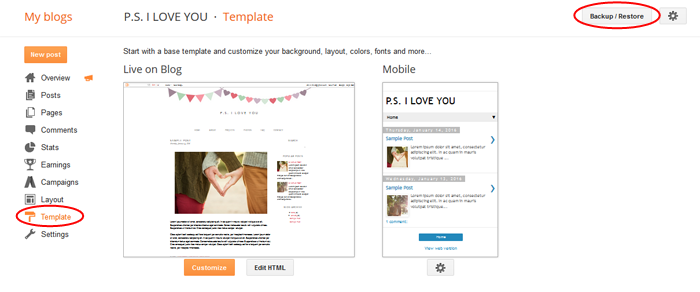
To backup, your blog design, blog layout, and all of the coding attached to it, go to your Blogger dashboard and then click on Template > Backup/Restore.

Blogger Dashboard and location of backup button

Then click Download Full Template. This will save your design and coding to your computer as an .xml file. It will save it using a generic name like “template-123456789.xml” so be sure to rename the file after you save it to your computer so it’s saved with a name that helps you remember what it is (note: be sure to keep the .xml extension at the end of the file name). This will help you easily access the file in the future should you need it.

Download your template to make a backup of it.

How to Backup Your Blog Content & Images

To backup the content from your blog which includes post content, post images and comments, go to

Settings > Other > Back up Content > Save to your computer

This will save another .xml file to you computer that will contain all of your blog content. By default the file name will be saved using the date the backup was saved, which might be a sufficient description for you. If not, feel free to rename the file to something that better helps you remember what the file is. Remember to leave the .xml extension at the end of the file name.

Backup your content in your blogger dashboard

How to Restore a Saved Backup

To restore a saved backup of your design and coding in the future, go to Template > Backup/Restore and instead of downloading the template, simply Browse for the saved backup on your computer and then click Upload. This will replace the existing design and all existing coding with the coding and design from the backup file.

Restore a saved blog backup

To restore a saved backup of your blog content, go in your dashboard to Settings > Other > Import Content > Import from Computer. Again this will replace all content that exists currently on your blog with the content from the saved backup. Unfortunately, any posts created since the last backup was saved will not be restored with the backup. That’s why it’s important to regularly save backups of your content. Because of this, restoring a backup of your blog content is only recommended if your blog, for whatever reason, has been deleted, hacked, or blocked.

How to Backup a Blogger Blog

Interested in more blogging tutorials like this one? Then be sure to check out our huge collection of tutorials here.

What’s Going On in This Graph? | March 11, 2020

0
What’s Going On in This Graph? | March 11, 2020

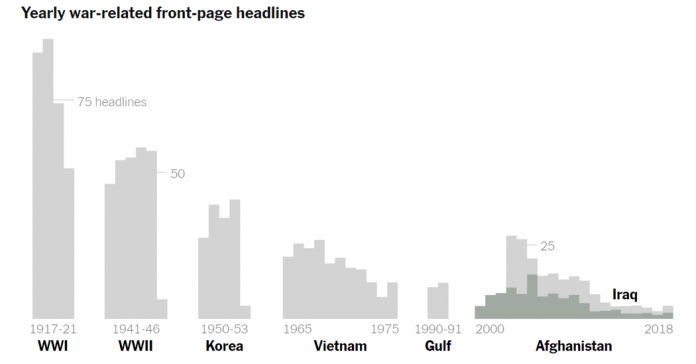
This graph, which shows the number of New York Times front-page articles by war, appeared elsewhere on NYTimes.com.

After looking closely at the graph above (or at this full-size image), think about these three questions:

  • What do you notice? If you make a claim, tell us what you noticed that supports your claim.

  • What do you wonder? What are you curious about that comes from what you notice in the graph?

The questions are intended to build on one another, so try to answer them in order. Start with “I notice,” then “I wonder,” and end with a catchy headline.

2. Next, join the conversation by clicking on the comment button and posting in the box that opens on the right. (Students 13 and older are invited to comment online. Teachers of younger students are welcome to post what their students say.)

3. After you have posted, read what others have said, then respond to someone else by posting a comment. Use the “Reply” button or the @ symbol to address that student directly.

On Wednesday, March 11, our collaborator, the American Statistical Association, will facilitate this discussion from 9 a.m. to 2 p.m. Eastern time to help students’ understanding go deeper. You might use their responses as models for your own.

4. By Friday morning, March 13, we will reveal more information about the graph at the bottom of this post. Students, we encourage you to post an additional comment after reading the reveal. How does the original article and the moderators’ comments help you see the graph differently? Try to incorporate the statistical terms defined in the Stat Nuggets in your response.


  • Read our 2019-20 introductory post, which includes the archives of past releases by topic and graph type.

  • Learn more about the “Notice and Wonder” teaching strategy and how and why other teachers are using this feature from our on-demand webinar.

  • Sign up for our free weekly newsletter so you never miss a graph, and add our 2019-20 “What’s Going On in This Graph?” live-moderated discussion Wednesdays to your Google calendar (3/11, 3/18, 3/25, 4/1, 4/8). Graphs are always released by the Friday before to give teachers time to plan ahead.

  • Go to the A.S.A. K-12 website, which includes This is Statistics, resources, professional development, student competitions, curriculum, courses and careers.