fbpx
Home Blog Page 1589

Lesson of the Day: ‘The Creepy Anglerfish Comes to Light. (Just Don’t Get Too Close.)’

0
Lesson of the Day: ‘The Creepy Anglerfish Comes to Light. (Just Don’t Get Too Close.)’

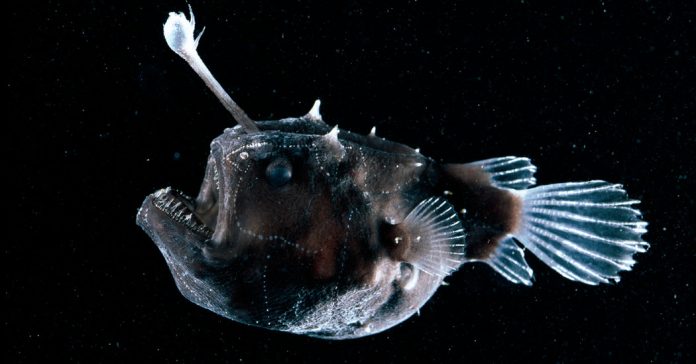
5. The author uses words like “exotic,” “ghoulish,” “demonic,” and “nightmarish” to describe the anglerfish’s appearance. How would you describe it? Which feature of this fish’s anatomy or behavior is most remarkable to you and why?

6. The article concludes:

Water covers more than 70 percent of the Earth’s surface and goes down miles; all told, the global sea accounts for 99 percent of the terrestrial biosphere.

“There’s a whole world of ocean out there,” Dr. Robison said. “And most of it is unexplored.”

What would you most like to study about the mysteries of earth’s oceans? And why? What questions about the anglerfish do you still have? How can our understanding of the mysterious and strange anglerfish help us understand all living things — including ourselves?

Design and create an imaginary organism to survive in an extreme environment. Your life-form can be big or small (even microscopic), realistic or fantastical. Be creative, and don’t feel you have to model your new organism on more commonplace animals you might see daily.

First, pick an extreme environment — arctic, desert, deep ocean, dark side of the moon or the top of Mount Everest, for example. Then, conduct some research on the challenges this environment poses for living things. Write down at least five major obstacles.

Next, brainstorm and design a creature that would best survive that extreme environment. As with all living things, food, shelter, defense and reproduction are critical to the survival of the species. Will it have sharp teeth or no teeth at all? Will it have big eyes for seeing in the dark like owls, or will it come with its own built-in light like the anglerfish?

As you create, keep in mind two important aspects of any biological organism: structure and function.

  • Structure refers to something’s form, makeup or arrangement — or “what it is.”

  • Function refers to something’s role or responsibility — or “what it does.”

Feel free to draw or borrow from what you already know about how species adapt to their environments (for example, how fennec foxes have long ears to release excess body heat in the hot desert, or how the fur of a snowshoe hare helps to camouflage it from predators by turning white in winter to blend in with the snow).

Finally, describe your organism using vivid language. (You can also draw it, if you are feeling ambitious.) Make sure to explain how its key features or structures will allow it to best adapt to its challenging environment. For your description, as in the warm up, try to use detailed, descriptive language. Use the opening two paragraphs of the article as a model text.
What Students Are Saying About: Mental Health Days, Self-Doubt and Their Fashion Idols

0
What Students Are Saying About: Mental Health Days, Self-Doubt and Their Fashion Idols

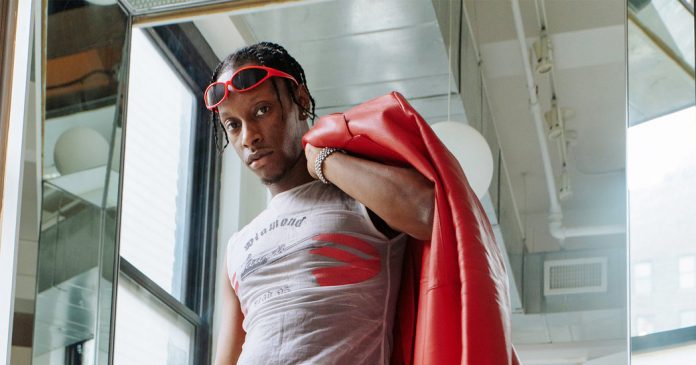
In honor of New York Fashion Week, we invited students to tell us who inspires their style and what they think of this season’s trends in our Picture Prompt “Fashion Idols.” Here’s what they had to say:

The modern fashion world has been bringing back trends from the past, and as a fellow trend follower, I have no complaints. I love vintage style outfits that scream chic and clean, a reflection of Audrey Hepburn or Chanel. I think my style inspiration comes from various different pupils and culture…I incorporate everything that catches my eye into my wardrobe. I am very decorative of plain outfits, and most style them with jewelry.

— Binderiya, Ulaanbaatar

The fashion world today is immensely diverse and constantly changing. From bright neon shoes to see-through pants, the fashion trends of the modern world is borderless. Personally, I absolutely love most fashion trends as they seem to reflect different values and personas. One of the most recent trend of soft pastel colors has come to especially catch my attention. I have recently started styling pastel as a staple piece with one or two bright colored statement pieces.

— Anu, Ulaanbaatar, Mongolia

Today’s fashion trends are something that I’ve been doing for rather a long time, wearing hoodies that are 2 sizes too large or and semi baggy jeans is something that I’ve been doing since my junior year. I love the trend about wearing a chain around the pockets of clothing, or the revival of overalls and the different styles of wearing them that everyone has. 90’s fashion has been revived as well, and I really like the colorful energy that it brings when hybridized with the darker parts of rap fashion.

— kery, Providence

I remember growing up in a time where artists like Soulja Boy, T-Pain, Lil Wayne, etc. were heavy hitters in the hip hop culture. This culture of baggy clothes, pants sagging, backwards hats also came with a sense of hypermasculinity that was religiously practiced in my community. Some kids, like me or my friends, differing from this norm were outcasted as weird, white, or gay. However, I liked being the weird kid sometimes, because while I was avoided by some peers for being different, I was inversely welcomed and embraced by a new community of other outcasts.

It is ironic though because give or take a couple years, this trend begins to shift with the likes of artists like Tyler, the Creator, Frank Ocean, and Kid Cudi becoming more prominent in the media. I began to see the culture that I placed myself in become mainstream. It shows how many people have no sense of self expression too, they just follow trends in hopes to be with the times. Meanwhile, I’m inspired by music artists like Frank Ocean and A$AP Rocky to not be tempted by gender and cultural norms and to express my identity through my style.

— Manuel, Providence

In my opinion, today’s fashion trends are lit and fashionable. The thing I love the most is it’s really comfortable and you can just do whatever you want, run or jump. The person who inspires me is Billie Eilish. She has a really unique and comfortable style, which I love the most. I kind of love the clothes that are comfortable, cozy and unique, because clothes also describe who you are.

— Tergel, Mongolia, UB

What’s Going On in This Picture? | Sept. 23, 2019

0
What’s Going On in This Picture? | Sept. 23, 2019

Students

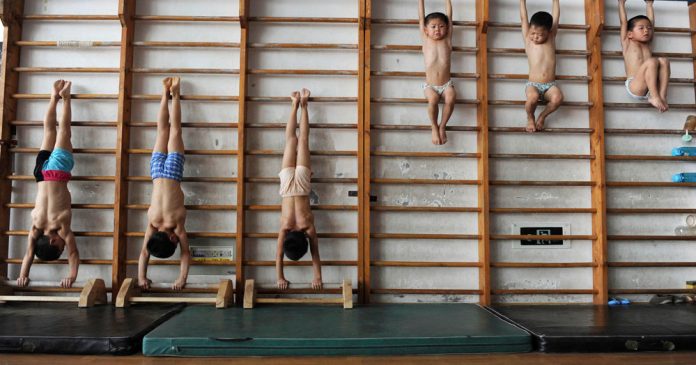
1. After looking closely at the image above (or at the full-size image), think about these three questions:

2. Next, join the conversation by clicking on the comment button and posting in the box that opens on the right. (Students 13 and older are invited to comment, although teachers of younger students are welcome to post what their students have to say.)

3. After you have posted, try reading back to see what others have said, then respond to someone else by posting another comment. Use the “Reply” button or the @ symbol to address that student directly.

Each Monday, our collaborator, Visual Thinking Strategies, will facilitate a discussion from 9 a.m. to 2 p.m. Eastern time by paraphrasing comments and linking to responses to help students’ understanding go deeper. You might use their responses as models for your own.

4. On Thursday afternoons, we will reveal at the bottom of this post more information about the photo. How does reading the caption and learning its back story help you see the image differently?

Protected: Is Python or JavaScript Worth Learning in 2019?

0

This content is password protected. To view it please enter your password below:

The post Protected: Is Python or JavaScript Worth Learning in 2019? appeared first on Coursera Blog.

Protected: Real-World Applications of Blockchain

0

This content is password protected. To view it please enter your password below:

The post Protected: Real-World Applications of Blockchain appeared first on Coursera Blog.

Protected: Self-Driving Cars: Pros and Cons, Tech Behind Them and Timeline

0

This content is password protected. To view it please enter your password below:

The post Protected: Self-Driving Cars: Pros and Cons, Tech Behind Them and Timeline appeared first on Coursera Blog.

Hello, Autumn Free Printable

0
Hello, Autumn Free Printable

Hello, Autumn Free Printable

Only a few more days to go and we can welcome a new season! Autumn is just around the corner and along with it, all the treats the cooler weather can bring. I’m ready to pack in my swimwear and beach trips and embrace snuggling in a cozy blanket, sipping some hot apple cider, taking a trip to the pumpkin patch, and giving thanks for all of the wonderful holidays soon to come. Welcome autumn to your home or office with this beautiful free printable of autumn leaves.

Hello, Autumn Free Printable

For Personal Use Only.


Tipping

0
Tipping

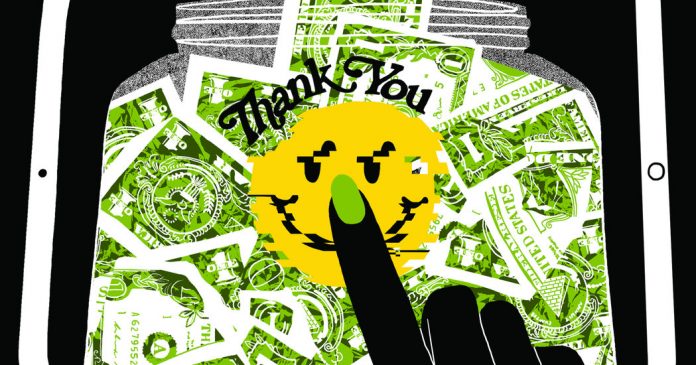
Have you ever bought a cup of coffee, a sandwich or a smoothie at a place that uses a customer-facing touch-screen payment system and been confronted with the question of whether you’d like to tip? If so, did you do it, at least in part, to avoid the embarrassment that might come from hitting “No tip” and then having to face the server?

In general, do questions of when to tip and how much confuse you? Do you have a tipping policy?

Tell us about your tipping experiences and opinions in the comments, then read the related article to learn what others say they do and why.

Find many more ways to use our Picture Prompt feature in this lesson plan. You can find all our Picture Prompts in this column.

Word + Quiz: rejoinder

0
Word + Quiz: rejoinder

1. a quick reply to a question or remark (especially a witty or critical one)

2. (law) a pleading made by a defendant in response to the plaintiff’s replication

_________

The word rejoinder has appeared in 51 articles on NYTimes.com in the past year, including on July 1 in “Taylor Swift’s Feud With Scooter Braun Spotlights Musicians’ Struggles to Own Their Work” by Ben Sisario and Joe Coscarelli:

Now we can add Taylor Swift to the chorus of artists who have bemoaned that their creative work is someone else’s property, as she once again used her social-media megaphone to stir debate about the inner workings of the music industry.

… “This is what happens when you sign a deal at fifteen to someone for whom the term ‘loyalty’ is clearly just a contractual concept,” Swift wrote, in a jab at Big Machine’s founder, Scott Borchetta.

Hours later, Borchetta posted a rejoinder, including a snippet of a deal proposal, that suggested that Swift could have earned her recording rights back had she renewed with Big Machine last year. Instead, she signed with Universal …

_________

Lesson of the Day: ‘The Secret History of “Easter Eggs”’

0
Lesson of the Day: ‘The Secret History of “Easter Eggs”’

Find all our Lessons of the Day here.

Featured Article: “The Secret History of ‘Easter Eggs’”

Easter eggs? No, we’re not talking about those plastic toys filled with candy and hidden in the backyard.

In this lesson, students will learn about the quirky software surprises Google, Tesla, Amazon and others hide in their products. They will consider the roles that audience and purpose play in the creation of these Easter eggs, and use that criteria to design their own.

When you hear “Easter egg,” what do you think of? What thoughts, feelings, memories and other associations come to mind?

The article you are about to read is about a different kind of Easter egg: an undocumented feature in a tech product, set in motion by a sequence of commands that nobody would hit accidentally and intended as a joke, bonus or surprise for viewers.

Take a minute to explore some. Open up Google and search the following terms:

What happens when you search these terms? Why do you think programmers built these features into Google? What effect do they have on you? Why do you think they are called Easter eggs?

Read the article, then answer the following questions:

1. What was the motivation behind the creation of the first known Easter egg? How does that differ from the reasons programmers use them today?

2. Dan Sandler, who works on the Android smartphone software, said that Easter eggs help “establish software as an art form.” What does he mean by that? Do you agree that software can be an art form? Why or why not?

3. Describe two of the Easter eggs mentioned in the article that stood out to you. What were their purposes? Who were they created for?

4. Easter eggs cost time and money to design, build and debug, and tech companies can’t even reveal or advertise them. Plus, they run the risk of getting negative feedback and press. Why do you think companies continue to include them in their products, despite these drawbacks?

5. In your opinion, are Easter eggs worthwhile? Why or why not?

Choose a favorite app, website, video game, movie or any other tech product. Now, imagine you are a programmer, writer or engineer on that team, and design an Easter egg for it. Your Easter egg can be as simple as an extra scene at the end of a movie or as complex as a secret level on a game.

This activity can be purely imaginative: Write about or draw what you would create and how your users would discover it. Or, if you have the time and skills, you can try building an actual digital or physical prototype.

As you create, keep in mind two important aspects of any technological feature: its audience and purpose.

  • Audience: Who is this feature intended for? The public, expert users, employees, creators or someone else?

  • Purpose: What impact do you want it to have? Is it simply to entertain and delight users? Reward them in some way? Give credit or pay tribute to someone? Something else?

These criteria will not only help you figure out what you want your Easter egg to do, but also how your audience will discover it. For example, if your feature is meant to delight users and you want anyone who uses your app to be able to see it, it might look something like Google Maps’ Mario feature. But if it is meant to reward serious users only, you might create a complicated combination of steps to get there, such as for Tesla’s secret features.

Be as creative as you like and, if you’re doing this in a school context, present what you made to your classmates.