fbpx
Home Blog Page 1600

Redefine What’s Possible With Coursera

0
Redefine What’s Possible With Coursera

Every day, 43 million (and counting!) Coursera learners are redefining what’s possible. 

From dorm rooms to lunch breaks, learners like Emmanuel, Kelly, Tristen, and Kara saw the opportunity to take a goal and turn it into a new reality. 

We’re proud to be a global community where anyone, anywhere can come to Coursera to find expert instruction from world-renowned universities and companies and use what they learn to achieve their goals. From mastering new skills in a Specialization, to getting job-ready for a new career with a Professional Certificate, or transforming a career with a university degree or MasterTrack™ Certificate — on Coursera, anything is possible! 

This back-to-school season, we’re celebrating the many ways that the Coursera community is redefining what’s possible. Read on to get inspired by some incredible Coursera learners. Then, share your own story with us using #RedefinePossible on Facebook, LinkedIn, Twitter, and Instagram.


How Emmanuel, Kelly, Tristen, & Kara are redefining what’s possible

Emmanuel mastered new technical skills to land his first full-time job

Emmanuel knew he wanted to work in tech after college, but he wasn’t sure how to get there. He was learning great critical thinking skills from his liberal arts program, but knew he needed more hands-on experience with data analysis, machine learning, the cloud, and more. When he started asking around for advice about how to land a technical internship, an engineer at Google recommended Coursera. One hundred courses later (we’re not exaggerating!), Emmanuel discovered not only the ability to master new technical skills, but he also rediscovered a love of learning.

“Learning from university and industry experts on Coursera gives me the chance to tackle topics that can seem intimidating and allows me to create a plan to take on those courses without the fear of failure.”

Not only did he gain new confidence for his technical interviews, he also had real work to showcase. Now he’s starting his new career as a software engineer at one of America’s biggest investment banks and he says he’s definitely not done learning. 

“Coursera lets me know that even if I don’t know something, I can learn it. It’s allowed me to shape my career. I’m now working as a software engineer in New York City.”

Explore Courses & Specializations on Coursera


Kelly tried a piece of a master’s program and used what she learned to start her Master of Education degree at the University of Illinois

 Working at Yale, Kelly is immersed in both sides of the learning process. By day, she supports students and assists professors with coursework and research. By night, she switches hats to complete her own courses online. Knowing she preferred the flexibility of learning on her own time and at her own pace, Kelly enrolled in the Instructional Design MasterTrack™ Certificate from the University of Illinois to get a taste of a graduate degree.

“The fact that I could take just the two MasterTrack courses for a standalone credential with the option to apply the credits to a full degree program if I was accepted really made it an easy decision to enroll!”

Aftering completing the Instructional Design MasterTrack Certificate, Kelly applied and was accepted to the Illinois Master of Education Degree Program. She can’t wait to use what she learns to further her career at the intersection of technology and higher education.

“My primary goal was to determine if instructional design was something I wanted to pursue further. I was really hoping the MasterTrack program would be a springboard into a full master’s program, which it was. Goal achieved!”

Explore MasterTrack Certificates on Coursera


Tristen got job-ready for his new IT career by learning from the experts at Google

Tristen first discovered his love for IT when he saw how he could use technology to help people. While in his second year of college, Tristen made the difficult decision to leave school in order to help his mother provide for their family. While he had to take a break from his studies, he never gave up on his dream of a career in IT. But for more than a decade, it was hard to find a way forward. 

“Getting into IT always felt insurmountable, because it was either I had the time but not the money, or I had the money but not the time. When I discovered the Google IT Support Professional Certificate I knew: this is my gateway. This is my path. This is how I can get into IT.”

The path required dedication – he’d often make time to learn after the rest of his family had gone to sleep. In less than a year, his dedication paid off and he earned his Professional Certificate. When he saw an opening for a technology analyst, he went for it and used his coursework to demonstrate his new IT skills. 

“After my supervisor saw my coursework, she was confident that I was the right person for the job. Thanks to the Google IT Support Professional Certificate, my family gets to see me finally achieve my dream of being in IT.”

 Explore Professional Certificates on Coursera


Kara found new confidence from a quality MBA that fit her life

From working as a journalist to owning her own company, Kara’s career didn’t follow a straight path forward. She thought about getting her MBA for years, but with a full time job, two young kids, and a life she loved, finding a real degree that could fit into her life wasn’t easy. Most programs didn’t stack up to her objectives–real university learning without the impossible price tag. Then she found the iMBA from the Gies College of Business on Coursera. 

 “It’s a really big deal to offer an online MBA that’s a real MBA at a price that’s achievable. This program is totally disrupting higher education.”

As the first in her family to get a degree of any kind, Kara knew she was setting a powerful example for her kids. She used the modular nature of the iMBA to learn everywhere from poolside at swim meets to on the plane and in hotels when traveling. Every week she was learning something she could use at work the very next day from the top instructors at the Gies College of Business.  

“I just wanted my kids to know you never stop – it’s never too late; a goal is something you can continue to work for even if it takes you awhile. Now I’m in a career I absolutely love and the MBA was a really important part of that.” 

Explore Degrees on Coursera


No matter your goal, there’s a path forward on Coursera. Show us how you’re redefining what’s possible: 

  • Get inspired: Connect with us on Instagram, LinkedIn, Twitter,  and Facebook for weekly inspiration from our global community
  • Commit to a new goal or celebrate a success: Use #RedefinePossible and @Coursera in your social media posts to show us how you’re redefining what’s possible

3

Reflections on Our Summer Reading Contest and Our Week 10 Winners

0
Reflections on Our Summer Reading Contest and Our Week 10 Winners

All summer long teenagers told us about the Times articles, Opinion pieces, videos, photos and podcasts that got their attention, and all summer long we celebrated our favorite responses.

We heard, of course, about the big headlines of the summer, like the Women’s World Cup, the protests in Hong Kong, the migrant detention centers, and the mass shootings in Dayton, Ohio, and El Paso. But we also heard about thousands of other topics The Times has covered recently, from hummingbirds to social media influencers, celery juice, androgynous fashion, racism, vegan kimchi, a math equation, President Trump, K-pop, vaping, Serena Williams, climate change and mental health.

We received more than 10,600 submissions from around the world all told, many of them so notably thoughtful, original and interesting that we agonized each week to crown just one winner. In fact, for this final week we gave up and chose two. Congratulations to Louise Dorisca, who wrote about The 1619 Project, and Cody Busch-Weiss, who wrote about the em dash. Together, they show the wide range of topics and writing styles typical of the submissions we received all 10 weeks.

Our judges came from both the Times newsroom and the business side of the company, and we asked them to reflect on what they noticed as they read. Here is what a few of them had to say:

Alexandria Symonds, a senior staff editor who most recently wrote an explainer about the Amazon rainforest fires:

I was struck while reading students’ responses to Times journalism by how impassioned they are, and by how — even while arguing opposite sides of an issue — their perspectives so often boiled down to simply wanting to live in a better, freer, kinder or more equal world.

Elda Cantú, a deputy editor for The New York Times en Español:

It is extremely heartbreaking and just a little surprising to see that so many students responded to stories on mental health. But the fact that their comments showed empathy toward others and the ability to write articulately around these issues is nonetheless encouraging. It’s evidence that perhaps these young readers are learning a vocabulary to better listen to their peers, ask for help and heal themselves.

Also, the breadth of interests and points of view is a reminder of the diversity of experiences of young people, who too often are grouped together just by virtue of their age.

Pia Peterson, a photo assistant at The New York Times Magazine who recently worked on The 1619 Project:

One of the things I love about judging the Summer Reading Contest is feeling like I’m learning about what teenagers are thinking about. We can’t read your minds, but sometimes we’re curious! I think a lot about the girl that shared in one submission, “My phone and I are really close. I share everything with it and it never tells a soul.” The way that you’re growing up now is so different from how I grew up. It’s a different experience and there’s so much value in sharing your thoughts on it.

Ms. Peterson also shared some advice for students that can take you beyond The New York Times:

I love thinking that today’s students are gaining an interest in the world or expanding their knowledge base on certain topics by reading these articles. I would always encourage them to read more. The Times’s reporting is incredible, but it’s not the end all be all. If you’re interested in an article, Google the topic. Google the author. Read around. Get a book on the subject. Go to protests. Talk to experts. Talk to your grandparents, if you’re lucky enough to have them around. There’s always more to learn!

If you liked participating in this contest, check back in June of 2020, since it’ll be back then for an 11th year. In the meantime, we invite you to participate in our many other contests for teenagers, and to respond to our daily writing prompts anytime you like.

Lesson of the Day: ‘Governments Shut Down the Internet to Stifle Critics. Citizens Pay the Price.’

0
Lesson of the Day: ‘Governments Shut Down the Internet to Stifle Critics. Citizens Pay the Price.’

Please note: Our old “Article of the Day” feature has been renamed “Lesson of the Day.” Each aims to be something teachers and students can do in one class period, with the option of “going further” for homework or in future classes.

Featured Article: “Governments Shut Down the Internet to Stifle Critics. Citizens Pay the Price.”

Internet shutdowns have become one of the defining tools of government repression in the 21st century — but citizens bear the cost at work and at home. Should internet access be a basic human right, worthy of being protected around the world? Why?

This lesson, including the featured Times article, is also available as a PDF.

Imagine if the government shut down internet access for a day, a week or a month? How would your life be affected? Would it change how you learn? How you work? How you spend your free time? Would an internet shutdown affect the rest of your family as well? How?

Now consider, there were at least 196 shutdowns in 25 countries in 2018, up from 75 in 24 countries in 2016. Before reading the featured article, brainstorm reasons you think a government might want to purposefully shut down the internet.

Read the article, then answer the following questions:

1. What is an internet shutdown? How can it affect the democratic process?

2. How can internet shutdowns affect the economy and individual businesses?

3. What justifications do governments often use for shutting down the internet? What real motivations do these public justifications typically mask?

4. Choose one example from the article and explain how daily life was affected in one country by an internet shutdown.

5. How have residents tried to get around internet shutdowns to keep communications flowing? Why are these workarounds limited in their effectiveness?

6. Do you think a government could ever have a valid reason for shutting down the internet? Why?

In the wake of World War II, the United Nations adopted the Universal Declaration of Human Rights, which for the first time set out fundamental human rights to be universally protected. However, the U.D.H.R. was proclaimed in 1948, long before the invention of the internet.

Do you think internet access is a basic human right? Explain why.

Then, come up with a “bill of rights” or a United Nations resolution that seeks to protect our rights when using the internet. What rights would you include?

Word + Quiz: panoply

0
Word + Quiz: panoply

: a complete and impressive array

_________

The word panoply has appeared in 57 articles on NYTimes.com in the past year, including on May 13 in the Opinion essay “Surviving Despair in the Great Extinction” by Margaret Renkl:

NASHVILLE — The gift of springtime is the panoply of new life: gray buds breaking open into bright flowers, gray branches sprouting leaves in a thousand shades of green to make a bower of our common lives. In the treetops, birds throw back their heads to sing their full-throated, body-shuddering songs. An ordinary suburban yard becomes a carpet of wildflowers, each one visited by tiny, iridescent bees which seem to materialize overnight out of nothing but the mild springtime air.

_________

Back to School

0
Back to School

It’s back-to-school season. How do you feel about the start of a new school year? What are you most looking forward to? What are you nervous about?

Tell us in the comments, then read the related article to find some strategies for transitioning back to school.


Find many more ways to use our Picture Prompt feature in this lesson plan. You can find all our Picture Prompts in this column.

Universidad de los Andes Will Develop Latin America’s First Top-Tier Online Master’s in Software Engineering on Coursera

0
Universidad de los Andes Will Develop Latin America’s First Top-Tier Online Master’s in Software Engineering on Coursera

By Dil Sidhu, Chief Content Officer at Coursera

Automation and technology are disrupting jobs worldwide while also  creating a strong demand for software engineering and IT professionals, and Latin America is no exception. The region currently has an estimated shortage of nearly 450,000 IT professionals, with a gap of more than 25,000 individuals in Colombia alone. 

To help address this critical skills gap, we’re excited to announce plans to develop a master’s degree in software engineering* from Universidad de los Andes, a leading institution in Colombia. This is Latin America’s first fully online master’s degree in software engineering from a top-ten university and the first Spanish-language degree on the Coursera platform. The degree will prepare Spanish-speaking learners — even those without a bachelor’s degree in computer science — to lead high-performance software development teams. 

Expected to begin admissions by August 2020 and launch in 2021 after official approval from the Colombian Ministry of Education, the graduate-level program will focus on high-demand skills like agile software development, DevOps, and project management. For the final module, students will be able to choose among topics like software automation, machine learning, data analytics, and visualization, so they can master the latest industry trends. In addition to teaching the theoretical foundations of software engineering and the latest technological thinking, the degree will also offer opportunities to work on live projects and collaborate with industry leaders so that students can apply their new skills to real-world situations. Notably, the program will not require a previous degree in computer science, though basic proficiency in programming is preferred and experience in software development is necessary.

“Businesses today need software engineers that can lead teams, coordinate complex projects, and bring new ideas to the forefront but there aren’t enough qualified graduates in Latin America to help move the industry forward,” said Alfonso Reyes, Dean of the School of Engineering at Universidad de los Andes. “We are thrilled to partner with Coursera to develop our first online degree to empower students everywhere to pursue advanced roles in the field. The curriculum will be designed to meet the needs of the next generation of software engineers and address the skills deficit in Colombia and beyond.”

At Coursera, we’re particularly excited to partner with a top-ranked university like Universidad de los Andes to launch this cutting-edge degree program. Known for innovation and research, the institution is in the top 1 percent of the QS World University Ranking. The School of Engineering retains a high-quality teaching staff with strong academic backgrounds — 76 percent of professors have Ph.D. degrees.  

Software development is one of the most valuable skills in today’s job market, but Spanish-speaking learners need more options for flexible, high-quality education to help them pursue roles in the field. With this advanced degree program from Universidad de los Andes, we look forward to helping Spanish-speaking learners — including those without a previous degree in computer science — succeed in this highly sought-after field. 

To learn more about the degree, please visit https://www.coursera.org/degrees/maestria-ingenieria-software-uniandes           

* The online master’s degree in software engineering from Universidad de los Andes is subject to approval from the Colombian Ministry of Education

1

Free September Wallpaper

0
Free September Wallpaper

Our September wallpaper features the Halcyon Brush Lettered font.

Included in the free download are two desktop options – one with the calendar and one without the calendar. The others include one wallpaper per device.

Enjoy!

FOR PERSONAL USE ONLY.


Looking for Graphs to Use in the Classroom? Here Are 34

0
Looking for Graphs to Use in the Classroom? Here Are 34

Our third year of “What’s Going On in This Graph?”, our weekly collaboration with the American Statistical Association, begins in September. To help you prepare, we have amassed an archive with 34 graphs on an array of topics, including baseball, popular music, climate change and military budgets. Take a look to see how thousands of students have already interacted with these fascinating examples of data journalism.

If you’re new to the feature, here is how it works:

  • Each week during the school year we take a graph that has been published elsewhere in The New York Times and ask students to share what they notice and wonder about it. This feature is completely free.

  • We post these graphs on Thursdays, and include them in our free weekly newsletter, so teachers can plan for the coming week. Our first graph of the new school year will be released on Thursday, Sept. 5.

  • Then, from 9 a.m. to 2 p.m. Eastern time the next Wednesday, we host a live-moderated discussion where students from around the world post their observations and analysis while moderators from A.S.A. facilitate the conversation among the students. Our first live-moderated discussion will take place on Wednesday, Sept. 11.

  • Your class can join the discussion any day of the week, not just Wednesdays, and students can even comment on graphs in our archive.

  • On Thursday afternoons, a week after we publish each graph, we add an “update” to the post which includes additional background about these graphs and relevant statistical concepts.

Below you will find 16 kinds of graphs, ranging from a simple dot plot to a radar graph. To make this free library even more accessible for teachers, we’ve organized them by both topic and graph type.

In addition, we have two new ways you can stay on top of everything related to “What’s Going On in This Graph?” and share this feature with your colleagues:

  • Add our 2019-20 “What’s Going On in This Graph?” live-moderated discussion dates to your Google calendar.

  • Watch our related webinar, featuring Sharon Hessney from the American Statistical Association and Dan Meyer from Desmos, as well as guest teachers and students, about how to use “What’s Going On in This Graph?” in your classroom.

Join us for our third year of “What’s Going On in This Graph?” We can’t wait to get started!

Environment, Science and Technology

Education

The Arts, Sports and Culture

Health & Wellness

United States Economy, Politics, History and Civics

Global Economies, History, Politics and Culture

Gabriel Dalporto Becomes Udacity’s New CEO

0
Gabriel Dalporto Becomes Udacity’s New CEO

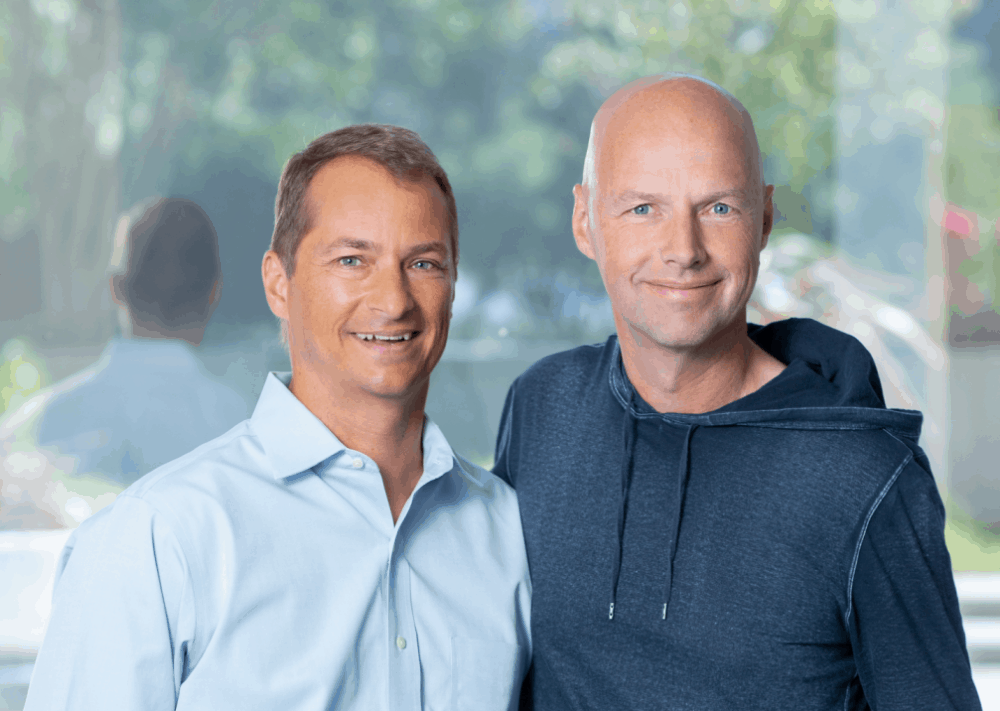
Dalporto and Thrun smiling

Last week, the $1B e-learning startup Udacity announced the appointment of Gabriel Dalporto as its new CEO. The appointment marks the end of a 10-month search initiated following Vishal Makhijani’s departure from the helm of the company in October 2018. The search was overseen by Sebastian Thrun, Udacity co-founder and former CEO, who retook the reins of the company in the interim.

Prior to joining Udacity, Dalporto spent 8 years at LendingTree, an online lending marketplace. His roles at the company included chief marketing officer and chief financial officer. And his responsibilities included leading major strategy shifts in the company’s core activities. This experience likely played a role in Dalporto’s new appointment, since he is joining Udacity in the wake of an important restructuring plan.

In 2015, Udacity made headlines by becoming a unicorn — that is, by reaching a valuation of over 1 billion dollars. Between 2016 and 2017, the company continued to grow rapidly. But in 2018, growth slowed down, partly because of the lack of Nanodegree blockbusters that year. This prompted the departure of Makhijani and the return of Thrun, and called for a fundamental transformation of the company’s core business.

This need for change crystallized in a restructuring plan that involved:

  • Increasing prices: In May 2019, Udacity effectively doubled the cost of its Nanodegrees when it switched from fixed prices to a subscription model. The year prior, Udacity had already doubled — sometimes tripled — Nanodegree prices.
  • Reducing pays: Udacity Mentors, who support learners during their Nanodegrees, saw their responsibilities change and their pay shrink.
  • Cutting staff: Over three rounds of layoffs, Udacity parted with over 40% of its workforce. In addition, some open positions were left vacant. And the company closed or downscaled several of its offices worldwide. In the wake of these measures, many of Udacity’s long-standing instructors left the company.

In addition, the restructuring plan involved changes to Udacity’s main product: its Nanodegrees. These changes included:

  • Speeding up Nanodegree production: By adopting a leaner approach to course development, involving smaller content creation teams, Udacity says it is on track to roll out 24 Nanodegrees in 2019, as opposed to only 8 in 2018.
  • Revamping mentorship model: In May 2019, Udacity formally restarted pairing learners with dedicated Mentors to guide them through their Nanodegree. In addition, learners would receive support from career coaches to help with their job searches.
  • Scrapping some Nanodegrees: Some upcoming Nanodegrees were cancelled, such as the Cybersecurity Nanodegree. And some existing Nanodegrees aren’t accepting enrollments anymore, such as all the Virtual Reality Nanodegrees.

Through these measures, Thrun hoped Udacity would reach profitability by the end of 2019. And it seems the plan is already paying dividends.

According to Thrun, the company continues to grow aggressively — in particular, its corporate and government businesses, which entail creating courses allowing companies and institutions to upskill and reskill their staff.

In addition, Thrun says that learner satisfaction and completion rates are up, and that Udacity just reached 100,000 Nanodegree graduations.

Finally, Thrun says that since June 2019, Udacity is cash flow positive — meaning that its monthly cash inflow exceeds its outflow — which, albeit not a guarantee of long-term profitability, is an encouraging sign.

Regarding revenue, Thrun said in May that he expects Udacity to reach $100 million in revenue in 2019, up from $90 million in 2018. But Dalporto has so far preferred to remain silent on the subject, stating that making projections at this point would be “premature.”

Retrieval Practice in the Classroom: Is Asking Questions Enough?

0
Retrieval Practice in the Classroom: Is Asking Questions Enough?

So, what does this mean for educators?

It is not enough to ask questions during lecture because students are unlikely to engage in covert retrieval unless they are pushed to do so. Instead, try having students write down an answer and then possibly share that answer with a partner or the class, but they need to engage in their own retrieval first. Simply asking students to engage in retrieval is not enough as many will likely wait for the answer and then engage in a recognition process (“Oh yeah, I knew that”) instead of recalling the response for themselves.

The other important takeaway more directly impacts student group work. When students are engaging in retrieval practice in groups, the person who is in charge of asking the questions would benefit from also writing down a response or they will see little benefit to this group work. Alternatively, it is important that students take turns frequently during group work, making sure that everyone gets asked the same questions so that all students benefit from the retrieval on each question.

References:

(1) Abel, M., & Roediger III, H. L. (2018). The testing effect in a social setting: Does retrieval practice benefit a listener?. Journal of experimental psychology: Applied, 24(3), 347.