fbpx
Home Blog Page 1606

Our Fifth Annual Student Review Contest

0
Our Fifth Annual Student Review Contest

Do you have strong opinions about books, music, fashion, restaurants or TV shows? Are you a theater buff or a foodie?

If so, you’re in luck. In this contest, we invite you to play critic and write an original review for our Fifth Annual Student Review Contest.

What can you choose? Anything that fits into a category of creative expression that The New York Times covers — from architecture to video games.

We do ask, however, that you pick something new to you. Part of the reason we created this contest is to encourage you to stretch your cultural imagination. So go see a local art, design or fashion show; explore a building; watch a movie or TV show or dance performance or play; listen to an album; read a book; play a game or eat in a restaurant that is novel and interesting to you.

Please note: For the first time ever, we plan to have two submission categories for this contest: middle school and high school. We will update this page with more detailed rules and submission forms on or before Nov. 7, 2019, the date when this contest officially opens.

Until then, here are useful resources so teachers and students can begin planning for this contest:

• Our 2018, 2017, 2016 and 2015 winners, runners-up and honorable mentions.
• Our lesson plan “Thinking Critically: Reading and Writing Culture Reviews.”
• A link to add this contest to your Google calendar.
• Our contest rubric.

If you have any questions about this contest, please contact us at LNFeedback@nytimes.com.

_________

1. Review something that fits into one of the categories of creative expression that The Times reviews.

• books (fiction, nonfiction and children’s books)
• video games
• music (albums and events, popular and classical)
• movies
• theater
• TV shows
• fashion
• architecture
• dance
• art
• restaurants
• hotels
• technology

2. Be concise. The review must be 450 words or fewer, not including the title.

3. Assert an opinion and back it up. A review is not simply a plot summary or description. State an opinion and support it with detail that makes your case.

4. Know your audience. Be mindful that you are submitting a review to The New York Times, not to a school newspaper, and that your potential audience therefore includes a broader cross-section of people. But, be sure to take into account who the creative work’s target audience is as well. For example, if you are reviewing a video game intended for 10-year-old girls, aim to write a review that will be useful for 10-year-old girls (and their parents).

5. Write something original. For this contest, you cannot submit anything you have already published, whether in a school newspaper or elsewhere.

6. Whatever you choose to review, it should be new to you. That doesn’t mean it can’t be a classic work and has been around for decades — just that it should be a fresh experience for you.

7. Use appropriate and engaging language, and give context. Assume that your audience is interested in learning more about your topic but does not have the same background about it that you do.

8. Only one submission per student is allowed.

9. What is the “prize”? Having your work published on The Learning Network.

10. We plan to offer two different categories for this contest: middle school and high school. Please stay tuned for more details.

Our Fifth Annual Student Editorial Cartoon Contest

0
Our Fifth Annual Student Editorial Cartoon Contest

On The Learning Network, we invite teenagers to write about their opinions daily, but it’s only during our annual Editorial Cartoon Contest that we ask them to illustrate those ideas.

With this, our Fifth Annual Editorial Cartoon Contest, we invite students to channel their thoughts into images. So if you have something to say about issues like the 2020 presidential race, climate change, student loans, racism, vaping or gun control — all topics the 2018 winners took on — or about any other subject The Times covers, try making an editorial cartoon that shows us what you think.

Please note: We will update this page with more detailed rules and submission instructions on or before Oct. 3, 2019, the date when this contest officially opens.

Here are useful resources so teachers and students can begin planning for this contest:

• Our 2018, 2017, 2016 and 2015 winners, runners-up and honorable mentions
• Our lesson plan “Drawing for Change: Analyzing and Making Political Cartoons”
• A link to add this contest to your Google calendar
• Our contest rubric

If you have any questions about this contest, please contact us at LNFeedback@nytimes.com.

_________

1. For this contest, we are accepting drawings or illustrations, or a series of artworks, that offer commentary or criticism about current issues, political topics or historical events covered in The New York Times. Format examples include, but are not limited to, single-panel drawings with captions, sequential comic art, illustrations or digitally created drawings.

2. Don’t be afraid to take a stand or have an opinion. Editorial cartoons illustrate a point, prompt a realization or offer an example.

3. Your submission must link to at least one related Times source. Since The Times has been publishing since 1851 and because content from any section or era can be inspiration for your work, that should be easy. If you’re stuck, try searching; you may be surprised at how much you can find in The Times.

4. Create something original. For this contest, you cannot submit anything you have already published, whether in a school newspaper or elsewhere. Be careful not to plagiarize.

5. The work you send in should be appropriate for a Times audience. Create your cartoon for a well-informed audience, but include enough background information to give context.

6. Create your cartoon by yourself or with a partner, but make sure you only submit one entry in this contest. If you’re submitting as part of a team, you should not also submit as an individual. If you are submitting a series of illustrations or panels as your cartoon, be sure that your entry is contained in one image file to be uploaded.

7. We will use this rubric (PDF) to judge editorial cartoons. The top cartoons, as judged by The Times and professional cartoonists, will be featured on The Learning Network.

8. What is the “prize”? Having your work published on The Learning Network — and, potentially, in print in a Times special section.

9. Submissions must be from middle and high school students, ages 13 and up. Since internet privacy laws are changing in the U.S. and around the world, please stay tuned for exact details about age requirements in different countries.

10. The children and stepchildren of New York Times employees are not eligible to enter this contest. Nor are teenagers who live in the same household as a Times employee.

Our Second Annual ‘Show Us Your Generation’ Photo Contest for Teenagers

0
Our Second Annual ‘Show Us Your Generation’ Photo Contest for Teenagers

5. We are equally interested in your statement and your images, and in the ways they work together, as our rubric shows. You do not have to be an experienced photographer to participate in this contest since technical excellence is just a part of how we will judge your work. We are chiefly concerned with the ideas and insights you offer about teenagers today.

6. What you choose to depict can be negative, positive or neutral. It can be specific only to a very particular group or type of teenager (like your friends, or a team you’re on, or a club you’re in), or it can show something you’ve noticed about people your age in general. It can focus on an aspect of everyday life that you think deserves more notice or a different point of view, or it can depict something special, like a holiday or event. We just want you to show us your world, as you see it. The list of questions we pose in Part III of this lesson plan might help you think about the ideas that interest you most.

7. Keep in mind that the work you send in should be appropriate for a Times audience.

8. Photographs can be made on any kind of camera, although if you are using a cellphone camera please do not use filter effects. Please keep digital manipulation and postprocessing to a minimum in general. (That is, you may use editing software for minor corrections such as one might make in a darkroom — cropping, adjusting brightness, balancing colors, etc. — but please do not alter the reality of the photo in any way.)

9. Submissions should be in jpeg files between one and five megabytes.

10. Your work will be judged by professional photojournalists and photo editors as well as The Learning Network staff.

11. What is the “prize”? Having your work published on The Learning Network, and, potentially, in print in a Times special section.

12. Submissions must be from middle and high school students, ages 13 and up. Since internet privacy laws are changing in the U.S. and around the world, please stay tuned for exact details about age requirements in different countries.

13. The children and stepchildren of New York Times employees, or teenagers who live in the same household as a Times employee, are not eligible to enter this contest.

Looking to the future

0
Looking to the future

As someone who started out studying history, life is now all about the future for Brendan. This secondary school teacher is tackling not only his own future, having returned to study to become a secondary school principal, but he’s determined to influence the future of education as a whole.  

Life’s no longer about historical events, that’s for sure. 

Choosing to study a Master of Education with Curtin University was the key to making these dreams a reality for Brendan. But as a full-time teacher and head of house at Iona Presentation College in Perth, finding a course that would allow him to continue with his classroom commitments was key.  

Not only that, but Brendan needed a course that was focused on the future of education just as much as he was. He wanted to “be able to enact change from the top down”, as he puts it.  

Choosing a modern degree 

With a Graduate Diploma of Education under his belt already, Brendan didn’t want to continue to study pedagogies of the past.  

For this teacher, dissecting up-and-coming education trends needed to be part of his journey towards becoming a leader in education. 

After finding the Master of Education with Curtin University on the Open Universities Australia website, Brendan felt he finally found the key to make it happen. 

“I think Curtin University is really future-focused in the way they teach and the units they offer. They’re really focused on where education is going.” Brendan says. 

Through OUA’s website, Brendan was able to not only find a degree that matched his focus on the future of his industry, but one that allowed him to study electives that matched his personal career goals. 

“I’ve been able to pick and choose what I feel is important in being a teacher for upskilling.” he adds. 

Mastering the balancing act 

With the best match for his goals selected, the next part of Brendan’s journey was actually studying. Which is no small feat when you’re busy educating the next generation. 

While Brendan was initially worried that he might not have the self-discipline to study and work at the same time, he’s been pleasantly surprised by his ability to make it work.  

His top tip? Take one unit at a time, and schedule study time. 

Brendan blocks out time in his calendar on Saturdays and Sundays, so that it doesn’t clash with school or social events. 

“It’s very manageable when paired with full-time work.” Brendan admits. 

“Those weekends are solely focused on uni and studying… but it’s a worthy sacrifice. In the long run it will definitely pay off.” 

By studying one unit per study period at a time, Brendan will finish his Masters in just a couple of years. Not bad for someone who has his hands full teaching secondary school English, Humanities and Social Sciences, and Psychology daily.  

Courses to set your dreams in motion 

Working full-time keeps your hands full. But there’s no need to feel that you can’t still achieve your dreams.  

With the ability to study online with a leading Australian university, you can take steps to make it happen.  

To express your interest in this course, or any that we offer – fill out the form on this page, and we’ll put you in touch with a friendly student advisor.  

If you’re keen to explore on your own, simply head over to our website to browse the extensive catalogue of courses from universities across Australia. 

Related courses through OUA: 

Bachelor of Education (Secondary Education)– Curtin University 

Graduate Certificate in Training and Development – Griffith University 

Master of Education – Griffith University 

Master of Educational Leadership – Australian Catholic University 

See more 

The 11th Annual New York Times Summer Reading Contest

0
The 11th Annual New York Times Summer Reading Contest

Every year since 2010 The Learning Network has invited teenagers around the world to add The New York Times to their summer reading lists and, so far, over 60,000 have.

At a time when teachers are looking for ways to offer students more “voice and choice,” we hope our open-ended contest can help: Every week, we ask participants to choose something in The Times that has sparked their interest, then tell us why. At the end of the week, judges from the Times newsroom pick favorite responses, and we publish them. It’s as simple as that.

Though our goals include some on many educators’ lists — helping students become more aware of the world and their place in it, learning how to navigate sophisticated nonfiction, and practicing writing for a real audience — we also just hope that students will realize that reading the newspaper can be fun. As you’ll see in the guidelines below, they can choose literally anything they like that was published on NYTimes.com in 2020. We don’t care what they write about; we just care about why they chose it.

Please note: We will update this page with more detailed rules and a submission form on or before June 12, 2020, the date when this contest officially opens.

Until then, take a look at the winning student responses from 2019, 2018 and 2017 to get a sense of the range of comments we have honored.

If you have any questions about this contest, please contact us at LNFeedback@nytimes.com.

_________

1. Every Friday during the contest, we will post the same questions: “What interested you most in The Times this week? Why?” That is where you should post your picks (and reasons) any time until the next Friday. Then we will close that post to comments and open a new one with the same questions.

2. You can choose from anything published in the print paper or on NYTimes.com in 2020, including videos, graphics, slide shows and podcasts.

3. Feel free to participate any or every week, but we allow only one submission per person per week.

4. Responses must be 300 words or fewer.

5. Make sure to provide us with the full URL or headline (for example, “How to Deal With a Jerk Without Being a Jerk” or https://www.nytimes.com/2019/04/05/smarter-living/how-to-deal-with-a-jerk-without-being-a-jerk.html).

6. New York Times journalists, Learning Network editors and educators will serve as judges.

7. Every Tuesday during the contest, ending on the day after the U.S. holiday Labor Day, we will publish a previous week’s winner or winners in a separate article you can find here. We will also celebrate the winners on Twitter and Facebook.

8. What is the “prize”? Having your work published on The Learning Network.

9. Submissions must be from middle and high school students. We are still determining what the minimum age will be. Please stay tuned.

10. The children and stepchildren of New York Times employees, or teenagers who live in the same household as a Times employee, are not eligible to enter this contest.

Our Third Annual Student Podcast Contest

0
Our Third Annual Student Podcast Contest

Imagine yourself — or, perhaps, you and your friends — as hosts of your own podcast. What would you talk about?

Maybe you’d tell a story, perhaps about a childhood memory, an experience that changed your life, or a bad romance. Or maybe you’d rather interview guests about a topic you’re exploring, whether a news-related issue like gun violence or gender roles, or a hobby, passion or concern of your own? Or, maybe you’d just like to have a conversation — about pop culture, sports, food, fashion, technology, politics, or, if you’re stuck, any of these 1,000-plus topics we’ve rounded up to inspire you.

In Our Third Annual Podcast Challenge, we invite teenagers to submit original work, of five minutes or less. Our favorites will then be featured on The Learning Network.

Please note: We will update this page with more detailed rules and a submission form on or before April 9, 2020, the date when this contest officially opens.

Until then, here are useful resources so teachers and students can begin planning for this contest:

• Our 2019 and 2018 winners, runners-up and honorable mentions (a 2019 winning podcast is featured above)
• Our lesson plan “Project Audio: Teaching Students How to Produce Their Own Podcasts”
• A link to add this contest to your Google calendar
• Our contest rubric

If you have any questions about this contest, please contact us at LNFeedback@nytimes.com.

_________

1. Podcasts must be five minutes or less. Please check the length of your audio file.

2. Your podcast must include a beginning, middle and end to produce a complete listening experience. Beginnings often draw the listener in or provide context. Endings often offer a summary, raise a question or act as a teaser for the next segment.

3. Your submission can be an excerpt from a longer podcast, as long as you demonstrate thoughtfulness about how you are using time. An end can be a hard “end” of a podcast, but it can also be the end of a segment, or even the end of an introduction within a longer episode.

4. Use any podcast format or genre. Popular podcast formats include, but are not limited to, interviews, conversations, nonfiction storytelling and fiction storytelling. Popular podcast genres include, but are not limited to, comedy, true crime, news documentary, history, radio theater and sports.

5. Create your podcast by yourself or with a group. If you are working as a team, just remember to submit all your names when you post your entry. But please submit only one podcast per student. If you’re submitting as part of a team, you should not also submit as an individual.

6. Use appropriate language. Assume your listeners are New York Times readers.

7. Be sure to use non-copyrighted sound effects or music, with some exceptions. You cannot use copyrighted sound effects or music for the sole purpose of making your podcast sound better. Instead, you can find royalty-free music and sound effects on Bensound or Freesound, or by doing a web search for royalty-free files. Or you can use audio editing software to create your own music or sound effects. However, there are limited fair use exceptions when you can legally use copyrighted work, such as when you are critiquing a song or reporting on a film. Read more about those exceptions if you think your use of copyrighted material does not infringe on copyright protections.

8. Upload your podcast to a third-party site so our judges can listen. Choose a host for your podcast. Many free options exist, such as SoundCloud (by far the most popular host used in previous contests), Buzzsprout, Podomatic and Spreaker. Make sure the privacy settings are set to public, so our judges can listen.

9. What is the “prize”? Having your work published on The Learning Network.

10. Submissions must be from middle and high school students. We are still determining what the minimum age will be. Please stay tuned.

11. The children and stepchildren of New York Times employees, or teenagers who live in the same household as a Times employee, are not eligible to enter this contest.

Our Seventh Annual Student Editorial Contest: Write About an Issue That Matters to You

0
Our Seventh Annual Student Editorial Contest: Write About an Issue That Matters to You

Every school day, we use our daily Student Opinion feature to invite teenagers to share their opinions about questions we pose — and hundreds do, posting arguments, reflections and anecdotes.

Now, for the seventh year in a row, we’re inviting them to make those thoughts into something a little more formal: short, evidence-based persuasive essays like the editorials The New York Times publishes every day.

Students, the challenge is fairly straightforward. Choose a topic you care about — whether it’s something we’ve addressed on this site or not — then gather evidence from sources both within and outside The New York Times and write a concise editorial (450 words or fewer) to convince readers of your view.

Because editorial writing at newspapers is a collaborative process, you can write your entry as a team or by yourself — though, please, only one submission per student.

Our judges will then use for selecting winners to publish on The Learning Network.

As teachers know, the persuasive essay has long been a staple of high school education, but the Common Core standards seem to have put evidence-based argumentative writing on everybody’s agenda. You couldn’t ask for a more real-world example of the genre than the classic newspaper editorial — and The Times publishes, on average, two of them a day.

And at a time when breaking out of one’s “filter bubble” is more important than ever, we hope this contest also encourages students to broaden their news diets by using multiple sources, ideally ones that offer a range of perspectives on their chosen issue.

Please note: We will update this page with more detailed rules and the submission form on or before Feb. 13, 2020, the date when this contest officially opens.

Until then, here are some useful resources so teachers and students can begin planning for this contest:

• The winning entries from 2019, 2018, 2017, 2016, 2015 and 2014
• Our webinar: “Write to Change the World: Crafting Persuasive Pieces With Help From Nicholas Kristof and the Times Op-Ed Page”
• Our writing prompts: 401 Prompts for Argumentative Writing
• Our video “How to Write an Editorial”
• Our lesson plan: “10 Ways to Teach Argument-Writing With The New York Times” which links to many more resources relevant to this contest, including ideas from educators who teach with the contest annually.
• A link to add this contest to your Google calendar
• Our contest rubric

If you have any questions about this contest, please contact us at LNFeedback@nytimes.com.

_________

1. You can write your editorial about any topic you like, as long as you use at least one source from The Times.

2. Use at least one non-Times source. But make sure that the source you use is a reliable one. We encourage you to find sources that offer different perspectives on an issue.

3. Always cite your sources. Our submission form contains a required field for entering your citations. We include an example as well, though you can use M.L.A. or A.P.A. styles, or just list the web addresses. Even if you use a print source or an expert interview, you must provide a citation. Readers (and judges) should always be able to tell where you got your evidence. However, there is no need to provide an in-text citation.

4. The editorial must not exceed 450 words. Your title and list of sources are separate, however, and do not count as part of your 450-word limit.

5. Have an opinion. Editorials are different from news articles because they try to persuade readers to share your point of view. Don’t be afraid to take a stand.

6. Write your editorial by yourself or with a group, but please submit only one editorial per student. If you are working as a team, just remember to submit all of your names when you post your entry. And if you’re submitting as part of a team, you should not also submit as an individual.

7. Be original and use appropriate language. Write for a well-informed audience, but include enough background information to give context. Be careful not to plagiarize. Use quotation marks around lines you take verbatim from another source, or rephrase and cite your source.

8. We will use this rubric to judge entries, and the winning editorials will be featured on The Learning Network. Your work will be judged by Times journalists as well as Learning Network staff members.

9. What is the “prize”? Having your work published on The Learning Network — and, potentially, in print in a Times special section.

10. Submissions must be from middle and high school students. We are still determining what the minimum age will be. Please stay tuned.

11. The children and stepchildren of New York Times employees, or teenagers who live in the same household as a Times employee, are not eligible to enter this contest.

Our Seventh Annual 15-Second Vocabulary Video Challenge

0
Our Seventh Annual 15-Second Vocabulary Video Challenge

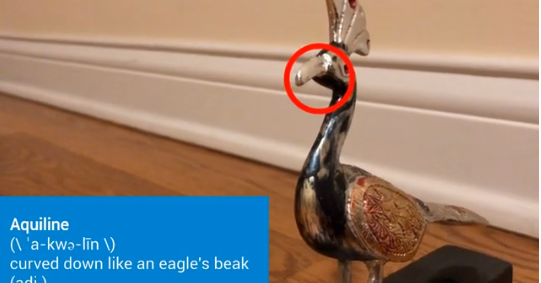
We’ve been publishing a Word of the Day every school day since 2009, and in 2013, just as we were about to hit 1,000 words, we announced our first Vocabulary Video Contest.

We liked the results so much that we’ve brought it back every year since.

Now, as our collection of words has surpassed 2,000, we’re once again inviting you to create a short video that defines or teaches the word of your choice.

As we like to remind you each year: Tenacity + a desire to edify + an enterprising nature – sloth = a beguiling result.

Please note: We will update this page with more detailed rules and the submission form on or before Jan. 9, 2020, the date when this contest officially opens.

Until then, here are useful resources so teachers and students can begin planning for this contest:

• A YouTube playlist of a selection of past winning videos
• A link to add this contest to your Google calendar
• Our 2019 winners, runners-up and honorable mentions

If you have any questions about this contest, please contact us at LNFeedback@nytimes.com.

_________

1. All words must come from our Word of the Day feature.

2. Each word must be pronounced and defined, and the part of speech must be given. Please don’t forget; every year we have to disqualify many who fail to heed this rule.

3. You can work alone, with a partner or in a group, but only one submission per student, please, whether you’re working alone or with others.

4. Your video should be no more than 15 seconds, but can be shorter.

5. Keep in mind, however, that the work you send in should be appropriate for a Times audience.

6. You can act the word out, animate it, use puppets, draw, sing a song, create a dance, incorporate photographs, create a Claymation, or anything else that will help viewers understand and learn your word.

7. What is the “prize”? Having your work featured on The Learning Network.

8. When this contest opens, we will ask students or teachers to upload entries to YouTube. Entrants must make sure the privacy settings are set to “public” or “unlisted” so our judges can view the submissions. We will only judge those videos posted to YouTube, not other services, since only YouTube videos easily embed in our system. Also, be sure that all entries abide by the YouTube Terms of Service. (For example, please note what those Terms of Service have to say about the use of copyrighted music or sound effects and, instead, find royalty-free music and sound effects on Bensound or Freesound, or by using audio editing software to create your own music or sound effects.)

9. Submissions must be from middle and high school students. We are still determining what the minimum age will be. Please stay tuned.

10. The children and stepchildren of New York Times employees, or teenagers who live in the same household as a Times employee, are not eligible to enter this contest.

Our 3rd Annual Connections Contest: Link Something You’re Studying in School With the World Today

0
Our 3rd Annual Connections Contest: Link Something You’re Studying in School With the World Today

So you’re studying the Civil War — or Shakespeare, or evolution, or “The Bluest Eye.”

Why? What does it have to do with your life and the lives of those around you? Why should you remember it once you’ve turned in that paper or taken that test?

What relevance does it have today? What lessons can you learn from it that can be applied to the world outside of school? What parallels do you see between it and something happening in our culture or the news?

Essentially, we’re asking students to do what we do every day: connect what’s in The Times with what you’re learning in school.

But if you simply open nytimes.com and start clicking around, you’ll see that the task is not that hard. The Times publishes hundreds of articles from around the globe every day, so you can almost always find something that confronts the very same themes, questions or issues that you’ve been discussing in class.

Please note: We will update this page with more detailed rules and the submission form on or before Dec. 5, 2019, the date when this contest officially opens.

Until then, here are useful resources so teachers and students can begin planning for this contest:

• Our 2018-19 and 2017-18 winners, runners-up and honorable mentions.
• Our lesson plans “Making It Relevant: Helping Students Connect Their Studies to the World Today” and “The Past Is Present: Strategies for Bringing Current Events Into the Social Studies Classroom.”
• A link to add this contest to your Google calendar
• Our contest rubric

If you have any questions, please contact us at LNFeedback@nytimes.com.

_________

2019-20 Contest Rules and Guidelines

1. Choose some piece of academic content: something you’ve been reading, discussing or learning about in school. It may be a work of literature, an event in history, a concept in civics, a phenomenon in science or something else entirely. It can be as small as a single haiku or as large as a world-changing event like the Industrial Revolution.

2. Find something published in The New York Times anytime in 2019 or 2020 that you think connects to your chosen subject in some interesting, meaningful way, and explain how.

3. You can pick any article, Op-Ed, image, video, graphic or podcast, or anything else you like, as long as it was published in The Times in 2019 or 2020.

4. Tell us, in 450 words or fewer, how and why the two things connect.

5. All entries must be submitted by the deadline posted in the announcement about this contest.

6. You can work alone or in a group of up to five people, but just one submission per person, please.

7. What is the “prize”? Having your work published on The Learning Network, and, potentially, in print in a Times special section.

8. Here is a rubric to help.

9. Submissions must be from middle and high school students, ages 13 and up. Since internet privacy laws are changing in the U.S. and around the world, please stay tuned for exact details about age requirements in different countries.

10. The children and stepchildren of New York Times employees are not eligible to enter this contest. Nor are teenagers who live in the same household as a Times employee.

New on FutureLearn: program page navigation and a new course list filter

0
New on FutureLearn: program page navigation and a new course list filter

Explore your program pages more easily

We’ve updated the navigation of our program pages by moving the navigation tabs higher up the page, above the course carousel. This makes the tabs easier to find and explore.

We’ve also changed the About tab name to Learning, so you can more easily identify where to access your courses and learning materials.

Track course progress within your program

To make it easier to see which courses need to be completed in your program, and to keep on top of your progress, we’re updating the way courses in a program are displayed on the Your learning page.

Instead of a carousel page, it will soon be displayed as a list. See the before and after below.

Screenshot of Your Learning program page

Screenshot of courses in this program page

Choose the right course type for you

On the course listings page, we’ve introduced a new filter to make it easier to see which courses are included in Unlimited, premium, or come with a free digital upgrade.

Filtering options on FutureLearn gif


Category
Making FutureLearn