fbpx
Home Blog Page 1642

How to Quickly and Easily Remove a Background in Photoshop

0
How to Quickly and Easily Remove a Background in Photoshop

Photoshop offers many different techniques to remove a background from an image. For simple backgrounds, using the standard magic wand tool to select and delete the background may well be more than adequate. For more complicated backgrounds, you might use the Background Eraser tool.

The Background Eraser Tool

The Background Eraser tool samples the color at the center of the brush and then deletes pixels of a similar color as you “paint.” It feels like painting with acid. Let me show you how it works.

Remove a Background, Step 1: Open your Image

Start by grabbing an image that you want to remove the background from. I’ll be using this image as it features areas that range from easy removal through to more challenging spots.

Remove a Background: The example image.

Remove a Background, Step 2: Select Background Eraser

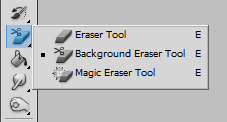
Select the Background Eraser tool from the Photoshop toolbox. It may be hidden beneath the Eraser tool. If it is, simply click and hold the Eraser tool to reveal it.

Remove a Background: Finding the Background Eraser Tool

Remove a Background, Step 3: Tune Your Tool Settings

On the tool options bar at the top of the screen select a round, hard brush. The most appropriate brush size will vary depending on the image you’re working on. Use the square bracket key ([ or ]) for quickly scaling your brush size.

Remove a Background: Brush adjustment panel

Next, on the tool options bar, set the Sampling to Continuous, the Limits to Find Edges and a Tolerance of somewhere between 20-25% is a good starting place.

Remove a Background: Limits settings. Find edges.

Note: A low tolerance limits your eraser to areas that are very similar to your sampled color. A higher tolerance expands the range of colors your eraser will select.

Remove a Background, Step 4: Begin Erasing

Bring your brush over your background and begin to erase. You should see a brush-sized circle with small crosshairs in the center. The crosshairs show the “hotspot” and delete that color wherever it appears inside the brush area. It also performs smart color extraction at the edges of any foreground objects to remove ‘color halos’ that might otherwise be visible if the foreground object is overlayed onto another background.

Note: For the example image, I actually used a rather high Tolerance than the 20-25% recommended above due to the wide range of blues behind this subject.

Beginning the background removal process

When erasing, zoom up your work area and try to keep the crosshairs from overlapping on the edge of your foreground. It’s likely that you will need to reduce the size of the brush in some places to ensure that you don’t accidentally erase part of your foreground subject.

Remove a Background, Step 5: Choosing Effective Limit and Sampling Settings

Even though I have used a smaller brush to work around the hair and neck area, the Background Eraser has still managed to gouge a few chunks out of the hair and shirt.

Overly aggressive tolerance settings are removing foreground detail

For foreground image areas that share colors with the background (like this one), you may need to adjust the Sampling and Limits. In this picture, I switched over to the Sampling: Once option, set my Limits to Discontinguous and set my Tolerance to 30%.

enter image description here

The Sampling: Once option samples the color under the crosshair only the moment you click and it doesn’t resample as you move your brush along. The DiscontiguousLimit option allows you to erase all pixels that match the sampled color that you’re erasing. This allowed me to get in between the hair strands without erasing them.

There’s a good chance the Background Removal Tool may be all you need to complete your task.

But if not, read on.

Remove a Background: Close up showing improved removal

Remove a Background, Step 6: Quick Mask or Pen Tool

While removing the background on our example image is mostly straight-forward due to the fairly solid background, there are inevitably areas of our foreground subject that get wrongly erased as we work close to foreground’s edges.

Remove a Background: Manually retouching challenging areas

In our example, the foreground and background share similar colors due to the lighting. This will be easiest to repair using Photoshop’s Pen tool. I only have a small section I need to touch up, so I’ll use the Pen to create a clean selection and delete the unwanted background.

Remove a Background: Using the pen tool to retouch difficult areas

Here’s the finished result:

Remove a Background: Finished background removal

Final Word

If you are working with a basic image with ample visual contrast between the subject and background, you can most likely get away with using only the Background Eraser Tool.

More complex images will likely require a mix of tools, samplings, and tolerances along with occasional manual touch-ups. There will be times when there is no visual difference between the foreground and background. We have to manually impose that distinction.

And don’t forget that if you are saving your image without adding a new background, you need to save it as a PNG to maintain the transparency.

CEO update: Answering the questions about FutureLearn’s new investors

0
CEO update: Answering the questions about FutureLearn’s new investors

Update as of 3pm May 2, 2019

Read the original blog post announcing the news here.

Thank you for all your messages of congratulations, we’re really excited about what this investment means for the future. I can see that there are some questions and concerns about what it means, so let me try to clarify things. We’re not changing the company’s purpose – to transform access to education – nor our strategy. But we want to be one of the world’s major players in opening up education through online services. This investment, and the opportunity to work with our new investors, means that we can do more, more quickly to deliver on our ambition.

What type of company is FutureLearn?

There’s been a bit of confusion about whether or not we’re a charity. The short answer is no.

FutureLearn was set up by The Open University, which is a registered charity, but FutureLearn was never set up as a charity or not-for-profit organisation: it was established as a commercial arm of The Open University and it was always the intention that we would, over time, generate profits for them, as our shareholder.

The Open University was previously our 100% owner and shareholder, and now SEEK Group has joined them to become equal shareholders, with 50% of the company each.

But it’s important to say that we’re focused on making a profit in line with our values and those of our partners and owners, driven by our purpose to transform access to education.

Free-to-join courses will continue and we’ll also be offering more job-focused subjects

We will continue to offer free-to-join courses and we have absolutely no plans to restrict the variety of courses we offer.

As some of you have picked up on, we are beginning to offer more courses that will help people in their careers. We’re doing this because we see that the world of work is changing, a ‘job for life’ is a thing of the past and people will increasingly need to reskill or upskill throughout their working lives. That means there’s a rapidly growing, global demand for more flexible learning in career-related subjects, as traditional industries are transformed by technology, and jobs that didn’t exist a few years ago lead to huge skills gaps. So we’re responding to that by working with our partners to develop more courses to meet that demand. But again, this is additional to our existing portfolio. We’re not swapping anything out for these new courses.

Our team is passionate about learning for the love of learning and we have no plans to restrict the variety of courses offered. We already offer courses, and even fully online degrees, on everything from data science to ancient history and it’s one of the things we love about working here. We want to attract a range of learners, not just one kind of learner. That’s the beauty of our platform – the conversations you can have with people from completely different backgrounds, locations and perspectives than you, as you all learn together.

There’s no change to our purpose to transform access to education

We are genuinely delighted with the investment from SEEK. They are exactly the right investor for us. Their stated purpose is to help people live more fulfilling and productive working lives and help organisations succeed. They are focused on people and how they can help them, which is aligned to The Open University’s purpose to open up education to all and our purpose to transform access to education.

SEEK has invested in our business strategy; they’re not asking us to change what we’re doing. They believe in what we’re doing, want to help us achieve our goals and are very much aligned with our values. Here are some videos about their community focus and their culture so you can get a better sense of who they are.

Marketing and advertising

I’ve seen some concerns about receiving emails from SEEK and seeing lots of advertising on our website. This won’t happen. There are no plans for SEEK to use the FutureLearn website for advertising purposes.

Also, there won’t be any changes to our privacy policy, as a consequence of the investment. This means you’ll only receive emails from SEEK if you sign up to receive them with SEEK directly. SEEK won’t have any access to your data either, in compliance with our privacy policy and GDPR rules.

What does SEEK get?

Some of you have also been asking about what SEEK gets out of this investment – great question!

SEEK want to help people live more fulfilling and productive working lives and help organisations succeed. They see a huge opportunity for the employment market and the education sector to work together. They see new job roles being created and people who need to reskill and upskill to get those roles. These people often can’t take time out of their lives and careers to physically go to training courses, so online learning is the only solution for them. That makes FutureLearn, as one of the world’s best online learning platforms, a great fit alongside their other portfolio of businesses.

They also understand who we are as a business and who you are as our learners, and believe in what we are trying to achieve.

I hope this answers your biggest questions and that you will continue to take the courses and qualifications on offer from our excellent partners, enjoy them, and recommend them to others if you think they are good!

And finally, I want to thank you all again for your support over the years and hopefully long into the future.

Thanks,

Simon

Category
FutureLearn news

Word + Quiz: lede

0
Word + Quiz: lede

: the introductory section of a story

_________

The word lede has appeared in 13 articles on NYTimes.com in the past year, including on Jan. 15 in “Watch Your Lapels: These Great Ledes Are Coming for Them” by Marc Lacey:

The “lede” is the first paragraph of a newspaper story. It can be ponderous and downright dull. Or it can grab you by the lapels, pull you close and scream into your face: Read this.

On the National desk, we began a tradition recently of honoring the “lede of the week.” We scrawl a particularly graceful lede in longhand on a white board that is visible to those coming and going from the newsroom. And we post the winning ledes on Twitter, where they regularly get loads of retweets.

_________

Learning With: ‘Emperor Akihito, Who Gave Japan’s Monarchy a Human Face, Abdicates Throne’

0
Learning With: ‘Emperor Akihito, Who Gave Japan’s Monarchy a Human Face, Abdicates Throne’

Add to your chart: What else have you learned about Akihito and Japan’s imperial family? What else are you still curious about?

A royal engagement typically unleashes breathless headlines and frenzied efforts by the press to learn of the wedding details. All that is happening in Japan, where Princess Mako, the eldest grandchild of Emperor Akihito, will soon be engaged to her college boyfriend.

But news of the impending engagement, which broke Tuesday night, is also raising fresh questions about the status of women in the imperial family.

Under the Imperial Household Law, which governs the succession of emperors in Japan’s monarchy, the world’s oldest, women are not allowed to reign on the throne. And women born into the royal family must officially leave it once they marry. …

The public overwhelmingly supports changing the law not only to allow the emperor to give up the throne, but to allow female successors. In a poll by Kyodo News this month, 86 percent of those surveyed said they were in favor of allowing a female to reign. And close to two-thirds said that sons — or daughters — born of royal women should also be allowed to ascend to the throne.

Under the current law, even if the princess, the eldest daughter of Prince Akishino, the younger brother of Crown Prince Naruhito, were allowed to remain within the imperial family after she marries, her children — even any sons — would not be in line to the throne. That is because the law requires that the line of succession pass only through the men of the family …

Given how short the line of succession has become, imperial family watchers say that the law should be reformed to allow for more heirs.

“Now we all know that an important imperial family member will be lost with the engagement of Princess Mako,” said Isao Tokoro, professor emeritus of legal history at Kyoto Sangyo University and an expert on the imperial family system. “It is urgent that the system should be reformed so that female members can remain in the imperial family. Otherwise, we will lose more and more members from the imperial family.”

Because the role of Japan’s emperor is largely symbolic — he acts as a figurehead with no real political power — is the imperial system even worth maintaining? In your opinion, what value, if any, does this symbolic role have today?

Tidying Up

0
Tidying Up

Do you know about the book (and related Netflix series) by Marie Kondo about how to declutter by getting rid of what no longer “sparks joy?”

How neat and tidy are you? Do you regularly give away, recycle or throw out things you no longer need or want, or are you more of a hoarder? What spot in your room or house most desperately needs a little decluttering? Why?

Tell us about it in the comments, then read a related article to learn more about organizing what you own.

Find many more ways to use our Picture Prompt feature in this lesson plan.

Weekly News Quiz for Students: Easter Sunday Bombings, Mueller Report, Census Question

0
Weekly News Quiz for Students: Easter Sunday Bombings, Mueller Report, Census Question

Above is an image related to one of the news stories we followed these past two weeks. Do you know what it shows? At the bottom of this quiz, you’ll find the answer.

Have you been paying attention to the news recently? See how many of these 10 questions you can get right.

Are Digital Memories Ruining Our Real Ones?

0
Are Digital Memories Ruining Our Real Ones?

Think of a recent experience that you or your friends video-recorded and then watched later.

Close your eyes and try to remember as much as you can from that moment.

What do you remember? What do you see?

Can you recall the actual experience? Can you remember what it looked like and felt like to be present in that moment? Or can you remember only the photograph or video you had recorded and then seen?

What does this tell you about the impact of digital recordings on your memories in general: How distinct is your memory? How much of what you can recall is from the time of your experience? How much of your memory is based on watching and rewatching it later?

Do you think videos enhance or detract from your memories?

In “Is the Immediate Playback of Events Changing Children’s Memories?,” Julia Cho writes that looking at a video right after an event can alter the actual memory of the experience:

The night of the elementary school talent show, we came home to celebrate with ice cream when my mother took out her iPhone to show a video she’d taken of my 10-year-old daughter’s performance. My daughter had played Ed Sheeran’s “Perfect” on the piano by ear and sang along. Despite her nerves, she got out there in the middle of the stage in a new dress with scattered sequins and sang her best, bowing to an audience of clapping parents before she walked off stage — an expression of relief and pride on her face.

When I saw my mother’s finger hovering over “play” on her phone, my daughter leaning over her shoulder, I stopped her: “You know what … let’s just let her enjoy the moment.”

I’ve seen the way my daughter’s facial expression changes, her eyes squint slightly, and her neck pulls her head back just a little when she watches videos of herself. I knew that in my daughter’s mind she’d felt like a rock star up there, and that seeing the video might surprise her and change the way she remembered the experience. It’s not that her performance wasn’t good — just that it might be slightly different on video than the way she experienced it, the way we all feel when we hear ourselves on a recording and say “Wait — that’s what I sound like?”

I wanted to keep her experience sacred for at least a little bit longer. I wanted to keep it her experience.

It turns out that my hesitancy has a genuine scientific basis. Daniel Schacter, a psychology professor at Harvard whose books include “The Seven Sins of Memory: How the Mind Forgets and Remembers,” told me, “We know from research that reactivating an experience after it occurs can have large effects on subsequent memory for that experience, and depending on what elements of an experience are reactivated, can even change the original memory.”

Many studies have been done on how a person taking a photograph reinforces or reshapes their memory, but what about our children — the subject of our constant documentation? Does seeing themselves in the third person change or even falsify their memories? Instead of remembering the experience of singing up there on the stage looking out at the audience from her own eyes, my daughter’s memory becomes entangled with the videographer’s perspective from the audience looking up at the stage.

The article continues:

What would have happened if I let my daughter watch the video right after her experience? According to Dr. Siegel she would have quickly moved from being a participant to being a more distant observer.

“A half-hour after the show, instead of being able to languish and enjoy the rich bodily sensations and emotions that accompany autobiographical experience and memory and narrative, she’s now being thrust into the observer autobiographical experience because she’s watching herself on the screen,” he said.

I have no videos of my elementary school performances, ballet recitals or birthday mornings from my early ’80s childhood. Videos were not sent via phone for instant viewing. Even film had to be developed when I was growing up; vacation pictures would be viewed a week or so after the experience. We got to linger in the experience for a while, from our own perspective, not the camera’s. Even though many of my childhood memories are hazy, they’re mine.

Students, read the entire article, then tell us:

— Are digital memories ruining our real ones? Why or why not? How difficult is it for you to separate your actual experiences from your videos and photographs of them? How have digital recordings of you affected your self-image?

— The article concludes:

It’s been a week since my daughter’s performance. “I can’t believe it’s over!” she says twirling around the kitchen. She knows I have a video of the performance, but, interestingly enough, she hasn’t asked to see it, and I haven’t volunteered it. I think I’ll let us both remember it just as it was that night for now: raw and unfiltered, and from our own perspectives, perfect.

Do you think Ms. Cho made the right decision to withhold the video from her daughter? If you were her daughter, would you have demanded to see it? Do you agree with Dr. Daniel Siegel, a professor of psychiatry at the University of California, Los Angeles, that videos can “rob our moments of their ephemeral power”?

— Have you ever thought of recording an experience (through video or photographs) and then decided not to because you felt it would detract from the moment, or from future memories of it? Having read the article, do you think you are more likely now to put your camera away next time?

— How good is your memory? How important are your memories to your identity and life? What do you think of the author’s statement that “Even though many of my childhood memories are hazy, they’re mine”? Is this a convincing argument for putting down the video camera? Or do you think her perspective is somehow outdated or irrelevant to people from your generation who have grown up surrounded by technology?

— Do you have a favorite memory? Was a camera present to record it?

— How much of your life has been recorded digitally? How often do you rewatch these images and videos? Do you think videos enhance or detract from your memories? If you have children of your own, would you want to videotape everything — from their first steps to high school graduation? Or would you ever hold back?

An Analyst’s Perspective

0
An Analyst’s Perspective

We provide analyst services.  I’m an analyst.  We are an analyst firm.  You may have read or seen such statements on various web sites or information on profiles in Linkedin, but not everyone knows what an analyst is, what role they play in the industry, how vendors see them (for the most part) and how as an analyst and/or analyst firm can provide information to enable consumers to make an informed decision.

Who am I?

Who am I? That is a line from Les Miserables but as an analyst it can be an important foundation when dealing with vendors. 

At my firm, we provide advisory (for vendors), consulting (for consumers) and analyst services.  As an analyst (one of my hats that I wear), it is very common for vendors to reach out to schedule an analyst briefing.  Equally, it is not uncommon for us to reach out to a vendor requesting an analyst briefing when we are seeking additional information, including product details.

Some vendors have an analyst relations department/team, with someone overseeing analyst relations.  They handle all analyst requests from talking with the right person or people (depending on what information you are seeking), to scheduling briefings, which depending on the type of briefing could be focused on sales, financials and frequently, product including updates, rollout, functionality, and so on.

Independence

The vendor and analyst relationship one is quite tricky.  On one hand there are vendors who feel that your role (as an analyst) is to present only positive information about their product and the company itself.  If you find or identify problems or issues with the product or on how the company handles support or other items for example, there are vendors who feel that this is not relevant and therefore should not be provided to the consumer market.

I would like to make it clear that this is not a universal attitude among vendors in the e-learning space, but there are enough out there, that as a consumer you should be aware of, in terms of it existing.

I can’t speak for other analyst firms, but at The Craig Weiss Group, we are always 100% independent and as you know, I will always tell it as it is.  If the product is good, then it should be identified and noted as such.  If the product has problems or issues, then it should be known as well. 

The same applies to the company itself.  For example, let’s say you become aware during a briefing that the vendor is cutting their sales and support staff, due to financial constraints.  As an analyst you will need decide whether or not this is relevant for people to be aware of, especially if you know the vendor is promoting that they are financially sound and everything is going great.

Or let’s say the vendor is showing on their web site an amazing system with lots of cool capabilities, yet when they show it to you, it is only 50% done and the rest still looks like it did from five years ago.    The vendor is hoping as an analyst you present the cool features and user interface and keep the other, quiet.   If you tell it as it is, you could face repercussions, if you gloss it over, the less likely the vendor is offended.

Repercussions

I have been very fortunate that the “we won’t show you anything” attitude is limited among all the vendors I come in contact with on a yearly basis.  But it doesn’t mean it doesn’t happen.  I can count on one hand, the vendors who feel that I am not presenting them in either a positive light or I did not present information accurately, when in fact I did.

This is part of where the expectation that you will write something positive about the vendor rears its ugly head.  As mentioned early, there are vendors who, if they do not get what they want, will “blackball” the analyst. 

Thus the analyst needs to make a decision on what they want or choose to do. As a firm, we never play that game, i.e. write only positive if we know there are also minuses.  And as an individual analyst, equally, if there is something wrong with the system or the vendor, it is noted on the blog, my newsletter, reports, etc. 

My personal feeling is that there are no perfect systems out there.  Just as there isn’t a perfect person.  We can all improve. Make enhancements, updates, tweaks, business direction and so forth to be better.

I’d rather have a vendor say, “yes, we are aware of that, ” or “we will investigate that”.  My hope is in turn they will investigate that and get if fixed or have it on their roadmap to fix it at a later date (depending on the severity of the issue).

Quid Pro Quo

It may be a term you have heard or at least heard whispers of it.  Another way to phrase it, is pay for play.  Pay for play means that in return for a fee or amount of money, the analyst and/or analyst firm will repeatedly push out positive only information about the vendor’s product.  Everything published by the analyst firm/analyst smells of fresh roses and happy land.

The vendor in turn, presents this information as proof positive that the product rocks and there is nothing to see here in terms of challenges, etc.

While I cannot speak for other analyst firms, I can state unequivocally, we never do quid pro quo or pay for play.  

Even systems I love, I will always note the minuses if I find them.  And again, there is no perfect system.

Embargo and NDAs

There are vendors who request an NDA prior to an analyst briefing. I never agree to them.  An analyst has to remain fair and balanced, and if they hear information that they see as useful and beneficial to consumers, whether it is via a mini-brief or post, etc.  then they should be able to provide that.

After all, many vendors seek input from the analyst, during certain briefings – related to the product.  Some seek insight into their strategy overall, during briefing calls.  Again, it adds to a slippery slope.  

I will provide some feedback if asked upon but limit it. Not every analyst will – it just depends on the firm and the analyst themselves.

An embargo in the analyst world means that the information the vendor is providing has been agreed upon, prior to, that it will remain confidential until a certain date and time. 

For example, the vendor may be launching a certain type of functionality that will be a difference maker (in their eyes).  They tell you about the function and show it to you, but ask that you embargo it until X date.  After they publish out on that date, you can, now present it to anyone.

I have no issue with an embargo, if it is agreed upon ahead of time.  If a vendor says to me, “this is off-the record”, then I will not publish it, because it is confidential.  Otherwise anything they present in a briefing is “on the record”.  And I should note this is quite common in the analyst world. 

On the record simply means that it can be published or presented to anyone.  With an embargo it is delayed.  

How to work with an analyst (attention vendors)

In the e-learning industry, the most common analyst briefings are with learning system vendors.  Can it be with non learning system? Absolutely, but generally speaking, by far it is learning systems.

As well as I cannot speak for every analyst firm, nor will I try, here are some items that as an analyst, are useful to know and equally, not relevant.

I should note that if the call is covering financials and/or sales information then drilling down to the numbers and asking questions around that is a necessity. Vagueness is not what an analyst wants to hear. 

For example, if you say, our year to year growth is 22%, then my expectation is you will give me the client numbers previous and current, so that it can be ascertained really how great or poor that growth is. 

On the product side, a briefing should include

  • A high-level PowerPoint deck.  Focusing on the key items that either were agreed upon prior to, or that the vendor wishes to present that is relevant to the entire briefing at hand.

If the briefing is on the system itself, then a demo is a necessity, and because a demo can take time, having a slide deck that goes on for 20 minutes is not something an analyst wants to spend a lot of time on, especially if there is information that isn’t necessary for that call.

  • A demo – either high-level or presents the information the analyst wants to know more about.  For example, I will tell vendors I would like to see ABC as part of the demo.  On the other side, a vendor may say, we will start by showing you are newest features, which is what I prefer, then we can go backwards.

Just the other day I had a briefing with a demo, and the vendor knew I was interested in metrics, so they focused their call on those new metrics they had in the system.  Then, with time remaining, we were able to cover two other areas of interest.    That is a strong use of time.

Pass..

Most analysts do not care who your clients are in a product briefing.  Vendors love to show you because well, it shows who is using their system.  While I can see that as useful information for a potential buyer, as an analyst, I don’t care. 

Now, if we are in sales briefing, that is a different story, and that is why vendors know I will always ask them if they are the “exclusive vendor” for that client (which means they are the only learning system being used by that client).

Another I have no desire to care is where you have offices located.  I can always find out that information on your web site or in a separate call.  I’m happy for you that you have an office in Topeka, Kansas and a new one in Bournemouth, England, but from a product briefing, let alone a sales one, not needed.

What is your NPS?

I can tell you that vendors love to tell me their NPS (Net Promoter Score). NPS is a customer loyalty metric. I should note it should not be the only one you use, but that is for another time.

NPS scale is 0 to 100, with the ideal being as close as you can get to 100.  Some vendors provide NPS with not only the system, but also their support too.

One of the items vendors never like to provide is the percentage of detractors (these are folks who will NEVER recommend the product, etc.).  In NPS you have promoters (they score either a 9 or 10 on a scale which usually goes to 11), passives (score 7 or 8) and detractors (6 and below).

An NPS is an actual number on a range from -100 to 100. It is not a percentile.

Some Concerns

An NPS only takes into account, current- active customers, and assumes that as a promoter they will actually recommend the system/product to others, which may or may not be the case.  How many times do you go to a hotel, they ask you if you would recommend them to others, you say yes, then never do?

Secondly, with recommendations it depends on who is presenting that information, for some people they seek experts i.e. in our case analysts, others it is Steve who runs the butcher shop at your grocery store.

Now Steve may know everything there is to know about a lamb shank, but do you want Steve to be your key recommender for a learning system?  Most likely, you will thank Steve and then, ask where is the mustard aisle?

Bottom Line

As you can tell, being an analyst, in e-learning, isn’t the easiest job in the world. There is always something to consider. Something to ascertain. Something to question.

But when you do, and you do it independently, fair and without any quid pro quo, then it can be a very useful way to present findings in a manner that matters.

When an analyst says this is a top tier product or system or company, it should be your expectation that what they are providing is accurate, fair, independent and without any misleading information.

The only way to truly know is to ascertain the trustworthiness of the analyst and the analyst firm, thru previous insight and current knowledge on their focused market/industry.

If you are unsure, well, look for an analyst you can trust

Or ask Steve, the next time you are wanting to buy

a Roast.

E-Learning 24/7


Machine Learning: Why Now?

0
Machine Learning: Why Now?

In a 2016 Google technical conference keynote, Eric Schmidt, who is now chairman of Google’s parent Alphabet, said he has seen the future of wealth creation from the IT industry, and its name is machine learning. And earlier this year, in a Newsweek opinion piece, Schmidt wrote about the significant impact he sees machine learning having on the world. He said, “We are now entering a decade in which machine learning will come to define how we interact with technology and the world around us – and how technology helps humanity thrive.”

I agree with Schmidt’s assessment and believe that digital technologies such as machine learning have the power to change how the world creates innovative value. This powerful technology is bringing companies unprecedented insights, more accurate predictions, and the automation of routine tasks, all of which allows them to focus on higher value opportunities.

Problem-solving beyond human comprehension

No longer are programmers defining rules for computers – with machine learning, we now give them problems to solve and they learn how to accomplish this on their own. Imagine software that can observe human actions and learn how to perform them autonomously without being explicitly programmed. Imagine machines that can access, analyze, and find patterns in Big Data that is beyond human understanding. Imagine machines that can spot patterns and make connections through exposure to massive amounts of data so they become intelligent advisors and help people make better decisions.

Machine learning is doing all of this and it’s helping companies become exponential – where they have an impact that is at least 10 times greater than their competitors.’ And it’s creating intelligent enterprises where businesses are more empowered than ever before.

Why all the hoopla—and why now?

You may wonder why there is so much in the news about machine learning now. Why now, when artificial intelligence, the parent technology to machine learning, has been around for more than 50 years? The reason is because there is an extraordinary convergence of large volumes of Big Data, unprecedented computing power, and sophisticated self-learning algorithms taking place. The affordability, viability, and feasibility of these three technologies are the driving forces behind why machine learning is becoming more and more prevalent today.

Let’s look at Big Data first.

The amount of data available today – we are currently creating around five exabytes a day roughly equivalent to 500 million songs – is giving machines the possibility to become super-intelligent. Nonetheless, the amount of computing power required to process all this data takes far more computing power than that available in everyday central processing units (CPUs).

Not long ago, researchers found that instead of stacking traditional computers with CPUs in the cloud, another approach could be more effective. The graphics processing units (GPUs), which were developed to speed up the graphics in our everyday computers and especially in the gaming world, had faced a similar problem: the growing sophistication, data volume, and data speed in computer graphics. They solved the challenge by stacking a very large number of simpler computing units that would work in parallel to render the graphics.

Researchers realized the same approach could be a way to accelerate ML computations, and their talent made it work. As an indication of the power unleashed, I’ve been told that it would take 2,000 CPUs to match the power of 10 GPUs. With the ability to execute in-memory data management and their tremendous parallel processing capabilities, GPUs have given machine learning a good part of its current thrust.

If you now add to this the network effect provided by the open availability of highly sophisticated shared algorithms for ML, it’s should be easier to understand why now machines can think more accurately and independently, recognize contexts, and make better decisions on their own. What these machines will do for us is already going well beyond what predictive analytics and Big Data analytics have done for us in the past – and well beyond what any human can do in may domains!

Machine learning in the enterprise

For enterprises, machine learning can automate and prioritize routine decisions, making processes leaner and faster. Machine learning can also change traditional rules-based processes into intelligent processes by discovering and exploiting new patterns in large, unstructured data sets, making predictions about them, and adapting the processes accordingly.

In practical terms, what does this all mean? Well, for instance, when machine learning is coupled with technologies such as the Internet of Things, a machine can decide on what’s optimal to fix in the first place in a manufacturing plant. In a human resources department, machines can intelligently match resumes to open positions and recommend career paths by matching skills to future enterprise needs.

In finance, machine learning can take over lightweight finance operations and some of its highly repetitive tasks, such as checking inter-company reconciliations, invoices, or travel expenses for accuracy. It can as well interact with suppliers and provide optimal procurement recommendations to the purchasing department. Machine learning can also facilitate self-driving customer service where tickets can be created intelligently—i.e., they are created if ML thinks they are needed, even if the customer did not open them—and they can be handled by the customer care personnel guided by accurate step-by-step recommendations from the ML system.

This technology is clearly transforming applications throughout the enterprise – at exponential speed.

Author : Felipe Gomez
Degree : Masters
Major : Marketing and Advertising
Country : United States
Language : English

View Resume

A daily dose of self-care

0
A daily dose of self-care

Self-care. It may seem like another trending phrase, but it’s more important now than ever, in a world constantly on the go.

But it’s not just the occasional bubble bath, or a
hearty pat on the back from you to yourself ­– self-care can take many forms,
and involves a bit of discipline and routine to ensure you don’t drop your
newly established good habits.

Feeling worn out? Here are some ways to set yourself up for better mental health, and have you feeling on top of the world – not scrambling beneath its weight.

Break the habit

Are you one of the billions who are addicted to
their phones, constantly craving a quick dopamine hit only a cat meme can
provide? Next time you put down your phone after
scanning social media, online shopping, reading the news, or whatever you’ve
been compelled into doing, ask yourself – do you actually feel any happier? If
not, all you need to do is create a few boundaries between you and your hand-held
friend.

Establish more control by restricting
your phone use until you have a good reason to, which will free your mind to contemplate
other things. While it’s tempting to Google every question that pops into your
head, try to hold off by writing them down on a notepad, to answer later in an isolated
block of ‘phone time’. Letting your phone use bleed into every aspect of your
day is the easiest way to lose control.

For some great advice, be sure to check out ‘How to break up with your phone’by Catherine Price.

Credit: Stacie Swift – https://www.stacieswift.com/

Build on something new

Maybe you’ve contemplated starting a new
hobby that taps into a skill, or unleashes your creative spirit? Well, now’s
the time to make a start. Investing time in a specific activity can enrich the
soul and boost your confidence – it could even lead to an exciting career change.

You could start with something small and simple, or just launch fearlessly into something left of field, which could become a talking point with friends and colleagues. To kill multiple birds with one stone, try something that gets you physically active, socially active, or creates something physical that can become a part of your home. It could be anything from sourdough bread baking to galaxy water painting, or Maneki-Neko making.

Leisure time doesn’t have to mean low
productivity – productivity offers satisfaction, and feeling satisfied is key
to good mental health. Setting goals (outside of your work life) gives you something
enriching to think about, plan towards, and look back on with pride.

Credit: Stacie Swift – https://www.stacieswift.com/

Book a check-up

Everyone gets in a low mood every now
and then, and understanding how to cope with these emotions is a very important
aspect of self-care.

Booking an appointment with a
psychologist or counsellor might sound a bit excessive, but just like getting regular
medical or dental examinations, checking in with a mental health professional can
be a great way to gain some perspective. Therapy can help you analyse and
reframe your thinking so you can better appreciate what is important, and how
you can work towards a better version of yourself.

Some businesses and institutions have
these services available free of charge, you’ll just need to ask around or do
some research. For those who are having an especially hard time and think they
may need on-going support, ask your local GP about setting up a mental health care plan.

Ask yourself how

Finally, ask yourself honestly – is there is anything you can do to improve your wellbeing overall? Is it more sleep that you need? A holiday? More family time? If you can build better habits, and invest more time in fruitful activities, you’ll be stronger and better equipped to deal with challenges down the track.

If you’re ever in need of help – don’t hesitate to get in touch with an OUA student advisor, who can help you find ways to better balance study, work and life.