fbpx
Home Blog Page 811

10 In-Demand AI Skills Freelancers Should Learn Now

0
10 In-Demand AI Skills Freelancers Should Learn Now

There’s a common saying in business that you should “fish where the fish are,” in other words, focus your efforts in the places where you’re likely to find success. When it comes to freelance tech work today, there are plenty of metaphorical “fish” in AI.

From writing effective prompts for AI chatbots to knowing how to test deep learning models, understanding the nuances of AI systems and how to use them gives you a valuable edge. Read on to learn which skills are best suited for freelancers who are looking to reel in some new business.

The top AI skills for freelancers

The freelancing platform Upwork recently analyzed data from the first half of 2023 (January to June) to see which AI-related skills companies sought out when hiring freelancers for projects. Here are the top 10 generative AI skills and tools that companies looked for — and the courses and paths to take to start learning them today.

Learn something new for free

1. ChatGPT

No surprise here, ChatGPT is a hot skill that AI practitioners should know if they want to find generative AI work. If you’ve played around with the chatbot in your daily life, you know how powerful and versatile ChatGPT can be. You can take your ChatGPT knowledge to the next level with our free course Intro to ChatGPT, then try our ChatGPT case studies to sharpen your prompt engineering skills. If you want to learn how to stay ahead of AI advancements, you can check out our course Learn the Role and Impact of Generative AI and ChatGPT.  

2. Natural language processing (NLP)

NLP is the range of methods that computers use to process language with AI. NLP is the reason why ChatGPT can understand our written requests and autocorrect can predict what we’re going to type next. You can learn all about how computers work with human language and complete a portfolio-ready project in our skill path Apply Natural Language Processing with Python.

3. TensorFlow

This framework is used to develop, train, and test deep learning models. Companies like Google and Airbnb use TensorFlow to integrate machine learning capabilities into their products, so it’s a well-known framework to have listed on your resume. If you know Python and NumPy and are familiar with the basics of machine learning, you can take our skill path Build Deep Learning Models with TensorFlow.

4. Image processing

Language models and machine learning algorithms can be used to describe and classify images, a technique known as image processing. Image processing comes up in diverse scenarios across lots of different fields. For example, image processing can be used to enhance the visual quality of an image, detect objects in computer vision tasks, or analyze medical imagery. You can delve into this field in our course Deep Learning with TensorFlow: Image Classification.

5. PyTorch

PyTorch is an open-source framework with an optimized tensor library (based on the Torch library) used for deep learning. You can install PyTorch for free — just make sure you have the NumPy module first.

6. AI content creation

Organizations are looking for talented folks who know how to use AI to create content — from blog articles to social media posts and more. In the course Prompt Engineering for Marketing, we’ll walk you through how to leverage ChatGPT to create marketing content.

7. Midjourney

Using Discord bot commands, you can enlist Midjourney to create images, animations, and other artistic output based on text prompts. Midjourney can be used to quickly make advertisements, logos, thumbnails, or prototypes. You can also use the text-to-image bot as a brainstorming tool when you need inspiration. Want to learn more about other business cases for AI-generated images? Try the case study Creating Marketing Assets with Generative AI to learn how to use DALLE-2 to make logos and other images.  

8. AI chatbot

Creating an AI chatbot that can simulate human conversation is a great way to get introduced to AI — and coding in general. In our skill path Build Chatbots with Python, we’ll teach you how to use the beginner-friendly language Python to create rules-based and generative chatbots. Already know some Python? You can jump in with the bite-sized course Language Models in Python: Generative Chatbots.

9. Model tuning

A key step in deep learning workflow is model tuning, the process of configuring parameters and experimenting with a model to fine-tune its output. Read this article to learn more about how neural networks are applied to real-world scenarios, and where model tuning comes in.

10. Stable Diffusion

Another text-to-image AI tool, Stable Diffusion uses a diffusion model to generate visuals that are similar to the material it was trained on. The result: You can create high-quality photo-realistic images from any natural language prompt. For example, here’s how Stable Diffusion interprets the prompt: “A freelance web developer using AI tools.”

We asked Stable Diffusion to generate an image of “a freelance web developer using AI tools.”

How to start freelancing in AI

Getting a freelance side hustle off the ground can take a lot of time and effort (especially if you’re also balancing learning to code or working a full-time gig). Here are some general tips for freelancing in the age of AI.

Familiarize yourself with AI applications

As a freelancer, you might be expected to work with a range of different tools depending on the client’s needs. It can be hard to keep up with all of the buzzy new AI applications that are launching as developers tap into generative AI’s potential. While you don’t have to be an expert in every single AI tool, you should know the similarities and differences between popular AI tools and how to choose the right AI solution for a project.

Unlike a full-time employer who may pay for continuing education or provide on-the-job professional development, freelancers have to make time for learning, researching, and practicing these tools outside of billable hours. Signing up for a Codecademy Plus membership is a great choice for freelancers who want to continue building in-demand skills for projects at their own pace.  

Revamp your resume

As you pick up more AI-related skills, you’ll also have to update the way that you market and offer your freelance services. Adding AI terms to your resume or professional website is one way to get discovered and hired for work.

According to a LinkedIn report published in August, there’s been a 75% uptick in LinkedIn members adding AI-specific keywords each month since January. The top terms that people use on LinkedIn to attract new AI business include “GAI” (short for generative AI), “ChatGPT,” “prompt engineering,” and “prompt crafting.”

Network the AI way

Finding clients and maintaining relationships (not to mention following up on invoices and keeping track of contracts) is a huge part of freelancing. See if there are ways you can streamline your process using AI. For example, you could use generative AI to help you write follow-up emails to clients. Or you could have ChatGPT help you develop a marketing strategy for your freelance business. If you want even more ideas, read this blog about how to network with ChatGPT.

Be sure to read the blog for more freelancing advice, including tips for finding freelance tech jobs and questions to ask yourself before going freelance.

Pitting Learning Styles Against Dual Coding

0
Pitting Learning Styles Against Dual Coding

By Megan Sumeracki

When creating content and materials for the Learning Scientists website, we try to include many different types of forms (NOT because of Learning Styles, but because of preferences, and diversity in the type of media an individual can consume!). To that end, I’ve created blog versions of some bite-size research podcast episodes in the past, to switch the format, create some healthy repetition, and cater to different preferences.

Today’s blog post revisits a paper that Althea and I covered a few years ago in a podcast episode (Episode 49 Learning Styles and Dual Coding). It is a repeat, and specifically, we tend to repeat ourselves a lot when it comes to learning styles and dual coding. However, repetition, especially after time has passed, helps with learning (though this is much longer than we would normally recommend!). And, learning styles is a pervasive theory. As long as companies are out there trying to sell learning styles assessments and students show up in our classes claiming to have been labeled as kinesthetic, auditory, visual, or verbal learners, we’ll keep writing about it!

We really like this paper because the authors, Josh Cuevas and Bryan Dawson, compare learning styles and dual coding directly. On the surface the two are really similar. But, if you’ve been following our work for a while and/or engage with the literature, you know that the two are not the same and do not have the same learning outcomes.

Learning styles is the idea that people have preferences, and specifically that matching instruction to those preferences is essential to maximizing learning. For example, let’s say that Isla is an auditory learner, and they like to learn by listening. Then, according to the learning styles hypothesis, Isla is going to learn best when the content they need to learn is presented to them in an auditory fashion. This could include having a teacher explain the content to them verbally, or perhaps even listening to a podcast or a recorded lecture. As another example, let’s say that Juaquin is a visual learner, and likes to learn by seeing visuals, like pictures or diagrams. Then, according to the learning styles hypothesis, Juaquin will learn best when the content they need to learn is presented to them in a visual fashion. Specifically, we would need to see this pattern that researchers describe as a cross-over interaction. If we had Isla and Juaquin in an experiment, then Isla would learn more than Juaquin when the information was presented in an auditory format, but Juaquin would learn more than Isla when the information was presented in a visual format. To maximize learning for both, we would need to cater to each individual’s style.

Dual coding, on the other hand, is the idea that when we combine modalities, specifically visual and verbal modalities, we maximize learning. This does not involve diagnosing individuals as one type of learner or another. Certainly, people still have preferences, but the idea is that we all tend to learn best when we are able to consume multiple representations of the information.

The Experiment:

The experiment pits learning styles and dual coding against one another.

University students read statements. Importantly, they were randomly assigned to either (auditory learning condition) process the statements by thinking about the way the words sounded or (visual learning condition) process the statements by thinking about how easy it was to create a visual image of the statement.

The students also completed a learning styles assessment, the VARK, to determine their learning style. The researchers cannot randomly assign students to learning styles; this is a “come as you are” variable. However, they can separate the data to look at how the auditory students perform when randomly assigned to each of the two learning conditions, and how the visual students perform when randomly assigned to each of the two learning conditions.

The researchers measured how many of the statements the students could remember immediately after learning.

Hypotheses:

If dual coding is true, then students should remember the statements from the experiment best in the visual learning condition. The reason is that the statements are already presented in a verbal way because the students are reading them, and so if we add visual processing, then we’ve added another representation that should facilitate learning. Importantly, this pattern of results should hold for students labeled as both visual learners and auditory learners.

If learning styles is true, then the condition that is best depends on students’ individual learning styles. If we group the auditory learners together and the visual learners together, then we should see opposite patterns of results. Those who are labeled as auditory learners should remember more statements if they were in the auditory learning condition than the visual learning condition, and those labeled as visual learners should remember more statements if they were in the visual learning condition than the auditory condition. In other words, we should see a crossover interaction.

The Results:

The results show strong support for dual coding. The graph below was created based on the data in the paper, and we can clearly see that students remember more of the statements when they are in the visual learning condition (compared to the auditory learning condition) regardless of learning style.

What Household Items Can’t You Live Without?

0
What Household Items Can’t You Live Without?

A hair dryer? A scissors? Microwave? Air-conditioner?

What household item can’t you live without?

In “Goodbye, Old Friend,” Jenny Ziomek illustrates a fond thank-you note and bids farewell to a roll of plastic wrap:

Students, read the entire illustrated story and then tell us:

  • What household item can’t you live without — and why? Tell us what role it plays in your daily life. If inspired, include an illustration or two of your beloved product, capturing your close relationship.

  • How much do you know about your product and its history? What would you like to find out more about?

  • What is your reaction to Ms. Ziomek’s love letter to a roll of plastic wrap? What in her ode resonated with your own experiences? Does it make you appreciate this 90-year-old product, or household items generally, more fully?

  • Have you, like the author, come to see any of your favorite products as friends? Imagine your life without this item: What would be different? What would be lost?

  • How might you convince others to love your favorite household item, if they don’t already have the deep connection you do? Come up with a convincing 30-second elevator pitch!


Students 13 and older in the United States and Britain, and 16 and older elsewhere, are invited to comment. All comments are moderated by the Learning Network staff, but please keep in mind that once your comment is accepted, it will be made public and may appear in print.

Find more Student Opinion questions here. Teachers, check out this guide to learn how you can incorporate these prompts into your classroom.

The Concert

0
The Concert

Use your imagination to write the opening of a short story or poem inspired by this illustration or, describe a memory from your own life that this image makes you think of.

Tell us in the comments, then read the related Opinion essay to learn more.


Students 13 and older in the United States and Britain, and 16 and older elsewhere, are invited to comment. All comments are moderated by the Learning Network staff, but please keep in mind that once your comment is accepted, it will be made public and may appear in print.

Find more Picture Prompts here.

Critical Thinking Skills and Why You Must Develop Them

0
Critical Thinking Skills and Why You Must Develop Them

Critical thinking skills are essential in today’s complex and rapidly changing world. Across every industry and in any position, the ability to bring abstract thought and consideration to a problem or situation is a requirement for growth and success. The good news is that critical thinking is a skill that can be honed, and this article outlines everything you need to know about it.

What is Critical Thinking?

Critical thinking is a cognitive process and skill that involves analysing, evaluating, and interpreting information thoughtfully and systematically. It’s the ability to organise information, question assumptions, consider multiple perspectives, and make informed decisions.

Information is everywhere. Any piece of information can include defects, misinformation, or be inaccurate or incomplete. With critical thinking, you actively go beyond simply accepting information at face value. Instead, you reconsider everything you read, see, hear, or know or misinformation, all to make more informed decisions and have a deeper understanding of the world around you.

The Importance of Critical Thinking

In today’s world, where everyone can publish information, true or false, we must learn how to navigate through the overwhelming amount of information available in today’s digital age. Here are a few reasons you should develop your critical thinking skills.

Problem Solving:

Critical thinking is a key component of effective problem-solving. Individuals with strong critical thinking skills can break down complex problems and situations into bite-sized parts, analyse each aspect, and come up with creative solutions.

Decision Making:

Strong critical thinking skills help you make informed decisions. Here, you can assess the evidence or information before you, explore alternatives and different perspectives, and anticipate and mitigate the consequences before making the final decision.

Avoiding Biases and Assumptions:

Another way critical thinking can benefit you is that it challenges you to face and overcome your biases, assumptions, and other false beliefs. Doing this opens your mind up to new perspectives and see things you may otherwise have missed before.

Promotes Creativity:

Regardless of whether you work as a creative or not, critical thinking skills and creativity work together. When you can think critically about existing ideas and concepts, you see things from a new angle and position yourself to come up with innovative and original solutions.

Improves Communication Skills:

We interact with individuals from all walks of life every day. Communication is not just a good skill to have, but coupled with critical skills, it enhances every interaction and communication with others. People rely on strong critical thinking skills to be able to articulate their thoughts, substantiate their views with support and evidence, and engage in constructive and lively discussions.

Additionally, many educational institutions and employers value and seek individuals who can approach challenges with a critical and analytical mindset.

How to Develop Critical Thinking Skills

The beauty of critical thinking is that it’s a learned skill that can be developed and refined over time through different learning opportunities, reading more, participating in discussions, or challenging yourself with problem-solving exercises. Here are some strategies to help you enhance your critical thinking skills.

  1. Ask questions: Often, people are afraid to ask questions because they’re afraid it will look like they don’t know. But you don’t know what you don’t know until you ask. Begin your journey to developing your critical thinking skills by welcoming inquiry and questioning. Ask “why” and “how” often will help you challenge presumptions and information you receive and help you seek deeper understanding.
  2. Be curious and inquisitive: Everyone has something to say, and everyone is convinced their way is the right and only way. Examine the legitimacy and conceivable biases of various viewpoints and information sources as you actively connect with them.
  3. Analyse all information: Don’t just analyse what is being said, but who is saying it. Develop the habit of deconstructing arguments to determine their logical coherence by breaking them down into premises and conclusions. Your analytical skills can be improved by participating in problem-solving activities and discussions with others who have different points of view.
  4. Take time to reflect: In the same way that others may not always be right, sometimes our thoughts are skewed and need introspection and reflection. Consciously and intentionally reflect frequently on your thought processes and prejudices and challenge them to reveal any underlying presuppositions.
  5. Embrace healthy scepticism: Become a constructive sceptic by adopting the stance of a person who looks for proof, exercises healthy scepticism, and masters the art of asking incisive questions.
  6. Collaborate with peers: We learn from others. Begin participating in deliberative conversations that challenge you to clearly state your positions and support them with evidence. When you do this, you will gradually improve your capacity for critical thought, and empower yourself to approach problems and decisions with a more discriminating and analytical mentality, through persistent practice, openness, and a commitment to learning.
  7. Don’t stop learning: Take and create opportunities to learn. Enrol in courses on online platforms like Alison that teach and equip you to develop your critical thinking skills like:

You must actively participate in your intellectual development if you want to develop critical thinking skills. By immersing yourself in a variety of concepts and thought processes through substantial reading on a variety of topics and genres, you can broaden your horizons. Remember that the development of good critical thinking abilities is a lifelong process of self-reflection, education, and a readiness to change your beliefs based on reason and facts.

In summary, critical thinking is a dynamic and adaptable cognitive skill that enables individuals to approach complex problems, make informed decisions, and engage in thoughtful discourse. It’s a skill that can be cultivated and developed through practice, reflection, and exposure to a variety of experiences and viewpoints.

3 resume templates & how to pick the right one for you

0
3 resume templates & how to pick the right one for you

So far in this series, we’ve laid the groundwork for resume writing by exploring our career goals and the key job skills it’ll take to achieve them. This week, we’re going to use those insights to choose the type of resume that is best structured to show off your skills.

We recommend structuring your resume around your skills because of the growing popularity of skills-based hiring. Skills-based hiring is when organizations prioritize a candidate’s proven skills over their named credentials (meaning employers want to see that you’ve applied your learnings; not just that you’ve learned).

According to the World Economic Forum’s 2023 Future of Jobs Report, 95 percent of companies surveyed said they assess skills during the hiring process. Many of the ways they assess skills can be found on a resume, detailed in your work experience, university degrees, online courses and certificates, and apprenticeships.

The takeaway: Highlight your skills and how you’ve used them on your resume.

The best way to do that will depend on your experience. Let’s discuss some common resume types.

Types of resumes

Not all resumes have to look the same. Currently, there are three types of resumes that experts commonly discuss:

  • Chronological, in which you list your credentials in reverse-chronological order (starting with the most recent). This is the most well-known resume type and will likely be the most digestible for recruiters, hiring managers, and applicant tracking systems (ATS) alike. Use this format when your past experience clearly aligns with the roles you’re applying for, for example, if you’re seeking career advancement.
  • Functional, a resume organized by skills rather than by roles. This can be a more modern approach to resume writing, so may not be as widely appreciated as other resume types (and ATS are generally not optimized to interpret this format), but if you’re switching careers, this can be an effective way to highlight your transferable skills.
  • Combination, in which you pull elements from chronological and functional resumes to create a format unique to your experience. This can be a happy medium if you’re applying for roles through an ATS and want to spotlight skills earned outside of a traditional work environment, for example, if you’re seeking your first job or a career change.

To determine the right resume format for you, revisit your job skills list from last week. Next to each skill, note a way you’ve used that skill to produce some positive result. Prioritize examples that took place in a work environment, but you should also include examples from your educational pursuits, volunteer work, professional groups, personal projects, or any other environment where you used those skills. Then, consider which resume format offers the best structure to incorporate all of those examples.


Reader tip: Last week, in the comment section, Peter Ndiforchu recommended taking a skill inventory for anyone interested in changing careers. For a quick motivational boost, read Peter’s transferable skills success story.


In the next issue, we’ll talk about using resume sections to craft your career story. In the meantime, you can find templates for each resume type in the links above or jump into resume writing with SUNY’s How to Write a Resume course, which takes about five hours to complete.

Let us know how it goes in the comments. See you next time!

P.S. The Future of Jobs Report we mentioned above is full of great information, including job creation projections (page 30) and in-demand skills on the rise (page 39). Coursera contributed to the report alongside LinkedIn and Indeed. It’s worth a read as you strategize your next career moves.

Nevada DETR and Coursera announce statewide program providing free job training to thousands of people 

0
Nevada DETR and Coursera announce statewide program providing free job training to thousands of people 

By Kevin Mills, Global Head of Coursera for Government 

Like many states across the country, advancing technologies are reshaping the labor market in Nevada, creating new job opportunities that require digital skills. We’re excited to announce that the Nevada Department of Employment Training and Rehabilitation (DETR) has partnered with Coursera to launch LearnNV, a new statewide program that will provide free job training to tens of thousands of unemployed and underemployed Nevadans, particularly young adults. LearnNV will help bridge skills gaps and create pathways for Nevadans to enter in-demand jobs in the state’s increasingly digital economy. 

The program aims to increase the number of skilled workers with recognized credentials who are available to local employers, with training programs aligned to the state’s industry demands. LearnNV’s initial focus is to equip young adults ages 18 to 24 with skills and credentials that will help them qualify for well-paying digital careers. The first phase rolls out in Clark County today and will expand to the entire state by the end of 2023.

“People can register for free courses in the comfort of their own homes,” said DETR Director Christopher Sewell. “New demands of emerging industries require people to be constantly learning, this program will allow people to earn credit and certifications that will allow them to succeed.”

LearnNV is a great investment in the next generation of Nevadans,” said Mary Beth Sewald, President and CEO of the Vegas Chamber, the largest business association in Nevada. “This platform offers another pathway for young people to acquire the skills they need to secure higher paying jobs and it will benefit employers who need qualified employees to help their businesses grow. 

LearnNV offers 6,000 courses and credentials to help learners develop essential career skills like digital proficiency, communication, and data literacy with expert instruction from top universities and companies. With 3,500 Guided Projects, learners can apply the skills they’ve learned to solve real-world scenarios, practice using industry tools specific to the job, and build a portfolio of work that can help them stand out to employers. 

The program also includes over 35 industry micro-credentials, designed by leading companies such as Google, Microsoft, and IBM, to prepare people without a degree or prior work experience for good-paying entry-level positions. These digital jobs are critical to any industry, including, Data Analyst, Cybersecurity Analyst, UX Designer, Application Developer, and Social Media Marketer. Many industry micro-credentials and Specializations on Coursera have ACE Credit Recommendation, so learners are eligible to receive college credit (ranging from 1 to 18 credits) upon completion.

We’re thrilled to partner with DETR to help tens of thousands of Nevadans acquire industry skills and micro-credentials that can unlock higher-wage career paths while also addressing skill shortages across the state.

Those interested in the program can contact their nearest EmployNV Career Hub, EmployNV Youth Hub,
EmployNV Business Hub or visit the registration page to learn more. To learn more about Coursera for Government, visit coursera.org/government.

How I Went from UX Designer to Experience Designer at Spotify

0
How I Went from UX Designer to Experience Designer at Spotify

Learning to code so that you can land a job in tech can feel daunting. That’s why we’re sharing inspiring stories from Codecademy’s community — to show how people like you (yes, you!) can embark on a learning journey and end up with a totally new career. We hope these stories serve as a reminder that there’s no single path to a more fulfilling work life.

Today’s story is from Tiffany Koval, a 28-year-old Experience Designer at Spotify, living in Los Angeles, California. Read more stories from Codecademy learners here — and be sure to share your story here.

Why I chose to learn to code

“I wasn’t one of those kids who went outside and played ball — I would stay inside, read, and learn. I was really inspired by these random blogs where people would code their own things. I would copy and paste a lot of like HTML, CSS, and PHP, which was really big back then.

After college, I worked as a medical scribe and did some research at UCSF. Then my friend persuaded me to join her company, and I started as a Market Research Intern. I worked on a few projects that were AI-leaning and focused. We had this internal language, which is really based off Python. I hadn’t dabbled in coding since I was a kid — it had been so long. I was really interested in going back and diving deep, because I think it really helps reinforce relationships with other engineers.

When you’re learning how to code, you need some kind of structure, and you want to know which pathway to take. There’s just so much out there that’s really varied. Codecademy was super helpful, and the Pro plan is what helped me start. I did the Front-End Engineer path.”

How I made time to learn

“To be quite frank, I think you can’t really learn on the side. You have to incorporate your learning into your current work, otherwise you will 100% forget it. Refreshing my memory on things that I’ve learned before, and then also trying to problem solve helps me learn. I can’t really divorce working and learning as separate things. They have to be together otherwise you’re just going to forget.”

Learn something new for free

How I got in the door

“I was a Digital Product Designer at Casper, which was a design-heavy role with not a lot of coding. Then I worked as a UX Designer at a fashion company called AG Jeans where I used Optimizely to run experiments, which required a little bit of code.

I was applying and interviewing a lot of places, but of course, Spotify is one of my dream companies. I just liked the culture, and I would talk to people who worked at Spotify. But I looked at the job description for Experience Designer, and I felt like it really resonated with me. I honestly just applied with whatever I had,* and I got an interview. Still to this day I feel like I got really lucky.”

* Figuring out whether or not you have enough experience to apply for a job can feel like a huge hurdle. Read this blog for tips about how to navigate this common issue.

How I nailed the interview

“The interview process was pretty interesting — it was not your standard technical interview. I had a designer and someone from marketing interviewing me, and then there was someone who led experimentation and engineering picking my brain. At Spotify, working cross-functionally is a huge thing.

They had a general ask for me: Test how to increase conversion on the premium landing page. They also wanted me to code the experiment as well; it was just a matter of mocking up different designs and then implementing them in CodePen.

I didn’t have to present anything on the spot or code it live, but they cared a lot about presentation. They told me I only had two hours to complete it. When it comes to coding, you can take a long time to make sure things look really good and code something really beautiful. So it was nerve-wracking.”

How day one and beyond went

“I do a bit of design, a bit of content strategy, and a little bit of coding and running experiments through Google Optimizely. The first month or so at Spotify, there’s a huge onboarding. As a brand, I think they want you to fully understand the product and the complicated tools before you run your first campaign, for example, or you start on your first assignment. I’m embedded on a team that does controlled experimentation for the premium landing page for Spotify. So I was kind of learning the process, and how they go from designing to coding to experimenting.

I was stressed the f-ck out when I actually had to do my first coding assignment. I had to make changes to the account page, using DOM manipulation*. There’s so many constraints I had never thought about before, and it was very overwhelming having to think about different locales, because Spotify is launched in 180 countries.”

* DOM is short for Document Object Model, the interface between JavaScript and HTML. You can learn how to work with the DOM in our courses Building Interactive JavaScript Websites and Learn jQuery: DOM Traversing.

What I wish I knew before I started learning

“Now that I know that you can’t really silo learning and working, I think I would have tried to do that more. When you’re taking a calculus class or something, you’re learning it but you’re not incorporating the tactics in your everyday life. If I could go back, I would just try to be more cognizant of that.

Sometimes I would just stop because I got busy or whatever, but really, continuous learning is the best. Because I do design and code, I like to problem solve. I’ll see something on a website, try to break it down by coding it, and just mock it up in CodePen or whatever. The thing is always to be open to learning and not be afraid.”

Not sure where to start? Check out our personality quiz! We’ll help you find the best programming language to learn based on your strengths and interests.

Want to share your Codecademy learner story? Drop us a line here. And don’t forget to join the discussions in our community.

What Accomplishments Are You Most Proud Of?

0
What Accomplishments Are You Most Proud Of?

What are your most memorable accomplishments? Mastering a difficult song on the piano? Getting a driver’s license? Learning to knit a scarf, shoot a layup or perform a dazzling magic trick?

Reflect on your accomplishments, big and small: How many of them did you pursue on your own? How many were things that you wouldn’t have gone after without the prodding of your parents, teachers or other adults? Is one kind of accomplishment more fulfilling than the other?

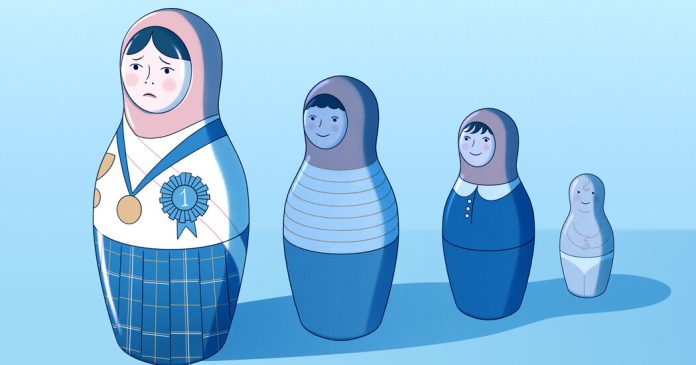
In “What We Lose When We Push Our Kids to ‘Achieve’,” Adam Gopnik writes about the importance of self-directed accomplishment:

When I was 12, I disappeared into my bedroom with a $40 folk guitar and a giant book of Beatles songs, with elementary, large-type “E-Z” chord diagrams to follow. I had no musical gift, as a series of failed music lessons had assured me — it was actually the teachers who assured me; the lessons were merely dull — and no real musical training. My fingers stung as I tried to press down on the strings without making them buzz, and my left hand ached as I tried, and for a long time failed, stretching it across the neck. Nonetheless, I worked my way through “Rain” (abbreviated to two chords) and “Love Me Do” (three) and finally “Yellow Submarine” (four chords, or was it five?) and discovered by myself the matchless thrill of homemade musical harmony.

No one asked me to do this, and surely no one was sorry the door was closed as I strummed and stumbled along after the nirvana of these simplified songs. But the sense of happiness I felt that week — genuine happiness, rooted in absorption in something outside myself — has stayed with me.

Fifty years later, I am still not a very good guitar player, but that week’s work, and the months and years of self-directed practice on the instrument that followed it, became a touchstone of sorts for me and a model and foundation for almost every meaningful thing I’ve done since. It gave me confidence, often wavering but never entirely extinguished, that perseverance and passion and patience can make one master any task.

Mr. Gopnik explains the difference between achievement and accomplishment:

Achievement is the completion of the task imposed from outside — the reward often being a path to the next achievement. Accomplishment is the end point of an engulfing activity we’ve chosen, whose reward is the sudden rush of fulfillment, the sense of happiness that rises uniquely from absorption in a thing outside ourselves.

Our social world often conspires to denigrate accomplishment in favor of the rote work of achievement. All our observation tells us that young people, particularly, are perpetually being pushed toward the next test or the “best” grammar school, high school or college they can get into. We invent achievement tests designed to be completely immune to coaching, and therefore we have ever more expensive coaches to break the code of the noncoachable achievement test. (Those who can’t afford such luxuries are simply left out.) We drive these young people toward achievement, tasks that lead only to other tasks, into something resembling not so much a rat race as a rat maze, with another hit of sugar water awaiting around the bend but the path to the center — or the point of it all — never made plain.

The essay concludes:

The pursuit of accomplishment, what I call the real work, never ends and always surprises. I learned in that chord-building week so long ago that if you simply lifted one finger from the C chord, you got the most tender and poignant harmony. I didn’t know then that it was a major seventh chord, favorite of the bossa-nova masters, but I later learned that Paul McCartney, like me, didn’t know that’s what it was, either, when he first made the shape and referred to it simply as “the pretty chord.” From the most gifted to the least, we are brothers and sisters in the pursuit of accomplishment and our stubborn self-propelled decoding of its mysteries. That’s our real human achievement.

Students, read the entire article and then tell us:

  • What have you accomplished in your life? What accomplishments, big or small, do you feel most proud of, and why?

  • What do you think of Mr. Gopnik’s distinction between achievement (“the completion of the task imposed from outside”) and accomplishment (“the end point of an engulfing activity we’ve chosen, whose reward is the sudden rush of fulfillment”)? Is one kind of success more meaningful? Do you prefer projects and activities that are asked of you, or ones that you choose yourself?

  • Mr. Gopnik writes that the self-discoveries he made playing guitar gave him “confidence, often wavering but never entirely extinguished” and taught him that “perseverance and passion and patience can make one master any task.” What have your accomplishments given you? Have they taught you anything?

  • Mr. Gopnik asserts that our society “often conspires to denigrate accomplishment in favor of the rote work of achievement,” driving young people into “something resembling not so much a rat race as a rat maze.” Do you think our culture is fixated on achievement? If so, how has that preoccupation affected you, positively or negatively?

  • Did you find this essay inspiring? Will it encourage you to explore your own interests, regardless of external reward or validation, more fully? Why or why not? What projects, big or small, would you like to accomplish some day? If you had unlimited time and resources, what would you try to learn, create, invent or investigate?

Fall Video Games

0
Fall Video Games

The coming months are “stacked with AAA releases, long-awaited sequels and promising independent games,” writes The Times in its preview, “12 Video Games Releasing This Fall.” That includes additions to the Mortal Kombat, Super Mario Bros. and Assassin’s Creed franchises — and more.

What games are you most looking forward to? Why? What games do you play most now?

Tell us in the comments, then read the related article to learn more.


Students 13 and older in the United States and Britain, and 16 and older elsewhere, are invited to comment. All comments are moderated by the Learning Network staff, but please keep in mind that once your comment is accepted, it will be made public and may appear in print.

Find more Picture Prompts here.