







By Kais Zribi, General Manager, Middle East and Africa at Coursera

Soha, a digital marketer and entrepreneur from Egypt, used online learning to develop new skills and increase her income after losing her main source of work during the pandemic. With a background in visual arts, Soha accessed courses that were not locally available and relied on online training to learn how to manage a small business. As pandemic restrictions eased, she began to see the positive impact of her education and was able to secure online work in social media and graphic design.
Soha’s story is a testament to the potential of online learning to create equal opportunities for underserved populations, especially women. According to a report from International Finance Corporation (IFC), Increasing women’s access to online learning can improve their economic prospects by helping them develop in-demand skills and enter new career paths. The study found that 30% of female online learners in Egypt have reported positive career or business outcomes after taking online courses, including finding a new job or promotion, setting up a business, or improving job performance. Online learning also produces gains within the larger economy, as in Egypt, one job is created for every 30 people trained on Coursera.
The new research is part of the “Women and Online Learning in Emerging Markets” report from IFC, created in partnership with the global online learning platform, Coursera, and the European Commission. The study uses data from Coursera to quantify women’s participation in online education, identify challenges to greater participation, and provide recommendations for the public and private sector to improve life-long learning opportunities and outcomes for women.
Despite the positive benefits that online learning is having on career advancement and skill progression, Coursera data shows that enrollment by women learners in Egypt stood at 31% in 2021 – a number that hasn’t grown since 2017. This lack of growth is primarily due to low labor force participation and a significant gender gap in internet access, in fact adult women in Egypt are 28% less likely than men to have access to the internet.
“Half of Egypt’s university graduates are women, with less than a quarter of those women part of the workforce,” said Cheick-Oumar Sylla, IFC’s Regional Director for North Africa and Horn of Africa. “Our study with Coursera demonstrates how online learning can help bridge the gap between academic expertise and professional skills, helping women increase their employability.”
Among other key findings in Egypt:
Our study shows that providing access to affordable, accessible, and flexible learning pathways can help build a competitive and diverse workforce that can contribute to the advancement of the economy. Governments, businesses and institutions must work closely to address some of the key challenges facing women in Egypt. Public-private partnerships will be critical to unlock women’s full potential and create more opportunities for them.
The “Women and Online Learning in Emerging Markets” study draws on data from nearly 97 million Coursera learners in over 190 countries, surveys of 9551 learners across Egypt, India, Mexico, and Nigeria who completed at least one lesson on the platform, and interviews with over 70 global learners and industry experts.
For more information, you can download the report here.

Hibernate is a widely used object-relational mapping (ORM) framework, and if you’re interviewing for a Back-End Developer, Full-Stack Developer, or Java Developer role, there’s a good chance you’ll be asked some questions about it during your technical interview.
One of the best ways to prepare for Hibernate interview questions is to practice them before your actual interview. You can set up a mock interview with a friend or family member and have them ask you questions so you can practice answering them out loud in front of someone.
If you’re interviewing over Zoom, you may want to do your mock interview over Zoom too. That way, you’re practicing in a similar environment to the one your interview will be conducted in. You can also use Zoom on your own and record yourself answering questions. Then, when you play it back, you can have the opportunity to fine-tune your answers and mannerisms.
To help you with your interview prep, here are 15 Hibernate interview questions and tips for how to answer them.
If you’re interviewing for an internship or your first job after college, there’s a good chance you’ll be asked this question, even though it seems like an obvious question to ask. In your answer, you should point out that Hibernate is a popular framework that helps Java applications communicate with and interact with databases. Hibernate is an object-relational mapping (ORM) tool that maps an object-oriented model to a relational database.
Persistence is the concept of storing data that gets saved in a database — or persists. One of the main functions of Hibernate is to persist changes, in a Java object’s state, to the connected database.. Classes in Java whose objects are stored in a database are called persistent classes.
Hibernate has a number of advantages that you can discuss in your answer to this question. You can talk about how it’s open source, so there isn’t a single company that has absolute control over Hibernate’s development. Another advantage of Hibernate is how quickly it can provide information about query statistics and database status. Also, it’s database-independent which means that it’s not dependent on a specific database management system.
HQL stands for Hibernate Query Language. While HQL looks similar to SQL, it’s an independent query language that you can use with any database. HQL is then converted to the database’s native SQL syntax at runtime. Unlike SQL, HQL supports full object-oriented programming (OOP) capabilities.
Hibernate supports a variety of databases, including MySQL, Oracle, DB2, Sybase SQL Server, Informix Dynamic Server, HSQL, PostgreSQL, and FrontBase.
Hibernate supports the same three basic associations as a relational database, which are:
A one-to-one association is where a record in a particular database table can be linked to one and only one other record in another database table.
For example, in a database of students at a college, each student is associated with only one student ID number. At the same time, each student ID number is associated with only one student.
There are three techniques to create a one-to-one association in Hibernate. You can create a foreign key column in one of the tables or a new table that contains the mapped values, or you can use a common primary key value in both tables.
In a one-to-many association, a record in a database table can be linked to multiple records in another database table.
For example, consider a college database that contains information about courses and instructors. An instructor can teach multiple courses, but one course can only be linked to one instructor. This represents the one-to-many relationship, where one instructor is associated with many courses.
In Hibernate, there are two ways to set up a one-to-many association. If we use the example of the college courses and instructors, then the first method is to create a foreign key column in the Courses table that associates each course with an instructor — the assumption is that instructors are all assigned a unique ID or number.
The second option is to create another table that contains two columns. One has a foreign key that refers to the primary key in the Courses table, and the other has a foreign key that refers to the primary key of the Instructors table.
A many-to-many association involves records in one database table that can be linked to multiple records in another table. At the same time, a record in the first table can also be linked to multiple records in the first table.
For example, in a college database that contains student enrollment information, a single course will likely have many students enrolled. At the same time, a single student can be enrolled in multiple courses.
Some of the important Hibernate interfaces are Configuration, SessionFactory, Session, Criteria, Query, and Transaction.
Session, and how do you create one?A Session in Hibernate is an object that manages the connection between a Java object and a database. Session methods allow you to store, extract, edit, or delete information from a database.
To create a Session object in Hibernate, use the SessionFactory interface.
By default, classes in Hibernate are mutable. However, you make a class immutable by marking the class as mutable = false.
The three states of an instance or object in Hibernate are:
If you’re looking for more ways to prepare for your upcoming interview, check out our complete guide to acing the technical interview and our tips on answering behavioral interview questions. Also, take a look at our advice for the whiteboard interview.Visit our Career Center for even more resources on interviewing and job hunting, like resume writing, networking, and creating a portfolio. If you’re looking for a class to learn a new skill or take an existing one up a notch, you can explore our full course catalog.
Murals at a school that depict the brutality of slavery are viewed by some as offensive. The artist says they are historically important. What should happen to the artworks?
This word has appeared in 11 articles on NYTimes.com in the past year. Can you use it in a sentence?
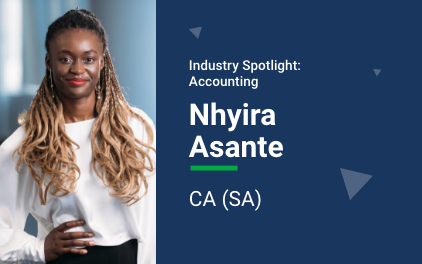
Each of us is accountable to something. Or someone. Organisations carry the same responsibility. In companies, accounting is the language of all business. Every business needs to be honest about its numbers. No fledging. No inflating. No exaggerating. Good accounting helps a business make decisions and plays a critical role in the planning and controlling processes. To get a better understanding of how companies balance books, and don’t go into the red, we sat down with a qualified CA, Nhyira, to learn more.
Tell us a bit about your background.
My name is Nhyira Asante (p.s. you don’t say it, the way it’s spelt) and I’m a CA(SA) currently working as an investment analyst.
What made you decide to go into accounting?
The age-old question – well I’m in this specific field via my mom’s direction. She always wanted to be an accountant but didn’t get to be one until later on in life, so she encouraged me to pursue it. When I saw the stars aligning in terms of academics, I gave it a full hearted “go” and I’ve often looked back since then (I jest, it’s a pretty fulfilling career).
For those who don’t know, what does an accountant do?
An accountant essentially works at making sure the financial side of a business is kept in check by recording transactional information and then provides insight into what all the numbers mean.
What courses did you take to become an accountant?
I went to Wits and studied a Bachelor of Accounting Sciences in my undergrad and then a year of postgrad for my CTA (Certificate in the Theory of Accounting).
What additional certifications, exams, and memberships have you had to complete as part of your career journey?
As soon as CTA was done, I wrote my first Board exam which is a technical exam, and thereafter my second and final Board exam which is a more “practical” exam.
Are there different types of accountants?
Yes, we can break it down by qualification (there are professional accountants, chartered accounts, chartered certified accountants, management accountants etc.) but all with a similar focus on providing accurate financial information to assess a business’s performance / forecast future performance. Then there are the roles that accountants perform as well – they can be bookkeepers, financial managers, CFOs, investment analysts, entrepreneurs – any number of things.
What essential skills should every accountant have for success?
Key would having a good handle on the organisation and paying attention to detail.
Do aspiring accountants need to be good at math to succeed?
Fortunately, yes otherwise people would sue us consistently and constantly.
What qualities and traits do you need to succeed?
The traits that help me in my current role in a more personal sense a very strong prayer life for strength (the job is immensely challenging) and the ability to persevere no matter the challenges.
What are the daily challenges you face as an accountant?
Usual stress of meeting near term deadlines in the most efficient and accurate manner.
In what sectors can accountants work and where are they most sought after?
Luckily, we can work across sector – as long as there is a need for someone to understand financial information there will be a need for an accountant.
What are some misconceptions about being an accountant?
That we are boring, stingy, penny pushers that people should ignore.
What does a typical day in your life look like?
My journey is a little different from a typical accountant’s – I work in an investment bank so my day to day involves covering admin and transactional points that may arise on one of the deals (selling and buying corporate businesses and providing other strategic advice to company leaders) I handle – this includes preparing materials, taking notes, valuing companies etc.
When you started on this journey, what was your vision and mission?
What are some of the daily habits you do that contribute to your success?
What’s the biggest sacrifice you’ve had to make, and would you make it again if necessary?
The biggest sacrifice is an ongoing motif in my current role – my job is quite intense, as a result, I’ve had to sacrifice quality time with family to cater to my job.
Have you experienced any failures or setbacks as an accountant and what lessons did you learn from that experience?
What do you know now about being an accountant that you didn’t know before you started your career?
Accountant roles post qualification are so wide and varied – it enables you to do anything you would want to do.
Who inspires you and pushes you to keep going?
I want to build a more beautiful life for my parents – the idea that I will be able to make that happen day one day keeps me going.
Is work-life balance something you can achieve in your job as an accountant?
In general – it is within reach however in my current role, its rare.
What are some non-negotiable things you practice in your role?
Do you have any apps or tools you use to stay organised?
I use Microsoft Outlook.
What words of encouragement or advice would you give someone looking to become an accountant?
When working with clients, what are the easiest and most challenging things you must deal with?
How important is teamwork in this field and how do you ensure you build a strong team?
Teamwork as in most fields is important – building a strong team takes intentionality in building trust and a safe space for team members to share their knowledge and ask questions.
What are the possible career paths for someone who has completed (or is about to complete) their accounting qualification?
Moving overseas using your qualification, financial manager, investment analyst, entrepreneur etc.
Your proudest moment in your career so far?
Qualifying as a chartered accountant.
Think you have what it takes to help companies keep account? Take our free workplace personality assessment below and find out who you are and why you do the things you do. Discover your skills, strengths and weaknesses and receive course recommendations to get your accounting career started.

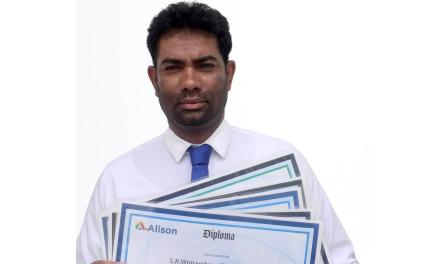
“My name is Senavirathnage Ranil Wimarshana Senavirathna. I’m a mechanical engineer in Sri Lanka and a member of the Institute of Mechanical Engineers. I have eighteen years of experience with reputable organisations, including international companies and the Sri Lankan government.
Currently, I’m the Managing Director of United Cam Engineering Pvt Ltd in Sri Lanka. I have already earned three Diplomas with Alison. At the moment, I’m studying for my MBA as well as taking Alison courses in Water Plants and Wastewater Treatment.
I learned about Alison courses online and the first course I took was Mechanical Engineering – Internal Combustion Engine. I run my own company and, as the Managing Director, I haven’t the time to attend a full-time education course. Alison is the best online learning institute for businessmen around the world. I gained quality knowledge through my Alison Diploma and then I increased my business island-wide across Sri Lanka.
I highly recommended Alison to everyone worldwide. It’s the best way to gain quality education and professional knowledge. Alison is never a waste of your time or money. Alison’s certificates, diplomas and courses are increasing the knowledge of people all over the world.”

Choosing to become a project manager is a demanding yet satisfying career choice. The project manager is the glue that holds a team together and needs to be in possession of a wide range of skills. They steer the ship in the right direction, motivate their team and help them achieve greater results.
Project managers have to monitor progress, make sure deadlines are followed, and maintain constant communication with superiors, clients, and the team they’re managing. As such, strong leadership and communication skills are two vital attributes of a successful project manager. In total, there are 6 must-have qualities for all great project managers.
Here are the 6 skills you need to develop to excel as a project manager.
Regardless of what industry you’re in, communication is an essential skill. When it comes to project management, communication issues are among the most common problems. Missing information, poorly explained deadlines, a team member failing to understand the team strategy, any one of these can result in project failure. The most important content marketing pain points are about communication and being unique.
When it comes to communicating effectively, it’s important to remember that too much information is always a bad thing. You need to be concise when expressing ideas while, at the same time, making sure your team has all the information they need.
Structure is also crucial when it comes to communication. Make sure you give your team step-by-step instructions whenever you need to communicate something, rather than just giving them information in drib and drabs.
A successful team is a team that knows what the expectations of their superiors are. They are aware of all the steps they need to follow and how to execute the tasks given to them.
If you don’t explain the goal of the project and how to get there, then your team will not be able to deliver the desired results. The process that your team needs to follow should be streamlined and outlined to them clearly. This applies to deadlines as well. A good project manager sets very clear deadlines and makes sure everyone has the resources they need to meet them.
In a highly competitive environment, everyone has to be continuously learning and upskilling. This is why you need to develop an intentional learning mindset. Adopting a learning mindset will not only help your team and your company to stay competitive, it will also make you a better leader. It’s not a surprise that the best leaders are constant learners.
As a team manager, it’s your job to be aware of new trends and methods within your industry. A project manager that is not constantly improving in their role and growing their team is ultimately working against the growth of the company.
A great project manager can utilize the strengths of each team member and achieve results by finding a harmony that allows everyone to be their best self. In order to find those strengths, you’ll need to listen. Listening is a very powerful tool for getting your team to achieve great results. There are many leaders out there who are focused on giving orders and telling people what to do but are not able to carefully listen to the team around them.
By listening carefully, you will be able to give personalized instructions. As a result, the members of the team will respond better to your directions. Encouraging your team is very important. Don’t be the person who is only focused on bad results. Your team needs to know what works. Give them feedback and compliment their work.
Managing a project can be demanding and stressful and there will be times when you will not have the answers. However, as the project manager you’re the one who needs to act. You need to stay composed and focused. If you are able to stay organized and calm during a storm, you will become a source of motivation for your team. People will be inspired by you and will try their best not to disappoint you. Strong leaders create strong teams. This podcast about leadership will give you insights from different professionals and help you to effectively lead your team.
A good project manager needs to follow trends in technology and know what are the best tools and apps available in their industry. Since the pandemic started, software outsourcing tools became a necessity for product managers, while tools like this website traffic checker can make your life easier by providing you with useful analytics. By following the latest developments in project management, you can learn how to implement new technologies which can improve the productivity of your team and create that competitive edge that all successful project managers want.
Nina Petrov is a content marketing specialist, passionate about graphic design, content marketing, and the new generation of green and social businesses.

“The more that you read, the more things you will know. The more that you learn, the more places you will go.” – Dr Seuss
If we’re honest, studying is not always easy to do. There’s an aspect of fun, excitement, the adventure of learning something new, discovering new skills to win at something and challenging yourself to greater heights. On the other hand, the art of balancing work and studies can become a bit overwhelming and leave you wondering if you can do it. The good news is, Yes You Can! But we all need a little encouragement along the way and hear from those who’ve successfully done it to remind you that you can too.
Today, we want to introduce you to one of Alison’s proud Alison graduates, Gloria Alado. We sat down one-on-one with her to find out about her learning experience with Alison, how it has grown her career and some words of wisdom for anyone looking to study further and achieve career success.
I work as a recruitment specialist.
I found Alison via LinkedIn.
Online learning is a lifeline to those who want to continue working and studying simultaneously. The “flexibility, clarity and in-depth explanations” of the courses are some of the reasons why I chose to study through Alison.
Alison is a great online learning platform. Not just because of the flexibility it offers its students, but because of the range of courses available to choose from. She told us that she has completed several courses to help boost and draw her closer to her career goals. These include a Diploma in HR, Recruitment, The Recruitment and Onboarding Process and Modern Recruitment.
I dedicated four days per week to studying.
“It helped me advance and have mastery in my career. I got to understand other areas of recruiting and was able to apply the knowledge gained to my work.”
Although the various courses were in the same field, each focused on a different aspect and thus produced learnings and skills. Teamwork, sourcing, and time management are some that come immediately to mind.
For some, the switch from face-to-face learning to online learning can be daunting. But the structure, flexibility and ease of our courses didn’t pose any challenges for me.
Alison has over 4000+ courses and there’s always something new to learn, skills to develop and areas to grow in. My academic journey is not yet finished. I am still taking and will continue to take more courses.
“Start now. There are so many things to learn in order to become an expert in your career. So, start now and be AMAZING!”
“I put my learnings into immediate practice as I proceed” with the course material.
If you, like Gloria, are interested in pursuing a career in HR, our Fundamentals of Human Resources course is a great place to start your journey. For the seasoned HR professional, a certificate in Strategic Human Resource Management and Development will teach you the essential skills to effectively improve productivity within your team and get the most out of each member.
Gloria has had an amazing development and self-empowerment journey with us. She recommends Alison as a learning platform to her trainees who are looking to break into the HR field and advance their careers. The courses she’s completed have helped her immensely in her career and they can do the same for you too.
We love hearing about all the positive ways studying is impacting lives and helping our students reach their goals. We are incredibly proud of Gloria’s dedication, and commitment to not only learning, but sharing the good news about Alison.
If you would like to be featured as part of our Alison Learner Spotlight series, tell us how Alison has empowered you in the comment section below. Who knows, you might just be next!
Alison is proud to announce the launch of the Disaster Management Hub in association with Catalyst 2030. The hub brings together crucial and potentially life-saving information both on how individuals can survive disasters and how organisations can better respond to and resource disaster situations.
Catalyst 2030 is an organisation of social entrepreneurs united in their commitment to achieve the UN’s Sustainable Development Goals. Catalyst 2030 is composed of various dedicated groups specialising in particular areas. The Disaster Management Group, chaired by Alan Braithwaite, has worked closely with Alison in creating this unique and free resource that aims to radically alter how we respond to disasters.
The Alison Blog spoke to Alan about the fundamental roles that both social enterprise and education have to play in reshaping disaster relief.
Hi Alan, can you tell us a bit about the aims of Catalyst 2030 and your role in the organisation?
Catalyst 2030 is a movement of social entrepreneurs across the world who are coming together to try and have a significant impact on the achievement of the UN’s 17 Sustainable Development Goals. The proposition is that, compared to top-down government actions, social entrepreneurs on the ground can make a disproportionate difference in promoting and implementing change.
Catalyst 2030 came together just two years ago and already we’ve attracted over a thousand members. We’re sponsored and funded by some of the most significant charitable foundations in the world – Ashoka, the Schwab Foundation, the Scholl Foundation, Echoing Green and the Bill and Melinda Gates Foundation as well.
Catalyst 2030 is built around both geographical groups and groups who come together around various conceptual or operational issues. I’m chairing the group on Disaster Management, organised around what we’ve called the three R’s of disaster: readiness, response and recovery.
We’re trying to craft and define a role for social entrepreneurs in the global system of how the world deals with disasters. There’s no question from the research that we’ve done that the way in which the world copes with disasters is broken. It’s characterised by not being as prepared for the obvious scenarios as one could be, arriving late, bringing the wrong things, leaving before people have had a chance to recover and all of the associated and well-documented questions of white colonial judgements as to what is good for people on the ground.
How did this collaboration between Catalyst 2030 and Alison come about?
Mike Feerick, Alison’s CEO, is a member of Catalyst and we identified very early on that there was a lack of both knowledge and access to knowledge for social entrepreneurs, agencies and authorities in terms of what needed to be done in disaster and potential disaster situations. So Mike stuck his hand up and said Alison is one of the largest online providers of educational resources and knowledge. Also, while Alison is a for-profit social enterprise, they don’t charge the ultimate user so it’s free at the point of use. And so Mike offered this amazing organisation’s capability up to the group. So Alison has created, discovered and consolidated a relevant body of knowledge into a Disaster Management Hub that is easy to access.
Why is education so vital for disaster management?
If you’re in a disaster, it’s likely that you’ll never have encountered one before so having the ability to access basic information on what’s happening, and what would be good or not good to do, is really important. That’s the first thing.
The second thing is that we’re trying to create an organisational framework so that social entrepreneurs can be a credible resource in the disaster relief chain. We need resources and information to be made available so that social entrepreneurs, who haven’t necessarily dealt with disasters before, can pivot to help and leverage their resources. They need access to knowledge and understanding in the easiest possible way and so that’s the value in the Disaster Management Hub.
How do you hope to see the Disaster Management Hub on Alison work?
The Disaster Management Hub carves out a specific space for information that we can then promote easily. It will also help us to invite contributions and attract partners to the project. We’ve found that was there’s actually a lot of courses already on Alison that are extremely relevant. The hub allows us to centralise those resources and then expand them.
What role do you think social enterprises can play on the ground in disaster situations?
Social enterprises are generally speaking local. They’re on the ground, they’re trusted and they exist with the consent of their community. If and when disaster strikes, they’re already there. They very often have relationships with local government and therefore they’re in a position to pivot and offer support with logistics, resources and organisation much more quickly than external organisations.
We know from all of the anecdotes that when disaster strikes it often takes three or four days for the big agencies to start to appear because they often spend time competing with each other for resources, rather than worrying about the people that are affected.
If the people on the ground can be better organised through the capabilities of social entrepreneurs, then the international resources can be better informed and the relief will be more relevant, targeted and effective.
What are the next necessary steps in setting up Catalyst 2030’S Disaster Management Group?
We’ve got a clear strategic plan now and we’re in the process of creating a full-blown programme. Having formalised the training and education, we now have to devise an operating protocol so everybody knows what their role is in the future system.
Alongside education we’ve obviously also got to build partnerships. We need to create an understanding as to what the information and communications technology infrastructure will be to support information flow in a disaster situation and how that can be managed.
We also need to explore how we make funding available. For example, if an area is particularly prone to disasters then maybe there are things they can invest in that will both mitigate that and also produce a return. There’s a lot of experience now in impact investments and that’s something we’ve got to integrate into our operating system.
