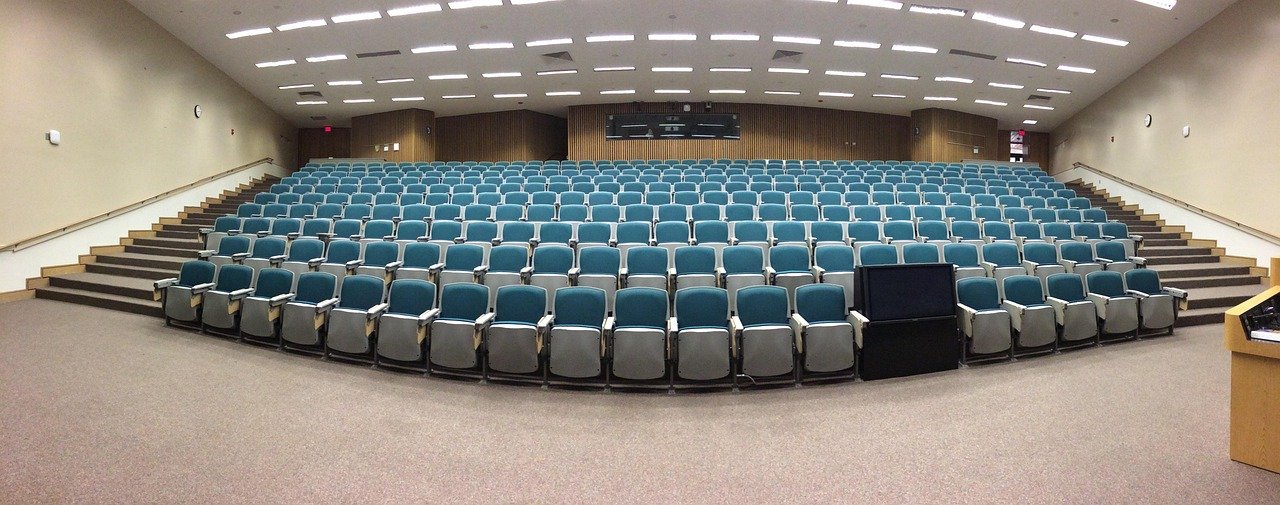
(cover image by ISDiva on Pixabay)
by Cindy Nebel
I am proud to work in a learning environment that follows the data and uses evidence-based practices in learning. Several years ago, and before my time, St. Louis University School of Medicine adopted a flipped classroom approach. Students rarely sit in live didactic lectures, but instead watch pre-recorded videos (sometimes created by faculty and often from third-party resources) and come to active learning sessions where they work together to answer questions about patients.
In my role, I spend most of my days talking to students about how to best prepare for these active learning sessions and for their exams. And a question that inevitably comes up is whether or not students should spend the considerable amount of time required to watch the videos. As much as faculty might roll their eyes at that, we actually have some internal (yet to be published) data showing that there is no correlation whatsoever between the hours students spend watching videos and how they perform in the class.
So when I saw the paper that this week’s blog is based on (1), it piqued my interest. While we have our own internal and correlational data that allows me to cautiously allow students to skip the lecture, here we have experimental data that actually says skipping the lecture might be better for my students. Spoiler alert: it’s not that simple. Let me review the study first and then provide the necessary caveats for why I think the jury is still out on this topic.
The Study
Here’s what they did: undergraduate participants came into the lab and watched one of two randomly assigned lectures. They treated it just as they would a lecture in one of their courses and were allowed to take notes (but, for control purposes, not keep them). After the lecture, they downloaded an app that sent them notifications to go take a quiz every 1 to 3 days. They saw 15 random questions during each session (out of 50 total) and were told the correct answer if they got a question wrong, continuing to answer all of the questions until they got them all right.
A month later they took a final test that included reworded questions from what they saw in the app as well as a couple of short essays.
Unsurprisingly, students performed higher at the beginning of the month on the lecture they watched, compared to the one they didn’t. Within a week or two, however, there was no difference between the conditions and this persisted on the final test, both multiple-choice and essay questions.
The authors rightly conclude that, in this study, watching the half-hour long lecture was a waste of time! Students learned just as much from answering questions and receiving feedback as they did when they watched the lecture beforehand.