
Find all our Lessons of the Day here.
Lesson Overview
Featured Article: “How Coronavirus Hijacks Your Cells” by Jonathan Corum and Carl Zimmer
The virus that causes Covid-19 is spreading around the world. At least six other types of coronavirus are known to infect humans, with some causing the common cold and two causing outbreaks: SARS and MERS.
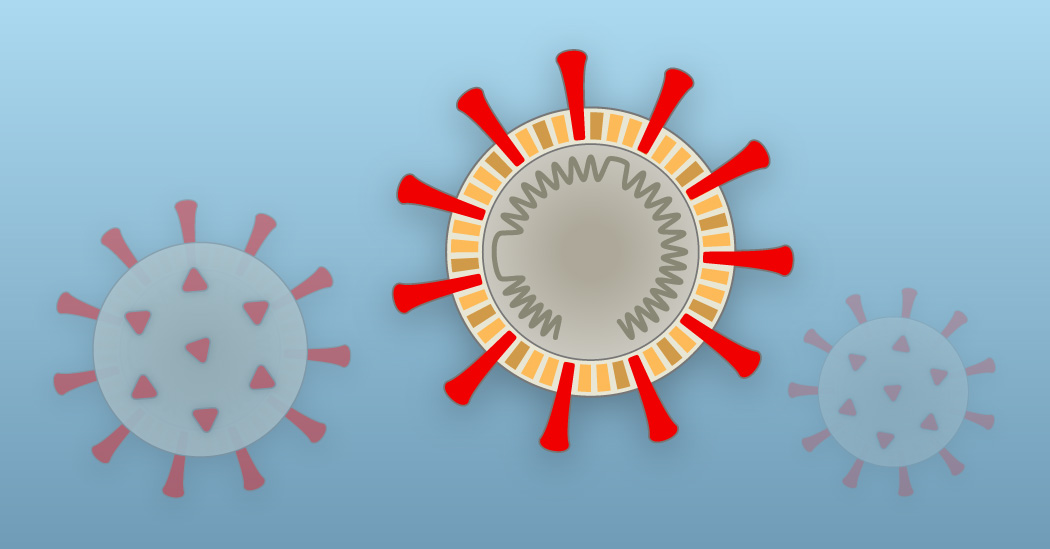
In this lesson, you will learn how the coronavirus is structured, how it spreads and how it attacks the body. Then, you will inform others in your community about this scientific knowledge to help them stay safe and be more aware.
Warm Up
What do you know about the science behind the coronavirus? Where have you learned that information? What kinds of sources have you used? You can use this K/W/L Chart to record what you know about this infectious disease and also what you still want to know.
Have you studied germs, diseases or cells before? Think about what you know about how cells interact with one another. Then, scroll through the featured article and look at the pictures. What are you able to notice about how the coronavirus affects cells simply based on the images? Do you have additional questions to add to your K/W/L chart?
Questions for Writing and Discussion
Read the article, then answer the following questions:
1. How does the coronavirus enter and leave the body? Based on that information, what are ways to prevent the coronavirus from entering your body?
2. What is viral RNA? How does it affect the infected cell?
3. Why don’t antibiotics work against viruses? Are there any medications that treat viral infections?
4. How does the coronavirus infection progress and spread through the body?
5. What does the immune system do to try to fight the virus?
6. How might a vaccine be able to prevent the coronavirus? Use your knowledge of how the flu vaccine works to support your point.
Going Further
The featured article explains how the coronavirus attacks cells, but it leaves unanswered many other questions about what happens when somebody is infected. Pam Belluck’s article “What Does the Coronavirus Do to the Body?” addresses many of those questions, including:
How does that process of hijacking cells cause respiratory problems?
What trajectory does the virus take in the lungs?
Are the lungs the only part of the body affected?
Why do some people get very ill but most don’t?
What do scientists still not know about coronavirus patients?
Use Ms. Belluck’s article in conjunction with the featured article to educate others about the science behind the coronavirus outbreak. You can create a video, design a poster, make a slide show or produce some other visually engaging medium to communicate this information.
Make sure that whatever you create is accessible to a range of audiences. If you use scientific language or abbreviations, be sure to define them for your audience. Try to use visuals to hold your audience’s attention and to make scientific concepts clear.
You might want to give yourself a challenge, such as educating a 7-year-old about the coronavirus, or using images and only five words to teach someone about it.
In your creation, give science-backed recommendations for people in your community about how to prevent the virus. Several ideas were mentioned in the article, but to learn more you can also read this advice from The Times.

