
Students in U.S. high schools can get free digital access to The New York Times until Sept. 1, 2021.
Lesson Overview
Featured Article: “‘R’ is for Rohingya: Sesame Street Creates New Muppets for Refugees”
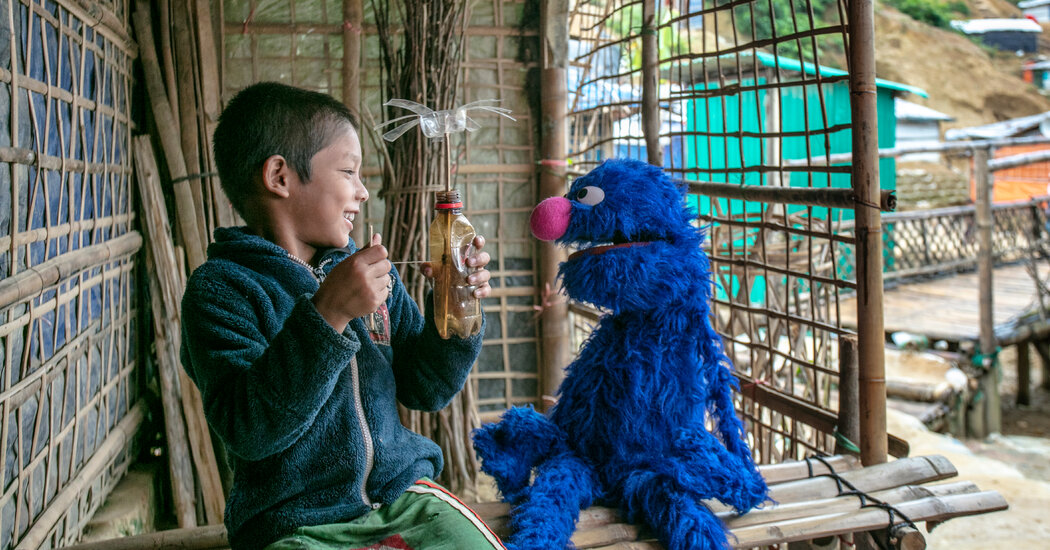
Sesame Workshop has long sought to champion diversity and social justice. Their newest muppets are 6-year-old twins Noor and Aziz who live in a refugee camp in Bangladesh. Noor and Aziz are Rohingya Muslims who escaped ethnic cleansing in their native Myanmar, but the show also emphasizes that they help around the house, tell stories and love to learn.
In this lesson, you will learn about the situation for refugees in Bangladesh and then delve deeper into the significance of TV programming to support individuals and communities in need.
Warm Up
What do you know about what has been happening in Myanmar to the Rohingya Muslims? Watch this 90-second video created in 2017 by the United Nations.
If you had not heard about the crisis before, what is your reaction to what you learned from the video?
How do you think Sesame Street, and the muppets, could offer support in a crisis like this?Does it surprise you that Sesame Street would be involved in some way? Why or why not?
Now, watch this one-minute video introducing the two new Sesame Street characters:
Based on this video, what you think of these new muppets and the Sesame Street initiative overall? What questions do you have?
Questions for Writing and Discussion
Read the article, then answer the following questions:
1. What are some of the characteristics of the two new muppets?
2. What significance are these new muppets likely to have for Rohingya children?
3. What does the survey conducted by Doctors Without Borders reveal about the experiences of Rohingya people, specifically children, since 2017?
4. How is Sesame Street trying to make the muppets relatable to Rohingya children? What other efforts has Sesame Street made over time to show diverse representation?
5. How did the show creators choose the interests of the main characters? Why did they make them twins?
6. What are some of the realities of life in Rohingya refugee camps that the show is not including?
Going Further
To learn more about the experiences in the Rohingya refugees and to hear stories of some of the families and children, watch this video from NBC.
After you watch, respond to the following questions in class discussion or in writing:
What moments in this news clip stood out for you? Why?
How are the creators attempting to provide social and emotional support and guidance for children through the show?
Do you think there are limitations to the work that Sesame Street is attempting to do? What other forms of support, aid or activism do you think are important?
Are you able to relate to this story in any way? Were there any TV shows, books or movies that were central to your emotional or educational development as a child?
About Lesson of the Day
• Find all our Lessons of the Day in this column.
• Teachers, watch our on-demand webinar to learn how to use this feature in your classroom.

