
This lesson is a part of our Accessible Activities feature, which aims to welcome a wider variety of learners to our site and to The Times in general. Learn more and tell us what you think here.
Lesson Overview
Featured Article: “Tour a House Full of Black History” by Corey Kilgannon
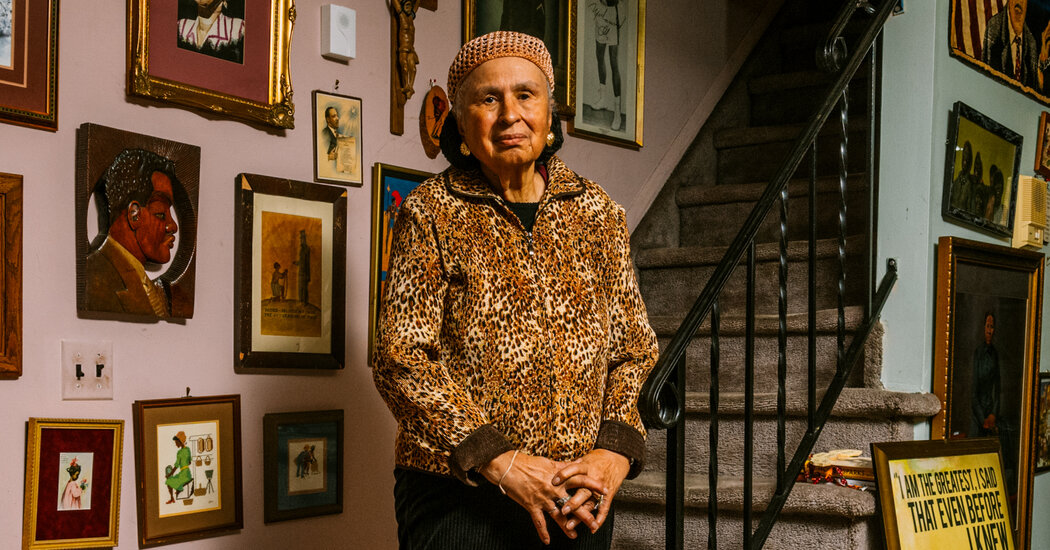
Elizabeth Meaders’s home on Staten Island houses one of the largest collections of Black history in the country. In this lesson, you will learn about some of the objects in her collection. Then, you will design an exhibit using some of the objects from Ms. Meaders’s collection.
Warm-Up
We recently asked students in a writing prompt to tell us what they collect. Students shared that they collect magnets, rocks and crystals, seashells and vintage books.
Write or discuss the following questions about collecting things and share your responses with your classmates or in the comments section of the original Student Opinion question:
Do you have a passion for collecting things? If yes, what do you like to collect and why? If not, why not? Could you imagine collecting something one day?
If you do have a collection of something, what do you think you will do with it? Will you sell it one day? Display it in a museum? Or do something else?
The article you will read today is about a woman who has collected objects relating to Black history. If you could collect objects related to any time period or subject in history, what would you pick?
Vocabulary
The article you are about to read includes eight vocabulary words that you might not be familiar with. Take a look at the list below and see how many you recognize and can define. Can you use them in a sentence or explain what they mean to a classmate?
1. artifact
2. riveting
3. prize
4. inhabit
5. abolitionist
6. roughly
7. memento
8. branch out
Now, read through the definitions and examples of all eight words in this Vocabulary.com list.
Questions for Writing and Discussion
Read the article and then answer the following questions:
1. What makes the Rosa Parks sculpture in Ms. Meaders’s collection so special?
2. What are some of the kinds of items that abolitionists created? Why do you think they used so many different mediums to “document their feelings”?
3. Who was Crispus Attucks? Why does Ms. Meaders says that his story “warms her heart”?
4. How did Ms. Meaders begin collecting historical artifacts? How did her collections begin to grow beyond her initial interests?
5. What is included in Ms. Meaders’s “civil wrongs” collection? Why does she emphasize that one of the objects is from Maine?
Going Further
Imagine that you are an art curator, someone who chooses which pieces will be displayed in an art exhibit, and you have been asked to create an exhibit on Black history using objects from Ms. Meaders’s collection. Follow these steps to build your exhibit:
Start by looking through the 18 photographs of objects in Ms. Meaders’s collection below. Read the description of each one.
Select three to five objects that you would like to include in your exhibit. As you select the objects, find a theme or focus that they all relate to — for example, sports, racism, activism, slavery or resistance.
Next, arrange the photographs you’ve selected artistically, either by printing them out and physically laying them out, or by using a design program like Canva to make a virtual exhibit.
Finally, write a paragraph that explains why you selected these objects and what story they tell. You can share why they are important to you personally, or why you think other people should see them.
You can share your exhibit with your classmates by doing a gallery walk.
Want more Lessons of the Day? You can find them all here.

