
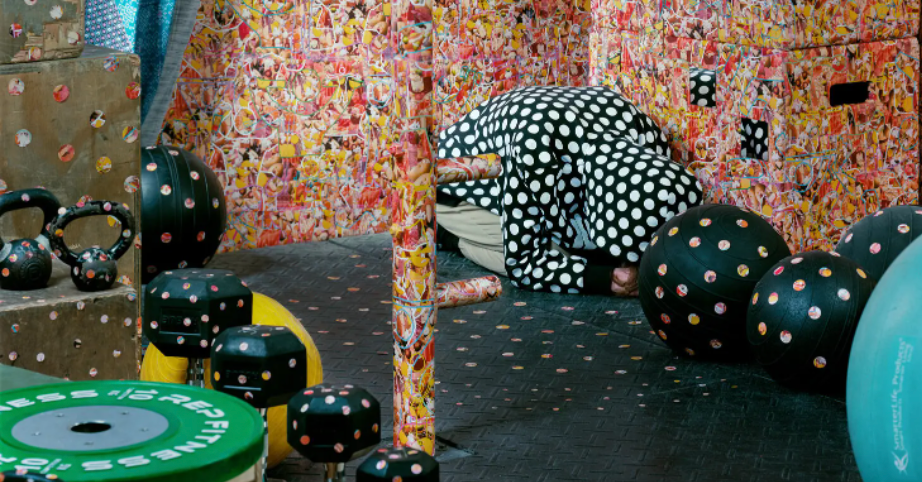
This leads me to another question, about the line between fit and fanatical. I have seen weight loss videos that make no physical sense, and I know girls take unreasonable measures to achieve their goals. But even knowing that it can be unhealthy, I can’t help but ask myself if just a little overexercising or a little starvation could pay off.
Growing up with social media in this day and age is absolutely detrimental to one’s self esteem and view of their own body. There are hundreds of influencers that are praised for having the perfect body when chances are, it’s completely edited. Which gives off the impression that you can’t feel comfortable in your skin without using FaceTune. Beyond that, for those who are blind to the amount of editing being done, are put under the impression that if you aren’t “perfectly” skinny or your stomach isn’t toned and flat then you aren’t beautiful. I have struggled with body confidence and I find myself deleting Instagram whenever it gets too bad because I am subconsciously wishing I looked like the girls on my feed.
From time to time, I scroll and scroll and subtly wish I had the charm and charisma, and in rare cases the body types of other men. Now, I do not have the most buff body type, justifying my common thought process … For example, in a post that blew up, people commented on any negative detail they could find about me. Some commented on my lanky, lean stature, which led to insecure thoughts. I thought I had to “appear” stronger so I would not have been made fun of.
Influencers share their “what I eat in a day” videos, and while their intentions may not be malicious, comparison truly becomes the thief of joy. You start wondering about how much you should be eating. Are you over-consuming? Are you eating too much sugar? Should you be eating after eight pm? Is this cookie worth it when, like they say, “summer is just around the corner?” While I admit that I have benefited from some nutritional information that has been taught by professionals on apps like TikTok and Instagram, the perpetuation of unrealistic beauty standards has been overwhelmingly detrimental for me.
I’ve been battling anorexia for almost two years, but I’ve been hateful towards my body since at least 2016. I still have marks from where my 3rd-grade self scratched the measurements of my waist and hips in pencil on my bathroom door. Back then, I was watching the YouTubers of the mid-2010s, who looked effortlessly flawless showing their midriffs in halter tops and mini skirts, when I could never feel confident wearing the same things, despite being slender.
During the pandemic, I increased my consumption of social media and began to feel “inspired” by all the ultrathin supermodels and heroin-chic movie stars of the 90s and 00s that were glorified by nostalgic Instagram pages. My explore page was tuned to my sudden interest in 1200-calorie meal plans and Victoria’s Secret ab workouts. Every time I opened Instagram, I was motivated to cut my portion sizes and to exercise even more. I felt proud of the sudden protrusion of my collarbones and ribs, the smallness of my wrists, the sharpness of my jawline. What I didn’t know is that I was slipping down a very steep slope, altering my brain and rendering myself potentially infertile.
Mr. Hawgood’s quote, “The line between getting fit and fanatical is not always clear,” is incredibly true. At some point, I crossed that line, but I couldn’t tell you when or where. All I know is that being thin became an obsession, and my relationship with food and exercise hasn’t been the same since 2020.


