
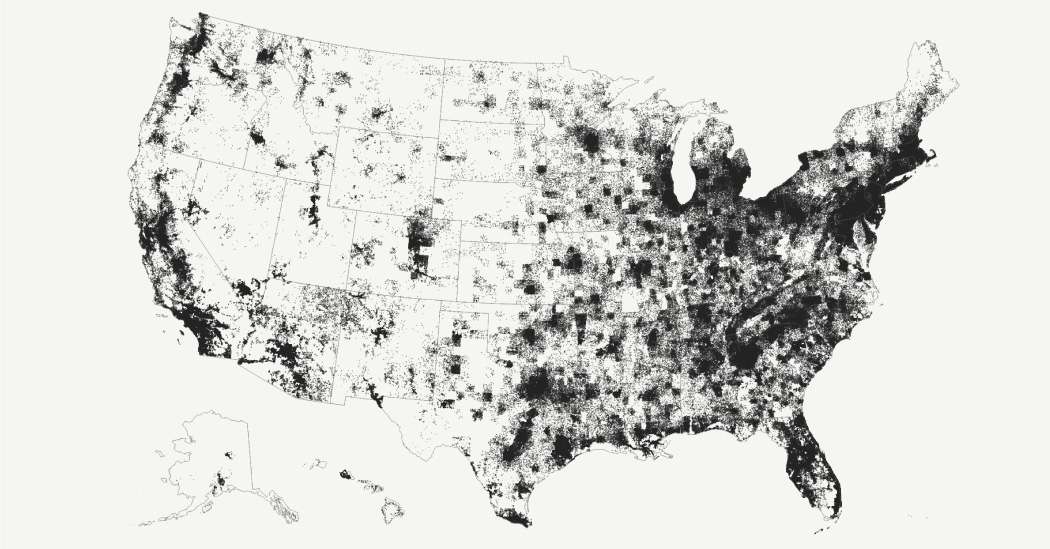
On Thursday, the number of known deaths from Covid-19 in the United States surpassed one million.
How are we to understand and reckon with this staggering death toll and immeasurable grief? What does one million deaths mean to you?
In “How America Lost One Million People,” Jeremy White, Amy Harmon, Danielle Ivory, Lauren Leatherby, Albert Sun and Sarah Almukhtar grapple with the gravity and meaning of this tragic milestone. First, scroll through the opening interactive until you get to the map of the United States. Then, read the excerpt from the piece below:
The magnitude of the country’s loss is nearly impossible to grasp.
More Americans have died of Covid-19 than in two decades of car crashes or on battlefields in all of the country’s wars combined.
Experts say deaths were all but inevitable from a new virus of such severity and transmissibility. Yet, one million dead is a stunning toll, even for a country the size of the United States, and the true number is almost certainly higher because of undercounting.
It is the result of many factors, including elected officials who played down the threat posed by the coronavirus and resisted safety measures; a decentralized, overburdened health care system that struggled with testing, tracing and treatment; and lower vaccination and booster rates than other rich countries, partly the result of widespread mistrust and resistance fanned by right-wing media and politicians.
The virus did not claim lives evenly, or randomly. The New York Times analyzed 25 months of data on deaths during the pandemic and found that some demographic groups, occupations and communities were far more vulnerable than others. A significant proportion of the nation’s oldest residents died, making up about three-quarters of the total deaths. And among younger adults across the nation, Black and Hispanic people died at much higher rates than white people.
Understanding the toll — who makes up the one million and how the country failed them — is essential as the pandemic continues. More than 300 people are still dying of Covid every day.
“We are a country with the best doctors in the world, we got a vaccine in an astoundingly short period of time, and yet we’ve had so many deaths,” said Mary T. Bassett, the health commissioner for New York State.
“It really should be a moment for us all to reflect on what sort of society we want to have,” she added.
The tragic Covid toll only hints at the suffering of millions more Americans mourning loved ones. Julie Bosman poignantly profiles some of those who have lost family members, spouses and friends and are grieving in a nation that wants to move on in the “The Lost Americans”:
A widow in North Carolina whose husband died of Covid-19 feels crushed when she hears people talk casually about life in America returning to normal. I will never go back to normal, she thinks to herself. I still feel as though I am missing a limb.
A man in New York City who lost his wife to Covid ruminates on the days before she got sick two years ago. He worries that he brought the virus into their apartment, wonders if her death was his fault and asks the unanswerable: Why did he survive Covid, but she did not?
A woman in Minnesota whose mother died from the coronavirus is mired in what she calls “Covid grief.” It deepens when she sees the pandemic mentioned on Facebook, when someone says how happy they are to be reuniting with loved ones again, when she is forced to listen to chatter of masks or politics or vaccines.
“There’s a reminder of how she died, literally every single day, multiple times a day,” said Erin Reiner, whose mother, Gwen Wilson, was a champion bowler and quilter in Kansas until her death at the age of 72.
For more than two years, Americans have made their way through a pandemic that has upended plans, brought tumult and despair, and sickened millions.
But one group has been forced onto a separate path. These are the loved ones of the nearly one million people in the United States who have now died of Covid-19, a catastrophic toll that reflects a death rate higher than in almost any other wealthy country.
These families have walked a path in isolation, mourning and anger. They are carrying a grief that feels lonely, permanent and agonizingly removed from the country’s shared journey.
Students, read the rest of one or both of the articles, then tell us:
What is your reaction to the staggering Covid death toll? What thoughts and emotions does this tragic milestone evoke for you?
How does reading the stories of those who lost loved ones during the pandemic, chronicled by Ms. Bosman, affect and move you? Do any of the stories resonate with your own experiences and feelings?
“We are a country with the best doctors in the world, we got a vaccine in an astoundingly short period of time, and yet we’ve had so many deaths,” Mary T. Bassett, the health commissioner for New York State, said of this tragic milestone. She added: “It really should be a moment for us all to reflect on what sort of society we want to have.” How would you respond to her perspective? How has the pandemic and the extraordinary loss of life affected how you think about American society?
The Times writes that some demographic groups, occupations and communities, such as the nation’s oldest residents, as well as Black and Hispanic people, have been far more vulnerable than others. What does that make you think or feel? What does this say about our nation?
What is the importance of noting these tragic milestones? Do you think that the United States has appropriately acknowledged and reckoned with this national tragedy? Why or why not? How else might we as a nation commemorate and mourn the one million lives that have been lost during the coronavirus pandemic?
In what ways have you and your community recognized the toll of the pandemic, if at all? What more do you think you could do?
Loss is intensely personal, so please only share your experiences if you feel comfortable. If you or your family has lost a loved one to Covid, you might use this space to share something about that person. Tell us what that person was most passionate about or what you miss most about your loved one.

