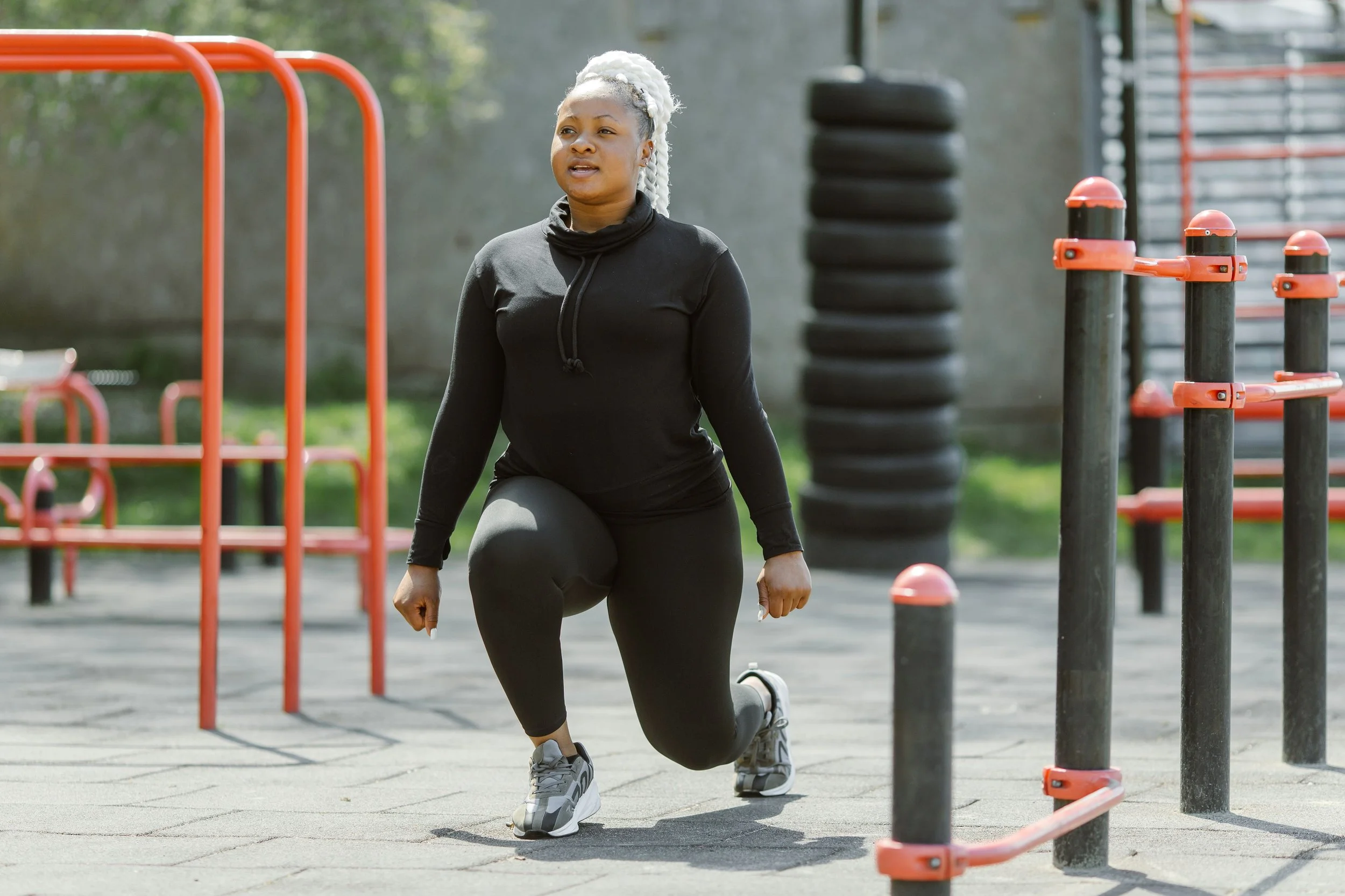
Cover Image by Gustavo Fring from Pexels
By Althea Need Kaminske
Perhaps one of the more obvious pieces of advice that I give medical students about learning is to remember that our brains are in our bodies. Yes, I know that these are very smart, high achieving students who know quite a bit about anatomy and biology. But I also know that in an educational system and society that focuses so much on productivity, it can be easy to compartmentalize our lives. To become so focused on maximizing spaced retrieval practice (yay!) that we forget to prioritize sleep, nutrition, and exercise (boo!). In high-stress and fast-paced environments it can be difficult to remember that we are, ultimately, animals. Creatures that need sleep, a healthy diet, and daily walks.
A recent meta-meta-analysis by Singh et al. (2025) examined the effectiveness of exercise for improving cognition (1). The analysis included 133 meta-analysis, which themselves comprised a total of 2,724 randomized control trials. I’ll break down the results, but the overall finding was pretty notable: exercise, even light intensity, benefits general cognition, memory, and executive function across all populations.
The meta-meta-analysis classified outcomes into three categories: general cognition, memory, and executive function. General cognition was measured by scales like the Mini-Mental State Examination, Montreal Cognitive Assessment, and the Alzheimer’s Disease Assessment Scale – Cognitive Subscale which are used in medical settings to assess overall cognitive functioning. Memory was measured by instruments like the Wechsler Memory Scale and Verbal Learning Test which measure short-term memory and episodic memory. Executive function was measured by tools like the Digit-Span Test, Digit Span-Backwards, Digit-Span Forwards, and Trail Making Test Part A and B which measure visual and verbal working memory and attention.
General Cognition and Exercise
There was a significant effect of exercise for improving general cognition. This effect was found across all age groups. The effect varied as a function of exercise type, with a moderate-to-large effect for exergames, and a small-to-moderate effect for aerobic, dance, mind-body, mixed mode, resistance exercise, and other. The effect of exercise on general cognition did not vary as a function of exercise intensity, however interventions that lasted for 1-3 months had the greatest effect on general cognition compared to interventions lasting 4-6 months or greater than 6 months. Finally, the beneficial effects of exercise on general cognition did not vary as a function of session frequency, session duration, or weekly duration.
Memory and Exercise
There was a significant effect of exercise on memory. This effect was stronger in children/adolescents than in older adults (though benefits were still present in older adults). The effect also varied as a function of exercise type, with large effects for exergames, small-to-medium effects for aerobic, dance, mind-body, mixed mode, and resistance exercise. The effect of exercise on memory did not vary as a function of exercise intensity or intervention length. Further, the beneficial effect of exercise on memory did not vary as a function of session frequency or duration (there was an insufficient number of studies to draw conclusions about weekly duration).
Executive Function and Memory
There was a significant effect of exercise on executive function. This effect was stronger in children/adolescents than in older adults (though benefits were still present in older adults). The effect also varied as a function of exercise type with exercises categorized as “other” as having a greater effect compared to aerobic, dance, exergames, mind-body, mixed mode and resistance exercise. The effect of exercise on executive function did not vary as a function of exercise intensity or intervention length. Further the beneficial effects of exercise on executive function did not vary as a function of session frequency, session duration, or weekly duration.
Why does exercise benefit cognition?
The authors propose two potential ways that exercise improves cognition. First, there are several physiological mechanisms that might lead to cognitive improvement. The release of neurotrophic factors, increased vascularisation of the brain, greater dendritic spine density, enhanced synaptic plasticity, and reduced systemic inflammation (1). Your brain is in your body! Exercise improves overall brain health.
Second, the authors highlight the fact that exergames appear to be a particularly potent form of exercise. They suggest that this particular mode of exercise not only confers some of the physical benefits listed above, but may be particularly potent because of the challenging cognitive aspect of the exercise. Exergames require you to recall movements, recognize cues, and memorize steps.
Exercise and ADHD
While there were benefits of exercise for all populations, the authors note that the benefit appears to be greater for those with ADHD. They highlight a few potential reasons for this. First, many of the studies examining exercise and ADHD involved children and adolescents, which is a population that was more responsive to exercise in general. Second, given that the hallmark of ADHD is struggles with executive function, they suggest that ADHDers simply had more room for improvement. Finally, they point out that one of the proposed mechanisms for working memory deficits in ADHD are altered neural activity in areas of the brain associated with working memory. Exercise may improve neural activity in these areas through enhanced blood flow and neuroplasticity. While further research is needed to test these theories, and to extend them to adult populations, this provides some initial evidence for a relatively low-cost tool for helping with the management of ADHD.
Takeaways
Overall, I think the results of this meta-meta-analysis are really encouraging. Exercise – any exercise – can benefit cognition. Whether it’s a 20 minute walk after dinner, lifting weights, or breaking out the Nintendo Wii, adding movement into your routine can improve your cognition, memory, and focus.