fbpx
Home Blog Page 1037

Sustainable jobs for a future-proof career!

0
Sustainable jobs for a future-proof career!

Rising global temperatures and sea levels, threatened biodiversity and increased pollution all make for grave uncertainties when it comes to the future of the planet. They also have severe implications for industrial development, sector growth and the job market.

At Alison we’re committed to sustainable development and protecting the planet. With all of our products, from our courses to our Career Guide, we emphasise green industries and sustainable careers in order to guarantee healthy and happy futures for our Learners and our environment.

Check our these varied careers that help protect both the planet and your livelihood from the dangers of climate change.

As more and more countries invest in alternative sources of energy, working with wind is a sure-fire way to secure your future career. Technicians need to have an in depth understanding of all aspects of this new field, from turbines to grid integration. The wind industry is guaranteed to grow further in the coming years, making it an exciting sector for career advancement and promotion opportunities.

A growing number of green taxes and grants are appearing. It’s up to accountants to keep track of developments and make sure their clients stay both sustainable and profitable. Our course on the role of accountants on climate change offers an all-encompassing appraisal of the new landscape of green business. You’ll learn the various ways that accountants can leverage their skills to flourish in this new atmosphere while also promoting sustainable businesses and making sure that environmentally friendly ventures succeed.

Solar energy is one of the planet’s great hopes for reducing our reliance on fossil fuels and so the solar industry is starting to really heat up! The sky really is the limit for this sector as there are boundless opportunities for expansion, particularly in the developing world. Our course on solar technology and its use worldwide is a fantastic course for anyone hoping to help grow solar energy systems around the world in the coming years.


Urban Planners have a crucial role to play in making sure that the cities of the future are green, sustainable and functional spaces where people and businesses can thrive. The intersection of the environment and transport is a crucial area that Urban Planners have to get right in order to reduce pollution and fossil fuel usage, while at the same time making sure that towns and cities continue to function. If you’ve got a brain for complicated problems that require ingenious solutions, then urban planning is the career for you.

A rewarding, stimulating and healthy career, organic farming is a growing industry benefiting from both increased state support and consumer confidence. Learning how to growing organic food sustainably is a rewarding course that will open up amazing opportunities in the organic food industry. Farming is an incredibly diverse area and farmers are a key stakeholder in the move towards a more sustainable world. Agriculture is going to see some exciting developments in the next decade, make sure you’re a part of it!

5 high paying jobs that don’t require a college degree!

0
5 high paying jobs that don’t require a college degree!

As both the educational and professional landscapes continue to change and develop radically, an increasing number of high paying jobs don’t require university qualifications.

This is, in part, a result of the shift in balance away from stagnating third level institutions that are unwilling or unable to respond dynamically to the market, and towards more responsive and learner-centred platforms like Alison.

If you’re interested in pursuing one of these high paying and exciting positions then we’ve got everything you could ask for! From our high quality courses to our informative Career Guide, you’ll find all the help you need to secure that lucrative new job!

Plumbing combines a satisfying manual element with complicated mechanical thinking. This increasingly lucrative career is a great fit for anyone who wants to work with both their hands and their mind. Our Diploma in Plumbing Studies is the ideal course for anyone seeking to gain a detailed understanding of both the mechanical and the theoretical elements of this fascinating trade.

Getting paid to travel the world and meet new people? Being a flight attendant is the dream job if you’ve got the get up and go to get up and go! This is a role that also requires a level head and the ability to stay calm and collected at 36,000 feet. Flight Attendants need to be resourceful and quick-thinking, while also having an in depth understanding of Airlines Transport Management. This course is a great way to take the first steps towards this adventurous career in the sky!

Wind power is the future and this new career is open to anyone with a brain for mechanics and an interest in being at the forefront of the fight against climate change. Working in the burgeoning wind energy sector requires gaining an understanding of cutting edge technology, from turbines to grid integration. While this type of information was incredibly difficult to come across in the past, thanks to Alison’s dynamic platform, you can now upskill in this exciting new career for free!


Public transport is being rejuvenated in the fight against climate change and cities across the world are extending their fleets of buses. Bus Drivers need to be incredibly technically skilled to be able to successfully manoeuvre a large vehicle, like a school or public bus. Drivers also need to be able to be able to navigate complex public transport systems and always be up to speed with the latest developments in transport management. That’s exactly what you’ll learn from this popular and engaging free course.

If you’ve got a good bedside manner and an interest in medicine then you’re a perfect fit for this stimulating and multifaceted role. Medical assistants need to be highly educated on the medical side of things but they also have to have top quality Executive Assistant Skills in order to carry out a professional job that allows the medical practice to run smoothly. When it comes to the health sector, there are no small jobs and this role requires an understanding of a wider range of fields than most.

5 industries that have actually GAINED JOBS during the Covid-19 pandemic!

0
5 industries that have actually GAINED JOBS during the Covid-19 pandemic!

The pandemic hasn’t been all doom and gloom for the jobs market. A diverse range of industries have actually managed to flourish in the unique set of circumstances produced by covid-19. 

While many sectors have been hit by layoffs, limited capacity and drastically reduced customer footfall, there have also been enormous opportunities for those who know where to look and are willing to upskill and diversify their skillset.

To point you in the right direction and give you a headstart over the competition, we’ve identified five careers that offer bright futures, virus or no virus!


Regardless of the pandemic, governments need to function and states have to operate. Politics is a fascinating and high pressure environment always looking for new talent. By taking our Executive Assistant Skills course, you’ll gain the high quality skillset that politicians expect all of their staff to have. Being a political assistant is a multifunctional role that could see you performing any number of fascinating tasks, from organising meetings with constituents to helping with speech-writing.

Crucial sales have continued throughout the pandemic, with many consumers buying much more food and household goods as a result of lockdowns. The shops that have remained open have had to negotiate a range of unprecedented situations, such as social distancing and being able to source staff on short notice. As a result, a lot of shops have had to seek out better managers, one of whom could be you if you take our course in Retail Management!

With so much business moving online, countless industries are now struggling to manage and leverage their customer data. This sector allows for horizontal movement across many career paths and also allows you to work from home or on the road. Understanding the complexities of Computer Networking is essential for anyone seeking a career in computer science, making this free course the perfect place to start.


Warehouse management is crucial to effective supply chain operations. This position is being valued by companies more than ever and wages are reflecting this. Warehouse Management is about keeping a vast array of moving parts moving and requires high levels of organisation and forward planning. Warehouse Managers need to know what’s going on at al levels of the business, from stock to sales, making this a dynamic and important position.

Construction was one of the few industries that largely remained up and running during the pandemic. With many people taking the lockdowns as a chance to carry out home repairs, construction has grown over the last two years. The pandemic as meant that Construction Managers need to be even more organised than before to stay ahead of supply chain issues and staff shortages. Construction Safety & Health has also become even more important that before. This course is a must on you CV if you’re interested in joining this booming industry.


How To Write A Game Developer Resume That’ll Land You An Interview

0
How To Write A Game Developer Resume That’ll Land You An Interview

The best resume is the one that gets you hired. But what does that look like in the gaming world? Is it formal or creative? Chronological order or by relevance? What keywords are best for the gaming industry? If you’re putting together a Game Developer resume — and hoping to land a job that could earn you a $101,644 annual salary! — it’s likely that at least one of these questions has crossed your mind.

Companies are looking to hire employees with relevant experience, skills, and passion for the gaming industry, and a solid resume will help you land an interview. Along with building your resume around your individual strengths and interests, there are a number of ways to up your chances of landing an interview for one of these creative jobs.

How to format a Game Developer resume

Formatting is an important part of a resume. It’s one way to make relevant skills and experience stand out. It’s also a way to grab the attention of the hiring manager in the hopes that they’ll spend an extra minute looking over your application.

Most resumes follow a standard format:

  1. Header and contact information
  2. Objective statement or summary
  3. Skills/core competencies
  4. Experience
  5. Education and courses
  6. Projects

Here’s what to include in these sections:

Header and contact Information

Your full name should appear in large print at the top of your resume, and you can follow it with your job title. For example, Kirsten S. Roberts, Game Programmer. If you’re applying for your first role in the industry, you could do something creative, like Kirsten S. Roberts, Computer Science College Senior with a Passion for Gaming, to catch the hiring manager’s eye.

Your contact information should also be at the top of the page. Include your name, phone number, and professional email address. While it’s not necessarily required to put your physical address, it’s often helpful for recruiters if you put your city and state (and/or country/territory). You can put links to your portfolio and LinkedIn profile here as well.

Objective statement or summary

An objective statement or summary is like a pitch to the hiring manager, and it should grab their attention. When writing your objective statement, imagine you’re answering the question, “what is your goal?” Also try to include a phrase that’s used in the job post or specific skills that are listed. Here’s an example:

Game Programmer with five years of experience and proficiency in TypeScript, C++, and C#. Working knowledge of Python and JavaScript. Experience in designing and implementing solutions and looking for a similar role in a progressive organization.

Skills/Core competencies

After your objective statement, you’ll want a section that highlights the skills you have that are relevant to the job. Again, you can pull these directly from the job description — literally copy and paste the exact phrasing used in the post if you have that skill.

So, if the job post states that a required qualification is experience with the PS4 and Xbox One platforms, you should have “PS4 and Xbox One platforms” listed under your skills.

Another example: Let’s say you’re applying for a position with the NBA and they want someone with familiarity with basketball and basketball simulations/games, then put “basketball simulations” under your skills section.

You don’t want to go overboard here. Try to home in on the most relevant skills and aim for 10-15 skills in your list.

Experience

The experience section is where you can elaborate on your past roles and their similarities with this new position. You should list your work experience in reverse chronological order, including the time period when you worked for each employer.

Summarize your responsibilities for each role, and always highlight your accomplishments and achievements. Tip: Use a verb to start each line in your work experience section. This will put emphasis on your accomplishments. Words like “developed,” “created,” “wrote,” or “led” are good ones to use here. (Bonus tip: Make sure that the tense of the verbs makes sense. So if you’re talking about a previous job, use past-tense; if you’re talking about your current job, use present tense.)

The experience section is a good place to include your soft skills. Problem-solving, collaboration, communication, time management, leadership, and creativity are all examples of soft skills that you can include when discussing your prior roles.

Education and courses

In the education section, include your degree if you have one, even if it’s not directly related to game development. If your degree was more general, like engineering or computer science, you can use bullet points to highlight aspects of your coursework that relate to game development.

If you’ve taken any professional development courses or earned a certificate, be sure to include those here. List your degrees first and in reverse chronological order if you attended multiple schools, and then list your professional development work after.

Projects

If you’re further along in your career, a Projects section might not be necessary. But it can be great for entry-level professionals. You can pick one or two recent projects to highlight here and include a link to your portfolio for more samples of your work.

More Game Developer resume tips

If you’re getting hung up on phrasing or how to list a specific skill, pull up LinkedIn and search for a game developer in a similar role to the one you’re applying for or someone who has a background comparable to yours. You can check out how they listed their skills to get some ideas for your own resume.

If formatting isn’t one of your strengths, there are sites like Rezi with downloadable Game Developer templates. Google Drive also provides free resume templates you can easily customize and edit in Google Docs. And remember: Always save your resume as a PDF (unless the job description has different instructions) so your formatting is preserved. You never want to send a potential employer an editable document like a Google Doc or a Microsoft Word file.

Prepare for a Game Developer job

If you’re looking for ways to boost your credentials or fill in gaps in your experience, our game development courses include both beginner and intermediate options.

A course in web development is also a good place for an aspiring Game Developer to start. We also offer courses focused specifically on programming languages relevant to gaming, like C++ and JavaScript.

Hopefully your resume lands you an interview for your dream job. If that’s the case, check out our tips on how to prepare for the interview process, which will include both technical and behavioral questions. Good luck!


Game Development Courses & Tutorials | Codecademy

There’s a gamer in all of us — whether you play on your phone, a console, a computer, or a virtual reality rig. And it takes people, either individually or in large teams, to bring these great experiences to life. Learn the foundations of Game Development and create your very own video game.

Spoonfed

0
Spoonfed

What do you think this image is saying? How does it relate to or comment on society or current events? Can you relate to it personally? What is your opinion of its message?

Tell us in the comments, then read the related Opinion essay to learn more.


Want more Picture Prompts? Find them all in this column.

Students 13 and older in the United States and Britain, and 16 and older elsewhere, are invited to comment. All comments are moderated by the Learning Network staff, but please keep in mind that once your comment is accepted, it will be made public.

Word of the Day: wherewithal

0
Word of the Day: wherewithal

: the necessary resources or means (especially financial means)

_________

The word wherewithal has appeared in 53 articles on NYTimes.com in the past year, including on Dec. 29 in “What Social Trends Told Us About the American Economy in 2021” by Jeanna Smialek:

Redditors weren’t alone in getting excited about leaving jobs this year. Americans quit their jobs at record rates, in what was labeled “The Great Resignation” or the “Big Quit.” Myriad essays and articles have tried to assess why people are throwing in the towel, but most agree that it has something to do with burnout after long months of exposure to public health risk or endless online hours during the pandemic.

Some have suggested that a collective life-or-death experience has caused people to reassess their options, while others have suggested that the same government-padded savings that are allowing people to spend so much are giving them the wherewithal to be pickier about where they work and how much they are paid.

Can you correctly use the word wherewithal in a sentence?

Based on the definition and example provided, write a sentence using today’s Word of the Day and share it as a comment on this article. It is most important that your sentence makes sense and demonstrates that you understand the word’s definition, but we also encourage you to be creative and have fun.

Then, read some of the other sentences students have submitted and use the “Recommend” button to vote for two original sentences that stand out to you.

If you want a better idea of how wherewithal can be used in a sentence, read these usage examples on Vocabulary.com.

If you enjoy this daily challenge, try one of our monthly vocabulary challenges.

Students ages 13 and older in the United States and the United Kingdom, and 16 and older elsewhere, can comment. All comments are moderated by the Learning Network staff.

Have You Ever Jumped Into Ice-Cold Water?

0
Have You Ever Jumped Into Ice-Cold Water?

Have you seen athletes dip into an ice bath after a hard workout? Are you familiar with a polar bear plunge, when people celebrate New Year’s Day — or raise money for a charity — by swimming in a frigid lake or ocean? Do either of these activities appeal to you?

When you encounter a cold-water swimming pool, do you jump in? When you go to a beach, lake or river with chilly water, do you stay dry?

Some people find that plunging into cold water brings them certain mental health benefits. Does that make sense to you?

In “A Cold Plunge for a Mental Boost,” Rhiannon Picton-James writes about Mental Health Swims, a nonprofit group that holds year-round gatherings at cold bodies of water:

On a chilly Saturday morning in early October, a group of women who had traveled from across the United Kingdom met up at one of the many swimming ponds in Hampstead Heath, a rambling public park in north London.

They are all members of the nonprofit group Mental Health Swims, which holds year-round gatherings at chilly lakes, rivers and coastlines. The group was formed around the notion that plunging into cold water eases mental health conditions like anxiety and depression.

This cold-water swimming community had recently reached an important milestone, their two-year anniversary, and it was the first time many of the women had ever met in person.

The science behind cold-water plunges and mental health isn’t robust enough to convince many in the medical community that it’s anything more than a placebo, but Dr. Mark Harper, who sits on the board of Mental Health Swims, is working on clinical trials.

The group’s founder is Rachel Ashe, 35, a mother of two who suffers from borderline personality disorder and P.T.S.D. “I advertised my swim; I did these videos telling people if you’re manic, if you’re depressed, if you’re dissociating — come, and I will be kind to you.”

During Covid-19 lockdowns, the women took ice-water plunges in recycling bins, bath tubs and children’s paddling pools to keep up their practice, and checked in on each other via Zoom chats.

Vicki Carter, 59, has a podcast called “Swim Out,” where she discusses open-water swimming. She swam the English Channel in 2019. “After the death of my son I had a nervous breakdown. When you’re in the cold water, you can’t think of anything else but how cold you are.”

Lauren Holt, 28, discovered this year that she is autistic. “Swimming doesn’t rely on how you socially interact, what you say and eye contact. It’s much easier for me to let all the other things melt away when I’m in the water.”

Students, read the entire article and look at the photographs, then tell us:

  • Have you ever participated in a cold-water plunge? What was your experience? If you haven’t participated before, would you ever consider doing so? Why or why not?

  • How do you feel when you encounter cold water — whether an ice-cold drink, a cold shower or a frigid swimming pool? Do you find it refreshing? Do you recoil at the cold? Use descriptive words to describe how your body reacts.

  • What is your reaction to the words and photographs in the story?

  • If plunging into cold water is not something you have tried or if it doesn’t bring you mental clarity or relief, what group or solo activities do you do to ease stress, anxiety, depression or just for fun?


Want more writing prompts? You can find all of our questions in our Student Opinion column. Teachers, check out this guide to learn how you can incorporate them into your classroom.

Students 13 and older in the United States and Britain, and 16 and older elsewhere, are invited to comment. All comments are moderated by the Learning Network staff, but please keep in mind that once your comment is accepted, it will be made public.

Lesson of the Day: ‘Inflation Has Arrived. Here’s What You Need to Know.’

0
Lesson of the Day: ‘Inflation Has Arrived. Here’s What You Need to Know.’

Featured Article: “Inflation Has Arrived. Here’s What You Need to Know.” by Jeanna Smialek

Have you noticed any prices going up? Say for food, gas or rent? Or for things like bikes or burritos?

The Times reported on Jan. 12 that inflation, as tracked by the Consumer Price Index, is rising at its highest rate since 1982. But what exactly is inflation, what is causing prices to go up and why are many economists worried about its continued rise?

In this lesson, you will learn about inflation and what the current rise in prices means for you, your family and your community. In a Going Further activity, you will act as an economic adviser to President Biden and make a recommendation for how to best tackle the problem.

What do you know about inflation? What do you want to know?

Have you and your family talked about rising prices? Has the higher cost of things affected what you buy and whether you save money?

Watch the two-minute video above by the BBC News explaining what inflation means and why it’s happening now in Britain. Then, in writing or through discussion with a partner, respond to the following prompts:

  • In your own words, what is inflation?

  • According to the video, what is one reason inflation is happening right now?

  • How does inflation affect consumers?

Part 2: Analyze and Interpret a Graph

Look closely at the graph above showing the year-over-year percent change in the Consumer Price Index — the annual change in prices for a basket of goods and services — in the United States since 1965. Then, respond to the following questions drawn from our What’s Going On in This Graph? feature:

  • What do you notice about the year-over-year percent change in prices over the past half century?

  • What do you wonder? What questions does the graph raise?

  • What’s going on in this graph? Create a catchy headline that captures its main idea.

Finally, make a prediction: Based on what you learned from both the video and the graph, do you think inflation will continue to rise? Or do you believe the increase is a temporary problem?

Read the featured article, and then answer the following questions:

1. Ms. Smialek writes: “Inflation has become central to the American zeitgeist in 2021 in a way that it hadn’t been for decades.” Give two examples from the article that support her observation.

2. The article defines inflation as “a loss of purchasing power over time.” In your own words, what is inflation? Use some concrete examples from everyday life to make your definition understandable to a fourth grader. What is the Consumer Price Index?

3. Why is a little bit of consumer price inflation generally viewed as desirable, according to the article? What roles does the Federal Reserve, America’s central bank, play in keeping prices from increasing too rapidly?

4. What are typical causes of inflation? What does Ms. Smialek mean when she writes: “The inflationary burst America has experienced this year has been driven partly by quirks and partly by demand.” Give an example of each.

5. Economic forecasters are divided about the future of inflation in the United States. Give one example to support the idea that “the price burst will fade,” as Ms. Smialek writes, and one to support the view that there are “concerning signs that inflation is becoming stickier.”

6. How does inflation impact different groups and institutions, such as borrowers, lenders, workers, banks and the stock market? Why can inflation be particularly hard on lower income households, according to the article?

7. What new things did you learn about inflation by reading the article? What details, lines or statistics stand out? Return to your prediction in the warm-up activity? Do you think prices will continue to increase and perhaps become a permanent feature of the economy or is inflation a transitory phenomenon? What evidence in the article leads you to this conclusion?

Option 1: Learn more about inflation and the state of the U.S. economy.

Inflation is high and has been for months. It’s weighing on consumer confidence, making Washington and policymakers nervous, and threatening to eat away at household paychecks well into 2022. What questions do you still have about inflation and the state of the U.S. economy? What else do you want to know?

You might begin by looking at The Times’s Economy topics page, or by reading one of the articles on inflation and its impacts below. Then, write or discuss with a partner: What is your reaction to the article? How did it add to or change your understanding of inflation? What was the most fascinating, provocative or memorable thing you learned? What questions do you still have about inflation?

Option 2: Interview a family member about the prices of goods when they were young.

One fun way to learn more about inflation is to talk to an elder. Ask a parent, grandparent or older family member or friend what prices were when they were children for at least three of the items on the list below:

  • A candy bar

  • Milk

  • A hamburger

  • A movie ticket

  • A gallon of gas

  • A car

  • College

Make sure to write down both the estimated price of the good and the approximate year. Then, do some research, either by visiting local businesses or by hunting online, to find out what the price is now for the same good.

Next, after you have gathered the information about prices then and now, make some observations: What do you notice? What do you wonder? What does the information you’ve gathered tell you about inflation and the change in prices over time?

Afterward, share your findings with your class and plot the information on a rough timeline of prices.

Option 3: Make a recommendation.

Inflation in the United States is rising at its fastest rate so far this century. At 7 percent, according to one index, inflation is more than triple the Federal Reserve’s target. While much of what’s happening is related to the pandemic and surging demand as the nation struggles to return to something resembling normalcy, Republicans have latched onto the issue, blaming President Biden for the economic situation.

Imagine you are an economic adviser to Mr. Biden: How concerned should we as a nation be about inflation? What should the Biden administration do to address it?

For example, should the president recommend that the Federal Reserve raise interest rates? Should he consider price controls or cut government spending? Or would you counsel him not to worry because the economy is generally strong and the inflation is likely to be a temporary phenomenon?

To help formulate your recommendation, you might read one or more of the Times articles and Opinion essays below:


Want more Lessons of the Day? You can find them all here.

How Much Do You Know About Saudi Arabia?

0
How Much Do You Know About Saudi Arabia?

Can you find Saudi Arabia on a map? What else do you know about this Middle Eastern nation with a population of 35 million people?

When Broadway closed during the pandemic, stage manager Cheyney Coles used the time to pursue her degree—online, on her time.

0
When Broadway closed during the pandemic, stage manager Cheyney Coles used the time to pursue her degree—online, on her time.

Cheyney Coles lives for the theater. So much so that when she got a chance to work backstage at a Tony Winning regional theater company, she leaped at the opportunity. She left her bachelor’s degree program at the University of North Texas (UNT) and started working full-time.

Over the next ten years, she gained a world of experience. She even made it to Broadway, working as a stage manager. But then things took a turn in 2020. She and her team had just successfully opened “The Girl From The North Country” when COVID-19 hit. Audiences went into lockdown, theaters closed, and Cheyney was suddenly adrift.

Despite all the real-world experience she’d amassed, she was worried about her job prospects, given that she’d never completed her degree. She wanted to go back to school and earn her credential, but returning to Dallas and giving up the next three years of her life didn’t feel like the right choice. 

That’s when she discovered that UNT offered an online Bachelor of Applied Arts Sciences (B.A.A.S.) program on Coursera. She reached out to an advisor, who walked her through the options. It proved to be the solution she was looking for. She could stay in New York and work at the accelerated pace she set for herself to be able to graduate before Broadway reopened.

“The online BAAS program offered access that I had never seen before in a degree. I got a bunch of classes done at once.”

The real-world management experience she’d already developed combined perfectly with the foundational skills taught in the program. As she progressed towards her degree, she realized she was building expertise that she could not only bring back to Broadway, but that she could leverage to bring to any management role in any field. “It makes me happy to know that I have a broader skill set and that, soon, I’ll have a degree that helps me to take my management skills anywhere.” 

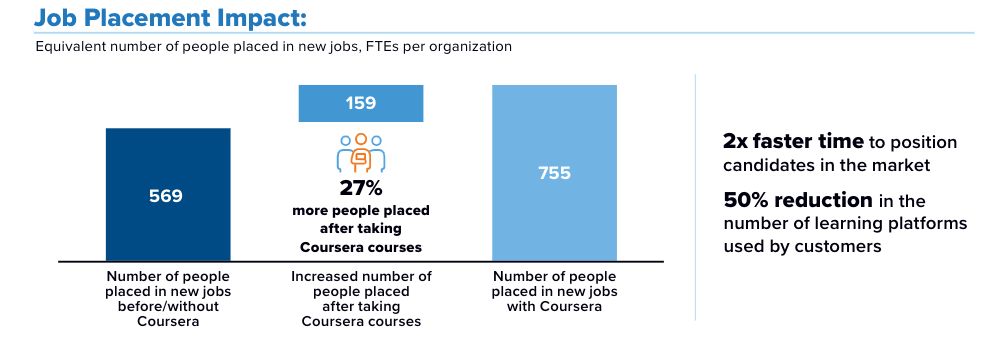
Cheyney graduated this December while working on her show—which is now back on Broadway (tickets are on sale!). A fellow classmate she befriended in the program is also at a new job, while both finishing her degree and being a single mom. Cheyney sees their parallels and recognizes the value the program offers them: “This degree is for people like me; like us. It makes something possible that used to feel impossible. I don’t know if I would have ever gotten my degree if I hadn’t joined the B.A.A.S..”

The University of North Texas’ Bachelor of Applied Arts and Sciences (B.A.A.S.) degree is the fastest, most affordable way to complete your bachelor’s degree online from a top 9 research school in Texas.