fbpx
Home Blog Page 1182

Digest #150: How To Read An Academic Paper

0
Digest #150: How To Read An Academic Paper

3.     QALMRI Instructions by Brosowsky and Parshina

QALMRI stands for Question, Alternatives, Logic, Method, Results, and Inferences and proposes guiding questions for each section of an academic paper and introduces a more elaborate approach to reading a scientific paper. While reading a specific section in the paper, try to obtain answers to the different guiding questions. This technique helps to take a critical view on an academic paper and to dig a bit deeper of what it means. I need to thank one of my colleagues, Phil McAleer, for pointing me to this resource.

What Students Are Saying About Social Media Consequences, Healthy Diets and Wild Weather

0
What Students Are Saying About Social Media Consequences, Healthy Diets and Wild Weather

Especially for teens, I feel that it is very hard to eat healthy. When we are with friends, it’s never “let’s go get a salad” or “maybe we should cut back on our calories.” It’s always what fast food place sounds the best right now; and that place is usually Chick-fil-A. But, as the pandemic rolled around, I wasn’t able to see my friends hardly at all. Meaning I had more control over every meal I had. With a combination of my dad’s teaching and a strong desire to get shredded for the summer, I ate one of the healthiest diets imaginable.

Most people can agree that they want to eat healthy and get in shape. Well, now is the time to do so. You have so much control over what you eat right now and what you do during the day. With school being only a few hours long and sports being cancelled, now is the time to eat healthy and focus on getting in shape.

Jack, Desmond

At the start of quarantine everything was closed. Because gyms and other places to work out were closed, it was my responsibility to get myself moving each day. If you don’t know, exercise creates “happy chemicals” in your brain, causing your mood (and health) to improve. When I wasn’t working out as consistently, there was a steep decline in my mental health. I was just kind of sad all of the time and I felt drained. And so, I reached for food as a way to help me “cope.” It was nothing too extreme, I didn’t have an eating disorder or anything, but that was my way of coping with what was going on. That cycle of not feeling great, then reaching for food, and then feeling worse, continued for a few weeks.

I was probably at an all-time low and I wasn’t feeling great about myself. I began to start running to get myself into shape, and started cooking more often. My family assigned my siblings and I one night to cook dinner for the family, and I thought that was fun and almost therapeutic. And so, I got really into cooking for myself and in turn, started eating healthier. I try to pay attention to the foods I eat, but I never obsess about it, because I know that can lead to toxic cycles and patterns. I try to fit in fruits and veggies when I can, but I don’t always get my “five a day” in.

Keener, Hoggard HS Wilmington, NC

Your diet is essential for many aspects of your life whether you realize it or not. And though Covid-19 has made it more difficult for many to have access to fresh produce and healthy food options it shouldn’t be an excuse to not be educated how to eat properly and make good food decisions. In fact, Covid-19 was one of the reasons I chose to become vegetarian. I wanted to have more control over my diet and cook at home more. This provided the me with the opportunity, through trial and error to see how my diet affected my body and mind. I was astonished to find that by eating more fruits and vegetables I had more energy and I actually began to enjoy learning new recipes and cooking for myself. It also made me realize just how much I’d been depriving myself of a very important part of any diet, fiber. And this is why I believe that it’s essential for people to think more deeply about what they chose to put into their body, because you only have one.

Jason J., Glenbard West HS Glen Ellyn, IL

This year my taste has changed in food, meaning my diet looks completely different from last year. I have cut all soda from my diet and replaced it with water. I have been eating healthier foods like salads, turkey, and chicken. The most important part to me about having not only a clean input of food but a good consistent exercise routine, without working out eating healthy has little impact.

Badr Abusalah, Palestine

As an athlete, I try to maintain a healthy diet and to be cognizant of what I eat and drink. While I certainly eat fruits, vegetables, and healthy grains, I also enjoy dessert, pancakes, and more — everything in moderation! However, I do think that it is important to note the harm of perpetuating diet culture, especially in teens. Eating disorders are widespread and incredibly common, and putting too much emphasis on food itself can lead to unhealthy practices. Rather than focusing on eating healthy to look a certain way, we should promote the concept of eating healthy for just that: health. To make sure that teenagers are eating according to Ms. Caron’s recommendations, we should recommend tasty ways to eat fruits and vegetables (for instance, a healthy smoothie) and promote healthy eating to feel better, perform better in sports, and be one’s best self, rather than for physical appearance.

Sarah Faz, Mountain View, CA

Teenagers in The Times: January 2021

0
Teenagers in The Times: January 2021

Here is the January edition of Teenagers in The Times, a roundup of the news and feature stories about young people that have recently appeared across sections of NYTimes.com. We publish a new edition on the first Thursday of each month.

For ideas about how to use Teenagers in The Times with your students, please see our lesson plan and special activity sheet, both of which can be used with this or any other edition.

_________

Education

Son Tipped Off F.B.I. About His Father, Who Is Charged in Capitol Riot

“I put my emotions behind me to do what I thought was right,” said Jackson Reffitt, 16, who weeks before the siege alerted the F.B.I. that his father was planning “something big.”

The Girl Who Walked Away

As an adolescent, Leslie Doyle felt embarrassed by her father. As an adult, she learned to be grateful for what he taught her.

‘A Slap in the Face’: The Pandemic Disrupts Young Oil Careers

Students and recent graduates struggle to get hired as the oil industry cuts tens of thousands of jobs, some of which may never come back.

Student Who Was Jailed for Breaking Quarantine in Caymans Apologizes

Skylar Mack, an American college student, was released last week after spending more than a month behind bars. She said, “I deserved it.”

The Misfits Shaking Wall Street

They are young, they are fearless and they are forcing everyone to pay attention.

Black, Deaf and Extremely Online

On TikTok and in virtual hangouts, a younger generation is sharing the origins and nuances of Black American Sign Language, a rich variation of ASL that scholars say has been overlooked for too long.

He Bonded With Kobe as a Competitor, Then as Another #GirlDad

A year after Kobe Bryant’s fatal crash, the former N.B.A. All-Star Zach Randolph and his daughter MacKenly, who played for Bryant’s girls’ basketball team, are still learning how to grieve.

Review: ‘We Are: The Brooklyn Saints’ Will Tackle Your Heart

In this Netflix docu-series, an outer borough children’s football program offers a community, and a chance.

Children’s Screen Time Has Soared in the Pandemic, Alarming Parents and Researchers

“There will be a period of epic withdrawal,” warned one addiction specialist, once schools, activities and social life return to normal.

Swimming With My Shirt Off

At 13, I was a guy with breasts, and I needed to get rid of them to survive my upcoming teenage years.

Figuring It Out: Two Novels About Ice Skating and Adolescence

“The Comeback,” by E.L. Shen, and “Ana on the Edge,” by A.J. Sass, put identity on center ice.

What Fuels a Fanatical Sports Parent?

In “Pee Wees,” Rich Cohen chronicles a year in youth hockey — and gets real about its impact on his own psyche.

Scared Straight or Scarred for Life?

In “Troubled,” Kenneth R. Rosen investigates the kind of tough-love programs he was placed in as a teenager and exposes their unusual methods.

‘Hunted’ Review: Catch Me if You Can

Riffing on “Little Red Riding Hood,” this sadistic chase movie sends a young woman and two attackers into the deep, dark woods.

A Boy Who Bonded With Biden Over Stuttering Will Write a Children’s Book

Brayden Harrington, 13, who spoke at the Democratic National Convention, will write a picture book, “Brayden Speaks Up,” HarperCollins announced.

Listen to 4 Young Black Poets Speak

Amanda Gorman isn’t the only young Black poet crafting language to explore powerful themes, including identity, civil rights and complicated emotions.

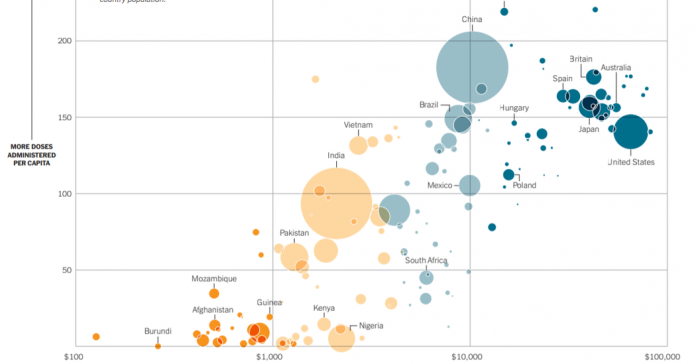
What’s Going On in This Graph? | Feb. 10, 2021

0
What’s Going On in This Graph? | Feb. 10, 2021

4. After you have posted, read what others have said, then respond to someone else by posting a comment. Use the “Reply” button to address that student directly.

On Wednesday, Feb. 10, teachers from our collaborator, the American Statistical Association, will facilitate this discussion from 9 a.m. to 2 p.m. Eastern time.

5. By Friday morning, Feb. 12, we will reveal more information about the graphs, including a free link to the article that included these graphs, at the bottom of this post. We encourage you to post additional comments based on the article, possibly using statistical terms defined in the Stat Nuggets.

We’ll post more information here on Thursday afternoon. Stay tuned!


More?

See all graphs in this series or a slide show of 60 of our favorite graphs.

View our archives that link to all past releases, organized by topic, graph type and Stat Nugget.

Learn more about the “Notice and Wonder” teaching strategy and how and why other teachers are using this feature from our on-demand webinar.

Sign up for our free weekly Learning Network newsletter so you never miss a graph. Graphs are always released by the Friday before the Wednesday live-moderation to give teachers time to plan ahead.

Go to the American Statistical Association K-12 website, which includes teacher statistics resources, professional development opportunities, and more.

Students 13 and older in the United States and the United Kingdom, and 16 and older elsewhere, are invited to comment. All comments are moderated by the Learning Network staff, but please keep in mind that once your comment is accepted, it will be made public.

Word + Quiz: ambivalent

0
Word + Quiz: ambivalent

: uncertain or unable to decide about what course to follow

_________

The word ambivalent has appeared in 143 articles on NYTimes.com in the past year, including on Dec. 4 in “Remembering Miguel Algarín, a Founder of the Nuyorican Poets Cafe” by Ed Morales:

Back in 1973, often remembered as the bad old days of the Lower East Side, Miguel Algarín, focusing on the light he saw shining from an emerging New York Puerto Rican community, began hosting a series of informal poetry readings in his apartment on East Sixth Street that brought together poets, theater types and musicians.

The gatherings soon outgrew his living room. Together with several contemporaries, Algarín went on to found the Nuyorican Poets Cafe, which opened down the block from his apartment in a former Irish bar on East Sixth Street. A new literary movement was taking shape.

…. His first lesson was about breathing and performance, when I had expected a line-edit. And while he seemed ambivalent about my poetry, he accepted me into his community, like the prince of the Nuyorican kingdom that he was.

_________

Lesson of the Day: ‘Myanmar’s Coup, Explained’

0
Lesson of the Day: ‘Myanmar’s Coup, Explained’

6. What is your reaction to the article? Can you draw any parallels between the coup in Myanmar and recent events in other places such as Mali, Thailand or Brazil where coups or the threat of military intervention are present? Can you make any connections between what is happening in Myanmar and what happened on Jan. 6 in the United States, when a mob of Trump supporters attacked the Capitol? How are the issues and dynamics in these places the same, similar or different? What do these events tell us about the strength and fragility of democracy around the world?

Option 1: Analyze and interpret a photo.

Take some time to look at the images and explainer text beneath each in the article “Myanmar’s Coup in Pictures.

Taken together, what do these images tell you about the coup in Myanmar and its impact on the country?

Choose one of the images that you find memorable, surprising or affecting and reflect in writing on what you see. You can write about anything that strikes you as important, or you might choose one or more of the prompts below:

  • Why did you choose this image? What about it caught your attention or intrigued you?

  • What do you think is going on in this photo? What do you see that makes you say that? What is your reaction to what you see?

  • How is seeing the coup and its aftermath from various perspectives different from learning facts about it, as you did in the featured article? How does this photograph paint a fuller picture of events?

  • What connections can you find between the image and your own life? How does this help you better understand what people might be experiencing in Myanmar?

Option 2: Examine the life and lessons of the Nobel Peace Prize winner Daw Aung San Suu Kyi.

In “How a Human Rights Angel Lost Her Halo,” Hannah Beech writes:

When Daw Aung San Suu Kyi emerged from years of house arrest a decade ago, having never used a smartphone or Facebook, she held court in the office of her banned political party, the smell of damp emanating from the human rights reports piled on the floor.

Armed with nothing more than a collection of international awards, she wore fresh flowers in her hair, sat with impeccable posture and promised the world two things: she would ensure that Myanmar’s political prisoners would go free and she would end the ethnic strife that has kept the country’s borderlands at war for seven decades.

But the two pledges have gone unfulfilled, and the world’s most shimmering icon of democracy has lost her luster. Ms. Aung San Suu Kyi, 75, has turned into an apologist for the very generals who once locked her up, downplaying their murderous campaign against the Rohingya Muslim minority. Her strongest critics accuse her, as a member of the Bamar ethnic majority, of racism and an unwillingness to fight for the human rights of all people in Myanmar.

Read the entire article, then consider the following questions as you evaluate and assess the life and legacy Ms. Aung San Suu Kyi: What is your reaction to her rise and fall from celebrated champion of human rights to the defender of the military’s genocidal campaign against the Rohingya? Should we lament her arrest? Is she a victim of the military? Ms. Beech writes that Ms. Aung San Suu Kyi, alongside Nelson Mandela and Vaclav Havel, “once represented the triumph of democracy over dictatorship.” How should we think of her now? What lessons can we learn from her life about leadership and power?

Option 3: Learn more about the plight of the Rohingya.

While the fate of the citizens of Myanmar remains unknown, no population is more at peril than the 600,000 Rohingya remaining in the country’s Rakhine State, facing severe repression and violence, with no freedom of movement or other basic rights.

In 2017, the military stepped up its brutal campaign against the Rohingya, compelling 750,000 members of the Muslim ethnic minority to flee to neighboring Bangladesh in one of the largest global outpourings of refugees in a generation. United Nations officials have said the mass burnings of Rohingya villages, complete with systematic executions and rape, were carried out with genocidal intent.

To learn more about the Rohingya, watch this Times video from 2017, “Inside a Rohingya Refugee Camp.” The three-minute film reports on a sprawling makeshift city that houses hundreds of thousands of Rohingya people, driven from their homes by Myanmar’s military. (Note to teachers: The film includes some graphic images and disturbing themes. Please watch it in advance to make sure it is appropriate for your students.)

Then respond to the following questions:

  • What messages, emotions or ideas will you take away from this film? Why?

  • What should the international community do to help the Rohingya — inside Myanmar and in nearby refugee camps? What questions do you still have about the Rohingya?

The Future of Jobs is Here: 10 Courses to Take in 2021

0
The Future of Jobs is Here: 10 Courses to Take in 2021

By Betty Vandenbosch, Chief Content Officer, Coursera 

As the new year unfolds, many challenges from 2020 persist: the pandemic continues to affect economies around the world and unemployment rates are still high. As we prepare to take advantage of new opportunities in 2021, professional development is top of mind for many. How can I gain the skills needed to secure a digital job? How can I manage my remote team more effectively? How can I be more creative, productive, and valuable at work? These questions emerge from a year marked by increases in remote work, automation, and demand for emerging technology skills. 

According to The Future of Jobs Report from the World Economic Forum (WEF), new workforce trends are reshaping the nature of work and jobs across industries. WEF projects that skills tied to tech roles, such as data, artificial intelligence, and cloud computing, will be especially sought-after in years to come. WEF also underscores the continued importance of business and soft skills such as analytical thinking, creativity, flexibility, and content creation. 

Taking these trends into account, we curated a list of courses to help you stay professionally competitive in 2021 and beyond. These courses are targeted at beginners in each discipline—presenting an opportunity to experiment or refresh prior learning—and all tie to the key skills and emerging professions outlined in The Future of Jobs Report. 

AI for Everyone from DeepLearning.AI

AI technologies are impacting nearly every industry, trickling into various sectors and roles. Taught by the world-renowned AI instructor, Andrew Ng, this course can help learners, especially non-technical workers, better understand how to use AI within an organization. It covers a variety of topics, including common terminology, how to solve problems with AI, and the realistic bounds of AI. 

Big Data, Artificial Intelligence, and Ethics from UC Davis

Demand for big data specialists is increasing as big data analytics technologies are slated for wide adoption across industries by 2025. This course shows learners how to harness the power of massive datasets, providing hands-on experience with IBM’s Watson AI and teachable machines from Google. It also examines some of the old and new ethical lines computational social scientists have to consider.

Creative Problem Solving from the University of Minnesota

“Creativity,” “originality,” and “initiative” are among the WEF report’s top 15 skills for 2025. This course helps foster those skills by focusing on divergent thinking, the ability to develop multiple ideas and concepts to solve problems. Applicable to any role, the course explores how societal norms, safety, legality, and economics impact the creative process.

Data-driven Decision Making from PwC

According to WEF, algorithms and machines will be key components in the future of work, focused on data processing and retrieval, admin tasks, and some manual labor. Despite this technological advancement, humans will still be crucial for a number of tasks, including decision-making. This course helps learners leverage big data and digital tools to conduct data analysis. At the end of the course, learners will have the chance to put their decision-making skills to the test in a simulated business environment. 

How to Manage a Remote Team from GitLab

Last year the future of work arrived for many with the shift to remote work. It’s fairly certain that remote work is here to stay with just over 80 percent of business leaders surveyed by WEF reporting that they are accelerating the automation of their work processes and expanding their use of remote work. Through this course, managers can adjust to this new reality by learning—then applying—remote work best practices, building a remote work policy, and preparing their team for success. 

Introduction to Cloud Computing  from IBM

WEF projects broad adoption of cloud computing technologies across industries by 2025. This course offers learners a foundational understanding of cloud computing to use in a general business environment or as the first step in exploring the world of cloud computing further. Upon completion, learners are eligible to earn the Cloud Computing Core IBM digital badge.  

Programming for Everybody (Getting Started with Python) from the University of Michigan

The WEF report shares that in 2019 and 2020 Python Programming was the No. 1 skill learned by those who were unemployed at the time. Python developer is also the top emerging job within engineering. This course allows learners to dip their toes in the world of Python and learn the basics to construct a program from a series of simple instructions in Python. It can serve as a stepping stone to more advanced Python courses and applications.

Resilience Skills in a Time of Uncertainty from the University of Pennsylvania

“Resilience,” “stress tolerance,” and “flexibility” are among the WEF report’s top 15 skills for 2025. Last year ignited an appreciation for these skills in both the personal and professional spheres. This course outlines how to incorporate resilience skills into all aspects of your life, covering strategies to manage anxiety, increase positive emotions such as gratitude, and leverage a critical relationship enhancement skill. 

Viral Marketing and How to Craft Contagious Content from the University of Pennsylvania

Content production roles like social media assistant, content specialist, and creative copywriter are on the WEF list of emerging roles. Successful content production relies heavily on effective marketing. This course shares strategies to create contagious content, build stickier messages, and engrain any product, idea, or behavior within your audience.  

Work Smarter, Not Harder: Time Management for Personal & Professional Productivity from the University of Irvine

While learning new technical or tool-based skills can help employees become more effective at work, it’s also important to lay a foundation of sustainable work habits. This course focuses on creating good work practices to maximize productivity and feel less overwhelmed. Key topics include goal setting, prioritization, scheduling, delegation, and how to say “no” when appropriate.

Whatever you would like to learn this year, Coursera is here to support you along the journey. From courses, Specializations, and hands-on projects, to Professional Certificates, MasterTrack™ Certificates, and degrees, you can choose the option that helps achieve your career goals. Start learning skills of the future today. 

* Course curation based on course rating, difficulty, and relevancy to WEF trends


Word + Quiz: ambiguous

0
Word + Quiz: ambiguous

1. having more than one possible meaning

2. open to two or more interpretations; or of uncertain nature or significance; or (often) intended to mislead

3. having no intrinsic or objective meaning; not organized in conventional patterns

_________

The word ambiguous has appeared in 216 articles on NYTimes.com in the past year, including on Jan. 1 in the Opinion essay “What New Science Techniques Tell Us About Ancient Women Warriors” by Annalee Newitz:

Though it’s remarkable that the United States finally is about to have a female vice president, let’s stop calling it an unprecedented achievement. As some recent archaeological studies suggest, women have been leaders, warriors and hunters for thousands of years. This new scholarship is challenging long-held beliefs about so-called natural gender roles in ancient history, inviting us to reconsider how we think about women’s work today.

… Armchair history buffs love to obsess about mythical societies dominated by female warriors, like Amazons and Valkyries. Let’s be clear. These findings don’t reveal an ancient matriarchy. But neither do they reaffirm the idea of societies in which men dominate completely. What they indicate is a lot more mundane and relatable: Some women were warriors and leaders; many weren’t. There was inequality, but it wasn’t absolute, and there were a lot of shifts over time. When it comes to female power, and gender roles, the past was as ambiguous as the present.

_________

Should We Rename Schools Named for Historical Figures With Ties to Racism, Sexism or Slavery?

0
Should We Rename Schools Named for Historical Figures With Ties to Racism, Sexism or Slavery?

Students in U.S. high schools can get free digital access to The New York Times until Sept. 1, 2021.

Do you know the origin and meaning of your school’s name? How does the name represent the values of your school and community? What significance does it have for the current students and alumni?

How would you feel if you attended a school named for a former slaveholder, regardless of that person’s other accomplishments or importance in American history? Is it appropriate for school districts to rename schools if they decide that the celebrated person no longer represents the values of their community?

In “San Francisco Scraps 44 School Names, Citing Reckoning With Racism,” Bryan Pietsch writes:

The San Francisco Board of Education voted this week to rename 44 of its schools named after prominent figures, in an attempt to purge the district of homages to what it said were controversial people with ties to racism, sexism or slavery.

Schools named for historical figures, including Abraham Lincoln and George Washington, as well as current ones, like Senator Dianne Feinstein, are set to be renamed.

Following the unrest in Charlottesville, Va., in 2017, which led to the killing of a protester by a white supremacist, the board moved in 2018 to establish a commission to evaluate renaming schools to “condemn any symbols of white supremacy and racism,” said Gabriela López, the board president.

The commission had decided that schools named after figures who fit the following criteria would be renamed: “engaged in the subjugation and enslavement of human beings; or who oppressed women, inhibiting societal progress; or whose actions led to genocide; or who otherwise significantly diminished the opportunities of those amongst us to the right to life, liberty, and the pursuit of happiness.”

The school board’s decision — which passed on a 6-to-1 vote on Tuesday — to rename 44 of the district’s 121 schools was criticized by some as inappropriate amid the coronavirus pandemic and the uncertainty over when students will be able to return to classrooms.

Yukina Grady, a senior at Abraham Lincoln High School who is half-white and half-Japanese, said she was “somewhere in the middle” regarding the name change, adding that there was “a lot more that schools could and should be focusing on” in dealing with racism than simply renaming schools.

“This is a great discussion to be had,” she said, but “with everything going on with Covid, I wonder if we should be focusing on other things.”

The article continues:

The commission, whose members include teachers, students, former board members and others in the community, found that George Washington — a slaveholder for whom a San Francisco high school is named — fit its criteria for renaming.

Lincoln, who had a high school in the city named for him and also made the list, has been criticized for his response to the so-called Minnesota Uprising, in which more than 300 Native Americans were sentenced to death by a military court after being accused of attacking white settlers in 1862. Lincoln said he found a lack of evidence in most of the cases and reduced the number of condemned to 38, who were hanged in what was thought to be the largest mass execution in U.S. history.

The list of schools set to be renamed also includes lesser-known figures, such as James Denman, a former superintendent of the school district who denied Chinese students an education.

Students, read the entire article, then tell us:

  • Should we rename schools named for public and historical figures with ties to racism, sexism or slavery? Why or why not? Why does a school name matter? What danger is there in removing these names? What is the possible harm or hurt if we keep them? How does your own identity or life experiences shape your views and perspective?

  • Reflect on the names of your schools — past and present: Do you know whom they have been named for and why? Do you believe these figures represent the values of your school and community? Have you ever attended a school whose name you felt was problematic or should be changed? If so, explain why.

  • What is your reaction to the decision by the San Francisco Board of Education to remove the names of 44 public schools — including some named for celebrated figures in American history like George Washington, Thomas Jefferson and Abraham Lincoln? For example, does Lincoln’s role in the execution of 38 Native Americans justify the removal of his name from school buildings? What do you think of the criteria the board used to make its determination, such as removing the names of figures “engaged in the subjugation and enslavement of human beings whose actions led to genocide” or “who otherwise significantly diminished the opportunities of those amongst us to the right to life, liberty, and the pursuit of happiness”? Are they helpful and instructive, or too broad, subjective and easily misapplied? If you were a member of the school board, what criteria would you use to evaluate whether school names should be changed?

  • One community member, who identified herself as Julie, said, “The heroes that we choose to name our schools after are opportunities for our children to see who’s important to us.” However, San Francisco’s mayor, London Breed, said, “What I cannot understand is why the School Board is advancing a plan to have all these schools renamed by April, when there isn’t a plan to have our kids back in the classroom by then.” And, Yukina Grady, a senior at Abraham Lincoln High School, said there’s “a lot more that schools could and should be focusing on” in dealing with racism than simply renaming schools. Which of these arguments resonates most? Which do you find less persuasive?

  • If you could help rename an existing school, or name a new one, which cultural heroes, past or present, famous or little known, would you like to see celebrated?

Lesson of the Day: ‘“Dumb Money” Is on GameStop, and It’s Beating Wall Street at Its Own Game’

0
Lesson of the Day: ‘“Dumb Money” Is on GameStop, and It’s Beating Wall Street at Its Own Game’
michael barbaro

From The New York Times, I’m Michael Barbaro. This is Daily.

[music]

What started as a story about Reddit versus Wall Street, the little guy versus the man, has revealed itself to be something larger — a kind of story of our time. Today: My colleagues, technology reporter Taylor Lorenz and business columnist Andrew Ross Sorkin, sort through the meaning of GameStop.

It’s Monday, February 1.

So Taylor, I want to start where this story starts, which is far from Wall Street. You write about internet culture for The Times. Tell us what you were observing in the weeks leading up to this becoming a huge national story.

taylor lorenz

I spend a lot of time on Reddit, which is basically full of all of these little subforums called subreddits. And there’s one in particular, called Wall Street Bets, that has a pretty notorious culture on Reddit. It’s full of these, essentially, day traders — people that trade small amounts of stocks, big amounts of stocks. They’re individual traders that don’t work for hedge funds or anything. It’s mostly young men, a lot of people in their teens or twenties. It’s very irreverent, and it has its own language. They post nonstop memes and jokes. They call winnings or gains “tendies.” It’s a play off “tender,” you know, sort of tender, money. They called it chicken tenders and now tendies. So it’s very customary when you have big gains on a stock to celebrate with a plate of fried chicken tendies.

michael barbaro

So it’s kind of self-consciously poking fun at the normal world of stock trading.

taylor lorenz

Yeah. It’s like if the normal world of stock trading took a bunch of shrooms and started livestreaming itself.

michael barbaro

[LAUGHS]

taylor lorenz

So Wall Street Bets is this place where the incentives of stock trading and incentives of the internet overlap and meet. It’s not just about trading a stock and making money. It’s also about maybe having a viral moment, or launching an online campaign, or shaping culture somehow with your trades. And much the way that memes go viral overnight and are suddenly popular, and everyone uses them for a while — and then they become passe — this community treats stocks like that, almost. They’re kind of hyping things up. They’ll go really viral. It’ll become funny, or it’ll become a meme, and everyone will talk about it for a while, and then they kind of fade away.

michael barbaro

Mhm. And, Taylor, how exactly are all these people, including teenagers, affording this stock? How is that working?

taylor lorenz

So Robinhood is key to all of this.

Robinhood is a stock investing app. It basically makes it really easy for people with very small amounts of money to buy tiny pieces of shares of stock in a company.

michael barbaro

Ah, fractions of shares.

taylor lorenz

Exactly. Robinhood’s whole goal is to democratize investing. So say I got 20 bucks from my lawn mowing job. I can put that into a Robinhood account and start investing tomorrow. It’s really easy to sign up. You have to be 18, but a lot of kids sign up under their parents’ information. And they start trading small amounts of money. And also with the pandemic, people have gotten really into this. A lot of people that used to bet on sports or used to spend their time, maybe their leisure money, elsewhere, are trapped at home. And Robinhood is almost gamified investing. It’s allowed people to just play around with the stock market. Maybe throw $20 in, see where it goes, almost as a pastime.

So over the past few weeks, as I’ve been spending more and more time in this community, I noticed that there was one stock in particular that had really emerged. And it seemed like at one point, every other post in the subreddit was about GameStop, or GME, which is the stock ticker.

archived recording (reddit user)

Traders, welcome! Happy Friday. I hope y’all all had a nice-[EXPLETIVE] week!

taylor lorenz

So there had been this one Reddit user called DeepEffingValue who had been posting about GameStop nonstop.

archived recording (reddit user)

GameStop is one of the most compelling asymmetric opportunities in the market today. Really, I don’t understand how you could disagree with that. Still in 2020, GameStop maintains a healthy market share within the gaming industry. GameStop’s modernizing stores, partnering with vendors and offering experiential products. This is the potential upside, and it’s enormous.”

taylor lorenz

This guy, he really believed in this company.

archived recording (reddit user)

If they succeed in carving out a sustainable niche, well, [EXPLETIVE],, that’s the type of asymmetric upside I’m looking for. And that makes for a tremendous investment opportunity.

taylor lorenz

And I think more and more people in the subreddit started to see that he might have a point about this company. They started to give it a chance. And at one point, I see this post that says, “Hello, my favorite paste-eating, rocket-posting children. In a few hours, the market opens, and the floodgates will begin. I’m all for GME.” Then he goes on to say, “You can control the power. GME is not going to the moon, but to the edge of the effing observable universe.” And then he puts 10 rocket emojis, which in Wall Street Bets lingo is like, this stock is going to go up and up and up. You better get on board now.

michael barbaro

Right. You paste-eating, rocket-posting children. So why GameStop?

taylor lorenz

GameStop is one of these retailers from almost a bygone era, when malls were king. In the ‘90s and the 2000s, you could walk into a GameStop and actually purchase physical video games. It was almost like a Blockbuster. And so it has this nostalgic place in a lot of people’s hearts. Now, there were legitimate reasons to think that it was being undervalued. The company had sort of made a case that it could pivot to an e-commerce retailer. A former executive at Chewy.com, which is a pet online retailer, had come in and was hoping to turn the company around. He had bought a bunch of stock in it himself. That was kind of the kernel that these people initially clung to. And it was like, maybe this company is being undervalued, but also maybe we don’t want to lose it. Maybe we’re not ready to let go of GameStop yet. But as the Redditors are rallying around this stock and getting excited about GameStop, a bunch of large hedge funds felt the opposite. They had actually shorted the stock.

michael barbaro

Explain that.

taylor lorenz

Shorting a stock is betting against it. It’s basically saying, hey, this stock is valued at $10, I think it should be valued at $5, and I’m going to essentially stake my financial position on it going down.

michael barbaro

Right. And profit, if it does, in fact, go down.

taylor lorenz

Exactly. Profit off of it going down. So say you think it’ll arrive at $5. It’s currently valued at $10. If it does eventually land on $5, you’ve made $5 cash.

michael barbaro

Right.

taylor lorenz

Now, if the stock goes up, you lose money. Say the stock ends up going to $20. Suddenly, you’re in the hole. So Redditors discovered that a bunch of big hedge funds were betting against GameStop. And so it kind of galvanized everyone. Whereas before, it was like, hey, look, we want to invest in this nostalgia store. We really think that it’s undervalued. The conversation changed to let’s stick it to these hedge funds. Let’s show them that they don’t allocate value. That they can’t say when a company is worth. We the people can say what the company is worth.

michael barbaro

Mhm. So framed this way, by this online community, what ends up happening?

taylor lorenz

So this sparks this online war, where this community on the internet is basically trying to get the stock as high as it can go and also is kind of gamifying it. You know, everyone is intrigued to see how high can this stock really go. And conversely, how badly can we screw these hedge funds over?

So three weeks ago, the price of GameStop’s stock was under $20. And as this campaign online started to get going, it started to rise. So first, by January 15, it was $35. About a week later, on January 20, it had risen to almost $40. And then on Monday, the stock had hit about $70. And on Tuesday, it was $80. I remember reading posts online where people were talking about buying at $80 but then being like, I don’t know. I don’t know, man. I don’t know if it can go any higher. And then people being like, let’s get it to $100. I think it can go to $100. Wednesday is when things went bananas.

Overnight, the stock price had gone up to $342. Keep in mind, that’s per share. Three weeks ago, this stock was less than $20. Now it’s worth almost $350. So that’s kind of when the whole internet broke. The people that had the stock were throwing it in everyone’s face, talking about how much money they made. People were posting screenshots, in some cases, showing that they had made millions of dollars. And just when you think it can’t get any higher, it goes up to $469.

michael barbaro

Right. I mean, just to put that into perspective — I used to be a business reporter — share price swings like that do not happen on Wall Street. I mean, you could spend 50 years waiting for a stock to go from $20 to $50, let alone $20 to $400. So this was like a nuclear bomb in the world of finance.

taylor lorenz

Yes. And it was crazy, because all of these people, they saw so much money come at them so fast. And as the stock is peaking, all of these people are hopping into online chat rooms. They’re on the subreddit, and they’re in this app called Discord, which is basically a chat app.

archived recording

[INTERPOSING VOICES IN CHAT CHANNEL]

taylor lorenz

They’re screaming, don’t sell now! People are spamming the chat with these long, emoji-laden posts, just saying, do not sell. Hold the line.

archived recording

Hold! [INTERPOSING VOICES IN CHAT CHANNEL]

taylor lorenz

There’s this one post that was a person basically bragging about buying in at the highest price and people below them also buying in. It was like, I’m buying in at $350, and I’m holding the line. And then people would be like, $360 reporting in here. And then $380. Almost celebrating how much they were paying for this stock, which is kind of unheard of. You usually celebrate getting in early.

michael barbaro

Right. You don’t brag about buying high.

taylor lorenz

Yes. But in this case, it was sort of like everyone wanted to be part of this.

michael barbaro

I’m mindful that a big motivating factor here, Taylor, was proving Wall Street wrong when it comes to GameStop. And as this stock price is surging and surging and surging and going places no stock ever goes, it sounds like that plan worked.

taylor lorenz

Yes, it did. I mean, people were celebrating. People were dancing on Wall Street’s grave. They were saying that this is the beginning of a revolution, and this is going to change things forever. And finally, the people are getting the recognition they deserve. You know, Wall Street traditionally considered day traders quote, unquote, “dumb money.” People that — they’re not super-informed investors. They’re not people that make millions of a year on Wall Street. And so I think finally they felt a little taste of victory.

The message was we determine the value, not you guys in suits, with your business school degrees. It’s the people. And if enough people on the internet get together and collectively agree that something is worth a billion dollars, who’s to say that it’s not?

michael barbaro

Mhm. Or in this case, almost $30 billion.

taylor lorenz

Yes. Or in this case, almost $30 billion.

michael barbaro

Thank you, Taylor. We appreciate it.

taylor lorenz

Thanks for having me.

archived recording (shepard smith)

So Andrew, the people are crushing the establishment. It must be time to change the rules, right?

archived recording (andrew ross sorkin)

Well, that’s what some people would say. And some people look at this as a stick-it-to-the-man opportunity. And they say that the system has been rigged all along. This is a company now, GameStop, that is, that has a market cap of something on the order of $24 billion. You could buy Delta Airlines, or you could buy GameStop. I think there’s a lot of people that are being drawn in by the likes of Elon Musk and others who think that they’re sticking it to the man. But the question is whether they’re ultimately going to be sticking it to themselves.

michael barbaro

After the break, Andrew Ross Sorkin on how changing the rules of the stock market may have unforeseen consequences.

We’ll be right back.

Andrew, I want to pick up where we left off with our colleague, Taylor Lorenz, which is this moment of comeuppance for Wall Street. These regular investors are celebrating having proven Wall Street — these hedge fund managers, these fancy bankers, all of them — wrong. And you are someone who has reported on Wall Street for years. You co-host a CNBC show about Wall Street. You know the players in that world really well. So how did it look to the folks in that world of finance as shares of GameStop are surging to these wild levels?

andrew ross sorkin

Total freakout. Total shock. Total confusion. Total consternation. A sense of what is happening here. This is Alice in Wonderland. Everything has just been turned upside down. To them, this was a system upended. This was not supposed to happen, in their minds. Because to Wall Street, things are supposed to be tied to revenues and profits and fundamentals. Here, all of a sudden, was a stock that was almost divorced from any of those things, and purposely so. These were investors who were publicly saying they weren’t investing based on those things. That this isn’t an investment about making a profit in that way. This is about making a profit to demonstrate that they can manipulate the system as well if not better than the professionals.

michael barbaro

Right. What turned out to be the actual consequences of all this on Wall Street — besides confusion and frustration — toward the end of last week?

andrew ross sorkin

Well, in very real terms, some of these hedge funds were losing billions of dollars, with a B. The Reddit traders won, and Wall Street was losing and losing billions of dollars — real dollars. In one case, Melvin Capital, which had been one of the more prominent firms out there that had shorted or bet against GameStop, literally was on the verge of bankruptcy. Lost over $3 billion and needed to be bailed out by other hedge funds. All of this is completely jarring to Wall Street, to policymakers. Debates are breaking out everywhere about what should happen here. Should regulators step in? Should the stock exchanges step in? Should something happen when you see what is clearly manipulation of some sort? What’s supposed to happen here?

michael barbaro

Right. Because theoretically, now that this has been proven to be something that small investors mobilized online are capable of, what’s to stop it from happening again and again and again.

andrew ross sorkin

Theoretically, if tens of thousands of thousands, of hundreds of thousands of people are willing to put up $25, $50 to effectively go after or push up the stock of a company, they could. They really could. And that is something that I don’t think was ever on anybody’s radar screen. And as all of this is swirling, Robinhood, which is the platform of choice for so many of the traders who were buying GameStop shares, literally suddenly stops letting people buy GameStop on it.

michael barbaro

And Andrew, what was the understanding of what motivated that decision? Because right away there was a lot of outcry over Robinhood making that decision. And to many, of course, it seemed like Wall Street was striking back, protecting itself at the expense of the small investor.

andrew ross sorkin

I mean, the outrage was everywhere. Because nobody really knew what the rationale was. People thought the regulators must have secretly called and told them they had to shut this down. They thought maybe hedge funds were telling Robinhood to shut this down. There were all sorts of conspiracies and allegations made about what Robinhood — which its entire brand is about helping the little guy — have all of a sudden done, and it looked like they were helping the big guy.

michael barbaro

And what turns out to be the truth behind that decision?

^archived recording (andrew ross sorkin)

I want to bring in the C.E.O. of Robinhood. Vlad Tenev, is with us right now.

andrew ross sorkin

So that night, I ended up interviewing the C.E.O. of Robin Hood on exactly that.

archived recording (vlad tenev)

First of all, I want to address some of the misinformation that’s been out there, because there’s a lot of it. We absolutely did not do this at the direction of any market maker or hedge fund.

andrew ross sorkin

The truth is, it was complicated, but so much more complicated than the speculation, and in many cases, worse than the speculation. Because the true answer was that Robinhood itself was worried that it was on the verge of collapse.

archived recording (vlad tenev)

The reason we did it was because Robinhood is a brokerage firm. We have lots of financial requirements, including SEC net capital requirements, and —

andrew ross sorkin

It had turned out that Robinhood was running out of money to continue making these trades. Every time somebody makes a trade on Robinhood, the firm has to put up money. And because there was such a velocity of trading taking place on this small group of stocks, they literally couldn’t keep funding it.

michael barbaro

It sounds to me though that you’re suggesting that there was a liquidity problem inside the firm. And my question about that then raises all sorts of new questions about whether there’s a systemic issue underneath the system and underneath the company onto itself.

andrew ross sorkin

You know, I pushed him really hard on whether this was a genuine liquidity crisis.

archived recording (vlad tenev)

No, no. There was no liquidity problem. And to be clear, this was done preemptively. So we did this proactively.

andrew ross sorkin

He did not want to use those words. It was clear he couldn’t bring himself to say the words liquidity crisis. But if you read between the lines, it was very clear that the company was truly on the precipice.

michael barbaro

Right. It was worried about running out of money.

andrew ross sorkin

Exactly.

michael barbaro

OK. So this is all wreaking a certain amount of havoc on Wall Street, on hedge funds, on trading platforms. But Andrew, wasn’t that the point, to make a bunch of well-off financial types shake in their boots and to show them that there is a new power dynamic? And I’m sure you saw this too over the past week or so, that a fair number of regular investors ended up making a lot of money off this. I mean, in one case — The Times wrote about this — a teenager whose mom bought him GameStop shares as a gift, and $60 turned into $3,000. And it was hard not to cheer for that.

andrew ross sorkin

Totally. It has been unbelievable to watch the little guy beat the big guy at their own game. No question. But it also assumes that the game is over. And what has a lot of people fearful is that the game is far from over. And that some of these individual investors, especially those who bought into the stock recently at $300, for example, stand to lose a lot of money if, in fact, it drops back down to $30 because of this manipulation. And whether the professionals who are — by the way, who are also now in this stock too, trying to ride this in all sorts of directions — may ultimately take advantage of them and win. Remember, there are a number of investors here who have borrowed money to invest. Some of them have used their rent money and levered that up, or their stimulus check. And since the price of this stock is arguably not sustainable — and we’ll see — when it falls, that’s money lost.

michael barbaro

Well, forgive this question, but what if they all just get out of this stock right now? Everyone just sells GameStop at once, and everybody does well by it.

andrew ross sorkin

That’s not really how it works. It’s going to happen over some period of time. Maybe it’s one day, maybe it’s a couple of hours. But as the stock falls, individual investors, hedge funds, whoever’s in it, are going to lose if they bought at a higher price. There’s no way for everybody to get out at the same time. It just doesn’t work like that.

michael barbaro

Right. Andrew, you have come under a fair bit of heat in recent days from the Reddit crowd, the folks from Wall Street Bets, for comments that you have made about this not being a simple good news story or a clear victory for smaller investors. Is that what you’re talking about, that people are underestimating the risk that this GameStop run-up poses to small investors, the supposed winner in this story?

andrew ross sorkin

Look, we’ve seen other examples of manipulated schemes like this over the years — just never at this scale. And they historically have ended badly for the individual investor. The professional investor has almost always come in, and effectively, in a predatory way, been able to succeed where the individual investor has not. Professional investors have better access to information. They have better access to data. Some of these big hedge funds are seeing the actual flows of trading. These are things the individual investor typically does not have. And so while there are some very clever and smart investors on Reddit who figured out how to pull this off, there is a whole number of people who effectively were induced into this, hoping to make a profit, who may not have the same background that they do. You know, I’m not the only one who has expressed anxiety about this. People like Senator Elizabeth Warren — an icon of populism on the left, she’s been a champion of the American consumer — on Friday, she came out, and she said, wait a minute. Hold on. She doesn’t like this either. And she wrote a letter to regulators where she spoke of what she called a, quote, “flash mob of money.” And she went on to write, “I am deeply concerned that these casino-like swings in the value of GameStop and other company shares are yet another example of the gamesmanship that interferes with the fair, orderly and efficient function of the market, raising obvious questions about public confidence in the market and those trading in it.”

michael barbaro

In other words, a champion of the little guy is not seeing this as a victory for the little guy.

andrew ross sorkin

I imagine that she has the same concerns that I do and others do, which is that along the way, there are going to be people who are going to get hurt and lose money.

michael barbaro

Mhm. I’m also mindful that a lot of this feels deeply rooted in a kind of populist sentiment, the belief that the system is broken. That Wall Street is broken and unfair. That the little guy doesn’t really have a fair shot. So isn’t there a case that this is what a revolution would look like? That maybe the logic you are applying to this of what the ultimate risks might be, or that it might not be the best financial decision, people aren’t foreseeing all the different downsides — that none of that really matters to people or is what it’s really about.

andrew ross sorkin

Oh, the truth is this is not about profits and losses. This is about how rigged and unfair the stock market is. How it is not a level playing field. How much distrust exists in the American public. This even goes beyond the stock market. This is about inequality in America and the haves and the have nots. And what the opportunities are for people. And what the special opportunities that have been created for those who already are wealthy, and how they have opportunities that others don’t. To the degree that you believe that this truly is a genuine protest with aggrieved parties, that’s what this is about.

michael barbaro

Mhm. So even if this ends up hurting small investors, this protest, is it ultimately — and feel free to push back — some kind of required step in this larger quest to make an institution like Wall Street, to make a place like American finance, fairer?

andrew ross sorkin

Very possibly. In fact, I hope so. I hope if anything comes out of it, it’s an awakening for policymakers. It’s an awakening for people on Wall Street to realize that the system isn’t fair. That people don’t trust it. And then when people don’t trust it, that’s a problem. It shouldn’t be something that can be manipulated by the big guy or the little guy. And hopefully that is a lesson of this. And I don’t want to say that every investor in GameStop is monolithic. There are some people who are investing in this as a protest movement, and they don’t care if they lose their money. There are other people who are investing at GameStop to make a profit. And invariably, there are also professional investors who have jumped into this in the same way, in fact, that in any good protest, they often get co-opted by looters and opportunists. And in this case, I am sure that the looters and opportunists have also arrived. And so it’s a very mixed group that’s involved in this quote, unquote “trade,” but if there’s anything beyond this trade, the trade is for trust.

That’s the real trade here. And it’s an American story. It’s an American story of distrust that we’re all struggling with in so many parts of society.

michael barbaro

Right. It sounds very much like the story of 2021.

andrew ross sorkin

Absolutely.

michael barbaro

All right. Andrew, thank you very much. We appreciate it.

andrew ross sorkin

Thank you, Michael.

michael barbaro

As of this morning, shares of GameStop are valued at $325, a 1,700 percent increase from one month ago, but down from a high of $483 last week. Meanwhile, Robinhood has ended its ban on purchasing shares of the company. It will now allow users to buy limited quantities of the stock.

We’ll be right back.

[music]

Here’s what else you need today. Five of the lawyers who planned to represent former President Trump during next week’s Senate impeachment trial have left his legal team. The departures appear to revolve around disputes over his strategy for defending himself against the charge of inciting violence at the Capitol. The Times reports that Trump had urged the lawyers to focus on the false claim that the election had been stolen from him. And —

archived recording

[CROWD CHANTING IN RUSSIAN]

michael barbaro

For the second weekend in a row, thousands of supporters of Alexei Navalny took to the streets of Russia to protest his detention in the latest show of disapproval for the country’s President, Vladimir Putin.

archived recording

[CROWD CHANTING IN RUSSIAN]

michael barbaro

In response, Russia’s government unleashed a wide-ranging crackdown, including mass arrests, the closure of transportation systems and brutal confrontations with demonstrators. Today’s episode was produced by Stella Tan, Jessica Cheung, Alexander Leigh Young, and Asthaa Chaturvedi, with help from Diana Nyugen. It was edited by Dave Shaw and Lisa Tobin and engineered by Chris Wood.

That’s it for The Daily. I’m Michael Barbaro. See you tomorrow.