Our entire website is dedicated to improving study skills in students and supporting their learning. In today’s digest, we would like to present five resources for exam preparation. Exams are coming up in most educational settings and they come in a variety of formats: Multiple-choice questions, essay questions, closed-book format, open-books format, and so on. We have compiled different resources that can be helpful when tackling upcoming exams. Good luck and happy studying!
The methods used by the researchers were reasonably straightforward. Over a series of nine experiments, they introduced participants to affect stimuli (pictures and videos chosen to elicit emotions that were either negative, neutral, or positive). Each set of experiments randomly put participants into one of two groups. The first experienced cognitive tasks referred to as a “load condition.” The other groups acted as a “control condition” and experienced no cognitive load tasks.
Participants recorded how they felt while being exposed to the affect images, and researchers analyzed any changes that occurred. While exposed to the stimuli, load group participants were asked to do various mental tasks such as counting backward by fives or even simply focusing on their feelings. After each trial, participants completed recognition tests to measure their recall of the images.
This research approach is a classic example of an experimental study as participants engaged in a series of tests to determine the role of mental resources in the ability to experience feelings subjectively. The researchers sought to determine if there is a causal relationship where manipulating a cognitive load can measurably reduce the intensity of feelings. Researchers paid undergraduate students at the Hebrew University of Jerusalem approximately four dollars to act as study participants. In total, they used over 300 participants in the study, with slightly over 60% being female.
So what did the researchers find? Can engaging in a mental exercise while experiencing negative feelings actually lessen their intensity? Five major findings resulted from the study answers these questions and more:
Processing Effect. Although a cognitive load reduces feeling intensity, it doesn’t diminish our ability to process information. In fact, load participants experienced virtually no effect on their abilities to recall the stimulus images.
Varying Instructions. The instructions themselves were not influencing the intensity of feelings. Whether participants were exposed to various levels of cognitive tasks with the same instructions or were literally told to expect the opposite effect, the ultimate results of the tests were the same.
Developing or Mature Feelings. Now that it has been determined that cognitive tasks can impact feeling intensity, does it matter if we are in the midst of feelings already established, or will it only work on feelings as they develop? This study suggests cognitive load even impacts the intensity of feelings we are already experiencing.
Positive and Negative Feelings. Experiments showed that cognitive tasks use resources that otherwise would be used to experience positive feelings as well as negative ones. Maybe this explains why so many teenagers don’t like math class after all!
Note: Winners of the November Vocabulary Challenge are announced at the bottom of this post.
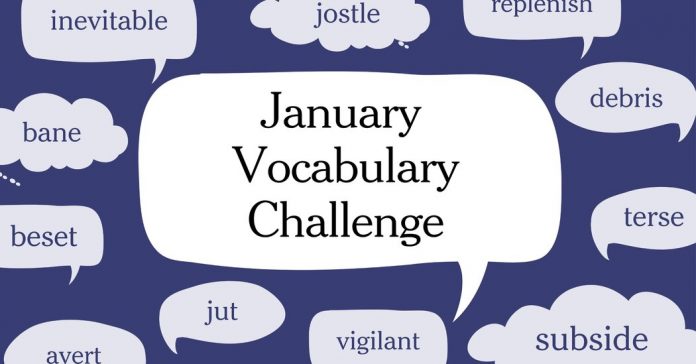
When you hear the words jostle, replenish and debris, does a story come to mind?
We want to read 50-word stories in which students incorporate some of the Words of the Day we published in December. We will publish our favorite submissions as examples for the March challenge.
While English language learners are encouraged to enter all of our vocabulary challenges, the one this month is a special opportunity open only to middle and high school students who are emerging writers, readers and speakers of English.
Any student who is currently working toward English proficiency is eligible, including students in E.L.L. and E.S.L. classes or programs. Find more information about eligibility below, and email LNFeedback@nytimes.com if you have questions.
Start by getting familiar with the vocabulary words published in December. Next, create a 50-word piece of writing in which you use some of the vocabulary words. You can write a whole story around one word or include a few.
Submit your story by commenting on this post between now and Jan. 31. Here is what we are looking for:
It is most important that you use each vocabulary word correctly according to its definition.
We are looking for entries that demonstrate your understanding of the vocabulary word or words you choose.
We are looking for pieces of writing that are creative and original.
The Vocabulary Words
Your piece of writing should draw from the words below. Each one links to a Word of the Day post that includes the definition of the word and an example of how it has been used in The New York Times. To find more usage examples, consult the Vocabulary.com online dictionary.
Your story must be 50 words or fewer and use at least one of the listed vocabulary words.
Identify your vocabulary words by writing them in ALL CAPS. (See the bottom of this post for examples.)
Submit your entry as a comment on this post by 11:59 p.m. Pacific time on Jan. 31.
It is acceptable to use a word in a different tense or to use the plural of a word that is listed in the singular.
Eligibility: Students in E.L.L., E.S.L., E.S.O.L., E.A.L. and E.F.L. classes or programs are eligible, as well as any student who is currently working toward English proficiency. Email LNFeedback@nytimes.com if you have questions.
Minimum Age Requirements: Middle and high school students ages 13 and older in the United States and Britain, and 16 and older elsewhere, can submit by commenting on this post. Teachers and parents can submit on behalf of students in middle or high school who do not meet these age requirements. If you are submitting on behalf of a student, please include the student’s name at the bottom of the comment.
Please submit only one story per student. You cannot edit your comment once it has been submitted.
November Challenge Winners
Congratulations to the winners of our November challenge, who excelled at using each vocabulary word accurately according to its definition. In addition to the winners included below, we want to give honorable mentions to Sofía from Kuwait, who wrote a memorable homage to Freddie Mercury, and Nissan from Dallas, whose story was a thriller.
Lincoln Gonzalez, age 14, South Miami Middle Community School, South Miami, Fla.
A while back, at my ALMA MATER, I was in a heated debate with a friend of mine. It was over something stupid; I can’t remember VERBATIM. He was so FERVID about it; he almost exploded with passion. I finally ALLAYED the situation, and we apologized profusely. We’re still friends today!
Kate Rowberry, age 17, Granite Bay High School, Granite Bay, Calif.
MEANDERING through the vegetable aisle, I encountered my DOPPELGÄNGER looking at the bell peppers. To ALLAY the awkwardness, I HASTENED past her, but we INADVERTENTLY got in the same checkout line. My LUGUBRIOUS look-alike turned to me and said VERBATIM, “You look like my twin sister who passed away recently.”
Sarah Pierson, age 15, Hoggard High School, Wilmington, N.C.
My head was down as I MEANDERED through the streets. Bonk! I INADVERTENTLY ran into someone! I HASTENED my step. Don’t turn around, don’t turn around. I turned around. I was met with the FERVID glare of an old man. I cowered before running away, never turning back.
This is the mantra that creativity expert, Professor Anne-Laure Sellier takes into the world of business, and also into the classroom. Her Boosting Creativity course at HEC Paris is among the most popular on the school’s online MSc in Entrepreneurship and Innovation program, and helps participants to tap into hidden powers they never knew they had…
Forget about gifts from the Gods or being struck by ‘the muse’, we all have the power to think creatively
“One of the reasons that we are only teaching creativity now – and HEC Paris is one of the few business schools in the world that does so – is that for the longest time, there was a widely-held belief that it simply can’t be taught. For most of history, our species has believed that creativity was God(s)-given, and there was not much that you can do about that. We now know this is at least partly nonsense: research provides enough data to know that you can indeed teach creativity. Can I turn you into Leonardo da Vinci in 18 hours? Of course not, but there is a sweet spot in the middle where I can help someone be more creative – reliably – in a relatively small amount of time.”
Learning this skill is incredibly attractive in a business setting
“Whatever your starting point, what we know about creativity today can make you a better creator – which is obviously a very precious asset for entrepreneurs and large companies alike, who have to keep innovating all the time in an increasingly competitive environment. Da Vinci did not have that problem – he could come up with 15 paintings in his lifetime and get away with that for 500 years. In business today, you need to innovate; you need to offer greater value than your competitors all the time using the capabilities you have.”
CEOs have rated creativity as their #1 business asset
“There was a report in 2010 which is still very up to date and relevant because I’m not aware of anything like it since. It was produced by IBM and was called Navigating Complexity. It was a big survey of 1,500 top CEOs and public leaders around the globe, and they were asked what skills are critical to successfully navigate today’s business world. By far the most important skill that these leaders highlighted was creativity. They did not detail what creativity meant to them – but they agreed it was the most important skill to have in business today.”
Unravelling the meaning of creativity is critical
“I spend a full session at the beginning of my class talking about what creativity actually means because the word itself escapes most participants. What exactly are we talking about? The truth is we’re still only beginning to understand how human creativity functions, but one of the few things we can agree on at this point is that a creative output is something that is both novel and useful. Cognitive scientists have gained other reliable insights, which are solid enough to get integrated into our teaching. But let’s be clear: it’s a bit like we’re taking a few steady footsteps on top of a big iceberg, and we have no idea how deep it goes underwater. We’re only at the very beginning of understanding how creativity works; it remains one of the few human cognitive functions still escaping artificial intelligence.”
We can learn a lot from deconstructing past creators to understand their creative process
“One thing we sometimes do in class is deconstruct famous creators. Consider Steve Jobs, for example. I greatly admire him, but I encourage participants to question a few myths about him. Not only was he incredibly creative, but he was also incredibly lucky, and trained to get to the insights that he needed. He didn’t just go, ‘Hmm, touchscreens are going to be the way forward; he knew touchscreens would work because he had a deep knowledge of anthropology, and he understood that one of the greatest pleasures of mankind, going back as far as the times of cavemen, is to actually apply your hand directly to draw, as they did on cave paintings. He had a different perspective from most people in his industry, and that definitely gave him an edge.”
One way to teach creativity, is through ‘provocation’
“Many participants put up their hand when I ask them who isn’t creative, which is always fun to watch land on the group… and we then dig into why that just happened and seek to understand where that way of thinking comes from. There’s a lot we can do by making people realize that the thing that is holding their creativity back is themselves, really, and the way they were wired by their education and more generally, the environment they grew up in. My classes are all about experience, and I try to make you feel at least once in the course – but ideally several times – that your thinking is being impacted by the things I get you to do differently from what you usually do. Take, for example, brainstorming, which is something that most companies do all the time even though scientists have long known that brainstorming is a suboptimal ideation process on average.”
The idea of taking things away to add value is another eye-opener
“One of the creativity techniques we work on involves thinking about creating something new by removing value from the existing world. Less is more. So, you take a phone, for instance, and you remove a feature instead of adding new ones, which is what every engineer does to differentiate their phone. When you remove a feature, it seems at first that you have a less valuable phone, but then you start thinking about what that seemingly inferior product – when viewed in the context of a social world – might do better. So, in the phone example, maybe I remove the ability to call, and suddenly you have the first phone for children where parents can call them, but they can’t call out (unknown others or wasting time calling the little friends they just left at school). Of course, it’s a niche, but you end up creating superior value for that niche.”
Another way of mixing things up is by getting students to blend unrelated concepts
“A former student reached out to me two days ago because she had created intergenerational daycare for children inside retirement homes in France. She went from understanding that there are not enough places in daycare centers in France, meaning that thousands of families do not have a solution for their young children, while on the other hand, you have two-and-a-half million people who are over 85 and even more who are over 65, who are retired and alone. So, she had the idea to mix the two in a way that created value both for the old and the young – which is one of the exercises we do in class; to find existing value spaces that do not correlate and consider what happens if we force them to fit together. In the case of my student, she found a solution that allows the older generation to get a few hours a day of interaction with the children, reading to them and so on, while the little ones learn about respect and empathy – and it helps to address the childcare problem. She has 10 centers opening this year and the ones that have opened are already full. Look them up on Internet, the company is called “Tom & Josette”. It is a clear example that you needn’t reinvent the wheel to create formidable value. A big bulk of creativity stems from taking the existing and rethinking the building blocks.”
This article has been written by Professor Anne-Laure Sellier, for HEC Paris’ website. To learn more about the MSc in Entrepreneurship and Innovation program visit: https://www.coursera.org/degrees/omie or contact msie@hec.fr
If you work in tech and you’re having trouble building your team, you’re not alone. Not only are people quitting left and right, but there’s also a talent shortage.
As a result, tech companies are left competing for the same talent pools. Some have shifted to remote work to try to draw people in (or encourage them to stay). But over the years, more and more companies — global companies like Apple, Google, IBM, and even Tesla — are finding that dropping degree requirements for certain positions opens them up to a much wider pool of talented people. And when you think about it, this move is really a no-brainer.
Higher education is no longer a barrier: Knowledge is everywhere
College used to be one of the only places you could go to get the technical knowledge and skills you’d need to launch a career, but that’s no longer the case. Learning opportunities abound online, and every day, more and more people are taking their learning into their own hands.
For instance, take Giacomo S., a Codecademy learner who taught himself JavaScript to fix a client’s problem while working in marketing and ultimately discovered a passion for coding. Since then, after taking courses on web development, he’s launched a career as an engineer and worked for companies like Facebook and Deutsche Bank. And he’s not alone! Check out our Learner Stories page to find others like Giacomo.
Danny Roberts, Senior Technical Recruiter here at Codecademy, points out that self-taught developers also have an added advantage. New tech emerges all the time, and colleges rarely update their curriculum accordingly. Per Danny:
“Technical skills are constantly evolving much faster than traditional organizations can follow. So, even if a candidate has a traditional 4-year degree, they’re still most likely augmenting their learning outside the classroom to learn the latest tools and trends.”
Plus, while learning with the latest tools, they’re also creating projects to build experience — which brings us to our next point.
You can retain more knowledge when you learn by doing
Self-taught developers also have an advantage because of the immediacy of their learning.
Say you have two candidates. One is a CS grad who’s three months into their first internship. The other is a self-taught developer who spent the past year building different websites to flesh out their portfolio. Who do you go with?
Assuming they’re equally skilled, either candidate could be a great choice, but research suggests that the self-taught developer might be more familiar with the critical knowledge and skills they’ll use on the job.
Hermann Ebbinghaus was a psychologist who developed The Forgetting Curve, which illustrates how quickly we forget new information that isn’t immediately relevant. College generally involves studying one subject intensely (or not-so-intensely) for a semester, then moving on to something new. So, unless they’re immediately putting their knowledge to use, college students arguably may not retain as much knowledge as one would expect.
On the other hand, those who are self-taught usually start with a goal in mind — whether that’s finding a new job or advancing in their current one. As a result, their training is often more tailored, and they immediately put their knowledge to good use by building projects and portfolios, which helps with retention.
Of course, this isn’t to say that one way of learning is superior to another — individual people have their own learning styles. It’s just that we don’t often talk about the pros of less traditional hands-on learning, so it’s worth considering the specific benefits that come with it.
Embracing equity: The bias in degree requirements
For many roles, degree requirements only serve to exclude potential candidates — which means they lose out on opportunities while companies lose out on great talent purely because people don’t all fit into the same cookie cutter. Ultimately, unnecessary degree requirements reinforce social inequities when alternatives are just as valid. As Danny explains:
“In an era where your traditional university is increasingly out of reach for your average person from a cost perspective, it’s important to consider why that degree requirement exists. With that in mind, it’s even more important if an organization is serious about diversity. Guess who can typically afford the traditional university experience? Let’s just say it’s not often students who come from diverse backgrounds.”
In an article for NPR, Byron Auguste, economist and CEO of [email protected], sheds more light on the issue — explaining how arbitrary degree requirements “screen out 70% of African-Americans, 80% of Latinos, and 80% of rural Americans of all races.”
Dropping unnecessary degree requirements helps under-privileged groups obtain more gainful employment, and it’s a great way to demonstrate your commitment to DEI (Diversity, Equity, and Inclusion). And, according to Danny, it also opens the door to valuable new perspectives.
“Particularly here at Codecademy and other learning platforms, candidates who have been on the journey of self-driven learning know the particular pain points and challenges that arise. Therefore, they can potentially really empathize with and build an outstanding experience for those in the same shoes.”
Still, embracing equity involves more than dropping degree requirements. Mindful onboarding and ongoing education helps set people up for success, and this can be achieved through tools like Codecademy Teams and Teams+ or even providing structured on-the-job mentoring opportunities.
There’s a strong case to be made for dropping degree requirements, and it’s worth considering if you’re looking to maximize your pool of candidates. For more tips on building a strong team, check out the articles below:
In August of 2011, my co-founder Ryan and I started Codecademy to create an easier, more accessible way for people to learn technology skills. While the world and our business have changed so much since then, our mission remains the same: to empower millions of people to build inspiring careers in technology.
Now, in our tenth year, we’re entering a brand new chapter – one that allows us to double down on that mission. We’re thrilled to be working together with Skillsoft, who announced that they have entered into an agreement to acquire Codecademy.
There are many reasons why I’m excited about this deal, and I’m especially excited about what it means for our learners. Working with Skillsoft allows us to accomplish more, and in less time, than we could as an independent company. That means we can do more and build more for our learners.
Why Skillsoft?
Skillsoft is one of the largest and longest-standing leaders in digital learning, working with 75% of the Fortune 1000 to equip their workforces with the skills of tomorrow. After originally talking to them about a potential partnership, we quickly realized that we not only shared the same vision, but that we’d be able to achieve that vision even faster by working together as one. Like Codecademy, Skillsoft believes in a world where every person and every team has the opportunity to realize their full potential through learning, and together we will continue building that world.
Codecademy’s goals align with Skillsoft’s strengths. As we look ahead to 2022 and beyond, their resources and expertise will empower us to achieve the following:
Build our curriculum: We will leverage Skillsoft’s extensive content catalog to expand our offerings in domains like cybersecurity and cloud computing, as well as explore new modes of learning.
Scale our work with businesses: We will leverage Skillsoft’s B2B relationships and expertise to get our hands-on learning platform in front of the biggest companies in the world.
Grow globally: We will work with dozens of Skillsoft’s global teams to reach fast-growing international markets like India.
For Skillsoft, Codecademy represents the future of digital learning – how millions of people and organizations can thrive in our tech-enabled world. They are working with us because they believe in our product and because they want to scale it to thousands of companies and their workforces worldwide. I’m incredibly proud of what we’ve built so far, and am excited for what we’ll continue to build in this next chapter.
What’s next?
Nothing will change about the Codecademy platform and learning experience in the immediate future – just as our mission and goals are staying the same. Until the deal closes, it’s business as usual, and after the closing we look forward to accelerating our growth and doubling-down on our mission. As we add more resources to our team, we’re excited to deliver even more products, curriculum, and learning experiences that will help our learners thrive throughout their entire careers.
When I think about Codecademy in the future, I envision a lifelong companion to every person working in technology – which will be most people in the future. We can help someone learn their first programming language and discover the career path that’s right for them. We can connect them directly to potential employers after helping them become job-ready. We can help them build skills that will make them better at their job, and help their companies prepare for the future. We can do all this through our interactive learning platform, as well as brand new experiences like instructor-led training, coaching, and mentoring.
This has been the vision of Codecademy all along, and combining with Skillsoft gives us the resources to achieve it faster than we’d be able to on our own. Our joint mission is to help people lead better careers and better lives, and we’ve never been in a better position to do just that.
I am hugely grateful to the Codecademy team, whose hard work and commitment to our mission made this opportunity possible. You helped us build the best technical learning platform in the world, and I look forward to seeing what you’ll achieve with greater resources and a bigger platform.
To everyone who’s been on this journey with us so far, thank you from the bottom of my heart. I can’t wait to see where we go from here.
Oh my goodness, don’t these cookies look delicious? This pretty pastels color palette uses soft and muted colors, including blue, green, and pink. When used in web design, it can create some of the most elegant designs. It is a combination you must check as graphics that use washed-out, desaturated colors appear clean and light and are amazingly easy on the eye.
Pretty Pastels Color Palette
It is our second in a row color palette featuring some pastel shades but I think such soft colors are great for winter. Below I have created for you a simple mood board featuring today’s color combination. It is in perfect Pinterest format, so feel free to pin it for later.
See our collection of other gorgeous color palettes by visiting our color palette section.
What do you think about our pretty pastels color palette combination? Where would you use it? I think it will look great both for interior design and digital arts. There are really no limits here. I believe that soft pastels may be worn even during wintertime when paired with the classic beige color.
We would love to hear your thoughts, so make sure to share them in the comments below.
Lastly, learn about the power of color in blog design in our blog post to see how important colors are in all the projects you create.
If you like pastel colors, make sure to check our Blogger Templates where you will find lots of pastel shades like blue and pink.
There is simply no shortage of design possibilities when it comes to bringing this pretty color palette to life. We even use some of them in our planner!
Life Planner
(pastel green)
Blog Planner
(pastel brown)
If you create something using today’s color palette don’t forget to share it with us!
Even as the worst of the early testing supply shortages have eased, and states have received federal money, including $10 billion from the American Rescue Plan, to implement school-based Covid testing programs, many school districts are still floundering.
… The rising demand for testing has also strained supplies. In Fresno, Calif., the school district has been unable to replenish its stock of rapid antigen tests and has had to cut back on its testing of student athletes as a result.
Daily Word Challenge
Can you correctly use the word replenish in a sentence?
Based on the definition and example provided, write a sentence using today’s Word of the Day and share it as a comment on this article. It is most important that your sentence makes sense and demonstrates that you understand the word’s definition, but we also encourage you to be creative and have fun.
Then, read some of the other sentences students have submitted and use the “Recommend” button to vote for two original sentences that stand out to you.
If you want a better idea of how replenish can be used in a sentence, read these usage examples on Vocabulary.com.
Students ages 13 and older in the United States and the United Kingdom, and 16 and older elsewhere, can comment. All comments are moderated by the Learning Network staff.
“It wasn’t a helicopter. And it wasn’t an airplane. It was a _____ between the two, with a curved hull, two small wings, and eight spinning rotors lined up across its nose and tail.”
Which one of these words — breakdown, chaos, cross or mix-up — best completes this sentence from a New York Times article on flying cars? Find out here.
This question is drawn from one of this fall’s interactive Vocabulary in Context quizzes, a new edition of which publishes every Thursday morning. Each takes the first several paragraphs of a fun New York Times article, drops out words, offers choices for the blanks, and gives more usage information about the correct answer. Each quiz then ends with a reading comprehension question that asks students, which short summary would you say best captures what the piece is about?
Below, we’ve collected all the quizzes published so far and sorted them into two rough categories: “more difficult” and “less difficult.” That’s because we’re trying to find the right balance — quizzes that are challenging, but not daunting — and we’d appreciate your help.
Let us know what you think, either by posting in the comments or by writing to LNFeedback@nytimes.com. Are they too hard? Too easy? Too long? Too short? Have you used them in your classroom? How have your students responded? And, as we continue these quizzes, are there specific Times articles you’d like to see us use?
Meanwhile, don’t forget our Vocabulary Video Challenge that runs through Jan. 12; our monthly Vocabulary Challenges, which are listed on this calendar, and, of course our Vocabulary column where you can find all of the above, plus our Word of the Day.
12 Quizzes
We’ve divided our quizzes into “less challenging” and “more challenging” based the difficulty level of the article each draws from, and on the scores of previous quiz-takers. But since reading is a complex activity that depends in part on background knowledge, your mileage may vary.
Use your imagination to write the opening of a short story or poem inspired by this illustration — or, tell us about a memory from your own life that this image makes you think of.
Post it in the comments, then read the related article to learn more.
Want more Picture Prompts? Find them all in this column.
Students 13 and older in the United States and Britain, and 16 and older elsewhere, are invited to comment. All comments are moderated by the Learning Network staff, but please keep in mind that once your comment is accepted, it will be made public.