fbpx
Home Blog Page 1207

Lesson of the Day: ‘The Exquisite Angst of Applying to College in a Deeply Anxious Year’

0
Lesson of the Day: ‘The Exquisite Angst of Applying to College in a Deeply Anxious Year’

Students in U.S. high schools can get free digital access to The New York Times until Sept. 1, 2021.

Featured Article: “The Exquisite Angst of Applying to College in a Deeply Anxious Year,” by Anemona Hartocollis

As a new season for college applications begins, the coronavirus has upended the process, forcing millions of students to learn remotely, canceling college tours and standardized testing dates, and preventing legions of students from participating in sports and other extracurricular activities.

No matter where you are in the college admissions process, this lesson can help you understand the steps for applying — and think about how this year’s disruptions might impact the future.

Are you or is anyone you know applying to college right now? How is it going? Is this article right that “the level of uncertainty and disruption is off the charts”?

Alone or with others, brainstorm a list of all the steps, big and small, a high school student traditionally takes as part of the college application process. Then, go back through that list and put an X through each one that has somehow been disrupted by the coronavirus pandemic. How many of the items on your list have not been affected? Are there any positives to this disruption, in your view?

Read the article, then answer the following questions:

1. What is the Common Application, and why did it add an optional essay this year?

2. Why are many students planning to wait as long as they can to apply this year, and why are low-income and first-generation students especially hesitant? Why might that mean a “severe disruption” to the business of many colleges and universities?

3. Why might some students be applying to even more colleges than normal this year? Why are test-optional schools particularly popular?

4. How are some colleges making up for the lack of test scores in evaluating prospective students? If you are applying now and are missing something that you had hoped to have on your application — whether testing, a sport, an extracurricular activity or anything else — how are you making up for it?

5. How has online outreach made connecting with a college both harder and easier than when visits, interviews and information sessions were done in person?

6. This article features several different applicants and their experiences this year. Which story do you relate to most? Why?

Option 1: Have a discussion with an adult or another student about your own college journey.

Where are you in the college admissions process? How stressed about it are you? What questions do you have?

Try one or more of the activities in “Thinking About College: Activities Adults and Teenagers Can Do Together,” a resource which invites students to work with an adult in their lives to make sense of the college process. You can begin with a broad conversation on your hopes for college, read some practical articles from The Times together, or create a to-do list together to manage the next steps.

Alternatively, you can set up an online interview with another student who may have advice or information you can use. For example, if you are a senior, you might reach out to a current student at a college you’re applying to. If you are younger, you might interview a senior you know who is going through the process now. What have they learned so far? What advice do they have?

Option 2: Predict how the coronavirus may change the college application process permanently.

What aspects of the college application process do you think may be permanently changed thanks to this year’s disruptions? Why? For instance, do you think some of the colleges that went test-optional will remain so? Do you think virtual visits and interviews will become much better and more common?

Read the Op-Ed “The Coronavirus May Change College Admissions Forever” by Frank Bruni. Then revisit your own predictions based on what you read in the Op-Ed. Do you have any revised predictions?


About Lesson of the Day

Find all our Lessons of the Day in this column.
Teachers, watch our on-demand webinar to learn how to use this feature in your classroom.

What’s Going On in This Picture? | Nov. 30, 2020

0
What’s Going On in This Picture? | Nov. 30, 2020

Students in U.S. high schools can get free digital access to The New York Times until Sept. 1, 2021.

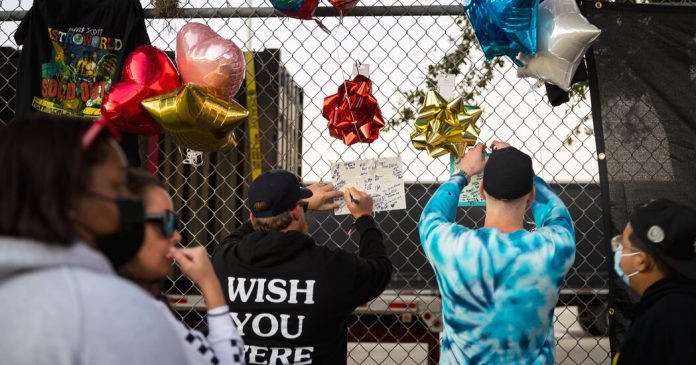
1. After looking closely at the image above (or at the full-size image), think about these three questions:

2. Next, join the conversation by clicking on the comment button and posting in the box that opens on the right. (Students 13 and older are invited to comment, although teachers of younger students are welcome to post what their students have to say.)

3. After you have posted, try reading back to see what others have said, then respond to someone else by posting another comment. Use the “Reply” button or the @ symbol to address that student directly.

Each Monday, our collaborator, Visual Thinking Strategies, will facilitate a discussion from 9 a.m. to 2 p.m. Eastern time by paraphrasing comments and linking to responses to help students’ understanding go deeper. You might use their responses as models for your own.

4. On Thursday afternoons, we will reveal at the bottom of this post more information about the photo. How does reading the caption and learning its back story help you see the image differently?

Lesson of the Day: ‘Old Dogs, New Research and the Secrets of Aging’

0
Lesson of the Day: ‘Old Dogs, New Research and the Secrets of Aging’

7. Which research was most fascinating, memorable, provocative or surprising to you and why? Does it confirm or revise your perspective on how dogs age? What questions about how aging in dogs, animals in general or humans do you still have?

Option 1: Tell Us About a Meaningful Relationship You Have Had With a Dog — or Another Animal.

Choose one or more of the following writing prompts to respond to:

  • How important are animals in your life? What do you think explains your personal connection with animals? Do you consider yourself a dog or cat person — or neither, or both?

  • Do you have a favorite story or experience with a dog or other animal? If yes, briefly recount it.

Option 2: Create an Annotated Timeline of a Pet.

Using the graph from the warm-up activity as a springboard, create an annotated timeline comparing the stages of life of an animal and a human. Your animal can be a dog or any pet that you have observed over time. For the human, you can use a celebrity, other than Tom Hanks, or an older friend or family member.

Your timeline should have at least four significant points, events or stages in the life of both the animal and the human of your choosing. For each point, include a photograph or drawing and a short description of the physical, social or emotional characteristics at that stage (such as playing, eating, sleeping patterns and habits, or changes in color, size, strength or personality).

For more information about dogs and other animals’ growth and development, you might start by scrolling through The Times’s Dogs, Pets and Animals topic pages. Or, look at some of the resources and websites discussed in the article, such as the Dog Aging Project.

When you are done, share your timeline with your class and reflect together: What similarities and differences do you notice in the various timelines? What was most challenging about the task? What did you discover about the growth and aging of animals and humans? What new questions emerged about the process of aging in animals?

Option 3: Write an Ode to a Dog or Other Animal.

Write an original poem or song about an animal. It can be of any length or style and can celebrate the life of a dog or another animal at any stage of life.

Introducing Four New Online Master’s Degrees from HSE University

0
Introducing Four New Online Master’s Degrees from HSE University

By Betty Vandenbosch, Chief Content Officer, Coursera

Degrees in business, technology, and data science will enable students around the world to prepare for in-demand jobs

The “future of work” is already here. According to the World Economic Forum, the global workforce is automating faster than expected, displacing 85 million jobs in the next five years. But this revolution is also creating 97 million new jobs across fields like data science, engineering, business development, and more. Citizens everywhere need to urgently reskill to remain competitive in the new labor market.

To help learners around the world gain job-relevant skills, we’re eager to announce four upcoming online degrees from HSE University, a renowned higher education institution in Russia. With upcoming English-language master’s programs in business analytics, computer vision, data and network analytics, and finance, HSE now has five fully online degrees on the Coursera platform.  

The new programs are as follows:

  • Master of Business Analytics — This degree will help students develop expertise in global financial markets, corporate finance, and risk management. Students will have access to virtual labs and applied projects by experts from HSE School of Finance’s global network. Graduates of the program will be prepared for roles in consultancy or financial management at investment banks, investment funds, and accounting departments.
  • Master of Computer Vision — This program will cover the most state-of-the-art methods in deep learning to train students for roles as computer vision engineers and scientists. The curriculum is based on the latest advanced research in the field and was designed by world-class scholars at HSE as well as industry experts from leading companies like Huawei, Intel, and Harman.
  • Master of Data and Network Analytics — Designed for applicants of all backgrounds, this program will approach data analytics from an applied perspective, teaching students to use cutting-edge tools to solve real-world problems. Graduates of the program will be prepared to pursue PhD programs at leading universities or data science careers at top global corporations.
  • Master of Finance In alignment with the CFA© Institute’s program syllabus, this degree will incorporate the most relevant innovations and developments in the financial services market. The program covers areas such as quantitative methods, financial management, alternative investments, and more, equipping students for careers at international banks, investment funds, consulting groups, and other financial institutions. 

“In the current conditions of rapid change and evolving digital technologies, learners everywhere need access to top-quality online degrees to develop the skills necessary for success in today’s labor market,” said Sergey Roshchin, Vice Rector of HSE University. “We’re excited to strengthen our partnership with Coursera to offer learners four new job-relevant degree programs, many of which were designed with direct input from global industry leaders.”

Ranked the No. 1 Russian university by Forbes, HSE is one of the most prestigious higher education institutions in the region and has made a concerted effort to expand access to its expertise through online learning. Since 2016, HSE has launched over 100 courses and seven Specializations on Coursera, making it one of the top 10 universities in terms of number of courses on the platform. 

Last year, HSE launched Russia’s first top-tier online Master of Data Science, which has seen enrollments from students across 36 countries and has a student satisfaction score of 94% for the fall 2020 cohort. We’re honored to expand our partnership with these new programs and reach even more learners across the globe. 

HSE welcomes applicants for the Master of Business Analytics, Master of Computer Vision, Master of Data and Network Analytics, and Master of Finance. The first cohort will begin in September 2021.

For more information on the new degrees from HSE and additional degree programs on Coursera, please visit www.coursera.org/degrees 


Thiha Kaung Set: “Before Alison, I was just a job seeker. Now, I am the Manager of a Local NGO.”

0
Thiha Kaung Set: “Before Alison, I was just a job seeker. Now, I am the Manager of a Local NGO.”
Thiha Kaung Set is an Alison Learner from Myanmar. Thiha has completed over thirty courses with Alison across a wide range of areas. His newfound skills and knowledge have resulted not only in a job, but in the opportunity to share his learning with others through his work with an NGO focused on empowerment and development.

“My name is Thiha Kaung Set. I am a Manager and Trainer at SEED for Myanmar, which is a registered, youth-led social impact organization in Mawlamyine, Mon State, Myanmar. (SEED stands for Scalable Engagement, Empowerment & Development.) I also work as a freelance trainer and facilitator. 


I have been learning with Alison since 2015. The first course I took from Alison was the Diploma in Human Resources which was recommended to me by my brother. I am a graduate who finished school with a Bachelor of Technology but I am really interested in Management. I decided I wanted to change my learning and career path so I started learning Management with Alison.


Before studying with Alison, I was just a job seeker who was looking for a job. Now, I have finished over thirty courses from Alison and I am the Manager of a Local NGO in Myanmar.

I am going to learn everything from Alison which can help me to expand my knowledge and to develop my skills. Currently, I am preparing to learn some Entrepreneurship courses with Alison. If someone asks me to recommend the best place to study, I recommend Alison. Alison can help you a lot, not just in learning but also in career development.”

Abiola Ajibade: “I strongly recommend Alison because of the rich range of courses.”

0
Abiola Ajibade: “I strongly recommend Alison because of the rich range of courses.”

“My name is Abiola Ajibade and I’m from Nigeria. I am a high school teacher by profession.” 

How did you learn about Alison?

I was introduced to Alison by a close friend.

What was your first course on Alison, and why did you choose it?

The first course I studied with Alison was Understanding Student Development and Diversity. I chose this because I want to relate better to my students in class, as I know full well that they come from different backgrounds. I want to be able to assist them as they grow every day. 

How have Alison courses affected your career?

My first Alison course helped me to understand that there is no such thing as a difficult child. You just need to be able to adjust to their needs.


What’s your favourite way to relax from studying?

To take a break from studying, I like to go through the social media to know what is happening around me. 

If you could learn absolutely anything in the world from an Alison course, what would it be?

If it were possible, I would love to study a course on how to prevent students from bullying each other.

What would you say to someone if they asked you about Alison? Would you recommend it and why?

I have fallen in love with Alison’s detailed courses and the way it helps me to unravel difficult topics. I strongly recommend Alison because of the rich range of courses.

Word + Quiz: expedient

0
Word + Quiz: expedient

adjective: appropriate to a purpose; practical

adjective: serving to promote your interest

noun: a means to an end; not necessarily a principled or ethical one

_________

The word expedient has appeared in 46 articles on NYTimes.com in the past year, including on Oct. 13 in “Using the Pandemic as an Opportunity to Lose Weight and Get in Shape” by Abby Ellin:

Another reason many people gained weight is that they stopped planning their meals in advance. Without planning ahead, they would just grab whatever was available.

“Before shelter in place they would prep their meals and sort of had a plan,” said Dr. Rami Bailony, the co-founder and chief executive of Enara Health, a digital membership weight loss clinic. “Once Covid hit they thought they could cook something up that was healthy. But once you’re thinking about eating in the moment you tend to go with what’s expedient.”

When the pandemic started, Mindy Bachrach, 58, a home health occupational therapist in Henderson, Nev., soothed herself with sugary and high fat foods. As an essential worker, she was working pretty much all of her waking hours. “I have a weird job, I eat in my car all the time,” she said. “If I don’t prepare very carefully, I end up getting fast food, which I don’t even like.”

_________

What Are You Thankful for This Year?

0
What Are You Thankful for This Year?

Students in U.S. high schools can get free digital access to The New York Times until Sept. 1, 2021.

Do you have a tradition at Thanksgiving of sharing what you are thankful for? Is it easy for you to name the things you are thankful for this year? Or is it difficult to feel gratitude in a year of loss and pain?

We know that Thanksgiving will be different this year as the coronavirus pandemic continues and cases increase across the country. Some families will not be able to gather in person, while others will be mourning the loss of loved ones.

Have these factors — and others — made you think differently about Thanksgiving in 2020? Have they changed what you are grateful for this year?

In “Being Thankful and Hopeful in This Weird and Terrible Year,” Dr. Perri Klass writes about how she is thinking about gratitude in 2020. She says that Thanksgiving is her favorite holiday because “what it celebrates is embedded in the day”:

[F]amily making the trip, crowding around the table, eating together, enacting silly rituals, and then (let’s admit it) going away again. It’s about traditions, but also innovations, about continuity, but also about marking change, as the people at the table grow up, and as we remember the ones who are gone.

But not this year. You know where I’m going with this. This year it’s all about keeping everyone healthy so we can do all that next year. This year we’re grateful to those who are not making the trip, crowding around the table, and all the rest. In my own family, an unbroken stretch of more than three and a half decades is about to be broken. But it’s not a year for mourning that we’re doing things differently.

What this is, is a weird and terrible year, a pandemic year, a year for getting ourselves and those we love through the winter as well as we can, for thinking hard about people who are bearing the greatest burdens and how to help them, and for waiting hopefully for better times.

Dr. Klass concludes the article by sharing some of the things that she is thankful for this year:

So in the interests of doing things differently this year, to mark a weird and terrible year, here are some things I’m grateful for. Some you know: dedicated frontline workers, steadfast parents everywhere getting their children through, smart epidemiology, vaccine research, the various kinds of privilege and protection which keep many people I love comparatively safe, the selflessness and mission that put many people I love at a certain amount of risk.

I’m grateful for deadlines, and pressures, which get me writing, since I didn’t turn out to be one of those people who just feels motivated by the at-home pandemic time to get really creative. Concomitantly, I’m grateful for guilt, especially the guilt that goes with overdue deadlines, because that really gets me out of bed in the morning, even when the news is bad.

I’m grateful for knitting, which has helped me with my Zoom fatigue, and for novels (especially to Anthony Trollope for writing so many of them and to Persephone books for republishing so many authors I hadn’t previously encountered), which take me into other worlds and other scenes more effectively than anything else (and then make me feel guilty for reading novels when I have deadlines overdue).

But most of all, I think, I am grateful for all those Thanksgivings past, and for the prospect of a better Thanksgiving in a better year — and I’m hopeful that will be 2021. I will not ask people to go around the table and announce what they’re grateful for, but honestly, there will be no need. If we get to that table, we will know.

Students, read the entire article, then tell us:

  • Dr. Klass describes this as a “weird and terrible year.” What three words would you use to describe 2020? Have these feelings made it easier or harder for you to feel gratitude? Why?

  • What are you thankful for this year? Who in your family or community are you grateful for? Can you think of other things — big or small — that have brought you comfort, security or joy?

  • In “What Are You Thankful for This Year?,” Melissa Kirsch writes: “Articulating what we’re thankful for is a radical act in the midst of a hard time. Turning our attention to the things we do have rather than what we don’t is a tough task, but a crucial one.” Do you agree with Ms. Kirsch’s statement? Do you think it is particularly important to express gratitude this year? Why or why not?

  • How often do you express your thanks? Only on Thanksgiving? Or all year long? How do you do you show gratitude in your daily life? Through words? Letters? Prayer? Meditation? Journaling? What does it feel like when you articulate the things you’re grateful for?

  • Many see Thanksgiving as a time to be thankful. But this year, some will be dealing with hardship because of the pandemic — loneliness, lost jobs, the death of loved ones. And in this moment of racial reckoning, others are wondering how to celebrate a holiday that has often ignored the nation’s violent treatment of Native Americans. Is it possible to acknowledge the pain that might come with this holiday while also feeling thankful and appreciative? How might you do that at your Thanksgiving table this year, if you’re celebrating?

  • Bonus question: Are you able to name what you are most grateful for in just six words? If you want, you can share your response with The New York Times to have a chance for your answer to be published.

Lesson of the Day: ‘Oxford’s 2020 Word of the Year? It’s Too Hard to Isolate’

0
Lesson of the Day: ‘Oxford’s 2020 Word of the Year? It’s Too Hard to Isolate’

Students in U.S. high schools can get free digital access to The New York Times until Sept. 1, 2021.

Featured Article: “Oxford’s 2020 Word of the Year? It’s Too Hard to Isolate” by Jennifer Schuessler

Every year, Oxford Languages, the publisher of the Oxford English Dictionary, chooses what it considers the “word of the year,” a selection that is meant to “reflect the ethos, mood or preoccupations” of the past 12 months. In 2019, it was “climate emergency.” In 2018, it was “toxic.” In 2017, it was “youthquake.” But this year is different. Instead of crowning a single word as the winner, Oxford has chosen to honor the coronavirus pandemic’s swift and widespread affect on the English language.

In this lesson, you will learn about the many ways that this year has changed the English language, according to Oxford’s report. Then, you will consider your own choices for the Word of the Year in 2020.

The pandemic has dominated public conversation over the past year, and given us a new collective vocabulary almost overnight.

We’re using some words and phrases more than we ever have before (“social distancing”) and in new and different ways (“remote” is no longer most associated with “village” or “island” but with “learning” and “working”). We’ve even created new words that are uniquely suited to this moment (“doomscrolling,” anyone?).

What are some of the ways the year 2020 has changed the way you talk?

Brainstorm a list of words or phrases you’re using now more than ever before, or words you’ve begun using for the first time this year. You might also consider how you’re using old terms differently (for example, “stay-at-home”). Slang, abbreviations, emojis and portmanteaus (blend words, like “infodemic,” “zoombombing” and “coronapocalypse”) are welcome!

If you are in a classroom context, compare your list with those of your classmates. What patterns or commonalities do you notice? What are some of the most significant ways in which the year 2020 has had an effect on the English language?

Read the article, then answer the following questions:

1. Why did Oxford Languages choose to forgo the selection of a single word to represent 2020?

2. How does Oxford typically select its word of the year? On what data and evidence does it base its choice?

3. Ms. Schuessler writes that the pandemic has “given us a new collective vocabulary almost overnight.” What are at least three ways, according to the article, that the pandemic has had an effect on the English language? Give examples of each.

4. Why is the use of the word “coronavirus” this year unprecedented?

5. How would you describe the tone of the most-used words in 2020? How does that compare with Oxford’s short lists from years past? What do you think could explain this difference?

6. Oxford says its selection for Word of the Year is meant to “reflect the ethos, mood or preoccupations” of the preceding year, while also having “lasting potential as a term of cultural significance.” Do you think its choice for 2020 meets this criteria? Why or why not?

What would be your choice for Word of the Year?

To start, return to the list you made in the warm-up and narrow it down to a short list of words that you think are worthy of the title of Word of the Year.

The coronavirus pandemic isn’t the only reason this year has been unprecedented; a national movement for Black lives, a contested presidential election, and record-breaking wildfires and hurricanes have all given us new and different words, phrases and ways of using language. So add any other words to your short list, related to these events or not, that you think meet Oxford’s criteria of reflecting “the ethos, mood or preoccupations” of 2020, and having “lasting potential as a term of cultural significance.”

Then, from that list, choose the word that you think best encapsulates the year 2020. (If you’re in a classroom context, you might hold a classwide vote.) Write a pitch to Oxford Languages explaining why you think this word deserves the title of Word of the Year based on its criteria.

If you speak a language other than English, what would your choice for Word of the Year be in that language? What effect has it had on the language and culture of the community it is spoken in? Would your choice be the same or different from your choice in English? Why?


About Lesson of the Day

Find all our Lessons of the Day in this column.
Teachers, watch our on-demand webinar to learn how to use this feature in your classroom.

Make a Poem From Newspaper

0
Make a Poem From Newspaper

Imitation is the best kind of flattery. All creative people, whether they be writers, artists, dancers, singers or actors, know that. Think about the performers on a TV show like “The Voice,” who sometimes perform the song of a judge they are targeting. Sometimes, it is imitation that gets them on the team of their dreams. It is the same with poetry.

Once you decide to write a poem, it often feels as if you are on a quest for the perfect word, the perfect image, or the perfect idea. In many ways a poem is a treasure and the writing of a poem is a dangerous treasure hunt. You never know what you might happen upon once you start writing.

Let’s take a look at a kind of poem called the cento. Cento is a 16th-century Latin word, meaning “patchwork.” A cento is crafted from “stolen” or found sources. Each line in a cento is taken from a source and putting these lines together weaves them into a patchwork of lines.

Many people think of the cento as a sort of “collage-poem.” A collage is made by combining images, texts and textures of different mediums and sizes. Similarly, a cento is created by patching together many found lines to create a poem.

Of course, stealing is terrible and every artist must give credit where credit is due, so at the bottom of every cento is a note where the writer lists the names of his or her source texts in the order that they appear in the lines of the poem.

For your cento, you will be using the At Home section to create a poem of five to seven lines. Your lines can be phrases from articles, headlines, quotes or even photo captions. To cut and paste your cento, follow the steps below.

The hunt

Hunt, or skim through the paper for lines that speak to you. Maybe your eye will settle on a sentence that uses interesting language, like a vibrant verb or a compelling adjective; maybe you will find a sentence that includes a description of an image you admire, or maybe you will find a line that refers to something that resonates with you, like a mention of a season, a color or an emotion. Keep hunting for your treasured lines. You may already have a topic in mind, or your topic may come to you once you have your lines cut out and you really examine them.

Keep track

Though this poem will be your own creation, the lines are not. Take out a piece of paper, or you can use a laptop or phone and write each line down and then write down the author of the article that line came from. You will need this later.

Thieve (or Cut)

If you are working from the print newspaper, cut out the lines you have found and place them on a flat surface. Or copy them to a document on your phone.

Connect

Look at your individual lines and start playing around with their order, as you stretch them out like snippets of yarn on a table or floor. Could one line jump off another? If so, put that pair to the side. Keep finding connections. Imagine these stolen lines to be threads you are weaving together in meaning, image or emotion.

Layout

Once you have laid out your lines, think about how to put them together. If you are still deciding what your poem is about, perhaps focus on an emotion, a place or an image. Your topic is up to you. Let these borrowed words spark something creative inside you.

When you’re ready, decide what line you want to start with and what line you want to end with. Laying these lines out as a frame will get you motivated. Then, start laying out your other lines. If something seems wrong, move it around, or cut it. You may even want to look for another line to substitute for it.

Paste

Paste your lines on paper or on a document, and you have your cento. Make sure to carefully write out, or type your sources.

Congratulations. You have now written a cento with the generous help of others!

Sources for Leah Umansky’s cento, drawn from the Nov. 8 issue of At Home: At Home cover, Courtney Rubin, Anna Goldfarb, Tara Parker-Pope, Joseph Burns, Anna Goldfarb, Anna Goldfarb