By Betty Vandenbosch, Chief Content Officer at Coursera
Today, we are pleased to announce that the IBM Cybersecurity Analyst, Data Analyst and Data Science Professional Certificates on Coursera have received American Council on Education (ACE®️) Credit Recommendations. Learners who complete any of these certificates are eligible to earn 10 to 12 college credits – the equivalent of up to four college courses.
American Council on Education (ACE) Credit Recommendations help learners gain access to academic credit for courses taken outside traditional degree programs. It is a powerful way of knocking down barriers for learners who have historically faced challenges accessing higher education. Although the decision to accept specific credit recommendations is up to each college and university, ACE recommendations make it easier for participating institutions to accept the certificates for credit toward a degree.
Entry-level certificates on Coursera, such as the three that have received ACE Credit Recommendations, do not require a college degree or prior tech experience. IBM’s certificates help expand opportunity by offering pathways—especially for non-traditional talent—to launch a career in cybersecurity, data analysis, and data science. Once learners secure a job in one of these growing fields, pursuing a college degree often becomes more feasible and can help with continued upward mobility.
Coursera and IBM are dedicated to helping individuals around the world access high-quality learning to prepare for digital jobs. We are honored to work with industry leaders such as IBM to expand access to meaningful higher education and employment opportunities.
Early in the pandemic, online learning shaped the response to a global crisis that changed the way we learn. More than a year later, new trends show that the combined force of online learning and remote work is creating a powerful opportunity to provide not just skills but more equitable job opportunities worldwide. To that end, I’m excited to present the second annual Coursera Impact Report.
With the double disruption of the pandemic and automation intensifying the unemployment crisis, people everywhere need to develop new skills for a digital future. Over 20 million new learners have come to Coursera in the past year to access world-class learning. The highest growth came from regions where higher education infrastructure is severely constrained in its capacity to meet the demand of a growing population. Growing collaboration between universities, industry, and governments to address the skills shortage through online learning is shaping a new and inclusive lifelong learning model.
Coursera is honored to be a platform that individuals and institutions around the world trust to learn the skills required to navigate change and disruption. This year, Coursera earned B Corp™ certification for meeting rigorous standards of social and environmental performance, accountability, and transparency. We also converted to a Public Benefit Corporation. The transition underscores our deep commitment to making a positive impact on society.
As the 2021 Impact Report affirms, offering flexible pathways to skills and credentials that prepare people for remote and digital jobs can pave the way for talent to rise from anywhere in the world. Together with our partners, we’re excited to continue our efforts to fulfill this promise in our quest to build a more just world.
The world of cybersecurity is constantly evolving. To stay on top of the latest developments, it’s all about who you know — or, who you follow on social media.
Cybersecurity is all about keeping digital assets safe, whether they belong to an individual or an organization. While articles and videos from cybersecurity companies can be informative, it’s also helpful to get information from the cyber soldiers on the front lines. Cybersecurity Analysts and other professionals in the field help companies identify and mitigate threats, design strategies, and choose tools that keep their information safe.
So who should you be following to stay in the loop? We’ve rounded up some of our favorite cybersecurity professionals to follow on social media to stay up to date on the big wide world of cybersecurity.
Virtually all compilers are vulnerable to an insidious attack in which an adversary can introduce targeted vulnerabilities into any software without being detected, new research warns. Rust has already released fixes. More are coming. #trojansourcehttps://t.co/hl5rk19VXn
Brian Krebs is best known for his site KrebsonSecurity, where he keeps readers informed of the latest developments in the cyber-verse. Krebs is also the author of a New York Times best-selling book, “Spam Nation.” He also worked for The Washington Post, authoring over 1,300 posts for the blog “Security Fix.”
Shira Rubinoff co-founded the security company Green Armor Solutions, and she’s also the president of SecureMySocial. On top of that, Rubinoff serves on several boards of directors that focus on information security.
ICYMI: Docket, the approved “vaccine passport” for residents New Jersey and Utah, had a bug allowed access to other people’s COVID-19 vaccination records. The bug is now fixed.https://t.co/dY2bvbc8Ry
Zack Whittaker is an editor for TechCrunch, a leading tech news site that keeps up with the latest and greatest in the industry. He also writes for CBS Interactive’s ZDNet.com, where he covers national security issues and cybersecurity topics. Whittaker has also written for BBC News, The New York Times, Reuters, Fortune, The Washington Post, WIRED, and more.
Bruce Schneier is known around the world as a security professional and author. He serves as an advisor to IBM security, and he’s a lecturer and fellow at the Kennedy School of Harvard University.
Here is the first of my 3-part blog on the general notion of intelligence, clarifying AI/ML vocabulary and technology, and applications of AI in cybersecurity. https://t.co/6vtFsjO7IK
Gaurav Banga founded Balbix and serves as the CEO. He also serves as a board member of several other tech companies. Before he founded Balbix, he was the CEO of Bromium. He’s well known as an entrepreneur and a cybersecurity professional, and he’s a frequent contributor to various media outlets and publications.
Fun chat with @rwang0 How legacy companies can compete with tech giants https://t.co/kTTh7Vz2e7 We talked digital platforms, data, how JVs like Honeywell and Cambridge Quantum make sense and Ray’s book.
Larry Dignan serves as the Editor in Chief at ZDNet, and he’s also the Editorial Director of Tech Republic. He’s known for his coverage of the financial services, cybersecurity, and technology industries, which he’s been doing since 1995. He’s published articles in The New York Times, Financial Planning Magazine, and WallStreetWeek.com.
Graham Cluley has been at the forefront of the InfoSec universe since the 1990s. He’s worked with some of the biggest names in the industry, including McAfee and Sophos.
Cluley was even named to the InfoSecurity Hall of Fame — a European agency recognizing cybersecurity professionals. He contributes to different media outlets around the world that cover cybersecurity.
Trusted platform module security defeated in 30 minutes, no soldering required https://t.co/vSHsiR6JIM
Dan Goodin is a security editor for the tech site Ars Technica, and he covers malware, botnets, hardware hacking, and computer espionage. He has more than 15 years of experience and has been covering the methodologies of many types of hackers since the mid-2000s.
Eleanor Dallaway is the editor of Infosecurity Magazine, and she’s been a leader in the industry for several years. She frequently interviews professionals in the industry, ensuring the magazine’s website has the latest and most relevant news regarding cybersecurity. Dallaway is also a contributor to a variety of cybersecurity industry events.
“Do You Trust Your #SIEM?” https://t.co/IcWMG0GSzp <- a somewhat informal exploration of where trust is involved in using a #SIE product…
Anton Chuvakin is the Vice President of Research at Gartner for Technical Professionals (GTP), working within the Security and Risk Management group of the company. He’s written several books about cybersecurity and authored many papers dealing with SIEM, log management, analysis of security data, PCI DSS, and general security management. He’s also the author of the popular “Security Warrior” blog.
I note that Microsoft haven’t flagged this zero day in Windows in Microsoft Threat and Vulnerability Management (again)… but they have covered a named vulnerability (Shrootless) in a competitor’s product. https://t.co/poqxXuWRS9
Kevin Beaumont is a cybersecurity professional who’s been featured by influential outlets like BBC News and Imperva. He currently writes for doublepulsar, SecurityBytes, and several other publications.
Daniel Miessler has been a security tester and consultant for almost two decades. He’s also a security and tech blogger, focusing on securing web applications, networks, and mobile and IoT solutions.
In case you missed my talk at @VMWorld last month.
3 Things the Pandemic Taught Us About Using Multi-Cloud Successfully
David Linthicum has written over 13 books, as well as 5,000 articles about cloud computing and cybersecurity. Apollo Research has also named him the number one cloud influencer, partially due to his appearances on radio and television programs. Linthicum has also held the roles of CEO and CTO of several tech companies.
— Brian Ó hEoghanáin (Brian Honan) #BLM He/Him (@BrianHonan) October 27, 2021
Brian Honan has been working in technology for more than three decades and has spent over a decade in the information security world. He has a well-established reputation as an author, blogger, and a former advisor to the cybersecurity team of Europol.
Honan has also played a significant role in many of the most influential changes in the world of cybersecurity. For example, he performed the role of ambassador for GDPR’s Awareness Coalition.
Eva Galperin is the Cybersecurity Director for the Electronic Frontier Foundation (EFF), as well as a technical advisor for the Freedom of the Press Foundation. She’s contributed significant research on nation-state spyware and malware and worked extensively for the protection of free speech and global privacy. Fast Company named Galperin in its list of 2019’s “Most Creative People.”
Businesses today generate huge volumes of data. Much of this data can be good to use, with data science allowing companies to discover patterns and trends to better understand and serve their customers. But, before data can be analyzed, it first needs to be organized.
Enter the Database Administrator.
Database Administrators (DBAs) organize and manage data, design and develop databases, archive data, and more. They also may handle maintenance, troubleshooting, security, documentation, and training. Let’s take a closer look at each of these responsibilities.
Organizing and managing data
As we mentioned, DBAs organize and prepare data to be used by data science professionals like Data Scientists and Data Analysts. These professionals analyze this data to find trends and make informed predictions to help guide their companies’ decision-making. The types of data that fall under a DBA’s domain can include purchase histories, financial records, and customer details.
Part of organizing data means setting up databases and making sure they operate efficiently. This often includes modeling and design, which involves collecting user requirements for the models and what’s required to feed them.
DBAs also help ensure data is secure. This involves managing access to sensitive information to ensure that only authorized users within a company can see it.
Updating databases
There’s more than one way to update a database. It doesn’t only mean feeding the latest data into it.
A DBA can update permissions for accessing the database to keep up with personnel changes or changing responsibilities within their company. They may also update the languages and systems used within their databases, check for software updates, or write new SQL code to keep up with the company’s needs.
They may also need to review how well the database functions and determine if a completely new system is required. Or, DBAs might adjust a database’s functions to align with the insights their company is trying to derive.
Design and development
The design of a database can include several elements, such as:
Data input and accumulation methods
Data protocols
How access permissions are administered
Checks for data integrity and accuracy
Backup plans
Program updates
Sourcing
A DBA has to consider the database users’ needs and build conceptual and logical data models that can accomplish them. Even if they’re not writing the databases’ code, they should still know what effective code looks like and accomplishes.
A DBA should be able to support the development of a database by enabling supporting applications and infrastructure.
Archiving data
To understand this aspect of a DBA’s role, you need to understand what archiving is, its purpose, and how it’s accomplished.
Archiving finds data that’s no longer being actively used, sets it aside, and transfers it out of operational production systems and into long-term storage. This long-term archive storage is set up to retrieve information that’s needed again for active operations.
DBAs archive data to keep active operational capacity from being wasted, ensure that information is backed up, and make all operations more productive and efficient.
Last but not least, DBAs ensure maximized use of cloud resources and that the most expensive infrastructure and data management systems are used for current, active operations, rather than being wasted on stale, unnecessary data.
Maintenance and troubleshooting
Database maintenance includes performing routine tests and making modifications to ensure the database works correctly and performs well.
To fulfill maintenance responsibilities, DBAs should know and understand these complex database systems. DBAs have to understand what to look for in both software programs and hardware to troubleshoot issues, and when they spot the issue, they know how to correct it.
Maintaining databases involves several regular tasks for a DBA, such as:
Periodic back-ups.
Monitoring operational elements like transaction rollbacks, disk space, and violation of system constraints.
Avoiding interruptions of applications.
DBAs also have a working knowledge of the SQL programming language. This allows them to resolve problems by correcting errors or issues in the SQL code itself.
Security
DBAs protect the integrity and security of their companies’ information. This can include elements of cybersecurity when databases are accessed remotely or through the internet. Data privacy is also a security issue for DBAs.
Some of a DBA’s security-related tasks include:
Anticipating, finding, and correcting problems.
Educating colleagues on security aspects of data.
Putting proactive measures in place at every level of a company.
Collaborating with management on plans.
Staying up to date on technology advances that serve security functions.
Documentation
Of course, team members in other departments can’t do very much with a database if there’s no guide for its use. DBAs create database documentation, so end-users know what they’re working with.
Database documentation describes the database, the data within, how it’s used, its sources, and what applications it can support. It also holds operational information such as:
How authorized users are identified.
How the database may be accessed.
How the database can be restarted or recovered if necessary.
Training
Documentation is a prerequisite for this last element of the work that DBAs do. DBAs help train their colleagues on what they need to know to work with databases.
Database documentation or guides are a reference for building training courses. DBAs’ team members need to be trained to understand database concepts, data availability, how to enter data, how to execute queries in a database, and how to generate reports from a database.
DBAs tailor training programs to the needs and responsibilities of those taking the courses. DBAs may also need to document when people have completed training and understand the concepts they need to know.
DBAs: Professionals with broad responsibilities
As you’ve now learned, DBAs have a lot on their plates. Not only are they designing, building, and maintaining databases, they also deal with peripheral issues. This includes working with colleagues, end-users, and management to make sure they know what they need to know to work with a database. That’s why DBA salaries are so competitive.
Database administration can be a rewarding job in that it offers a variety of challenges and functions to master. The importance and reach of data in business operations mean the DBA is now a crucial role in many companies.
We created this course in partnership with SmartBear, whose API development tools are used by millions of developers worldwide at companies like Adobe, JetBlue, and Microsoft. With SmartBear’s open-source Swagger tools and OpenAPI standard, you’ll be building APIs you (and your users) love in no time.
Who is it right for?
If you’re already familiar with API development and want to learn more about the process, this course is a great pick. But, you’ll also need a basic understanding of REST principles and the fundamentals of web development. This includes languages like HTML, CSS, and JavaScript, along with tools like Node and Express.
What will you learn from the new course?
Learn API Development With Swagger and OpenAPI will deepen your understanding of the API development lifecycle. You’ll also learn best practices for design and documentation, and by the end of the course, you’ll be able to:
Use open-source Swagger tools to design, develop, and document APIs
Design a human-readable API contract using OpenAPI 3.0 and YAML
Apply the Design-First approach to API development to create successful APIs
Say hi! to November by decorating your screen with soft shades of orange and brown. Days are getting shorter and shorter, so the bright color will help you lighten up your office space.
Even though I prefer dark wallpapers, it is nice to use something different from time to time. It helps with creativity and gives a feeling of refreshment, especially if you are spending lots of time in from of your computer or phone screen at work.
Each wallpaper download from November 2021 include:
Desktop wallpaper x3 (plain, with the calendar, and with a quote)
Phone wallpaper x2 (plain and with a quote)
Tablet wallpaper
Instagram ready quote
As always, our November free wallpaper comes with two different mobile phone layouts. They are great to use at once – the simple version for your phone background and the one with a quote for the lock screen.
Quote for November 2021
November, for me, is a month of giving thanks and remembrance. In Europe, we do not celebrate Thanksgiving, but since I create Thanksgiving content for Designer Blogs, I get pretty familiar with this holiday, and I must say that I love it! It’s such a warm and kind time of the year, and I wish to host a proper Thanksgiving dinner one day. In my country, November is mainly known for All Saint’s Day, which takes place on the 1st day of the month, so I always associate November with the time of remembrance and reflection.
This month’s quote connects those two things. It will help you remember to cherish and be thankful for things you have.
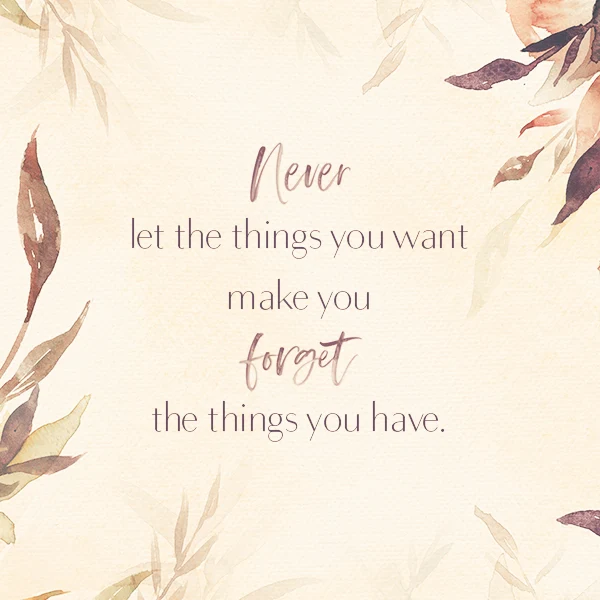
Never let the things you want make you forget the things you have
P.S the square image is also included in the download package below! Feel free to post it on your Instagram.
In conclusion, the free download includes three desktop options – one with the calendar and one without the calendar, and one with a quote. There is also a wallpaper for tablets and two options for the phone. We have also included an Instagram-ready square with the weekly quote.
FOR PERSONAL USE ONLY.
NOTE: this template is available as a free download through November 30, 2021 only. After that, a $5 download fee applies.
What font is it?
Free November’s wallpaper features my all time favorite scipt font called Opulent and the classic Bodoni Sans.
If you have your favorite quotes and would like them to appear on the next free wallpaper, make sure to post them in the comments below or send us your ideas via email.
Enjoy!
P.S This post includes affiliate links so by clicking them you are supporting us. Thanks!
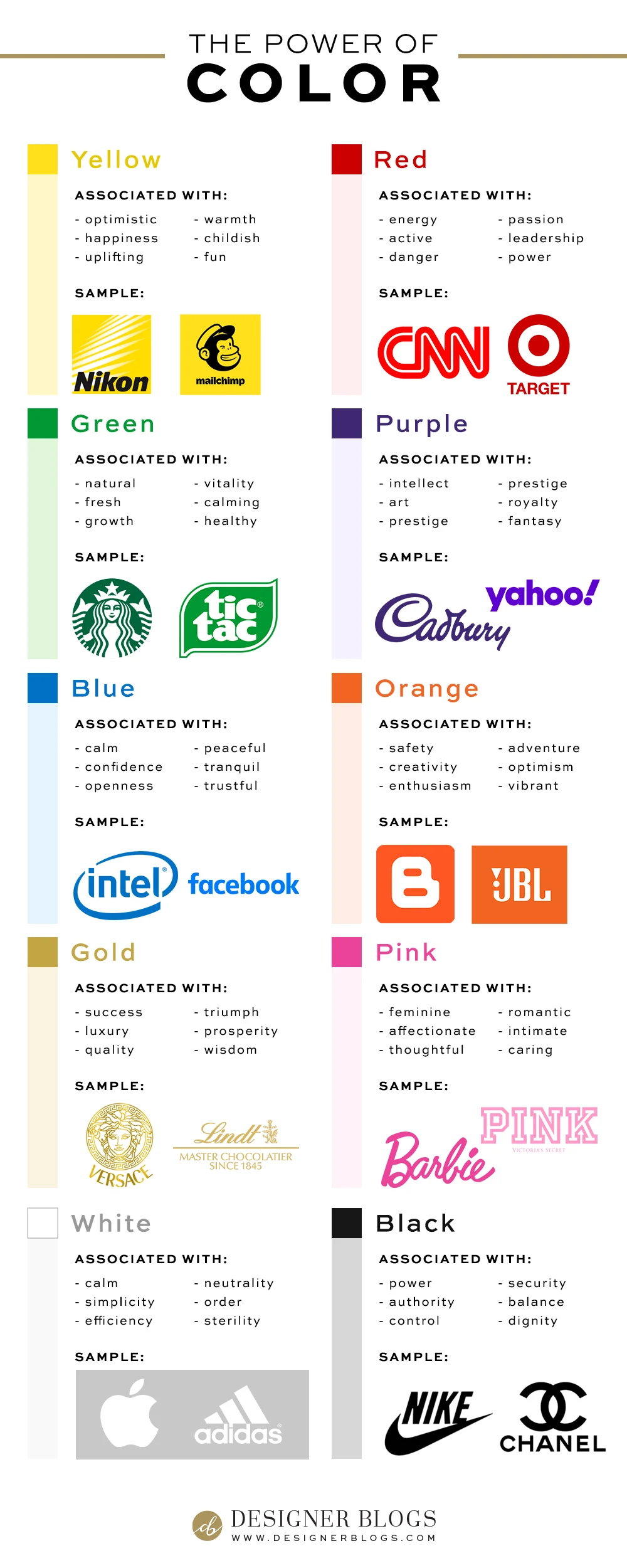
Whether we realize it or not, our minds are automatically programmed to respond to color. Color shapes our moods, our thoughts, and our emotions. Because of the subconscious effect color has on the mind, it’s important to keep the psychology of color in mind when selecting colors for your blog. Your choice of color may very well make the difference between a reader hanging out for hours on your site or leaving it. In this post, we will show you how to pick the best colors for blogs.
Best colors for blogs
We’ve compiled some color associations below to help your conscious mind understand some things that your subconscious mind is already very aware of. Whoa, now that’s getting deep! As you read through this list, think about which color descriptions best match the message you are trying to portray through your blog.
Which color should you choose?
The color palette you choose for your blog design should represent the personality of your blog. What this means is that it’s important to select colors that reflect the message your blog is trying to portray rather than selecting colors you are personally drawn to. For example, a food blogger might be personally drawn to the color blue, but because blue is known to suppress the appetite, it would be wiser for that blogger to use red or orange shades in their design because they have been shown to increase appetite. A health/fitness blogger might want to incorporate the color green because it is reflective of health and growth. A beauty/makeup blogger might want to incorporate pink as it would appeal to their target market.
The goal with color is to use colors that appeal to your ideal blog audience and accurately portray the message of your blog. Based on the color associations above, do you feel the colors you’ve chosen for your blog accurately represent the personality of your blog? If not, give us a holler and we’d be delighted to help you fix that!
Dalee Sullivan looked straight ahead into her computer’s camera and started making her case to the judge. She referred to transcripts, emails and policies she had pulled from the student handbook at Alpine High School. The school, she contended, had made errors in tabulating grade-point averages: Classes and exams that should have been included were left out, and vice versa.
Ms. Sullivan had won Lincoln-Douglas debate tournaments and, in her freshman year, was a member of the mock trial team. But she is not a lawyer. She is 18, and she graduated from the lone public high school in the small West Texas town of Alpine just a week ago, which was the reason she was in court to begin with.
“This serves to prove that no matter the outcome of the G.P.A. contest, and no matter how many times we had the school recalculate the G.P.A.,” Ms. Sullivan told the judge during a hearing on Friday, the Alpine Independent School District “was going to make certain I could never be valedictorian, even if I earned it.”
School officials said she ranked third in her class. Ms. Sullivan disagreed.
She could not find a local lawyer who would agree to take on her case. A firm in Dallas told her it would, she said, but estimated the case could cost her $75,000 — far more than she could afford. Instead, she figured out how to write a request for an injunction and represented herself in the 394th District Court of Texas.
She believed that her G.P.A. could, in fact, have been higher than one or both of the students ahead of her, making her worthy of the title salutatorian or even valedictorian. She and her parents had protested her rank for the past month, and she claimed that the school intentionally did not invite her to an awards event where top students were honored.
The school district has said that it calculated her grades repeatedly, and that each time Ms. Sullivan still ranked third.
The article continues:
In Alpine, a town of roughly 6,000 people in Texas’s Big Bend Country, some who know Ms. Sullivan said they were surprised she would take this on. There are other ways to spend one’s last summer before college. (She plans to attend the College of Charleston in South Carolina and major in biophysics with the aim of going into medicine.) But she had always been serious about school and a bit steely in her resolve.
“She’s already going to college, she already has scholarships,” said Teresa Todd, a local government lawyer who is a longtime friend of Ms. Sullivan’s mother and whose sons are close in age to Ms. Sullivan. “She worked really hard for this, and I think all kids deserve to know where they fall in the pecking order.”
“Kids have to show their work,” Ms. Todd added. “Why doesn’t the school have to show their work?”
Does class rank matter to you? Why or why not? What motivates you to work hard and succeed in school? Do you care about your G.P.A. or titles like salutatorian or valedictorian? How do you think your class rank might affect your future?
Does your school rank students? If so, what is the ranking based on? G.P.A.? Classes and exams? Do you think it is a fair and transparent system?
Do you feel your current rank in school, if you know it, is an accurate representation of your school performance to date? Why or why not?
What’s your reaction to the story? Do you think Dalee Sullivan was right to take her high school to court over her class rank? Why do you think the issue mattered to her so much even though she was already accepted to college with a scholarship? Do you find her argument persuasive that her final transcript is “not an accurate reflection of my high school career, so it’s already done irreparable damage”?
Do you think all schools should rank their students? Or should they scrap the whole process?
Want more writing prompts? You can find all of our questions in our Student Opinion column. Teachers, check out this guide to learn how you can incorporate them into your classroom.
Students 13 and older in the United States and Britain, and 16 and older elsewhere, are invited to comment. All comments are moderated by the Learning Network staff, but please keep in mind that once your comment is accepted, it will be made public.
Recently, 12 passengers with disabilities traveled aboard a parabolic flight in an experiment testing how people with disabilities would fare in a zero-gravity environment.
In this lesson, you will learn about their experience and the efforts being made to ensure that the future of spaceflight is more inclusive. Then, you will think about accessibility and universal design in your community.
Warm-Up
Do you want to travel to space? When we asked students this question in February, many of them were excited about, or at least interested in, this possibility. Before reading the featured article, consider the two additional questions below in writing or class discussion.
What limitations or barriers are there to your traveling to space?
Have you ever considered how ability or disability affects your possibilities for space travel? Why or why not?
1. In what ways has the history of spaceflight been exclusionary? How does the nonprofit organization AstroAccess attempt to make spaceflight more accessible?
2. Why do the participants in the AstroAccess flight argue that it is important to consider accessibility in private space travel now, rather than later?
3. What is the purpose of the space travel testing that AstroAccess is currently doing?
4. Tim Bailey, the executive director of a nonprofit organization focused on space education, said at first that he was concerned about people with disabilities on a zero-gravity flight. What assumptions did he make? Why did he change his mind?
5. What were some of the designs that were tested on the AstroAccess flight to address various accessibility needs?
6. How are space agencies and private spaceflight companies becoming more inclusive — or not — for astronauts and everyday people with disabilities who are interested in space travel?
7. The article featured the personal stories and reflections of several of the passengers on the AstroAccess flight. Choose one story that you found particularly interesting and share what stood out to you about that passenger’s experience.
Going Further
The featured article focuses on accessibility for people with disabilities in space. Learn more about accessibility here on Earth by exploring one or more of these articles:
Inclusive Design: Did you know there is a whole movement dedicated to accessible and inclusive architecture and design? It is sometimes called universal design, or inclusive design. You can learn more about inclusive design by reading about a museum exhibit dedicated to accessible designs, or an architectural reflection of changes to design following the American With Disabilities Act. Or you can learn about accessible cosmetics designs or home designs for older people.
Choose one article and, as you read, make note of any design features that you had not considered before. Would any of these benefit a space you go to often, such as your school, your home or your local grocery store? How so? What additional questions or reflections do you have about accessible design in your community?
Accessibility at Work: “Making Work Accessible,” an illustrated article from the Scratch column, profiles Krystal Bailey, a vocational rehabilitation counselor in the Bronx who helps people with disabilities enter the work force. As you read, consider how Krystal’s experience using a wheelchair has made her interested in this kind of work. Then, make note of how she helps her clients find work and the different elements she must consider in terms of accessibility.
Want more Lessons of the Day? You can find them all here.