fbpx
Home Blog Page 1235

Accelerating your journey to a master’s degree and career advancement

0
Accelerating your journey to a master’s degree and career advancement

With MasterTrack™ Certificates on Coursera, you have the unique opportunity to advance your education and your career simultaneously. By successfully completing a MasterTrack™ Certificate program, you can earn credit towards a master’s degree and receive a university-issued career credential that affirms your new skills and capabilities.

To create a MasterTrack Certificate program, we split a full degree program into separate online modules, each of which becomes its own “MasterTrack.” Learning with this modular approach makes it possible for you to earn degree credit in a flexible, interactive, and affordable format, while also receiving a certificate from a top university that you can add to your resume and LinkedIn profile.

  • Enhance your resume: Earn a university-issued certificate that you can add to your resume and LinkedIn profile to attract interest from recruiters and hiring managers
  • Benefit from master’s-level Llearning: Experience world-class learning in an online module from a full master’s degree program and enjoy live expert instruction and feedback combined with interactive team-based learning.
  • Set yourself up for degree program success: If you are accepted into the full master’s program, your completed coursework will count towards your degree.
  • Build Your Global Network: Study and engage with a dedicated group of professionals from around the world.

You can now choose from more than 15 MasterTrack Certificate programs. From cutting-edge technologies like blockchain and machine learning to impact-driven fields such as social work and sustainability, you can learn the in-demand skills that recruiters and hiring managers are looking for as you advance your learning and enhance your professional profile.

Hear from MasterTrack Certificate learners:

“Thanks to the Instructional Design MasterTrack™ Certificate, I found a master’s program that will prepare me for the direction I want to take with my career. I was thrilled to receive my admissions decision letter a few weeks ago, andI’m ready to start fall classes as an official Fighting Illini!”

Kelly J., Special Assistant, Faculty Support at Yale School of Management


“As a Supply Chain Excellence MasterTrack student, I’m literally taking the real-time learning and best practice framework and applying it to a project.”

Sheri H., Director of Strategic Services, North America; Executive Advisor and Change Learner, FDA Software


“My level of confidence about Instructional Design increased tremendously after completing the Instructional Design MasterTrack™ Certificate. Previously, I was a self-taught designer. Today I have a formal certification from a great university thanks to Coursera. I’m confident about my skills in analysis, developing learning objectives, and assessing learning outcomes with the right process and tools” 

Suprita J., Freelance Instructional Designer based in California


Career advancement and master’s-level learning go hand-in-hand when you enroll in a MasterTrack Certificate program on Coursera. It’s an ideal learning approach for anyone who wants to learn job-ready skills and earn a valuable career credential while building credits towards a master’s degree.

Get started today!

1

Are You an Orchid, a Tulip or a Dandelion?

0
Are You an Orchid, a Tulip or a Dandelion?

How sensitive are you to your surroundings and experiences? Would you say you’re more like an orchid that needs a very particular environment to thrive? A dandelion, which can grow practically anywhere? Or, a tulip — somewhere in between those two extremes? Why?

Sensitive children are keen observers of the world, but tend to get overstimulated. They often live intense inner lives and are highly creative, but they are wary of new situations and of people they don’t know.

They also easily intuit the moods of others and feel their pain. This empathy draws their peers and sometimes even adults to confide in sensitive children. Later in life, they often go into helping professions like health care and counseling, where their natural gifts are put to good use.

Roughly one in five children are highly sensitive, according to the research psychologist Elaine Aron, whose 1996 book “The Highly Sensitive Person” popularized the term. Dr. Aron developed a 23-question test, which is often used to help determine whether or not a child is highly sensitive.

Sensitivity is an inborn temperament, she says, that comes hard-wired and remains with highly sensitive people for their whole lives. Michael Pluess, a professor of developmental psychology at Queen Mary University of London, has found that our life experiences, particularly those early in life, also have a big impact.

“We found that about 50 percent of differences in sensitivity between people are due to genetic factors, the other half by environment, including the prenatal environment,” Dr. Pluess said.

He said people fall roughly into three groups: highly sensitive, whom he calls “orchids,” which are beautiful flowers that need very particular environments to thrive; hardy “dandelions,” which can grow virtually anywhere; and a middle group — the largest — “tulips,” which fall somewhere between the two extremes of the sensitivity scale.

“The idea is not that one is better and one is worse,” Dr. Pluess explained, “but that these are different personalities, each with their own unique strengths and weaknesses.”

He added: “It is important to communicate consistently to the child that their sensitivity isn’t a problem, that it’s a strength so that they can develop a healthy sense of what they can do well.”

  • In what kind of environment do you thrive? Are you able to be at ease regardless of what is happening around you? Or are you sensitive to the sounds, sights and people nearby? If you were to create your ideal atmosphere to grow and learn, what would it look like?

  • How do your friends, family, teachers or others in your life talk about sensitivity? In general, is it viewed as a strength or a weakness? After reading this article, how do you think about sensitivity?

  • Do school, parties, family gatherings or group activities tend to overwhelm you? Do you find that you are able to “intuit the moods of others and feel their pain”? And has the pandemic and staying home more offered you welcome respite to “explore, create, read and think on [your] own”? Or do you miss the energy, crowds and noise that were part of your daily routines?

  • Do you think that people understand you and the way you relate to the world? What is one thing that you wish people better understood about your nature? If people better understood this part of you, how do you think that would change the way they treated and interacted with you?

  • According to the article, research has found that being highly sensitive is not specific to one gender; boys who are perceived as more sensitive, however, are sometimes viewed as being less masculine. Is this true in your experience? What roles do gender or other identify factors play in how sensitivity is viewed by your peers, teachers, family members or society? How does this make you feel?

  • If Dr. Pluess’s flower metaphor doesn’t resonate with you, what is an analogy you can come up with to describe where you fall on the sensitivity scale?

  • Students 13 and older in the United States and the United Kingdom, and 16 and older elsewhere, are invited to comment. All comments are moderated by the Learning Network staff, but please keep in mind that once your comment is accepted, it will be made public.

    Lesson of the Day: ‘18 Revelations From a Trove of Trump Tax Records’

    0
    Lesson of the Day: ‘18 Revelations From a Trove of Trump Tax Records’

    Students in U.S. high schools can get free digital access to The New York Times until Sept. 2021.

    Featured Article: “18 Revelations From a Trove of Trump Tax Records” by David Leonhardt

    On Sept. 27, The New York Times published the results of an examination of decades of personal and corporate tax records for President Trump and his businesses in the United States and abroad. The records provide a detailed history of Mr. Trump’s business career, revealing struggling properties, vast write-offs, an audit battle and hundreds of millions in debt coming due.

    What The Times’s investigative team found was an existential threat to the image he has constructed about his wealth and lifestyle. The tax documents consistently appeared to call into question the business acumen he has cited in his presidential campaign and throughout his public life.

    In this lesson, you will learn what The Times’s investigative team discovered in the tax documents and what the investigation reveals about our president. In the Going Further activity, you will synthesize what you’ve learned in a visual one-pager.

    Take a moment to study the graph below of income and losses from businesses that Donald J. Trump has run over the past 20 years. Then respond to the following questions:

    • What story does this graph tell about Mr. Trump and his finances? Write a catchy headline that captures its main idea. If your headline makes a claim, tell us what you noticed that supports your claim.

    Read the article, then answer the following questions:

    1. Why are President Trump’s tax returns “among the most sought-after documents in recent memory”?

    2. What did The Times’s investigative team learn about Mr. Trump’s federal taxes over the past 20 years? How do Mr. Trump’s federal payments compare with other wealthy Americans and past presidents?

    3. How was Mr. Trump able to receive a $72.9 million tax refund? Why is it now the subject of an Internal Revenue Service audit?

    4. The article states that “the most successful part of the Trump business has been his personal brand.” What evidence supports this claim? How does Mr. Trump’s personal brand compare with the success of his high-profile businesses such as his hotels, resorts and golf courses?

    5. How might have Mr. Trump’s financial situation influenced his decision to run for president in 2016, according to The Times?

    6. Currently, how many loans is Mr. Trump personally responsible for? Why would a second term as president put his lenders in an “unprecedented position”?

    7. Which of the revelations do you think is most significant and why?

    Option 1: Share your thoughts

    • What is your reaction to The Times’s investigation and its findings? What picture of President Trump emerges from it? Does it change how you see Mr. Trump as a man, as a businessman or as a president?

    • Do you think the financial and tax revelations will affect Mr. Trump’s presidency and the remaining five weeks of the 2020 election campaign? Do you think they should factor in voters’ decisions on Nov. 3?

    • In “The Picture of a Broken Tax System,” The Times’s Editorial Board writes about the state of the United States tax system that allows a man like Mr. Trump, who before he became president, lived lavishly while paying little in federal income taxes:

    Remove Mr. Trump’s current job from the picture, and what remains is a story that still demands attention. The portrait of a man who earned hundreds of millions of dollars, lived a life of comic excess and yet, in many years, paid nothing in federal income taxes is an indictment of the federal income tax system. It illustrates the profound inequities of the tax code and the shambolic state of enforcement.

    The government has sharply reduced the share of income that it collects in taxes from the wealthiest Americans. One recent study found that the 400 wealthiest households paid 70 percent of their total income in federal, state and local taxes in 1950, 47 percent in 1980 and 23 percent in 2018. The cuts in tax rates have come mostly at the federal level.

    Do you agree that the tax system is broken? Which of the Editorial Board’s recommendations to reform it, such as cracking down on rich tax cheats, restoring I.R.S. funding and modernizing collection techniques, would you support? What other changes to our tax system would you want to see?

    Option 2: Synthesize

    Synthesize everything you have learned by creating a one-pager. A one-pager is a way to visually share key ideas about a text using both words and images. At a minimum, your one-pager should include:

    • Three key takeaways about President Trump’s taxes

    • Two important quotations from the article

    • One question you still have about the president’s taxes or the U.S. system of taxation in general

    • Visual elements that illustrate the essential points

    You can also include any other information you think is important to share.

    Your one-pager can be arranged however you think makes the most sense. But if you need inspiration, you can see examples of other students’ work here or find a template to print or copy here.

    About Lesson of the Day

    Find all our Lessons of the Day in this column.
    Teachers, watch our on-demand webinar to learn how to use this feature in your classroom.

    Test-Taking in a Pandemic

    0
    Test-Taking in a Pandemic

    Students in U.S. high schools can get free digital access to The New York Times until Sept. 2021.

    The SAT is taken by some two million high school students every year as part of the college application maze. But this year, just finding the opportunity to sit for the three-plus-hour exam, with its math and verbal sections and optional essay, has been its own test for many students.

    Are you taking the SAT this year? Do you think it’s fair to hold the test now, when there are so many hurdles to administering it safely and to offering equal access to all communities? How important do you think tests like this are in general?

    Tell us in the comments, then read the related article to learn more.


    About Picture Prompts

    Find all our Picture Prompts in this column.
    Have an idea for a Picture Prompt? Tell us about it.
    Teachers, discover more ways to teach with our Picture Prompts and learn how to use our free daily writing prompts for remote learning.

    Students 13 and older in the United States and the United Kingdom, and 16 and older elsewhere, are invited to comment. All comments are moderated by the Learning Network staff, but please keep in mind that once your comment is accepted, it will be made public.

    Word + Quiz: pandemonium

    0
    Word + Quiz: pandemonium

    : a state of extreme confusion and disorder

    _________

    The word pandemonium has appeared in 52 articles on NYTimes.com in the past year, including on June 9 in “New York City’s Kettlebell Shortage: ‘People Are Kind of Freaking Out’” by Aaron Randle:

    When the coronavirus forced Americans indoors — out of offices, away from grocery stores and off public transit — gyms under went an economy-rattling shift.

    Suddenly fitness enthusiasts were forced to reimagine not only where they could work out, but how. People snapped up benches, resistance bands, dumbbells and kettlebells. In New York, the demand led to a citywide shortage of workout equipment.

    “People are kind of freaking out,” said Jahkeen Washington, co-owner of JTW Fit, a boutique gym in Central Harlem. “They feel like all of the hard work they’ve been putting in for so long is at risk of going to waste.”

    ….“It’s pandemonium,” said Ed Pryst, the chief sales officer of Gym Source, a New Jersey-based workout equipment retailer with several offices in New York. “I’ve been in the business for 30 years and I’ve never seen anything like it.”

    _________

    How Much Do You Know About Malawi?

    0
    How Much Do You Know About Malawi?

    Can you find Malawi on a map? What else do you know about this African nation with about 19 million people?

    Lessons From Animals

    0
    Lessons From Animals

    Students in U.S. high schools can get free digital access to The New York Times until Sept. 2021.

    Blair Braverman is a musher — the human driver of a dog sled team. She writes that she is learning from her dogs how to navigate the “endurance challenge” that is the pandemic. Here is one thing her animals have shown her about encountering the unknown:

    Working with dogs in the wilderness means negotiating countless shifting variables: snow and wind, wild animals, open water, broken equipment, each dog’s needs and changing mood. I learned that plans, when I made them, were nothing but a sketch; the only thing I needed to count on was that the dogs and I would make decisions along the way.

    Have animals ever taught you anything, whether those animals were pets you owned or creatures you encountered in the wild? What? How?

    Tell us about them in the comments, then read the related article to learn more.


    About Picture Prompts

    Find all our Picture Prompts in this column.
    Have an idea for a Picture Prompt? Tell us about it.
    Teachers, discover more ways to teach with our Picture Prompts and learn how to use our free daily writing prompts for remote learning.

    Students 13 and older in the United States and the United Kingdom, and 16 and older elsewhere, are invited to comment. All comments are moderated by the Learning Network staff, but please keep in mind that once your comment is accepted, it will be made public.

    Word + Quiz: vociferous

    0
    Word + Quiz: vociferous

    : conspicuously and offensively loud; given to vehement outcry

    _________

    The word vociferous has appeared in 56 articles on NYTimes.com in the past year, including on May 15 in “Examining the Meaning of ‘Mrs.’” by Amisha Padnani and Veronica Chambers:

    To us, she has always been Amelia Earhart, but there was a time when The New York Times called her Mrs. Putnam in newspaper articles, linking her identity to that of her husband, George. She wasn’t the only one: Frida Kahlo was sometimes called Mrs. Diego Rivera; Coretta Scott King was Mrs. Martin Luther King Jr.; and Jacqueline Kennedy Onassis was Mrs. John F. Kennedy.

    The practice of referring to a married woman — even a famous one — by her husband’s name wasn’t unique to The Times. Much of society often referred — and sometimes still refers — to women this way. It was not until 1986 — after a vociferous debate — that The Times began using the less polarizing title “Ms.”

    _________

    Lesson of the Day: ‘Kids Need Superheroes Now More Than Ever’

    0
    Lesson of the Day: ‘Kids Need Superheroes Now More Than Ever’

    Students in U.S. high schools can get free digital access to The New York Times until Sept. 2021.

    Featured Article: “Kids Need Superheroes Now More Than Ever” by Megan Margulies

    In the featured article, Megan Margulies, granddaughter of the creator of Captain America, writes about how comic books and “magical thinking” can help children get through hard times.

    In this lesson, you will learn more about the origin of Captain America and the power of comic books to offer relief, escape and hope during difficult times. In a Going Further activity, you will create your own superhero to help kids get through the pandemic.

    Are you a fan of superheroes? Do you have a favorite?

    Take a few minutes to write about a superhero that has made a lasting impression on you: What are the qualities that draw you to them? Is it their costume? Their superpowers? Their personality? Their origin story? The villains they fight?

    If you aren’t a big fan of comics and superheroes, tell us why. What kinds of characters and stories are you drawn to instead?

    Afterward, share your writing with a partner or the whole class and discuss the similarities and differences in the characteristics of your superhero choices.

    Read the article, then answer the following questions:

    1. How did Captain America help the author’s 4-year-old daughter join her preschool class on Zoom? What is her family’s connection to the famed red, white and blue costumed fictional character?

    2. What is the story behind the creation of Captain America over 80 years ago? What was happening in the world at that time — and how was the shield-wielding character a response to those circumstances?

    3. What is a talisman? How has one helped Ms. Margulies throughout her life? Have you ever had your own talisman?

    4. Why does the author believe that superheroes can help provide children with comfort and strength through the pandemic? What evidence does she give? Does her argument resonate with your own life or current experiences?

    5. What criticisms have comic books and superheroes faced over the years? How persuasive do you find these critiques? How does Ms. Margulies counter these arguments?

    6. What is your reaction to the article? Which lines or ideas were most surprising, memorable or provocative? Does the article change your views on comic books and their positive role for readers — especially young children? Tell us why or why not.

    Option 1: Share your thoughts.

    • The pandemic has upended our lives in ways that would have been unimaginable one year ago. How are you coping? What things are helping you to get through these tough times? Are you exercising? Baking? Meditating? Journaling? Tell us what you are doing to cope.

    • What role have comics or superheroes played in your life? What life lessons, if any, have you ever learned from a comic book or superhero?

    • After reading the article, do you think you might use a talisman, superhero or some form of magical thinking to help you now? If so, tell us how.

    • What advice or activities would you recommend to others who are struggling through these tough times? What lessons or resources, if any, have you discovered during the pandemic that might provide other students hope, strength or a beacon of light?

    If you are interested in exploring your thoughts about life during the pandemic further, you can read and comment on our related Civil Conversation Challenge forum on the coronavirus.

    Option 2: Create an original superhero.

    Create an original superhero to help readers through the pandemic — including with a name, costume and of course, a superpower!

    Your superhero can be a fairly literal take on the pandemic: Vaccine Man fights the Germ-Meister, or the masked Social Distance Woman tackles the dreaded Zoom Robot … (OK, we know you can do much better!). Or, you can create a metaphorical or allegorical story of fear or hope or resilience or quarantine, the way that Joe Simon and Jack Kirby created Captain America to make “little Jewish kids around the world feel safer in light of the rise of Nazism.”

    Before you brainstorm ideas, consider the specific struggles children and teenagers might be dealing with. What kinds of talismans or special powers do you wish you had? Keep in mind some of the concepts you learned in the article, like “magical thinking” and “The Batman Effect.”

    You can find some helpful general tips for creating a superhero here, or for coming up with specific aspects like: name, costume, superpower and origin story.

    After your brainstorm, sketch and color your comic with paper and pen, or use an online tool like MakeBeliefsComix.com.

    When you are done, share and celebrate your superhero and comic book with your class.


    About Lesson of the Day

    Find all our Lessons of the Day in this column.
    Teachers, watch our on-demand webinar to learn how to use this feature in your classroom.

    What’s Going On in This Picture? | Sept. 28, 2020

    0
    What’s Going On in This Picture? | Sept. 28, 2020

    Students in U.S. high schools can get free digital access to The New York Times until Sept. 2021.

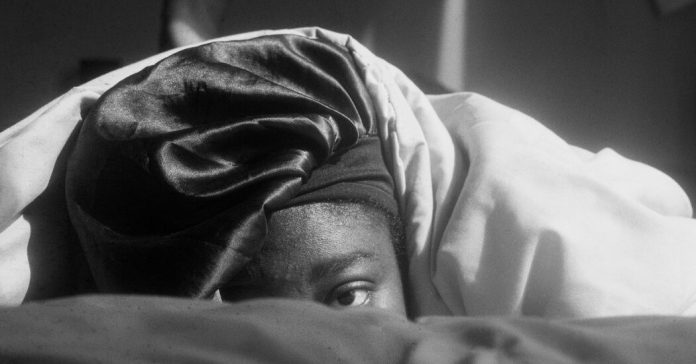
    1. After looking closely at the image above (or at the full-size image), think about these three questions:

    2. Next, join the conversation by clicking on the comment button and posting in the box that opens on the right. (Students 13 and older are invited to comment, although teachers of younger students are welcome to post what their students have to say.)

    3. After you have posted, try reading back to see what others have said, then respond to someone else by posting another comment. Use the “Reply” button or the @ symbol to address that student directly.

    Each Monday, our collaborator, Visual Thinking Strategies, will facilitate a discussion from 9 a.m. to 2 p.m. Eastern time by paraphrasing comments and linking to responses to help students’ understanding go deeper. You might use their responses as models for your own.

    4. On Thursday afternoons, we will reveal at the bottom of this post more information about the photo. How does reading the caption and learning its back story help you see the image differently?