fbpx
Home Blog Page 1354

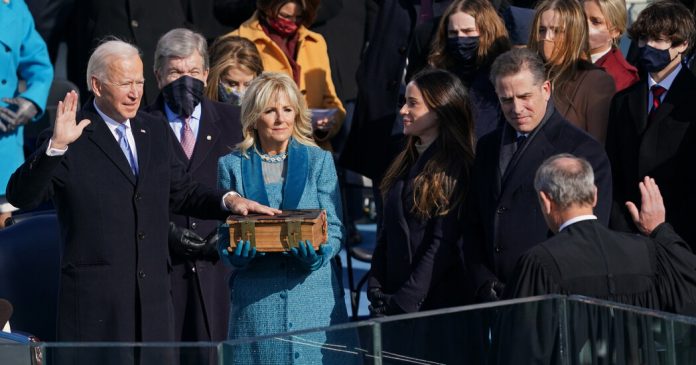
What’s Going On in This Picture? | Nov. 4, 2019

0
What’s Going On in This Picture? | Nov. 4, 2019

Students

1. After looking closely at the image above (or at the full-size image), think about these three questions:

2. Next, join the conversation by clicking on the comment button and posting in the box that opens on the right. (Students 13 and older are invited to comment, although teachers of younger students are welcome to post what their students have to say.)

3. After you have posted, try reading back to see what others have said, then respond to someone else by posting another comment. Use the “Reply” button or the @ symbol to address that student directly.

Each Monday, our collaborator, Visual Thinking Strategies, will facilitate a discussion from 9 a.m. to 2 p.m. Eastern time by paraphrasing comments and linking to responses to help students’ understanding go deeper. You might use their responses as models for your own.

4. On Thursday afternoons, we will reveal at the bottom of this post more information about the photo. How does reading the caption and learning its back story help you see the image differently?

The top jobs at risk of being robotised

0
The top jobs at risk of being robotised

Does the idea of robots taking your job make you shriek in despair? Or are you the type to sigh in disbelief? With the Fourth Industrial Revolution well and truly upon us, it’s time to find out which reaction is based in reality. 

Whether you’re a believer or not, numbers can’t be argued with. Robotisation is changing the way we shop, communicate, get help,  process data – and so much more.  

As a result, roles in the workplace are changing too. You might have noticed that your passport is no longer checked by a person at airport security, or that there are less and less workers at the check-out to help you scan your groceries.  

All of these changes are examples of automation replacing roles in the community.  But it’s not all doom and gloom. In fact, as the Definitive Guide to Thriving in the Future of Work reveals, the Australian economy will see a $1.2 trillion boost by 2030. With a boost in economy, comes more jobs. However, they won’t be the same roles we’re used to. 

So, which jobs are at risk of being robotised? Here’s the deal. 

 Store-people and hospitality workers 

According to the report, if you’re a store-person or hospitality worker, more than half of your job may be replaced by chat-bots and digital sales platforms – a trend that’s already emerging in Japan. 

In fact, in Australia, these kinds of roles are already being taken over by automation. Some restaurants have fitted iPads into each table, allowing you to order your food without talking to a waiter. 

Check-in scanner on reception desk.

Clerical and office support workers 

The same report reveals that people who work in administration support will see 44% of their tasks automated. This is due to technologies that can read, monitor and search through large databases without the need for humans.  

The good news is, making decisions based on this data will remain in human hands. 

Bricklayers, joiners and carpenters 

More than half of most bricklaying, joinery and carpentry professions will be automated, the same report finds. 

With cleaning and mixing taken care of by machines, only 45% of the job – the project management and creative tasks like choosing materials – will be left to the human experts. 


If your profession is listed above, fight the urge to panic. In the future of work, people of all professions will need to up-skill and re-skill to remain relevant in the digital workforce. No one is safe from a little disruption.  

In trade-based industries, there is an increasing demand for new and accredited skills through government-supported TAFE institutions, while those in seemingly ‘safe’ jobs are adding new digital and human-centric skills to their resume.  

Making the shift 

Luckily, in the modern world of work and education, reshaping your career to fit into the new landscape of automation and AI is far more achievable than you think. 

If you’re balancing work and family life with your study, and can’t commit to a full-time course, a single subject through Open Universities Australia is an ideal avenue for updating your skills while keeping your day job. You can head over to the website to browse hundreds of degrees and subjects from leading Australian universities right now. 

To learn more about how to study through OUA – fill out the form on this page, and a friendly student advisor will get in contact. You can also chat to them on OUA’s website Messenger service, Facebook Messenger, WhatsApp or SMS. They’ll help you find the right course for your future. 

Otherwise, gain more skills to prepare you for the future of work with your own, free copy of the Definitive Guide to Thriving in the Future of Work. It’s the guide every career-conscious Australian needs.  
 

What’s new on Coursera for Business – October 2019

0
What’s new on Coursera for Business – October 2019

By Kyle Clark, Senior Skills Transformation Consultant

Coursera released 50+ courses on our platform in October. This month brings a number of new courses focused on innovation and disruption, from developing a systems mindset to digital transformation, AI workflows, and futures thinking.

Here are our top picks for enterprise for this past month:

October 2019’s Key Launches:

  • Developing a Systems Mindset, University of Colorado Boulder – This course will highlight the urgency for you to have a systems mindset to engage complex problems for a systems perspective, meaning that you have approach problems from different angles, scales and perspectives.  This class is the first step in creating that mindset and for you to effectively engage – from receiving the “ask” for “assistance”, to orienting yourself to the issue, understanding the community, and developing a project plan. 
  • Impact from Digital Transformation: Full course, EIT Digital – This course is about what you can do when everything around you seems to be moving due to digital change. It is about how to handle the disruptive process that tends to unfold in industry nowadays due to digitalisation. The way to handle this is what is here referred to as “Digital Transformation” and at the core of it, it is about understanding how the new business landscape is evolving and heading for a new position in that landscape. It is about corporate strategy.
  • IBM AI Enterprise Workflow Specialization, IBM – This six course specialization is designed to prepare you to take the certification examination for IBM AI Enterprise Workflow V1 Data Science Specialist. IBM AI Enterprise Workflow is a comprehensive, end-to-end process that enables data scientists to build AI solutions, starting with business priorities and working through to taking AI into production. After successfully completing this specialization, you will be ready to take the official IBM certification examination for the IBM AI Enterprise Workflow.
  • Exploratory Data Analysis with MATLAB, MathWorks – In this course, you will learn to think like a data scientist and ask questions of your data.  These skills are valuable for those who have domain knowledge and some exposure to computational tools, but no programming background is required. 
  • Futures Thinking Specialization, Institute for the Future – Do you want to think about the future with more creativity and optimism? Do you want to see what’s coming faster, so you can be better prepared for disruptions and more in control of your future? This Specialization will introduce you to the practice of futures thinking, as developed and applied for the past 50 years by the Institute for the Future, a Silicon-Valley-based research and learning group founded in 1968. The Futures Thinking specialization is for anyone who wants to spot opportunities for innovation and invention faster.
  • Machine Learning for All, University of London – In this course you will learn to understand the basic idea of machine learning, even if you don’t have any background in math or programming. You might be a manager or other non-technical role in a company that is considering using Machine Learning. You really need to understand this technology, and this course is a great place to get that understanding.

All Courses

Business

Technology

Data

Other


Protect Your Personal Data By Thinking Like a Data Scientist

0
Protect Your Personal Data By Thinking Like a Data Scientist

Data is a currency, and many of us spend it more often than we realize. When we use a “free” search engine that tracks our searches, or a social media platform that maps and analyzes our relationships, or even a grocery store rewards card that offers discounts in exchange for a record of our shopping habits, we exchange information about ourselves to get something we want. But how can we tell if these are fair trades?

Just as financial literacy helps us make sound choices with our money, understanding how our information gets collected and used equips us to evaluate the decisions we make every day about our personal data.

Recognizing When You’re Trading Your Data

Sometimes, the data-for-goods-and-services exchange is made explicit, like at the Shiru Cafe, where students trade their data for coffee.

Often, though, what we are giving up is less obvious. We might expect our posts or search terms to be analyzed, but do we think about what sites can determine about us by recording our mouse movements? Or do we realize that companies might still be tracking our locations, even after we try to disable this feature? Or are we aware that the “free” new app our favorite restaurant put out that tells us their daily specials may be collecting more information than it displays?

In the age of Big Data, it may be safest to work under the assumption that the services we use are gathering all the information about us that they feasibly can. Our burden as consumers, then, is to be conscious of what data we put out there, and trying to think like a data scientist can help with this.

YourDataPieChart

A handy pie chart

Say we are big fans of a certain news website. If this site doesn’t have a paywall, then we might expect that they are funded by advertisements. As targeted ads are more profitable, we may assume that we are giving up data about what kind of articles we click on in exchange for being able to read them. Is this the only trade we make on this site, though?

Pretend we work as data scientists for the site. What other kinds of data could we extract about users?

Perhaps we could record how long readers spend looking at each article and how far down they scroll, or even how long they spend looking at the headlines in each section of the homepage. But if that’s being recorded, then aren’t users exchanging their data not only for the privilege of reading articles, but also for the ability to see what articles are even available?

Recognizing these sorts of trades is a crucial first step toward making informed choices about giving up our data. Until we understand what our data can be used for, though, we are paying with a foreign currency without knowing the exchange rate.

How Your Data Can Be Used

Our data can be used for good causes, from advancing healthcare to reducing energy usage. It can also be used in ways we find kind of creepy or outright disturbing. Indeed, the same piece of our personal information might be used to help and hurt us by the same organization.

So when should we feel comfortable giving up our data for access to something we want? There are no easy answers, but we will be better able to assess each situation if we get a sense of what insights organizations can extract from our data and practice stepping into a data scientist’s shoes.

TargetedAds

Let’s revisit that hypothetical news site and walk through how thinking like a data scientist can help us better understand the choices we have to make.

First off, what type of questions might that site’s data scientists look into? What kind of articles attract readers, maybe? Or, more specifically, what kind of articles attract readers who click on advertisements? Or, possibly, what are the traits of popular articles that could be adapted to make sponsored content more appealing to readers?

The next step is to consider if the site could realistically piece together the data we provide to answer these questions and, if so, how might they do this.

In our example, looking at trends in readers’ page clicks and view times, or perhaps conducting sentiment analysis of comments readers leave, might allow the analysts to group articles based on how appealing readers find them. Then, combining this with data about the individual articles in each group, they might find attributes that seem to make readers like some articles more than others (perhaps using certain keywords or referencing particular companies, trends, or individuals).

By going through this thought process, we can refine our questions about how—or whether—to use this news site. Now, we might ask, “does the information or enjoyment we get from this site outweigh the risk that the site will use our habits to make the delivery of sponsored messages we don’t necessarily support more effective?” Or, possibly, “are we comfortable clicking on so many opinion-based articles if that might be seen as an indication that the site should shift focus away from impartial reporting?”

Now, we are starting to ask the right sorts of questions to make informed choices about the data we give up. However, there is more we should consider. Even seemingly useless data we give up now can be stored until technologies and analysis techniques improve enough to make sense of it, meaning that we not only need to consider what can be done with our information today, but also what might be done with it tomorrow.

How Your Data Might Be Used in the Future

Today, the idea of using our data to generate and display individualized content that changes our opinions on important issues may seem like science fiction. In a few years, it might not.

With many billions of dollars being invested in machine learning and artificial intelligence each year, even my limited predictive abilities are sufficient to see that organizations will extract progressively more insight from our data. How fast these developments will occur is harder to say.

OffTheGrid

There is a wealth of reporting and commentary about the advancements in machine learning and AI, but without at least a baseline understanding of these fields, it is tricky to sort out the truth from the hype. The more educated we are about these areas, the better we will be able to predict the risk of our current data being used in troubling ways in the near future.

In Conclusion

If we use our data as currency, we need to know how much we are really spending to keep ourselves out of trouble. The apps, websites, and other products and services that harvest our data might well be worth the cost, but it is hard to be sure without making a conscious effort to recognize the full range of our data that is collected and thinking through how this data could be used.

Naturally, educating ourselves about data science and related fields should improve our ability to put ourselves in the shoes of different organizations’ analysts.

Word + Quiz: gewgaw

0
Word + Quiz: gewgaw

: showy jewelry or an ornament on clothing that serves no purpose

_________

The word gewgaw has appeared in four articles on NYTimes.com in the past year, including on Jan. 16 in “New York’s Lost Department Stores” by Vanessa Friedman:

On Saturday, Henri Bendel, the department store whose brown and white stripes once defined the concept of the boutique as a carnival of gewgaws and glamour, will shut its doors for the last time. It has been a slow farewell, 24 stores blinking out like fireflies since the start of the year, culminating with the shuttering of the New York flagship this week. (The website will stay open until Jan. 28.)

_________

Should Facebook Fact-Check Political Speech?

0
Should Facebook Fact-Check Political Speech?

Find all our Student Opinion questions here.

In a speech at Georgetown University on Oct. 17, Mark Zuckerberg, Facebook’s chief executive, defended a sweeping policy the company unveiled last month around political speech on the site.

The Times reports:

In it, the company said it would not moderate politicians’ speech or fact-check their political ads because comments by political leaders, even if false, were newsworthy and in the public’s interest to hear and debate.

What is your reaction to this policy? Do you think Facebook should fact-check politicians? Why or why not?

In “Defiant Zuckerberg Says Facebook Won’t Police Political Speech,” Cecilia Kang and Mike Isaac write about the policy:

Facebook’s position on political speech is part of a growing divide between social media companies and traditional media companies. Twitter, too, has said it will not remove accounts of politicians who appear to violate its policies against violent speech because the posts add to discourse. In contrast, traditional media companies — including cable channels like CNN, MSNBC and CNBC — have taken a harder line by declining to air political ads with false content.

Facebook’s policy on political speech was quickly put to the test this month when the Trump campaign released a 30-second video ad that falsely claimed Mr. Biden committed corrupt acts in Ukraine. The ad played across social media outlets and on some broadcast networks; CNN and NBCU declined to air it because they said the ad violated their standards.

When Mr. Biden’s campaign asked Facebook to take down the false ad, the social network refused. Ms. Warren later dared Facebook by deliberately creating an inaccurate political ad that said Facebook and Mr. Zuckerberg were backing Mr. Trump’s re-election, even though neither Mr. Zuckerberg nor his company has announced their support of a candidate.

“We decided to see just how far it goes,” Ms. Warren said of Facebook’s openness to leaving up false political ads.

Civil rights groups said they were stunned by how hands-off Facebook was being on political speech. Giving politicians free rein to post any material — even lies — potentially sets up the social network for more disinformation efforts ahead of the 2020 election, they said.

Vanita Gupta, president of the Leadership Conference on Civil and Human Rights, a coalition representing 220 civil rights groups, said she spoke to Mr. Zuckerberg last week to express alarm about the policy. She said he told her the public could make its own determinations about false statements and racially divisive content from politicians.

“Mark Zuckerberg is co-opting civil rights history to try to justify Facebook’s policies that do long-term damage to our democracy,” Ms. Gupta said. “The company is in denial about what’s happening.”

Neil Chilson, a senior research fellow at Stand Together, an organization within the Koch network, a conservative policy group, said Facebook’s free speech position was “a very reasonable policy choice.” When Mr. Trump speaks, reporters then fact-check what he says, showing “that the cure to a politician’s misstatement is more speech, not to shut it down,” Mr. Chilson said.

The article continues:

In an interview at Facebook’s Silicon Valley headquarters on Tuesday, Mr. Zuckerberg laid out more of the reasoning behind his speech. He cited Facebook’s role as an American company — one that can espouse Western ideals such as free expression — and mused on how the social network would be viewed in time.

“Today, the state of the global internet around the world is primarily defined by American companies and platforms with strong free expression values,” he said. “There’s just no guarantee that will win out over time.”

Students, read the entire article, then tell us:

  • After reading this article, has your initial answer to the question changed? Do you think Facebook should fact-check political speech on its site? Why or why not?

  • How good do you think you are at detecting false information on Facebook, Instagram or other social media sites? When you come across a political ad or meme, do you check to make sure it’s true? Or do you trust that what you see is accurate?

  • Some have argued that false political content on Facebook could have potentially dangerous effects on our lives and democracy. For example, Russia used the platform to run a disinformation campaign that interfered in the 2016 election. (And it’s still using these tactics in countries around the world today.) Facebook has also been used to incite violence in places like Myanmar where military officials led disinformation campaigns that helped fuel the modern ethnic cleansing of Rohingya people.

    What consequences could you see Facebook’s policy having in our society today? Given these potential risks, how important do you think it is for Facebook to moderate political speech, if at all?

  • Do you think limiting what politicians can say on Facebook is a violation of free speech? Does Facebook have a responsibility to promote free expression as Mr. Zuckerberg says, despite the potential consequences? Or do you agree with Aaron Sorkin, who argues in this Op-Ed, that Facebook isn’t defending free speech; instead, it’s assaulting truth.

  • Nearly half of all Americans get some of their news from Facebook. In some developing countries, like Myanmar, Facebook essentially is the internet — and, by extension, the only source of information — for millions of people. Given these statistics, to what degree do you think Facebook has a responsibility to be a reliable source of public information, if at all?

  • Do you think Facebook should get to determine what content it does or doesn’t fact-check? Or should the government be responsible for regulating the type of content that is allowed on Facebook and other social media sites?

  • Twitter recently announced that it would no longer accept political ads. What do you think of this policy? Which do you think is better: Twitter’s policy or Facebook’s? Or neither one? Why?


Students 13 and older are invited to comment. All comments are moderated by the Learning Network staff, but please keep in mind that once your comment is accepted, it will be made public.

World Series Champions

0
World Series Champions

On Wednesday night, the Washington Nationals beat the Houston Astros, 6-2, in Game 7 of the World Series.

The victory marked the Nationals’ first ever World Series win, becoming the first major league team from Washington to win the World Series since 1924.

Are you a baseball fan? What is your reaction to this historic win? Which team were you rooting for?

If baseball isn’t your sport, what team would you like to see win a championship this year, whether it’s your own local high school team, a college or club team, or a national team in any sport?

Tell us in the comments, then read this related article to learn more about the Nationals’ victory.


Find many more ways to use our Picture Prompt feature in this lesson plan. You can find all our Picture Prompts in this column.

Welcoming ten million learners to FutureLearn

0
Welcoming ten million learners to FutureLearn

When FutureLearn launched in December 2012, this post outlined the aims of the company as follows:

  • To bring together a range of free, open, online courses from leading UK universities, that will be clear, simple to use and accessible.
  • To draw on the Open University’s expertise in delivering distance learning and pioneering open education resources to underpin a unified, coherent offer from all of its partners.
  • To increase accessibility to higher education for students across the UK and in the rest of the world.

Nearly six years later, we’ve just welcomed our ten millionth learner to the FutureLearn fold and have active learners in every single country of the world. 

From a stellar group of 21 UK and two international university partners in 2012, we’ve grown to work with 175+ industry-leading institutions around the globe. 

From Russell Group universities to national museums, we’ve worked with partners to bring you thousands of online courses and materials so that anyone, anywhere has the opportunity to learn.  

In honour of the occasion, and to put ten million people into perspective, we’ve taken a deep-dive into what ten million looks like for our platform, university partners, courses and learners.

Last year in the UK, there were 2.3 million students in higher education.

With ten million learners on the books, FutureLearn has seen quadruple the student population of the UK last year sign up to our courses.

In terms of university student populations around the world, ten million learners are equal to:

       ➞416 times the student population of Oxford University.

       ➞67 times the student population of the University of London.

       ➞436 times the student population of Harvard University.

       ➞212 times the student population of Melbourne University.

Sitting slightly above the UK average for female students in higher education, 60% of our learners are female. 


10 flags of the countries with the most FutureLearners

Infographic of our 3 top performing courses, Understanding IELTS, Mindfulness for Peak Performance and Start Writing Fiction.

Infographic about our most active FutureLearner. They enrolled in 1,500 courses, completed over 40,000 course steps and left 240 comments.

And fuelling the tireless efforts of the team behind the platform?

Infographic showing the FutureLearn team has consumer 3,100 kg of coffee and 102,800 tea bags

Infographic that states we have 10 million learners, 25 million enrolments and 35 million comments.

With ten million learners on the books, over 25 million enrolments across our courses, and over 35 million comments made on course steps, we’ve made exciting progress towards our mission of transforming access to education. 

But the work is only just beginning. 

We’ll continue to invest in our platform, making sure it’s enjoyable to use and easy to connect with and learn from those who share your passions. 

Thank you for sharing your thoughts, questions, ideas, and experience with us and your fellow learners, whether it’s through leaving a comment on a course step or chatting with us on social media

Every single one of the ten million (!) of you has brought us closer to our mission of creating enjoyable, social and credible learning experiences where anyone, anywhere can enjoy the transformative power of education.

Please do share your experiences of learning on FutureLearn below, or enter our #FL10million competition for the chance to win a free course upgrade and certificate.

Now, to the next ten million 🥂.

Category

Lesson of the Day: ‘With California Ablaze, Firefighters Strain to Keep Up’

0
Lesson of the Day: ‘With California Ablaze, Firefighters Strain to Keep Up’

2. What is believed to have caused the current wildfires? What factors have affected their spread?

3. What skills and preparation do firefighters need to control and extinguish the wildfires? What are the biggest obstacles for firefighters? Give at least three examples from the article.

4. What is the best way to contain a wildfire, according to the article? How successful have the efforts been so far?

5. Doug Harwood, a veteran firefighter, said:

Imagine, if you can, 16-hour days of manual labor where you’re hustling all the time, and you do it often times for 14 days straight.

What is your reaction to the comment? Does reading the article affect how you view firefighters? While being a firefighter brings obvious challenges, what do you imagine are the rewards?

6. What specific details from this article are most memorable to you? Why? Select one image from the article and write about how it illustrates both the skills required and challenges faced by firefighters battling the wildfires.

In this Letter to the Editor, a high school student says she should not have to worry about air quality or whether her power will be shut off.

I live less than two hours south of the Kincade fire. The air is heavy with smoke, and we are told not to go outside. Countless people from the high school I attend have lost power, and I know many others who have been evacuated from their homes.

Is this the new normal? There seems always to be a fire burning in California. Last year, during the Camp Fire, my school canceled classes, which was unheard of at the time. We were given the impression that there would never be a fire of that severity again. And yet, here we are; nothing has changed.

I’m 16. I should not have to worry about the air quality or whether my power will be shut off. And no one should fear that his or her home might burn down. More preventive measures must be taken to prevent future fires, so that we never have to experience this again.

Kate Armanini
Mountain View, Calif.

If you are a student affected by the California wildfires, write your own Letter to the Editor and post it in the comments section, or submit it to the Times Opinion section.

‘OK Boomer’

0
‘OK Boomer’

In a recent article, The Times reports:

In a viral audio clip on TikTok, a white-haired man in a baseball cap and polo shirt declares, “The millennials and Generation Z have the Peter Pan syndrome, they don’t ever want to grow up.”

Thousands of teens have responded through remixed reaction videos and art projects with a simple phrase: “ok boomer.”

What do you think this catchphrase is trying to communicate? What is it saying about older generations? What does it say about Generation Z?

What is your opinion of the message? Would you wear a sweatshirt with this slogan on it? Why or why not?

Tell us in the comments, then read the related article to find out what other teenagers are saying about “ok boomer.”


Find many more ways to use our Picture Prompt feature in this lesson plan. You can find all our Picture Prompts in this column.