
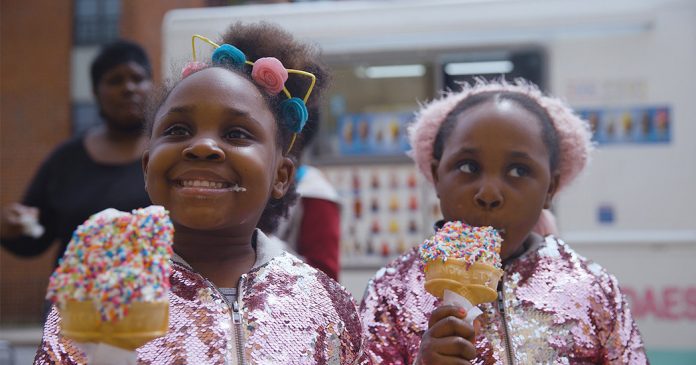
[birds chirping] [ice cream truck music] “You remember when you was a kid, right? When you heard that bell, that bell was like almost going to Disney World because now you get to come outside and you get to get your ice cream that you always wanted, that rainbow or that vanilla cone with rainbow sprinkles or that chocolate cone with cherry dip, you know — whichever makes you happy. [ice cream truck music] I have an obligation. I have to take my trucks to the street. Why? Because I believe the ice cream trucks are essential service. Someone asked me why am I working in the coronavirus? Well, I mean, my customers actually wait for me. What’s up, Champion? Speaking Spanish: Chocolate or vanilla? You know, they can choose anybody. They can choose Mr. Softee, they could choose Carvel, but they choose to come to the FunTime Frostee truck because I’ve been serving them for the past 26 years. You got it? Have a great day.” “Thank you.” “It’s harder for us to social distance six feet to give you an ice cream cone.” “Thank you.” “I try to tell the drivers make sure that the truck is disinfected. Make sure that you got wipes. Make sure you got gloves. Make sure you got two masks. You know, make sure that the customer order back up. Hey, how’s it going? As this coronavirus happens, as it’s going on, you know, the ice cream trucks have been kind of lonely. We had to transition to now wait for the customer. I think they coming. There’s no more stopping five minutes and going. Now, we have to stop 10 minutes, 15 minutes on a block, and get ’em downstairs.” “Well, when I hear the ice cream truck, I just come running.” “She acts like a child when she hears the ice cream truck.” “I’m glad I heard the ice cream truck, ’cause it’s better than hearing the sirens of the fire truck and ambulance.” “Dos.” “A lot of people haven’t been buying ice cream because of the coronavirus. You know, they don’t want to touch nothing. I know that, but this is a childhood thing, you know?” “The atmosphere now is crazy in New York City because I’m a born New Yorker, and I’ve know this place to be hustle and bustle. But driving around the neighborhoods now, it’s like … [sirens] … wow, is this really happening? Is this happening?” [sirens] [ice cream truck music] “And then when you hear the ice cream truck, you say, ‘Oh, guess what? Hey, Joey, go get your clothes. Come on. We’re gonna go get some ice cream.’” “Now we feel normal again because now I can go outside, because now I can go bring my kids. We can have a little ice cream, stay outside, catch a little fresh air and then go back inside. Have a great one. We are essential. We’re providing a service, making you and your family happy during the pandemic, without a pandemic, rain, sleet or snow, I feel that I can bring that joy to people.” [ice cream truck music]
Lesson of the Day: ‘Praying Mantises: More Deadly Than We Knew’

Find all our Lessons of the Day here.
Lesson Overview
Featured Article: “Praying Mantises: More Deadly Than We Knew” by Cara Giaimo
Praying mantises have long been viewed as “sit-and-wait predators”; they observe their prey and do not strike until the moment is right. As a result, this kind of predator is often thought of as being robotic and predictable in its behaviors. However, new research has challenged that belief, complicating how we understand insects’ capabilities.
In this lesson, you will learn about the research and findings from a new praying mantis experiment conducted at the University of Sussex. Then, you will observe an insect, compare the movement of a praying mantis to a cheetah, or read a full scientific research article.
Warm Up
Watch these two videos showing a praying mantis capturing its prey. The first video is at full speed:
Now, watch the video, recorded at one-tenth of actual speed:
With the recording slowed down, what more are you able to notice about how the praying mantis traps its prey?
What do you wonder about how praying mantises hunt and capture their prey?
Questions for Writing and Discussion
Read the article, then answer the following questions:
1. What are the two categories of predatory animals? What makes them different from each other?
2. How did research conducted in 2016 about praying mantises challenge previous beliefs about how they strike their prey?
3. What question guided the experiment conducted by Sergio Rossoni, a zoology doctoral student?
4. How did Mr. Rossoni conduct his experiment? What were the methods and techniques he used?
5. What were the findings of Mr. Rossoni’s experiment? What are the larger implications of Mr. Rossini’s research?
Going Further
Option I: Observe an Insect
Make a list of the insects you see inside and outside of your home. What have you observed those insects doing? Maybe you have seen an ant carrying a crumb or a ladybug crawling on a piece of fresh fruit.
Spend some time observing one insect with a focus on its movement:
What are the tempo, rhythm and pace of the insect’s movements?
What part of its body does it lead with?
What happens when it becomes aware of your presence?
Then, conduct additional research — National Geographic is a good place to start — about the insect you were watching. Here are some questions to guide your research: Is the insect typically a predator or prey? What does it eat? How does it see or navigate the space around it?
Option II: Compare and Contrast
The featured article mentions the movement of cheetahs, which are categorized as pursuit predators. Watch this one-minute video, from a 2013 Times article, that documents how cheetahs hunt their prey:
To guide your reading, use this advice adapted from Science News for Students:
1. Take your time.
You may need several hours, or even a whole day, to work your way through the research article. You should reread the featured article and use what you learned to support your reading.
3. As you read the research article, rewrite each section using your own words.
In addition to writing, you can take notes or draw diagrams. You can challenge yourself to make the content of the article accessible for a fifth grader, or write sentences that explain the concepts in 280 characters or less, like a tweet.
4. After you are done reading the article, answer the following questions:
What methods did the scientists use to answer their question?
What techniques did they use to identify something new?
What answers did the scientists come up with? Why do they think their answers are important?
What are the limitations of the findings? What more do you want to know?
33 Teen-Chosen Quarantine Reads: The Results of Our Special April Challenge

Laura Arbona on “The Quarantine Diaries”
The article reminded me that I didn’t have to be perfect. That I could write/draw/create whatever I wanted without fear of judgment; that I didn’t have to be a “scaredy-cat.” Which is why I’ve started a quarantine diary, not necessarily to document the progress of the coronavirus, but for myself; just an antique looking journal, a black pen, and my thoughts.
Matalin Bloomfield on “When a Ballerina Gets to Be Goofy”
I take twenty-four hours of ballet a week, and in each of those classes, I apply every correction, trying to make my dancing as perfect as possible … Striving for perfection warrants progress, but it can also make dancers feel like they’ll never be good enough. Lovette allows herself to act like a real person while she’s onstage, and values the clumsy nature of her character more than the classical steps.
Mollie Brinker on “How The Times Covered the First Earth Day, 50 Years Ago”
Fifty years ago … no one protested Earth Day … You can see that in the paper from half-a-century ago, the universal support of the idea to protect the Earth. I, however, have friends who’ve argued with me about why we need such a pointless holiday. I hope in the future, Earth Day can look more like it did at the very beginning of the environmental movement.
Jessica C on “The Slur I Never Expected to Hear in 2020”
When schools closed, I felt so relieved. I did not have to take the horrifying subway home, and I can just stay at my house. Staying home made me feel safer. However, I still see racist comments on social media platforms, especially on Tik Tok. I scroll and see an Asian person on my For You Page, and their content is usually very funny and nothing harmful. However, when I look at the comments and scroll really far down, I see slurs and racism directed toward them.
Mark Cameron on “The Reclusive Food Celebrity Li Ziqi Is My Quarantine Queen”
Her content is really relaxing, yet entertaining: the perfect thing to watch while in quarantine. She offers some kind of escapism in the videos she makes, which I think is part of why she’s so appealing. I told my parents about the news and they were quite surprised because they didn’t know Western audiences were aware of Li Ziqi’s online presence, but it is great to see her get the recognition she deserves.
Simone Cronier on “Widow Walks Into Wall, Finds Hope”
When the schools announced they were closing due to Covid-19, we all knew it was bound to happen. That didn’t stop the news from robbing my breath. It happened again when I found out I might never see certain friends, who are moving away, ever again. Or when I found out my grandma, who lives in another country, might not be able to visit us this summer. We’ve all lost something, but that’s all the more reason to be hopeful about our future, like Bette.
Mason Evans on “Procrastinate Much? Manage Your Emotions, Not Your Time.”
My growing homework pile was beginning to swallow me whole, but I kept putting off this assignment and giving myself fake reasons to do something else. So naturally, the first article that piques my interest is one regarding procrastination. And as an experiment, before writing this response, I decided to follow the article’s directions to change my emotional state. And surprisingly, it worked to at least some success.
Adeline G on “College Campuses Must Reopen in the Fall. Here’s How We Do It,”
Like Paxson, I am “cautiously optimistic” about schools reopening come fall. But, like she says, there are many necessary steps that must be implemented for colleges to reopen. I can only pray that these steps are taken because for me, the only thing worse than schools not reopening next year is having them reopen, only to close again.
Anagha Ghosh on “‘Instead of Coronavirus, the Hunger Will Kill Us.’ A Global Food Crisis Looms.”
Why do the deaths now bother us more? In fact, what we are going through right now is temporary but the poor and hungry have gone through this trauma every single day … When I read the article, I found my answer right there. I realized that we never cared as much because it wasn’t ‘our’ problem it was ‘theirs’.
Helena on “Who Gets a Ventilator?”
I cannot help feeling like the question itself has no correct answers. When considering each option discussed, each seems like an unacceptable choice. Despite these feelings, I do see the need for a set of fair guidelines, as any need to make such decisions on the spot would harm doctors and produce more unfair outcomes. I find it likely that if this decision were left up to doctors, many decisions would come down to personal biases such as socioeconomic status, religion, ethnicity, and countless others.
Cooper Hyldahl on “Examining Tara Reade’s Sexual Assault Allegation Against Joe Biden”
I love the reporters that wrote the article and have followed their work the entire election cycle, but I felt as though they were not honestly reporting the whole story, or at least skewing in the article in a way that made it favorable to Joe Biden. On multiple occasions, the article blatantly tried to dismiss Reade’s claims and even Reade herself.
Laine Kowalski on “Earth Day Message to Leaders: After Coronavirus, Rebuild Wisely”
The author shares with us eye opening statistics that because of the pandemic, global greenhouse emissions will be reduced by 6 percent this year, but it still isn’t enough to reverse the damage of climate change. This is a wake-up call to us all.
Sara Kowalski on “‘Afraid to Be a Nurse’: Health Workers Under Attack“
This article is important to me because the nurses should be treated right. They need to feel appreciated and loved for what they are doing everyday to make this virus go away. They are not asking for a lot, they are just asking us to take care of them.
Daniella Liang on “My 4-Year-Old Thinks She’s a Sous Chef. I’m Trying to Remain Calm.”
I really like cooking, and know all about disasters. It was the only article that I saw that didn’t have anything about Covid-19. However, I really like to try new things, and the article was just really funny. It showed two very different personalities working together and changing their perspectives.
Rachel Lonker on “‘Pacing and Praying’: Jailed Youths Seek Release as Virus Spreads”
My father is a public defender, so this issue resonates with me in particular. Seeing it in The New York Times helps me understand how widespread and dangerous their confinement is, and how much of a difference his work makes. He represents Montgomery County juveniles and has been actively working to get them released since the beginning of the outbreak.
Emma McLaughlin on “Women May Finally Be Declared Equal”
To me it’s not only ironic, but crazy that we still cannot pass an act that will make women equal to men. We have made many steps in creating equality for everyone but there are still steps to be made. I have learned to better educate myself so I can have a substantial role in getting these rights for women in future generations.
Madelyn Myerson on “What I Learned From Being Off My Anxiety Meds in a Pandemic”
Hearing about people overcoming mental illness to do what they love will always be inspiring, and it’s something I definitely needed to read right now during quarantine when my mental health has been erratic at best.
Priya Patel on “Why Mars Needs Leap Days, Too”
Ever since I was able to understand my National Geographic Solar System Guide, I felt an attraction for the cosmos … Putting my foot on Martian soil would be the highlight of my entire existence.
Wesley Peng on “The Slur I Never Expected to Hear in 2020”
Staying positive is already hard during these bleak times, but being Asian-American makes it ten times harder. This reminded me of a horrific event: The Asian-American church in my neighborhood was vandalized for the first time in decades. Even though no one was congregating, vandals ripped out wiring and cut pipes during a time of financial hardship for all.
… We are all petrified of contracting this disease, but why are people hurting others emotionally and physically when there is already so much pain in our country?
Sydney Pugh on “Searching For A Jesus Who Looks Like Me”
In the U.S., the Jesus I most often see is the pale, robe-wearing, long and wavy brown-haired, Eurocentric man that has been ingrained in my head … I think recognizing more depictions of religious figures that aren’t drawn to look like the U.S’s majority may help to finally show that, as Dinorah Nieves states in the article perfectly, “It’s important for us to see melanin and sacredness as connected and not opposites.”
Kathleen S. on “Their Met Gala, Their Way. You’re Invited.”
As I read this article I felt inspired. It showed young people who were interested in the same things I am, and how they used their creativity to become successful. This isn’t something I see a lot of, especially involving high fashion.
Weronika on “‘Heck Yeah, We’re Dancing’: It’s Diplo, Live From His Living Room”
Many people are devastated because of these canceled events and I fully understand, considering my plans of attending Lollapalooza are uncertain. I love seeing these artists adapting to this current pandemic and making the best of it.
Grace Trimpey-Warhaftig on “Artists Are Hunkered Down, but Still Nurturing Their Inner Visions”
I often have felt unmotivated. I know there are things I could do or should do but instead, I sit in my room bored complaining looking at the endless pages of stupidity found on my Instagram or Tik Tok feed … After reading this article. I felt inspired to get out and paint. I decided to sit on my porch and look out and paint what I saw. I painted the multicolored flowers that are spread out in my garden. Then on a separate canvas, I looked up and painted the clouds. It calmed me down and felt good to be inspired.
Gracelynn Whitaker on “What the Great Pandemic Novels Teach Us”
We can let the past be our guide. Times of crisis incite times of blame. Plagues since Roman antiquity have had scapegoats. Christians, Jews, Ethiopians, Egyptians- Chinese. Blaming one religion or ethnicity does not get rid of the illness. We are on witch-hunts that will get us no closer to winning over Covid-19.
Give a Different Kind of Graduation Gift

The class of 2020 is graduating into an off-kilter world. Ceremonies are canceled and it’s not safe to throw an in-person party. But graduates are still celebrating. And gifts are still in order, though in interviews many graduates acknowledged the country’s economic problems, and did not want to create a stress or burden on their families. For many joy and pride are enough.
“The greatest gift can be just spending time with the ones I love,” said Zeeshan Parupia, a senior marketing major at the University of Texas at Dallas.
Based on dozens of suggestions from real graduates, here are some gift ideas to help them celebrate their accomplishments.
For A High School Graduate
The promise of a future get together
Emma Lingo, an 18-year-old from Kirkwood, Mo., wants to make memories, to make up for experiences she lost because of the pandemic. “I missed out on a lot at the end of senior year, from banquets to bonfires,” she said.
Kirkwood High School held a parade for seniors, where they wore their caps and gowns and drove through their community in decorated cars. She thought it was fun but not quite the equivalent of a formal graduation ceremony.
Once it’s safe to go outside, she wants her aunt to take her out for coffee, or to visit an aquarium with her little cousins.
To give an experience to your graduate, create a certificate redeemable for a future hang.
A laptop
Dylan Campos wants to concentrate in English literature and political science when he begins at Hampshire College in the fall. Mr. Campos, 17, has been doing his schoolwork remotely on the shared family computer. He’d like a laptop.
“I have no expectations, and I know that if they could provide me with the latest state-of-the-art technology, they’d do it in a heartbeat,” Mr. Campos said.
Mr. Campos, a first-generation American, knows he will need to use videoconferencing once classes start, either to attend them from his home in Branford, Conn., or to keep in touch with his family from campus.
Money
Money is not an uncommon graduation gift, but this year’s recipients may be spending it in different ways. Amelia Loeffler, a senior at Lafayette High School in Lexington, Ky., is trying to save up for a geology course she is taking this fall at The University of North Carolina at Chapel Hill. The class takes an annual trip to California over fall break, the coronavirus permitting.
“Students have to pay about $500 in fees for the trip, so I’m saving the money I’ve been gifted by friends and family to pay for this experience,” she said.
Support for a local business
Lexie Overstreet, 18, loves her job at a coffee shop in Louisville, Ky. Before she goes to Centre College in Danville, Ky., this fall, Ms. Overstreet wants to spend time with her friends out and about in Louisville.
“I would take exploring downtown or going to a coffee shop with them one more time over any material item,” she said. “If I did get a gift, I’d love anything local or that gives back to my hometown community.”
Supporting the area’s businesses is especially important to her now, so a gift certificate to one of them would be perfect.
“Walmart and Amazon don’t need support during this pandemic, but the little shops that donate to local events and charities throughout the year do,” she said.
Also: They will not have photos of prom or graduation, but all those Zoom screenshots need to go somewhere, so consider getting prints and frames for grads. And portable Bluetooth speakers bring the beat to even socially distanced events and will be useful whenever dorms reopen.
For A College Graduate
A class ring
It can be expensive, but your graduate might wear a class ring for the rest of his or her life. It’s one of the most enduring symbols of honest-to-goodness graduation.
Leah Abrams, who majored in public policy and history at Duke University, has worn hers since the fall, when her grandmother helped her buy it. Her friends have been teasing her, “Why don’t you wait until graduation?”
“I guess graduation never came, and now I’m so happy to have this physical reminder that my experience at Duke is always with me,” she said.
It’s especially meaningful because the virtual commencement ceremony, over in 30 minutes, was such a letdown.
“My grandma was like, ‘Was that it?’” Ms. Abrams said. “And I had to be like: ‘Yep, thank you all so much for coming! It means a lot!’
“I hadn’t cried yet, but I cried after that.”
Letters and photographs
It was hard for Marcella Anderson to miss out on a traditional ceremony. She has three older sisters and remembers their blowout parties. She tries not to think about what she is missing. It makes her too sad.
Instead of gifts, Ms. Anderson, who is graduating from San Diego State University with a degree in food and nutritional sciences, wants the physical acknowledgment that remote graduation can’t provide.
“To know that my family and friends are still supporting me during this time is all that really matters to me,” she said. “I think a graduation card, or even a piece of paper folded into an envelope, is all I really need right now.”
Victoria Eavis wants photographs taken by her father. He takes a camera with him wherever he goes.
“I’d like four of his photos — in whatever size he sees fit — that are in some way representative of my four years in college,” said Ms. Eavis, who graduated with a degree in cultural anthropology from Duke. “I don’t want to be in them, rather I want to look up at them on my wall and be reminded of the beauty of Durham’s sticky light and infinite skies.”
A wok, or a cast-iron skillet
In usual times, many recent grads specialize in takeout for dinner. After spending much of the last semester at home eating family meals, they may be more inclined to cook. Help them.
“I’ve been spoiled by my kitchen at home, equipped with any cookware I could ask for,” said Hala El Solh, who studied at Yale University.
Both a wok and a cast-iron skillet truly last a lifetime. They distribute heat more evenly than most other pans and are not coated with chemicals. If your graduate also loves to bake, present him or her with a piece of cookware, a few printed-out recipes and some spices, tied up in a bow.
A few great books
Amanda Gordon, who majored in journalism and history at Northwestern University, has been reading more during the quarantine and knows that the first few months out of college can be daunting.
“I would love for the women of my family to send a book they read in their early 20s, one which helped them through tough moments in early adulthood,” she said. “It’s my hope that these stories can shed some light on the very murky waters I find myself wading into.”
Also: Consider a coffee maker and a thermos. The real world starts a lot earlier than college and making your own coffee and taking it with you saves money and cuts down on the waste of disposable cups. You could also go for a mixology kit: Bars will most likely be among the last places to open, so D.I.Y. refreshments and entertaining at home may take precedence. And one final idea, a watch: Even if it is the most traditional gift ever and may seem obsolete in the age of cellphones, it’s a sign of adult life. And punctuality is always in.
Learn Guitar with Laura Marling
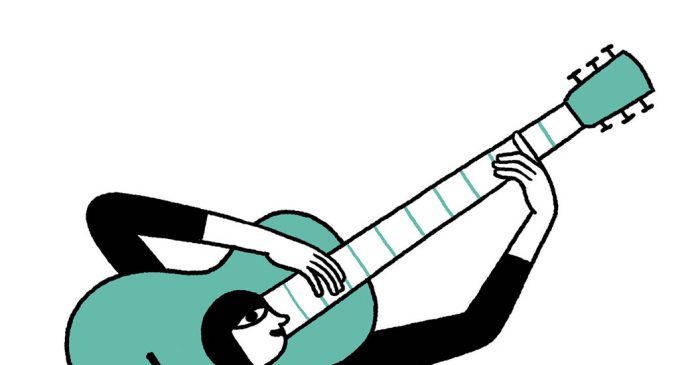
Despite performing for more than a decade, and having seven solo albums to her name, the British folk singer-songwriter Laura Marling insists she’s not a natural entertainer. She calls herself the “subtle event” rather than the life of the party.
Accordingly, instead of serenading her fans with concerts from her home in London, she has made the most of her lockdown by livestreaming weekly guitar tutorials on Instagram, @lauramarling. Since late March, Ms. Marling has posted more than a dozen 10-to-15-minute videos breaking down some of her most famous songs, garnering tens of thousands of views.
Ms. Marling first learned how to play guitar as a child in Hampshire, England, by watching and playing alongside her father, who owned a recording studio and often strummed Joni Mitchell and Neil Young covers for fun. Both artists have heavily influenced Ms. Marling’s work, which, like Mitchell’s and Young’s, often relies on nonstandard tunings.
Her tutorials are geared toward more inexpert guitarists. “I hope that people don’t know that much about the guitar, because I think knowing too much about music stifles your ability to try odd things,” Ms. Marling said in an interview. A basic knowledge of the instrument and tablature language could be useful, but isn’t necessary, she noted.
She recommends that beginners start with the tutorial in which she discusses “The Suite.” The four tracks — “Take the Night Off,” “I Was an Eagle,” “You Know” and “Breathe” from her 2013 album, “Once I Was an Eagle” — were originally written as a single, longer song. “The Suite” requires DADDAD tuning and most of the chords use only two fingers. “It’s such a beautiful tuning and it’s really easy to get your head around,” she said.
She cautions viewers to tune carefully. Turning the tuning keys gently and slowly while keeping your other hand on the strings, over the sound hole, helps prevent string breakage. (To help you nail the exact tunings Ms. Marling uses, there are plenty of free or low-cost guitar tuning apps, like Guitartuna.)
Ms. Marling uses her own oeuvre as a jumping-off point, but she said her tutorials are “not about learning my songs, it’s about exploring the guitar.” Even as a successful musician she has sought out lessons from people she admires, like the producer and songwriter Blake Mills and the guitarist Peter Randall. But she hasn’t yet had the opportunity to learn from women artists she looks up to.
“Learning from female guitarists by female guitarists is really important,” she said. “I wanted for so long a kind of female mentor or somebody to show me un-judgmentally how to grow in all forms of life.”
Join Ms. Marling live every Sunday at 2 p.m. Eastern time from her home in London.
A Quick-Start Guide to Teaching from Home by Andrew Ng
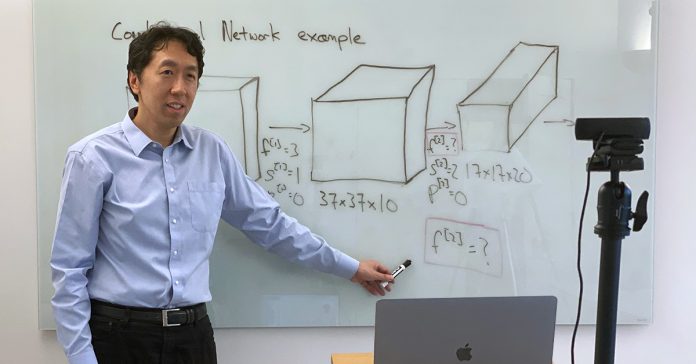

A guide for educators to transition from teaching in the classroom to teaching online with minimal planning and effort.
Recent events have accelerated digital transformation in higher education, requiring educators to quickly shift from teaching live in classrooms to teaching online in their living rooms in the span of weeks. Redesigning an in-person class into a high-quality online offering with limited access to equipment is no easy task, and many of us simply don’t have the time to do so, given the unprecedented circumstances.
With these challenges in mind, I have created a step-by-step “Teaching From Home – Quick Start Guide.” The goal of this guide is to empower all educators to transition from classroom to online teaching with minimal planning and effort, while preserving instructional quality and student experience.
This guide aims to answer four common questions you may have when it comes to teaching from home:
- What kind of teaching setup should I use to maximize pedagogical effectiveness?
- What tools and supplies will I need to set up a professional classroom at home?
- How can I make the online learning experience more interactive for my students?
- How should I standardize best practices for virtual teaching across my department, school, or university?

In the final sections of the guide, I have included instructions on implementation, hardware and software recommendations for different setups, and a shopping list with all the supplies listed for you to get started.
You can download the full guide with all of the details below. I hope you find this resource helpful, and I look forward to supporting the great work you are doing for students around the world.
Andrew Ng
Co-Founder of Coursera; Founder and CEO of Landing AI
Download the full version of “Teaching from Home – Quick Start Guide” here (PDF)
See how Rayan found a new career path in digital marketing
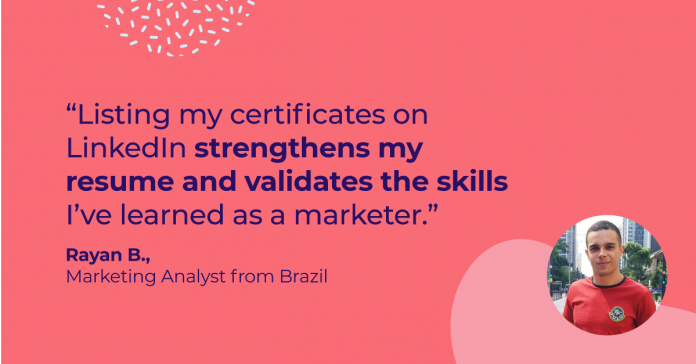

Meet Rayan, a 26-year-old marketing analyst from Belo Horizonte, Brazil. In this post, he discusses his journey to a successful digital marketing career, and how his commitment to learning new skills on Coursera helped make it possible.
Ready for a change
After completing my Bachelor’s degree in Linguistics in 2016, I stayed unemployed for two long years, during which I had a chance to do some self-reflection. I saw myself at a critical turning point where I realized that I wanted to switch career paths. As I was exploring new career options, I came across marketing, listed as one of the ‘Jobs of Tomorrow’ by the World Economic Forum.
In order to get out of my career limbo, I decided that I needed to find ways to build skills and a solid foundation in marketing. It also just so happened that I discovered that the United Nations Volunteers organization provides its registered members free access to Coursera.
Building a foundation in marketing
Before I joined Coursera, it was difficult and time-consuming to find reliable and structured content and to test my learning progress afterwards. Now I’ve completed four courses and I’m applying my skills to my current job.
Here are some of the courses I’ve completed so far:
“I have been listing all these certificates on my LinkedIn profile, which makes my resumé much more attractive.”
Not only does my resume look impressive—filled with the names and logos of world-class institutions—but these certificates also bring me closer to my career goals by validating the skills I’ve learned.
Now I’m working as a marketing analyst, and it is evident to me how all the skills I learned through Coursera prepared me for the real world. I plan to further specialize in digital marketing with additional courses, and hope to one day manage social media and content-marketing projects for a technology-related company in e-commerce or the AI industry.
Some words of advice
“My advice for other learners is to write a list of your career goals and then go to Coursera and search for related courses that teach skills that align with those goals.”
I also recommend that you define weekly study goals, so that your learning progress is consistent instead of sporadic. Interacting and networking with peers on the platform is also a great way to meet professionals in the field you want to get into––you never know when you’ll come across helpful advice that will assist you in your next course or next job!
A Statistics Primer for the Overwhelmed Educator

Factorial ANOVAs are a bit more complicated. A factorial ANOVA means there is more than one factor being examined. Maybe we’re interested in both multiple choice vs. short answer questions as well as whether the questions are factual or applied. There are two factors that require a factorial ANOVA. There can be more factors and they can have more levels (maybe you want to compare multiple-choice to short-answer to essay – that’s 3 levels). Factorial ANOVAs allow us to examine interactions between our factors. For example, Roediger and Karpicke (2006) found that at a short delay, participants performed better when they restudied, but at a longer delay they performed better when they were tested via retrieval practice (1). That is an interaction between two variables: delay (short vs. long) and type of study (restudy vs. retrieval practice).
r: Pearson’s r is used to ask how strong of a relationship exists between two variables. The value of r can range from -1 to 1. An r-value near 0 means that there is no relationship between the variables and a value near 1 (positive or negative) means there is a perfect (maximum strength) relationship. A positive r-value means that as one variable goes up, so does the other. An example here would be the relationship between height and weight; as height goes up, weight also goes up. A negative r-value means that as one variable goes up, the other goes down. An example here would be the relationship between absences and course grades; as absences go up, course grades tend to go down.
Regression: There are many different types of regression and discussing all of them is outside the scope of this blog post, but in general, a regression is a mathematical way of plotting the relationship described by a correlation. The big advantage of using regression is that you can make predictions about what would happen outside the range of data. At the time of this writing, regression lines are becoming very popular as people are looking at linear and logistical regressions to plot the trend line for coronavirus cases and deaths and to make predictions for the coming weeks and months.
p: When statistics are reported, most typically you will see a z, t, F, or r-value referring to the statistical tests above, and then you will see a p-value. The p-value is the exact probably that this effect is due to chance (or the exact probability of obtaining results that are this extreme or more). We are therefore looking for very low values as strong evidence that there is something more going on than just random variability. Traditionally, .05 or 5% has been used as a cut off value for something being considered “statistically significant” (although this method has come under quite a bit of scrutiny in recent years). So, again, statistically significant simply means that there is sufficient evidence to indicate that the results we see are not due to chance.
Effect size: After the p-value, you will often see one more letter (d, ηp2, etc.). This is the effect size, which is exactly what it sounds like. It is the magnitude of the effect and there are different rules of thumb for what constitutes a small, medium, and large effect. This is arguably more important than statistical significance because a very small effect can still be statistically significant without being terribly important. As an example, you could have a weight loss program where you find a statistically significant amount of weight loss, demonstrating that it is real – the weight loss is likely due to the weight loss program, but the magnitude of the loss might only be 1 lb… that small of an effect might not be worth spending money on.
There is much more that could be covered here, but hopefully this is enough to help decipher the results sections of empirical articles. One more final recommendation might be to read the first paragraph or two of the discussion section before going back to reading the results as that section usually begins with a summary of the main findings.
Drawing

Do you like to draw, sketch or doodle? What do you tend to depict when you do? Do you find it meditative? Tell us in the comments.
Or, if you don’t draw, try the easy six steps recommended here, then come back and tell us how they worked out by posting a comment. What did you draw? How did it turn out? Was it fun?
Find many more ways to use our Picture Prompt feature in this lesson plan. You can find all our Picture Prompts in this column.
Word + Quiz: ablation
ablation a-ˈblā-shən noun
1. the erosive process that reduces the size of glaciers
2. surgical removal of a body part or tissue
_________
The word ablation has appeared in two articles on NYTimes.com in the past year, including on Feb. 27 in “Raising a Glass to Chronic Disease” by Susan Gubar:
“Alesha,” I said, “you are my guardian angel, but remember the ileostomy!” With a compromised digestive system, it is impossible to eat a sufficient portion of the foods she listed without suffering some sort of ghastly bowel blockage.
“Ah, yes,” she nodded. “Maybe peanut butter … or bananas!”
Bananas, neatly packed in their lined coats, are a portable source of nourishment — for those who can stomach them. I’m wondering if they lose their virtue if they are baked into banana bread, when a late-night email pops up from my friend Nancy K. Miller. A cancer patient, she just learned that a nodule in her lung is growing. She must choose surgery, radiation or ablation, all far worse prospects than gagging down a banana.
_________
