fbpx
Home Blog Page 1493

What Role Should Celebrities Have During the Coronavirus Crisis?

0
What Role Should Celebrities Have During the Coronavirus Crisis?

In “Celebrity Culture Is Burning,” Amanda Hess writes about the changing relationship between celebrities and the public during the pandemic:

America is in crisis, but the celebrities are thriving. They are beaming into our homes, reminding us to stay indoors and “stay positive,” as “we’re all in this together.” When I watch their selfie public service announcements, I find my attention drifting to the edges of the frame: to the understated wall molding visible behind Robert DeNiro’s shoulder; to the Craftsman beams on Priyanka Chopra’s balcony; to the equine wallpaper framing Zoë Kravitz’s crackling fireplace.

“Staying home is my superpower,” the “Wonder Woman” star Gal Gadot reported from her walk-in closet. Ryan Reynolds urged his fans to “work together to flatten the curve” from within his rustic loft. When Jennifer Lopez posted a video of her family sheltering in the backyard of Alex Rodriguez’s vast Miami compound, the public snapped.

“We all hate you,” was one representative response.

Among the social impacts of the coronavirus is its swift dismantling of the cult of celebrity. The famous are ambassadors of the meritocracy; they represent the American pursuit of wealth through talent, charm and hard work. But the dream of class mobility dissipates when society locks down, the economy stalls, the death count mounts and everyone’s future is frozen inside their own crowded apartment or palatial mansion. The difference between the two has never been more obvious. The #guillotine2020 hashtag is jumping. As grocery aisles turn bare, some have suggested that perhaps they ought to eat the rich.

So when Pharrell Williams asked his followers to donate to aid front line responders, they virtually grabbed him by the pants and shook him upside down, telling him to empty his own deep pockets. Kristen Bell and Dax Shepard have been “outed” as landlords. As Ellen DeGeneres lounged on her sofa, video-chatting with famous friends, the comedian Kevin T. Porter solicited stories from service workers and Hollywood peons who had experienced run-ins with DeGeneres, whom he called “notoriously one of the meanest people alive.”

Students 13 and older are invited to comment. All comments are moderated by the Learning Network staff, but please keep in mind that once your comment is accepted, it will be made public.

What Questions Do You Have About the Coronavirus?

0
What Questions Do You Have About the Coronavirus?

Find all our Student Opinion questions here.

Is that doorknob safe to touch? Can I hug my grandparents? Can I have friends over? My school is closed. When will it reopen?

As the coronavirus outbreak grows, so do our lists of questions.

What questions do you have — big and small? Whether it’s about the science of the virus, the health and safety of you and others, or the broader political and economic impact of the pandemic, tell us what you want to know more about.

In “Coronavirus Tips: Frequently Asked Questions and Advice,” The Times writes:

As the coronavirus outbreak has become a pandemic, it has left thousands of people dead, reaching nearly every continent. Daily life for millions more has been upended in ways both big and small.

Offices and factories have shut down. Hospitals are scrambling for equipment and beds. With many people required to stay at home, people working in grocery stores and retail shops are now essential workers.

The crisis has injected uncertainty into what used to be mundane tasks for many people: Is that doorknob safe to touch? Can I go to the gym or do my laundry? Can I hug my grandparents?

And it has made planning for the future nearly impossible, for millions of people who watched their retirement accounts dip with the whims of the stock market, for those worried about their mortgage payments, for children whose schools shut down.

Governments around the world are reacting in varying degrees to the crisis. In the United States, Congress this week agreed to a $2 trillion recovery plan, including direct payments to many American citizens.

We know you have questions about staying healthy, about what to do if you’ve lost your job, what has happened to your retirement investments and which businesses are still open and why.

The article goes on to provide answers to questions on health, money, staying in, going out, politics, science and travel. Here are excerpts from six:

How worried should I be about getting sick?

Everyone should be concerned about contracting the new coronavirus — if not for yourself, then to protect others who are at risk of becoming severely ill. As with the flu, the virus is more dangerous for people who are older than 60, people who have a weakened immune system, and people with an underlying condition, like diabetes, asthma or another chronic illness.

What does ‘stay at home’ mean?

Authorities in different states have used different phrases while asking people to stay home.

Generally, it means you should limit trips outside except for essential needs. You can still go for walks and exercise, but do it in a way that keeps you several feet away from other people. You can still go to the grocery store, but try to go once a week instead of more frequently. And wash your hands when you come back inside.

How long can the virus live on a doorknob? On cash? On my keyboard?

The coronavirus can live up to 72 hours on some surfaces, like plastic and steel, according to a recent study. It can survive on cardboard for up to 24 hours.

The good news is that coronaviruses are easy to destroy. A disinfectant on a surface will render it harmless, according to Gary Whittaker, a professor of virology at the Cornell University College of Veterinary Medicine.

Although the W.H.O. has not said that cash transmits the virus, the organization said in a statement that “it is good hygiene practice to wash your hands after handling money, especially if eating or handling food.”

Can I visit my grandparents?

You shouldn’t. But if Skype, FaceTime or another app is an option, you can make a virtual visit. And there’s always the old-fashioned telephone call, too.

The virus is especially bad for older people like your grandma and grandpa, which means it’s even more important for them to stay away from other people. It can be hard, but this keeps them healthier.

Can I play on the playground?

Probably not. You shouldn’t touch the slides or swings (the virus can live on them, whether they are plastic or metal), and you’d have to stay about six feet away from other kids. Maybe go to a field and try a game of catch with one of your parents.

My school is closed. When will it reopen?

It depends. Schools are closed for different lengths of time, and it’s unclear when it will be safe to go back. Some schools are trying learning-from-home programs, and others are offering free lunches for pick-up. Ask your parents.

Students, read the “Just For Kids” section and at least 5 other questions, then tell us:

  • What questions do you have about the coronavirus? No question is too big or small, trivial or silly. Let us know what you want answers to.

  • Which answers provided in the article were most helpful? Surprising? Informative? Explain why.

  • How will you change your behavior based on the facts and information provided here? Give at least one example.

  • Where do you get your information on the coronavirus? How do you know it is reliable and accurate? In “That ‘Miracle Cure’ You Saw on Facebook? It Won’t Stop the Coronavirus,” Jacey Fortin writes:

There is no known cure for the new coronavirus.

Scientists are scrambling to find treatments and vaccines for the virus, which causes the illness Covid-19, and health care professionals are working to stop the spread of misinformation.

On social media, memes have become efficient vectors of bad advice, often with urgent instructions or dystopian graphics. One, misstating the benefits of gargling salty water, shows the virus as a cluster of green burrs infecting the throat of a glowing blue man.

One series of posts with bad advice — including claims that sunshine could kill the virus and that ice cream should be avoided — tacked on the name UNICEF.

Have you seen claims of cures and treatments on social media? Have you or people you know ever believed them to be true? How do you think we can stop the spread of misinformation?

Your Learning Space

0
Your Learning Space

Has your school shifted to remote learning in response to the coronavirus pandemic? Do you have a dedicated space for learning in your home? What does it look like? What things have you included to help you learn and make your space comfortable? Do you like working there? Why or why not?

What would your ideal learning-from-home space look like? Where would it be? How would it be decorated? What touches would make it feel personal, organized and inspiring?

Tell us in the comments, then read the related article to learn about some ways you can make your space more conducive to learning.


Find many more ways to use our Picture Prompt feature in this lesson plan. You can find all our Picture Prompts in this column.

Word + Quiz: limn

0
Word + Quiz: limn

1. make a portrait of

2. trace the shape of

_________

The word limn has appeared in eight articles on NYTimes.com in the past year, including on Sept. 17 in “More and More Children Are Feeling Anxious. This Graphic Novelist Is Trying to Help” by Scott Stossel:

Children are struggling. Over the last decade, cases of anxiety disorder in young people have increased by 20 percent or more. Rates of suicide and suicidal thinking have risen sharply among young people of all ages — including, horrifyingly, children under 11. Scholars debate why this is happening — plausible culprits include social media, video gaming, helicopter parenting, school shootings and lockdown drills, overweening college pressure, and both the over- and under-prescribing of medication, among other things — but the fact of steadily rising numbers of children with anxiety and depression is hard to dispute.

Telgemeier is not, in a book aimed at third to eighth graders, out to solve the mystery of this rise or limn its sociological roots. What she does do, in keeping with the mode of her previous books, is provide a remarkably well-rendered and accessible first-person account of what it’s like to experience clinical anxiety as a 10-year-old girl — which, I can say with authority, is also pretty much what it’s like to experience clinical anxiety as a 10-year-old boy.

_________

The Digital Divide: Researching the Challenges of Online Learning for Many Students

0
The Digital Divide: Researching the Challenges of Online Learning for Many Students

Find all our Lessons of the Day here.

Featured Article: “She’s 10, Homeless and Eager to Learn. But She Has No Internet.” by Nikita Stewart

In recent weeks, many schools have turned to online learning in an attempt to stop the spread of Covid-19, the disease caused by the novel coronavirus. On March 23, the New York City public school system moved its 1,800 schools online. However, the city has an estimated 114,000 children who live in shelters and unstable housing, which makes offering accessible online education a challenge.

In this lesson you will read about several New York City kids who are navigating online education while living in homeless shelters or homes without internet access. Then, you will create a “one-pager” response to the article, or research your region’s plan for providing online education for students who are homeless.

The featured article profiles six children and teenagers in New York City, beginning with this three-minute video focusing on one child: Allia Phillips. As you watch the video, write down your responses:

  • One quote from the video that you found moving or insightful.

  • Two questions or ideas that you have after watching the video.

  • Three images or stills that you found interesting or meaningful.

Now, read the featured article in its entirety to learn more about Allia and other young people in New York City who are also navigating online education without having permanent housing.

Read the article, then answer the following questions:

1. In your own words, summarize the different struggles that students, parents and school administrators have faced during New York City’s move to online education. Then, summarize some of the attempted solutions and their effectiveness.

2. Richard Carranza, the schools chancellor, and Christine Quinn, executive director of the nonprofit Win, expressed two very different outlooks on the remote-learning situation in New York City. How would you characterize their perspectives? Why do you think they see things so differently?

3. What did Estrella Montanez, the director of the Nelson Avenue Family Residence in the Bronx, notice when she and her staff went door-to-door in the shelter where they work? What different solutions has she been exploring?

4. What are some of the questions and concerns that Jennifer March, executive director of the Citizens’ Committee for Children, has raised? What do you think of her solutions? Do you have other ideas of what could be done?

5. The article profiles six New York City kids: Allia Phillips; the sisters Kamiyah Williams and Chastity Battle; the brothers Khalil and Tahir; and J’Marion Brown. Choose one young person to focus on and answer:

  • How has their living situation affected their online education experience?

  • What solutions have they and their families explored and implemented?

  • What more do you think could be done to offer support? Who do you think is responsible for providing additional support or services?

Option I: One-Pager

What is your emotional reaction to reading the article? Are you able to empathize — “sense other people’s emotions, coupled with the ability to imagine what someone else might be thinking or feeling” — with any of the young people featured in the article? Does the article make you think of anything you have ever gone through, or of anything someone you care about has gone through? Or, do the stories feel very different from anything you’ve experienced? If the latter, are you able to imagine what the children and teenagers in the article might feel?

Now, create an emotional and visual response to the article by designing a One-Pager. Look back through the article and choose:

You can organize your selections on this One-Pager worksheet. If you have more time, design a visually compelling one-pager and explain the importance of the article. If you choose this option, you can add:

  • An additional quote and image.

  • A phrase from the article that can serve as the border of your one-pager.

  • The theme of the article, in your own words, along with problems and solutions.

  • A feeling that you are left with after reading the article.

Option II: Take Action

If public schools in your area are closed because of the coronavirus pandemic, do you know how students without housing or stable living situations are being supported in online learning? If schools in your area have not yet closed, do you know anything about your district’s plan to support those students in the event schools close?

To answer these questions, conduct some research by looking on your school district’s website and in local newspapers. Once you have an understanding of the services that are, or will be, offered to students without stable housing, answer the following questions:

Summarize your district’s plan for providing educational services to students without housing during the coronavirus pandemic.

Evaluate the plan based on what you learned about the struggles in New York City:

  • Is there a plan in place for distributing devices such as laptops or iPads?

  • Is there a way to ensure that all students will have reliable access to the internet?

  • Has any work been done to ensure that students can have a quiet and safe place to work during the day?

  • What is being offered for children who struggle in school or need more support in certain subjects, like J’Marion Brown discussed in the article?

Based on your evaluation, write a letter to your district’s superintendent offering suggestions on how he or she can best accommodate the learning needs of students without housing during the pandemic.

Empty Spaces

0
Empty Spaces

In recent weeks, the world’s busiest thoroughfares have become desolate. Airports are ghost towns. Stadiums sit empty. Even Disneyland has closed.

But the barren landscapes provoke a more playful question: What typically-crowded places have you dreamed of having all to yourself?

Would you visit an amusement park without having to wait in lines; run wild on a mall shopping spree; explore a renowned museum with free rein — or is there some other place or activity you’d love to enjoy in solitude?

Tell us in the comments, then read the related article to see a stunning collection of eerily-empty locations around the globe.

Film Club: ‘She’s an Honors Student. And Homeless. Will the Virtual Classroom Reach Her?’

0
Film Club: ‘She’s an Honors Student. And Homeless. Will the Virtual Classroom Reach Her?’

5. After you have posted, try reading back to see what others have said, then respond to someone else by posting another comment. Use the “Reply” button or the @ symbol to address that student directly.

Allia Phillips was excited about picking up an iPad from her school in Harlem last week. She did not want to miss any classes and hoped to land on the fourth-grade honor roll again.

On Monday, the first day that New York City public schools began remote learning, the 10-year-old placed her iPad on a tray she set up over her pillow on a twin bed in a studio that she shares with her mother and grandmother inside a homeless shelter on the Upper West Side.

And then, Allia saw nothing.

“I went downstairs to find out that they don’t have any internet,” said Kasha Phillips-Lewis, Allia’s mother. “You’re screwing up my daughter’s education. You want to screw me up? Fine. But not my daughter’s education.”

The Department of Education, which runs the largest school system in the country with more than 1.1 million students, began attempting to teach all students through remote learning this week because schools were closed to slow the spread of the coronavirus.

Shuttering the vast system, which includes 1,800 schools, was a serious challenge for the city, and the large-scale, indefinite school closures are uncharted territory, altering the lives and routines of 75,000 teachers, over one million children, and well over 1 million parents.

Add to that the complication of adapting traditional lesson plans to be taught online, and the city has been faced with an enormous and unprecedented undertaking. Recreating a classroom on the internet is a logistical challenge that will comes with a learning curve for students, teachers and parents.

And it is already leaving poor and vulnerable students behind — especially the estimated 114,000 children who live in shelters and unstable housing.

Resources to Support your Learners: Stay Informed & Productive During the Coronavirus Crisis

0
Resources to Support your Learners: Stay Informed & Productive During the Coronavirus Crisis

By Alison Lands, Skills Transformation Consultant

As companies scramble to secure the health and safety of employees, virtualize their operations, and check-in with their customers (not to mention find a quiet + comfortable + decent-looking nook from which to work virtually in their homes!), a new level of leadership is being demanded from every individual along the chain of command. Among those tapped to lean in and shape the COVID-19 professional landscape, the Learning & Development function is fast emerging as an unsung hero of social distancing and the pandemic response. 

With as many as 1 in 3 workers around the globe and 75% of Americans subject to shelter-in-place and stay-at-home orders, traffic to online learning platforms has spiked, with a 60% increase in new registrations in recent weeks. According to McKinsey, “businesses can’t afford to put capability building on hold [due to coronavirus]. Whether the effort is reskilling at the business-unit level or a company-wide aspirational transformation, companies can’t simply push the pause button on critical workplace learning, even as they move rapidly to put employee safety first.” 

L&D leaders and business managers are seizing this opportunity to leverage training to comfort, educate, and empower employees in a climate of uncertainty, and in doing so, position businesses for life after COVID-19. In the spirit of supporting companies globally, Coursera for Business has launched a curated series of curricula designed to engage enterprise learners, support their productivity, and empower them to be leaders in their own right. 

The content showcased above could be disseminated to employees, accompanied by creative messaging to support remote workers and provide encouragement over what looks to be an extended work-from-home timeline. In addition, to help our broader user community stay connected during this critical time, we’re launching new, free resources accessible to everyone, as well as surfacing interesting course collections, community discussions, and expert interviews to help your teams and their extended families stay engaged, positive, and motivated throughout this transition.

Whether we work in an office, at home, or from the laundry room/closet/garage, the criticality of maintaining our momentum on learning represents not only a business imperative, but an overwhelmingly positive response to a grave economic and spiritual challenge for our society. We at Coursera support our Enterprise customers and stand ready to work with you and enable your teams to persevere during this time of uncertainty and challenge. Please let us know how we can support you.


Word + Quiz: stochastic

0
Word + Quiz: stochastic

: being or having a random variable

_________

The word stochastic has appeared in five articles on NYTimes.com in the past year, including on March 6 in the book review “How Rebecca Solnit Found Her Voice” by Jenny Odell:

… Chance encounters lead to further chance encounters that sometimes turn into a book, or to ideas Solnit revisits from an unexpected angle. One chapter begins with an allusion to “hopscotch,” a metaphor she invokes for returning to the same subject, or point in time, armed with new knowledge. It also describes the memoir’s recursive style, which an impatient reader may find frustrating. Others will see it as true to experience, memory and the process of growth.

The stochastic nature of social change has been one of Solnit’s guiding concerns, and here it’s transposed to a personal register: How does a person change? We rarely know what something means when it happens to us. We may be finding out for the rest of our lives.

_________

How Much Do You Know About Bangladesh?

0
How Much Do You Know About Bangladesh?

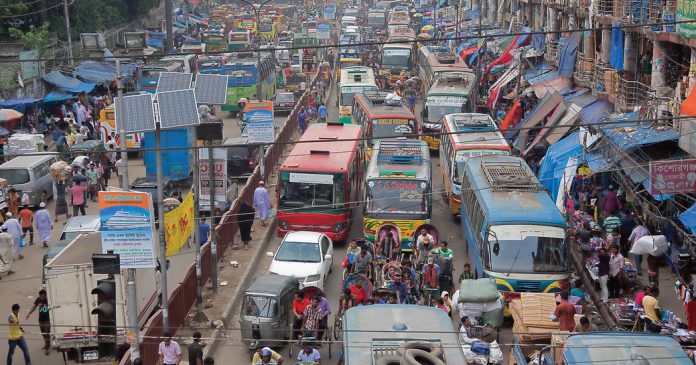
Can you find Bangladesh on a map? What else do you know about this South Asian nation with a population of about 165 million people?