fbpx
Home Blog Page 1492

What is quarantine and why is it effective?

0
What is quarantine and why is it effective?

This blog was published on 3 April 2020. For the latest advice on how to respond to the coronavirus, please consult the World Health Organization and take guidance from your national government’s latest advice.

Before 2020, the word quarantine might have reminded you of pets in cages at border control or tropical disease prevention in history books. 

However, in the past four months, quarantine has become something of a buzzword that’s splashed over front pages and rings out of radios and televisions all over the English speaking world.

What is quarantine?

The current Oxford dictionary definition of quarantine is: 

a state, period, or place of isolation in which people or animals that have arrived from elsewhere or been exposed to infectious or contagious disease are placed.

However, the concept of putting people who could be unwell into isolation isn’t new.

A short history of quarantine

The word quarantine comes from the Italian word, ‘quarantena’, which means ‘forty days’. 

It came about in the Venetian language in the fourteenth-century, and was used to describe the period all ships at the time were required to spend isolating before anyone could go ashore during the bubonic plague epidemic.

According to the Centers for Disease Control and Prevention (CDC), this was the first recorded example of quarantine as we know it today. 

Similar, more recent examples include the 1799 outbreak of yellow fever in Philadelphia in the USA. 

The government quarantined hundreds of sailors in a hospital just outside of the city in an attempt to stop the spread. However, the fever comes from mosquitos so it was the cold winter which finally saw the outbreak end. 

Americans faced quarantine again in New York in 1892 after a city-wide outbreak of Typhus. It was suspected to have come from a boat carrying immigrants who then spread it amongst tenement housing.

Tents were used to house suspected exposed cases on an island in the East River.

One of the most widespread pandemics before coronavirus, the flu pandemic of 1918, also saw many efforts made towards enforcing quarantine and isolation.

Public gatherings were banned and people were asked to stay at home, though it proved difficult to enforce these measures on a wide scale.

What does quarantine mean in terms of the coronavirus?

Quarantine during the time of the coronavirus means separating and restricting movement for anyone who is or may have been exposed to the virus. This means confining the person in question to one place, be it a medical facility or their home.

Being in quarantine means you can monitor when symptoms develop and, if it turns out you have been exposed, you will not spread the virus to others as you and the virus will remain in your home. 

Quarantine is a public health strategy and the World Health Organisation advises that it “may delay the peak of an epidemic in an area where local transmission is ongoing”.

What’s the difference between self-isolating and quarantine?

Though both self-isolation and quarantine exist to decrease public exposure to a disease, according to the CDC:

  • isolation separates people with a contagious disease from people who are not ill
  • quarantine separates and restricts the movement of people who are not ill but may have been exposed to a contagious disease to see if they become ill.

In other words, quarantine isn’t reserved for people who are ill. People who appear healthy can still be quarantined. 

Whilst there is a difference between isolation and quarantine, the measures you take to self-quarantine or isolate at home are similar. 

How to self-quarantine

Separation

Unless you live alone, when living in quarantine, WHO recommends you should make sure you have a room to yourself that is ventilated. Preferably, you’ll also have your own bathroom.

You should not leave the house for non-essential reasons (eg to go to work if you can work from home) and you should not come into contact with any other people.

Quarantine should last for the length of the incubation period of the virus, that means the time between being potentially exposed and potentially showing symptoms. For coronavirus, this has been recommended by the CDC to be 14 days. If you develop symptoms during quarantine, you should start your period of isolation again.

Hygiene

According to Unicef, the spread of most respiratory viruses, like coronavirus, occurs when mucus or droplets containing the virus get into your body through your eyes, nose or throat. 

Mostly, this happens through your hands. Hands are also one of the most common ways that viruses spread to other people through touching the same thing as others.

Washing your hands frequently with soap and water for at least twenty seconds is a cheap and effective way of helping to remove traces of the virus from your hands. 

WHO also advises that you cough into your elbow or a tissue and dispose of any rubbish in a double-bagged bin bag, separate to the rest of your household waste. 

Monitoring

Quarantine is a preventative measure so you should consistently take note of how you’re feeling. 

If you feel any symptoms, no matter how small, you should note down what they are and when you first felt them. This will act as guidance for any potential next steps, eg starting day 1 of 7 days of self-isolation.


According to the CDC, quarantine is medically “very effective in protecting the public from disease”. Though often requiring huge effort and brutal change, following quarantine measures when required is a small price to pay for long term public health.

If you’d like to learn more about how to self-isolate, check out our blog post about the difference between self-isolation and social distancing.

For the latest advice on how to respond to the coronavirus, please consult the World Health Organization and take guidance from your national government’s latest advice.

What is lockdown and what does it mean for you?

0
What is lockdown and what does it mean for you?

This blog was published on 3 April 2020. For the latest on how to respond to the coronavirus, please consult the World Health Organization and take guidance from your national government’s latest advice.


On Monday 23 March, Prime Minister Boris Johnson announced that Britain would be put into a state of lockdown in response to the coronavirus pandemic. 

Placing it in line with other countries around the world, there would now be, he explained, limits to public gatherings, and people are being advised to stay inside as much as possible. 

What does lockdown mean for the UK?

  • You can’t visit friends in their home.
  • You can’t meet family members who don’t live with you.
  • You can leave home if you’re a worker performing essential work.
  • You can exercise once a day.
  • You can walk your dog once a day as part of your daily exercise.
  • You can go to donate blood.
  • You can shop for essentials (eg. food and medicine).
  • You can leave home for medical purposes (eg. a trip to the doctor or hospital).
  • Children under 18 with separated parents can visit both homes.
  • Emergency callouts (eg. a plumber fixing a boiler) can happen, but social distancing rules need to be observed (people standing 2 metres apart).
  • Weddings, baptisms, and sporting events are banned.

The exact regulations and advice may differ depending on what part of the UK you are in. Check your national and regional government services for the latest updates.

Is lockdown different from quarantine?

Lockdown is an amorphous term, which includes quarantine measures in its definition. According to the CDC, quarantine separates and restricts the movement of people who are not ill but may have been exposed to a contagious disease to see if they become ill.

Lockdown is a term that refers to measures being placed on the whole of society to restrict movement and services to their essentials, of which mass quarantining is a part.

For more information on what quarantine means, check out our quarantine explainer.

Why are we in lockdown?

The thinking behind lockdown is to ‘flatten the curve’ of the pace of advance of the virus. 

COVID-19 is a relatively contagious disease: seemingly twice as contagious as the flu, and less contagious than MERS.

Because a relatively high proportion of people who get it require hospital treatment – some estimates being as high as 20% – coronavirus threatens to overwhelm national health systems in a very short period of time if cases are left unchecked and allowed to spread.

However, by limiting the movement of the public, the movement of the disease can be similarly restricted, meaning that not everyone gets it at once – and hospitals don’t become overloaded with patients.

This might mean us all staying inside for longer, but the payoff is trying to prevent doctors from having to triage patients in large numbers – as happened in Italy. 

If you want to know more, the London School of Hygiene & Tropical Medicine’s course on COVID-19 covers how coronavirus spreads, how we can ‘flatten the curve’, and more.

Is lockdown effective?

Coronavirus first originated in Asia, and countries there were equally the first to use lockdown as a strategy to stop the virus from spreading and to protect the integrity of their healthcare systems.

We can see that the data shows clearly that lockdown does work as a method of preventing viral spread.

China was the first country to enforce lockdown, in the Hubei region where COVID-19 was discovered. The country has reported a levelling off of infections since lockdown was introduced, and Hubei recently announced it had seen no new cases in five consecutive days. 

Three months since lockdown began, public transport is now running again in Wuhan, Hubei’s capital.

China:

Similarly, South Korea has also seen its curve flatten:

However, South Korea was able to do this without the widespread measures on movement seen in China and elsewhere. Instead, they focussed on extensive testing, using GPS to monitor and track anyone found to carry the virus so that they (and anyone they came into contact with) could be quarantined.

This is an important reminder that lockdown is only one aspect of containment and that testing (as the World Health Organisation have stressed) is vital too.

Which countries are in lockdown and when did they start?*

Countries have been going into lockdown at various points in the pandemic:

  • China: Began lockdown 23 January with the death toll at 17
  • Italy: Began lockdown 9 March with the death toll at 463
  • Spain: Began lockdown 15 March with the death toll at 288
  • France: Began lockdown 16 March with the death toll at 148
  • UK: Began lockdown 24 March with the death toll at 355
  • New Zealand: Began lockdown 25 March with the death toll at 0
  • India: Began lockdown 25 March with the death toll at 10
  • South Africa: Began lockdown 26 March with the death toll at 0.

Many European countries are severely restricting movement, including Norway, Denmark, Switzerland, and Austria. Sweden has so far resisted instituting lockdown measures.

There have also been lockdowns announced by states or cities that have been particularly badly affected – Saudi Arabia has placed Riyadh in lockdown, for example.

In the United States the following states have banned large public gatherings and ordered citizens to stay at home:

  • California
  • Connecticut
  • Delaware
  • Florida
  • Georgia
  • Hawaii
  • Illinois
  • Indiana
  • Louisiana
  • Maryland
  • Massachusetts
  • Michigan
  • Nevada
  • New Jersey
  • New Mexico
  • New York
  • Ohio
  • Oregon
  • Pennsylvania
  • Rhode Island
  • Texas
  • Washington, D.C.
  • Washington state
  • West Virginia
  • Wisconsin.

*Correct as of 3 April

Category Coronavirus, Current Issues

Home Cooking

0
Home Cooking

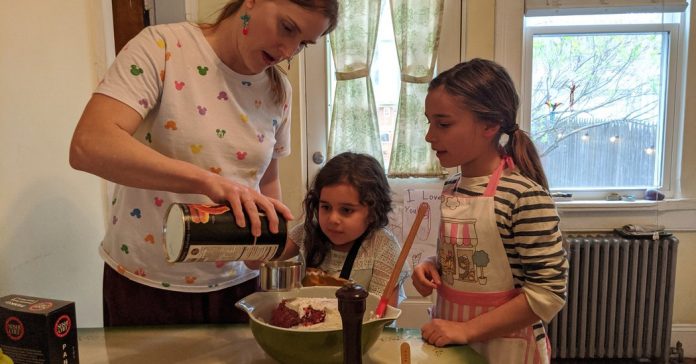
Thanks to recent world events, many of us are spending a lot more time indoors with family. And some are falling back on a surefire method of bonding: cooking and eating together.

Are you connecting more with your loved ones at mealtime? Have you been experimenting with any new recipes to pass the time? What foods does your family enjoy making and eating? What are you favorite comfort foods?

Tell us in the comments, then read the related article to learn more about cooking while social distancing.


Find many more ways to use our Picture Prompt feature in this lesson plan. You can find all our Picture Prompts in this column.

Word + Quiz: lacuna

0
Word + Quiz: lacuna

1. a blank gap or missing part

2. an ornamental sunken panel in a ceiling or dome

_________

The word lacuna has appeared in six articles on NYTimes.com in the past year, including on Sept. 15 in “A Big New Biography of Susan Sontag Digs to Find the Person Beneath the Icon” by Nina Siegal:

Moser quotes from a letter that Susan wrote to Zwick, her sister, in which she describes her work for Rieff: “He corrects what I have written + submits it under his own name. In other words, I’m a ghost writer!” It’s part of Moser’s establishing a case that Sontag gave up rights to authorship of the Freud book in exchange for custody of her son in the couple’s subsequent divorce.

“Of course she wrote it,” Zwick said in our interview. “We always knew it. A lot of people always knew it.”

Moser saw a copy of the book in which Rieff wrote a personal dedication to Sontag, crediting her as a co-author 40 years later. But he never found a signed legal agreement, which would have settled the matter for good.

“It’s an interesting lacuna,” Moser said. “There’s almost nothing about that in the archive. She talked about it all the time in her life; it was an episode that was really traumatic for her.”

_________

What’s Going On in This Graph? | April 8, 2020

0
What’s Going On in This Graph? | April 8, 2020

The interactive graph above, showing the bus ridership among the 15 largest transit agencies for 2011 to 2020, appeared elsewhere on NYTimes.com. The graph below shows bus ridership for four additional cities.

By Friday morning, April 10, we will provide the “Reveal” — the graphs’ free online link, additional background and questions, shout outs highlighting student comments and headlines, and Stat Nuggets.

After looking closely at the graphs above (or at this full-size image), think about these three questions:

  • What do you notice? If you make a claim, tell us what you noticed that supports your claim.

  • What do you wonder? What are you curious about that comes from what you notice in the graphs?

The questions are intended to build on one another, so try to answer them in order. Start with “I notice,” then “I wonder,” and end with a catchy headline.

2. Next, join the conversation by clicking on the comment button and posting in the box that opens on the right. (Students 13 and older are invited to comment online. Teachers of younger students are welcome to post what their students say.)

3. After you have posted, read what others have said, then respond to someone else by posting a comment. Use the “Reply” button or the @ symbol to address that student directly.

On Wednesday, April 8, our collaborator, the American Statistical Association, will facilitate this discussion from 9 a.m. to 2 p.m. Eastern time to help students’ understanding go deeper. You might use their responses as models for your own.

4. By Friday morning, April 10, we will reveal more information about the graphs at the bottom of this post. Students, we encourage you to post an additional comment after reading the reveal. How does the original article and the moderators’ comments help you see the graphs differently? Try to incorporate the statistical terms defined in the Stat Nuggets in your response.


Looking Back

0
Looking Back

What story does this image inspire for you?

Use your imagination to write the opening of a short story of poem inspired by this illustration — or tell us about a memory from your own life that this picture makes you think of.

Post it in the comments, then read the related Opinion essay to find out what this image is about.


Find many more ways to use our Picture Prompt feature in this lesson plan. You can find all our Picture Prompts in this column.

Weekly News Quiz for Students: Stimulus Bill, Social Distancing Guidelines, Mister Rogers

0
Weekly News Quiz for Students: Stimulus Bill, Social Distancing Guidelines, Mister Rogers

Above is an image related to one of the news stories we followed over the past week. Do you know what it shows? At the bottom of this quiz, you’ll find the answer.

Have you been paying attention to the news recently? See how many of these 10 questions you can get right.

GUEST POST: The Power of Metacognition in Everyday Life

0
GUEST POST: The Power of Metacognition in Everyday Life

The inner voice and inner ear may be central to consciousness (2). The point is that talking to yourself is a powerful tool for successful living. I have previously described how to use your inner voice in order to practice metacognitive quality-control of your reading and self-regulation of your learning. You can learn how to carry out this activity simply by holding an inner dialogue as you consume academic content. As you read or consume academic content, ask yourself questions such as these:

  • Does this remind me of anything in another unrelated domain of knowledge?

  • Can I think of anything else I know that contradicts this concept?

  • What other things that I already know support the veracity of this concept?

  • Can I think of any practical examples of this?

  • Is this the first time that I’ve come across this nugget of knowledge?

  • Where else have I come across this idea?

  • Who else has tried to teach me this before?

  • How certain am I that this is true and correct?

  • Does this relate to anything else that I already know?

  • Where else in life can I find an example of this?

  • What other related concepts come to mind?

  • How difficult was it for me to grasp this?

  • If this is a WHAT, then can I explain the WHY?

  • How can this information be applied in my life?

  • Why is this important to know?

  • What else do I know about this topic?

  • What else would I like to learn about this subject?

  • Do I fully understand this?

  • Can I break this down into smaller parts?

  • How would I explain this to a child?

  • How does this fit in with the rest of what I know about this subject?

  • Is this information reliable?

  • Is this totally believable?

  • What, if anything, surprises me about this?

  • Is this easy to grasp?

  • Do I find this interesting and why?

  • How can I apply this in the real world?

  • Why is this important to know?

  • Am I curious to learn more about this?

  • What else might I want to learn more about because of this?

  • What does this mean to me?

  • Do I need to consult another source to better understand this?

  • What questions does this raise for me?

  • Does this have any broader implications?

  • Why is this important?

  • What other ways could I express this concept?

  • Does this bring any examples to mind?

  • Would I like to be able to remember this forever?

  • Should I consult another source?

  • How would I succinctly summarize this?

It’s widely accepted that metacognition has a central role in achieving academic success. But what role does it have in everyday life?

Every goal we pursue in life requires thought and planning behavior. To the degree that we can bring the skill of metacognition to bear, we can quality-control our thinking and planning in order to optimize our outcomes.

Many of us don’t purposely use our inner voice or ear to hold rational and reflective inner dialogues. It’s very easy to use them simply to fret, worry, levy blame, relive the past, and complain about our life circumstances. But there are many more useful activities that we can exercise in order to achieve more successful lives. Let me give you a couple of examples.

We can live more successfully by employing metacognition to properly assess for truthiness. Truth must be based on real rather than alternative facts. While we have become a highly polarized society, everyone still needs to embrace reality in order to live successful lives. But how do we test for the truth? Unfortunately, almost everyone falls victim to one of the most pernicious of the cognitive biases, confirmation bias. This is the bias where once we adopt an opinion, we lose the mental agility to change our minds. Instead, we search the world for data and in fact, we tend to interpret all future data in a manner that confirms what we already believe, silently ignoring anything that refutes our existing beliefs. So, how can you employ some metacognition to avoid this trap? We need to ask ourselves “What would this belief look like if it were untrue?”, “How can I disprove this opinion?” and “Could those folks with the opposite opinion actually be right?” We need to approach our opinions with vigilance and test them against the real world. It’s easy to have an opinion but the most successful people know how to reassess their beliefs. They are able to test their opinions without preconception and change their views when the real world shows them that they are wrong. Learn to develop a falsification bias! Hold metacognitive dialogues and challenge your thinking and beliefs.

This final example somewhat conflates cognition and metacognition. But I think that it is a story worth telling. We sometimes need to invent a solution for a serious everyday life problem. A tool that some of the greatest scientists and philosophers have utilized, throughout history, is the thought experiment.

One of my favorite examples of a thought experiment is the story of “Houston. We have a problem!” in Apollo 13. If you saw the movie version [please watch this short video to refresh your memory] you may recall that the astronauts experienced an oxygen tank failure because of an explosion during a routine stirring operation. They soon were running out of life-sustaining oxygen needed for breathing and the generation of electrical power. A NASA team on the ground used an 8-step approach that saved the lives of the astronauts.

  1. Define the problem

  2. Determine goals/objectives

  3. Generate an array of alternative solutions

  4. Evaluate the possible consequences of each solution

  5. Use this analysis to choose one or more courses of action

  6. Plan the implementation

  7. Implement with full commitment

  8. Adapt as needed based upon incoming data

While the experiment was actually carried out in the physical world by a team, this story demonstrates how a thought experiment can be used to solve a real-world problem.

Word + Quiz: parlous

0
Word + Quiz: parlous

: fraught with danger

_________

The word parlous has appeared in five articles on NYTimes.com in the past year, including on Nov. 18 in “Bricks-and-Mortar Is Dead. Let’s Open a Store” by Guy Trebay:

It takes a certain brand of optimism — maybe the cockeyed kind — for any designer to hang up a shingle when consensus holds that bricks-and-mortar is kaput.

Nearly 6,000 stores across the United States were shuttered in 2018, a figure likely to double by the end of this year, according to data compiled by Coresight Research, a consumer analytics group. Yet far from being daunted by the parlous statistics, Ms. Bode decided the time was just right to set up shop.

_________

What Role Should Celebrities Have During the Coronavirus Crisis?

0
What Role Should Celebrities Have During the Coronavirus Crisis?

In “Celebrity Culture Is Burning,” Amanda Hess writes about the changing relationship between celebrities and the public during the pandemic:

America is in crisis, but the celebrities are thriving. They are beaming into our homes, reminding us to stay indoors and “stay positive,” as “we’re all in this together.” When I watch their selfie public service announcements, I find my attention drifting to the edges of the frame: to the understated wall molding visible behind Robert DeNiro’s shoulder; to the Craftsman beams on Priyanka Chopra’s balcony; to the equine wallpaper framing Zoë Kravitz’s crackling fireplace.

“Staying home is my superpower,” the “Wonder Woman” star Gal Gadot reported from her walk-in closet. Ryan Reynolds urged his fans to “work together to flatten the curve” from within his rustic loft. When Jennifer Lopez posted a video of her family sheltering in the backyard of Alex Rodriguez’s vast Miami compound, the public snapped.

“We all hate you,” was one representative response.

Among the social impacts of the coronavirus is its swift dismantling of the cult of celebrity. The famous are ambassadors of the meritocracy; they represent the American pursuit of wealth through talent, charm and hard work. But the dream of class mobility dissipates when society locks down, the economy stalls, the death count mounts and everyone’s future is frozen inside their own crowded apartment or palatial mansion. The difference between the two has never been more obvious. The #guillotine2020 hashtag is jumping. As grocery aisles turn bare, some have suggested that perhaps they ought to eat the rich.

So when Pharrell Williams asked his followers to donate to aid front line responders, they virtually grabbed him by the pants and shook him upside down, telling him to empty his own deep pockets. Kristen Bell and Dax Shepard have been “outed” as landlords. As Ellen DeGeneres lounged on her sofa, video-chatting with famous friends, the comedian Kevin T. Porter solicited stories from service workers and Hollywood peons who had experienced run-ins with DeGeneres, whom he called “notoriously one of the meanest people alive.”

Students 13 and older are invited to comment. All comments are moderated by the Learning Network staff, but please keep in mind that once your comment is accepted, it will be made public.