fbpx
Home Blog Page 1501

St Patrick’s Day

0
St Patrick’s Day

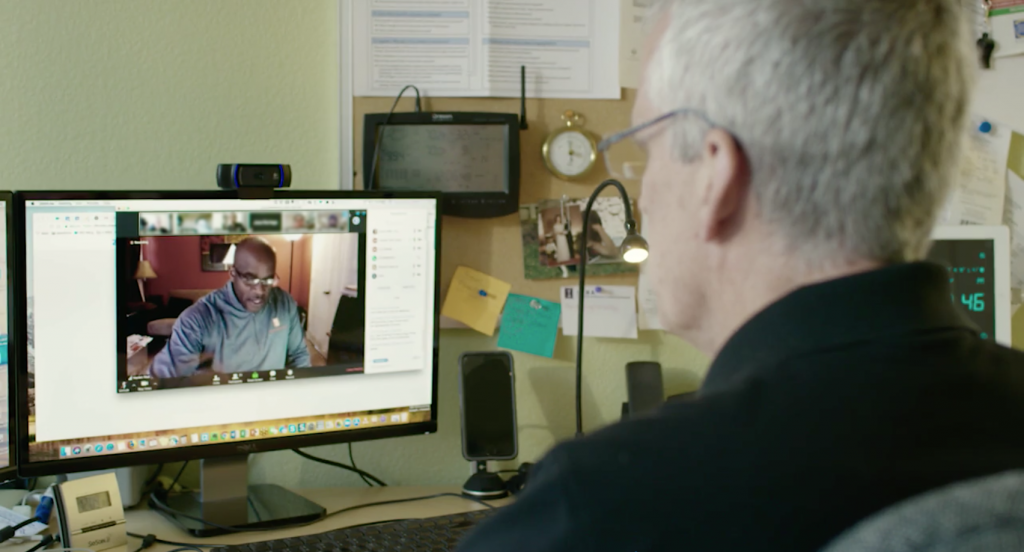
Today is St. Patrick’s Day. Although parades around the world have been canceled to help contain the coronavirus outbreak, the holiday can still be enjoyed in a number of other ways.

Do you celebrate St. Patrick’s Day, whether you’re Irish or not? Do you dress in green garb, perform Celtic step dancing or play traditional music with loved ones? Does your family prepare a special feast? What foods do you eat?

What are some of your favorite memories of the holiday?

Tell us in the comments, then read the related article, which features a plethora of Irish recipes.


Find many more ways to use our Picture Prompt feature in this lesson plan. You can find all our Picture Prompts in this column.

Word + Quiz: genome

0
Word + Quiz: genome

: the ordering of genes in a haploid set of chromosomes of a particular organism; the full DNA sequence of an organism

_________

The word genome has appeared in 106 articles on NYTimes.com in the past year, including on Jan. 9 in “When the Cobra Bites, You’ll Be Glad Someone Sequenced Its Genome” by Nicholas Bakalar:

Some scientists think genomic technologies could be used to synthesize antivenom, and eventually treat victims more cheaply and effectively. They want to study the venom genes themselves, including their organization, variability and evolution. Doing this requires mapping the snake’s genome.

In Nature Genetics on Monday, one team of researchers released their map of the genome of Naja naja, the Indian cobra. They found 12,346 genes expressed in the venom glands, what they call the “venom-ome” of the animal. Of these, they found 139 toxin genes, the ones that perform the biological reactions specific to toxins. Then they designated 19 of these genes as “venom-ome specific,” expressed only in the venom gland, and that are responsible for a wide range of symptoms in humans, including heart-function problems, paralysis, nausea, blurred vision, internal bleeding and death.

_________

How Much Do You Know About Cape Verde?

0
How Much Do You Know About Cape Verde?

Can you find Cape Verde on a map? What else do you know about this island nation with a population of about 550,000?

Is It Immoral to Increase the Price of Goods During a Crisis?

0
Is It Immoral to Increase the Price of Goods During a Crisis?

Find all our Student Opinion questions here.

In “He Has 17,700 Bottles of Hand Sanitizer and Nowhere to Sell Them,” Jack Nicas writes:

On March 1, the day after the first coronavirus death in the United States was announced, brothers Matt and Noah Colvin set out in a silver S.U.V. to pick up some hand sanitizer. Driving around Chattanooga, Tenn., they hit a Dollar Tree, then a Walmart, a Staples and a Home Depot. At each store, they cleaned out the shelves.

Over the next three days, Noah Colvin took a 1,300-mile road trip across Tennessee and into Kentucky, filling a U-Haul truck with thousands of bottles of hand sanitizer and thousands of packs of antibacterial wipes, mostly from “little hole-in-the-wall dollar stores in the backwoods,” his brother said. “The major metro areas were cleaned out.”

The Colvin brothers saw a golden business opportunity. Demand for hand sanitizer was exceptionally high, while supply was limited and falling fast. Economics 101: If they played their cards right, they could make a huge profit by buying low and selling high.

Is that an example of capitalism at its finest? A fast path to the American dream? Or, is it immoral and selfish?

The article continues:

Matt Colvin stayed home near Chattanooga, preparing for pallets of even more wipes and sanitizer he had ordered, and starting to list them on Amazon. Mr. Colvin said he had posted 300 bottles of hand sanitizer and immediately sold them all for between $8 and $70 each, multiples higher than what he had bought them for. To him, “it was crazy money.” To many others, it was profiteering from a pandemic.

The next day, Amazon pulled his items and thousands of other listings for sanitizer, wipes and face masks. The company suspended some of the sellers behind the listings and warned many others that if they kept running up prices, they’d lose their accounts. eBay soon followed with even stricter measures, prohibiting any U.S. sales of masks or sanitizer.

Now, while millions of people across the country search in vain for hand sanitizer to protect themselves from the spread of the coronavirus, Mr. Colvin is sitting on 17,700 bottles of the stuff with little idea where to sell them.

Mr. Nicas writes:

Mr. Colvin is one of probably thousands of sellers who have amassed stockpiles of hand sanitizer and crucial respirator masks that many hospitals are now rationing, according to interviews with eight Amazon sellers and posts in private Facebook and Telegram groups from dozens more. Amazon said it had recently removed hundreds of thousands of listings and suspended thousands of sellers’ accounts for price gouging related to the coronavirus.

Amazon, eBay, Walmart and other online-commerce platforms are trying to stop their sellers from making excessive profits from a public health crisis. While the companies aimed to discourage people from hoarding such products and jacking up their prices, many sellers had already cleared out their local stores and started selling the goods online.

Now both the physical and digital shelves are nearly empty.

Mikeala Kozlowski, a nurse in Dudley, Mass., has been searching for hand sanitizer since before she gave birth to her first child, Nora, on March 5. When she searched stores, which were sold out, she skipped getting gas to avoid handling the pump. And when she checked Amazon, she couldn’t find it for less than $50.

“You’re being selfish, hoarding resources for your own personal gain,” she said of the sellers.

The article also explains how the practice of selling goods online to make a profit is nothing new:

These sellers call it retail arbitrage, a 21st-century career that has adults buying up everything from limited-run cereals to Fingerling Monkeys, a once hot toy. The bargain hunters look for anything they can sell at a sharp markup. In recent weeks, they found perhaps their biggest opportunity: a pandemic.

As they watched the list of Amazon’s most popular searches crowd with terms like “Purell,” “N95 mask” and “Clorox wipes,” sellers said, they did what they had learned to do: Suck up supply and sell it for what the market would bear.

Initially, the strategy worked. For several weeks, prices soared for some of the top results to searches for sanitizer, masks and wipes on Amazon, according to a New York Times analysis of historical prices from Jungle Scout, which tracks data for Amazon sellers. The data shows that both Amazon and third-party sellers like Mr. Colvin increased their prices, which then mostly dropped when Amazon took action against price gouging this month.

It continues:

…. Mr. Colvin, 36, a former Air Force technical sergeant, said he started selling on Amazon in 2015, developing it into a six-figure career by selling Nike shoes and pet toys, and by following trends.

In early February, as headlines announced the coronavirus’s spread in China, Mr. Colvin spotted a chance to capitalize. A nearby liquidation firm was selling 2,000 “pandemic packs,” leftovers from a defunct company. Each came with 50 face masks, four small bottles of hand sanitizer and a thermometer. The price was $5 a pack. Mr. Colvin haggled it to $3.50 and bought them all.

Mr. Nicas concludes:

Mr. Colvin does not believe he was price gouging. While he charged $20 on Amazon for two bottles of Purell that retail for $1 each, he said people forget that his price includes his labor, Amazon’s fees and about $10 in shipping. (Alcohol-based sanitizer is pricey to ship because officials consider it a hazardous material.)

Current price-gouging laws “are not built for today’s day and age,” Mr. Colvin said. “They’re built for Billy Bob’s gas station doubling the amount he charges for gas during a hurricane.”

He added, “Just because it cost me $2 in the store doesn’t mean it’s not going to cost me $16 to get it to your door.”

But what about the morality of hoarding products that can prevent the spread of the virus, just to turn a profit?

Mr. Colvin said he was simply fixing “inefficiencies in the marketplace.” Some areas of the country need these products more than others, and he’s helping send the supply toward the demand.

“There’s a crushing overwhelming demand in certain cities right now,” he said. “The Dollar General in the middle of nowhere outside of Lexington, Ky., doesn’t have that.”

He thought about it more. “I honestly feel like it’s a public service,” he added. “I’m being paid for my public service.”

As for his stockpile, Mr. Colvin said he would now probably try to sell it locally. “If I can make a slight profit, that’s fine,” he said. “But I’m not looking to be in a situation where I make the front page of the news for being that guy who hoarded 20,000 bottles of sanitizer that I’m selling for 20 times what they cost me.”

After The Times published this article on Saturday morning, Mr. Colvin said he was exploring ways to donate all the supplies.

Students, read the entire article, then tell us:

  • Does high demand for items like hand sanitizer and masks during a public health crisis justify higher prices? Are resellers who stockpile supplies and then sell them at a higher price providing a service? Or, are they taking advantage of people? Do you think what Mr. Colvin did is immoral?

  • How much responsibility do online retailers like Amazon and eBay have to prevent price gouging during a crisis? Do you think these companies did the right thing in restricting sales of any coronavirus-related products from certain sellers?

  • How much responsibility do retailers in general have to prevent stockpiling? Should they place limits on how many items, like hand sanitizer, a person can buy?

  • What do you think Mr. Colvin should have done with all the supplies he stockpiled? Should he be punished by the state of Tennessee?


Students 13 and older are invited to comment. All comments are moderated by the Learning Network staff, but please keep in mind that once your comment is accepted, it will be made public.

Lesson of the Day: ‘Coronavirus Cost to Businesses and Workers: “It Has All Gone to Hell”’

0
Lesson of the Day: ‘Coronavirus Cost to Businesses and Workers: “It Has All Gone to Hell”’

Find all our Lessons of the Day here.

Featured Article: “Coronavirus Cost to Businesses and Workers: ‘It Has All Gone to Hell’”

As the coronavirus outbreak forces the cancellation of trips, nights out and large gatherings, economic damage is mounting across the country.

In this lesson, students will learn about the economic fallout that happens when people are homebound for an unspecified amount of time. They then explore how federal, state and local governments; large corporations; and customers might pitch in to help.

Many Americans can work from home and still get paid during the pandemic. However, many others can’t. If the crisis lasts for weeks or months, consider ways that the following groups and individuals may be affected:

Read the article, then answer the following questions:

1. Diane Swonk says of the economy, “It’s not just that we’re slowing down things. We’re actually hitting the pause button, and there is no precedent, there is no mold for that.” How is a “pause” different from an economic slowdown? What are examples from the article and from your own observations that present serious challenges to businesses being able to stay afloat during the pandemic?

2. How have stock market losses affected the real estate market, according to a Silicon Valley broker who is quoted in the article? How might the stock market’s drop affect other industries?

3. The article gives examples of the employees, related businesses and employees of those businesses that will suffer when a restaurant owner decides to close a dozen restaurants for months or when an event like a professional sports game gets canceled. What is another example of a business decision made in light of the pandemic that would have a ripple effect for businesses and their employees?

4. The Seattle restaurant Canlis has made changes in light of the pandemic. What are those changes? How might its decisions serve as a model for other restaurants? What about other sorts of businesses?

Return to the different groups you thought about in the warm-up activity. What should we as a society do to help the different groups affected by the coronavirus outbreak?

  • What should the federal government do to help each group or individual? Read about a proposal to reinstate powers that were used during the 2008 financial crisis to support the economy.

  • What should state and local governments do? What measures might be taken to help with economic difficulties faced by residents who lose income while not able to work?

  • How should large corporations protect their employees from economic hardship — even in the midst of falling profits and rising uncertainty caused by the pandemic?

  • Finally, what can local communities and individuals do to help workers who have lost wages or business owners dealing with losses?

COVID-19 and its Impact on Learning

0
COVID-19 and its Impact on Learning

There isn’t any way of saying this, the Pandemic will impact all of us, no matter where we are located in the world.  No one can say when it will pass or when we can get back to some level of normalcy. 

This post isn’t about the virus and what you should not do, or where you can’t go, etc., rather it is about the virus and its impact on learning, at the corporate level and education too.

Education

It’s impact is already being felt at schools around the world.  Most are closed or will be in the near future.  This means that a lot of students will be taking online classes and content.

And this means that teachers will have to create content that is meaningful and relevant to whatever topic or topics that are to be covered during this time.  At the university level, at least in the U.S., many are closed, with again, others soon to follow suit.  Each of them, will have students go online to take classes, content and so forth.  And just as in the K-12 sector, professors, instructors, lecturers at the university level will need to create effective and meaningful content.

The Elephant in the Room

90% of the content I see coming out of the education sector is bad. It is boring.  It follows a synchronous based approach using a syllabus.  Linear is the route the majority of schools and universities follow when they provide online courses.  Classroom via a webinar normally requires students to be online during that time frame, fine if you are 10 yrs old or in high school, bad if you are at a university during this time, where the students are not situated at the college itself, requiring folks to now access the “live webinar” during a time zone that likely will not be conducive.

Thus, if you are a university in Michigan, Central Time here in the states, and you have students on the west coast, which is two hours behind you, and you schedule your live classroom online (via a web conferencing) for say 11 a.m., this means that your students on the west coast have to be online at 9 a.m.  If you have students that are overseas, the time is beyond not conducive.   Hawaii?  Nobody is getting up at 4 a.m. to attend your live class.

Homework is another fiasco when it comes to online learning for education.  Again, K-12 is one thing, for a university where students are not at a central location is another thing. Faculty will need to recognize that it is not the same ol same when it comes to e-learning. If you are following a syllabus and thus linear learning, you will need to create your content ahead of time, in advance frankly, before you have one student go into your learning system and take a course or whatever materials you are presenting.

You will need to give them time to complete the assigned work and/or reading.  Speaking of reading, you must have the reading content ready to go for download with say a PDF format.  You must recognize that not everyone is on high speed, thus, if you have a 5mb PDF, then you should break it down into sub-chapters so it is no more than 800KBS. 

If you are asking students to watch video content, again, be aware of bandwidth speed.  Let’s say at your university the speed is 50mbs or 100mbs.   But in certain states, someone may only have 5mbs.  Thus, having a video which consumes a lot of data, if say someone is to watch it via their mobile device, will in return cost the student money, if they do not have an unlimited data plan.

Typically at the university level, you read material, then post your comments or a review of the material on a discussion board.  Then the instructor/professor/etc. goes online, reviews what you said and respond accordingly.  The problem of this, is that many faculty members are slow to respond.  Some never read all the posts, but get on students when they fail to respond to every post.

Then there are faculty members who will say this is due by this exact time and date, forgetting that someone could lose their net connection, or there may be issues with the professor’s e-mail account, or setting a deadline time is ideal for the professor, not everyone else.

Setting a deadline is fine, but as an educator you must allow people to submit material that is 10-30 minutes late.  You must recognize that there are factors out there, and this is not your physical classroom.

Uh Oh

As noted earlier 90% of content via HE and even K-12 is horrible.  It is static, with lots of texts, maybe a video or two incorporated and pictures.  Whippee!  It is rare to find universities adopting asynchronous based learning which is where someone can bounce anywhere they want to in the course, focusing on what is relevant to them.  The course is self-contained as we say.  And it can be done at any level, although it is ideally suited for higher ed.

Mobile can be leveraged as well.  Have your students create a one minute or two minute Tik Tok video on some subject matter you are covering.  Maybe create an Instagram page or some other social media site that is popular with students in higher education.  Have them incorporate these types of sites into their learning.

Add a gamification component. You want students online?  You want them engaged? You want to show them that knowledge is fun?  Then tie a gaming piece in here, with a reward or benefit at the end.

LXPs are ideally suited for these challenging times, because they can allow the students to pick their interests and/or topics they want to learn.  You as the faculty member can set up what topics are available.  Numerous learning systems offer the playlist or channel option, whereas again, as a university or even a school, you could tap into. Many of your students are listening to Spotify and similar sites, so the playlist angle makes perfect sense.

As an educator, the worst thing you can do, is present boring content.  Just because you have a captured audience – i.e. required, doesn’t mean that you should bore them.  There won’t be any retention here, because boring doesn”t drive it.

Instead of tests, ask students to complete a project that they can post online.  Engagement here is essential during this time, not stagnation.  Maybe have your students say in 3rd grade, create their own puzzle or something that is easy to do within your learning system.   Many learning systems in the K-12 range offer teachers unlimited resources via a repository, where the resources may come from teachers located globally or more often than not, other teachers in other school districts that are on the system.

So why not the kids themselves?  Have them do an assignment that is creative and then post those items in a repository too? Maybe they create a set of steps for how to make a paper airplane (OK, i haven’t been 12 in a long time), then have that placed in the repository for other students.

Create a series of teams with students being in a team.  Then the team competes with the other teams.  Allow the students to create their own nickname.  You in turn create the “Event” that everyone competes in.  I can tell you from experience at the high school level, this works (I have done this personally at the HS and college level).

The onus is on you the teacher.  Not the student. Not the parent, but you.  Take the time, change the narrative, create engaging and fun and your students will love it.  Especially during this time.

Corporate Impact

There are people who enjoy working from home, and others who struggle to work from home – a TV, the internet, nobody is watching me, so I can take a nap. 

The virus is impacting the corporate market as we speak. Offices and establishments are being closed, with employees working from home.

E-Learning will pay a very big role in these coming months and the virus’s impact on learning will be visible.

Say so long to ILT for the time being

Face to face learning in a classroom, board room or wherever you hold your sessions is no more.  At least not for a while. Webinars will need to become the new solution (if you have not done so before).  What is a plus about webinars is even if a person cannot attend in real-time (i.e. live), the webinar is recorded so that someone can view it on a latter date.  You could even add the webinar recordings to your content, so that folks can re-watch them at anytime, and multiple times as well.

The webinar recording can include the questions that people asked. If you want to take it an additional step, people who view at a later date, could submit questions to the presenter and they – the presenter could follow up directly with them.  Any materials can be shared, and even placed in a repository for future sharing and viewing/downloading.

Skills Development and People’s Interest

Workers will have a lot on their plate, but research has shown that most people access a learning system out of the workplace (excl. hourly, union, retail, seasonal).  We should focus on the skills development and building angle, rather than on the job role, which is the current approach.

This job role angle is heavily skewed to white collar workers, which is fine if is your only group, but not fine, if you have a mix of white and blue collar workers.

By focusing on skills development for your entire workforce, and what skills they are interested in acquiring, regardless of their job role, you are now offering your employees a great opportunity to gain new knowledge or build upon their knowledge based on their interest.  This is where an LXP can really work.  Other type of learning systems could as well, as long as they offer a way to provide a playlist or similar for their end-users.

Maybe your learning system (LMS) cannot have it so folks can pick their interests or topics up-front.  No worries.  When the end user logs in and goes to their home page, the administrator could ask them to complete a survey that will identify their interests/topics of interest, then from there the administrator can put together a catalog of content for those folks who prefer this topic or that topic and the content contained within.

Or if your system offers skill ratings, and skills development, then use this component or components to identify topics or areas of interest your learners want to learn.

Now is the not the time to push compliant or regulatory content as your only option for your learners.   If you must, then have it, but make sure there is more personal and professional development content.  If you have proprietary then yes, include that as well, and assign it to the folks who will need to take it.   But offer it and frankly all the content with a table of contents, so that your employees are not forced to watch the whole video or the whole course, because, they won’t. 

Peer to Peer sharing will offer a great opportunity for your employees.  Get people involved in sharing playlists, sharing content, sharing ideas on this or that, even with their interests, which most employers ignore when it comes to “sharing”.  People are more likely to relate to someone just like them, so a warehouse worker is more likely to take content if another warehouse worker recommends it, more so than if the division head recommended it.

Sharing

One topic to instantly share is best practices to work remotely.  You can create a quick course in any authoring tool and push it online, but what I would do is – if you have coaching – push out the question, “What are your recommendations for working remotely” or something along those lines.   Encourage responses by tying in gamification.  Assign points to anyone who responds.  Share it with another learner? Points.  Create a mini video and publish it with your ideas? Points.   Collaborate on something, points and so forth.

Remote Newbies

Create engaging and interactive content.  Look people that work from home are either experts and doing so, or are newbies.  The latter group will either have folks who will actually work, and then it will have folks like my nephew who worked from home, a bit back, which consisted of him watching online movies and surfing the net for the entire day.  The only time he worked, was responding every once in a while on Slack, but since the work wasn’t something that was visible online, he respected that process, and responded by doing no work.

He is 23.  I think you see where this is going.  I know people who are in their forties who are not into remote work and would do similar for as long as they can get away with it.  Thus, knowing that output for some folks will drop, push online learning as part of their weekly work schedule.  

Have them pick content that is of interest to them, or put a catalog together of all types of content, and notify that employee that they are expected to use the learning system each week to acquire knowledge and learn.   The spin is necessary otherwise, it will feel as though your most hated school teacher is back and staring right at you with their coffee and cigarette breath.  You know who I am referring to.

Mix up your learning acquisition

This is to say, offer more opportunities for various types of learning (webinar, courses, micro or other, ebooks, podcasts, etc.) for folks to take (but they do not have to complete).  If you have been waiting for the right time to launch your interactive courses, now is the time.  If you have been waiting for the right time to launch your VR or AR course, now is the time. 

I do not see any challenges from the customer training aspect, since many customers who take B2B online do so from elsewhere.  Thus, since Starbucks and many other coffee houses are closed from walk-in and relax on uncomfortable sofas,  these folks will access the content from their abode. 

The biggest challenge for remote working and e-learning will be blue collar workers. But with the content that ties into their interests, it can be achieved.

This is an ideal time to start your coaching online program, which many learning systems have some component of it today (not all mind you).  Some systems offer a robust coaching capability, so if you haven’t used it in your system, and it offers it, now is the time to do so.

With blue collar workers, make sure that you offer experts or those defined as “experts” within the coaching capability, are in similarity.  You could also have an expert in say Management that is available to any end-user, even those with blue collar jobs.

The Time is Now

When you visit this blog, i.e. mine, you will notice on the main header “Free Resources During Pandemic“, this is a new section to the blog, where you can find a list of vendors offering free content (for your system or as a standalone), free access to their learning system, free authoring tool or other e-learning tools, and/or a discount.

I created this page as a way to bring the entire e-learning community together to share resources and provide additional resources to help along the way.  Every vendor who is on the list, and it will continue to grow, recognizes that we are all in this together.

Most of the content is not COVID-19 prep in case you are wondering, rather it goes all over the board. 

The page will be updated continuously, so check back often.

Bottom Line

I found it somewhat odd that many in the media and in politics are making out online learning as this new concept in learning, that is new and who knows if it will work or not.

The fact is this:

It does work.

It can be very effective and more engaging than OJT, ILT or reading a manual.

But you need to bring it to the workers.

By pushing topics of interest, their interest – not yours, and what they wish to learn to acquire new or build upon skills. 

Onboarding is still very doable.  Reskilling? Doable.

Upskilling? Doable.

Learning that will work for all?

E all the way.

As in e-learning.

E-Learning 24/7


Moving online: What you can implement now

0
Moving online: What you can implement now
Photo taken from the iMBA program from the University of Illinois, hosted on Coursera

By Linlin Xia and Alexandra Urban, Teaching & Learning Team, Coursera

Online, live sessions provide effective synchronous learning opportunities and create a space to engage with your students while remote. In particular, live events are optimal for:

  • Mastering content that requires students’ active participation in collaborative problem solving
  • Fostering peer-to-peer interaction, especially when distance or health concerns limit in-person meetings
  • Offering step-by-step guidance, while responding to students’ questions in real-time
  • Providing personalized scaffolding in smaller group settings

While we’ve worked with Coursera partners to develop and launch programs that leverage live sessions as a way to build interactivity and in-depth learning, we’ve consolidated best practices into key tips for core use cases regarding live sessions and how to implement them.

1. Enhance course community

– Start with ice-breaker questions (e.g. what’s your favorite dessert) to get all students participating from the very beginning

– Invite alumni or previous students from the course to share their learning tips

– Encourage real-time community by asking students to submit messages, raise a hand, or use other tools within the virtual classroom

2. Dive into key concepts

– Share your screen or use a virtual whiteboard functionality when the problem involves calculations, concept mapping, or images

– Show step-by-step problem solving to guide students in your thought process

– Make sure to pause and ask students questions throughout the session to ensure understanding

3. Preview or debrief an assessment

– Collect questions from students about the specific project before the session

– Walk through the purpose and benefits of completing this assignment

– If it’s an open-ended project, allow students to share ideas with instructors or their peers and collect feedback

– Address common pitfalls, as well as how mistakes can be avoided

4. Conduct a live demonstration

– Make sure the code, software, or interface is large and clear enough for students to read

– Zoom in on important elements to focus students’ attention

– Talk through the process for conducting this type of simulation or problem solving, so students can recreate needed steps later on their own

5. Initiate a team project

– Encourage peer-to-peer learning through specific prompts and clear deliverables desired

– Use virtual breakout rooms with separate video conference links for each student-group to discuss

6. Highlight a guest speaker

– Send a summary of the guest’s background and expertise before the session, so students can prepare

– Collect questions from students ahead of time to add structure to the meeting

– Add interactive and reflective elements to help students apply what they’re hearing and encourage the guest to brainstorm alongside the students when possible

7. Create virtual office hours

– Let each student or team sign up for 10 to 15 minute slots of time at least one week ahead

– Ask students to submit their questions before the event so you can use the time most efficiently and center on the most frequently asked questions

– Send out beforehand which topics will be covered to pique students’ interest to attend

Beforehand:

  • Determine the goal and learning objectives of the event
  • Define a clear agenda and share it with students to convey the benefits of attending
  • Prepare clear guidelines for student participation with a timeline of all activities
  • Test your internet access, camera, and speakerphone

During:

  • Use icebreakers or virtual polls to get started and encourage all students to participate
  • Invite a teaching assistant to help moderate while you lead
  • Stick with your planned schedule and keep track of time

Afterwards:

  • Upload the recorded session, including both the video and chat files
  • Create a brief survey to collect feedback from your students
  • Complete any action items raised from the live event, whether creating a frequently asked question and answer sheet for an upcoming assignment or planning a next guest speaker

While live sessions may feel less natural at first than standing in front of a full classroom, these online events are full of potential. In Degree and MasterTrack™ Certificate programs hosted on the Coursera platform, students have shared that live sessions are some of their favorite experiences in these online for-credit programs. For students and instructors alike, live events can add a much needed synchronous element, creating deeper bonds and dynamic problem solving in online experiences.

Though live sessions are powerful to engage students at distance, it’s not the only tool that you can use for synchronous learning. You may consider a live forum event for students to actively post and respond to each other within one hour – this is a written discussion when students and faculty are all engaging together at the same time. Live forums are particularly helpful for students who are shy to speak up or who speak English as a second language. Written posts and responses allow more time for students to organize their thoughts. You may be happily surprised by the depth of the conversation. If possible, instant messaging could be another channel for you to connect with students. It’s best for quick questions and check-ins. For example, an instructor on Coursera used to run a Facebook group where students could report their learnings and reflections at 5 PM everyday. In that way, students stay motivated by each other in an online learning community.

As you continue moving content online, we look forward to hearing your learnings and supporting your new endeavors together.

References

Pappas, C. (2015, May 8). Top 10 Synchronous Learning Best Practices for Instructor-Led Training. Retrieved from https://elearningindustry.com/top-10-synchronous-learning-best-practices-for-instructor-led-training

Park, Y. J., & Bonk, C. J. (2007). Is online life a breeze? A case study for promoting synchronous learning in a blended graduate course. MERLOT Journal of Online Learning and Teaching, 3(3), 307-323.

Warden, C. A., Stanworth, J. O., Ren, J. B., & Warden, A. R. (2013). Synchronous learning best practices: An action research study. Computers & Education, 63, 197-207.

Wilson, K. (2017, June 19). Best Practices for Synchronous Sessions. Retrieved from https://dl.sps.northwestern.edu/blog/2017/06/best-practices-synchronous-sessions/

Yamagata-Lynch, L. C. (2014). Blending online asynchronous and synchronous learning. International Review of Research in Open and Distributed Learning, 15(2), 189-212.

6

8 Tips for Effective Online Learning

0
8 Tips for Effective Online Learning

By Linlin Xia, Teaching and Learning Team, Coursera

Taking an online course for the first time? As a member of Coursera’s Teaching and Learning team, I’ve had the privilege to work with hundreds of educators to bring their courses to more than 48 million people around the world. Based on research and best practices from our community, here are eight, go-to study tips for learning online.

#1: Set daily goals for studying

Ask yourself what you hope to accomplish in your course each day. Setting a clear goal can help you stay motivated and beat procrastination. The goal should be specific and easy to measure, such as “I’ll watch all the videos in Module 2 and complete the first programming assignment.” And don’t forget to reward yourself when you make progress towards your goal!

#2: Create a dedicated study space

It’s easier to recall information if you’re in the same place where you first learned it, so having a dedicated space at home to take online courses can make your learning more effective. Remove any distractions from the space, and if possible, make it separate from your bed or sofa. A clear distinction between where you study and where you take breaks can help you focus. 

#3: Schedule time to study on your calendar

Open your calendar and choose a predictable, reliable time that you can dedicate to watching lectures and completing assignments. This helps ensure that your courses won’t become the last thing on your to-do list.

Tip: You can add deadlines for a Coursera course to your Google calendar, Apple calendar, or another calendar app

#4: Keep yourself accountable

Tell your friends about the courses you’re taking, post achievements to your social media accounts, or blog about your homework assignments. Having a community and support network of friends and family to cheer you on makes a difference.

#5: Actively take notes

Taking notes can promote active thinking, boost comprehension, and extend your attention span. It’s a good strategy to internalize knowledge whether you’re learning online or in the classroom. So grab a notebook or find a digital app that works best for you and start synthesizing key points.

Tip: While watching a lecture on Coursera, you can click the “Save Note” button below the video to save a screenshot to your course notes and add your own comments.

#6: Join the discussion

Course discussion forums are a great place to ask questions about assignments, discuss topics, share resources, and make friends. Our research shows that learners who participate in the discussion forums are 37% more likely to complete a course. So make a post today!

#7: Do one thing at a time

Multitasking is less productive than focusing on a single task at a time. Researchers from Stanford University found that “People who are regularly bombarded with several streams of electronic information cannot pay attention, recall information, or switch from one job to another as well as those who complete one task at a time.”

#8: Take breaks

Resting your brain after learning is critical to high performance. If you find yourself working on a challenging problem without much progress for an hour, take a break. Walking outside, taking a shower, or talking with a friend can re-energize you and even give you new ideas on how to tackle that project.

Want to go deeper? Here’s some of the research I referenced to create these online study tips: 

Adam, G. (2009). Media multitaskers pay mental price. Retrieved from https://news.stanford.edu/news/2009/august24/multitask-research-study-082409.html

Bönstrup, M., Iturrate, I., Thompson, R., Cruciani, G., Censor, N., & Cohen, L. G. (2019). A rapid form of offline consolidation in skill learning. Current Biology, 29(8), 1346-1351.

Hiemstra, R. (1991). Aspects of effective learning environments. New directions for adult and continuing education, 1991(50), 5-12.

Kozlowski, S. W., & Bell, B. S. (2006). Disentangling achievement orientation and goal setting: effects on self-regulatory processes. Journal of Applied Psychology, 91(4), 900.

Listening Note Taking Strategies. UNSW Sydney. Retrieved from https://student.unsw.edu.au/note-taking-skills

4

Word + Quiz: nonplus

0
Word + Quiz: nonplus

: be a mystery or bewildering to

_________

The word nonplus has appeared in nine articles on NYTimes.com in the past year, including on April 29 in “Arya’s Dagger Has a Complex History in ‘Game of Thrones.’ Here’s a Look Back” by Jennifer Vineyard:

Arya’s weapon of choice might have looked familiar, and it should have: Before it ended the Battle of Winterfell in Sunday night’s “Game of Thrones,” it appeared in several other important moments, starting way back at the very beginning.

Fuzzy on the history? Here’s the chain of custody for this key piece of evidence.

…. Littlefinger claimed that the last man who wielded the blade was the assassin who attempted to take Bran’s life, and offered to do “anything” to help out the last surviving Stark male heir. Bran was nonplused. He didn’t seem to care about the gift, or its value, or Littlefinger’s empty promises …

_________

Making Connections: 56 Teenagers Suggest Creative Ways to Link School Curriculum to the World of 2020

0
Making Connections: 56 Teenagers Suggest Creative Ways to Link School Curriculum to the World of 2020

Teva Alon, Bergen County Academies, Cresskill, N.J.: “The American Dream” by Edward Albee and “Welcome to the Era of the Post-Shopping Mall”

This year, we read “The American Dream,” a satirical play by Edward Albee that explores the materialism and superficiality of American society. The characters are fully engaged in a capitalistic society and therefore exclusively focused on their jobs, purchases and status. Through the characters’ shallow dialogue, it is evident that they lack both meaningful personal relations and excitement from life that doesn’t come from an exchange of money. At first, this play was hard to comprehend and even harder to connect to my everyday life, mostly due to Albee’s absurdist style of writing. But everything clicked when I read Amanda Hess’s article, “Welcome to the Era of the Post-Shopping Mall,” discussing the opening of “The American Dream” shopping mall. This 3-million-square-foot mall has dedicated over half its area to entertainment, with the Big Snow ski resort, a Nickelodeon theme park, a DreamWorks water park, and much more.

This may seem like a dreamlike fantasy, but Hess chose to describe the American Dream as “vulgar.” While recounting her awe and nostalgia while skiing at Big Snow, Hess also confronts the emptiness of stepping on a ski lift and realizing that she is skiing in a vacant metal warehouse. This vacancy is present throughout both the mall and the play. In “The American Dream,” the character Young Man discusses his profound emptiness and inability to feel emotions. This perfectly parallels the empty corridors that connect the ostentatious attractions of the American Dream. The unfinished hallways, filled with vibrant posters of cartoon animals, are nothing but cheap diversions attempting to combat their true bareness, just surface-level platitudes meant to distract from its deep misery.

“The American Dream” was written as a satirical critique of what was considered in the 1960s to be the peak of capitalism. However, the American Dream makes it clear that this is the true peak of capitalism. The American Dream isolates outside experiences inside of metal boxes, covers every imaginable surface with obstructive advertisements, and always promises to elevate and enlarge every experience possible. Corporations, dissatisfied with simply selling products, have moved on to selling experiences that, as Hess put it, “are simulations of [life’s] extremes.” We are promised heightened bursts of adventure as a way to escape from the dullness of life, convincing us we need to empty our pockets just to feel something. I now find it strange that Albee’s play is considered “absurd” when it is as normal as life itself. The American Dream Mall is just an extension of a capitalistic nightmare that Edward Albee could only dream of, signaling that if we are not careful, we are inching closer to a world where we truly believe that money can buy happiness.

Brennan Bower, South Forsyth High School, Cumming, Ga.: Orbital velocity and “Boeing Starliner Ends Up in Wrong Orbit After Clock Problem”

Television signals, weather patterns, GPS location: these are all provided by satellites. The mystery of how these satellites transmit information was solved in my physics class. By reaching a certain orbital velocity given a radial distance from the Earth, satellites can orbit at the same speed at which the Earth spins. This gives us the information we need, as satellites can send and receive information from the same location in relation to the Earth’s surface.

While reading “Boeing Starliner Ends Up in Wrong Orbit After Clock Problem” by Kenneth Chang, I recognized the failure that caused this wrong orbit. Yes, as Chang said, the thrusters fired at the wrong time due to inaccurate clocks, but the underlying cause is tied back to the concept of orbital velocity. By firing at the wrong time, the rocket achieved a speed different than that which would have put the rocket on a radial target toward the International Space Station (ISS). The mission was a failure, and the rocket was returned back to Earth to not waste fuel on a trajectory away from the ISS.

As an unmanned rocket launch, the computer system issues were irreversible since their location in between satellite signals made it impossible to communicate with the home base during the untimely jet thrusts. These thrusts tossed the rocket out of its preferred orbit, and sent its path at the wrong radius. By the formula V=GMr, where M is the mass of the Earth in kilograms, r is the orbital radius in meters, G is the constant for gravity, and V is the resulting velocity, the rocket thrusters gave the rocket the wrong velocity at the wrong radius, leading the rocket mass to be off target of the ISS. The inopportune firing of the jets — a result of a simple timing mistake in the system’s computer — had serious physical consequences, costing Boeing millions of dollars in their failed mission. Their economic consequence wasn’t just from resources lost like fuel and boosters, but in public relations (given the 737 Max controversy, another system failure doesn’t exactly give airlines confidence in Boeing airliners). The cost of the inability of the rocket to correctly execute their launch with the guiding formula for orbital velocity is much greater than the perceived severity of a miscalculated clock.

Everything relating to the launch of a rocket is tied to physical phenomenon, from powerful synthetic fuels, to the need to overcome the gravity of Earth. Learning the basic, yet important, laws of physics taught in school is instrumental to the successful launch of not only rockets, but also to the correct execution of military technology, machinery, automobiles, and of course, satellites.

Christina Cheng, Woodside Priory School, Los Altos, Calif.: The principle of explosion, a law of logic and mathematics, and “Pinterest Restricts Vaccine Search Results to Curb Spread of Misinformation”

“Because if false can be true …” my math teacher frequently says, and I finish the sentence in my head: “then all of math falls apart.” This is the principle of explosion, or ex falso quodlibet: “from falsehood, anything (follows).” When one false statement (for example, 1+1=3) enters the math universe as an apparent true statement, it contradicts the genuinely true statement (in this case, that really 1+1=2). From this contradiction, the number of apparently true statements “explodes” — anything can be inferred as true — through an endless chain of falsehoods emanating from that one false statement. We can prove 2+2 = (1+1) + (1+1) = 3 + 3 = 6 and countless other math statements. When truth and falsity are blurred, logic is rendered meaningless and the entire system of mathematics collapses.

The principle of explosion extends beyond abstract numbers to public health and the rise of vaccine misinformation, which can be traced back several decades to inaccurate studies falsely linking vaccines to autism and toxins. As reported in “Pinterest Restricts Vaccine Search Results to Curb Spread of Misinformation,” social media platforms have recently been “infiltrated” with these vaccine falsehoods, presented as truths. Now, in the field of vaccines, truth and falsity is blurred to the extent that “everybody’s an expert.” This misinformation has wreaked havoc across the globe, triggering deadly outbreaks of measles in Samoa and Ebola in the Democratic Republic of Congo, with thousands killed or infected, disrupting societies. Indeed, the World Health Organization declared vaccine hesitancy one of last year’s “10 notable threats to global health.” Social media platforms have attempted to contain this “explosion” by resolving the contradiction — vaccine misinformation. Last year, Pinterest banned vaccine-related searches, while YouTube demonetized anti-vaccine videos, and Facebook and Instagram banned anti-vaccine ads and downgraded anti-vaccine searches. These platforms are making good progress, but have not yet effectively combated vaccine misinformation. As Dr. Gregory Point points out, “It’s a mess that I don’t see easily solved.”

However, our experience with the principle of explosion in math offers guidance on how to successfully resolve the proliferation of vaccine misinformation. In 1901, mathematician Betrand Russell discovered a contradiction (Russell’s Paradox) in naive set theory that threatened the validity of all of mathematics. According to the principle of explosion, this contradiction potentially invalidated all mathematical proofs. Mathematical pioneers, including Ernest Zermelo and Abraham Fraenkel, persevered and prevented this mathematical “explosion” by creating a new subbranch of mathematics, axiomatic set theory, thereby resolving the contradiction and reaffirming the validity of mathematics. Their successful resolution affirms that through diligence and persistence, we can prevent the rampant spread of misinformation on social media from jeopardizing public health and creating catastrophe.

Jonathan Gao, Brooklyn Technical High School, Brooklyn, N.Y.: The French Revolution and “Hong Kong Protest, Largest in Weeks, Stretches Several Miles.”

As I read from my history textbook, the French cried out the Chant du Départ: “La victoire en chantant, nous ouvre la barriére.” Fear became anger and anger became violence; the French took to the protest-torn streets to participate in the storming of the Bastille, the reformation of societal policies, and ultimately, the end to the monarchy. The widespread acceptance of violence during the French Revolution transformed society into one that would accept nothing less than “liberté, égalité, fraternité.”

In the article “Hong Kong Protest, Largest in Weeks, Stretches Several Miles” written by Javier C. Hernandez and Elaine Yu, I realized that Hong Kongers drew inspiration from the French; Hong Kong is alike in their attempts to break from the tight grasp of authoritarianism. The authors discuss the large turnout from local Hong Kongers in a march to pressure the government into meeting the peoples’ demands. From images of masked students clashing with police to Canto-pop political anthems to the makeshift barricades, these actions are reminiscent of France’s revolutionary political culture. The French newspapers captured a society in shambles where the middle class rioted and burned barricades in the streets.

History is characterized by continuities, and these revolutions were no different from each other. Though having occurred more than two centuries ago, the French Revolution is important for its emergence of civil rights, democratic ideals, and liberties. Hong Kong’s demands for universal suffrage and a leader elected by the people, along with calls for the right to freely speak and assemble draw from the Enlightenment ideas that helped shape a new France.

The violence from both historical events is not to be overlooked. In France, the people armed themselves with weapons and gunpowder from the Bastille. As civil society quickly collapsed, commoners armed themselves in preparation for a counterrevolution from militaries abroad during the Great Fear. In a similar fashion, Hong Kongers have barricaded themselves in the city’s universities and central districts. Arming themselves with Molotov cocktails, gas masks, and bricks, they are provoking China to send in their own “counterrevolution” as they vandalize pro-China businesses and legislative buildings.

Though having occurred more than two centuries ago, the actions of the French Revolution continues to reverberate throughout time. We are all bearing witness to a series of turbulent situations not only in Hong Kong but in a greater wave of protests throughout the world. Each protest highlights the greater issue of corruption that runs amok in authorities and the need for popular sovereignty. As the world treads down a path of intense opposition, we must ask: How can we safeguard our rights and freedoms and maintain a society when the government is working in their own interests?

KellyAnne George, New Milford High School, New Milford, N.J.: Shakespeare’s “Othello” and “Brother of Qandeel Baloch, Pakistani Internet Star, Gets Life Term for Her Murder”

While reading Othello in class, I couldn’t help but stumble over Othello’s reason for killing Desdemona. He explains that his murder was, “not in haste, but all in honor.” Othello’s thought process is similar to people who justify honor killings. Since it is uncommon in the US, countless people overlook honor killings completely. Unfortunately, in many Asian and Middle Eastern countries, the term “honor killings” is all too common. Women are slaughtered for reasons that are incomprehensible to most Americans; these reasons include having a boyfriend, leaving their spouse, or marrying outside their race or religion. In Othello’s case the reason was Desdemona’s supposed affair. When asked to speak for his actions, Othello asks to be called an “honorable murderer.” This reveals that Othello uses the loss of honor to justify his actions. In class, we were asked to think about the extent to which Othello is a tragic hero. I, however, failed to see heroism as I was blinded by his abusive nature.

In the article “Brother of Qandeel Baloch, Pakistani Internet Star, Gets Life Term for Her Murder” a horrible story is portrayed of a brother who murders his own sister for sullying the family’s honor. The victim in this story is a woman named Fauzia Azeem, Qandeel Baloch on social media, who became relevant by “posting provocative views and images, including seminude pictures, on Facebook and Twitter.” This was enough for her brother to take his revenge. What’s even more unsettling is that the parents had said that “they had absolved him and [is] asking the court to do the same.” According to this article, it is very common for an assailant to not be charged with murder if the family forgives him.

In Othello, this same message is portrayed as Othello only feels guilty and kills himself after finding out that Desdemona was innocent of adultery. This means, that to Othello and the other characters in the play, her murder would have been valid if she was really having an affair. Often times in the play people see Desdemona getting abused by Othello, and simply pass it off as Othello having a bad day.

When Othello strikes Desdemona, all Lodovico says is “make her amends.” This line emphasizes that there are no repercussions for Othello’s actions. Although the other characters see Othello hit Desdemona and hear him call her a “strumpet” and a “devil,” none of them seem concerned. Similarly, stories of honor killings are ignored and the perpetrator often gets away with his crimes. It would seem that even Baloch’s story only got attention because she was already popular prior to her death. This ignorance causes shame culture to continue and makes murder seem honorable.

Justin Hsieh, Fountain Valley High School, Fountain Valley, Calif.: “Polite Lies: On Being a Woman Caught Between Cultures” by Kyoko Mori and “Two States. Eight Textbooks. Two American Stories.”

Who am I without my environment?

I faced this question after reading “School,” Kyoko Mori’s account of the formative differences between her Japanese and American educations.

In “School,” a chapter of her memoir “Polite Lies,” Mori explains that she writes her books and poems in English rather than Japanese because she “was never taught to write in what was [her] native language.” Her Japanese language classes were formulaic and esoteric, and the rigid and arbitrary nature of instruction provided few opportunities to explore and improve in topics and styles of writing that interested her. By contrast, her English classes gave her that freedom and feedback, and “by the time [she] was a high school senior, [she] wanted to be a writer, and English was the only language [she] could write in.”

For me, Mori’s story — a powerful example of how instrumental schools are in shaping our youth’s identities — triggered an identity crisis. Many values I hold dear and see as key, nonnegotiable parts of who I am have clear antecedents in my childhood environment. If I had not grown up here, with these experiences, who would I be? If my identity is so changeable and contingent upon circumstance, what meaning does it have? Am I anything beyond a block of wax, a portfolio gathering stamps of “wealth,” “race,” “parenting,” or “schooling?”

During this crisis, I encountered Dana Goldstein’s article, “Two States. Eight Textbooks. Two American Stories.” Goldstein details how California and Texas versions of identical history textbooks differ in portraying topics of political sensitivity, from immigration and the legacy of slavery to environmentalism and the role of capitalism in American history. These discrepancies, from revisions by government-influenced review panels, mean the states’ existing political demographics are being reinforced, generation after generation.

This story’s impact, for me, was in how tangibly it substantiated the idea of environmental identity. As a proudly progressive Californian with multiple card-carrying conservative Texan friends, this article made me wonder how different our stories might be if ten years ago we had switched Texas and California textbooks. What meaning do our political values have if they are the product of the books we happened to be raised with?

I did not leave my crisis with answers. I left with better questions. How can we condemn people for holding beliefs we disagree with, or praise ourselves for our own, when in reality all we’re doing is dutifully reflecting the influences of our environments? How can we judge people for who they are, what they’ve achieved, and what they believe without at least understanding the circumstances that got them there? In the grand scheme of things, the question of nurture versus nature is an argument for empathy.

Jenny Hu, The Seven Hills School, Cincinnati, Ohio: “I Saw a Chapel” by William Blake and “Pope Francis Abolishes Secrecy Policy in Sexual Abuse Cases”

When studying William Blake’s “I Saw a Chapel” in my British Literature class, I was surprised by both the harshness and the modernity of the poem. Blake depicts a shining, golden church scaring off its weeping congregation, only to be desecrated by a vile serpent tearing through it. With graphic imagery, the poem paints a vivid picture of a church whose innocence is ruined by its worldly desires; hope and faith are lost in a descent into corruption.

The criticism felt strikingly applicable to today — the poem’s description of the serpent’s rape of the chapel is easily equated to the crisis of sexual assault ravaging the Catholic Church. Darkening the Church’s principles, each accusation only emphasizes the paradox and betrayal of a priest being a rapist. Though the Church has traded much of its nineteenth-century lavishness for something less concrete, the hypocrisy is unchanged. The ostentatiousness of golden chapels and white pillars has been replaced with equally conspicuous values of goodness and morality. In both Blake’s poem and this current crisis, the Church betrays its congregation.

Blake’s Catholic Church’s root flaw lay not only in its greed but also in its hypocrisy — at once both discouraging avarice and pursuing it. Sadly, Elisabetta Povoledo’s article “Pope Francis Abolishes Secrecy Policy in Sexual Abuse Cases” points out the Church’s continued legacy of hypocrisy; its public condemnation of sexual abuse is incongruous with its private protection of accused priests. She outlines the fact that until December 2019, the Vatican enforced high-level secrecy about sexual-abuse accusations against members of the clergy to shield them from criminal punishment by secular authorities. Despite claims that the confidentiality was meant only to protect and not to hide, traditional pontifical secrecy often led to covering up sexual abuse within the church and discouraging victims from speaking up. Similar to Blake’s poem, the church’s actions resulted only in the disillusionment of both victims and the general congregation.

Blake concludes his poem with the narrator abandoning the corrupted and unfaithful church for a pigsty. However, while the poem ends on a bitter note, Pope Francis’ latest changes bring hope for a more transparent and open Catholic Church. In response to the public outcry, he has begun to address the numerous allegations against prominent bishops and Church leaders. Though not resolving all of the problems pointed out by victim advocates, such as the fact that guilty priests are technically allowed to remain part of the clergy, the new canon law takes strides to confront the Church’s sexual abuse crisis. Perhaps this is the first step toward slaying Blake’s serpent, the chapel’s plague.

Sara Jarecke, Lakewood High School, Lakewood, Ohio: Study of rhetoric and “We Learned to Write the Way We Talk”

Speak

Anastrophe you say,

Yoda I think.

Last year they told me that in AP Language and Composition, I would find my writer’s voice. After five years of nothing but annotating works of fiction, however, I was a little skeptical.

In entering AP Lang, I immediately found it consisted of a lot more than just writing essays. I was introduced to something new: rhetorical strategies and the striking impact that they could have on our written words. I stumbled my way through foreign terms — epizeuxis, amplification, anastrophe — and learned their meanings and sound.

The New York Times article titled “We Learned to Write the Way We Talk” by Gretchen McCulloch shone a light on what I’ve been learning about strategies, but for so long failed to see. McCulloch discusses the new occurrences and patterns in our written word, observing how we’ve shifted from a formal way of writing to an informal and even messier way of writing. However, despite the growingly consistent “likes” and “ums” in our works, McCulloch came to a conclusion: no matter how we write, either informally or a breath away from perfection, we write to connect with others.

Writing is all about communication. Writing is used to convey a message — your thoughts, your ideas, your opinions. It is used to tell a story, to share your point of view, to ask questions; on the contrary, it can also form an ironic double meaning that is usually found to be delightfully humorous. But most of all, writing is used to connect deeply with other people in a state of vulnerability achieved by nothing else.

As McCulloch said, “We’ve been learning to write not for power, but for love.”

I’ve found this vulnerable voice in each of our rhetorical devices. When we see epizeuxis, we hear the voice of any great leader or powerful person. When we see amplification, we hear a voice full of emotion. When we see anastrophe, we think, of course, of Yoda.

I’m sure that it’s rarely thought that rhetorical strategies are a way of writing the way that we talk, but this is the way that I see it. Even while our writing world is changing due to things such as tablets, texting, and Twitter, our voices remain unique and distinct through the written word.

We’ve learned to write the way we talk in more ways than one. While our written works are not always going to be full of “likes,” “ums,” or “wowwwws,” we are still able to communicate our voices with the use of rhetorical strategies. Even with our written word, we can expose our feelings for what they are, creating deeper and more vulnerable connections with others.

Alexander Patel, Mercer Island High School, Mercer Island, Wash.: “Man’s Search for Meaning” by Viktor Frankl and “Should You Add a Microchip to Your Brain?”

Stripped of their humanity, relentlessly beaten, and crowded into crude barracks, the prisoners in the concentration camps of the Holocaust were left to die. The lives of millions were dangling at the end of a thinning string, their oppressors the puppeteers.

While the physical existence of the prisoners was controlled by the Nazi guards, they still had the freedom of emotion, feeling, and ideas. Dr. Viktor Frankl’s novel “Man’s Search for Meaning” details his use of the thoughts and memories in his brain, of loved ones and his working manuscript, to detach from his suffering. This existential free will, argues Frankl, allowed him to survive through optimism, whereas those trapped in a cycle of hopeless acceptance of fate did not live.

Although Frankl’s work is critical in revealing the atrocities of the Holocaust, its underlying message is especially important: with the brain’s freedom, human beings have some semblance of control over their lives. Decades later, however, Dr. Susan Schneider’s op-ed piece “Should You Add a Microchip to Your Brain?” portrays a dystopian world of cognitive “upgrades” that challenges Frankl’s conception of human freedom. To keep pace with the advances in artificial intelligence, humans must resort to technological brain sharpening, potentially at the expense of their unique attributes. Suddenly, the line between “being” and thing becomes blurred; do you become a robotic prisoner stuck in the mindless cycle Frankl describes? How much of your life do you even control?

The parallels between the works of Frankl and Schneider force the consideration of what happens when the human experience is vested in the computer, with algorithmic efficiency replacing philosophical understanding. Dr. Schneider’s message is an ominous one: once artificial intelligence loses the “artificial,” humanity is at the will of the technological ecosystem, and the experiences of Viktor Frankl in captivity become meaningless. Individuals will lose fundamentally important aspects of the human experience: critical thinking, choice, consciousness.

Society today is driven by a continuously expanding technology behemoth; from consumer items to healthcare, innovation remains at the forefront of our lives. However, in this decades-long expansion, it seems that the world has turned a blind eye to DARPA’s “Super Soldiers” and the “Internet of Things” in households worldwide. Little consideration has gone toward understanding the relationship between the computer and the free individual; we have quickly accepted technology as the answer to many of our problems. Yet in this attempt to improve the human experience, embrace of shortsighted advances may actually be tearing it down.

As Viktor Frankl states in his novel, “When we are no longer able to change a situation … we are challenged to change ourselves” (117).

One must wonder: Are we changing ourselves for the better?

Rachel Shey, PA Homeschoolers, Walnut Creek, Calif.: “The Glass Menagerie” by Tennessee Williams and “The Jungle Prince of Delhi”

When I read The Glass Menagerie by Tennessee Williams, my puzzlement and subsequent careful examination of Laura’s outwardly passive character (which nevertheless tied to the theme) reminded me of “The Jungle Prince of Delhi” by Ellen Barry, which also told the story of a mother, a son, and a daughter. When Barry first begins her investigation of the House of Oudh, her tireless pursuit is driven by a hunch that their story is connected to the larger tensions of British departure from India. I fixated on Laura because she felt integral to the themes of The Glass Menagerie, but exactly how she fit in flummoxed me.

What stuck with me about “The Jungle Prince of Delhi” was how it showcased the appeal of a dramatic story, then lifted the veil to show that nothing was how it seemed. I reread the pages several times, shocked that the truth was so different from romantic tale I wanted to believe. No descendant of a royal family, Wilayat was actually just a “megalomaniac.” Barry did not present these facts with the air of a racy exposé; she seemed almost to regret finding out the truth, ruminating that Prince Cyrus would surely have been saddened to think of his remarkable family so trammeled and common.

Similarly, The Glass Menagerie also pitted exciting adventure against a crippling reality. Tom’s frustration with real life is palpable throughout the play; he escapes by watching movies. Laura, passive as she may be, intrigued me because she seemed to represent the dream itself. Williams lets us see her adventure, the “climax of her secret life,” but then he lifts the veil and destroys the hope for a romantic happy ending. The broken unicorn perfectly illustrates this. When Barry found the stack of receipts and started to uncover the truth behind the House of Oudh, she broke the horn off the glass unicorn. Now the story of the House of Oudh was like all the other horses, just the story of another family broken by Pakistan’s separation from India. But the integral difference is here: where Williams paints the romance of the glass unicorn as pathetic, though perhaps “holy,” Barry suggests that falsity resounds more strongly than mundanity. “What could be more interesting than the story they told about themselves?” Sometimes, do we really want to know the truth?

In today’s political atmosphere, one that many glib pundits describe as “post-truth,” The Glass Menagerie and “The Jungle Prince of Delhi” remind us that a story can be beautiful and emotionally affecting without being true, and that an exquisite lie can move people more than any reality. Paired, they illustrate the value of dreams, tempered with grounded pragmatism.