fbpx
Home Blog Page 1532

Blue Monday and the problem of junk science

0
Blue Monday and the problem of junk science

blue monday

It’s Blue Monday, so you might be feeling pretty low today. Alternatively, you probably feel much like you did last Monday.

If you don’t know what I am talking about, for the last 10 years, the 3rd Monday of each year has been awash with tabloid articles about the ‘research’ conducted for travel company Sky Travel, reporting on ‘scientific’ evidence that today is the most miserable day of the year (or possibly it’s next week, depending on who you ask). Accompanying these articles are a similar quantity of news articles debunking the theory, and bemoaning the presence of junk science in the media.

There are enough articles showing that Blue Monday doesn’t exist – I won’t add to them.  So why write this? Is any of this ‘Blue Monday’ debate even important? I believe it is, and not because it matters whether Blue Monday exists or not.

Why ‘Blue Monday’ is important regardless of if it exists 

First, stories like this devalue real evidence: real findings about the world that actually do matter to people. Hundreds of researchers across the world are working to find things out that will better society. When they find things out that are important, we need to know about it, and we can’t do that if it is buried by stories about chocolate helping you lose weight (it doesn’t).

Second, stories like this make the news media less valuable. When we no longer see value in the news as a source of reliable information, what does it provide? A source of entertainment perhaps, but I think we should be striving for more than that.

And third, when we live in a world where real evidence is undervalued, and the aim of the media is to provide for the whims of the masses rather than actual information, it becomes dangerous. When a headline suggests that one in five Muslims support violent Jihadis (they don’t), or that climate change is a myth (it isn’t), people who read these are affected – presence in even the least reputable newspaper implies a veneer of truth, so readers’ beliefs may change or be hardened, or readers may feel offended, or ostracised. And that is bad for the world when the story is, in fact, junk, and its conclusions can lead to bad personal and policy decisions.

How can we improve our understanding?

So, is there anything that can be done to change the way the media works, and make it value good evidence more highly? Whilst there are many examples of excellent journalism out there, junk science and junk media are probably not going anywhere any time soon. As a result, we as readers and consumers of the media need to learn how to process it. We need to be able to dig deeper into stories, and make our own decisions about what is real, what matters, and what we can, and should ignore. We need to take responsibility for what we believe and what we do not.

That is the reason why my colleagues and I at the Sheffield Methods Institute have produced a new Futurelearn course on Making Sense of Data in the Media as well as creating a new undergraduate degree to ‘level-up’ our students’ quantitative social science skills. Whilst it is not reasonable to expect everyone to understand all the complex statistics that are reported in the media, there are some simple things that we can do as readers to help us be critical about the findings that we see. By signing up to the course, we can help you learn the skills to do this.

In the meantime, don’t feel too down. After all, apparently the happiest day of the year is only a few months away!

If Dr Bell has got you debating data, then join the free online course Making Sense of Data in the Media from the University of Sheffield Methods Institute.

This post was first published on January 18 2016.

Pack of People

0
Pack of People

What do you think this image is saying? How does it relate to or comment on society or the world today? Can you relate to it personally? What is your opinion of its message?

Tell us in the comments, then read the related article to find out what it’s all about.


Find many more ways to use our Picture Prompt feature in this lesson plan. You can find all our Picture Prompts in this column.

Night Circus

0
Night Circus

What story does this image inspire for you?

Tell us about a memory from your own life that this illustration makes you think of — or use your imagination to write the opening of a short story or poem about the setting and the people who occupy it.

Tell us in the comments, then read the related article to find out where this photo was taken.


Find many more ways to use our Picture Prompt feature in this lesson plan. You can find all our Picture Prompts in this column.

Word + Quiz: gangly

0
Word + Quiz: gangly

1. tall and thin and having long slender limbs

2. tall and thin

_________

The word gangly has appeared in 39 articles on NYTimes.com in the past year, including on May 7 in “Laura Dern Embraces the Messiness of Human Life” by Christine Smallwood:

Dern was in Concord to shoot Greta Gerwig’s “Little Women” (it will be released on Christmas) in which she plays Marmee, the matriarchal character based on Louisa May Alcott’s own mother. In person, Dern, 52, is gangly, more of a giraffe than an ostrich. When she talks, she makes swooping gestures, as if trying to take in more of the world, and often touches her own body and face — not nervously or pridefully, just in a way that reminds you that she works with it.

_________

Martin Luther King Jr. Day: 8 Places in New York to Remember His Legacy

0
Martin Luther King Jr. Day: 8 Places in New York to Remember His Legacy

Jan. 19, 11-12:30 p.m. and 2-3 p.m.; stjohndivine.org.

King delivered a sermon titled “The Death of Evil Upon the Seashore” in 1956 at this enormous Episcopalian house of worship in Morningside Heights, Manhattan. In his speech, he drew a connection between the escape of Jewish slaves from Egypt in the Book of Exodus and the fate of African-Americans fighting for equality. “There is a Red Sea in history that ultimately comes to carry the forces of goodness to victory,” he said. To commemorate King’s courageous optimism, the cathedral will hold a service in his memory. Later in the afternoon, in the Chapel of St. James, the composer and conductor Alice Parker will lead an hour of communal singing to honor the civil rights leader. Both events are free and open to the public.

Jan. 20; nycgovparks.org.

If you’re looking to celebrate King by emulating his commitment to service, volunteering is a way to go. The Department of Parks and Recreation is looking for ecologically minded helpers to pitch in removing invasive plant species at Forest Park in Queens (9 a.m.-12 p.m.); Inwood Hill Park in Manhattan (9 a.m.-12 p.m.); and Conference House Park on Staten Island (9:30 a.m.-12 p.m.). Volunteers will learn how to identify plants that disturb local ecosystems before getting down to work.

Jan. 20, 10 a.m.; manhattancountryschool.org.

Young people, really young people, are increasingly the leading voices in political causes like the fight for gun control and against climate change. Eighth-graders at Manhattan Country School will gather at the Harriet Tubman Memorial in Harlem to demand “equity now,” the theme of this year’s march commemorating King. Students will give speeches and wield handmade signs to make sure they’re heard over the city’s formidable din.

Jan. 20, 10:30 a.m.; bam.org.

For Nikole Hannah-Jones, King’s life and work of is not a thing of the past. The New York Times journalist, and keynote speaker of this year’s daylong celebration at the Brooklyn Academy of Music, has made her career showing that the fight for civil rights is ongoing and the achievements of King and others must be protected and renewed. Onstage, Ms. Hannah-Jones will be joined by the musical guests Son Little and the Brooklyn Interdenominational Choir. “Picture the Dream,” an exhibition of artwork by local children inspired by King, on view through Feb. 9, will also emphasize the continuing relevance of his legacy.

Jan. 20, 11 a.m.-4 p.m. 6753 Fourth Avenue, Brooklyn.

Bay Ridge for Social Justice has decided to postpone its annual “March for Visibility Against Hate” until the weather is more conducive to gathering outdoors. In its place, the activist organization and several co-sponsors are holding a day of educational events at the Fourth Avenue Presbyterian Church in Brooklyn, which will focus on community safety and conflict resolution. According to the event’s Facebook page, a potluck lunch will be held to connect community members, and child care will be provided.

Jan. 20, 11 a.m. and 1 p.m.; bigonion.com.

A walking tour from the group Big Onion, which begins in front of the Schomburg Center for Research in Black Culture, will guide visitors through Harlem, a neighborhood that is central to African-American history. The two hour jaunt focuses on the connection between Harlem Renaissance in the 1920s, a period of cultural and economic flourishing, and the civil rights movement of the ’50s and ’60s. The itinerary isn’t fully set, but stops could include the Abyssinian Baptist Church, where King spoke at a meeting of black and white clergy in 1957.

Jan. 20, 11 a.m.- 2 p.m.; mcny.org.

This museum’s ongoing exhibition, “Activist New York,” provides a good reminder that the fight for social justice has a long and complex history in the city. Young visitors can absorb this lesson through a scavenger hunt that teaches them about King’s role in the civil rights movement and its connections to other similar struggles. Story time and an art activity related to these subjects will kick off the day.

Jan. 20, 3-5:30 p.m.; bsec.org.

An event for children and parents here will honor King by highlighting art and culture from Africa. Moses Ogunleye will give a drawing lesson focused on styles and imagery from the continent, and Simba Yangala and dancers from her company JungleDom will introduce African dance forms before performing alongside audience members. Music about King’s life will be performed by the vocalist DuPree and the musician Barry Kornhauser.

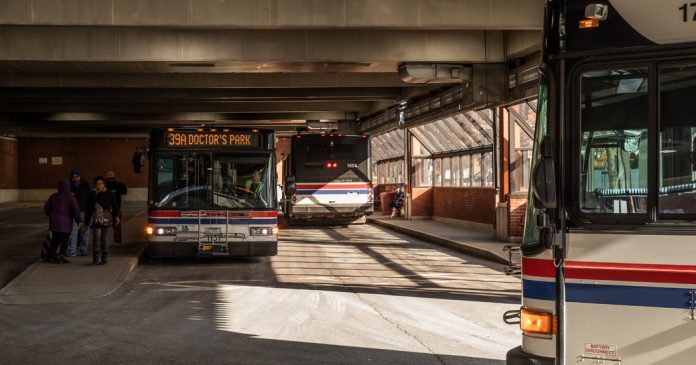
Should Public Transit Be Free?

0
Should Public Transit Be Free?

Find all our Student Opinion questions here.

How do people get around in your community? Are there different forms of public transit, such as trains and buses? Is it more common for people to drive or cycle to and from work and school? Does your community have shared forms of transit like ride-share services, taxis or shared bikes?

Do you think your community should make public transit free for everyone?

In “Should Public Transit Be Free? More Cities Say, Why Not?,” Ellen Barry writes about cities in Massachusetts that are experimenting with offering free public transit:

Mayor Daniel Rivera of Lawrence, intrigued after hearing his friend Ms. Wu speak about fare-free transit, asked his regional transit authority how much was collected on three of the city’s most-used bus lines. The answer was such a small amount — $225,000 — that he could offset it from the city’s surplus cash reserves.

“What I like is the doability of this, the simplicity of it,” Mr. Rivera said. “We are already subsidizing this mode of transportation, so the final mile is very short. It isn’t a service people need to pay for; it’s a public good.”

Around 100 cities in the world offer free public transit, the vast majority of them in Europe, especially France and Poland.

A handful of experiments in the United States in recent decades, including the cities of Denver and Austin, were viewed as unsuccessful, because there was little evidence that they removed cars from the road; new riders tended to be poor people who did not own cars, according to a 2012 review by the National Academies Press.

But in another sense, they were successful: They increased ridership right away, with rises between 20 and 60 percent in the first few months. That statistic accounts for its revival among a new wave of urban progressives, who see transit as a key factor in social and racial inequality.

Some cities are drawn to the idea because they have seen a decline in ridership:

The idea also appeals to moderates in places like Worcester, the state’s second-largest city, which is struggling to persuade residents to use its buses. Ridership has dropped by 23 percent since 2016, and the buses now run half-empty, according to a report released last May by the Worcester Research Bureau, a nonpartisan policy group.

At a City Council meeting last week, a parade of citizens lined up to express support for a proposal to make Worcester’s buses free for three years, as a pilot program. Revenue from bus fares is so low, and the cost of collecting them so high, that it could be replaced by an infusion of $2 million to $3 million a year.

Mayor Marty Walsh of Boston has expressed concern about the potential profit loss, saying that in 2019 bus fares in his city generated $109 million:

“There’s no such thing as free,” Mr. Kane said. “Someone has to pay. Boston has the highest-paid bus drivers in the country. They’re not going to work for free. The fuelers, the mechanics — they’re not going to work for free.” Advocates of free transit have suggested that the cost could be offset by a gas tax increase; but replacing $109 million would mean raising the gas tax by 3 and a half cents, Mr. Kane said. And all the while, he said, the system is straining to cope with the current demands.

“I hate to be the guy who says, ‘eat your peas,’” he said. “But that’s where we are.”

Proponents of the idea argue that Mr. Kane’s numbers are inflated and that the true replacement cost would be closer to $36 million. That gap, they say, could be covered by a 2-cent rise in the gas tax.

“That’s where something controversial or impossible a few years ago now seems possible,” said Stacy Thompson, the executive director of the LivableStreets Alliance, a transportation research group.

The Boston Globe editorial board, which endorsed the idea of making Boston’s buses fare-free this month, suggested the cost could by covered by philanthropy.

Students, read the entire article, then tell us:

  • What is your reaction to the different perspectives presented in the article? Do you think that public transportation should be free, or do you have concerns about the financial burden on cities? How much does it cost to ride a bus or train in your city? Do you agree with the fares?

  • How do you get to and from school? How does your family get to and from work? What are other times when you have to travel around your community? Do you have a sense of how much these trips cost you, either in fares or in gas money? Is that something you pay for, or your family pays for — or is it provided by your school or local government?

  • Some people support free public transit as a way to have fewer cars on the road and to reduce carbon emissions. How important is that to you? Try this Carbon Footprint Calculator from the Nature Conservancy to see your travel carbon footprint. If you select the “Advanced” settings, you will be able to enter miles for specific forms of public transit. Experiment with changing miles spent driving a car versus miles spent riding a bus and see if there is a significant difference or impact.

  • In the article, Dionisia Ramos, 55, uses the bus twice a day to get to and from community college. Ms. Ramos has appreciated the access to free buses and said that public transportation was “not a luxury,” but a “basic need.” Do you agree with her statement? How do you imagine public transit fares affect people like Ms. Ramos, who receives an unemployment check for $235 once a month and has bus fares of $2.40 a day? Are there other solutions you can imagine that would support someone like Ms. Ramos?

  • The article states that for some people, free public transportation is a way to create social and racial equality. What do you think? How do people view public transit in your community? Are there beliefs or stereotypes about the kind of people who use public transportation or about the safety and quality of those services? Or is public transit normalized and used by a wide variety of people in your community?

  • In New York City, the Metropolitan Transportation Authority (M.T.A.) hired an additional 500 police officers to patrol subway stations for fare evasion and crime, even though New York Police Department statistics indicate that crime in the subway has decreased. The New York Times editorial board has come out against the increased policing, saying that:

Adding hundreds of officers to the transit system without good cause could also lead to the sort of over-policing of black and Hispanic boys and men that the city has seen before. Already, between October 2017 and June 2019, black and Hispanic people made up more than 90 percent of those arrested on charges of fare evasion.

What do you think? Have you observed a connection between policing for fare evasion and race or socioeconomic status in your community? Do you think that making New York City trains and buses free would eliminate these issues or create more problems?


Students 13 and older are invited to comment. All comments are moderated by the Learning Network staff, but please keep in mind that once your comment is accepted, it will be made public.

Lesson of the Day: ‘When the Monkey Chants Are for You: A Soccer Star’s View of Racist Abuse’

0
Lesson of the Day: ‘When the Monkey Chants Are for You: A Soccer Star’s View of Racist Abuse’

3. How does Lukaku deal with the racism he has encountered — both emotionally and as a player on the field?

4. What factors are connected to the increase in racism at European soccer matches, according to the article?

5. Why did Lukaku leave England after nearly eight years of play? Why did he feel that criticisms of his performance with Manchester United were biased and unfair?

6. What does Stella Orakwue, the author of “Pitch Invaders: The Modern Black Football Revolution,” mean when she writes that black players are judged “not on the basis of their individuality but on the basis of concocted group characteristics, enshrined in mythology”? How do characterizations of Lukaku’s play by fans, sportscasters and media support her view?

7. The article concludes:

He [Lukaku] does not feel cowed. He has not allowed it to sour his experience. But that does not mean that he is prepared to tolerate it, or that he believes others should be forced to endure it, or wait passively as education improves and ignorance erodes.

“You have to keep coming on strong,” he said. “You have to keep fighting.” He cannot be silent, so he does what he has always done: He stands up, and speaks.

What is your reaction to Lukaku’s final quote? What lessons can we learn from his story — whether we are fans of the sport or not?

Choose one or more of the following activities:

1) What should be done to address racism in European soccer?

This summer, the Union of European Football Associations, the governing body of European soccer and the umbrella organization for 55 national associations — including the Premier and Italian leagues — set a three-step protocol for handling racist abuse during matches. Step one involves a message played over the public-address system, with step two having the referee take the teams off the field for a period of time. If the players return to action and another episode of racist behavior occurs, the game will be ended as the third step of the protocol.

In a related article, “In Fight Against Racism, Soccer Can Choose the Playing Field,” Mr. Smith writes:

Many would advocate an outright ban for teams or nations that are repeat offenders, like Bulgaria. If there is a fear that may nourish some sort of victim complex — though it should be pointed out that at the heart of all far-right thinking is a contorted sense of persecution — then perhaps a simpler solution is at hand.

There is no reason that any player, white or black, should be expected to go and play in a country with a history of racist abuse. Perhaps, then, those nations where this occurs depressingly frequently should be forced to play all of their matches away from home. The same punishment could be meted out to club teams, rather than forcing games to be played without fans but on familiar ground.

What do you think should be done?

Should teams or nations be banned? Should games be halted? Should players and teams walk off the field? Should fans be suspended or banned? Should other fans intervene? Should players shrug off racist chants as a part of the game, as some Italian fans suggested after an episode last year?

Custom Design Feature | Christopher E. Smith

0
Custom Design Feature | Christopher E. Smith

Today’s featured design is a book author website. It was an honor for us to work with Christopher E. Smith on the page featuring his four new books about Walt Disney World.  I was already working with Chris in the past, so I was very excited to be creating another website for him. We are always happy to see returning customers as it means that the work we did for them lasted for a long time (usually even for years!).


Finding the perfect style

Christopher wanted to showcase the books. Other then that, he was open to any suggestions we may have. I decided to create three straightforward mood boards. Each of them is featuring a different style. Starting from something light and funny and ending on sophisticated serif font. Here are all three options she prepared as a start for this project:

Since Christopher requested us to create thr whole branding for him, all mood boards include a smaller logo version to use in places where a large horizontal one would not be useful.

Option #2 won and became a starting point for a website design.


Creating the website design

There weren’t a lot of elements required for this site homepage, so I decided to make a little bit more colorful slider. This way, it is not only easy to showcase Chris’s books, but it also makes the site more unique and eye-catching.

Here is a full-length view of the final website design:

Click here to view larger


Final thoughts

It was a pleasure to work with Chris. I was able to finish his design within a few weeks, and wes were pleased with the final results. We have also asked Chris about his opinion, and it is what he shared with us:

I had a general idea about what I wanted the site to look like, but I needed a lot of hand-holding and advice in terms of what would help the site look and function the best. Kate was so patient and so responsive and helped make my dreams for the site become a reality. I cannot emphasize her talent, skill and professionalism enough. The site turned out to be better than I could have ever hoped, and helps portray the brand that I am trying to build. This is my 2nd time working with Kate for good reason, and it will not be the last!

Christopher E. Smith

If you are looking for a custom blog or website design, visit our Custom Design Services page to request a quote.

What’s Going On in This Graph? | Jan. 22, 2020

0
What’s Going On in This Graph? | Jan. 22, 2020

This graph and map showing water stress levels around the world appeared elsewhere on NYTimes.com.

By Friday morning, Jan. 23, we will provide the “Reveal” — the graphs’ free online link, additional background and questions, shout outs highlighting student comments and headlines, and Stat Nuggets.

After looking closely at the graph and the map above (or at this full-size image), think about these three questions:

  • What do you notice? If you make a claim, tell us what you noticed that supports your claim.

  • What do you wonder? What are you curious about that comes from what you notice in the graph and map?

The questions are intended to build on one another, so try to answer them in order. Start with “I notice,” then “I wonder,” and end with a catchy headline.

2. Next, join the conversation by clicking on the comment button and posting in the box that opens on the right. (Students 13 and older are invited to comment online. Teachers of younger students are welcome to post what their students say.)

3. After you have posted, read what others have said, then respond to someone else by posting a comment. Use the “Reply” button or the @ symbol to address that student directly.

On Wednesday, Jan. 22, our collaborator, the American Statistical Association, will facilitate this discussion from 9 a.m. to 2 p.m. Eastern Time to help students’ understanding go deeper. You might use their responses as models for your own.

4. By Friday morning, Jan. 24, we will reveal more information about the graph and map at the bottom of this post. Students, we encourage you to post an additional comment after reading the reveal. How does the original article and the moderators’ comments help you see the graph and map differently? Try to incorporate the statistical terms defined in the Stat Nuggets in your response.


  • Read our 2019-20 introductory post, which includes the archives of past releases by topic and graph type.

  • Learn more about the “Notice and Wonder” teaching strategy and how and why other teachers are using this feature from our on-demand webinar.

  • Sign up for our free weekly newsletter so you never miss a graph, and add our 2019-20 “What’s Going On in This Graph?” live-moderated discussion Wednesdays to your Google calendar (1/22, 1/29, 2/5, 2/12, 2/26, 3/4, 3/11, 3/18, 3/25, 4/1, 4/8). Graphs are always released by the Friday before to give teachers time to plan ahead.

  • Go to the A.S.A. K-12 website, which includes This is Statistics, resources, professional development, student competitions, curriculum, courses and careers.

Word + Quiz: habeas corpus

0
Word + Quiz: habeas corpus

1. a writ ordering a prisoner to be brought before a judge

2. the civil right to obtain a writ of habeas corpus as protection against illegal imprisonment

_________

The term habeas corpus has appeared in 13 articles on NYTimes.com in the past year, including on Oct. 9 in the obituary “Overlooked No More: Mitsuye Endo, a Name Linked to Justice for Japanese-Americans” by Stephanie Buck:

After the forced evacuation of Japanese-Americans, the Japanese American Citizens League, a national group, hired James Purcell, a San Francisco lawyer, to put together a case that would challenge the government and shutter the 10 detention camps it had opened …

… On July 13, 1942, Purcell filed a writ of habeas corpus, arguing, “If you can abrogate certain sections of the Constitution and incarcerate any person without trial or charges just because you do not like his nationality, what is to prevent from abrogating any or all of the Constitution?”

_________