fbpx
Home Blog Page 1533

Would You Consider Serving in the U.S. Armed Forces?

0
Would You Consider Serving in the U.S. Armed Forces?

Find all our Student Opinion questions here.

Do you know anyone who has served in the United States Armed Forces? Have you ever considered enlisting?

Today, the U.S. military is an all-volunteer force, with about 1.2 million active-duty troops. But increasingly, new recruits come from a small demographic group. Is it healthy for our democracy? Is it fair?

In “Who Signs Up to Fight? Makeup of U.S. Recruits Shows Glaring Disparity,” Dave Philipps and Tim Arango write:

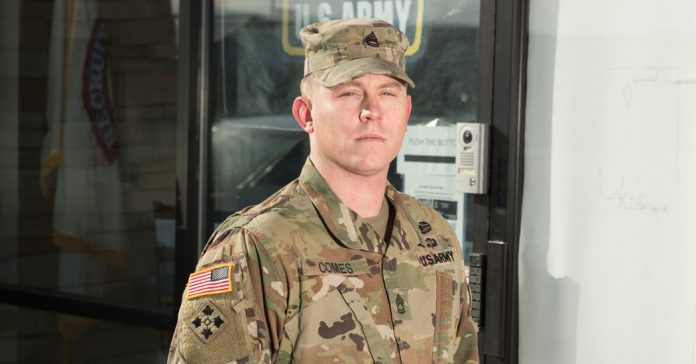
The sergeant in charge of one of the busiest Army recruiting centers in Colorado, Sgt. First Class Dustin Comes, joined the Army, in part, because his father served. Now two of his four children say they want to serve, too. And he will not be surprised if the other two make the same decision once they are a little older.

“Hey, if that’s what your calling is, I encourage it, absolutely,” said Sergeant Comes, who wore a dagger-shaped patch on his camouflage uniform, signifying that he had been in combat.

Enlisting, he said, enabled him to build a good life where, despite yearlong deployments to Iraq and Afghanistan, he felt proud of his work, got generous benefits, never worried about being laid off, and earned enough that his wife could stay home to raise their children.

“Show me a better deal for the common person,” he said.

Soldiers like him are increasingly making the United States military a family business. The men and women who sign up overwhelmingly come from counties in the South and a scattering of communities at the gates of military bases like Colorado Springs, which sits next to Fort Carson and several Air Force installations, and where the tradition of military service is deeply ingrained.

For years, military leaders have been sounding the alarm over the growing gulf between communities that serve and those that do not, warning that relying on a small number of counties that reliably produce soldiers is unsustainable, particularly now amid escalating tensions with Iran.

“A widening military-civilian divide increasingly impacts our ability to effectively recruit and sustain the force,” Anthony M. Kurta, acting under secretary of defense for personnel and readiness, told the National Commission on Military, National and Public Service last year. “This disconnect is characterized by misperceptions, a lack of knowledge and an inability to identify with those who serve. It threatens our ability to recruit the number of quality youth with the needed skill sets to maintain our advantage.”

The article continues:

With the goal of recruiting about 68,000 soldiers in 2020, the Army is now trying to broaden its appeal beyond traditional recruitment pools. New marketing plays up future careers in medicine and tech, as well as generous tuition benefits for a generation crushed by student debt. The messaging often notes that most Army jobs are not in combat fields.

But for now, rates of military service remain far from equal in the United States, and the gap may continue to widen because a driving decision to enlist is whether a young person knows anyone who served in the military. In communities where veterans are plentiful, teachers, coaches, mothers, uncles and other mentors often steer youths toward military service. In communities where veterans are scarce, influential adults are more wary.

That has created a broad gap, easily seen on a map. The South, where the culture of military service runs deep and military installations are plentiful, produces 20 percent more recruits than would be expected, based on its youth population. The states in the Northeast, which have very few military bases and a lower percentage of veterans, produce 20 percent fewer.

The main predictors are not based on class or race. Army data show service spread mostly evenly through middle-class and “downscale” groups. Youth unemployment turns out not to be the prime factor. And the racial makeup of the force is more or less in line with that of young Americans as a whole, though African-Americans are slightly more likely to serve. Instead, the best predictor is a person’s familiarity with the military.

“Those who understand military life are more likely to consider it as a career option than those who do not,” said Kelli Bland, a spokeswoman for the Army’s Recruiting Command.

That distinction has created glaring disparities across the country. In 2019, Fayetteville, N.C., which is home to Fort Bragg, provided more than twice as many military enlistment contracts as Manhattan, even though Manhattan has eight times as many people. Many of the new contracts in Fayetteville were soldiers signing up for second and third enlistments.

Students, read the entire article, then tell us:

  • Would you consider serving in the U.S. armed forces? Why or why not? Does reading the article affect your view?

  • How would you describe your views and attitudes toward the military? Do you see military service as an important patriotic duty? Or are you skeptical or critical of the military? What experiences have shaped your views?

  • What do you see as the benefits and drawbacks of enlisting? Are you drawn to the qualities of Army life that Sergeant Comes describes, such as the “camaraderie, stability and generous health, education and retirement benefits”? Or, are you fearful of long deployments in dangerous places like Iraq and Afghanistan?

  • What is your reaction to the disparities in Army recruitment across the country? Do you think it is wrong that Fort Bragg provided more than twice as many military enlistment contracts as Manhattan, even though Manhattan has eight times as many people?

  • Does your community or school encourage and support military service? For example, does your school have Army recruiters or an R.O.T.C. program. Does it encourage students to take the military’s aptitude exam? Would you like to see more or less of a military presence at your school?

  • In the opinion piece “John Kelly Suggests More Americans Should Have the Honor of Serving. He’s Right.,” Clyde Haberman writes:

Requiring everyone to serve in some fashion, other than those too physically or psychically impaired, would be a profoundly democratizing action. In time, it might even encourage more civilized political discourse in this atomized land, by putting young people in proximity to those with roots in different ways of life and thinking. It’s harder to sneer at the “other” after you’ve both shared a life-transforming experience.

Do you think all Americans should serve in the military, or do you believe that it should continue as an all-volunteer force? Why or why not?

Lesson of the Day: ‘How’s Your Internship Going? This Teen Found a Planet’

0
Lesson of the Day: ‘How’s Your Internship Going? This Teen Found a Planet’

Find all our Lessons of the Day here.

Featured Article: “How’s Your Internship Going? This Teen Found a Planet”

Wolf Cukier, a teenager from Scarsdale, N.Y., spent the summer before his senior year interning at NASA’s Goddard Space Flight Center in Greenbelt, Md. In his time interning, he identified a body that was later confirmed to be a planet, now known as TOI 1338 b.

In this lesson, you will learn about the process that Wolf was a part of that invites everyday people to become scientists. In the Going Further activity, you will be given a chance to become a planet hunter yourself — or participate in another citizen science project.

What do you know about how planets are discovered and identified? In the article, Wolf scrutinized data that was collected from TESS, or the Transiting Exoplanet Survey Satellite. To learn more about how TESS works to gather data, watch this Times video from 2018 and answer the questions.

  • What is the “wobble method” of planet hunting?

  • How did the Kepler space telescope spot planets by using starlight?

  • What does the TESS spacecraft look for to identify planets? What do scientists hope TESS will be able to accomplish? How might TESS’s findings contribute to our knowledge of space?

Read the article, then answer the following questions:

1. What was Wolf responsible for doing in his internship? How did he work to identify TOI 1338 b?

2. How do TESS’s camera and graphing systems operate? Can you explain the systems in a way that a fifth grader could understand?

3. Veselin Kostov, Wolf’s mentor and a research scientist, talked about the shortcomings of algorithms in analyzing TESS’s data. How does the thought process that Wolf went through when first looking at the TOI 1338 b data support Mr. Kostov’s point?

4. What was the verification process that scientists went through to confirm planet TOI 1338 b?

5. How has Wolf talked about the experience of identifying an exoplanet?

The article refers to “citizen science,” which is scientific research, observation or analysis done by everyday people. Have you ever wondered about the herpetofauna (reptiles and amphibians) in your area or wanted to make your city safer for cyclists? Maybe you’ve observed how your dog has aged over time or you’re interested in the precipitation levels in your region. These are all examples of citizen science projects that you could be a part of, or that could inspire you and your class to create your own.

After reading the article, we encourage you to support and contribute to NASA’s TESS by searching for exoplanets using TESS’s observation tool: Planet Hunters TESS. You will first need to read a short tutorial on how to identify and mark transits, and then you can become a planet hunter. If you prefer to look at images of planets, you can help scientists to characterize surfaces on Mars using Planet Four: Terrains and Planet Four: Ridges.

Weekly News Quiz for Students: Iran Missile Attack, Earthquake, College Football Champion

0
Weekly News Quiz for Students: Iran Missile Attack, Earthquake, College Football Champion

Above is an image related to one of the news stories we followed over the past week. Do you know what it shows? At the bottom of this quiz, you’ll find the answer.

Have you been paying attention to the news recently? See how many of these 10 questions you can get right.

Welcoming Zac Rule and JP Moran to Coursera’s Enterprise Leadership Team

0
Welcoming Zac Rule and JP Moran to Coursera’s Enterprise Leadership Team

By Leah Belsky, Chief Enterprise Officer, Coursera

Due to the rapid pace of technology advancement, companies, jobs, and the skills needed to compete are at risk of being disrupted. As a result, institutions can no longer be complacent about skills capital; companies, governments, and universities must come together to reskill and upskill the global workforce.

As leading institutions partner with Coursera to deliver lifelong learning to their workforce, our enterprise platform continues to grow tremendously. At the end of 2019, we announced that our North American enterprise business saw 100 percent year-over-year customer growth. Over 2,100 companies, governments and universities rely on us to develop a workforce equipped with the skills of the future, including more than 100 Fortune 500 companies.

Growing our enterprise team is key to advancing our efforts in equipping institutions and communities with the skills of the future. Today, I’m pleased to welcome Zac Rule and JP Moran, two new executive leaders, to our enterprise leadership team. 

As Vice President of North America, Enterprise, Zac will lead Coursera’s go-to-market effort and sales execution to help companies of all sizes across the United States, Canada and Latin America achieve skills transformation. Zac, a seasoned executive leader, has worked with MemSQL, DataStax and Oracle to drive organizations’ digital transformation via cloud and data infrastructure. He most recently served as Vice President of World Wide Sales and Field Operations at MemSQL. 

JP will serve as Global Head of Channels and Emerging Business as well as Coursera for Campus in the Americas. He is a veteran technology executive with experience in advisory services and building enterprise solutions with Skillsoft and CareerBuilder. He most recently served as Vice President of Sales, Technology and Developer Group, at Skillsoft. 

I look forward to working with Zac and JP. Both bring deep domain expertise and help form a powerhouse leadership team that enables Coursera and our partners to build a new institutional model for lifelong learning.

For more information about the Coursera for Business offering, visit coursera.org/business. 

Coursera for Business provides a world-class learning platform for companies that need to upskill, reskill, and deepskill their talent. With topics ranging from digital transformation and data science to software development and leadership, over 2,100 institutions trust the Coursera for Business enterprise platform to transform their talent.


Announcing: Google IT Automation with Python Professional Certificate

0
Announcing: Google IT Automation with Python Professional Certificate

For the last two years, the Google IT Support Professional Certificate has been equipping learners around the world with the fundamentals needed to jumpstart new careers in information technology (IT). To celebrate the 2-year anniversary of the program, we’re excited to announce that Google has expanded its IT training to help you take the next step in your career, now available on Coursera.

The new Google IT Automation with Python Professional Certificate is designed to provide IT professionals with in-demand skills that can help you advance your career, including Python, Git, and IT automation. Python is now the most in-demand programming language by employers, and more than 530,000 U.S. job postings currently require Python proficiency, including 75,000 entry-level jobs, according to Burning Glass. The new IT Automation with Python Professional Certificate will equip you with the latest job-ready skills to help you take your career to the next level. This certificate program can be completed in about 6 months and can help prepare you for a variety of IT roles, like more advanced IT Support Specialist or Junior Systems Administrator positions.

With this beginner-level, 6-course program (including a capstone project), you’ll :

  • Learn how to program with Python with no previous knowledge of coding required and you’ll use Python to automate common system administration tasks
  • Learn to use Git and GitHub, to troubleshoot and debug complex problems
  • Apply automation at scale by using configuration management and the Cloud
  • Practice your technical skills with hands-on projects including a capstone project where you’ll use your new knowledge to solve a real-world IT problem
  • Learn at your own pace with accessible online courses

Upon completion of the program, you’ll get access to career resources that can help you prepare your resume and practice interviewing. You’ll also have the option to share your information with potential employers, like Walmart, Sprint, Bank of America, Hulu, Google (of course!), and more.

Whether you’re just starting your IT career or you already have work experience under your belt, this program will teach you in-demand skills to help you stand out from the crowd and accelerate your career. 

Get started on the Google IT Automation with Python Professional Certificate today with a 7-day free trial.


Teaching and Learning About Martin Luther King Jr. With The New York Times

0
Teaching and Learning About Martin Luther King Jr. With The New York Times

What would Dr. King make of America today?

On April 4, 2018, The Times published an interactive look at that question. Headlined “Martin Luther King Jr.: 50 Years Later, His Battles Live On,” here is how it begins:

Martin Luther King Jr. remains frozen in time for many Americans. Seared into our consciousness is the man who battled Southern segregation.

We see him standing before hundreds of thousands of followers in the nation’s capital in 1963, proclaiming his dream for racial harmony. We see him marching, arms locked with fellow protesters, through the battleground of Alabama in 1965.

But on the 50th anniversary of his death, it is worth noting how his message and his priorities had evolved by the time he was shot on that balcony at the Lorraine Motel in Memphis in 1968. Dr. King was confronting many challenges that remain with us today.

He was battling racism in the North then, not just in the South. He was pushing the government to address poverty, income inequality, structural racism and segregation in cities like Boston and Chicago. He was also calling for an end to a war that was draining the national treasury of funds needed to finance a progressive domestic agenda.

This may not be the Dr. King that many remember. Yet, his words resonate powerfully — and, perhaps, uncomfortably — today in a country that remains deeply divided on issues of race and class.

How do your students see his words resonating in their own lives and communities — and in our nation and around the world? Invite them to click through this rich collection, which links to both new and archival pieces, as they attempt to answer the question we pose above: What would Dr. King make of America today?

As they work, students might highlight quotes and ideas that pair especially well with other things they are reading, learning about, listening to or viewing. For instance, how do they speak to current works like Childish Gambino’s “This Is America” or Angie Thomas’s “The Hate U Give”? Why? As a culminating activity, a class might create a gallery of images and quotes that bridge Dr. King’s battles with those we are fighting today.

Pet Keepsakes

0
Pet Keepsakes

After your pet dies, you can have it turned into any manner of mementos — diamonds, tattoo ink, a locket to wear around your neck.

Theresa Furrer of Nine Lives Twine spins the hair of cats and dogs into yarn and woven keepsakes.

Would you like to have any of your pets commemorated in this way? Would you like a job like Ms. Furrer’s, creating something precious for people to remember their furry friends by?

Have you ever made something to remember your departed pets? Or known someone who has? Would you like to do so in the future? Why or why not?

Tell us in the comments, then read the related article to learn more about Ms. Furrer’s work.


Find many more ways to use our Picture Prompt feature in this lesson plan. You can find all our Picture Prompts in this column.

Word + Quiz: nadir

0
Word + Quiz: nadir

1. an extreme state of adversity; the lowest point of anything

2. the point below the observer that is directly opposite the zenith on the imaginary sphere against which celestial bodies appear to be projected

_________

The word nadir has appeared in 53 articles on NYTimes.com in the past year, including on Dec. 30 in “Gracie Gold Embraces a Rugged Comeback Path” by Karen Crouse:

Gracie Gold is still on the ice, steadily building a comeback in figure skating one small victory at a time.

At 24, she has replaced the sweeping ambitions that made her an Olympian in 2014 and, for a while, one of the favorites to win gold in 2018. Now she is taking what she considers a healthier approach.

Gold’s career was sidetracked by mental illness that reached its nadir in 2017, when she had to abandon her bid for the 2018 Winter Games in Pyeongchang, South Korea, and enter an inpatient therapy clinic in Arizona to address an eating disorder, depression and anxiety.

_________

What Role Should Textbooks Play in Education?

0
What Role Should Textbooks Play in Education?

Find all our Student Opinion questions here.

Do your teachers use textbooks in class or for homework assignments? Are there certain classes where you think textbooks are particularly beneficial to learning? Are there other subjects that you prefer learning a different way?

The New York Times writer Dana Goldstein spent the last five months reading 43 middle school and high school textbooks. In “Two States. Eight Textbooks. Two American Stories.,” Ms. Goldstein writes about the differences between major textbooks published in Texas and California since 2016:

In a country that cannot come to a consensus on fundamental questions — how restricted capitalism should be, whether immigrants are a burden or a boon, to what extent the legacy of slavery continues to shape American life — textbook publishers are caught in the middle. On these questions and others, classroom materials are not only shaded by politics, but are also helping to shape a generation of future voters.

Conservatives have fought for schools to promote patriotism, highlight the influence of Christianity and celebrate the founding fathers. In a September speech, President Trump warned against a “radical left” that wants to “erase American history, crush religious liberty, indoctrinate our students with left-wing ideology.”

The left has pushed for students to encounter history more from the ground up than from the top down, with a focus on the experiences of marginalized groups such as enslaved people, women and Native Americans.

The article continues:

The differences between state editions can be traced back to several sources: state social studies standards; state laws; and feedback from panels of appointees that huddle, in Sacramento and Austin hotel conference rooms, to review drafts.

Requests from textbook review panels, submitted in painstaking detail to publishers, show the sometimes granular ways that ideology can influence the writing of history.

A California panel asked the publisher McGraw-Hill to avoid the use of the word “massacre” when describing 19th-century Native American attacks on white people. A Texas panel asked Pearson to point out the number of clergy who signed the Declaration of Independence, and to state that the nation’s founders were inspired by the Protestant Great Awakening.

All the members of the California panel were educators selected by the State Board of Education, whose members were appointed by former Gov. Jerry Brown, a Democrat. The Texas panel, appointed by the Republican-dominated State Board of Education, was made up of educators, parents, business representatives and a Christian pastor and politician.

Shortly after the article was published, many Times readers responded in comments and on social media. In the follow-up article “Readers Respond to Our Look at the Politics of American History Textbooks,” Ms. Goldstein highlights some of those comments.

She noticed many readers were struck by the difference in how the two states interpreted and presented African-American history. For example, the CNN commentator Keith Boykin tweeted:

Both California and Texas textbooks teach the Harlem Renaissance. But Texas school books say that some critics “dismissed the quality of literature produced.” California explains white flight to the suburbs in the 1950s. Texas doesn’t mention their race.

There were educators, and other readers, who questioned the benefits and future of textbooks:

One teacher, Peggy Warren, wrote on Twitter that the article was “Solidifying my decision to not use the designated textbook in my classroom! Primary sources are the way to go!”

Some people questioned how much students retain from textbooks. But others responded that textbooks may be most influential as a guide to teachers on how to focus their lessons.

James, a Times reader in Los Angeles, commented, “I teach college freshmen. Those of you who think that these textbooks have little or no effect on the students’ education are being naïve. I see the difference every day. Some states simply teach better history.”

Writing on the Mother Jones website, the journalist Kevin Drum said, “I hate both of these textbooks. I hate all textbooks these days. Cut them all in half! Get rid of the endless boxed inserts and stupid ‘discussion points.’ But add more charts! If I had been forced to learn American history from one of these overstuffed, chopped-up monstrosities, I’d probably hate history too.”

Some readers proposed that there be a national curriculum to ensure consistency of interpretation across the United States:

Trish Zornio, a Democratic candidate for Senate in Colorado, wrote on Facebook, “As an educator myself I’ve long supported a basic federal common core curriculum (e.g. evolution not creationism) to ensure American children get consistent and quality education no matter where they grow up. This comparison of textbooks between two states shows why it’s vital.”

Richard N. Haass, the president of the Council on Foreign Relations, agreed, posting on Twitter:

National unity depends on their being a national narrative. This is especially so for the US as it is a country based on an idea. The idea of each state fashioning its own narrative is an oxymoron that contributes to our political dysfunction.

However, Nikole Hannah-Jones, a writer at The New York Times Magazine and the creator of The 1619 Project, responded to Mr. Haas on Twitter by saying:

“National unity” has depended on a national narrative and political reality that downplays and erases genocide and slavery to play up an “idea” only made possible through the subjugation of millions. The belief that there was ever a single national narrative is naive.

Students, read the entire article, then tell us:

  • What are your experiences with textbooks? What are the benefits and limitations to learning with textbooks? Have you had different experiences with textbooks depending on the subject you were studying or how the teacher presented the material?

  • Do you trust all that you read in textbooks? Have you ever perceived bias in the textbooks you have used? If yes, have teachers or other students called out or responded to the bias? Do you think any textbooks are free from bias or opinion? Can you think of anything you have read in a textbook that reflects something about the state where you live? You can look at the examples in the original article if you want ideas.

  • Are there other ways you learn in school that don’t involve textbooks? Do you have teachers who supplement textbooks with other sources? What are your experiences with analyzing primary sources to learn history or conducting experiments to learn science?

  • Who do you think should be responsible for writing, editing and approving textbooks? In the original article, Ms. Goldstein explains the steps of textbook production:

1. Authors, often academics, write a national version of each text.

2. Publishers customize the books for states and large districts to meet local standards, often without input from the original authors.

3. State or district textbook reviewers go over each book and ask publishers for further changes.

4. Publishers revise their books and sell them to districts and schools.

What do you think about this process? Is there anything you think could be done differently? Why? How do you think people should be selected for reviewing textbooks?

  • In the two articles, some teachers express how they have thought about ditching textbooks entirely, adding or challenging the information in the textbook, or using an article, like Ms. Goldstein’s, to remind students about the bias inherent in their textbooks. What do you think about these approaches and responses? Does one resonate with what you think should be done?

  • What do you think about the idea of having a national curriculum? Do you think it would be beneficial to have one narrative or one perspective on science, math, history, English and other subjects? What concerns do you have about this approach?

Lesson of the Day: ‘Two States. Eight Textbooks. Two American Stories.’

0
Lesson of the Day: ‘Two States. Eight Textbooks. Two American Stories.’

Find all our Lessons of the Day here.

Featured Article: “Two States. Eight Textbooks. Two American Stories.” by Dana Goldstein

The New York Times analyzed some of the most popular social studies textbooks used in California and Texas. They found hundreds of differences — including some that reflect the nation’s deepest partisan divides on issues like race, gender and immigration.

In this lesson, you’ll consider how those differences can shape students’ understanding of American history and influence their political views. Then you’ll explore what this means for your own learning.

Consider the following statement: “History is never neutral.”

What do you think that means? Do you agree with its premise? Why or why not? Can you think of any examples that support or contradict this statement?

Where, if anywhere, might you find “neutral” history? For example, are history textbooks impartial?

(Note to teachers: If you’re in a classroom setting, you might set this up as a Graffiti Board or Big Paper activity so students can read and build upon each other’s ideas.)

Read the article, then answer the following questions:

1. Ms. Goldstein writes that textbooks are “shaded by politics.” What does she mean by this? Give one example from the article and explain how it helps illustrate this point.

2. What ideas about American history have conservatives pushed schools to teach? What ideas has the left pushed? How might these ideas help to “shape a generation of future voters”?

3. In your own words, summarize how textbooks are produced. How does knowing about this process influence your view of textbooks?

4. How do California and Texas textbooks cover white resistance to black progress differently? How do each of these teachings affect students’ understanding of the roles of race and racism in American history?

5. California textbooks include history on gender and sexuality that Texas editions do not. In what ways might the inclusion or omission of women and L.G.B.T.Q. people and issues shape students’ beliefs about gender and sexuality?

6. In what ways do California and Texas textbooks portray immigration differently? What message does each curriculum send about immigrants in the United States? How might these messages be influenced by politics?

7. Textbooks in California and Texas both emphasize the role of big business in American history, but they view it very differently. What information do the books from each state include or exclude to support their views? How might this information shape students’ ideas about the American economy?

8. Did anything you read in this article surprise you? If so, what? What is one key insight about textbooks that you will take away?

Choose one or both of the following activities to complete.

Option 1: Discuss the idea of “neutral history.”

Return to the statement from the warm-up: “History is never neutral.”

How, if at all, do you view this statement differently based on what you learned in the article? Is it possible for history to be neutral? Why or why not?

In a related piece, The Times collected reader responses to the article. Richard N. Haass, president of the Council on Foreign Relations, wrote on Twitter:

Nicole Hannah-Jones, a writer at The New York Times Magazine and the creator of The 1619 Project, responded to Mr. Haass’s comments:

Who are you more likely to agree with? Should there be a single, national narrative of American history that all students learn, as Mr. Haass suggests? Or, as Ms. Hannah-Jones argues, is that impossible? Why do you think the way you do?

Are there any unifying themes or ideas about American history that are worth teaching? If so, what are they and why? If not, why not?

Option 2: Analyze your own history curriculum.

How have you learned about the history of the United States? With a textbook? Primary sources? Online resources? Or some from all three?

Compare your American history curriculum — whether it’s a textbook or a syllabus created by your teacher — to that of California and Texas. You might focus on one of the areas discussed in the article — race, gender and sexuality, immigration, the economy — or choose a topic of your own.

As you analyze your curriculum, you might consider the following questions:

  • What information, texts and points of view have been included or excluded in your class?

  • What ideals, values and beliefs — whether implicit or explicit — does your history curriculum communicate about the United States? What story is this curriculum telling about our country?

  • How might it be influenced by the politics of your state? In what ways might it work to shape your own political views?

Then consider how this information can empower you as a student: Going forward, how might you think about what you learn in school differently?