fbpx
Home Blog Page 1608

What’s new on Coursera for Business – July 2019

0
What’s new on Coursera for Business – July 2019

By Kyle Clark, Enterprise Content Expert

Coursera released 45 courses on our platform in July, including the brand new G Suite Administration Specialization from Google Cloud. Here are our top picks for enterprise for this past month:

July 2019’s Key Launches:

  • G Suite Administration Specialization by Google Cloud – The G Suite Administration Specialization has been developed to help administrators master the foundations of managing and establishing G Suite best practices for their organization.
  • Reinforcement Learning Specialization by University of Alberta – Harnessing the full potential of artificial intelligence requires adaptive learning systems. Learn how Reinforcement Learning (RL) solutions help solve real-world problems through trial-and-error interaction by implementing a complete RL solution from beginning to end.
  • IT Fundamentals for Cybersecurity Specialization by IBM – There are a growing number of exciting, well-paying jobs in today’s security industry that do not require a traditional college degree. Forbes estimates that there will be as many as 3.5 million unfilled positions in the industry worldwide by 2021! One position with a severe shortage of skills is as a junior cybersecurity analyst. This specialization will provide you with the basics you need to get started. 
  • Storytelling and influencing: Communicate with impact by Macquarie University – An ambitious vision for the future of your organisation isn’t enough – how do you communicate this vision to get your colleagues on board? The ability to effectively communicate and persuade others is a key leadership skill. Traditional and common-sense models of communication and persuasion often fail to capture the complex nature of ‘influencing’. Via structured learning activities (video lectures, quizzes, discussion prompts and written assessments) this course will develop your capacity to communicate appropriately in different situational and cultural contexts, making you a highly influential leader.
  • Sequences, Time Series and Prediction by deeplearning.ai – In this fourth course, you will learn how to build time series models in TensorFlow. You’ll first implement best practices to prepare time series data. You’ll also explore how RNNs and 1D ConvNets can be used for prediction. Finally, you’ll apply everything you’ve learned throughout the Specialization to build a sunspot prediction model using real-world data!

All Courses

Business

Technology

Data

Other


GUEST POST: To Nap or Not to Nap, IS That a Question?

0
GUEST POST: To Nap or Not to Nap, IS That a Question?

A common sleep recommendation is to limit naps! Wait, what?

Anyone who has struggled to get children to nap should be laughing so hard now they might be crying. As a parent of two young boys, I cherish times when they both settle down for an afternoon nap. Certainly, children should be getting more sleep than adults, but how tempted am I to nap with them? Mayo Clinic.org (2) explains that adults who nap should pay attention to the length of their nap. They suggest that going past 90 minutes in a nap is a deal breaker. After 90 minutes you typically progress into deeper sleep. Spending too much time or not enough in deep sleep stages can cause you to feel terrible after you wake.

I have been teaching my students about the role of sleep in forming memory for a while now. Psychologists Georg Muller and Alfons Pilzecker were among the first to suggest that what we learn changes overtime, and sleep can account for some of this change by improving long-term memory (3). They found that participants learning short sets of “non-sense” syllables (e.g., FOV) would recall syllables randomly, over time, even when these syllables were no longer being tested. They called the ability to remember without intention, “perseveration.” Consider not being able to stop thinking about an embarrassing event, long after you were embarrassed; this is perseveration. Muller and Pilzecker called the process of consistently remembering consolidation. This word makes me think of taking all the leftovers in my fridge and planning to eat what is still good and throw out what is too far gone each week. Consolidation is an important process to remembering.

When we make new memories, the hippocampus is heavily relied upon. Over time, memories begin to rely predominately on the cortex and in turn, less on the hippocampus. It is not that the knowledge “moves” from one place to the other. It is that as time passes, we tend to use and connect long-term memory with other memories (4). This image from research by Gordon and Diekelmann depicts how information at learning relies on activation of the hippocampus, but, after sleep and retrieval, activation shifts to the cortex.

Summer Reading Contest Winner, Week 6: On ‘Buzz Aldrin Returned From the Moon. Then His Real Adventure Began’

0
Summer Reading Contest Winner, Week 6: On ‘Buzz Aldrin Returned From the Moon. Then His Real Adventure Began’

Thank you to the 1051 teenagers who participated in the sixth week of our 10-week Summer Reading Contest, and congratulations to Ryuga Akaishi, our winner, as well as to our many runners-up and honorable mentions.

Scroll down to take a look at the variety of topics — from migrant detention centers and ancient greek philosophy to a new NASA drone mission and sleep paralysis photography — that caught the eyes of our participants this week. You can find the work of all our winners since 2017 in this column.

And please remember to always check the top of our contest announcement to find the right place to participate, any week from now until Aug. 23.

Ryuga Akaishi from Hong Kong chose an Op-Ed called “Buzz Aldrin Returned From the Moon. Then His Real Adventure Began” and wrote:

For centuries, mankind would look up at the night sky and dream of the unknown. But in 1969, after becoming the first people to set foot on the moon, the unknown became a tangible reality for Buzz Aldrin and his crewmates.

Once returning to Earth, their names became synonymous with the moon landing and were inevitably forced to carry the curiosity of the millions that adored them for the experiences they had aboard the Apollo 11. For Aldrin, it was crushing. He fell into a spiral of alcoholism and marital issues, ultimately leading to depression.

I was particularly fond of this article as it shed light upon the “human” side of this astronaut. In mass media, many celebrities are often glorified to the degree where they seem almost perfect. Through the small keyhole we get to peer into these individuals’ lives, we see images and narratives perfectly curated—a far cry from any sign of mental health issues.

Through this article, however, we are shown that even those with great accolades and fame are susceptible to depression. Moreover, Aldrin’s battle against it entails an important lesson for those in similar situations: to not allow the struggle to define them, but to use it as fuel to grow stronger. To highlight, the fruition of his perseverance came while he was hospitalized for depression and finally grew the courage to tell himself, “You’ve been to the moon. You did it. Now get the hell out of here and live the kind of life you want.”

Neha Bhalla on “‘Trump Is Going to Get Re-elected, Isn’t He?’”

D.S. on “Levain Ups the Cookie Ante”

Ellie on ”When Your Child Believes Meat Is Murder”

On Our Way to LWMOOCs in Milwaukee

0
On Our Way to LWMOOCs in Milwaukee

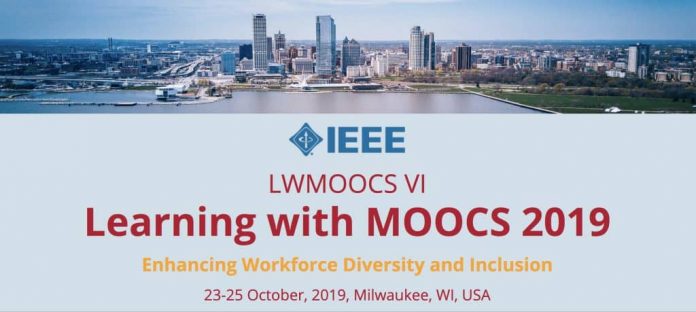
Early this year, Class Central published a list of conferences relevant to MOOCs and online learning. Two of the conferences on that list dedicate themselves entirely to MOOCs — EMOOCs and Learning with MOOCs (LWMOOCs). Class Central attended EMOOCs earlier this year in Naples, Italy;  and we’ll be heading to Milwaukee, Wisconsin this October for LWMOOCs. In addition to soaking up the latest MOOC-related research, Class Central will be presenting our own original research on the SWAYAM platform and speaking about Coursera’s monetization journey.

For researchers working in the MOOC space, LWMOOCs is one of the most targeted venues in which to present findings. Now in its sixth year, LWMOOCs has for the past two years been run by the Institute of Electrical and Electronics Engineers (IEEE), a professional organization usually referred to as “I triple E”. LWMOOCs is global in scope and venue. Last year’s conference was held in Madrid, Spain; this year’s is in Milwaukee.

The focus of this year’s conference is on “enhancing workforce diversity and inclusion.”  As Dr. Russ Meier, Professor of Electrical Engineering and Computer Science at the Milwaukee School of Engineering and one of this year’s conference organizers, explained, “The cost of higher education has skyrocketed in the United States, and that has limited access for many students. Yet the high-tech world we live in requires many skills that are not typically taught in K12 schools.” This year’s conference theme references the opportunity for MOOCs to provide work-relevant education to millions of people who would not otherwise be able to afford or attend universities.

LWMOOCs is meant to be an interactive experience for participants. For this reason, the forty papers that have been accepted for this year’s conference agenda will be presented not just as lectures but also as part of a poster session, intended to foster dialogue and connection. As Dr. Manuel Castro, Professor of Engineering at Madrid’s UNED and another of the conference organizers, put it, “This is not a place to just hear about MOOCs. It’s a good place to talk and debate about MOOCs.”

Among those topics that may come up for debate are some of the trends that the LWMOOCs organizers are seeing in the research, such as the mainstreaming of MOOCs into higher education, recognition of MOOCs and other alternative forms of training in the job market, and diversity and inclusion within MOOCs. Class Central will also be represented among those 40 papers. Manoel Cortes Mendez will be presenting his research on the Indian MOOC platform SWAYAM.

LWMOOCs will take place at the Milwaukee School of Engineering on October 23-25, 2019. Attendees can look forward to enjoying brisk fall temperatures and peak foliage, exploring the Western shore of Lake Michigan, and sampling some of Milwaukee’s famous local brews.

With a little less than three months to go before LWMOOCs, registration and hotel information is now available on the conference website.

Will you be at LWMOOCs this year? If so, we’re looking forward to seeing you there!

Class Central is a media partner for LWMOOCs.

Learning to lead the way

0
Learning to lead the way

Numbers
were always a thing of comfort for Behnoud – an international language that he
could take anywhere, and put to work right away. But what threw him was
leadership – something he was never taught as an emerging engineer.

Behnoud’s
career in mechanical engineering began in the south of Iran, where he grew up,
and where the oil and gas industry employed the majority of adult residents. He
was still in university at the time, and quickly realised there was still a lot
to learn about the role that couldn’t be gained from books. Behnoud’s job took
him from country to country, which made it difficult to balance work and home
life, but the upside was the exposure to a wealth of different cultures and
lifestyles. “We are a collection of our
knowledge and experience, and this shapes our personality” says Behnoud, “so learning
is the biggest motivation for me.”

Behnoud in a meeting

In 2008, Behnoud immigrated to Australia, and worked as a project manager in the oil and gas industry. He was constantly challenged by how to best lead a team, and keep them motivated for the long term. “They never train engineers to lead teams, and that’s where the MBA helps” says Behnoud. In need of extra training, Behnoud enrolled in an MBA through RMIT University, and started making his way through the course in his spare time. A move to Singapore for work meant that Behnoud had to put his study on hold midway through, but a few months later, realised he could resume the same course online through Open Universities Australia. After gaining credit for what he’d already completed, Behnoud resumed his place as an RMIT student – online this time. He’s nearing the finish line, with plans to complete the course this year.

Behnoud smiling

Today, Behnoud holds the role of Engineering Manager for Puma Energy Australia. While he loves his role, at times, work-life balance can prove a challenge, particularly when he is being kept from spending time with his family. “Universities should issue a certificate for the families,” Behnoud laughs “because it’s very important to have them on board”. Their support gets Behnoud through the day, as well as his love for learning, and vision of the end goal. “Sometimes I get home very tired because we have long days, but I’m happier while I’m studying, because I’m doing what I really love to do”.

Behnoud on the phone

It’s worth the hard work

Work, family, friends – it can already feel like a juggling act without adding study to the mix. But a qualification is more than a piece of paper to put on your wall and list on your resume. What really makes study worth the effort (despite a busy schedule) is the lifelong skills you gain, increased confidence in your own ability, and the sheer joy of learning.

Through Open Universities Australia (OUA) you can:

  • Find the right course – Choose from over 300 degrees and 1500 single subjects from universities across Australia.
  • Earn the same degree as on-campus – Enrol through us, then study online with your chosen uni (and graduate with them too).
  • Study, regardless of your history – Start with single undergraduate subjects without any entry requirements.
  • Gain credit towards your degree – Apply for credit for past study or work experience, and finish faster.
  • Feel supported from start to finish – Get help from a friendly student advisor, right through to graduation.

To express your interest in this course, or any that we offer – fill out the form on this page, and we’ll put you in touch with a friendly student advisor.

If you’re keen to explore on your own, simply head over to our website to browse the extensive catalogue of courses from universities across Australia.

Related courses through OUA:

Bachelor of Business – Griffith University

Bachelor of Business (Management) – University of South Australia

Master of Applied Project Management – University of South Australia

See more

5 useful tips and tools for social learning

0
5 useful tips and tools for social learning

FutureLearn’s Head of Community, David Thair, shares his top five tips for getting the most out of our social learning features.

At FutureLearn, learning through conversation is important to us.

That’s why you can leave comments and have a conversation on almost every step of our courses.

Just scroll to the bottom of a step, or press the comments link.

If you’re new to FutureLearn or to social learning, making sense of lots of comments might seem like a lot to manage.

Here are a few tips to help you feel at home.


1. Complete your FutureLearn profile

Your FutureLearn profile is what other learners can see about you when you interact with them on a course.

If you haven’t already, you should add some information to your FutureLearn profile–just like our example learner above. 

Your profile can only be seen by logged in learners. It isn’t public and it won’t be found by search engines unless you untick the box on the Edit profile page.

You could include the country you live in, your hobbies and interests, or why you’re taking courses on FutureLearn.

You should also add a profile picture. If you don’t, a coloured logo is created from your initials, but I’m sure you’ll agree it’s a lot more fun to talk to a friendly face. 

Read more about getting started with your FutureLearn profile.


2. Join the conversation

Write a comment when you have something to say. Maybe the step has prompted you to share your own experience or reflect on an idea. Or, perhaps you can help answer another learner’s question.

If you don’t feel confident writing, you can encourage others and share your views by ‘liking’ a comment instead.

You are not expected to write a comment on every step or even read every comment (that could take a while!).

Instead, just read as many comments as you wish, and use the next three tips to make organising them easier. 

Read more about getting started with comments and replies.


3. Follow educators and learners you find interesting

If you notice a learner who writes comments you enjoy, you can follow them to find their comments more easily.

There’s a follow button on each profile and next to every comment.

It’s a good idea to do this for the educators on your course too. That way, you can quickly see what they’ve been saying to learners on the step you’re viewing. We’ll explain how in the next section.

And don’t worry, when someone follows you, they do not get notifications about your personal activity. 

Read more about following, followers, and finding people


4. Organise and filter comments

Here’s the clever part…

At the top of every comment section there are two buttons you can press to filter and sort the comments on the step:

As there are sometimes a lot of comments, it can help to filter how you read them. 

The show button lets you choose which comments you see on the step. The default is all comments. 

Choosing show: following will show you only comments by people you are following.

Read a comment that you’d like to come back to later?

Just press the bookmark button on the comment, and use the bookmarked filter to see any comments you have bookmarked on that step. 

You can also choose to only see your own comments by choosing the your comments filter. 

The sort by button lets you choose the order you want to see the comments in. 

The default is the newest comments first. You can also choose to sort by most liked to see the comments and conversations that other learners found useful or interesting on that step.


5. Get involved

This is the most important tip!

A comment that says

If you’ve never made a comment or replied to someone else’s, you should definitely give it a try. 

I have a hunch that after you’ve received your first reply, you’ll find plenty more things to say.

Even if you don’t feel you have something to contribute all the time, giving other people’s comments a few ‘likes’ will help everyone to find the most useful interactions.


If you’d like to put these tips into action, go back to your courses and start commenting, liking and replying in the discussions there. 

Ready to start learning? Browse all of our courses.

How businesses will benefit from the Millennial workforce

0
How businesses will benefit from the Millennial workforce

Millennials will make up over 50 per cent of the workforce by 2020 and 75 per cent by 2025. While some might worry about their impact on workplaces, their qualities could see businesses benefit in big ways.

According to Workplace Trends, over 90 per cent of Millennials have their sights set on being workplace leaders in their chosen fields. But being a ‘leader’ means something different to the newest kids on the block. 

An Oxford Economics survey revealed that the younger working generation believe leadership lies in empowering others to succeed – an approach that’s worlds away from the stereotypical leadership tropes of money, prestige and power. 

This isn’t the only Millennial quality businesses will benefit from, though. Millennial workers are: 

Digital natives

This is the generation that was born into technology. They grew up knowing how to swipe a digital device before they could speak in full sentences.

Their years of experience in picking up technology quickly makes them agile in business environments – able to handle new additions to technology, and new team structures and environments with ease.

Innovative

Millennials believe in problem-solving through innovation. Rather than sitting back and waiting for things to happen, this is a generation that has an eye on the future and is willing to learn.

Seekers of inspiration

Along with empowering others, Millennials value being inspired. As leaders, they endeavour to inspire others too. This can result in highly motivated and enthusiastic teams.

Impatient for change

More so than any other generation, Millennials are willing to challenge the hierarchy. Not content with keeping the status quo, they’ll question and challenge directives given. This can result in new initiatives being formed and the creation of better processes. 

If encouraged, it can also lead to more open communication between levels of management. That’s a win for all involved. 

Collaborators

Millennials understand the merits of collaboration, making members of this generation particularly team-orientated. This makes them ideal collective decision-makers. What’s more, millennial leaders build a synergistic culture which maintains high productivity and morale.

Diversity advocates

This generation, more than others, believe that a company that creates a diverse workforce is an ideal one. Not only is diversity needed to create fair and just workplaces, investing in diversity strengthens the depth of talent within an organisation, which in turn helps businesses succeed. 

Driven by flexibility

Millennials thrive on the opportunity to create flexibility in their work schedules. Skyping, working from home and having flexible hours are all highly valued. 

Given this, it’s no surprise that the same Workplace Trends survey found that some Millennials are concerned about leadership roles impacting on work-life balance. As such, Millennials need workplace environments that support their wellness.

While this may require some businesses to adapt, it can only be a good thing. According to the People Matter Employee Survey released in 2018, employees with flexible working arrangements are more engaged.

Impact seekers

Most employees, no matter their generation, want the work they do to be meaningful. However, Millennials in particular want to work for companies that ‘give back’ to the wider community and have a sense of purpose.

This desire to do good gives businesses a chance to reflect on where they can do the same.


While the thought of Millennials running tomorrow’s organisations is scary for some, this generation brings game-changing qualities that will revolutionise the way we work. 

Businesses looking to retain, and engage Millennials need to embrace the change they bring.

Insights from a health care recruiter: The impact of AI

0
Insights from a health care recruiter: The impact of AI

The health care industry’s reliance on artificial intelligence is increasing – does this mean that jobs in health care are disappearing? Hear from Dan Hobson of Hobson Health Recruitment.

Is AI erasing opportunities in health care?

Artificial intelligence is always a hot topic, and it’s certainly on the
rise in health care. We’re seeing very practical implementation of technology,
like doctor consultations via video, through to amazing innovations, like the
3D printing of human organs. It’s natural to assume that perhaps, there’s less
of a need for human intervention, when the capability of a machine is so
advanced.

But rest assured, there is always going to be a need for the human touch. “An artificial intelligence system can’t have emotion or reactions, so it’s about those soft skills – attitude, platitude and gratitude – artificial intelligence can’t actually gauge that” explains Dan. The (often dramatised) notion of emotionally-intelligent machinery isn’t our reality quite yet, so until then, there’s still an abundance of roles available for humans who are keen to make a difference.

Hear more from Dan

We chatted to Dan about a number of topics – check out what else he has to say about the health care industry:

Health courses through OUA

Open Universities Australia offers a number of health courses from leading Australian universities, at both a undergraduate and postgraduate level. With the online delivery format, there’s no need to drop everything to start heading towards your dream role.

Bachelor of Community Health – University of South Australia

Bachelor of Health Science (Nutrition and Exercise) – University of South Australia

Bachelor of Food and Nutrition – La Trobe University

Master of Public Health – Griffith University

See more

If you’d like to talk to a student advisor about how you could step into a health career, and what your study options are, fill out the form on the right of this page, and we’ll get in contact.

Insights from a health care recruiter: Landing a role

0
Insights from a health care recruiter: Landing a role

There’s plenty of opportunity in health care, but what does it take to land a role? Take a tip from Dan Hobson of Hobson Health Recruitment.

Making a start in the industry

When it comes to recruiting people for health care roles, Dan looks for a combination of qualities. “We want to try and find people who we look at and think, could I let that person look after one of my family members?” explains Dan. “Ultimately they could do the job, but do they have the right level of soft skills?” Aside from qualifications, the personal traits fit for health care work include a high-level of empathy, a kind nature and excellent communication skills.

It’s one thing to be entering the health care industry as a fresh
graduate, but if you’re looking to change careers and move into health care, it
can be tough to find the time and money to re-train. Dan is a big advocate of
online study, as it allows people to hold down their current job while they
chase a career they feel more passionate about.

“We want to try and find people who we look at and think, could I let that person look after one of my family members?”

Career-changers also have the option to enter the health care industry in a role that utilises their current skillset – every organisation needs staff in such areas as accounting, HR, law and marketing. There may be internal opportunities for professional development, that could lead to a shift in role that doesn’t require formal study. Sometimes, it’s just about getting a foot in the door, and seizing opportunities that arise organically.

Hear more from Dan

We chatted to Dan about a number of topics – check out what else he has to say about the health care industry:

Health courses through OUA

Open Universities Australia offers a number of health courses from leading Australian universities, at both a undergraduate and postgraduate level. With the online delivery format, there’s no need to drop everything to start heading towards your dream role.

Bachelor of Community Health – University of South Australia

Bachelor of Food and Nutrition – La Trobe University

Master of Public Health – Griffith University

See more

If you’d like to talk to a student advisor about how you could step into a health career, and what your study options are, fill out the form on the right of this page, and we’ll get in contact.

Insights from a health care recruiter: Job opportunities

0
Insights from a health care recruiter: Job opportunities

Toying with the idea of a career in health care? Whether you’re starting
fresh, or looking to change career direction, there’s plenty of opportunity in
Australia, according to Dan Hobson of Hobson
Health Recruitment
.

What’s happening today in health care

Australia is seeing shortages in a number of areas, such as nursing,
aged care and disability care. Dan’s focus is to fill those gaps – not just
with anyone, but with the right people, who are properly trained and have the ideal
soft skills.

There’s plenty of opportunity within the sector, but what could help get more people into roles is greater awareness and support. “It would start with providing more education around what roles are actually available within health care, and it’s about making people feel as if they can come into health care at any age” says Dan.

“It’s about making people feel as if they can come into health care at any age.”

For those already in health care, Dan’s advice is to push for internal development opportunities, that could help you move across into related roles, or broaden the scope of your current role. In demand right now are transdisciplinary professionals – for example, a qualified physiotherapist, who can also perform work in occupational therapy or myotherapy, as the need arises. To be flexible in health care is to be valuable, which for the worker, offers a varied and stimulating work life.

Hear more from Dan

We chatted to Dan about a number of topics – check out what else he has to say about the health care industry:

Health courses through OUA

Open Universities Australia offers a number of health courses from leading Australian universities, at both a undergraduate and postgraduate level. With the online delivery format, there’s no need to drop everything to start heading towards your dream role.

Bachelor of Community Health – University of South Australia

Bachelor of Food and Nutrition – La Trobe University

Master of Public Health – Griffith University

See more

If you’d like to talk to a student advisor about how you could step into a health career, and what your study options are, fill out the form on the right of this page, and we’ll get in contact.