fbpx
Home Blog Page 1615

See How Danielle Advanced in Her IT Role with the Google IT Support Professional Certificate

0
See How Danielle Advanced in Her IT Role with the Google IT Support Professional Certificate
Danielle

My name is Danielle and I live in West Virginia where I work as an IT Asset Tracking Coordinator. The Google IT Support Professional Certificate program has enabled me to take on additional responsibilities in my role, gain more visibility with system administrators and management, work on exciting and impactful projects, and even get a raise. As a single working mom, I’m incredibly proud to have been able to complete this program. Often, my evenings are full of chores and caring for my four year old. Squeezing this program in around family life and a full-time work schedule has not been easy! But it’s been well worth it.

Prior to the program, I had mostly worked in government research and then as a travel manager for a non-profit organization. I have some college credits, but never completed an undergraduate degree. While my husband went back to school for nursing, I focused on caring for our daughter after she was born. Unfortunately, my marriage did not work out and I suddenly had to jump back into the workforce as a single mother. I panicked because I was relatively new to West Virginia and had been out of the workforce for a few years. I needed a plan. I had to boost my skills so that I could hold my own in an IT department, and grab extra shifts at a help desk if necessary to meet our financial needs. The Google program was a perfect fit.  

When I first started as an IT Asset Tracking Coordinator, my only responsibility was to pull reports from a system, ping network names, and send emails to let users know their devices were offline. As I progressed through the coursework, I started writing powershell scripts to get more detailed information for devices that I saw online with a particular network name. I was no longer just running a ping batch. I could write powershell code to find the serial number of the device, the mac address, or the user and was able to see the specs on a network device so that I could determine if the device should be replaced. The courses on Computer Networking and System Administration helped me understand how our networks work and, as a result, I started being able to predict issues before they occurred.  Now, I investigate our assets and their usage in ways that I couldn’t before.

I’m a much stronger contributor at my company now that I have an understanding of the whole picture, instead of one small piece of it. I’m able to run a lot of data analysis now, too, because I know where to get information on network devices. Now my colleagues trust my ability to hunt down the information, compile it, and analyze it properly. It’s so much more than just: “I learned task x in the course and now I can perform that task.” I learned how to think about various aspects of IT in a way that allows me to respond to issues when they occur, as they occur. These are the skills that IT departments really need. 

I can’t stress enough that this program didn’t just give me specific skills, it also gave me the confidence to do well in an IT setting. 

The training is so comprehensive that I was constantly realizing that I understood what was happening around me because I had recently learned about it in the program. I no longer felt like I didn’t belong at my company or that I couldn’t figure things out.  With what I learned in the Google program, I have been able to excel at my position by finding solutions to challenges faced by both users and our department.

1

Comment on 2019 Ultimate Blog Planner by Sabonete Artesanal

0
Comment on 2019 Ultimate Blog Planner by Sabonete Artesanal

2019 Blog Planner - Designer Blogs

We all know that running a successful blog takes careful planning and ample promoting. Throw in sponsors, affiliates, mailing lists, guest posts, tracking stats, giveaways, and taking pictures and blogging quickly becomes a full-time job! With so many balls in the air, it can often be hard to keep track of everything and stay organized. That is why we have painstakingly worked to design the most comprehensive blog planner kit out there.

Blog Planner Preview - Designer Blogs

Our blog planner has been downloaded by over 70,000 bloggers and is the most popular, well-utilized blog planner out there. It has been designed for driven, full-time bloggers who are determined to increase blog income and traffic.

The pages included in the full planner will help you brainstorm post ideas, plan your weekly posts, set yearly & monthly goals, track yearly & monthly stats, keep track of affiliates, Facebook advertising, social media posts, newsletter campaigns, finances, usernames & passwords, giveaways, etc. You name it, and our blog planner kit has you covered.

There’s no better way to grow your blog than by strategic goal setting and regularly tracking your progress towards reaching your blogging goals. Using The Ultimate Blog Planner is key to blog organization and blogging success!


WHAT’S INCLUDED

The following 9 pages can be downloaded in US Letter size (8.5 x 11) ABSOLUTELY FREE by joining our mailing list through the button below:

CALENDARS

  • 2019 Calendar
  • Undated Monthly Calendar
  • Undated Monthly Editorial Calendar

POST PLANNING

  • Post Brainstorming Guide
  • Weekly Post Planner

TO-DO LISTS

OTHER

  • Cover Page
  • Contacts
  • Blank Planner Page

2019 FREE BLOG PLANNER - DESIGNER BLOGS

FREE DOWNLOAD

Need more pages and/or sizes? Check out the extension package below!


“This is my third year using this planner and it covers absolutely everything I need. It’s a beautiful planner and the extension package is well worth the price.”
– Tammy R.


GET THE EXTENSION PACKAGE

The extension package includes 52 additional meticulously designed pages of organizational goodness! The extension is available in four sizes (US Letter, A4, A5 & Personal) so it will fit the planner of your choosing. Here’s a look at what the extension package includes:

CALENDARS

  • Dated Monthly Calendars
    (12 months/pages) – new!
  • Dated Monthly Editorial Calendars
    (12 months/pages) – new!

POST PLANNING & TO DO LISTS

  • Post Topic Brainstorming
  • Blog To Do List

ADVERTISING

  • Advertising Tracker
  • Facebook Advertising

GOAL SETTING

  • Monthly Blogging Goals
  • Yearly Blogging Goals

SOCIAL MEDIA

  • Social Media Planner
  • Weekly Facebook Post Planner
  • Weekly Instagram Post Planner
  • Pinterest Post Planner
  • YouTube Planner – new!

STATS & ANALYTICS

  • Yearly Stats & Analytics
  • Blank Yearly Stats & Analytics
  • Monthly Stat Tracker

EMAIL CAMPAIGNS

  • Email Campaign Tracker
  • Automated Email Planner
  • Email Campaign Planner

FINANCE

  • Monthly Finance Tracker
  • Yearly Finance Tracker

OTHER

  • Usernames & Passwords
  • Affiliate Programs
  • Giveaway Tracker
  • Sale Tracker
  • Sponsors
  • Change Record
  • Printing Guide
  • Printing Instructions
  • Copyright & Terms

Blog Planner Extension Package - Designer Blogs


ADDITIONAL DETAILS

PAGE SIZE OPTIONS

The extension pack is available in the following 4 page sizes: US Letter (8.5 x 11 inch – North America), A4 (8.3 x 11.7 inch / 210 x 297 mm – Europe/International), A5 (5.8 x 8.3 inch / 148 x 210 mm) & Personal (3.7 x 6.7 / 95mm x 171mm). You can choose one or more sizes at checkout.

Blog Planner Sizing Options - Designer Blogs

Free Pages Included

The 9 free pages (above) are also included in the extension package, so you’ll receive the full 61-page planner in the size you choose with your purchase.

Ample Margins

The planner has been carefully designed with ample margin space to allow for holes to be punched without punching through any text.

Downloadable PDF Files

This planner is a digital item so you will not receive any physical products. The file(s) will arrive to you via email immediately upon purchase (if you don’t get them check spam). When you download the files, they will arrive in zipped folders. You will need to unzip/extract the files from the folder in order to access them. All files are in PDF format. You will need Adobe Reader to view and print them. Adobe Reader can be downloaded for free here.

Only Print the Pages you Need

This planner allows you to pick and choose only the pages you want to use so you aren’t lugging around unused pages. The Print Guide (included) will help you know how many of each page to print out. The Printing Instructions (included) will give instructions on how to print each of the different page sizes.

Update Subscription

Your extension pack purchase includes an optional subscription to yearly updates. To be notified of yearly updates, you MUST opt into our newsletter at checkout. New and/or updated pages will be available separately at a discounted price to subscribers only.


“I just love Designer Blogs. I have downloaded and used the Blog Planner and now the Life Planner. I enjoy very very much the emails I receive and the wallpapers. I will continue to look to Designer Blogs to fulfill various needs. A very professional yet personable company.”
– Kat Y.


PAGE USE EXAMPLES


Are you ready to increase your blog income & traffic?
Are you ready to absolutely slaughter your blogging goals?
Are you ready for unbelievable blogging success?

Make this your year!

BUY NOW – $17.99

Please review our terms & conditions before purchasing the extension.

Comment on Free July Wallpaper by Karen Cline

0
Comment on Free July Wallpaper by Karen Cline

Our July wallpaper features the Antrokas font and the Auguste Dessert – Watercolor Floral Set.

Included in the free download is a desktop option with & without a calendar and phone & tablet options without a calendar.

Enjoy!

FOR PERSONAL USE ONLY.


Comment on 10 Ways to Make Your Blogger Blog Load Faster by Econ Dude

0
Comment on 10 Ways to Make Your Blogger Blog Load Faster by Econ Dude

10 Ways to Make Your Blogger Blog Load Faster - Designer Blogs

You only have a few seconds to make an awesome first impression with your blog. You might have a gorgeous blog design and out-of-this-world content, but if your site takes FOREVER to load, people are going to be looking for the “back” (aka: “get me outta here”) button before they even have the chance to enjoy your blog in all of its glory.

If your blog takes longer than 3 seconds to load, it is loading TOO SLOW and is costing you visitors. Every second counts!  Google’s PageSpeed Insights is a great tool to use to find out how fast or slow your site is loading. If your blog is loading too slow, the tips shared below will help make your Blogger blog load faster in no time.

Note: this post is specifically for Blogger blogs. If you are WordPress, we’ve covered this here: 10 Ways to Make Your WordPress Site Load Faster.


1. Limit the Number of Posts on the Front Home Page of Your Blog

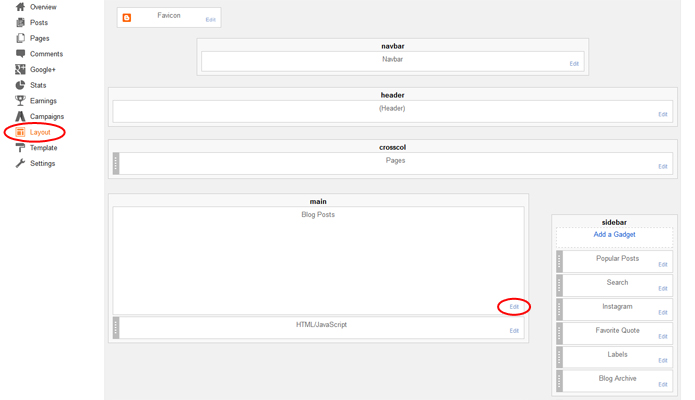
The more posts you show on your front page, the longer your blog will take to load. We recommend showing no more than 10 posts on the front page. However, if your posts are long and/or they have a lot of images, then it would be wise to show even fewer posts. To change the number of posts your home page shows, go to “Layout” > “Blog Posts” > “Edit.”

Limit number of posts - Blog load faster - Designer Blogs

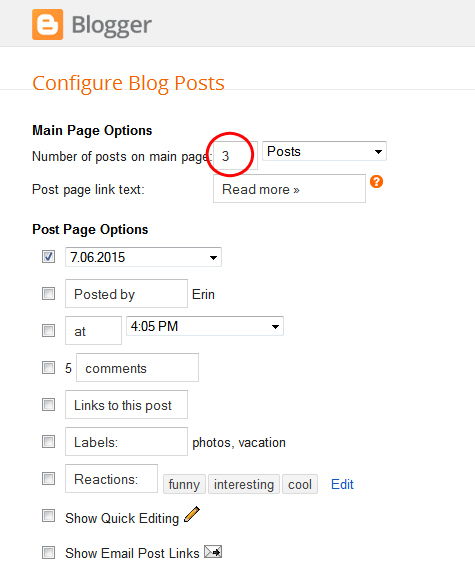
Under “Main Page Options,” switch the number of posts shown on the main page to a number less than 10. Then click the “Save” button. View your blog and it will now only show the number of posts you have set it to show.

Speed up Blogger blog - Designer Blogs


2. Display Expandable Post Summaries

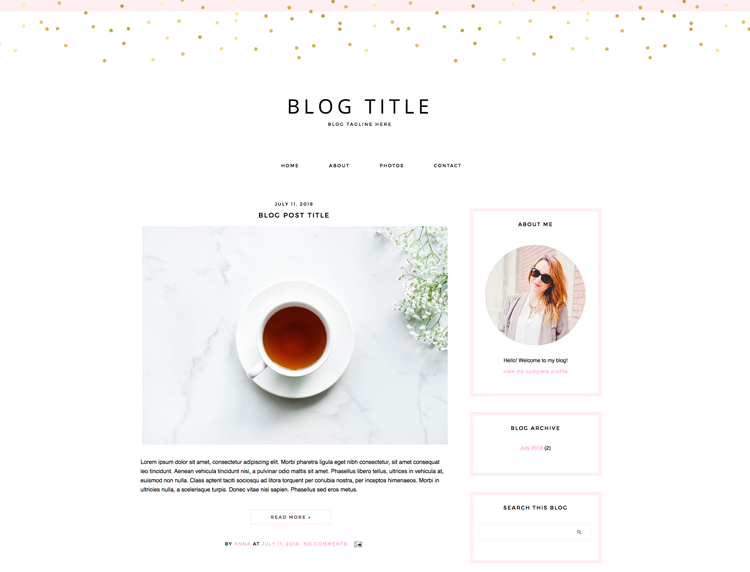
If you would prefer to show a lot of posts on your main page, using expandable post summaries/post excerpts is a great alternative to the first tip. Expandable post summaries is a feature that shows a short paragraph for each post and then allows your users to click on a “read more” link to view the full content of each post.

Display expandable post summaries - Designer Blogs

Using expandable post summaries on your home page dramatically decreases load time because only a small snippet of each post on the homepage has to load.

RELATED POST: How to Add Post Excerpts to a Blogger Blog


3. Resize Images Before Uploading Them To Your Blog

Uploading images in their original size is a surefire way to slow your blog down. The larger the images you upload, the longer your blog will take to load those images.

The goal is to size your images no wider than your post area width, so it’s important to know that width. If you are using a Designer Blogs design, we state the post area width on each of our designs so you’ll know the exact width to use when resizing your images. If you don’t have one of our designs and/or don’t know the width of your post area, then shoot us an email and we’ll be happy to take a look at your site so you’ll know the exact width of your post area. Most post area widths are between 600-800px wide.

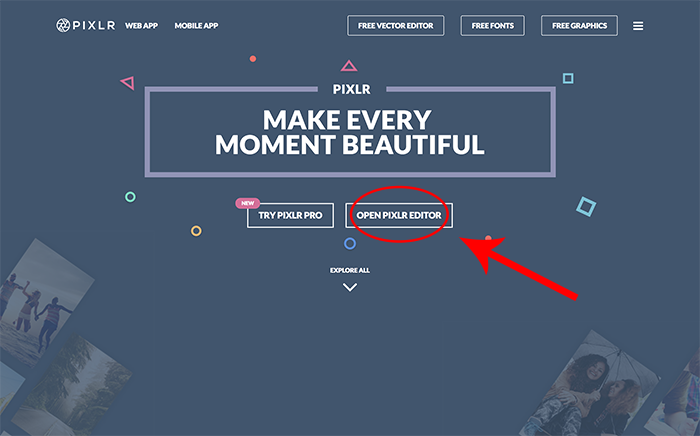
Photoshop is the best tool for resizing images, but if you don’t have Photoshop, Pixlr is a free service you can use to do this. Here’s how to easily resize a photo using Pixlr:

1) Hop over to Pixlr and click “Open Pixlr Editor” on the site.

10 Ways to Make Your Blogger Blog Load Faster - Designer Blogs

2) Click “Open Image from Computer” and find the image you want to use from your computer.

10 Ways to Make Your Blogger Blog Load Faster

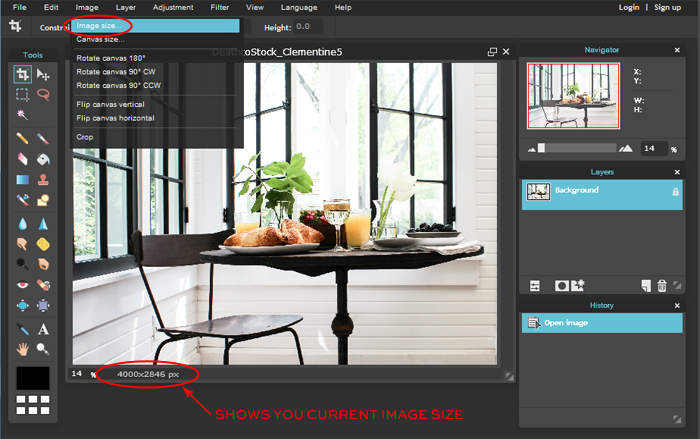
3) Your image will appear and will be ready for editing. At the bottom of the image you’ll see the current image size. My sample image is currently 4000px wide, which is WAY too large to be uploaded to a blog. So I’m going to change it to the width of my post area, which is 800px wide. In the top navigation bar, click “Image” and then “Image size…”

How to use Pixlr - Designer Blogs

4) Change the image width to the width of your post area. The height of the image will automatically adjust to keep the proper proportions. Click “OK.”

Reducing blog post image size - Designer Blogs

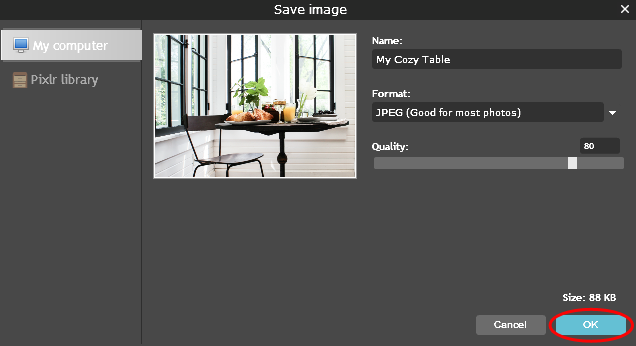
5) Now you just need to save the resized image, so go to “File” and then “Save.” Rename the file (if needed) and then click “OK.” Find the folder on your computer where you’d like to save the image and click “Save.” You’re now ready to upload your resized image to your blog.

Saving blog post images using Pixlr - Designer Blogs

RELATED POST: How to Achieve Pixel Perfect Images in Blogger


4. Use an Image Host for Your Blog Images

Separate your blog and your blog images by using an image host for your blog images. If you post a large amount of images on your blog in the double digits for each blog post, consider using an external image host.

An external image host will separately load your images on your blog. This takes a little of the loading strain off your blog as your blog only has to load your design and text and widgets.

10 Ways to Make Your Blogger Blog Load Faster - Designer Blogs

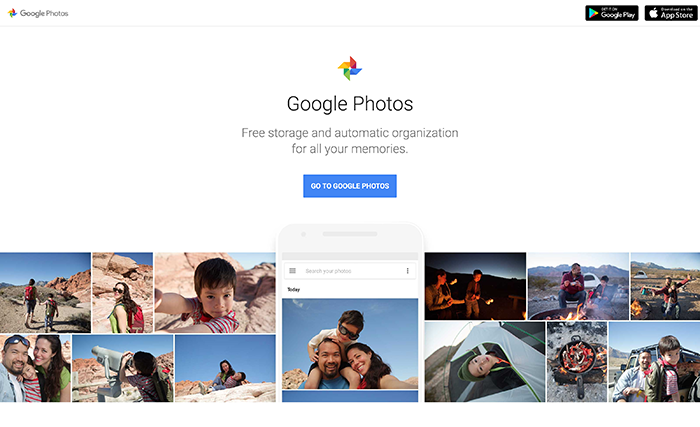
Popular free images hosts to use are Imgur, Google Photos, and Flickr.


5. Compress Your Images

If your blog images are still taking too long to load, consider optimizing them by compressing the file size. Compressing images removes a little of the unnecessary bulk of the image file size. This will only provide a small benefit if you use only a handful of images per blog post. This trick is more suitable if you post images into the double digits for each blog post and need the extra bit of optimization.

Photoshop can be used for compressing images, but if you don’t have Photoshop, TinyPNG is a free service that works great for automatically compressing your images. Here is how to easily compress images using TinyPNG:

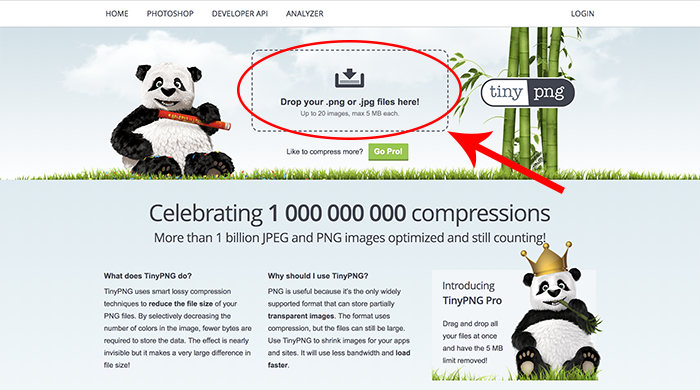
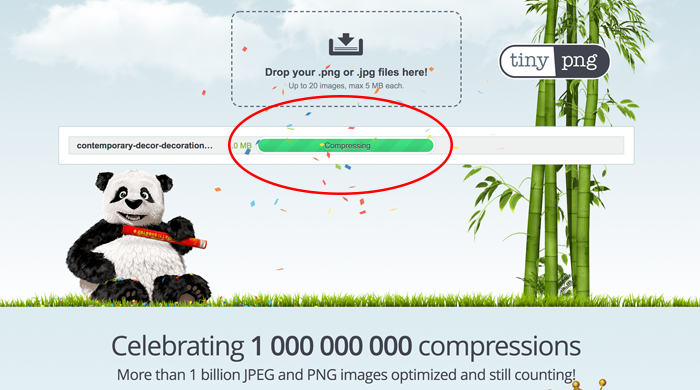
1) Open the TinyPNG site and click on the “Drop your .png or .jpg files here” section on the site to upload your image.

Compressing Images - Designer Blogs

2) Choose the image you want from your computer and upload it.

3) TinyPNG should instantly start compressing your image.

Speed up Blogger blog - Designer Blogs

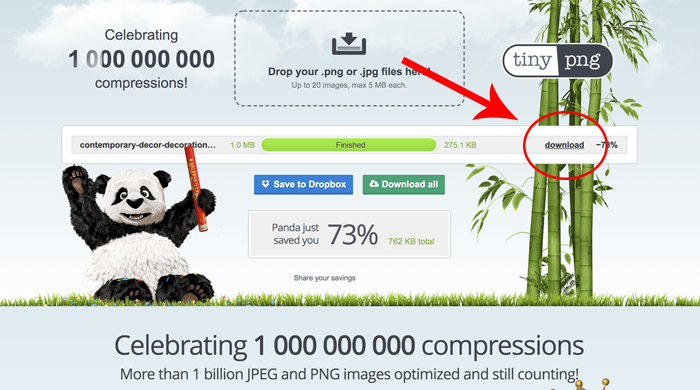
4) When your image has finished being compressed, download your image from TinyPNG to your computer by choosing the “download” link.

Using TinyPNG to compress images - Designer Blogs

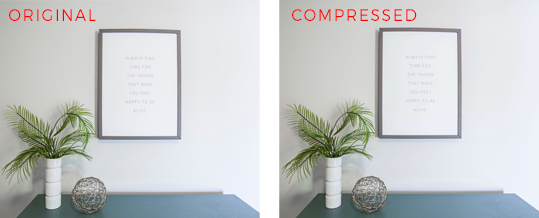
A before and after comparison shows the compression ended up resulting in a slightly darker image when compressing up to 73% of the original image size. The image was compressed from 1mb to 275kb.

Compressing image to speed up blog - Designer Blogs


6. Clean Up Your Blog Widgets

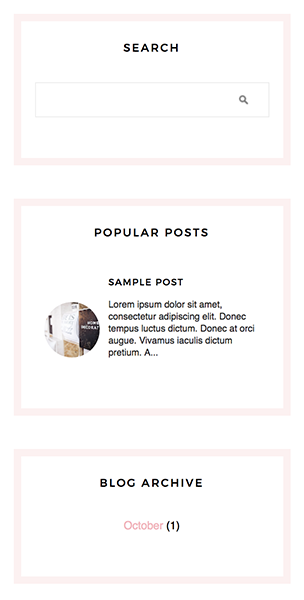
Rid your blog of clutter. Keep the number of widgets you use on your site to a bare minimum. Ask yourself, “do I really NEED this widget?” If not, get rid of it. You don’t want your users getting distracted from your amazing content by an overly cluttered sidebar or footer. Less is more when it comes to widgets. Keeping your widgets to a minimum will allow your content to shine and will help keep your site load time lightening fast!

Clean up widgets for faster blog - Designer Blogs

Keep the essentials only. We recommend the following must have widgets: profile widget, email subscribe widget, blog archive widget, popular posts widget, and search widget.

RELATED POST: How to Clean Up Your Sidebar


7. Minimize Your Third-Party Gadgets

Similar to reducing your Blogger widgets, keep only the essential third-party gadgets on your blog. Twitter, Instagram, Pinterest, and other social media platforms are well known for having gadgets that take a long time to load. Keep only the gadgets that are essential for your blog.

Consider which platforms are your main sources of readers and prioritize them accordingly. For the platforms that are less important, link to them on your about page or on your sidebar instead of using a third-party gadget.


8. Minimize the number of HTML/JavaScript Gadgets

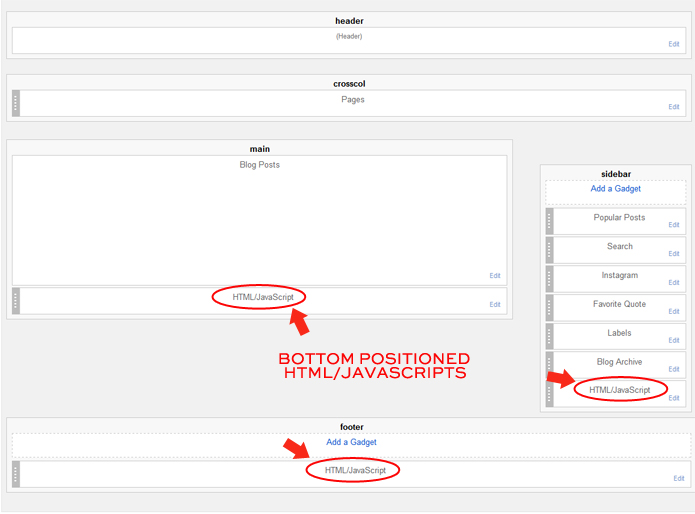
Adding your own HTML/JavaScript gadgets can be a great way to customize your blog, but adding too many can slow your site down, so use them sparingly. Your blog loads from the top down, so if you do decide to use them, it is best to position them at the bottom of the sidebar or blog so that your users can still read your content while the javascripts are loading.

If you are using them within the main code of the site, it’s best to position them at the end of the body tag (right before ).

Speed up Blogger blog - Designer Blogs

Remember to use javascripts sparingly and, when used, to position them at the bottom.

Use Javascripts sparingly - Designer Blogs


9. Remove Large Blog Design Images

Do you have a large header image you uploaded to your blog? Or a wide background image? If your blog is taking too long to load, these are two areas to check to see if these images are slowing down your blog.

Blog header images should be less than 1mb in size. Ideally, header images should be around 200-400kb.

Blog backgrounds should also be less than 1mb in size. The best blog background images to use are seamless patterns because these images tend to be small and load quickly. Desktop sized backgrounds should not be used for your blog background because these images are usually very large and take a long time to load as most are over the 1mb recommended file size.


10. Limit the Use of Custom Fonts

Custom fonts are beautiful and add personality to your blog design but if you find that your blog takes too long to load, remove or limit your custom fonts. Custom fonts are similar to images in that they take time to load and can be large files. Fancier calligraphy style fonts tend to have larger file sizes in comparison to serif or sans-serif fonts you would find in a book or newspaper.

Custom fonts are best used sparingly such as for your blog header and blog post titles. If possible, use 1 or 2 custom fonts only and change the size or make the fonts bold or italic in your html to use a small number of fonts but still add variety in your fonts on your blog.

Speed up Blogger blog - Designer Blogs

The maximum amount of custom fonts you should have on your blog should be a maximum of 3-4 fonts. Any more and you are only slowing down your blog.

RELATED POST: DIY Custom Fonts for Blogger

Comment on Free June Wallpaper by Karen Cline

0

Good design. I always want to have a special calendar. Thanks for sharing.

Comment on 2019 Ultimate Blog Planner by The Best Free Blog Planners for 2019 – The Frangipani Creative

0
Comment on 2019 Ultimate Blog Planner by The Best Free Blog Planners for 2019 – The Frangipani Creative

2019 Blog Planner - Designer Blogs

We all know that running a successful blog takes careful planning and ample promoting. Throw in sponsors, affiliates, mailing lists, guest posts, tracking stats, giveaways, and taking pictures and blogging quickly becomes a full-time job! With so many balls in the air, it can often be hard to keep track of everything and stay organized. That is why we have painstakingly worked to design the most comprehensive blog planner kit out there.

Blog Planner Preview - Designer Blogs

Our blog planner has been downloaded by over 70,000 bloggers and is the most popular, well-utilized blog planner out there. It has been designed for driven, full-time bloggers who are determined to increase blog income and traffic.

The pages included in the full planner will help you brainstorm post ideas, plan your weekly posts, set yearly & monthly goals, track yearly & monthly stats, keep track of affiliates, Facebook advertising, social media posts, newsletter campaigns, finances, usernames & passwords, giveaways, etc. You name it, and our blog planner kit has you covered.

There’s no better way to grow your blog than by strategic goal setting and regularly tracking your progress towards reaching your blogging goals. Using The Ultimate Blog Planner is key to blog organization and blogging success!


WHAT’S INCLUDED

The following 9 pages can be downloaded in US Letter size (8.5 x 11) ABSOLUTELY FREE by joining our mailing list through the button below:

CALENDARS

  • 2019 Calendar
  • Undated Monthly Calendar
  • Undated Monthly Editorial Calendar

POST PLANNING

  • Post Brainstorming Guide
  • Weekly Post Planner

TO-DO LISTS

OTHER

  • Cover Page
  • Contacts
  • Blank Planner Page

2019 FREE BLOG PLANNER - DESIGNER BLOGS

FREE DOWNLOAD

Need more pages and/or sizes? Check out the extension package below!


“This is my third year using this planner and it covers absolutely everything I need. It’s a beautiful planner and the extension package is well worth the price.”
– Tammy R.


GET THE EXTENSION PACKAGE

The extension package includes 52 additional meticulously designed pages of organizational goodness! The extension is available in four sizes (US Letter, A4, A5 & Personal) so it will fit the planner of your choosing. Here’s a look at what the extension package includes:

CALENDARS

  • Dated Monthly Calendars
    (12 months/pages) – new!
  • Dated Monthly Editorial Calendars
    (12 months/pages) – new!

POST PLANNING & TO DO LISTS

  • Post Topic Brainstorming
  • Blog To Do List

ADVERTISING

  • Advertising Tracker
  • Facebook Advertising

GOAL SETTING

  • Monthly Blogging Goals
  • Yearly Blogging Goals

SOCIAL MEDIA

  • Social Media Planner
  • Weekly Facebook Post Planner
  • Weekly Instagram Post Planner
  • Pinterest Post Planner
  • YouTube Planner – new!

STATS & ANALYTICS

  • Yearly Stats & Analytics
  • Blank Yearly Stats & Analytics
  • Monthly Stat Tracker

EMAIL CAMPAIGNS

  • Email Campaign Tracker
  • Automated Email Planner
  • Email Campaign Planner

FINANCE

  • Monthly Finance Tracker
  • Yearly Finance Tracker

OTHER

  • Usernames & Passwords
  • Affiliate Programs
  • Giveaway Tracker
  • Sale Tracker
  • Sponsors
  • Change Record
  • Printing Guide
  • Printing Instructions
  • Copyright & Terms

Blog Planner Extension Package - Designer Blogs


ADDITIONAL DETAILS

PAGE SIZE OPTIONS

The extension pack is available in the following 4 page sizes: US Letter (8.5 x 11 inch – North America), A4 (8.3 x 11.7 inch / 210 x 297 mm – Europe/International), A5 (5.8 x 8.3 inch / 148 x 210 mm) & Personal (3.7 x 6.7 / 95mm x 171mm). You can choose one or more sizes at checkout.

Blog Planner Sizing Options - Designer Blogs

Free Pages Included

The 9 free pages (above) are also included in the extension package, so you’ll receive the full 61-page planner in the size you choose with your purchase.

Ample Margins

The planner has been carefully designed with ample margin space to allow for holes to be punched without punching through any text.

Downloadable PDF Files

This planner is a digital item so you will not receive any physical products. The file(s) will arrive to you via email immediately upon purchase (if you don’t get them check spam). When you download the files, they will arrive in zipped folders. You will need to unzip/extract the files from the folder in order to access them. All files are in PDF format. You will need Adobe Reader to view and print them. Adobe Reader can be downloaded for free here.

Only Print the Pages you Need

This planner allows you to pick and choose only the pages you want to use so you aren’t lugging around unused pages. The Print Guide (included) will help you know how many of each page to print out. The Printing Instructions (included) will give instructions on how to print each of the different page sizes.

Update Subscription

Your extension pack purchase includes an optional subscription to yearly updates. To be notified of yearly updates, you MUST opt into our newsletter at checkout. New and/or updated pages will be available separately at a discounted price to subscribers only.


“I just love Designer Blogs. I have downloaded and used the Blog Planner and now the Life Planner. I enjoy very very much the emails I receive and the wallpapers. I will continue to look to Designer Blogs to fulfill various needs. A very professional yet personable company.”
– Kat Y.


PAGE USE EXAMPLES


Are you ready to increase your blog income & traffic?
Are you ready to absolutely slaughter your blogging goals?
Are you ready for unbelievable blogging success?

Make this your year!

BUY NOW – $17.99

Please review our terms & conditions before purchasing the extension.

Embrace Training in ED and HigherEd

0
Embrace Training in ED and HigherEd

I’m sure it happens to you.  There you are at work, when you ask yourself, how would Plato handle it? What would Peter the Great do in this situation with your missing lunch, that was there just an hour ago waving at you in the fridge?

Perhaps in the next few weeks you will visit one of the hundreds of thousands of web sites that are filled with educational theory. Theory that sounds great on paper virtual or otherwise, but never really worked out so well in the classroom.

It was boring.  It sounded like it was spoken on Venus.  The real world applications were not there, unless you were prepping to be Socrates at your part-time job.  

There continues to be great buzz about this idea of taking higher ed, pushing theory out the tower window and focus only on skills.

My question is why start there?  Why wait, until we are at this level?

Blast from the Past

I was once a high school teacher at an inner city school.  The challenge I faced was that when the bell rang, the kids flew out of my classroom.  During the class, some students were interested in the topic, others were not.  They were learning as I had learned, and their parents before them and before them and so on.. had learned.

Something had to change.

Then I read a book from some guy who taught at an inner city high school in Baltimore and found that when he allowed his students to be in “teams” and select their own “nickname” and compete at the end of the week (from lessons they learned), they seemed to enjoy his subject matter.

I followed his approach and added my own spin by bringing in real-world scenarios to my daily classes.  Every scenario included all the variables (components) they would need, built upon the information they had learned earlier in the week.  Teams were created, students placed in those teams and nick names created.   Standings too.

And then something happened.  Just as that teacher had seen, I saw it too. Kids stayed in the class, when the bell rang.  They were more engaged. They learned new skills, built upon real world (in this case Journalism was the subject matter – both print and broadcast), and everybody was involved.  

Looking back at it, components of gamification were in play, but the scenario based learning (as I called it) was the essential glue that made it work.  

I followed the same mantra when I went and taught at a university.  The information changed. The scenarios changed. The complexitity changed.  The results?  Higher engagement, new skills, improved upon skills and application driven learning – training if you will at the university level.

And that is what this is all about, what we should be focusing on our schools today, with the power of e-learning and immersive learning, the empowermeant of skills based training, rather than theory with a mix of “activities” or “group think” – which is really a bunch of people in a group, talking amongst themselves, writting down some ideas, that are good, average and yes poor, and then others respond and whalla, class bell has rung.

Awesome.

Training is In,  Teaching is out

Before I get slammed with educators demanding me to be sent to the far reaches of the world from a cannon, let me explain that I am not saying we should get rid of teachers, nor the very important and highly underpaid field of teaching, rather we should change the way teachers are taught – which is heavy into the theory.  How often are you using Gagne?  Who today is still saying Kirkpatrick all the way!!

I went an alternative route to be able to teach, but still had to pass the same professional and subject exams that students studying education in college did, in order to become a teacher in their respective state.

Education is one of the few fields that I have seen where theory is so ingrained in the subject matter that you can see why teachers burn out, have mixed results in the classroom, among other items.  Is your principal really a nitwit? Maybe.  Have you had to add multiple job roles you never thought you would need, in order to be a teacher today? Absolutely, and where was that in your university class?

What teachers were not being taught it what they need in today’s classroom. Those new skills needed to adopt, adapt, understand, enhance, develop, apply, utilize, synthesize and experience.  

What they get instead is the same approach that Judy Ol’School headmaster was provided in 1803, on the prairies of Nebraska.   The same, boring theory.  With a toss-in of being a student teacher for a period of time, and then off to your classroom you go.

Professional Development Days

If you have never been a teacher, these words will mean little to you, but anyone who has been a teacher whether it is K-6, middle school or high school, will know what those two words – Professional Development – mean.

Besides free dougnuts (coaches rule!), and coffee, it means listening to someone or some folks talk for a long period of time on whatever is the new hot subject or some personality fun test – I’m green (thinker).  What it never is?  Learning new skills that can be applied into actual teaching.   Skills.  Not theory.   Not someone’s favorite take after they read in Readers Digest this is what we all should be doing.  

Nor an opportunity to hear from the Prinicpal how rough they have it, and how you should be happy to help the school became a top rated one, by doing things they never mentioned during those college classes.

Train to Teach

That is what I am saying here. Turn those PD days into actual training sessions on how to use everything from the computer itself (you think this isn’t an issue?), to the LMS, to the course tools by applying it into the real world – the classroom.  

That is step one.

Step two is having the teachers take an interactive course on some subject matter they will face in the classroom or could face.  AR/VR and even MR (not ready for prime time) can bring a real life experience (depending on the skill set), much more “alive” then say them watching a video, or reading an e-book.

A fully interactive course with real-life scenarios can match and surpass some VR content, because as with anything it is how it is built in the first place that is the key.  If you doubt me, grab a VR headset with webVR and go surf the web.   Or watch a movie thru VR and compare it to you being five feet in front of the movie screen. 

A series of courses could be created based on real-life situations that happen during the school year, bringing about a new level of “real time” to the training environment.   Any teacher in any grade can relate to a student who is using attention seeking behavior (adult learners do it too). 

What you do with it though it another matter.  I’ve seen trainers at workplaces get caught off guard with no way to resolve this behavior, just as often as I’ve seen it with teachers (including college professors too). 

An online learning course with a table of contents, and scenarios at each chapter level, can be built in such a way, that if someone was to go linear it would take them 10 minutes, but as with the power of online learning, the real success is selecting the areas of interest you want to learn, and going back over and over actually attain and sythensize.

Training U

If you think this type of training can only be applied to K-12, you are so far wrong.  Training and universities are made for one another.  Why some folks still believe that if Mark has a doctorate from fancy U and teaches at Super Fancy U, he is a great educator.  Mark could be a great researcher and a lousy educator. He could be at a univeristy whose primary focus is a research institutition, not a teaching institution (research is still relevent, but not the primay directive – post-tenure).

MOOCs seem to be in love with the fancy university professor or facutly member.  The assumption is that because it is Dr. Fancypants, expert of widgets, they will do an outstanding job expousing information via a MOOC setting.  

I saw that same episode – on a video from Professor CD guy.    Still theory drivel just wrapped into an online classroom experience, which is really synchronous based learning at its worst.  

Have you ever wondered why corporate follows asychronous based learning and academia prefers synchronous based? Take a MOOC and see for yourself.

Academia is too heavy on the theory for its own good.  Everything has evolved in the world, we no longer are taught COBOL (and I thank G-D every day for that), nor do we use pencil sharpners or pencils for that matter (how is that industry still around?). 

I once sat in a department meeting with my fellow professors, lecturers, instructors and had to listen to how a couple of folks from the communication department were not getting along, because of one of them was using a jack knife to clean his fingernails, and thus he was “threatening” the other two. As if this couldn’t get any stranger, they used to all be buddies. 

Tenure..BOO

I digress.

Another session I sat in, was not department wide, rather university wide and was discussing financials and students.  In other words, how to attract more students, so we can acquire more dollars and thus do more of this or that, without having to cut this or that.  I can’t recall how I was selected to be a part of this “group,” but I can say it was a small unit of folks who wanted to change the dyanmic of what was facing us head-on.

Even then I knew that e-learning was the answer. 

But where I didn’t see at that time, which I can see clearly now, was that that would fix only half the problem.  Change the application process (get rid of it), allow anyone to be accepted, pay a set fee per year for X credits (upon completion), offer 100% online Bachelors, Masters and Doctorate, bring in those scenarios thus knocking away the Synchronous based approach, add a few of this and a few of that.  And when needed create a consortium of colleges similar but in various parts of the country or the world to offer again the courses, etc. needed for students to graduate with the student’s name being on that university degree by the stated univeristy or joint universities. 

By my own number calculations back then, the revenue potential was and still to this day enormous.  Far more than most, frankly a lot of people realize. 

What though, and I stated it earlier, is what I didn’t realize,  was the other half.

The professors, lecturers, full or half-time faculty who were teaching the courses.   Sure I knew some shouldn’t be in a classroom to begin with, and so being online would only be worse, but the thing I didn’t see it was theory.

Just as with teachers, professors (inc. lecturers, instructors, etc.),  need to learn the skills to apply in today’s world (even in that world back in the late 90s).  They need to be trained.  Think of it as a reboot.  With software we constantly have updates.  Yet, when we are educating the future, we still rely on floppy disks.

Bottom Line

Teaching is one of the most important professions in the world.  I surmise that you, like me has a teacher that you respected.  Someone who made a difference in your life, that you wish you could tell them.

Perhaps you also have a professor as well.

But there are many folks who have no one.  Not because they had a series of awful humans presenting in a classroom (although I bet my algebra teacher ran that team), but because those educators did not have the skills needed.

Instead of being in the ivory tower, let’s start at the ground level.

And recognize what we all know.

Toss Theory.

Embrace Training.

New Skills.

E-Learning 24/7

To Jackson Moynahan, Journalism Lecturer and Dr. Charles Fleming (grad advisor and oustanding journalism, mass comm., and stats professor) – Thank you.


Instafame: Why influencers are good for business

0
Instafame: Why influencers are good for business

Social media marketing has become vital for business in the digital era and Instagram influencers have become the perfect conduit between brands and consumers.

Instagram is one of the most popular social media platforms in the world, with over 1 billion users accessing the platform every month. While it’s a great place to share and view images, it has also become a major marketing tool for business and individuals to make a living.

These individuals, coined ‘influencers’, will wear, use or promote a product to their followers for a fee. Chances are, you’ve seen one (or a tonne) of them on your feed before. It can’t be ignored, as more and more businesses harness their follower base to reach consumers en mass.

What is an Instagram Influencer?

Influencers promote a business’s goods, services, or a give-away to the massive audience of followers they have, leveraging their ‘credibility’, or relationship, with that audience.

Because they are a trusted source, they can help a brand become liked by a larger, or new, audience. Some influencers are already well-known names and faces in industries, like Jamie Oliver, while others have carved an entire career on the platform from the ground up.

Influencer marketing is considered so effective that 92 per cent of marketers who used influencers in 2017 found the tactic to work, and almost 40 per-cent of them aimed to increase their spend on influencer marketing.

Young woman wearing hat near the beach.

Who are the biggest Instagram influencers?

Given that Instagram is a platform built on images and videos – fashion, travel, health, wellness, personal beauty and photography are major industries represented by influencers.

But that doesn’t mean you can’t reach enormous audiences in other industries as well. Here are some of the biggest Instagram influencers and the industries they represent:

  • Food: Jamie Oliver (7.2 million followers). From his time as The Naked Chef to his modern-day crusades for healthier eating in schools, Jamie Oliver remains one of the most popular voices in food on the planet.
  • Travel: Annette White (100.3k followers). A mother, business owner and author who has shared her travels across 54 countries on her Bucket List Journey.
  • Photography: Benjamin Lowy (228.9k followers). A New York based photographer specialising in conflict and feature photography that began his career covering the Iraq War in 2003.
  • Design: Marie Kondo (2.9 million followers). Netflix signed her up for the hit show ‘Tidying Up with Marie Kondo’ based on the Japanese sensation’s influence on Instagram and through her personal blog.
  • Beauty: Michelle Phan (1.9 million followers). Starting as a popular YouTube makeup artist and personality with 8.9 million subscribers, 1.1 billion lifetime views, and 385 uploaded videos, Michelle is extremely popular on Instagram.
  • Sport and fitness: Massy Arias (2.6 million followers). Massy emerged from depression relating to an abusive relationship and her brother’s health issues to become a world-famous personal trainer and source of inspiration.
  • Lifestyle: Jannid Olsson Delér (1.3 million followers). A Swedish woman living her best life, sharing photos from her travels including images of fashion, food and her training regimen.

Software you can use to tap into Instagram influencers

Seeking out the right influencer in your industry could be a time-consuming exercise, especially if you are starting from scratch.

But ever since Facebook acquired Instagram in 2012, a raft of Instagram Influencer platforms have been released to help you in your search.

‘Upfluence’ is one of the leading platforms, targeting influencers on all of the main social channels, as well as blogs. You can upload your search parameters and locate the best influencers in your industry, then monitor their feeds and gain access to their contact details.

‘NeoReach’ is another popular platform linking influencers with relevant brands. It has a database of over 3 million influencers and uses a powerful algorithm to connect brands and large companies with the right people.

Increasingly, brands are turning to niche audiences and micro-communities with the help of ‘micro-influencers’. Jules Lund’s platform, Tribe, connects brands and their specific campaigns with the right influencers in the market, leveraging users with more engaged audiences. 


So, have you made room in your marketing budget for influencers? It might be time you did. 

What are the drivers and innovations shaping tomorrow’s higher education landscape?

0
What are the drivers and innovations shaping tomorrow’s higher education landscape?

Author: Maria Spies, Managing Director at HolonIQ. Global Education Market Intelligence for decisions that matter

What are the drivers and innovations shaping tomorrow’s higher education landscape?

Higher education is a global story and, like many other sectors, being impacted by global trends that are re-shaping whole industries. These trends present critical challenges for the sector but also tremendous opportunities for those who understand the changes under way and how to convert them into positive momentum for their institution.

There is no doubt that tertiary education is growing, with numbers doubling from 100m to 207m between 2000 and 2014. However, demand for education is unlikely to come from the traditional places or in a traditional form.  The very nature of future growth is set to challenge our assumptions about higher education provision, the ‘shape’ of the industry, what ‘providers’ look like, the role of regulators, and perhaps the role of employers.

Four mega-trends impacting tertiary education globally

Globalisation and growth – The global economic outlook has a profound influence on where and how we deliver learning. The world economy is likely to double in size by 2050 and the E7 economies could have increased their share of world GDP from around 35% to almost 50%. With expectations of three billion in the Asian middle class by 2030, who will all want tertiary education for their children, this demand is hard to fathom. It is clear, however, that the current sector will be unable to meet this demand. Indeed, UNESCO predicts that by 2025, 98 million qualified students worldwide will be excluded from higher education due to a shortage of university seats.

Global population changes – The next decade will see an additional 350m post-secondary graduates and nearly 800m more high school graduates than today. Asia and Africa are likely to drive the biggest changes in education attainment over the next decade with Africa delivering nearly 90 million more primary education people through to 2030 and Asia bringing 200 million more post-secondary graduates. At the same time, ageing populations in developed countries see diminishing school-age populations and fewer working aged people supporting a larger group of retirees.

The future of work and skills – By 2030 the global skills deficit is expected to reach 85.2m workers with India being the lone country with a skills surplus. It is expected that, by 2027 more than half of US workers will be in contingent work. This rise of the “gig economy” —in which workers freelance either exclusively or to augment salaried work—is a global phenomenon. Younger workers no longer expect to remain with a single company for long, and 40% of all workers expect to change jobs in a given year.

At the same time, there has been much publicity about the loss of millions of jobs to automation, the new set of skills that will be required of the future workforce, and predictions around the number of jobs and careers that will be the norm. These workforce changes present immense challenges for individuals, societies and economies, but also opportunities as millions of workers will need to be re-skilled to transition into new jobs and ongoing training to keep pace with the new world of work.

Advancements in technology – Advances in technology, along with a vast reduction in technology costs over the past 15 years have provided the foundation for genuine transformation of a global education sector. The move to mobile, social, personalised and gamified learning has been years in the making, while the impact of artificial intelligence is yet to be seen. More than half the world’s population now use the internet, with much of the developing world leapfrogging to mobile connections.

“In short, huge demand for tertiary education is coming our way, providing substantial opportunities for education providers. However, demand is unlikely to be in the shape and form of current education models.

Four key trends driving new business models in education

Collapsing learning-work boundaries – It used to be that university students who were not straight out of high school were called ‘non-traditional learners’ – this cohort now constitutes the largest number of university enrolments worldwide. Working adults who are reskilling or upskilling make up the majority of university enrolments globally and for programmes delivered online, over half of undergraduate and postgraduate courses are in the professions of business, IT and health. Traditional providers will need to ‘re-tool’ in order to service this growing demographic of learner if they are to support learners through a lifetime of learning and compete effectively in the global education market.

Global opportunity – Shaped by an increasingly global work of work and commerce, education is no longer bound fully by its geographic and cultural context. Most universities now ‘compete’ for students globally, both online and offline. Indeed, with a vast number of learners from emerging economies, who can neither afford or will want to travel offshore for their education, new ways of engaging with a global cohort of learners are already available. These emerging models are typically built for global scale, are focussed on servicing new sets of skills required for the 21st Century, move at a fast pace, are not contained within national or geographic boundaries and, for the most part, operate completely outside any regulatory framework.

Small, specific and ongoing – Alternative providers come with alternative credentials. And there’s no doubt that alternative credentials are gaining traction. If the ‘degree’ was the old ticket to ride, the new kids on the block are microcredentials, nano-degrees, digital badges and a revival of competency-based education. OK, so perhaps everything that is old is new again? The point here is that technology can facilitate digital, scalable, borderless opportunities that just weren’t available in the past.

Technology-led and personalised – Technology will need to take a leading role in education given the scale of learners and learning required over the next 10-20 years, whether for the youth bulge in Africa and Asia, or for the significant re-skilling required in developed economies. Advanced technology has the potential to provide personalisation at scale and technology companies and alternative providers are entering the global tertiary education market to find solutions for scale. Backed by significant funding they continue to modify and perfect their business models, reach into markets around the world, improve quality and gain recognition from employers and industry groups.

Category
Research insights

Imperial Researchers Model US Health Impacts of FDA Sodium Targets

0
Imperial Researchers Model US Health Impacts of FDA Sodium Targets

Cardiovascular disease is one of the biggest public health challenges facing America today by any measure. It is the leading cause of mortality and morbidity in the U.S., resulting in 800,000 deaths and 6 million hospital admissions per year. Cardiovascular disease costs the economy $318 billion annually in healthcare costs and an additional $237 billion in lost productivity.  

Sodium consumption is the leading modifiable risk factor for both cardiovascular disease and high blood pressure, so it’s no surprise that in 2016 the U.S. Food and Drug Administration (FDA) proposed adopting voluntary 2-year and 10-year sodium targets for commercially processed and prepared foods. These targets are in line with policies that have been proven to reduce sodium intake in the U.K. and other European countries. However, the U.S. Congress has moved to block the FDA from issuing such standards, in part due to questions about their effectiveness.

A recent study led by Imperial College of London’s Dr. Jonathan Pearson-Stuttard in collaboration with U.S. and other international researcher institutions sheds some light on these important questions. Aspiring public health professionals anywhere in the world can work on impactful projects like these with the 100% online Global Masters in Public Health from Imperial College London.

Researchers used the previously-validated US IMPACT Food Policy Model to project the standards’ impact on cardiovascular disease (CVD) cases and deaths, quality-adjusted life years (QALYs), and cost-effectiveness over a 20-year time period. Because the standards are voluntary, the researchers also modeled several different compliance scenarios to estimate of the range of potential outcomes.

  • 100% compliance with 10-year targets: The optimal scenario would prevent 450,000 CVD cases, gain 2.1 million QALYs, and produce cost savings of $41 billion.
  • 50% compliance with 10-year targets: The moderate scenario would prevent 220,000 CVD cases, gain 1.1 million QALYs, and save $19 billion in costs.
  • 100% compliance with 2-year targets, 0% compliance with 10-year targets: The pessimistic scenario would prevent 120,000 CVD cases, gain 700,000 QALYs, and save $12 billion in costs.

A Monte Carlo sensitivity analysis indicated that all three scenarios yielded a greater than 80% probability that the standards would be cost-effective by 2021 and cost-saving by 2031, making a clear case that these policies make sense from a health as well as an economic perspective. These cost-saving estimates included both industry costs from reformulating products to meet the targets, as well as government costs for administering the policy itself. 

It’s also worth noting that the absolute health benefits of the policy would be roughly 50% higher for men than women, owing to their higher sodium intake. The policy would also benefit older Americans and black Americans. The impacts on black Americans is important considering the disproportionate CVD burdens faced by this population. This factor makes the policy effective from an equity perspective (as well as in absolute terms).  

As noted above, the FDA’s proposed standards for the U.S. were based on those implemented in the U.K. and other European countries. Similarly, the research team for this project spanned both continents. Co-authors of the report include Dr. Pearson-Stuttard of Imperial College London as well as researchers from the University of Liverpool, Tufts University, the Medical University of Gdansk, Poland, and the American Heart Association. 

The collaboration with U.S. researchers at Tufts and the American Heart Association are part of an extensive track record of collaboration between Imperial College and American institutions. In fact, U.S. researchers were the co-authors for nearly 8,000 papers published by Imperial researchers from 2015 to 2017, more than any other country.

The study was conducted as part of the Food-PRICE (Food Policy Review and Intervention Cost-Effectiveness) project at Tufts, a collaboration of US and European researchers seeking to identify population-level nutrition strategies to improve public health outcomes for Americans. Areas of focus for the project include heart disease, stroke, diabetes, obesity, and cancer in the US.

If you’re interested in making an impact on public health and public policy in the US — or anywhere else in the world — the Global Master of Public Health degree from Imperial College gives you the chance to collaborate with peers and study on your schedule from wherever you are.