
After discovering a scoring error, a girls basketball team forfeited its championship title. Is doing the right thing more important than trophies?
Public Art
How important do you think it is for cities and towns to display art?
Word of the Day: innocuous
This word has appeared in 178 articles on NYTimes.com in the past year. Can you use it in a sentence?
Empowering Women Through Best & Self-Paced Education: Alison Partners with TechEquity

Education is the foundation of empowerment, and when knowledge is easily accessible, opportunities become limitless. In a groundbreaking initiative, Alison is proud to partner with TechEquity, a digital skilling platform launched under India’s G20 Empower Presidency in 2023. It is backed by the Indian Government’s Ministry of Women and Child Development.
This partnership marks a pivotal step towards bridging the digital divide and enhancing women’s participation. As part of this union, TechEquity is offering Alison’s best online self-paced courses in essential skill areas such as digital literacy, financial development, tech development, and personal development. Together, we are driving progress towards Sustainable Development Goal 5 (SDG 5) by breaking barriers, fostering growth, and shaping a future where every woman and girl has the skills to thrive.
TechEquity: A Government-Backed Initiative for Digital Learning
TechEquity is a digital skilling platform launched under India’s G20 Empower Presidency in 2023, a global alliance dedicated to enhancing women’s upskilling and development needs. With the support of the Indian Government’s Ministry of Women and Child Development, TechEquity serves as a one-stop solution to bridge the digital divide in today’s technology-driven world.
By partnering with Alison, TechEquity ensures that high-quality education is accessible to every woman and beyond — regardless of socio-economic background.
 What This Partnership Means for Women’s Empowerment
- Access to unlimited free courses: Women can now explore a vast library of self-paced global courses covering digital literacy, financial skills, and technical and career development.
- Bridging the gender gap in education: By providing the best freely accessible courses, this partnership removes financial and geographical barriers that often prevent women from upskilling.
- Career growth and economic independence: Education is a direct pathway to employment and entrepreneurship. Women who complete Alison courses through TechEquity can gain recognised Certificates that enhance their career prospects.
- Support from a global movement: Being a part of G20 Empower, TechEquity elevates the impact of this partnership, making it a model for other nations aiming to empower women through education and skill-building.
A Shared Vision for the Future
At Alison, we believe that education should be free and accessible to everyone, everywhere. TechEquity shares this vision, and together, we are committed to creating an environment where women have the resources, support, and knowledge they need to succeed.
Join the Movement: Start Learning Today
The collaboration between Alison and TechEquity is not just a partnership. It’s also a movement towards inclusive education, workforce development, and bridging the digital divide in today’s world of work. Women across India now have free access to high-quality learning resources, helping them unlock new opportunities, achieve economic independence, and drive progress in their communities.
No matter your gender or location, you can upskill with free courses, empower yourself, and transform your future, too.
Is Watching a Movie in a Theater Better Than Streaming It at Home?
Does experiencing a film on the big screen make it worth the ticket price?
Milestone Birthdays
What big birthdays have you had or are you looking forward to?
Word of the Day: foster
This word has appeared in 1,086 articles on NYTimes.com in the past year. Can you use it in a sentence?
Weekly Student News Quiz: Hurricane, Marathon, Shutdown

Have you been paying attention to current events recently? See how many of these 10 questions you can get right.
Test Your Knowledge of Family-History Novels That Were Adapted as Movies or TV Series

“Wicked: The Life and Times of the Wicked Witch of the West,” Gregory Maguire’s 1995 novel, has been adapted into a stage musical that was itself made into a two-part feature film. In all versions, what is the name of the witch Elphaba’s younger sister, whom she accompanies to Shiz University?
5 Ways A Digital Content Library Improves Employee Learning
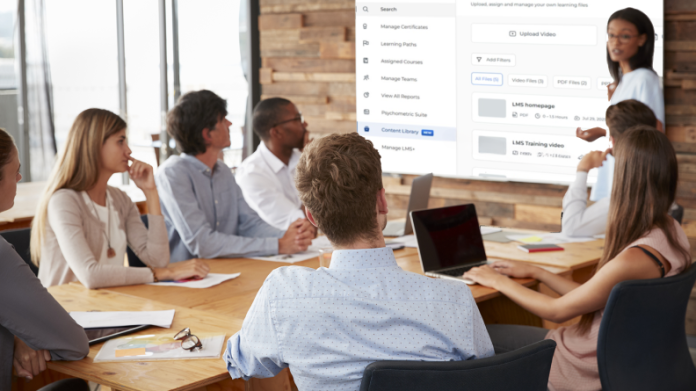
For years, organisations have struggled with a common problem: too much information scattered across too many platforms. From training videos sitting in cloud drives to onboarding manuals lost in email threads, employees often waste valuable time trying to track down the right resources. This inefficiency doesn’t just create frustration; it also slows down learning, increases policy risks, and undermines engagement.
A digital Content Library solves this challenge by providing a central hub for storing, organising, and distributing essential training materials. When built into a Learning Management System (LMS), it ensures that employees can access the right content at the right time, whether they’re new hires getting started or seasoned professionals brushing up on company policies. The Content Library is a centralised hub where all your organisation’s learning and training materials live. Instead of juggling scattered folders, emails, and separate platforms, everything is stored in one secure, accessible place. This makes it easier for employees to find the right information when they need it, supporting both structured training and self-directed learning.
In this article, we’ll explore five ways a digital content library improves employee learning, strengthens training programmes, and enhances the overall employee experience.
1. Centralising Training Resources In One Place
Centralising training resources in a single Content Library doesn’t just make life easier for administrators; it directly impacts how employees learn. When materials are scattered across folders, platforms, and email threads, employees waste valuable time searching for what they need. This delays learning, reduces motivation, and increases the chance they’ll reference outdated information.
By providing one secure, centralised source of truth, employees can access the right materials at the right time. Whether they need to quickly refresh their knowledge before a task, complete compliance training, or explore additional learning paths, everything is available in one place. This reduces barriers to learning, encourages consistency, and fosters a smoother, more confident learning experience.
In turn, employees spend less energy navigating systems and more time actually engaging with learning materials. Over time, this supports stronger knowledge retention, better application of skills on the job, and a culture of continuous learning across the organisation.
2. Streamlining Onboarding For New Hires
Onboarding is a critical stage in the employee lifecycle. Research consistently shows that a well-structured onboarding programme improves retention, boosts confidence, and accelerates time-to-productivity.
With a digital Content Library, new hires receive a clear and structured pathway through their onboarding journey. On day one, they can access essential materials such as:
- A welcome video from leadership
- An employee handbook and company values
- Role-specific training guides
- Tutorials for software and tools
- Policy and safety procedures
New employees can dive into learning once managers have assigned the relevant files to them. This system lets the manager know that the new employees are seeing the files that are necessary to them and not every document in the library.
3. Supporting Compliance And Policy Awareness
Policy training is often seen as a box-ticking exercise, yet failing to meet regulatory requirements can carry serious consequences. Whether it’s health and safety standards, data protection regulations, or industry-specific certifications, employees need access to the latest information, and organisations need to demonstrate that training has been delivered and understood.
A digital Content Library supports this by making policy documents easy to assign, track, and update. Administrators can:
- Upload the latest policies and handbooks
- Assign them to specific teams or individuals
- Track who has accessed the content and when
- Generate insights into completion and engagement
The tracking feature is particularly powerful. Managers can quickly identify employees who have not yet completed mandatory training and follow up accordingly. Instead of relying on guesswork, L&D teams gain visibility into employee progress, reducing risk and ensuring accountability.
For employees, the benefit is equally clear. Instead of searching for the correct policy version or wondering whether they’ve completed the required training, they have everything organised in one accessible location and ultimately will have workplace confidence. This transparency builds trust and reduces uncertainty.
4. Enhancing LMS Integration And Learning Paths
When a digital Content Library is built into an LMS, the impact on employee learning is transformative. Rather than simply acting as a storage system, the library becomes an active part of the learning journey.
At least 83% of organisations already use an LMS for training delivery. Having a Content Library built into your LMS enables:
- Personalised learning paths: Employees only see content relevant to their role, team, or career goals.
- Blended learning opportunities: Digital resources can complement instructor-led training, creating a more engaging experience.
- Scalable training delivery: As organisations grow, content can be assigned to larger groups without losing consistency.
When updates are made, documents must be reassigned to the employees. This is also a good way of ensuring that all employees are kept up to date on any changes made to policies.
5. Encouraging Continuous Learning And Engagement
Learning shouldn’t stop once onboarding is complete or policy boxes are checked. The most effective organisations foster a culture of continuous learning, where employees are encouraged to expand their knowledge, upskill, and explore new areas of development. (Gallup.com)
Globally, employee disengagement costs the economy $8.8 trillion in lost productivity every year. Giving employees the tools to learn on demand can significantly counteract this trend.
A digital Content Library supports this by making resources available anytime and anywhere. Team members don’t have to wait for formal training sessions or request files from managers. Instead, they can access the learning materials that have been assigned to them by admins, whether it’s brushing up on communication skills, reviewing leadership frameworks, or deepening technical expertise. This system also has the benefit of measuring training effectiveness and impact.
This structured accessibility supports self-directed learning within defined parameters, empowering employees to take ownership of their professional development. Over time, this creates a workforce that is more engaged, motivated, and equipped with the skills needed to adapt to changing business environments.
Why These Benefits Matter
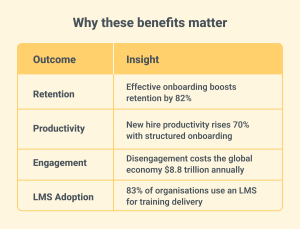
These figures show that a digital Content Library isn’t optional or nice-to-have; it’s a strategic investment that affects retention, productivity, and engagement.
Final Thoughts And Next Steps
The introduction of a Content Library is not just about convenience. It represents a strategic shift in how organisations approach learning, training, and policy. By centralising resources, streamlining onboarding, ensuring employee retention, integrating with LMS platforms, and encouraging continuous learning, businesses can create a smarter, more efficient training ecosystem.
If you’re exploring how to make your training programmes more effective, now is the time to consider integrating a digital content library into your LMS. To see how this feature works in practice, take a look at our LMS integration resources and browse our technical guides.
By investing in a modern learning management platform with Content Library today, you’re laying the foundation for a more skilled, engaged, and future-ready workforce.
