

How closely have you paid attention to current events? See what you remember by taking our special Summer 2025 News Quiz.
Udemy vs Coursera: Comparison + a Free Alternative

Online learning is booming, but with so many platforms to choose from, it’s easy to feel overwhelmed. Among the sea of options, two names consistently stand out: Udemy and Coursera. But which one should you go for? And what if we told you there’s an equally powerful, completely free alternative that might just outshine them both?
Whether you want to grow your career, explore a hobby or switch professions, this blog is for you. We’ll break down the pros and cons of both Udemy and Coursera, while also introducing you to Alison free online courses – a platform that empowers millions of learners worldwide with free education.
Udemy Overview
Udemy is a popular online learning platform offering video-based courses taught by independent instructors worldwide. It covers a wide range of topics, from coding and marketing to photography and personal development, catering to learners of all levels. The platform provides flexible learning with lifetime access to purchased courses, making it convenient for users to study anywhere. With its diverse course selection and accessibility, Udemy has become a go-to resource for professionals seeking to learn new skills or enhance their existing ones.
Pros:
- Diverse range of topics
- Budget-friendly with frequent discounts
- Lifetime access to purchased courses
- Helpful user reviews and ratings
Cons:
- Quality varies significantly between courses
- No formal accreditation or recognised certificates
- Limited structure or progression for career development
Coursera Overview
Coursera works with leading universities and organisations to offer a broad range of online academic and professional courses. The platform offers a range of options from short, guided courses to comprehensive degree programmes, making it suitable for those who prefer a more traditional or structured learning experience. Learners can discover courses across numerous subjects and gain from the expertise of instructors associated with renowned institutions. Whether you’re looking to develop a specific skill quickly or pursue a full qualification, Coursera offers a variety of pathways that cater to different educational needs and goals.
Pros:
- Courses from renowned universities and companies
- Accredited certificates and degrees
- Structured learning paths and specialisations
- Option to audit courses for free
Cons:
- Higher cost for most certifications
- Some courses have fixed schedules or deadlines
- Can be too academic or advanced for beginners
Alison: A Free and Smarter Alternative
Alison is a free online learning platform offering over 5,500 self-paced courses across various subjects, including free online IT and Computing courses, Business courses, Health and Medicine courses, Personal Development courses and more. Aimed at removing financial barriers to education, the platform provides access to certificate and diploma-level courses at no cost, with the option to purchase certificates for a fee if desired.
Alison’s course creation process is accredited by the CPD-UK, ensuring recognised standards of professional development. In addition to courses, Alison offers practical tools such as a free Resumé Builder, a Career Ready Plan, Psychometrics and Aptitude Tests to help learners apply their expertise in real-world settings. With a flexible learning structure and a global community of over 45 million Learners, Alison is a practical option for those seeking accessible and skills-based education. Many Graduates have shared positive reviews and testimonials, highlighting how the platform has helped them gain confidence, upskill, and advance their careers.
Why Alison Stands Out
- Free access to course content: All learning materials are available at no cost. Learners can choose to purchase certificates if needed.
- CPD UK-accredited: The course publishing process meets Continuing Professional Development standards, adding recognised value to your learning and professional growth.
- Large global learner base: Over 45 million Learners from 193 countries and more than 10 million Graduates.
- Career development support: Includes a Resumé Builder and career guidance tools – all available at no cost
- Flexible and self-paced learning: Courses can be taken at any time, allowing learners to fit study around their own schedules.
Some popular Alison courses include:
Want to learn about artificial intelligence in a simple way? Check out these free AI courses to get started.
Udemy vs Coursera vs Alison: What’s Best For You?

Making the Smart Choice
So, who wins the Udemy vs Coursera comparison? The answer really depends on what you’re after.
- Try Udemy if you want quick, affordable courses to learn a hobby or skill.
- Try Coursera if you’re looking for academic credibility or aiming to pursue a degree.
- Choose Alison if you’re a jobseeker, student or lifelong learner wanting free, accredited courses with career support.
With more than 5,500 free courses and tools to help you land a job, Alison is more than just an alternative and might just be the smart choice for your learning journey. Whether you’re just starting out or looking to build on your skills, Alison gives you the freedom to learn at your own pace, anytime and anywhere. With both Certificate and Diploma courses available, you will find options that match your goals. The best part is, you can learn it all for free.
Explore Alison’s free online course catalogue and start learning today. Whether it’s IT, marketing, health or project management, there’s something for everyone.
Looking to boost your CV? Enrol in a free digital marketing course or a Diploma in Information Technology Management and level up your career, completely cost-free.
Happy learning!
New Stanford study: Sharing Coursera micro-credentials on professional networking platforms can significantly improve learner employment outcomes


By Marni Baker Stein, Chief Content Officer, Coursera
Today, I’m pleased to share some new independent research from Stanford Graduate School of Business, highlighting the employability benefits offered by micro-credentials on Coursera. The new paper, “The Value of Non-Traditional Credentials in the Labor Market”, reports results from a randomized experiment, finding that sharing micro-credentials as proof of skills acquisition increases the chance of a learner getting a new job. These effects are particularly strong for learners who lack traditional credentials, do not have relevant work experience, or are based in emerging markets.
“Our research shows that micro-credentials, when shared on professional platforms like LinkedIn, can meaningfully boost employment prospects for learners who traditionally lacked access to the labor market” said Susan Athey, professor of economics, Stanford Graduate School of Business “By making skills more visible to employers, these digital credentials help level the playing field for talent in emerging markets and underserved communities.”
“It was striking to see how a lightweight change — simply removing small frictions in the sharing process — could lead to such a large increase in credential sharing, which in turn boosted the rate at which people found new jobs,” added Emil Palikot, co-author of the study and assistant professor of marketing at Northeastern University.
Technological change continues to transform global labor markets. It is both increasing the demand for digital roles and enabling individuals to be hired for these roles, regardless of their location. Talent in emerging markets often lacks training for these roles, driving learners worldwide to pursue job-relevant micro-credentials to close skills gaps and access new career opportunities.
To explore the impact that micro-credentials are having on learner employability, Susan Athey and Emil Palikot, researchers at Stanford’s Graduate School of Business (GSB) and Northeastern University, conducted a randomized experiment that measured the impact of credential sharing on job outcomes across a cohort of 40,000 Coursera learners. They sought to understand:
- The Impact of credential sharing on employability — Do micro-credentials effectively enhance job prospects by equipping learners with new skills and demonstrating them to employers?
- Effectiveness of platform-driven credential sharing — Assess how Coursera’s built-in features and prompts influence learners’ likelihood to share their credentials online.
- Differential benefits for underserved learners — To what extent non-traditional credentials benefit learners from developing countries or those without college degrees, and which group has the most to gain from these opportunities.
Key findings from the study include:
- Showcasing non-traditional credentials on professional networking platforms can significantly improve employability for learners, particularly those from disadvantaged backgrounds. Learners who shared a micro-credential on LinkedIn to signal their new skills were 6% more likely to report new employment within a year after doing so than those who did not share their earned credentials.
- Encouraging and simplifying credential sharing works. A platform feature, consisting of nudges and a streamlined sharing process, increased visibility and job outcomes.
- The benefits of micro-credential sharing were greater for learners with lower baseline employability. Coursera and Stanford GSB found that learners in the bottom employability tertile — based on their initial probability of reporting a new job according to characteristics such as their past employment history, level of education, type of university, and age — experienced an 11% increase in employability.
The study authors recommend that:
- Online learning providers should continue to develop and promote features that encourage the sharing of non-traditional credentials. All of Coursera’s credentials, which are offered by top universities and leading industry partners, can be seamlessly shared on LinkedIn.
- Educational institutions and policymakers should support initiatives that enhance the credibility and recognition of non-traditional credentials. By doing so, they can help learners from disadvantaged backgrounds effectively signal their skill sets in the absence of traditional degrees or relevant work experience, thereby improving their employability.
These findings offer strong new experimental evidence that gaining and sharing micro-credentials can reduce disparities in employment outcomes, particularly for those without traditional credentials or strong employment histories.
Coursera continues to expand its collection of micro-credentials and recently released ten job-relevant Professional Certificates, offered by leading industry players including Amazon, Dell, IBM, Microsoft, and XBOX. In 2024, Coursera recorded over 4.3 million enrollments across our portfolio of Entry-Level Professional Certificates, which are equipping learners from all backgrounds and geographies to attain the most in-demand remote digital jobs in under six months.
The full study can be accessed here.
Word of the Day: brouhaha
This word has appeared in 26 articles on NYTimes.com in the past year. Can you use it in a sentence?
‘SNAP Wasn’t a Handout’: The Week 8 Winner of Our Summer Reading Contest
Viviana Thumm, 15, writes about the Trump administration’s cuts to the food aid program — changes she says are “personal.”
Gamified Learning: How Organisations Can Boost Learning Engagement by 25%
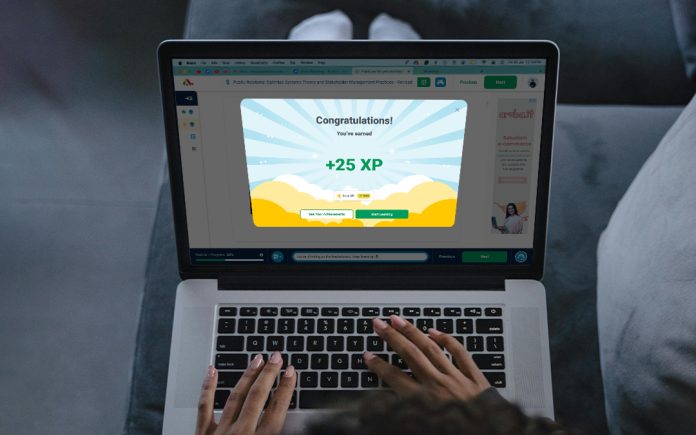
Disengaged learners cost organisations millions in lost productivity, higher turnover, and stalled capability growth. According to Gallup, employee disengagement costs the global economy $8.8 trillion annually, equivalent to 9% of global GDP. The good news? According to G-UpLearning, companies that embed gamification into their L&D programmes report 25%+ higher engagement, stronger knowledge retention, and faster upskilling. By turning learning into an active, rewarding experience, gamification doesn’t just increase participation; it delivers a measurable business advantage.
At Alison, we recently conducted a beta test involving 56K+ users on our new gamified platform. This real-world test measured exactly how gamification impacted learning outcomes, and the results speak volumes.
What Is Gamified Learning?
Gamified learning refers to the use of game-like elements, such as points, badges, leaderboards, and progress streaks, within a digital learning environment. When integrated into a Learning Management System (LMS), these elements encourage consistent learner participation and reinforce positive behaviours.
Gamification isn’t just about adding fun for fun’s sake. It’s rooted in cognitive and motivational science, designed to create psychological incentives that keep learners coming back.
For example, a sales team using a gamified LMS might earn badges for completing product modules, see their names rise on a leaderboard for high quiz scores, and maintain a learning streak that unlocks bonus content, turning daily training into a friendly, rewarding competition.
The Solution: Gamification in Learning Management Systems
To address the persistent challenges of disengagement, low retention, and high drop-off rates, Alison integrated game mechanics directly into its LMS+, its Learning Management System.
In our beta programme, we introduced three key features:
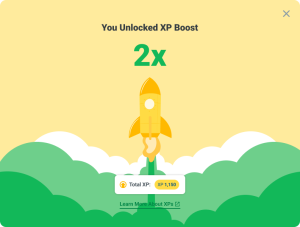
- Experience Points (XP): Learners earned XP for completing modules and quizzes, offering immediate, tangible rewards for progress.
- Leaderboards: Ranking systems created friendly competition among users, energising learners through visible achievement and team dynamics.
- Streaks: Daily participation streaks reinforced habit formation and rewarded learners for consistent effort.
These elements weren’t superficial add-ons. They were intentionally designed to align with motivational triggers and reduce friction in the learning journey. Together, they formed a scalable, free gamification platform built to improve both learner experience and business outcomes.
Incorporating these into your workplace gamification strategies enables scalable L&D innovation while aligning training with behavioural science principles.
By implementing these mechanics, Alison created a real-world example of LMS gamification lessons in action, illustrating how strategic design can radically shift user behaviour and performance.
Real Results from 56K+ Learners
Our beta test engaged over 56,000 learners. The performance gains were measurable and significant:
- Study time increased by 25.6%
- Number of sessions rose by 21.3%
- Course completions increased by 12.3%
- Average time per learner grew by 5.2%
These improvements were observed across regions, industries, and job roles, demonstrating that gamification in learning can deliver consistent results at scale.
Why Gamification in Learning Works
Gamification succeeds because it reflects how people are wired to respond to progress, recognition, and challenge. It connects psychological drivers to educational design.
- XP feeds the need for accomplishment. Seeing a progress bar move or watching a point total grow creates a real sense of momentum, even in small steps, which keeps learners engaged.
- Leaderboards tap into social motivation. When learners see their efforts reflected in rankings, even anonymously, they feel a deeper investment in outcomes.
- Streaks encourage consistency. Repeated actions over time form habits. By recognising consecutive days of learning, streaks make the process feel natural and worth sustaining.
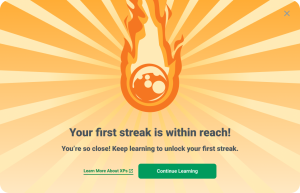 In post-test feedback, learners shared how these features transformed their behaviour. Some returned “just to keep the streak alive.” Others admitted that the XP system nudged them into finishing courses they might have otherwise dropped. What began as a novelty quickly became motivation.
These results reinforce that, but because it’s built on a strong behavioural foundation. It aligns what learners want, clear goals, progress, and reward, with what organisations need: participation, retention, and outcomes.
What This Means for L&D Teams
For Learning & Development leaders, the implications are clear:
- Gamification reduces drop-off and increases course completion.
- It’s scalable across teams, departments, and geographies.
- Built-in engagement mechanics lower administrative overhead.
- Real-time analytics provide clear data on learner performance.
With gamification, training stops being something that needs reminders or follow-ups. Learners are more likely to return, participate, and complete without extra prompting, freeing up L&D teams to focus on strategy, not chasing completions.
How to Implement Gamified Learning in Your Organisation
To bring gamified learning to life in your workplace:
1. Use a platform with built-in gamification
Choose a learning platform like Alison’s LMS+ that includes XP, streaks, and leaderboards out of the box, no third-party tools or extra integrations required.
2. Align game mechanics with KPIs
Tie gamification to measurable goals like compliance, upskilling, or internal mobility. Use badges and XP to recognise real business milestones.
3. Communicate the why
Explain to learners how gamification benefits them, their career development, recognition, and overall learning outcomes.
4. Launch, track, and scale
Start small, gather data, and expand based on real engagement metrics. Use platform analytics to refine the approach and personalise future learning paths.
Conclusion: Gamified Learning Is More Than a Trend
Gamified learning isn’t just a buzzword. It’s a tested, psychology-backed approach to solving one of the biggest problems in corporate training: getting people to care enough to learn.
Done right, gamification fosters consistency, ownership, and motivation, without additional cost or complexity. And with Alison’s free gamification platform, it’s now easier than ever to embed those benefits directly into your organisation’s learning strategy.
Additional Tools to Boost Workplace Learning
To further support employee development, explore these valuable tools and assessments:
Stay connected with us on LinkedIn for updates and success stories.
Word of the Day: inedible
This word has appeared in 22 articles on NYTimes.com in the past year. Can you use it in a sentence?
How AI Impacts Workforce Efficiency in Learning

Do you remember when people worked remotely due to COVID?
A couple of years ago, some companies announced that remote workers had to return to the office.
The reasoning behind this was that employees’ performance was better on-site than remote.
The data, though, doesn’t support that premise.
Companies from Gallup to Deloitte to McKinsey to the GAO to many others all show strong and better performance for remote workers compared to in the office.
On top of this, fewer distractions and more completed tasks appear with remote versus on-site.
Seeking lower attrition rates and happier employees?
Hubstaff found that 71% of employees had higher satisfaction compared to on-site employees.
Want another study?
Consider a study that found employees who worked remotely reported lower stress and better mental well-being. (79% and 82% respectively).
The adoption of companies that require employees to be in the office 100% of the time is increasing.
Take a look at any job site, and the numbers are significantly lower for someone to work remotely only versus hybrid or 100% on-site.
Even though that darn data again indicates a higher percentage of employees who would leave a company if they ever went to the office.
What about those cost savings?
Neat, found that on average. Employers will save around $11K (USD) per remote employee.
The environmental impact of on-site compared to remote operations has the potential to result in 54 million greenhouse gas emissions.
All of which, when viewed from a broader perspective, clearly indicate the benefits of remote versus on-site work, including environmental benefits, reduced employer costs, improved employee well-being, increased productivity, and fewer distractions.
Workforce efficiency and performance staring you, well, the person overseeing the whole strategy, right in their face.
Nevertheless, the push for full on-site improves productivity, and the benefits of such are overall the mode of operation for many companies, including Amazon.
I bring this up because the idea that AI will increase employee performance and make them more efficient isn’t, at this stage, a winning solution.
Let’s not kid ourselves here.
There will be plenty of companies, as data and studies show, that eliminate jobs and replace them with AI.
This isn’t in any stretch a benefit for employee performance.
Workforce efficiency, though?
McDonald’s experimented with AI to improve workforce efficiency, reducing the need for employees to take orders and serve food at the window.
It failed miserably.
An article in the New York Times discusses individuals with computer science degrees who focused solely on coding, only to lose their jobs or struggle to find employment due to coding being handled by AI.
One individual stated they applied to over a few thousand jobs to no avail. There wasn’t any mention of whether this person adapted, and while looking, started to take courses on AI programming – a necessity for the next generation of the workforce.
Schools and higher academia are finally recognizing the relevance of AI for tomorrow’s workforce and are moving away from the wholly coding experience.
However, for graduates with an AI programming degree, finding a job depends on many factors, which isn’t the focus of this thread.
Nor is the amount of money that will be thrown at them (assuming their talent level is elite).
What is missing in all these discussions is an effective business plan that incorporates AI into the development of workforce performance and efficiency.
A topic I will refrain from discussing in detail with this post.
The post here, instead, is about learning technology needs towards workforce efficiency and its rollout of functionality in learning systems (under the umbrella of LT), to meet those needs.
Are learning systems today meeting the needs of workforce efficiency?
The answer is no.
This is not unexpected, because of where AI stands, what is unknown (a lot), and what are its weaknesses and failures to solve (hallucinations, AI bias, and lately LLM traits moving over to another LLM), to say the least.
All of these exist, and yes, could be sitting in the system – not the bias – that is the client, ditto on the LLM we have, and we want to go into your system, and even the direct source, which may not exist – it’s your content, my dear client.
Systems themselves are limited in what they can do, even though, to their respective side, they are trying (as a whole) to induce and improve workforce performance and thus efficiency.
Is that learning’s role?
It is something we often fail to ponder.
What is the role of learning and training online in workforce performance and efficiency?
To guide? Yes
To offer opportunities to learn new skills and develop current ones, too? Yes
To empower an employee to produce more by knowing more?
All relevant only as it relates to what the company, i.e., the client, is offering them in terms of learning.
If we recognize that well-being is crucial for boosting productivity, offering employees the chance to take courses/content that are not only job-specific but also tailored to their personal needs makes perfect sense.
Yet, that is rare on the L&D and HR side. Training in its methodology finds the usefulness of personal and professional development.
That said, if the company forbades this mechanism of learning, then it is a negative on the part of the company itself.
There is by far nothing more stressful than the fear that AI will replace the employee.
That’s the stress a company should focus on from a learning standpoint. And make no mistake, there is real fear and thus stress here.
I stumbled upon a Reddit thread discussing the release of GPT-5 and its potential to replace white-collar workers.
The hype surrounding version 5 was driving this, as the respondents were not focusing on AI in general; some were, but overall, it was the latest LLM from OpenAI.
Even though there were mentions of the Ph.D. spin being incapable of solving basic math, there was also the occurrence of hallucinations and just general underwhelming sentiment.
Nevertheless, let’s say your company decided to roll out 5 in your workplace.
Under the presumption that the latest LLM would improve workforce efficiency and performance.
If the employee believes online learning will replace them and there is no plan to alleviate this fear, then the effectiveness of tasks becomes a serious question of what is defined as success.
There is, without a doubt, a time when two types of autonomous agents will appear within learning technology: free for XYS and, if you want more capabilities, a fee-based agent.
If I were a vendor investing in autonomous agents, I would consider this, depending on the agent’s level and what it can accomplish for the learner.
And that is a big piece, right?
For the learner.
Not just the admin, which would be of use to them.
Nor the manager or department head, again, depending on what it is doing and providing in terms of performance for the person in that role in the system.
But the learner.
Workflows and AI
It makes 100% sense, and the level to which it will be extensive or has the potential to be is a key element.
With an autonomous agent, you have one type of workflow, with learning and what “tasks” should be done or pushed out once X or Y is met is another, but what exactly is the task for the learner?
More importantly, should a task for an autonomous agent be handled by the learner, or should it be something the learner needs to learn themselves?
It’s one thing for AI to handle the creation of a slide deck (still requires a human to review, even if folks are ignoring doing this). Still, it is entirely different for someone who needs to learn how to do certain features, if not specifics, with PowerPoint, or even just the basics.
Would you want AI to handle this task in your system for that learner?
Answer engines will continue to improve, but their effectiveness is directly tied to the LLMs driving them, the multimodal approach (beyond just text, including audio, video, and PDF summaries) within the engine, the content, and the sourcing.
Today, Answer Engine for the most part is a search engine with some panache (as a whole).
It still requires the human element, as with any AI, until the days of Singularity happen, and impacts far more so than learning, but in our case here, learning.
Right now, though, how much should AI exist within a learning system, let alone another learning technology that improves the learner’s experience?
An answer engine surely would be – because knowledge management, at least in my opinion, will take an LMS, and other types of learning systems, to a whole new level.
If you look at it from a space level, what is a learning system?
It has always aimed to be, and continues to be, a platform for knowledge acquisition and growth, even if not explicitly stated.
With the engine, we can now say it out loud – the beginning of a new tier of knowledge management.
What then is the role of AI in a learning system from a performance standpoint?
Performance is the point here, because how we define performance with learning is the stuck in the mud, ROI thing, any L&D and Training exec will tell you, is data manipulation – after all, the necessity of saying 35 hours of learning reduced safety accidents by 84% or 42 hours of training (online) by ABC increased their sales by 43%.
Sure, doable, but there are always additional variables.
Nothing is as cause and effect, one-to-one.
With AI thrown into the learning mix, a whole new variable is at play.
Again, I am looking at the learner side and only their side.
Should I have AI handle tasks that learners typically perform or tasks that the AI can or will handle?
If it can read a publication and display only the highlighted text that correlates with the learner’s search, then yes, it helps in that way.
If the whole article is of zero interest to the learner, then I’d argue no.
Efficiency is often interwined with the guise of speed.
It is poor to think in such a way.
Especially with learning.
It reminds me of those “Speed Reading courses by Evelyn Wood,” that were prominent in the 70s and 80s.
OR those now thirty-somethings who would say that speeding through a YouTube video increased their learning comprehension and retention far more than the usual speed.
There is no mention of validation, say in six months, nor synthesis at 12 months.
Bottom Line
Visit any site these days that presents an article or post, including well-known publications, and you will see the summary above.
The summary includes specific points of relevance (as defined by the AI) for the reader.
However, the internet and its content are not primarily about learning to boost employee productivity in the workplace, whether they are on-site or remote.
Because, despite what you might think, on-site employee XTFD still could be reading on their mobile device, and not using their workplace desktop or laptop.
They are still not entirely focused on the task at hand.
Unless that task is about reading an article
Then yes, it is delivering.
But online learning on content that empowers the employee’s ongoing development of skills, and various personal and professional knowledge, shouldn’t be limited to an agent
.
Handling a task of this or that.
Instead, it should be in conjunction with the learner.
Symbiotic in a way
That maximizes
Rather than detracting.
E-Learning 24/7
How to Build a Daily Learning Habit (And Actually Stick to It)

We all want to learn more, grow faster, and keep upskilling. But let’s be honest, building a consistent learning habit is tough. Life gets busy, motivation dips, and that TV show you’ve been binge-watching always seems to win. There’s good news, though. Building a daily learning habit doesn’t have to be hard. In fact, with a few small tweaks, it can become something you actually look forward to.
But how do you make learning a daily part of your life without turning it into a chore? Read on and we’ll show you how to go from “I should learn more” to “I learn something new every day.”
Start With Consistency, Not Intensity
You don’t need to study for three hours a day. In fact, starting that way is one of the fastest routes to burnout. Instead, aim for just a few minutes a day. Commit to what you can, whether that’s 10 or 20 minutes. It’s not about cramming, it’s about consistency.
The real power comes from showing up every day. A few minutes of focused learning every day add up, and over time, those small wins create momentum. The trick is to make learning feel easy, so you’re more likely to return to it.
Make Learning Part of Your Routine
Habits stick when they’re attached to something else. If you always study with your morning coffee or while waiting for dinner to cook, you’ll start to associate learning with those moments. This technique is known as “habit stacking” and it works because you’re not relying on willpower, you’re building learning into your existing daily study routine.
Here are a few ideas:
- Learn right after brushing your teeth in the morning
- Watch a course module while you eat lunch
- Review what you learned before bed
The key is to keep it easy and repeatable. The more automatic it feels, the easier it is to stay consistent with upskilling.
Start Small and Build Up
Big goals are exciting, but they can also be overwhelming. Start by learning one new concept a day, or completing one module per session. Once that feels easy, you can level up. The goal isn’t perfection, it’s progress.
Online learners who commit to short, regular learning sessions often see better results than those who binge once a week. Why? Because small steps help build confidence, and confidence fuels motivation to learn every day.
Put the Fun Back in With Alison’s Gamified Learning
Remember the buzz of ticking off a to-do list or hitting your daily step goal? Alison now brings that same sense of progress and achievement to your learning journey. With gamified features like Experience Points (XPS), Streaks, and a global Leaderboard, learning becomes less of a task and more of a game you’ll want to keep playing.
Each lesson completed, quiz passed, or streak extended gives you a small win – a boost of energy that keeps your motivation high. Leaderboards add a friendly competitive edge, letting you see how you stack up against Alison Learners in your country and around the world.
It’s not just about finishing a course. It’s about staying engaged, hitting milestones, and celebrating momentum along the way. With Alison’s redesigned learning experience, progress feels rewarding, motivation is easier to maintain, and learning becomes a habit you’ll actually look forward to.
Link Learning Streaks to Real-Life Rewards
Keeping your Streak alive feels good in the moment, but what makes it really powerful is what it leads to. Every day you learn, you’re building skills that can lead to better job opportunities, career growth, and more confidence in your abilities.
Think of your Streak as more than a number. It’s a visible reminder that you’re investing in yourself. Over time, that habit translates into real change:
- A 15-day Learning Streak on a language course brings you closer to landing a job at a multi-national company
- A daily leadership lesson helps you manage your team more effectively
- Regular learning boosts your confidence to apply for that promotion
Fun or Focused? Why Not Both?
Learning doesn’t have to be one-size-fits-all. It can be fun, serious, or both, depending on your goals. Maybe you’re learning just for the joy of it, like improving your photography skills, mastering guitar chords, or exploring the world of psychology. Or perhaps your goals are more career-focused, like levelling up your Excel game, brushing up on project management principles, or preparing for a certification in cybersecurity.
Whatever the purpose, Alison’s new gamified learning experience makes the journey more enjoyable. It helps you stay committed, not just through motivation, but by turning your personal goals into achievable milestones. Whether you’re diving into our hobbies and interests courses for fun or exploring IT, Business, or Healthcare topics for professional growth, gamified learning keeps the process rewarding, purposeful, and yes, enjoyable.
Word of the Day: hackneyed
This word has appeared in 20 articles on NYTimes.com in the past year. Can you use it in a sentence?
