fbpx
Home Blog Page 691

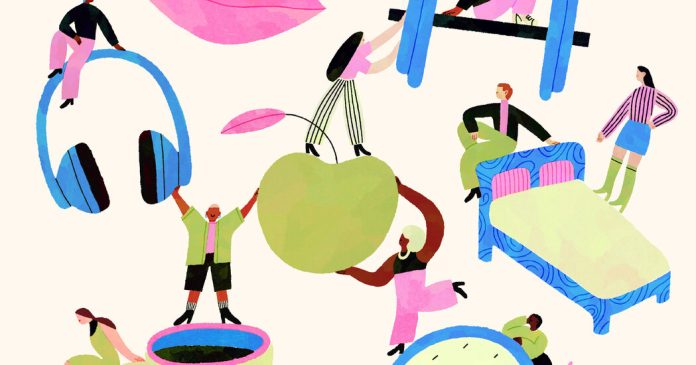
What Do You Do to Stay Healthy?

0
What Do You Do to Stay Healthy?

It’s the start of the new year, a time when many recommit to healthy habits.

What are you doing that’s good for your health right now? Think about everything from your diet and exercise routine to the habits you have that take care of your mental health and well-being.

For instance, do you regularly stretch? Write in a journal? Eat a balanced diet? Make time for family and friends? Manage your screen time?

What health goals do you have for 2025? Is building healthier habits something you’d like to do in the new year?

In “35 Simple Health Tips Experts Swear By,” The Times Well desk asked experts to share one health trick, life hack, rule or reminder that they have learned through their work that they swear by. Here are a few of their tips:

When I find myself stuck in a pattern of negative thinking, I try not to complain for seven days. It retrains your brain to stop going down a negative path. I write “Don’t complain!” on a sticky note right by my bed so I see it when I wake up. — Dr. Kali D. Cyrus, psychiatrist and assistant professor at Johns Hopkins Medicine

Dark-chocolate-covered nuts (at least 70 percent cocoa) are almost a perfect food. They combine two remarkable nutrient-rich foods — nuts and cocoa — and are high in phenolics, minerals, healthy fats and fiber. — Dr. Dariush Mozaffarian, director of the Food is Medicine Institute at Tufts University

My second-grade teacher, Ms. Edson, told us: If something feels too hard to do, it just means that the first step isn’t small enough. So often when we’re struggling, we tell ourselves that it’s a sign that we’re broken or that something is our fault, and then we freeze. But when something is too hard in the moment, tell yourself Ms. Edson’s advice. — Becky Kennedy, clinical psychologist, parenting expert and founder of Good Inside

In the world we live in, usually the phone is the last thing we see and the first thing we see. It’s the bookend to our sleep, which is terrible. At night, I shut my phone down and meditate before I go to bed. In the morning, I meditate when I wake up — before looking at my phone. — Peter Economou, assistant professor of applied psychology at Rutgers University

“Stop, Breathe, Be” is a three-second brain reset to help manage anxiety in the moment. The instructions are in the name: Stop whatever you’re doing, take a brief pause. Take a deep breath in and out. Be grounded in the present moment. “Stop, Breathe, Be” gets you out of “What if?” thinking and back to what is, in the here and now. — Dr. Aditi Nerurkar, Harvard physician specializing in stress and burnout

I’m a big fan of making fancy ice cubes by freezing lemon or lime juice with chopped berries or pineapple and herbs. These little flavor-packed cubes turn plain water into a refreshing, luxurious treat — with added vitamin C. — Emily Haller, dietitian

During my workday, one of the most restorative things I can do is listen to a song I love between clients. If I listen to some Snoop Dogg, I’m going to feel a little recharged. It puts you in a different zone. I have a playlist that has gospel music and Megan Thee Stallion and all sorts of stuff. — Nedra Glover Tawwab, licensed clinical social worker

A couple of times a day, I consciously drop my shoulders, sigh and think to myself: “Let go.” — Sherry Cormier, psychologist and bereavement trauma expert

Students 13 and older in the United States and Britain, and 16 and older elsewhere, are invited to comment. All comments are moderated by the Learning Network staff, but please keep in mind that once your comment is accepted, it will be made public and may appear in print.

Red Words

0
Red Words

What do you think this illustration is communicating? How does it relate to or comment on society or current events? Can you relate to it personally? What is your opinion of its message?

Tell us in the comments, and then read the related article to learn more.


Students 13 and older in the United States and Britain, and 16 and older elsewhere, are invited to comment. All comments are moderated by the Learning Network staff, but please keep in mind that once your comment is accepted, it will be made public and may appear in print.

Find more Picture Prompts here.

Word of the Day: cognizant

0
Word of the Day: cognizant

The word cognizant has appeared in 133 articles on NYTimes.com in the past year, including on Oct. 29 in “Part-Time Farmers, Part-Time Rock Stars: A Chinese Band’s Unlikely Rise” by Vivian Wang, which is about Ba Nong, the frontman of the band Varihnaz, who worked as a graphic designer in a large city when he began to write songs:

At the same time, he was growing disaffected by his work designing insurance ads. He read “The Half Farmer, Half X Lifestyle,” a book by a Japanese environmentalist about getting by through sustainable agriculture mixed with passion projects. In 2012, he moved home.

… He also found new hobbies. Cognizant that his hometown traditions were endangered, he visited local museums to study traditional instruments. He collected nursery rhymes in the Zhuang language, which has faded as schools push standardized Mandarin, and published a book of his lyrics and poems.

Can you correctly use the word cognizant in a sentence?

Based on the definition and example provided, write a sentence using today’s Word of the Day and share it as a comment on this article. It is most important that your sentence makes sense and demonstrates that you understand the word’s definition, but we also encourage you to be creative and have fun.

If you want a better idea of how cognizant can be used in a sentence, read these usage examples on Vocabulary.com. You can also visit this guide to learn how to use IPA symbols to show how different words are pronounced.

If you enjoy this daily challenge, try our vocabulary quizzes.


Students ages 13 and older in the United States and the United Kingdom, and 16 and older elsewhere, can comment. All comments are moderated by the Learning Network staff.

The Word of the Day is provided by Vocabulary.com. Learn more and see usage examples across a range of subjects in the Vocabulary.com Dictionary. See every Word of the Day in this column.

Is It OK to Be Messy?

0
Is It OK to Be Messy?

Are you messy or neat?

Is your bed perpetually unmade? Are your closets crowded with long-forgotten odds and ends? Is your floor difficult to navigate without stepping on dirty T-shirts and old toys? Are your book bag and notebook so cluttered that it’s impossible to find a homework assignment without an hourlong search?

If so, have you ever been judged or shamed for your messiness? Do you ever feel pressure to be more organized? Or are you OK with a little clutter?

In “My Home Is Messy, and I Don’t Feel Bad About It,” KC Davis, with photographs by Eli Durst, writes about the relief and joy that come from embracing her messiness:

I’m a therapist who writes about housekeeping hacks for messy people. When I post videos about my home — a place where clean laundry is tossed unfolded into baskets and a giant trash can on wheels rolls around my kitchen — the comment section explodes with admonitions that I am lazy. My private inbox, however, is different. People often tell me my embrace of mess is revolutionizing their lives.

“Are you saying that I’m not a horrible person and that I’m not just making excuses?”

“I just found you and I’m already crying in relief that I’m not the only one.”

The world is harsh toward messy people. I get it. Not that long ago I thought the home of a mature, successful woman was a bright and airy haven, à la HGTV’s famous interior designer Joanna Gaines, one with made beds and clear countertops. Homes where all the stuff is neatly packed away into artfully labeled containers, and where there are no piles or smudges.

My home has never looked like that. For years, it felt as if I failed the aesthetic litmus test for being grown-up and put together. But four years ago, I accepted something that freed me and brought unexpected joy: I am messy.

Messiness ought to be celebrated. Instead, it’s a problem to solve, a bad habit to rectify, something to apologize for profusely when a visitor walks in. At best, you might forgive yourself or joke about your defect — your character flaw, really, since our culture associates messiness with laziness.

The essay continues:

The parts of my brain that allow me to produce handmade Renaissance costumes are the same parts responsible for a dining room bursting with fabric scraps and sewing supplies. It’s time we admit that what makes us shine can’t be divorced from what makes us scattered.

Science agrees. For example, people who have A.D.H.D. are often messy because their brains’ executive functioning center — the area that controls time management, focus shifting, memory and prioritization — operates differently from a typical brain’s. This atypical functioning can also create a higher level of divergent thinking and creativity, according to some research.

The often-repeated claim that clutter is harmful to one’s productivity and creativity may be wrong, as well. A University of Minnesota study tested the creative output of students working in a messy office space versus those working in a tidy one by asking them to imagine they worked at a Ping-Pong ball factory and had to come up with new uses for Ping-Pong balls. Participants in the messy room not only generated the same number of ideas as their clean-room counterparts, their ideas were also rated as more creative by independent judges.

To be sure, we messy people need to be considerate of others and provide a safe and sanitary environment for ourselves and our families. The good news is you can create an enjoyable, functional life as a messy person without becoming a neat one by using methods that work with your brain, not against it.

Students, read the entire article and then tell us:

  • Are you a messy person? Or do you like to keep your home, your bedroom and your belongings neat, tidy and well organized? Describe your room and tell us whether you think it could use an organizational makeover or not.

  • Has being messy ever been an issue for you? How much effort do you put into keeping things neat? What strategies have you used that have been effective?

  • Ms. Davis writes that messiness is seen by our culture as a sign of laziness, a character flaw and a problem to be solved. Does that resonate with your own experiences? Have you ever been judged for being messy? Do you feel pressure to be more organized?

  • What do you think of Ms. Davis’s argument that messiness ought to be celebrated instead of shamed? What do you see as the benefits and downsides of being messy?

  • Is neatness overrated? Should we all embrace our messiness? How might your parents or teachers respond if you did?


Students 13 and older in the United States and Britain, and 16 and older elsewhere, are invited to comment. All comments are moderated by the Learning Network staff, but please keep in mind that once your comment is accepted, it will be made public and may appear in print.

Find more Student Opinion questions here. Teachers, check out this guide to learn how you can incorporate these prompts into your classroom.

How Much Say Do You Have in What You Learn at School?

0
How Much Say Do You Have in What You Learn at School?

How much say do you have in what and how you learn at school?

For example, do you ever get to choose the books you read, the classes you take, the topics you study or the kinds of projects you do?

When you do have the opportunity for some control and choice over what you learn, what effect does that have on your interest and investment in it?

In the guest essay “Giving Kids Some Autonomy Has Surprising Results,” Jenny Anderson and Rebecca Winthrop, who wrote a book called “The Disengaged Teen: Helping Kids Learn Better, Feel Better, and Live Better,” present an argument for students’ being more involved in setting their own academic goals. The essay begins:

In a polarized nation, one point of agreement deserves more attention: Young adults say they feel woefully unprepared for life in the work force, and employers say they’re right.

In a survey by Gallup and the Walton Family Foundation of more than 4,000 members of Gen Z, 49 percent of respondents said they did not feel prepared for the future. Employers complain that young hires lack initiative, communication skills, problem-solving abilities and resilience.

There’s a reason the system isn’t serving people well, and it goes beyond the usual culprits of social media and Covid. Many recent graduates aren’t able to set targets, take initiative, figure things out and deal with setbacks — because in school and at home they were too rarely afforded any agency.

Giving kids agency doesn’t mean letting them do whatever they want. It doesn’t mean lowering expectations, turning education into entertainment or allowing children to choose their own adventure. It means requiring them to identify and pursue some of their own goals, helping them build strategies to reach those goals, assessing their progress and guiding them to course-correct when they fall short.

This approach works because it teaches kids strategies they’ll need to succeed in work and life — and keeps them invested, too. But a survey of over 66,000 young people that we conducted with the Brookings Institution and the education nonprofit Transcend showed that very few middle and high school students regularly have the opportunity to work this way. Only 33 percent of 10th graders report that they get to develop their own ideas in school. The result? In third grade, 74 percent of kids say they love school. By 10th grade, it’s 26 percent. School feels like prison, many teenagers told us over three years of research. The more time they spend in school, the less they feel like the author of their own lives, so why even try?

Johnmarshall Reeve, a professor at Australian Catholic University, has spent two decades studying what happens when kids are given some agency in school. In 35 randomized control trials in 18 countries, he and other researchers found that when students are allowed some opportunity to take their own initiative, they are more engaged in class and better able to master new skills, they have better grades and fewer problems with peers — and they are happier, too. The effect sizes were often between 0.7 and 0.9, a significant degree of impact.

Importantly, the teachers did not need to change the curriculum they taught or alter their disciplinary approach. They just applied a few new teaching practices in the course of their normal lesson. At the start of a lesson, instead of providing a step-by-step schedule and overview for the class period, as many good teachers do, they inquired about the kids’ own interest. They might say, “Today I’m going to tell you about the solar system. Before we start, is there anything about the solar system that you are particularly curious about or have a question about?” This simple step encourages kids to think about what they know, what they care about and what they want to know more about, rather than just settling in and tuning out.

Students, read the entire essay and then tell us:

  • In your own words, what do the authors mean when they say that students should have a degree of agency in their learning? What is agency? Can you give an example or two of how it applies at school? What about outside of school?

  • What are your thoughts on the argument that allowing students more input and autonomy in their education could make them more interested and invested in what they learn, as well as better prepare them for life and the work force?

  • How much say do you have in what and how you learn at school? Do you feel that you have the right amount of agency and autonomy, or do you sometimes wish you had more? Explain.

  • Have your teachers ever used the teaching techniques from the article — or similar ones — such as inviting you to set your own goals, allowing you to ask questions about a subject before diving in, or explaining why you’re learning what you’re learning? What exactly did these teachers do? What effect did their approach have on you?

  • The authors cite a statistic saying that nearly half of the more than 4,000 young people who were polled felt unprepared for the future. Does that seem accurate to you? Do you think your skills in learning, managing time, setting and reaching goals, communicating, problem-solving and being resilient are sufficient for happiness and success after high school? If so, which ones have been helpful? If not, which ones do you think would?

  • If you were a teacher, how would you make your classes engaging? What approaches would you borrow from your own educators, past and present? What new ideas do you have that could make learning more fun for students?


Students 13 and older in the United States and Britain, and 16 and older elsewhere, are invited to comment. All comments are moderated by the Learning Network staff, but please keep in mind that once your comment is accepted, it will be made public and may appear in print.

Find more Student Opinion questions here. Teachers, check out this guide to learn how you can incorporate these prompts into your classroom.

Hug

0
Hug

Use your imagination to write the opening of a short story or poem inspired by this illustration, or describe a memory from your own life that this image makes you think of.

Tell us in the comments, and then read the related essay to learn more.


Students 13 and older in the United States and Britain, and 16 and older elsewhere, are invited to comment. All comments are moderated by the Learning Network staff, but please keep in mind that once your comment is accepted, it will be made public and may appear in print.
Find more Picture Prompts here.

Word of the Day: jeremiad

0
Word of the Day: jeremiad

The word jeremiad has appeared in five articles on NYTimes.com in the past year, including on Aug. 30 in the Opinion column “Why We Don’t Build Beautifully” by Ross Douthat:

Standing in the Roman Pantheon last spring, one of my daughters asked the kind of question that newspaper columnists are tempted to place in the mouths of our children when we’re hard up for a column hook: “Dad, why don’t people build things this beautiful anymore?

One of my fitfully followed parental rules is that when a kid asks about something that touches on the deep issues of our time, I don’t immediately launch into a jeremiad. Instead, my children are served a combination of here’s what your dad thinks and here’s what other people think, with a thumb on the scale for the paternal point of view but also a pedantic attempt to make sure they understand the whole debate. (Often they wander off before I’m done, for some reason.)

Can you correctly use the word jeremiad in a sentence?

Based on the definition and example provided, write a sentence using today’s Word of the Day and share it as a comment on this article. It is most important that your sentence makes sense and demonstrates that you understand the word’s definition, but we also encourage you to be creative and have fun.

If you want a better idea of how jeremiad can be used in a sentence, read these usage examples on Vocabulary.com. You can also visit this guide to learn how to use IPA symbols to show how different words are pronounced.

If you enjoy this daily challenge, try our vocabulary quizzes.


Students ages 13 and older in the United States and the United Kingdom, and 16 and older elsewhere, can comment. All comments are moderated by the Learning Network staff.

The Word of the Day is provided by Vocabulary.com. Learn more and see usage examples across a range of subjects in the Vocabulary.com Dictionary. See every Word of the Day in this column.

What Teens Are Saying About Barring Children Under 16 From Social Media

0
What Teens Are Saying About Barring Children Under 16 From Social Media

I really like Australia’s new law. I don’t have social media and even though it makes me feel like I’m left out of a lot of things, I’m grateful that my parents don’t allow me to have it. I see my other friends addicted to the phone and social media and throughout the years, I have realized that they are missing out on a lot that’s going on in the outside world …

I think that Australia’s new law is going to be very effective and I think that once the kids get the opportunity to have social media, they will be hesitant or realize that they are missing out on a lot more important events. A lot of my friends who have graduated from high school have started to delete some social media and they’ve told me that people aren’t using it as much. Maybe social media is just a thing that is mostly popular within the age group of 13-16, so Australia is trying to stop the social media addiction and make it so that people are more present and won’t end up having social media at all, even when they get to the age of legally being able to have it.

Rita, Fountain Valley High School

I believe Australia’s law, on paper, is a good idea. But I don’t believe it will be effective. Technology has given young minds infinite access to the world, there will always be a way for a teen to simply lie about their age and over time new social media will continue to surface. In most cases this will leave the law irrelevant and useless. Social media has had an overwhelming negative effect on many people, but many teenage minds have become reliant on social media and can simply work around the law in order to find social media.

Baylee, CA

I don’t think banning all kids under sixteen from social media is the answer. Take some families in China, for example — parents can be so strict they confiscate phones. But here’s the kicker: the stricter the parents, the more these kids turn into tech ninjas, plotting like secret agents to sneak a peek. Some even go full drama mode — stealing money just to buy a phone or hitting up internet cafes like they’re on an intelligence mission. Instead of an outright ban, maybe we should let teens use their phones in moderation — with some guidance.

Amy, China

I think Australia’s new law has the right idea, but is too strict and simply the wrong way to handle the ever growing social media issues. By passing this law, Australia is restricting children from valuable media outlets that keep them up-to-date on news, what their friends are up to, and collaborative conversations with those around the world, like a friend or tutor. While I believe that media is harming the way young people think and perceive the world, I think this could have been handled differently. For instance, a governmental system that filters the media that enters the country could be implemented in order to protect the young minds of children, while still giving them access to all the knowledge they want to pursue.

Michael, Nevada Union High School

What’s Going On in This Graph? | Jan. 29, 2025

0
What’s Going On in This Graph? | Jan. 29, 2025

4. After you have posted, read what others have said, then respond to someone else by posting a comment. Use the “Reply” button to address that student directly.

On Wednesday, Jan. 29, teachers from our collaborator, the American Statistical Association, will facilitate this discussion from 9 a.m. to 2 p.m. Eastern time.

5. By Friday morning, Jan. 31, we will reveal more information about the graph, including a free link to the article that includes this graph, at the bottom of this post. We encourage you to post additional comments based on the article, possibly using statistical terms defined in the Stat Nuggets.

We’ll post more information here by the morning of Friday, Jan. 31. Stay tuned!


More?

See all graphs in this series or collections of 75 of our favorite graphs, 28 graphs that teach about inequality and 24 graphs about climate change.

View our archives that link to all past releases, organized by topic, graph type and Stat Nugget.

Learn more about the notice and wonder teaching strategy from this 5-minute video and how and why other teachers are using this strategy from our on-demand webinar.

Sign up for our free weekly Learning Network newsletter so you never miss a graph. Graphs are always released by the Friday before the Wednesday live moderation to give teachers time to plan ahead.

Go to the American Statistical Association K-12 website, which includes teacher statistics resources, Census in the Schools student-generated data, professional development opportunities, and more.

Students 13 and older in the United States and Britain, and 16 and older elsewhere, are invited to comment. All comments are moderated by the Learning Network staff, but please keep in mind that once your comment is accepted, it will be made public.

What’s Going On in This Picture? | Jan. 27, 2025

0
What’s Going On in This Picture? | Jan. 27, 2025

Note: We will live-moderate a discussion about this photo on Monday, Jan. 27, and then post the photo’s Reveal by the morning of Friday, Jan. 31.


1. After looking closely at the image above (or at the full-size image), think about these three questions:

2. Next, join the conversation by clicking on the comment button and posting in the box that opens on the right. (Students 13 and older are invited to comment, although teachers of younger students are welcome to post what their students have to say.)

3. After you have posted, try reading back to see what others have said, then respond to someone else by posting another comment. Use the “Reply” button or the @ symbol to address that student directly.

Each Monday, our collaborator, Visual Thinking Strategies, will facilitate a discussion from 9 a.m. to 2 p.m. Eastern time by paraphrasing comments and linking to responses to help students’ understanding go deeper. You might use their responses as models for your own.

4. On Thursday afternoons, we will reveal at the bottom of this post more information about the photo. How does reading the caption and learning its back story help you see the image differently?

We’ll post more information here by the morning of Friday, Jan. 31. Stay tuned!


More?

See all images in this series or slide shows of 40 of our favorite images — or 40 more.

Learn more about this feature in this video, and discover how and why other teachers are using it in their classrooms in our on-demand webinar.

Find out how teachers can be trained in the Visual Thinking Strategies facilitation method.

Students 13 and older in the United States and Britain, and 16 and older elsewhere, are invited to comment. All comments are moderated by the Learning Network staff, but please keep in mind that once your comment is accepted, it will be made public.