fbpx
Home Blog Page 690

What Are Your Thoughts on a Possible TikTok Ban?

0
What Are Your Thoughts on a Possible TikTok Ban?

It’s been a whirlwind week for TikTok and its roughly 170 million users in the United States.

On Friday, the Supreme Court unanimously upheld a law that effectively banned the Chinese-owned social media app.

Late on Saturday, the app went dark nationwide. But less than 24 hours later, it came back.

Then, on Monday, President Trump signed an executive order to delay enforcing a federal ban of TikTok for 75 days.

Have you been paying attention to the recent news about TikTok? How did you feel when the app went dark? What do you think will be the ultimate fate of the wildly popular app?

In “What We Know About the TikTok Ban,” Sapna Maheshwari writes:

Starting on Saturday night, TikTok, the short-form video app owned by the Chinese company ByteDance, was unavailable in the United States as a result of a new law that banned the company’s apps in the country. By around noon on Sunday, it was back.

Though the law calls on ByteDance to sell TikTok to non-Chinese owners or face a ban starting Sunday, TikTok said it was responding to new “clarity” from President-elect Donald J. Trump when it restored service.

Mr. Trump vowed early Sunday to stall the implementation of the ban to give TikTok more time to make a sale that would satisfy the law. It’s still not clear how he’ll be able to do so.

The article looks at whether Mr. Trump can legally reverse the ban with his executive order:

The new law has a provision that says a president can issue a one-time extension of 90 days to the ban, if he or she certifies to Congress that a “qualified divestiture” is underway and that it can take place during that period. But it’s not clear if he can exercise that option now that the law has taken effect. The law was passed by Congress with wide bipartisan support, signed by President Biden and now upheld by the Supreme Court. So to simply subvert it now will raise serious questions.

Why did Congress ban the app in the first place? In “This Was the Government’s Case for Banning TikTok on National Security Grounds,” David E. Sanger explains Congress’s concerns:

… the argument about the risk has typically been described in hypothetical terms: The government fears that under Chinese law, TikTok executives could be ordered to let disinformation seep into the app, and thus deep into the cerebral cortexes of several generations of Americans. In its arguments to the court, the government made the case that because TikTok collects so much data on its users — their interests, their preferences, sometimes even their geolocation — China could use the data for “espionage or blackmail” or to “advance its geopolitical interests” by “sowing discord and disinformation during a crisis.”

And, in the related article “In the United States, Users React to Life (Briefly) Without TikTok,” Madison Malone Kircher and Eli Tan talked to TikTok fans about the momentary ban:

“I can’t believe I’m making an Instagram reel to complain about this right now because normally when anything happens in the world, I go to TikTok,” the influencer James Charles said in a video late Saturday night.

Mr. Charles, who has 20 million followers on Instagram, was reacting to the notification that users in the United States had received earlier in the evening informing them that the app would be going dark.

The article continues:

“It was just so disappointing,” Casey Lewis, who writes the youth culture newsletter After School, said of using Reels after the ban went into effect. “TikTok, the algorithm, just knows me and gives me everything I want to see.”

Students, read one or all three of the articles in their entirety and then tell us:

  • What’s your reaction to the whirlwind of TikTok news? Did the temporary ban of the popular social media app affect you? How about your friends?

  • Do you use TikTok? If so, how much and what for? What, if anything, would you lose if the app were permanently banned?

  • Congress overwhelmingly passed the law last year to ban TikTok or force its sale over concerns that the Chinese government could use the app to gather information about Americans or spread propaganda. However, lawyers for TikTok and creators who use the app argued before the Supreme Court that banning the platform would infringe on the First Amendment. Which arguments do you find most persuasive, and why?

  • In the guest essay “I’m a 17-Year-Old TikTok Junkie. I Need This Ban,” Juliet Weisfogel writes: “I love TikTok so much that I cannot imagine a life without it. And yet I desperately need a life without it.” Does her point of view resonate with you?

  • What, if anything, do you think is missing from the debate over TikTok? What do you think adults, particularly those with the power to make decisions about the app, may not understand about it, and especially about how young people use it?

  • What do you think will be the ultimate fate of TikTok in America? Do you think it will be permanently banned or sold? What do you think should happen?


Students 13 and older in the United States and Britain, and 16 and older elsewhere, are invited to comment. All comments are moderated by the Learning Network staff, but please keep in mind that once your comment is accepted, it will be made public and may appear in print.

Find more Student Opinion questions here. Teachers, check out this guide to learn how you can incorporate these prompts into your classroom.
Longevity

0
Longevity

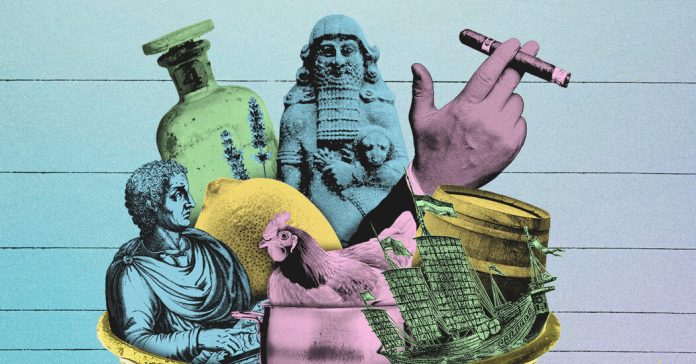
Would you want to live to be 150? How about 1,000? If you could, would you want to live forever?

A recent article in The Times reports that though the expected span of an American life has increased by about three decades since 1900 — to around 78 as of 2023 — for many people, even 78 years just won’t do. Many of them are taking radical steps with diet, exercise and cutting-edge science to try to live as long as possible.

Do you share this fascination? What would you be willing to do to extend your life — and how far would you want to extend it?

Tell us in the comments, then read the related article to learn more.


Students 13 and older in the United States and Britain, and 16 and older elsewhere, are invited to comment. All comments are moderated by the Learning Network staff, but please keep in mind that once your comment is accepted, it will be made public and may appear in print.

Find more Picture Prompts here.

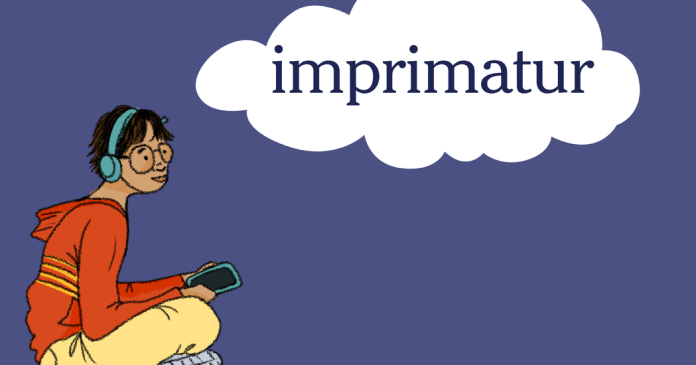
Word of the Day: imprimatur

0
Word of the Day: imprimatur

The word imprimatur has appeared in 53 articles on NYTimes.com in the past year, including on May 22 in “What Do Students at Elite Colleges Really Want?” by Francesca Mari:

Despite the popular image of this generation — that of Greta Thunberg and the Parkland activists — as one driven by idealism, GenZ students at these schools appear to be strikingly corporate-minded. Even when they arrive at college wanting something very different, an increasing number of students at elite universities seek the imprimatur of employment by a powerful firm and “making a bag” (slang for a sack of money) as quickly as possible.

Can you correctly use the word imprimatur in a sentence?

Based on the definition and example provided, write a sentence using today’s Word of the Day and share it as a comment on this article. It is most important that your sentence makes sense and demonstrates that you understand the word’s definition, but we also encourage you to be creative and have fun.

If you want a better idea of how imprimatur can be used in a sentence, read these usage examples on Vocabulary.com. You can also visit this guide to learn how to use IPA symbols to show how different words are pronounced.

If you enjoy this daily challenge, try our vocabulary quizzes.


Students ages 13 and older in the United States and the United Kingdom, and 16 and older elsewhere, can comment. All comments are moderated by the Learning Network staff.

The Word of the Day is provided by Vocabulary.com. Learn more and see usage examples across a range of subjects in the Vocabulary.com Dictionary. See every Word of the Day in this column.

Let’s Discuss: Inside 100 Years of the Harlem Renaissance

0
Let’s Discuss: Inside 100 Years of the Harlem Renaissance

Welcome to Conversations With Journalists! In this new series, we invite students every two weeks to join a discussion about a New York Times article with a Times journalist and other teenagers from around the world. Learn more about the feature and find a schedule of the pieces we’ll be reading together in the future here.


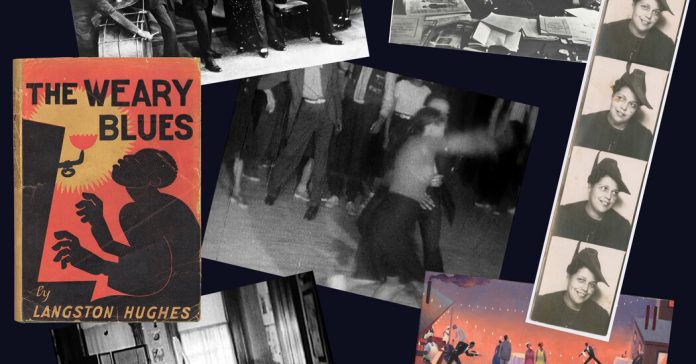
Langston Hughes. Zora Neale Hurston. Duke Ellington. W.E.B. DuBois. Bessie Smith. Jacob Lawrence. Paul Robeson. Josephine Baker.

You may recognize these names as some of the most influential figures of the Harlem Renaissance, the 1920s cultural movement that reshaped the landscape of American culture and opened up new possibilities for Black artists around the globe.

What do you know about the Harlem Renaissance? Do you have a favorite writer, poet, activist or artist from this era? How does the movement still reverberate today?

In this conversation, you’ll get to chat with Veronica Chambers, who helped to curate and edit a New York Times series celebrating and examining the 100th anniversary of the Harlem Renaissance. In an overview of the series, she wrote: “I’m a Brooklyn girl, but I’m low-key obsessed with the Harlem Renaissance.” Join the conversation this week to find out why.

Start by reading Ms. Chambers’s brief introduction to the series, “Harlem Was No Longer the Same After This Dinner Party,” published on April 5, 2024.

Then, explore further by choosing one additional piece from the series to read:

A Visual History of the Harlem Renaissance
Keeping the Spirit of Harlem Dance Alive
When Harlem Was ‘as Gay as It Was Black’
The Dinner Party That Started the Harlem Renaissance
The Rent Was Too High So They Threw a Party
New York’s First Black Librarians Changed the Way We Read
Overlooked No More: Gwendolyn B. Bennett, Harlem Renaissance Star Plagued by Misfortune
How Well Do You Know These Works of the Harlem Renaissance?
The Met Aims to Get Harlem Right, the Second Time Around
With ‘Gems’ From Black Collections, the Harlem Renaissance Reappears

Ms. Chambers is the editor of Narrative Projects at The Times, a team dedicated to starting up multilayered series and packages. She has worked on such projects as Black History, Continued, a series that explores pivotal moments and transformative figures in Black culture, and Suffrage at 100, a package about the 19th Amendment and women’s fight for the right to vote. She has also written and edited several books, including some for middle-grade readers.


Students 13 and older in the United States and Britain, and 16 and older elsewhere, are invited to comment. All comments are moderated by the Learning Network staff, but please keep in mind that once your comment is accepted, it will be made public and may appear in print.

Are you a teacher or student who has feedback on this new feature or would like to suggest a Times piece for future discussion? Please post a comment here.

Working With Your Hands

0
Working With Your Hands

When was the last time you made something, just for the fun of it? What was the experience like?

Making something with your hands is good for your brain. And research shows that do-it-yourself projects, whether planting an herb garden or building a birdhouse, are rewarding; they can help boost happiness and lower stress.

What have projects like these given you, even if you haven’t done one in awhile? What projects might you plan for 2025?

Tell us in the comments, and then read the related article to learn more.


Students 13 and older in the United States and Britain, and 16 and older elsewhere, are invited to comment. All comments are moderated by the Learning Network staff, but please keep in mind that once your comment is accepted, it will be made public and may appear in print.

Find more Picture Prompts here.

Word of the Day: dismantle

0
Word of the Day: dismantle

The word dismantle has appeared 375 times on NYTimes.com in the past year, including on Nov. 13 in The New York Times Magazine article “Nature’s ‘Swiss Army Knife’: What Can We Learn From Venom?” by Kim Tingley:

The problem, as far as he could tell, was that the people who study tarantula venom are biologists, and they generally lack the experience and technology to sequence it efficiently. On the flip side, his pharma colleagues had the tools and know-how to dismantle and reassemble infinitesimal droplets, but they tended to think of venom (if they thought about it at all) as a blunt instrument of pain and death, not a treasure trove of compelling molecular designs. And, of course, they had no idea where to get it.

Can you correctly use the word dismantle in a sentence?

Based on the definition and example provided, write a sentence using today’s Word of the Day and share it as a comment on this article. It is most important that your sentence makes sense and demonstrates that you understand the word’s definition, but we also encourage you to be creative and have fun.

If you want a better idea of how dismantle can be used in a sentence, read these usage examples on Vocabulary.com. You can also visit this guide to learn how to use IPA symbols to show how different words are pronounced.

If you enjoy this daily challenge, try our vocabulary quizzes.


Students ages 13 and older in the United States and the United Kingdom, and 16 and older elsewhere, can comment. All comments are moderated by the Learning Network staff.

The Word of the Day is provided by Vocabulary.com. Learn more and see usage examples across a range of subjects in the Vocabulary.com Dictionary. See every Word of the Day in this column.

The Start of a New Trump Presidency: A Lesson Plan for Assessing the Issues at Stake

0
The Start of a New Trump Presidency: A Lesson Plan for Assessing the Issues at Stake

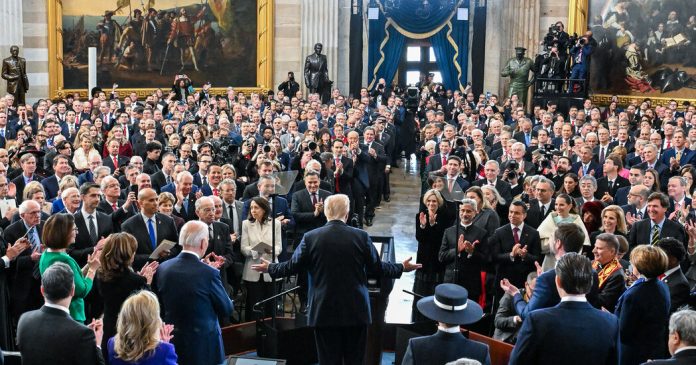
On Jan. 20, in the culmination of an extraordinary political comeback, Donald J. Trump was officially sworn in as president of the United States for a second time. Mr. Trump’s return comes four years after being voted out of office and being impeached for trying to overturn that election.

Within hours of taking the oath of office, he had signed dozens of executive orders and issued nearly 1,600 pardons. His actions touched on some of the biggest policy issues in American life, including health, the environment and immigration. Mr. Trump also promised other consequential changes in the coming days.

This lesson plan provides students with a way to keep up with the flurry of announcements and to track, analyze and critically assess Mr. Trump’s ambitions to remake America and usher in what he calls a new “golden age.”

As a warm-up activity, students share their hopes and fears about the new presidency. Then, they focus on one issue that Mr. Trump has addressed and track it over the coming weeks. To go further, we encourage students to write an open letter about an issue they care about and submit it to our contest this spring.

What are your hopes and fears for President Trump’s second term? Why?

Spend some time answering that question. You may freewrite, create a two-column list, build a mindmap or use any other method that helps you brainstorm.

If you need more information before answering, you can watch the video embedded above with highlights from Mr. Trump’s inaugural address, read his speech in full or read this news analysis from The Times about his first hours in office.

After you’re finished, you may want to briefly discuss your thoughts, feelings and ideas with a partner or your class.

Then, if you would like, go further by responding to our related student forum and reading what other teenagers had to say.

In a barrage of executive orders, Mr. Tump signaled a sharp reversal from existing policies on issues including immigration, the environment and diversity initiatives.

Here is some of what he has said or done in the first hours of his presidency:

Part I: Pick one of these issues — or choose another from this list of executive orders — and dig deeper to find out how the Trump presidency will affect it. Here are questions to address now:

  • What is the issue, why does it matter to you, and what is at stake for the nation and the world?

  • What has Mr. Trump said he would do — or what has he already done — about this issue?

  • How do you know? What sources are you using to get your information?

Part II: Over the next few weeks and months, keep track of what is going on with this issue and share your reactions and questions:

  • What actions has the Trump administration taken, what has been the impact and what obstacles or pushback has it faced?

  • Are you pleased or critical of the results? How would you have handled the issue differently?

  • What questions do you still have?

1. Reflect on what you have learned.

Consider these questions, whether in writing or discussion with your class:

  • What have you learned about how the government works? How much power does the office of the presidency have? What checks and balances are in place, and how well do they work?

  • How much effect can ordinary people have on these issues, whether on a national or local level? How do you know?

  • What questions came up as you followed the issue? What predictions can you make about its future?

  • How do Mr. Trump’s actions measure up to what he said he would do? What grade would you give him?

  • Return to the hopes and fears you wrote about at the beginning of the lesson. Have they changed? If so, how or why? What are you thinking or feeling about Mr. Trump’s second term?

2. Write an open letter.

In our Open Letters Contest, which runs from March 12 to April 16, we invite students to write public-facing letters to people or groups about issues that matter to them. If you feel strongly about the issue you tracked for this activity, then consider submitting to our contest. Think carefully about to whom you want to address your letter — whether it is the president, a member of Congress, someone involved in the issue or who it affects, or anyone else — and how you want that person or group to take action.


Find more lesson plans and teaching ideas here.

What Are Your Hopes and Fears for President Trump’s Second Term?

0
What Are Your Hopes and Fears for President Trump’s Second Term?

In the news analysis piece “A Determined Trump Vows Not to Be Thwarted at Home or Abroad,” David E. Sanger, who has covered five American presidents, writes of the beginning of Mr. Trump’s second term:

In his 29-minute inaugural address, Mr. Trump wasted no time on lofty appeals to American ideals. Instead, he spoke with a tone of aggression intended to be heard by domestic and foreign audiences as a warning that America under a more experienced Donald Trump will not take no for an answer.

He will end an era in which the world exploited American generosity, he said, empowering an “External Revenue Service” to “tariff and tax foreign countries to enrich our citizens.”

After falsely declaring that China controls the American-built Panama Canal, he vowed, “We’re taking it back.” He hailed a presidential predecessor: not Washington or Jefferson or Lincoln, but William McKinley, the tariff-loving 25th president, who engaged in the Spanish-American War, seized the Philippines, Guam and Puerto Rico and paved the way for that canal.

And in the best McKinley spirit, he reinvigorated the idea of an America that will “pursue our manifest destiny,” a rallying call of the 1890s. This time, though, he described that destiny as an American settlement on Mars — a declaration that brought a thumbs up from Elon Musk, the world’s richest man who founded SpaceX with that goal in mind, and who has barely left the president’s side since Election Day.

Mr. Trump’s burst of executive orders was intended to send the message that this time the chaotic disruption that marked his first term would be married to rapid and more disciplined execution.

He began essentially shutting down the southern border to migrants and signaled his intention to challenge the constitutional principle of birthright citizenship.

He was scrapping restrictions on drilling and exporting oil and gas and withdrawing from the Paris climate accord again. Even with parts of Los Angeles still burning, there was no talk of climate change.

Federal funding of gender transition care was out. Federal forms, his aides told reporters, would be set back to a previous era, and allow people to check only “male” or “female.”

To anyone who watched Mr. Trump struggle through his first term, this combination of the substantive and the performative, with the gestures to his base, seemed familiar. The big difference, his aides suggest, is that this time he knows how to get it done, substantively as well as symbolically.

The New York Times interviewed people about their hopes and fears as Mr. Trump returns to power.

Robin C. Campbell, 49, who owns a small retail store in Asheville, N.C., said, “I have issues with him as a man but I will say, as much as I don’t like the guy, I think he runs America like a business and that’s what it is.” The article continues:

She said she did not vote in 2024 “for the first time in my life” because of disappointment with the Biden administration’s handling of the economy and her dislike of Donald J. Trump. But she hopes Mr. Trump will improve the economy: “I really, really am hopeful,” she said, to see where her business’s “numbers are two years from now, four years from now.”

Rev. Carol Thomas Cissel, 62, said, “It feels harsher. It feels scary for my family for my friends.” She adds:

12 Java Code Challenges for Beginners

0
12 Java Code Challenges for Beginners

If you’re starting a career as a Front-End Developer, Full-Stack Developer, or Computer Scientist, then you’ve probably started learning Java. Maybe you’ve started with an online course, which is a great way to build a solid programming foundation. Once you’re familiar with the basics, try putting your Java skills to the test with some practical exercises to build on your knowledge.

One of the best features of Java is its flexibility. You may find that there are multiple ways to solve the same challenge. In fact, if you’re learning Java with a friend, try these challenges together and learn from each other by comparing your results.

If you get stuck, try thinking through the problem using pseudocode or a general description of the programming steps you’d use to solve the problem. Pseudocode is helpful because it lets you work through programming challenges without having to worry about the specific syntax of a programming language (you can worry about that later).

Below are 10 Java code challenges for beginners. The first five challenges are with strings, while the last five challenges involve numerical inputs. Let’s get started!

Learn something new for free

10 Java code challenges to practice your new skills

1. Word reversal

For this challenge, the input is a string of words, and the output should be the words in reverse but with the letters in the original order. For example, the string “Dog bites man” should output as “man bites Dog.”

After you’ve solved this challenge, try adding sentence capitalization and punctuation to your code. So, the string “Codecademy is the best!” should output as “Best the is Codecademy!”

2. Find the word

Starting with an input string of words, find the second-to-last word of the string. For example, an input of “I love Codecademy” should return “love.”

To make your program more challenging, allow for a second numerical input, n, that results in returning the nth word of a string. So, for the string “I can program in Java” and n = 3, the output should be the third word, “program.”

For a given input string, return a Boolean TRUE if the string starts with a given input word. So, for an input string of “hello world” and input word “hello,” the program should return TRUE.

For a more advanced word searcher, create a program that returns the number of times a word appears in an input string. For example, given an input word “new” and an input string “I’m the new newt,” the program should return a value of 2.

4. Anagrams

Two words are anagrams if they contain the same letters but in a different order. Here are a few examples of anagram pairs:

  • “listen” and “silent”
  • “binary” and “brainy”
  • “Paris” and “pairs”

For a given input of two strings, return a Boolean TRUE if the two strings are anagrams.

As an added challenge, for a given array of strings, return separate lists that group anagrams together. For example, the input {“tar,” “rat,” “art,” “meats,” “steam”}, the output should look something like {[“tar,” “rat,” “art”], [“meats,” “steam”]}.

5. Pangrams

A pangram is a sentence that contains all 26 letters of the English alphabet. One of the most well-known examples of a pangram is, “The quick brown fox jumps over the lazy dog.” Create a pangram checker that returns a Boolean TRUE if an input string is a pangram and FALSE if it isn’t.

For an added pangram challenge, create a perfect pangram checker. A perfect pangram is a sentence that uses each letter of the alphabet only once, such as, “Mr. Jock, TV quiz Ph.D., bags few lynx.”

6. Number reversal

This one is a technical interview favorite. For a given input number, return the number in reverse. So, an input of 3956 should return 6593.

If you’re ready for a bigger challenge, reverse a decimal number. The decimal point should stay in the same place. So, the number 193.56 should output 653.91.

7. Armstrong numbers

An Armstrong number is a whole number that’s equal to the sum of its digits raised to the power of the total number of digits. For example, 153 is an Armstrong number because there are three digits, and 153 = 13 + 53 + 33. The four-digit number 8208 is also an Armstrong number, as 8208 = 84 + 24 + 04 + 84.

Create an Armstrong number checker that returns a Boolean TRUE if the input number is an Armstrong number. Hint: to extract each digit from a given number, try using the remainder/modulo operator.

If you’re looking for something a little more challenging, create an Armstrong number calculator that returns all Armstrong numbers between 0 and the input number.

8. Product maximizer

For a given input array of numbers, find the two that result in the largest product. The output should include the two numbers in the array along with their product.

As an extra challenge, use an input of two arrays of numbers and find two numbers — one from each input array — that results in the largest product.

9. Prime number checker

A prime number is any whole number greater than 1 whose only factors are 1 and itself. For example, 7 is a prime number because it’s only divisible by 1 and 7.

Create a function that returns TRUE if an input number is prime. The first few prime numbers are 2, 3, 5, 7, 11, 13, 17, and 19.

For a slightly harder challenge, create a prime number calculator that outputs all prime numbers between 2 and the input number.

10. Prime factorization

The prime factors of a number are all of the integers below that number that are divisible into the number as well as 1. For example, the prime factors of 12 are 1,2,3,4,6, and 12.

Create a prime factorization calculator that returns the prime factors of any number between 2 and 100. If you’re looking for a more advanced version of this challenge, use exercise 9 to create a prime factorization calculator for any number. Hint: think about using square roots to cut your work in half.

Advancing your career with Java

Along with being a fun, low-stress way to test your knowledge of a programming language, code challenges play an important role in helping you prepare for the interview process. If you’re pursuing a career where knowledge of Java is expected, then you’ll be asked to complete a Java-based coding test, as well as other questions related to Java. And, the best way to prepare for that test is to practice code challenges like these.  

To find more opportunities to practice, take a look at our other Java courses, including our popular Java for Programmers course.


Whether you’re looking to break into a new career, build your technical skills, or just code for fun, we’re here to help every step of the way. Check out our blog post about how to choose the best Codecademy plan for you to learn about our structured courses, professional certifications, interview prep resources, career services, and more.

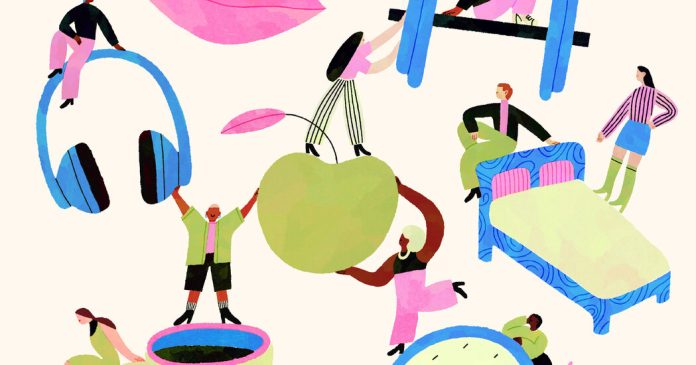
What Do You Do to Stay Healthy?

0
What Do You Do to Stay Healthy?

It’s the start of the new year, a time when many recommit to healthy habits.

What are you doing that’s good for your health right now? Think about everything from your diet and exercise routine to the habits you have that take care of your mental health and well-being.

For instance, do you regularly stretch? Write in a journal? Eat a balanced diet? Make time for family and friends? Manage your screen time?

What health goals do you have for 2025? Is building healthier habits something you’d like to do in the new year?

In “35 Simple Health Tips Experts Swear By,” The Times Well desk asked experts to share one health trick, life hack, rule or reminder that they have learned through their work that they swear by. Here are a few of their tips:

When I find myself stuck in a pattern of negative thinking, I try not to complain for seven days. It retrains your brain to stop going down a negative path. I write “Don’t complain!” on a sticky note right by my bed so I see it when I wake up. — Dr. Kali D. Cyrus, psychiatrist and assistant professor at Johns Hopkins Medicine

Dark-chocolate-covered nuts (at least 70 percent cocoa) are almost a perfect food. They combine two remarkable nutrient-rich foods — nuts and cocoa — and are high in phenolics, minerals, healthy fats and fiber. — Dr. Dariush Mozaffarian, director of the Food is Medicine Institute at Tufts University

My second-grade teacher, Ms. Edson, told us: If something feels too hard to do, it just means that the first step isn’t small enough. So often when we’re struggling, we tell ourselves that it’s a sign that we’re broken or that something is our fault, and then we freeze. But when something is too hard in the moment, tell yourself Ms. Edson’s advice. — Becky Kennedy, clinical psychologist, parenting expert and founder of Good Inside

In the world we live in, usually the phone is the last thing we see and the first thing we see. It’s the bookend to our sleep, which is terrible. At night, I shut my phone down and meditate before I go to bed. In the morning, I meditate when I wake up — before looking at my phone. — Peter Economou, assistant professor of applied psychology at Rutgers University

“Stop, Breathe, Be” is a three-second brain reset to help manage anxiety in the moment. The instructions are in the name: Stop whatever you’re doing, take a brief pause. Take a deep breath in and out. Be grounded in the present moment. “Stop, Breathe, Be” gets you out of “What if?” thinking and back to what is, in the here and now. — Dr. Aditi Nerurkar, Harvard physician specializing in stress and burnout

I’m a big fan of making fancy ice cubes by freezing lemon or lime juice with chopped berries or pineapple and herbs. These little flavor-packed cubes turn plain water into a refreshing, luxurious treat — with added vitamin C. — Emily Haller, dietitian

During my workday, one of the most restorative things I can do is listen to a song I love between clients. If I listen to some Snoop Dogg, I’m going to feel a little recharged. It puts you in a different zone. I have a playlist that has gospel music and Megan Thee Stallion and all sorts of stuff. — Nedra Glover Tawwab, licensed clinical social worker

A couple of times a day, I consciously drop my shoulders, sigh and think to myself: “Let go.” — Sherry Cormier, psychologist and bereavement trauma expert

Students 13 and older in the United States and Britain, and 16 and older elsewhere, are invited to comment. All comments are moderated by the Learning Network staff, but please keep in mind that once your comment is accepted, it will be made public and may appear in print.