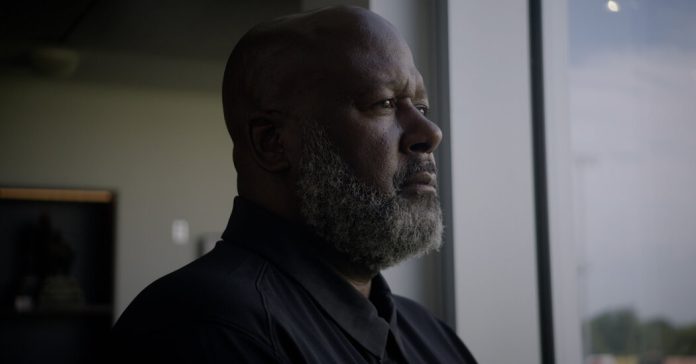
Cater to their interests? Relax some of the rules? Emphasize socialization? Or something else?
Alison Publisher Spotlight: Richard Boothman
It’s difficult to ignore the stories of floods, earthquakes, cyclones, tropical storms, severe heat, and changing weather conditions that flood the news headlines weekly. Every day, we hear and in extreme situations, experience the impact of environmental damage and climate change. To learn more about these realities, we’re shining the Alison Publisher Spotlight on Richard Boothman, associate lecturer and founder of Ideostone Limited, to tell us more.
Introduction and Background
Please share with our learners a bit about your background.
I grew up on a small farm in northern England and went to college to study one of the first environmental courses available in the UK. This is how my interest in environmental issues began.
In the late 1990s, I began a degree with The Open University, and I graduated in 2003.
Prior to graduating, I worked as an Associate Lecturer at The Open University. I have been doing this part-time now for about 20 years and until recently I have been tutoring on four different environmental modules at undergraduate and postgraduate levels.
When Brexit happened, I began to write my own environmental courses and when the world changed due to Covid, we moved all our courses online.
Where did your interest in environmental issues stem from?
Growing up on a farm in the 1960s, it was clear even then that we were getting many things wrong. I have maintained an interest in the environmental sector since then. The opportunity to learn more about the underlying theories and concepts and then to help students to grasp these same concepts and theories has led me to this relatively late, but very welcome change in my career.
Ideostone Limited
What is the idea behind Ideostone Limited?
Our aim is to encourage as many people as possible to become informed about the environment and environmental issues. Ideostone Limited is the vehicle that enables us to develop and sell online learning courses.
What is your vision for Ideostone and how is Alison helping you achieve your goal?
I want to help a much wider group of people to become aware of the whole range of environmental issues that we currently face. In a very small way, we want Ideostone to help with this transition by informing more people about the issues.
Alison is helping us to achieve our goal because it enables us to generate a small income from our courses while providing learners with valuable free resources. More than 2000 people have enrolled in our first Alison course – Introduction to Environmental Literacy – and in the few days since our new course launched, more than 100 learners have already enrolled.
Please share with our readers about your course.
Our new course is “Introduction to Climate Breakdown”. The climate crisis is the most significant of several linked environmental and social crises we face.
We try to present this information in an easily accessible form that will enable a wide range of people to engage with the material. We hope that all those people who study our courses will have a much better understanding of the issues and feel empowered to do something about it.
Who should be enrolling in your course?
When we first began developing the course, it was aimed at the parents and grandparents of children who were learning about climate breakdown at school and who might have their own questions.
- It should, therefore, act as a valuable primer for anyone who might be interested in studying the topic in more depth.
- Or someone who is interested in a career in the environmental sector and wants to know more about the issues.
- An awareness of climate breakdown is important for most employees. Many companies and other organisations recognise the need to reduce their impact on the environment and need employees who understand the issues and where to begin to take action.
Our course should provide these people with a basic grounding in the topic.
Why should we be interested in learning about and understanding environmental issues?
We all need to be interested in environmental issues because they are affecting us all, now. And if we do not do something about them, the impacts will become more and more severe to the extent that the planet may no longer support human life.
We have an increasingly narrow window of opportunity to act decisively and the more people who understand this and are willing to take action, the more chance we have of making a difference.
How can people get involved and make a difference?
Many communities across the world are now recognising that we need to take action to deal with climate breakdown.
- Find your local activist group and join them.
- If you are time-poor, support them with donations or support in kind.
Once you have some knowledge about climate breakdown and other environmental crises, talk about them. Engage your family and friends and encourage them to learn and act too.
- Follow and support environmental organisations who are working in this space (an internet search will reveal many).
- Write to your government representative(s) to make sure they are aware of your support for environmental change. If they are not receptive, vote for someone else at the next election.
- Support companies who are acting. Few are taking meaningful action even now but find the best. If you really need that new tee shirt or piece of furniture, find out the best-performing companies in that sector and buy from them.
- Social media has become a bit toxic recently, but it can still have an impact on companies who want to sell things to you.
Publishing on Alison
What made you decide to create courses on Alison?
Alison approached us at a time when we were looking for an additional platform for our courses. The courses being free to students made it available to a different, and potentially larger, audience and we decided to try it.
You’ve been a self-publisher with Alison for several years. What do you enjoy most about publishing on this platform?
The support we have received from the team at Alison encourages us to carry on despite the challenges we face.
What lessons or takeaways have you learned as a self-publisher on Alison?
- Allow plenty of time to upload your material onto the platform.
- Don’t expect to make money quickly. It takes time to build up a significant number of students.
How has being a self-publisher on Alison changed or impacted your life?
It is good to know that environmental knowledge and awareness are being accessed by many learners, from all around the world.
What do people enjoy most about your course?
The animated video sections receive good comments – they are a way to inject some humour and provide memorable images to reinforce learning.
Learning environmental management and other issues
What skills and qualities would help an individual succeed in this environmental studies and management?
Curiosity, a willingness to ask questions mind and a real desire to engage with the material. Do not accept the status quo. Challenge everything.
What are the biggest challenges learners face going into the environmental space?
If you want a career in the sector, there are plenty of opportunities but, as with all opportunities, you need to be able to stand out from your competitors. Studying the topic on Alison, making changes in your own lifestyle, and, perhaps, engaging with local action groups, are good ways to stand out.
Organisations fighting climate change
Who are some key individuals and/or organisations that people can follow to learn more about or contribute to?
There are so many clever, interesting, and insightful individuals and organisations working in the sector that it is difficult to single them out.
- Greenpeace, Friends of the Earth, and WWF are active in this space. If you are up for being more radical, then Extinction Rebellion is worth considering.
- Fridays for Future and the School Strike for Climate have both arisen from the protests started by Greta Thunberg.
- If you are interested in science, Michael Mann, Katherine Heyhoe, and Johan Rockstrom are interesting people. You should also look at organisations like NASA, the NOAA, and The Hadley Centre.
Last Thoughts
What words of advice would you give someone who would like to become a publisher on Alison?
Structure your course in line with the requirements of the publishing platform. Keep in touch with your contact person – they are great at responding to any queries.
What has been your most important lesson or discovery when it comes to online education programmes?
Don’t expect a good income – at least not straight away.
What else can Alison and its learners look forward to from you in the coming year to two?
We do not currently have any plans for another Alison course. We will monitor the latest one for student uptake and revenue before deciding. We’re looking at some (live?) and interactive events later in the year and will be providing information on these via LinkedIn and our own website.
Any last words, advice, or wisdom you’d like to share with our learners?
Do something!!!
We don’t need to be hard-core activists or environmentalists to effect change and speak up about environmental issues. We are all responsible for playing our part in preserving the earth for those who are coming after us. I cannot do everything, but I can do something. And because I cannot do everything, I will not refuse to do the something that I can do.” ― Edward Everett Hale
Word of the Day: guile
This word has appeared in 21 articles on NYTimes.com in the past year. Can you use it in a sentence?
What’s Going On in This Picture? | March 13, 2023
Look closely at this image, stripped of its caption, and join the moderated conversation about what you and other students see.
What Old Technology Do You Think Is Cool?
Point-and-shoot digital cameras are hot again. What retro tech do you love?
Robot Snakes
What do you think this image is communicating?
Word of the Day: devise
This word has appeared in 114 articles on NYTimes.com in the past year. Can you use it in a sentence?
What Should Be Done With Art That Offends? Students Debate.
Teenagers discuss how a school should handle murals depicting slavery that some students and administrators say are racist.
What Is Visual Basic Used For?
Back in the early ’90s, Visual Basic was considered cutting-edge because it was one of the first languages to use a more readable syntax. Nowadays, while it isn’t the newest programming language, it’s still used today by companies worldwide. And it makes sense why: it’s a powerful tool for back-end programming, and while it’s often used to build internal systems, you’ll also find it in web and system applications and even chatbots.
What is Visual Basic?
Visual Basic (VB) is an object-oriented programming language (OOP) introduced by Microsoft in 1991. It derives from an earlier programming language called BASIC, which stands for “Beginners’ All-purpose Symbolic Instruction Code.” VB was designed to enable rapid application development (RAD) of graphical-user interface-based (GUI-based) applications and access to local and remote databases.
Learn something new for free
Why is Visual Basic so popular?
BASIC was one of the first programming languages to incorporate more everyday words into the syntax so the language could be easier to learn and remember. This is a big reason why Microsoft wanted to release a programming language that stemmed from BASIC.
Another innovation of VB was its use of graphical elements within Visual Studio, Microsoft’s integrated development environment (IDE) for Visual Basic. Rather than having to designgraphical components like menus and buttons, developers could resize menus with their mouse or drag and drop elements such as buttons and text. In other words, Microsoft added a “visual” part to the BASIC language — thus, Visual Basic.
So, not only was Visual Basic programming easy to learn, but its visual-based IDE made it much faster and cheaper to develop applications. It’s no wonder that VB has been so popular for so long.
Visual Basic vs. Visual Basic.NET
After the release of Visual Basic 6.0, Microsoft introduced Visual Basic.NET (VB.NET) in 2002, which ran on the newer .NET framework for developing software applications for Windows. (Note that “VB.NET” also refers to the version of Visual Basic that first employed the .NET framework.) Compared to VB 6.0, VB.NET is a fully object-oriented language like C++ or Java and it offers better performance and reliability.
Today, the Visual Basic 6.0 IDE is no longer officially supported. However, you’re still likely to come across VB 6.0 as a developer, particularly in companies that use older systems that are too time-consuming or costly to migrate to VB.NET. But when you hear about Visual Basic programming today, then you’re likely hearing about VB.NET.
What is Visual Basic programming used for?
The best part about Visual Basic programming is its flexibility. Front-End Developers and Full-Stack Developers can use VB to create customized applications that run in Windows or web applications. Plus, it can run from any browser or device.
VB is still one of the quickest and easiest ways to create applications that rely on forms, selections, and inputs. It’s also a popular choice for developing console applications — applications that run using only a command line rather than a GUI. VB applications are especially popular among medium and large companies for:
- Inventory management
- Data collection
- Accessing databases
- Communications
And as a web development tool, VB is used to create server-side scripting programs. Server-side scripting programs are run on a web server rather than within a browser. Web developers use VB to create web forms and applications. If you’ve ever communicated with a chatbot on a website, then chances are that you’ve interacted with Visual Basic programming.
Since VB.NET runs on Microsoft’s .NET framework, developers who use Visual Basic can access the full suite of .NET libraries and easily work with other .NET software applications. A few examples of typical .NET applications include:
- Messaging platforms
- Small-scale social media platforms
- Order processing applications
- Logistics management and invoice generation applications
Visual Basic behind the scenes
You may have noticed that the most common VB applications are for business-related functions. That’s because most Visual Basic programmers develop applications that perform particular tasks that you can’t do with traditional, off-the-shelf business software. Most VB applications aren’t mass released at all but instead used as internal or proprietary software.
Visual Basic vs. VBA
Chances are that you’ve heard about Visual Basic for Applications or VBA. On the surface, the two programming languages seem to be the same, or at least very similar. Both were developed by Microsoft, and both use a very similar syntax. But while both Visual Basic and VBA come from the same original programming language, Basic, the two languages have different functions.
Visual Basic is written in Visual Studio and can be used to create executable files that can run independently.
On the other hand, VBA only works within a Microsoft Office host application: Word, Outlook, Excel, Access, or PowerPoint. These applications include the Visual Basic Editor (VBE) to create and run VBA code. People use VBA to automate complex or repetitive tasks within these host applications, such as generating forms in Word or creating standardized graphs and charts in Excel. But while VBA is more limited than Visual Basic, there is one big advantage: you can run VBA within most Microsoft Office for Mac applications.
Who should learn Visual Basic?
Just because you don’t hear about Visual Basic being behind the latest web app doesn’t mean that you shouldn’t learn it. In fact, VB remains one of the most popular programming languages. Companies all over the world rely on VB programmers to develop applications to perform critical business functions.
Visual Basic is a must-have skill if you’re interested in becoming a business-to-business (B2B) software developer.
And if you’re a business analyst, data analyst, or anyone who works extensively with Microsoft Office, then learning VBA will help you work more efficiently by automating repetitive tasks.
Developers still should know Visual Basic
Visual Basic might not be the newest programming language out there, but that doesn’t make it obsolete. If you’re a new Front-End Developer, Back-End Developer, or Full-Stack Developer ready to get into B2B software, you’ll want to add Visual Basic to your toolkit of skills and programming languages along with SQL and C#.Our final bit of advice: to keep your skills sharp, never stop learning. There’s always something new to learn with an online programming course. If you’re not sure what to do next, our developer Career Paths will guide you along your new career path.