fbpx
Home Blog Page 874

Lesson Plan: The Webb Telescope Changes How We See the Cosmos

0
Lesson Plan: The Webb Telescope Changes How We See the Cosmos

The James Webb Space Telescope is a giant leap in the history of stargazing. Our view of the universe will never be the same.

In this lesson, based on The New York Times Magazine’s “A Beginner’s Guide to Looking at the Universe,” students learn about how Webb has helped scientists see the distant reaches of outer space more clearly and, in doing so, has helped us challenge and rebuild what we thought we already knew about the cosmos. The lesson encourages students to look closely at Webb images and videos and invites them to to create their own illustrated guide to Webb’s discoveries.

Part I: Read the article’s introduction.

Nearly a million miles away, the James Webb Space Telescope just took a picture. Since transmitting its first data in late 2021, Webb has made stunning discoveries, including a plume of water spanning 6,000 miles in our solar system and a galaxy that formed only 390 million years after the Big Bang, or more than 13 billion years ago.

The telescope is an engineering marvel: Its massive mirror makes it possible to collect light from the faintest objects. It has multiple ways of blocking and dissecting that light, giving us detailed portraits of distant galaxies and close neighbors alike. And its position, orbiting the sun and using Earth as its shield, allows it to take pictures around the clock, sending us up to 57.2 gigabytes of data — the equivalent of tens of thousands of standard iPhone photos — every day. What’s it telling us about our past — and the future of cosmology?

What questions do you think Webb might help scientists answer about the universe?

Part II: Look closely at this picture that Webb took using its near-infrared camera.

Spend at least one minute studying the image (set a timer if you can). As you look, use these two questions to guide you:

  • What do you notice?

  • What do you wonder?

Part III: Consider why we should care about what lies hidden in outer space.

Scientists are able to see more deeply and more clearly into the universe with the Webb telescope. In your opinion, why does that matter?

Read the rest of the featured article and then answer the following questions, using the five sections to guide you.

Section 1: Ways of Seeing

What is infrared light? Why is detecting infrared wavelengths so useful in revealing otherwise-hidden regions in space?

Section 2: With Our Own Two Eyes

How has our ability to see in outer space changed over time?

Section 3: Dissecting Light

Webb doesn’t just capture light; it scatters and measures it. How does it do that, and why is that useful?

Section 4: Seeing Beyond

What can studying distant galaxies teach us about our own?

Section 5: Knowing and Unknowing

The author writes, “Webb helps us know but also to ‘unknow.’” What does that mean? Provide examples from the article and examine why unknowing is important.

What was most fascinating or surprising for you in the article? What questions do you still have about the Webb telescope or its discoveries? What questions do you hope Webb will help us to answer about the universe?

Activity 1: Watch a video.

Watch one or more of these videos that focus on different corners of the universe. Then answer: What mysteries of our universe is Webb helping us to better understand?

Crab nebula
El Gordo galaxy cluster
NGC 346
Pandora’s Cluster
Pillars of Creation

Activity 2: Study an image.

Visit Webb’s Flickr page and scroll through the dozens of images posted in 2023. Choose one to study more closely. Then click on the image to learn more. Next, answer the same question as above: What mysteries of our universe is Webb helping us to better understand?

Activity 3: Create your own illustrated guide.

The New York Times Magazine created its guide to the Webb telescope using text, illustrations and pictures from Webb.

Create your own beginner’s guide to looking at the universe. You can start with the same opening line, “The James Webb telescope is a giant leap in the history of stargazing. Our view of the universe will never be the same.” Then select images from Flickr 2023 and Flickr 2022 that you think show Webb’s power in making discoveries and revealing new mysteries, and tell your own story about how Webb is revolutionizing stargazing.

6 Ways to Help Your Freelance Sales Pitch Get Noticed

0
6 Ways to Help Your Freelance Sales Pitch Get Noticed

Times are tight for many people, and freelancing is a great option if you want to make a little money on the side or start building professional tech experience. Take it from Kyle Prinsloo, a web developer from South Africa who taught himself to code and launched a successful freelancing business in 2015. “If you’re looking to make $1,000, $2,000, or $3,000 on the side — that’s really doable and realistic,” Kyle says. “It might even turn into a full-time job.” 

But whether you’re a web developer or a data scientist, finding clients can be tough — even if you have all the marketable skills. How do you get people’s attention without being spammy? Should you follow up, and if so, how many times? Kyle faces these questions every day in Freelance Fam, his online community for freelance web designers. Ahead, he shares some of the key takeaways from his experience that can help you get better at pitching yourself as a freelancer, so you can find new leads and reach your goals.

Learn something new for free

Work with what you have (and learn the rest) 

There are any number of reasons why you might put off reaching out to your first client. Your portfolio website, your LinkedIn profile, your pitch templates — everything’s got to be perfect. We get it. But the longer you wait, the more money you’re leaving on the table. “If you’re a perfectionist, you’ll get nothing done,” Kyle says. “Start, learn, figure it out as you go, and adapt.” 

Sometimes you just have to get the ball rolling. In Kyle’s early days as a freelancer, he didn’t have any design skills when he pitched wireframes to a client, so he winged it on PowerPoint. The client loved what he presented, and the connection enabled him to keep finding work and expanding his offerings.  

As a freelancer, anytime you learn a new skill you’re also creating new income streams. Today, there are tons of online courses you can take to pick up any technical skills you may need to learn on the fly. For example, you can learn how to build wireframes in our free course Introduction to UI and UX Design. 

Find a personal approach 

Figuring out how to stand out from the competition can be tricky. According to Kyle, sending an email blast offering your services for low prices to everyone you know isn’t a sustainable approach for long term success. “Check your spam, you probably have two or three of those random, cold outreach emails that were probably sent to a million people today,” he says. “Don’t do that.” 

Instead, cultivate a list of 10 to 20 potential clients and create targeted, personalized outreach messages. Jot down a couple notes on why you want to work with them and how, specifically, you could help their business. For example, if you’re a web developer, you could go through a client’s existing websites and brainstorm potential improvements. 

Kyle uses the video-recording software Loom to send short videos to potential clients. “Here’s a short, two-minute video of my suggestions,” Kyle says in the Loom videos. “No obligations, but if you’d like to chat further, I’m happy to help.” With this strategy, he suggested improvements that a content creator could make to their landing page, and he was able to land a $2,500 retainer. 

But don’t force it. If you have to wrack your brain trying to come up with an enticing package for a client, it might just be better to move on to the next. “If you can’t find anything you can improve, they’re not an ideal client,” Kyle says. 

Be patient 

Even the best sales pitch won’t always get a response on the first try. People are busy, and if they aren’t expecting your email, they may not even see it. You don’t want to be overbearing, but you do want to maximize your visibility. “If you don’t follow up, you’re losing out on leads,” Kyle says. “Sometimes you need to follow up five, six, or seven times before they say yes.” 

Your follow ups should be a condensed version of your pitch; highlight the key points of your proposition and include potential next steps (e.g., setting up a phone call or meeting). How long you should wait before following up depends on who you ask, but generally, you should increase the time increments between each message. With AI tools like ChatGPT, crafting follow up emails is a breeze, even if you aren’t a strong writer. Check out our free case study Write a Sales Outreach Email with ChatGPT to learn how. 

You don’t want to waste your time continuing to reach out if it’s clear you’re not going to get a response, but also remember that silence isn’t necessarily a “no.” If emails aren’t moving the needle, maybe folks would prefer a phone call or face-to-face meeting. 

Pitch on- and off-platform

Freelancers often debate between using platforms like Fiverr and reaching out to people cold on social media and email. Both have their own pros and cons: 

  • Freelancing platforms make it easier to find clients (and for clients to find you), but they also take a percentage of your earnings, and it might be discouraged to take your relationship with your client off-platform. 
  • Finding good leads is harder when you’re doing it yourself — especially for new freelancers who are still building a platform — and it can be harder to get a client’s attention when they aren’t actively looking for your services. 

But Kyle suggests that it isn’t an either-or scenario because both options can lead to additional opportunities. For example, Kyle found his first client on a freelancer platform, and went from making website analytics reports to suggesting website improvements and building an entire marketing package. “This $5 turned into over $10,000 from my very first client purely because of the upsells and referrals to their different friends and businesses,” he says. 

Bolster your sales packages 

Learning tangential skills is a great way to earn more money as a freelancer. Not only can it help you stand out from the crowd, but you can also help your clients advance their goals with more holistic sales packages. For example, if you’re a web developer, Kyle suggests learning about conversion rate optimization, A/B testing, and search engine optimization (SEO). “You can’t just wing it; you really need to know what an effective website looks like,” he says. “Even a simple thing like changing a layout, adding a video, or changing pricing tiers can make a major difference to conversions.”  

Need some inspo? Take a look at our course catalog and start learning in-demand, marketable skills that can bolster your freelance offerings.  

Qualify your leads 

Qualifying your leads means figuring out how likely an entity is to become a client. Do a little research to get a sense of your compatibility — keep an eye out for indications of growth or decline (e.g., are they marketing new services or putting out ads for new hires?). 

And as you grow as a freelancer and clients start reaching out to you, there are a few questions you can ask to determine whether the project is worth undertaking. For example, do your skills align with their business needs?  Is there potential to build a more long-term relationship? Are they likely to have the budget to meet your rate? “Pricing is a good thing because it’s such a crucial topic, and it can qualify your leads to help you find ideal clients as well,” Kyle says. “What I usually say is ‘our minimum engagement is X per month; we don’t consider anything else.” 

Cultivating your potential clients helps you avoid wasting time on unlikely pitches and maintain healthy work boundaries, which becomes crucial as you take on more clients. Freelancing offers the flexibility to pick and choose the clients you’ll take on, and over time, you’ll develop preferences and carve out your niche. Qualifying leads also helps prevent scope creep, which is what happens when the work involved in a project gradually grows beyond the original parameters, Kyle says.  

Build the skills you need to start freelancing 

If you’re looking for a side hustle in tech and starting from scratch, you can learn all the skills you need to start pitching to clients in our career paths. For example, our Full-Stack Engineer career path will teach you the ins and outs of front-end and back-end development so you can build fully-functional, aesthetic websites and applications. 

And remember that it’s not just about the technical stuff. Freelancing hinges on building quality, valuable client relationships, so you’ll need strong people skills too. If you want to learn how to build the soft skills you’ll need to succeed in your career, sign up for the last of our soft skills series — and if you missed the previous ones, Codecademy Pro/Plus members can watch the recording here.

Feeling stuck in your career? Start here.

0
Feeling stuck in your career? Start here.

Hello again!

Today marks the beginning of our series on career growth and development. Over the next several weeks, we’ll explore topics related to growing within and toward your chosen path and offer resources to help ease some common growing pains.

Choosing your career path can bring a clarity of purpose to your work and life, while also opening up exciting new professional landscapes for you to explore. After all, who doesn’t love that feeling of setting out on a journey, tackling unfamiliar challenges, and honing their skill set along the way?

But, sometimes, our paths can become clouded by a fog of uncertainty. Whether you’re brand new to a field or are an experienced professional, there are times when we just don’t know the steps we need to take to further progress our careers. 

That’s where your professional development goals come in. 

Setting your professional development goals 

Professional development goals are the objectives you set for yourself to further your career. In other words, they’re your professional targets that define where you’re going and why. They can be big—like becoming the CEO of your very own company—or smaller—like earning your first leadership role. Most importantly, your professional development goals are unique to your interests, aspirations, and life.

To set your own professional development goals, here’s what you’ll need to do: 

1. Know what you’re actually working toward.

Too often, we rush from one milestone to another without asking ourselves where it is we’re actually trying to go. So, to set your professional development goals, take some time to consider what it is that you want to work toward. Start by simply considering where you want to be in a week, month, year, or longer.

As you think about what you want, here are a few courses that may help guide your self-reflection:

2. Make goals manageable with milestones.

Most long-term, big-picture goals are made up of smaller, incremental goals. Take a look at where you want to end up and consider the smaller goals you need to accomplish to get there. Then, set some short-term goals based on those smaller goals.

One way to frame your goals is to make them SMART: Specific, Measurable, Achievable, Relevant, and Time-bound. In other words, they should be concrete goals that are relevant to your desired outcome, which you commit to achieving within a certain time frame, and you’ll know—or can measure—when you’ve achieved them.

For example, let’s say you want to gain new data analytics skills to apply to your current role. Your SMART goal may be to learn the basics of data analysis by completing Google’s Data Analytics Professional Certificate within six months. If that’s too much for you, start with one course in one month, or one module in one week. Framing your goals in this way can make your long-term goals feel more manageable. 

Where to begin

The best place to begin your professional development is exactly where you are. That’s going to be slightly different for everyone, but here are the broad starting points we can recommend:

For a crash course in defining your goals, try The Career Design Lab: Change your Job, Change your Life from University of California, Santa Cruz.

For a deeper dive into achieving success, try Wharton’s Achieving Personal and Professional Success Specialization.

To start working toward your professional development goals, search for your specific area of interest on Coursera. There are thousands of courses available at the beginner, intermediate, and advanced levels. If you’d like help finding a course for your area of interest, let us know in the comments and we will see what we can find.

That’s all for this week! Next week, we’ll talk about how you can turn your goals into an actionable career development plan. In the meantime, want some ideas for how you can approach your goals? Drop them in the comment section below and we’ll choose some examples to break down in our next issue. See you then!

What Have You Changed Your Mind About?

0
What Have You Changed Your Mind About?

Have you ever changed your mind about something — a song, a food, an activity, a person — that you were sure you loved or hated?

Do you tend to be open-minded and flexible about your likes and dislikes? Or are you generally set in your tastes? Are you willing to give something or somebody a second chance? How about admitting you were colossally wrong in your initial judgment?

In “I Thought I Hated Pop Music. ‘Dancing Queen’ Changed My Mind.,” Jeff Tweedy, the singer and guitarist of the band Wilco, writes about his newfound love for Abba, the Swedish supergroup from the 1970s:

It’s important to admit when you’re wrong. And though I once bristled at the notion that there could ever be such a thing as a wrong musical opinion, I have since come to accept that there is, in fact, such a thing. I know because I had one: I was colossally wrong about the song “Dancing Queen” by Abba.

I’m happy I can admit it, maybe even a touch proud of myself for not digging in my heels and hating this song for even a second longer than I had to (unlike some friends I know who are still holding out). To me, looking back, the weirdest part is that I ever felt I had to hate something so clearly irresistible.

In a way, I blame the time and place where I grew up. The mid-1970s, when “Dancing Queen” came out, was a time when there were very strict lines being drawn between cultural camps. As a kid who liked punk rock, this tune was situated deep in enemy territory, at the intersection of pop and disco.

I am, perhaps, a bit skeptical by nature, but scanning the horizons of my memory — seeing what I saw around me from about the mid-70s to the late ’80s — I’d say there was something else going on, too. I was just a kid. And in that particular nanosecond of geological time, kids hated stuff.

In particular, my group of friends and I despised a lot of music and, by extension, the morons who would dare admit that they liked something we hated. Music. Can you believe it? It seems hard to imagine now that a group of preteens could be capable of conjuring vein-bulging fury at the mere mention of the band Styx. But we were. And we did.

Why did we feel this way? Mostly, I think, because hating certain music gave us a way of defining ourselves. Our identities were indistinct, and drawing a line in the sand between what we liked and what we hated made our young hearts feel whole.

Mr. Tweedy writes about the moment many years later when his thinking completely changed. He was standing in a grocery store aisle, staring at the overhead speaker, “just reeling at this familiar melody and how exuberantly sad it was. ‘Having the time of your life!’” He explains: “It was a real ‘come to Jesus’ moment. A ‘come to Agnetha, Björn, Benny and Anni-Frid’ moment.”

He continues:

Before that day, I, along with many others, had denied myself an undeniable joy. Countless fantastic records and deep grooves were dismissed and derided out of ignorance. But of course, this song and this music was always going to win eventually. Because it’s just too special to ignore forever.

To this day, whenever I think I dislike a piece of music, I think about “Dancing Queen” and am humbled.

That song taught me that I can’t ever completely trust my negative reactions. I was burned so badly by this one song being withheld from my heart for so long. I try to never listen to music now without first examining my own mind and politely asking whatever blind spots I’m afflicted with to move aside long enough for my gut to be the judge. And even then, if I don’t like something, I make a mental note to try it again in 10 years.

Students, read the entire article and then tell us:

  • What have you changed your mind about? Tell us about something that you once liked, loved, hated or dismissed but that you later dramatically revised your judgment about. Was it hard to admit to yourself or to others that you were wrong?

  • How have your tastes changed or grown over time? Do you tend to be open-minded and flexible about your likes and dislikes? Or, once you love or hate something, do you never waiver?

  • Mr. Tweedy writes that in the 1970s, when “Dancing Queen” came out, there were “very strict lines being drawn between cultural camps” and that, as a kid who liked punk rock, the song was “situated deep in enemy territory.” Does that resonate with your own experiences? Do you ever feel as if you aren’t allowed to like or dislike certain things because of your own cultural identification?

  • Mr. Tweedy ends his essay, “So if you take anything away from this, I hope it will be this recommendation: Spend some time looking for a song (or a book or a film or a painting or a person) you might have unfairly maligned.” Do you agree with his advice? Are we all too quick to pass judgment on things, and might that make us miss out on great experiences and joys? In the future, do you think you will try to give your dislikes and hates another chance?


Students 13 and older in the United States and Britain, and 16 and older elsewhere, are invited to comment. All comments are moderated by the Learning Network staff, but please keep in mind that once your comment is accepted, it will be made public and may appear in print.

Find more Student Opinion questions here. Teachers, check out this guide to learn how you can incorporate these prompts into your classroom.

10 Tips and Tricks to Survive Year-End Fatigue and Finish Strong

0
10 Tips and Tricks to Survive Year-End Fatigue and Finish Strong

As the year draws to a close and we find ourselves caught up in the upcoming whirlwind of holiday celebrations, work deadlines, and the desire to finish strong, it’s not uncommon to experience the notorious “year-end fatigue.” This is the time when our energy levels seem to dwindle, and stress levels tend to rise. This can be a challenging time, with stress and pressure, sometimes self-imposed, to accomplish your goals before the clock strikes 12. The last two months can seem to stretch longer than the previous 10 months, but with the right strategies, you can not only survive but thrive during this period. In this article, we’ll explore ten tips and tricks to help you navigate the year-end fatigue and finish the year on a high note.

Understanding Year-End Fatigue

Year-end fatigue, also known as end-of-year burnout, is a common phenomenon experienced by many as the year comes to a close. It typically manifests as a sense of exhaustion, both mentally and physically, as individuals contend with a culmination of work-related stress, holiday obligations, and personal reflections on the year gone by. This fatigue can be triggered by a combination of factors, including increased work demands, the pressure to meet year-end goals, and the emotional intensity of the holiday season. Managing year-end fatigue is crucial to ensure a healthy balance between productivity and self-care during this busy period.

10 Tips and Tricks to Survive Year-End Fatigue and Finish Strong

To navigate this challenging period successfully, it’s essential to prioritise self-care and effective time management. In the following tips, we will explore strategies to help you survive year-end fatigue and make the most of this hectic yet meaningful time of the year. Whether you’re juggling work responsibilities, holiday preparations, or personal goals, these strategies will provide you with the tools you need to finish the year with a sense of accomplishment and renewed energy.

  • Prioritise self-care: Amidst the hustle and bustle, it’s crucial to prioritise self-care. Make time for relaxation, exercise, and sleep. These activities help recharge your energy and enhance your resilience during stressful times. Whether it’s indulging in a good book, going for a long walk, or simply enjoying a cup of tea, self-care moments are essential for maintaining your well-being.
  • Set realistic goals: Review your year-end goals and ensure they are realistic and attainable. Break larger goals into smaller, manageable tasks. Having clear objectives will give you a sense of direction and reduce overwhelm. Remember that it’s perfectly fine to adjust your goals if circumstances change or if you discover new priorities along the way.
  • Create a to-do list: Maintain a to-do list to keep track of tasks and deadlines. Organising your responsibilities will help you stay focused and prevent the feeling of being scattered or overwhelmed. Plus, the satisfaction of checking off completed tasks can be a motivational boost.
  • Delegate tasks: You don’t have to do everything on your own. Delegate tasks when possible to relieve some of the workload. Collaborate with colleagues or enlist the help of friends and family to share responsibilities. Delegating not only lightens your load but also fosters teamwork and support.
  • Time management: Effective time management is crucial. Use techniques like the Pomodoro method, time blocking, or the Eisenhower matrix to prioritise tasks and manage your time efficiently. These methods can help you make the most of your available time and reduce the pressure of last-minute rushes.
  • Avoid multitasking: While it may seem like a way to get more done, multitasking can decrease your productivity and increase stress. Focus on one task at a time to ensure better quality and reduce stress. Concentrating on one task allows you to fully engage and produce better results.
  • Take breaks: Regular breaks, even short ones, can help refresh your mind and boost productivity. Step away from your work, stretch, take a walk, or engage in a quick mindfulness exercise to clear your mind. These short respites can improve your focus and overall well-being.
  • Embrace stress-relief techniques: Explore stress-relief techniques like meditation, deep breathing, yoga, or even a relaxing hobby. These practices can help you manage stress and maintain your emotional well-being. Finding a stress-relief method that resonates with you can be a valuable tool for staying grounded and calm.
  • Plan for the holidays: Don’t let holiday preparations add to your year-end fatigue. Plan and organise your holiday celebrations well in advance to reduce the last-minute rush. Creating a detailed holiday plan, complete with gift lists and meal schedules, can make the holiday season more enjoyable and less stressful.
  • Reflect and celebrate achievements: Take time to reflect on your accomplishments throughout the year. Celebrate your successes, no matter how small they may seem. Acknowledging your achievements can boost your morale and motivation. Recognising the progress you’ve made can provide a sense of fulfilment and inspire you to tackle new challenges in the year ahead.

Year-end fatigue is a common challenge, but with the right strategies, you can navigate this period successfully. Prioritising self-care, setting realistic goals, staying organised, and managing your time effectively are just a few of the key tactics to help you not only survive year-end fatigue but also finish the year strong. By implementing these tips and tricks, you can reduce stress, boost your productivity, and embrace the year-end with confidence and resilience.


Libraries

0
Libraries

What role have libraries played in your life? Do you have any favorite memories?

Have you ever attended children’s programming or other events at a library? Taken a class? Gone to check out books or other materials? Spent time studying, reading or working in the quiet?

Do you still visit the library? If not, where do you go now to read or discover books?

Tell us in the comments, then read the related article — to look at archival photos of children’s reading rooms at the New York Public Library over the years.


Students 13 and older in the United States and Britain, and 16 and older elsewhere, are invited to comment. All comments are moderated by the Learning Network staff, but please keep in mind that once your comment is accepted, it will be made public and may appear in print.

Find more Picture Prompts here.

Word of the Day: largess

0
Word of the Day: largess

The word largess has appeared in 80 articles on NYTimes.com in the past year, including on Oct. 6 in “New York’s Right to Shelter Is Under Attack. Again” by Ginia Bellafante:

In light of the migrant crisis, which has put roughly 117,000 mostly jobless, struggling and traumatized people under the city’s stewardship, the Adams administration was formally expressing the grievance it has aired for months — that the city, having already opened 210 emergency sites and spent more than $2 billion, had reached the limit of its largess.

Officials were asking for a temporary suspension of the mandate, during designated emergencies, specifically in regard to single adults — not families with children, which might seem inconceivably heartless — on the grounds that resources have been exhausted. Exhaustion itself, though, is not a sufficient basis for a legal argument, so the complaint, now in the hands of the New York Supreme Court, rests largely on the assertion that the right-to-shelter decree constrains the city’s “flexibility” to handle the crisis.

Can you correctly use the word largess in a sentence?

Based on the definition and example provided, write a sentence using today’s Word of the Day and share it as a comment on this article. It is most important that your sentence makes sense and demonstrates that you understand the word’s definition, but we also encourage you to be creative and have fun.

Then, read some of the other sentences students have submitted and use the “Recommend” button to vote for two original sentences that stand out to you.

If you want a better idea of how largess can be used in a sentence, read these usage examples on Vocabulary.com.


Students ages 13 and older in the United States and the United Kingdom, and 16 and older elsewhere, can comment. All comments are moderated by the Learning Network staff.

The Word of the Day is provided by Vocabulary.com. Learn more and see usage examples across a range of subjects in the Vocabulary.com Dictionary. See every Word of the Day in this column.

Learn About AI From Experts in Our Live Interactive Course

0
Learn About AI From Experts in Our Live Interactive Course

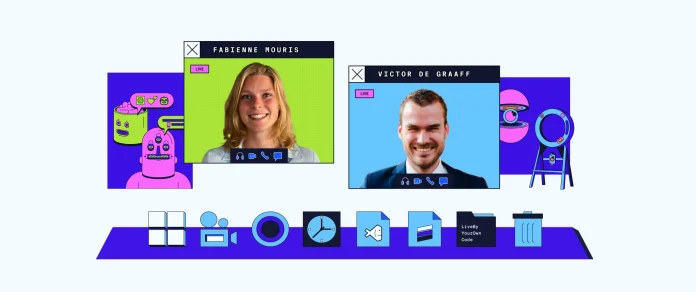
Get excited: We’re launching a brand-new type of AI course, and we want you to be part of it. On December 6 at 12pm ET, you can join us for ChatGPT & Generative AI. Unlike the rest of our self-guided courses and paths, this is a live, instructor-led session that’ll take place in real-time online.

We brought in two expert instructors in the AI field to lead this course: Victor de Graaff, Founder of the international data science consultancy D-Data who has a PhD in recommender systems, and Fabienne Mouris, a Data Scientist at D-Data who specializes in machine learning models and advanced AI techniques. The cool thing about this interactive session is that you’ll be able to ask questions in real time, brush (virtual) shoulders with AI experts, and explore these topics alongside your fellow Codecademy learners.

This is an exclusive offer for our Pro and Plus learners, and it’s an awesome opportunity to brush up on everything that’s been happening in AI over the past year, so you can embrace new possibilities in 2024 and beyond.  

Learn something new for free

Who is this course for?

Our new course is a solid option for anyone who’s looking to leverage ChatGPT and generative AI tools to become more efficient. Whether you want to pivot into the tech industry, use technology to improve your output at your current job, or just be able to follow the latest tech news, this course is for you.

You don’t need a ton of coding experience or machine learning expertise to keep up with this live interactive course (that’s what our expert instructors are for). If you’re brand new to AI, we recommend that you take our free courses Intro to Generative AI and Intro to ChatGPT to get a primer on the topics that’ll be covered.

Developers and people further along in their coding journeys will get a lot from this course, too. We’ll get you up to speed on how to use the latest generative AI tools like ChatGPT to write code and model data and dig into some of OpenAI’s developer tools, like how to build an API and train your own chatbot.

Bottom line: All our Pro and Plus learners are invited to join this live, interactive session. If you have a Basic membership, be sure to upgrade your plan or start a 7-day trial in time for the course.

What will you learn in the new course?

In the course, we’ll break down how AI systems like ChatGPT work and introduce you to key natural language processing concepts. You’ll also get to practice prompt engineering, which is an essential and marketable skill that you need to work with any generative AI tool.

A section of the course will focus on real-world case studies, where you’ll get to see generative AI in action. We’ll spend time getting into ethical questions about AI and unpacking the risks and limitations of the technology — because we know that’s a huge part of being a responsible and ethical AI practitioner.

Register now, check out the course outline to prepare, and we’ll see you on December 6 at 12pm ET.

Lesson Plan About Race and the U.S. Census

0
Lesson Plan About Race and the U.S. Census

What do you notice about changes in the ways the census has asked about race and ethnicity over time? What do you think the questions and the language used in the form say about each of those decades in American history? What questions do these snapshots of the U.S. census raise for you?

Part III: How do you think the census should ask about race and ethnicity?

The United States Census Bureau explains the purpose of the decennial census:

Also known as the Population and Housing Census, the Decennial U.S. Census is designed to count every resident in the United States. It is mandated by Article I, Section 2 of the Constitution and takes place every 10 years. The data collected by the decennial census determine the number of seats each state has in the U.S. House of Representatives and is also used to distribute hundreds of billions of dollars in federal funds to local communities.

The bureau also addresses why it asks questions about race:

We ask a question about a person’s race to create statistics about race and to present other estimates by race groups.

Local, state, tribal, and federal programs use these data, and they are critical factors in the basic research behind numerous policies, particularly for civil rights. Race data are used in planning and funding government programs that provide funds or services for specific groups.

These data are also used to evaluate government programs and policies to ensure that they fairly and equitably serve the needs of all racial groups and to monitor compliance with antidiscrimination laws, regulations, and policies.

What do you think? Should the census collect information about race and ethnicity? If yes, then how? Does asking about race and ethnicity in the census and other government forms help or hurt efforts to address social inequalities and discrimination? Why?

Have students read the featured article and then answer the following questions:

1. The authors write, “The census is more than a bureaucratic exercise; it embodies the country’s continued efforts to neatly categorize inherently nuanced and layered identities.” Do you think the census is important and more than just a “bureaucratic exercise”? Why, or why not?

2. The authors also write, “The reality of categorizing people with distinct labels has never been simple.” Do you agree? What makes categorizing race and ethnicity so complicated — throughout the history of the United States and even today?

Where Is the Line Between Helping a Child Become More Resilient and Pushing Them Too Hard?

0
Where Is the Line Between Helping a Child Become More Resilient and Pushing Them Too Hard?

Has a parent, a teacher, a coach or some other caring adult ever pushed you to try something new? To persevere through a difficult situation? To do something that you thought you couldn’t do?

If so, were you grateful for the prompting in the end? Or did you think it went too far?

In “I Was Trying to Build My Son’s Resilience, Not Scar Him for Life,” Erik Vance writes about one such situation with his own son:

When my wife and I took our 7-year-old son to climb a 900-foot piece of rock near our home in Colorado, it seemed like a good idea at the time.

We’d done a 600-foot climb the previous year, and he had loved it. This one, called the “Standard Route,” up the Third Flatiron in Boulder, was marginally tougher — shaped like a steep, rocky slide that’s attached to a skyscraper.

Yes, he told my wife the night before, and again that morning, that he was too scared to do it. She worried that we were pushing him, but I insisted we go ahead. And the kid seemed confident once we all got to the foot of the route.

Alas, it did not go well. The angle was a little too steep and the whole thing took about two hours longer than I’d planned. A cloud of bugs at the top was almost intolerable and the rappel off the back involved an uncomfortable mess of limbs and ropes pinning my son against the rock.

“This is the worst day of my life!” he screamed at one particularly hard moment.

It wasn’t our first Daddy-inspired mishap, and I can’t see it being our last. I was raised to believe that challenging a child is a good thing — my father always called it “building character.”

But where is the line between being scarred for life and sufficiently scuffed up to build resilience? It’s a choice parents weigh every day — when to cuddle them if they scrape their knee, and when to give a dose of hardship so that they become tough enough to take on the road ahead.

Students, read the entire essay and then tell us:

  • What is your reaction to Mr. Vance’s story? What, if anything, do you think he could have done differently as a parent?

  • Have you ever had an experience similar to the one Mr. Vance described, when a caring adult pushed you for the sake of building resilience or grit? What happened? Looking back on the experience now, are you grateful for it, or did it scar you? What, if anything, do you wish had gone differently?

  • Mr. Vance said he was raised to believe that “challenging a child is a good thing.” Do you agree with that sentiment? Is it helpful and important for parents to challenge their children? Why or why not?

  • How resilient would you say you are? In other words, how well are you able to recover and move on from adverse events, failures or changes? What has helped — or could help — you develop that skill?

  • What advice would you give to parents, and other adults who have children in their lives, to help children build resilience? What advice would you give to kids?


Students 13 and older in the United States and Britain, and 16 and older elsewhere, are invited to comment. All comments are moderated by the Learning Network staff, but please keep in mind that once your comment is accepted, it will be made public and may appear in print.

Find more Student Opinion questions here. Teachers, check out this guide to learn how you can incorporate these prompts into your classroom.