




Announcing Our New “Ace That Test” Book!! And Other Books We Enjoy (Digest #169)
We have a BIG ANNOUNCEMENT! Our newest book, Ace That Test: A Student’s Guide To Better Learning is coming out this summer—July 19 to be exact. You can preorder through Amazon now! Starting June 28, you can preorder through the Routledge link on our website. You can read Chapter 1 for free here!We are SUPER…
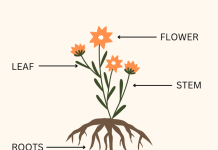
GUEST POST: How and Why Teachers Should Use Graphic Organizers in the Classroom
After the lecture, students studied the display they were given (outline, text, etc.) for 15 minutes. They were told that there would be three tests:A test on facts. Question example: What is the size of the Brahmaputra basin?A test to check relationships based on categories. Question example: Which rivers merge with other rivers?A test to…

The Effect of Supervision and Instruction on Students’ Use of Retrieval Practice
By Carolina Kuepper-TetzelWhile there is clear evidence for the benefits of using retrieval practice as a learning strategy (1), we also know that students may not necessarily chose to use retrieval practice when studying on their own (2). A very recent experiment (3) investigated study choices in university students who were tasked with learning English-Swahili…

The Need For Flexible and Nuanced Recommendations
Here is an example she gives in the newsletter: baby sleep location. The first best is that babies sleep alone in a crib, on their back with no loose blankets or toys, in their parents’ room, for at least the first six months of life. This is what the AAP recommends and is considered the…
Retrieval Strategies in Children with Developmental Language Disorder
Sometimes their recall was tested, and they were asked to produce the word. For example, “Tell me about the truck. The truck is very___” or “Tell me about the table. The table is very___” and they needed to finish the sentence. Sometimes they were tested with multiple-choice; they were shown four pictures and were asked…

The Benefits of Retrieval with Medical Residents
With the constant advances in the medicine, medical training is continual and unabating. To start with, after spending typically four years earning a bachelor’s degree, medical professionals then typically spend four years in medical school, three to seven years in residency, and possibly a few years in fellowship. Then, relatively less formal education continues as…

Digest #168: Introduction to ChatGPT
Everyone is talking about it, but we may not yet fully grasp what it is and what it means for education: ChatGPT. ChatGPT stands for “Generative Pre-Trained Transformer” and is an Artificial Intelligence (AI) chatbot. This means that you can have a dialogue with an AI bot. It will provide you with answers to questions,…

GUEST POST: Interview with an occupational therapist, entrepreneur, and EdTech guru
Dr. Toni Shub is the CEO of QoreInsights. She is leading the innovation and development of the Classroom Education Plan, a K-5 practice-embedded personalized professional development program with a decision intelligence platform for needs analysis and research-informed strategies. Toni earned her EdD in Leadership and Learning in Organizations from Vanderbilt University, and holds an MS…

Delayed and Immediate Feedback in the Classroom: The Results Aren’t What Students Think!
Experiment 1 ResultsStudents in the delayed feedback condition performed better on the exams than students in the “immediate” feedback condition. The difference was about 8%, or the difference between earning a B and an A. However, students’ perceptions did not match the exam results. The students that received the delayed feedback really didn’t like it.…

The Relationship Between Test Anxiety and Exam Performance
By Althea Need Kaminske Does test anxiety cause poorer performance on exams? Meta-analyses show that students with higher test anxiety tend to perform worse on exams (1). We also know that anxiety can affect cognitive processes through working memory capacity (2). Therefore, the general consensus is that test anxiety interferes with our working memory, which…
