


Learning With Flashcards
How did they investigate these questions?They conducted two experiments. In the first experiment, participants were asked to study one of two text passages (biological anthropology versus geology) and then instructed participants to study in one of four conditions:1. Provided-Flashcards: Participants were given premade flashcards from the textbooks to study with. These flashcards were heavily detail-level…

GUEST POST: What’s the Secret to Learning? It’s Belonging
The relationship between belonging and engagement was further explored in a survey study by Yust et al. (3). In previous research studies, belonging has been linked to achievement, motivation, engagement, and class enjoyment. This article focused on introductory psychology courses, as entry-level classes are important as a means to explore possible majors and even future…
Believe to Succeed: The Impact of Self-Efficacy on Performance
The self-efficacy intervention was designed to be comprehensive, targeting all the different ways in which self-efficacy is thought to be influenced:1) Previous experiences: If you think about times that you have been successful in the past, you are more likely to believe you can be successful in the future. For the intervention, students were provided…
Digest #167: Should we give up on growth mindset?
5) Goodbye growth mindset, Hello efficacy and attribution theory by Mirjam Neelen and Paul Kirschner @P_A_KirschnerThis blog post was written before this latest revival of the growth mindset controversy, but provides an accessible description of why many interventions might fail in the ways that they simplistically apply mindset research. Instead, a clear and easily applied…

Digest #166: Perfectionism in Education
By Carolina Kuepper-Tetzel“Perfection is the opposite of done!” I came across this statement recently and it made me think about how perfectionism really affects one’s work and studying. Growing up, I always thought of perfectionism as a good thing, as something to aspire to. However, more recently I am questioning this thought. It adds unnecessary…

When Revising, Read Out Loud
Why disfluency?There has been some research looking into whether reading something disfluent, like sans forgetica font, could improve learning via desirable difficulties. That is, when learning is more effortful, it often results in better long-term retention. Most recently, a meta-analysis (2) showed that disfluent font doesn’t lead to much better learning, but the hypothesis still…

GUEST POST: Transformational Learning & Reflection: 3 Keys for Medical Educators
How to reflect When asked to reflect on an experience, what questions do you ask yourself? In the book, Make it Stick [6], neurosurgeon Mike Ebersold comments:I’d go home that night thinking about what happened and what could I do, for example, to improve the way a suturing went. How can I take a bigger bite with…
VLOG: The Learner Variability Project
For today’s VLOG post, Cindy interviewed Jessica Jackson, Director of Professional Learning for the Learner Variability Project @DigitalPromise. In this video, Jessica talks about the concept of learner variability and walks through all the fun tools available through the Learner Variability Project, and in particular the Learning Variability Navigator. The Navigator is an evidence-based guide…

Prior Knowledge and Learning New Information: The Rich Get Richer
The ResultsA regression analysis showed that prior knowledge predicted final test performance for new items, but only in the domain that they had prior knowledge for. People who came into the experiment with a stronger background in cooking learned more “new” facts about cooking, but not football. Similarly, people with a stronger background in football…
Spacing Retrieval is More Important than Extra Retrieval
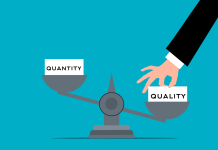
Let me phrase those results a different way. Taking the same amount of time and energy that it took to write the normal quiz for a class and just distributing those questions across a couple different quizzes was more beneficial than writing and answering (and grading?) additional quiz questions. Educators: Quiz your students. Absolutely you…
