
If you’re hungry, stop reading right now.
If you’re not hungry, keep reading … and you will be soon.
To honor Hispanic Heritage Month, celebrated in the United States from Sept. 15 to Oct. 15, we have compiled five New York Times articles that celebrate Latino people and their cooking with a range of foods across the country.
Here’s the menu:
1. Croquetas
2. Tacos
3. Mexican pizza
4. Barrio bread
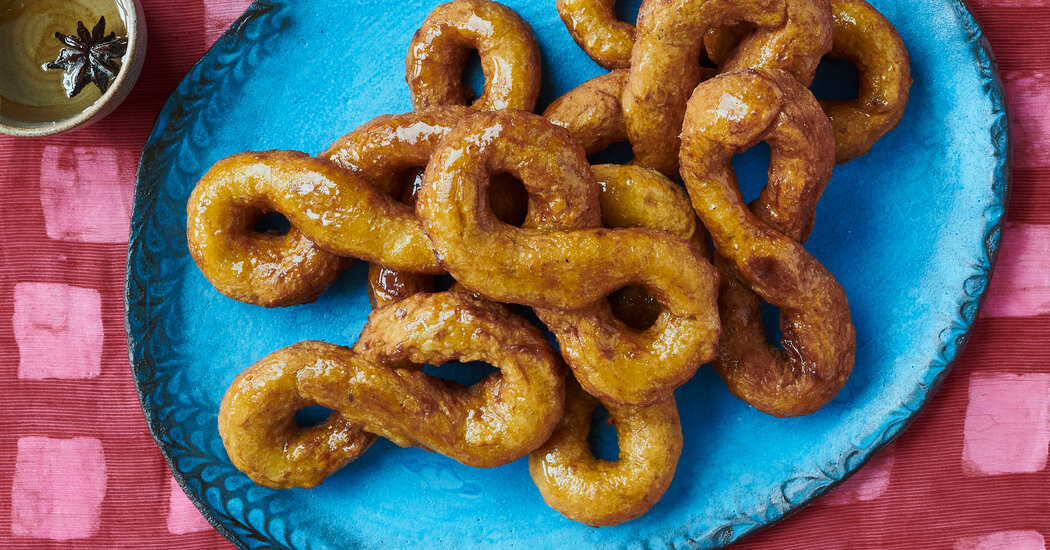
5. Buñuelos
To accompany each article, we have designed a basic lesson plan that features a warm-up, discussion questions and a post-reading activity. Teachers might have students choose a lesson to complete or assign them to small groups for a jigsaw. At the beginning, we offer an idea for a warm-up for the whole class and, at the end, some options to extend learning.
In these mini-lessons, students will explore the relationship between food and cultural identity and appreciate how food can both preserve traditions and inspire innovation.
Let’s eat!
Before reading | What do you know about Cuban culture, history and food? Take this short quiz to test your knowledge. What is something new you learned?
During reading | Read the article and respond to the following questions:
1. What are croquetas?
2. What is the history and cultural significance of the croqueta?
3. What are some of the innovative ways chefs are modifying croquetas? Why are these innovations significant?
Before reading | What makes a food “authentic,” in your opinion? Make a list of attributes and then come up with a definition of “authentic” food. What are some restaurants you know that would be considered “authentic” or “inauthentic” according to your definition?
During reading | Read the article and respond to the following questions:
1. What makes Veracruz All Natural unique?
2. How have Reyna and Maritza Vazquez, the owners of Veracruz All Natural, influenced dining in Austin, Texas? Why do they feel conflicted about their success?
Before reading | Do you eat pizza? If you could assemble your perfect pizza, what toppings would you put on it and why?
During reading | Read the article and respond to the following questions:
1. What is Mexican pizza?
2. What were some of the different factors that prompted the chefs profiled in this article to make their hybrid pies?
3. What can we learn about culture, food and identity from this story?
After reading | The chefs interviewed for the article combined South Philadelphia’s deep Italian roots with their own Mexican heritage to create their versions of Mexican pizza. What new dish could you invent that combines the foods of two or more cultures, perhaps your own and another in your community? Write a recipe that explains how to make it.
Local-Grain Bread
“One Baker’s Quest to Make Bread that Blurs Borders”
“Misión: hornear un pan que desafíe fronteras”
By John Birdsall
Before reading | What do you know about making bread? Watch a few minutes of the short video “How to Make Homemade Artisan Bread” with Don Guerra, the baker featured in the article you’ll read. What did you learn about making bread?
During reading | Read the article and respond to the following questions:
1. What is the local-grain movement? Why is it significant to Mr. Guerra and other Latino bakers?
2. What does “assimilation” mean as it’s used in the article? Why did Mr. Guerra’s father encourage it? How is Mr. Guerra challenging that practice now?
Before reading | What foods are part of your holiday traditions? Do you have a favorite dish? What is it and why? Write about these questions or discuss them with a partner.
During reading | Read the article and respond to the following questions:
1. What are buñuelos?
2. Why are there different versions of buñuelos across Latin America?
3. The article said that buñuelos are “a food that connects people to their parents and grandparents no matter where they are.” How can food connect people to their family or culture? Give an example from the article or from your own life.
After reading | Write about a memory you have of preparing a holiday dish with your family. What images, sounds, smells, textures and tastes come to mind when you think about this moment? Why do you think this memory has stuck with you? What did this moment mean to you?
Going Further
Looking to take what your class has learned about Latino culture and food further? Here are some ideas:
Share learning with the class.
After students have completed one of the activities above, facilitate a discussion with the whole class or within small groups about what they learned. Here are some prompts to get you started:
What is something you learned about the food or culture you studied?
What are some of the reasons traditional dishes might change over time? How would you describe the differences between innovation, adaptation and assimilation when it comes to food?
What is the relationship between food and cultural identity? In what ways can food be power? In what ways can it be a connector?
What is a food that is important in your culture or family? What do you know about its history? What traditions, if any, do you have for preparing it? Why is this food significant to you?
Have a classroom potluck.
Invite students to cook a Latin American recipe for a classroom potluck. They might make something their family has been preparing for generations, something they find online or in a recipe book or something from The New York Times Cooking’s Latin American Recipes page.
In addition to cooking it, students should research the origins and history of the dish, as well as its cultural significance. Then have a day of celebration so students can share their food, as well as what they learned, with the class.
Write a restaurant review.
Students can visit a local restaurant that serves food from a Latin American culture and write a review of it using New York Times restaurant reviews as a model. Here are some recent examples:
At La Piraña Lechonera, a Machete, a Shower of Pork and Other Magic
Elegantly Dressed Peruvian Cuisine Makes Landfall in TriBeCa
Flavors From the Ecuadorean Andes and a Friendly Wave to Mexico, at Leticias
As in a Times review, students should be sure to evaluate the food, the environment and the management. They can even give the restaurant a star rating. Remember, if students are personally unfamiliar with the food and its cultural origins, they may have to do some additional research in order it to give it a fair review.
(If students choose a restaurant that is new this year, they can enter their review into our Student Review Contest.)
Explore the intersection of food, family and culture further with writing prompts.
If this lesson inspired students to want to talk more about their own food, culture, memories and experiences, they can respond to one of these prompts, either on their own, in writing, or in a class discussion:
Student Opinion Questions
